Wender·Vista
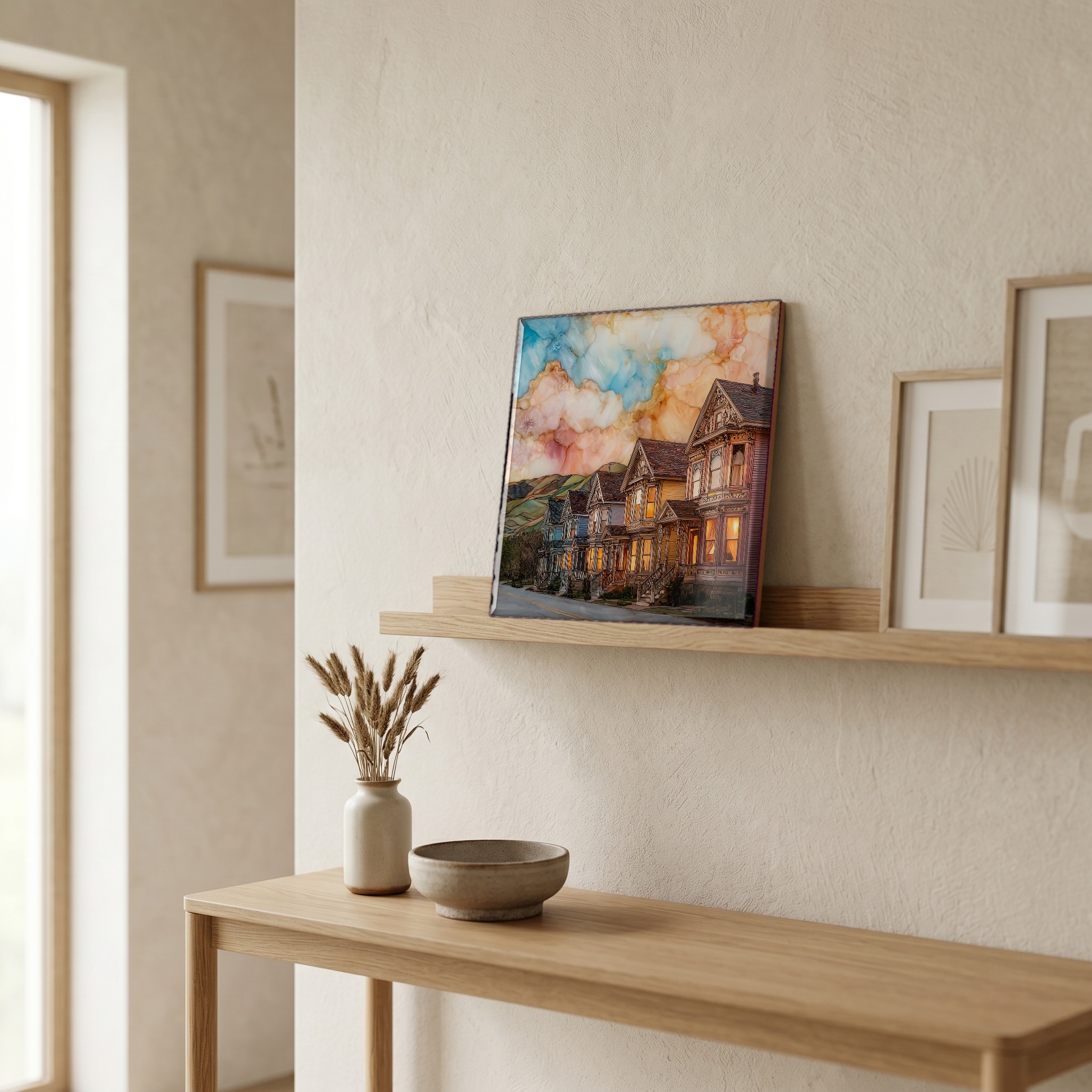
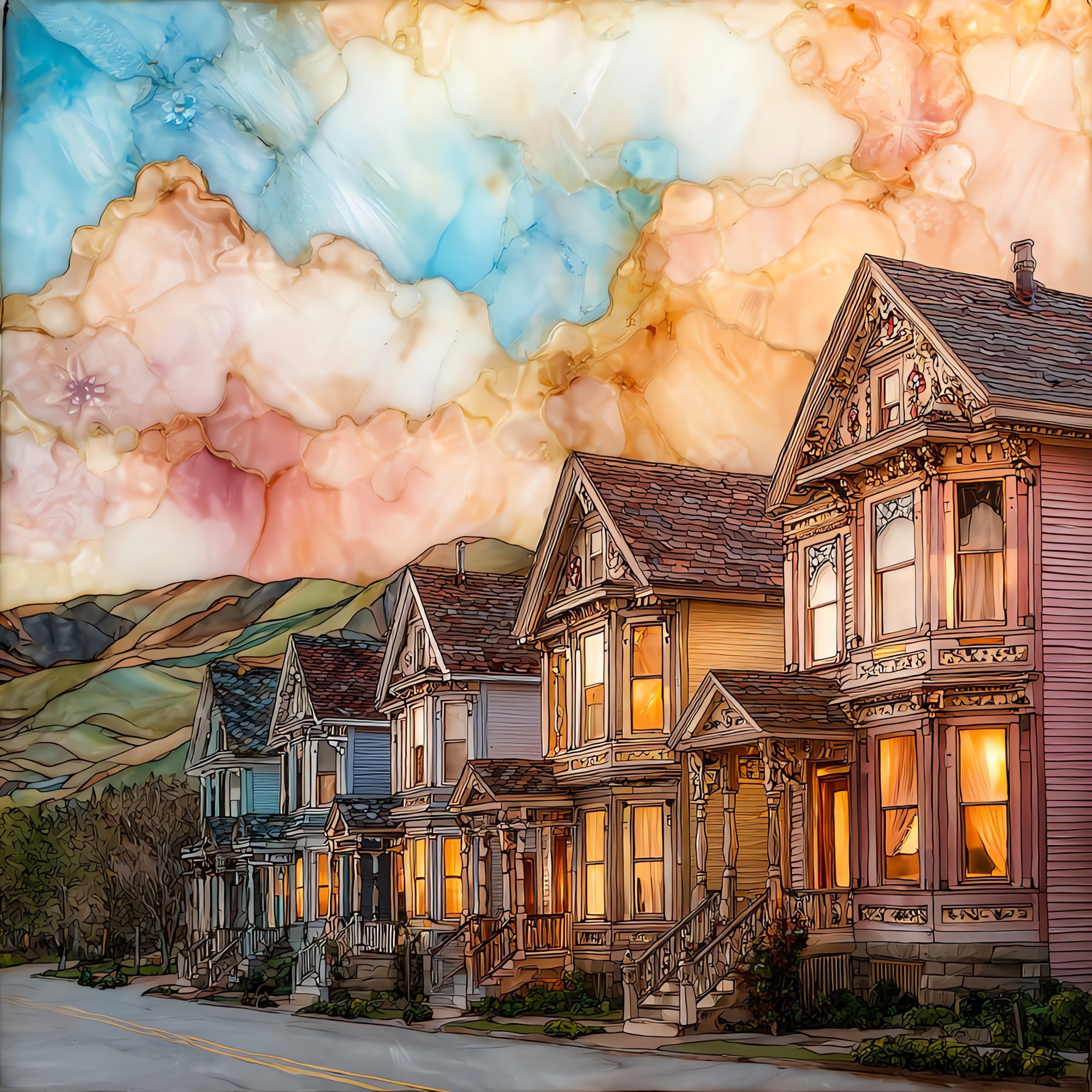
Sherman Avenue Aspen Victorians Elk Range Ceramic Art Tile
shown on ceramic, 12-inch tileColorado · United States
in Aspen's West End, the Elk Range over the rooflines

Sherman Avenue Aspen Victorians Elk Range Ceramic Art Tile

gingerbread porches with a fourteener behind them.

Where it lives

Not only on a wall.

A small tile on the nightstand catching the morning. A larger one above the fire. Yours, wherever you spend the slow hours.
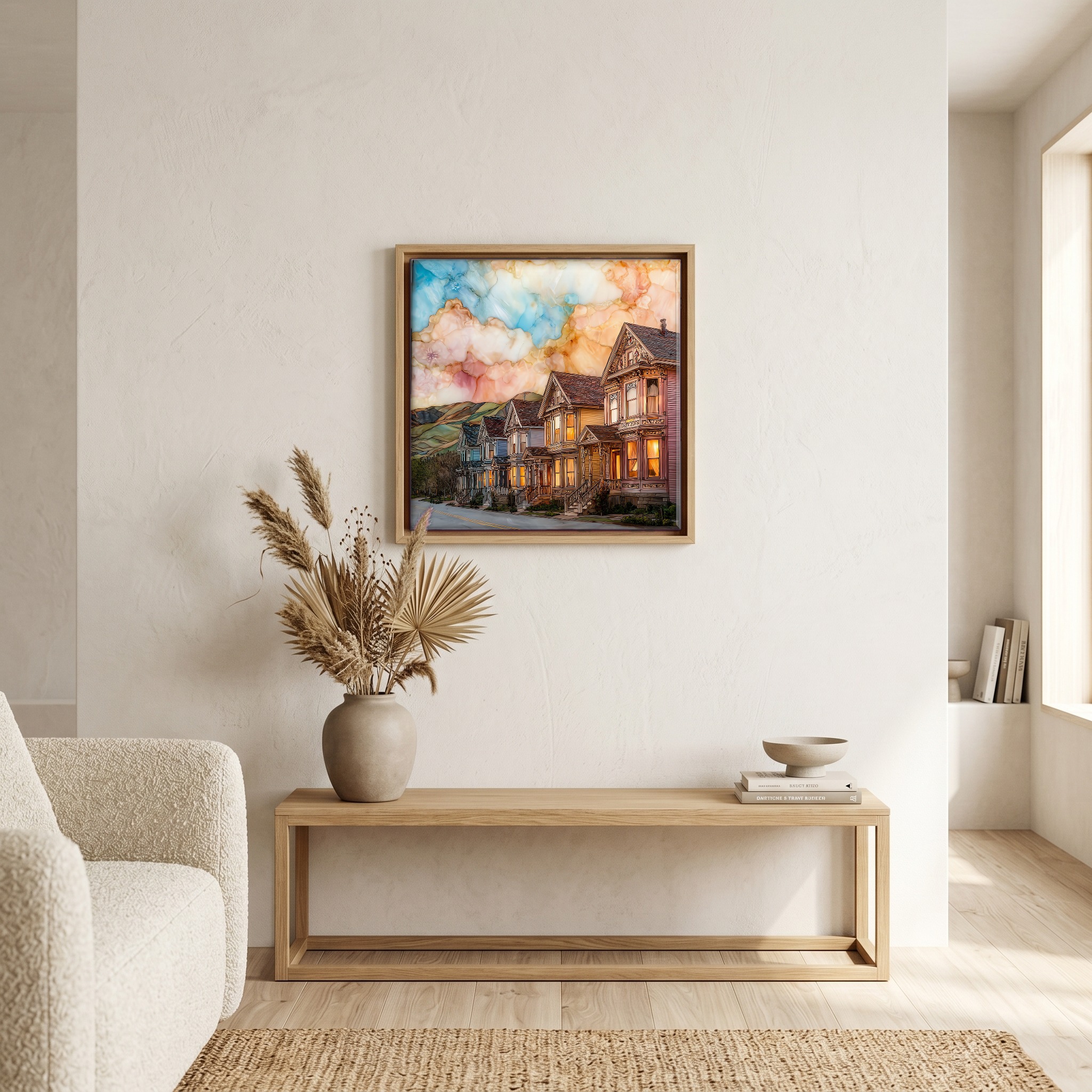
Above the bench, in a warm oak surround.
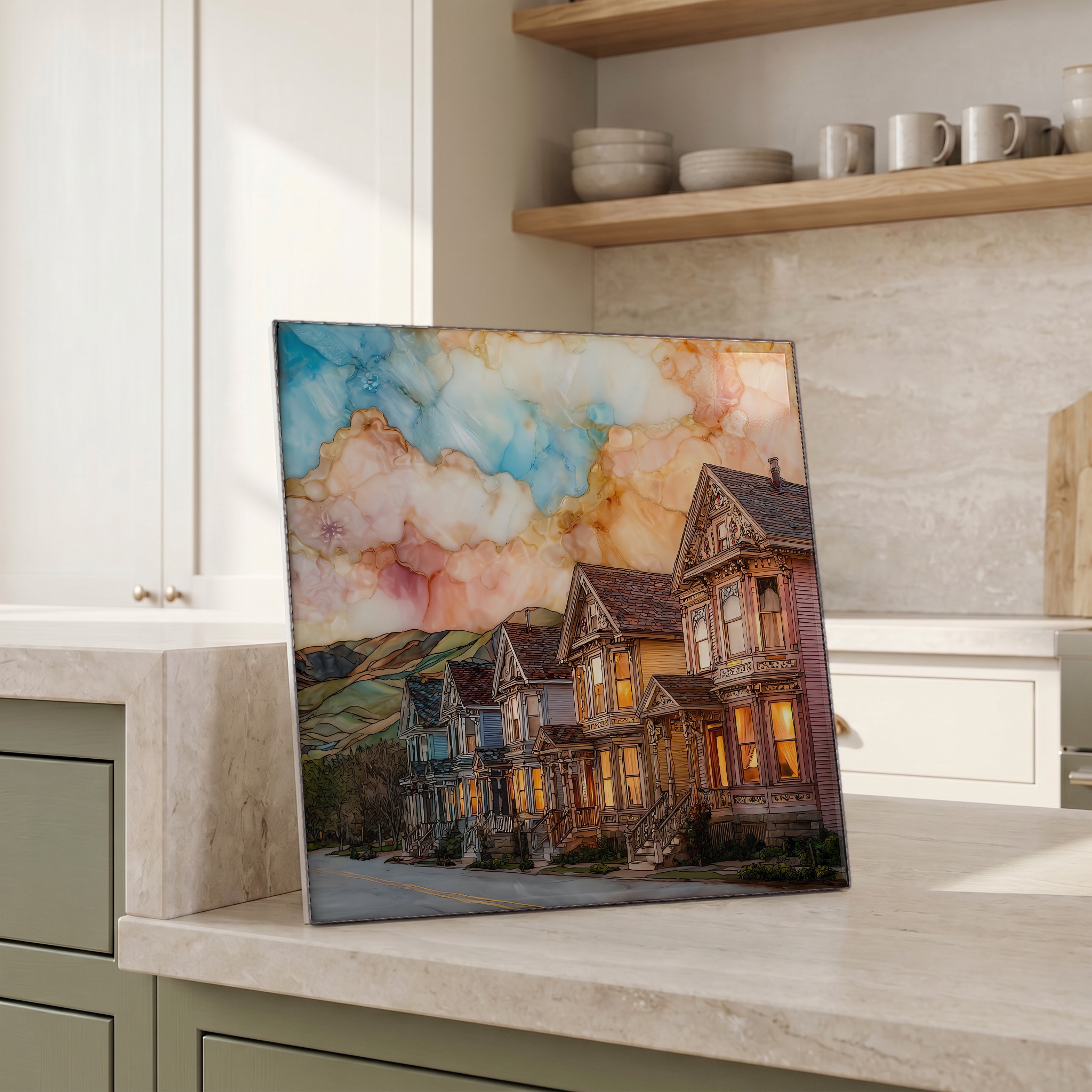
Beside the kettle, propped on the counter.
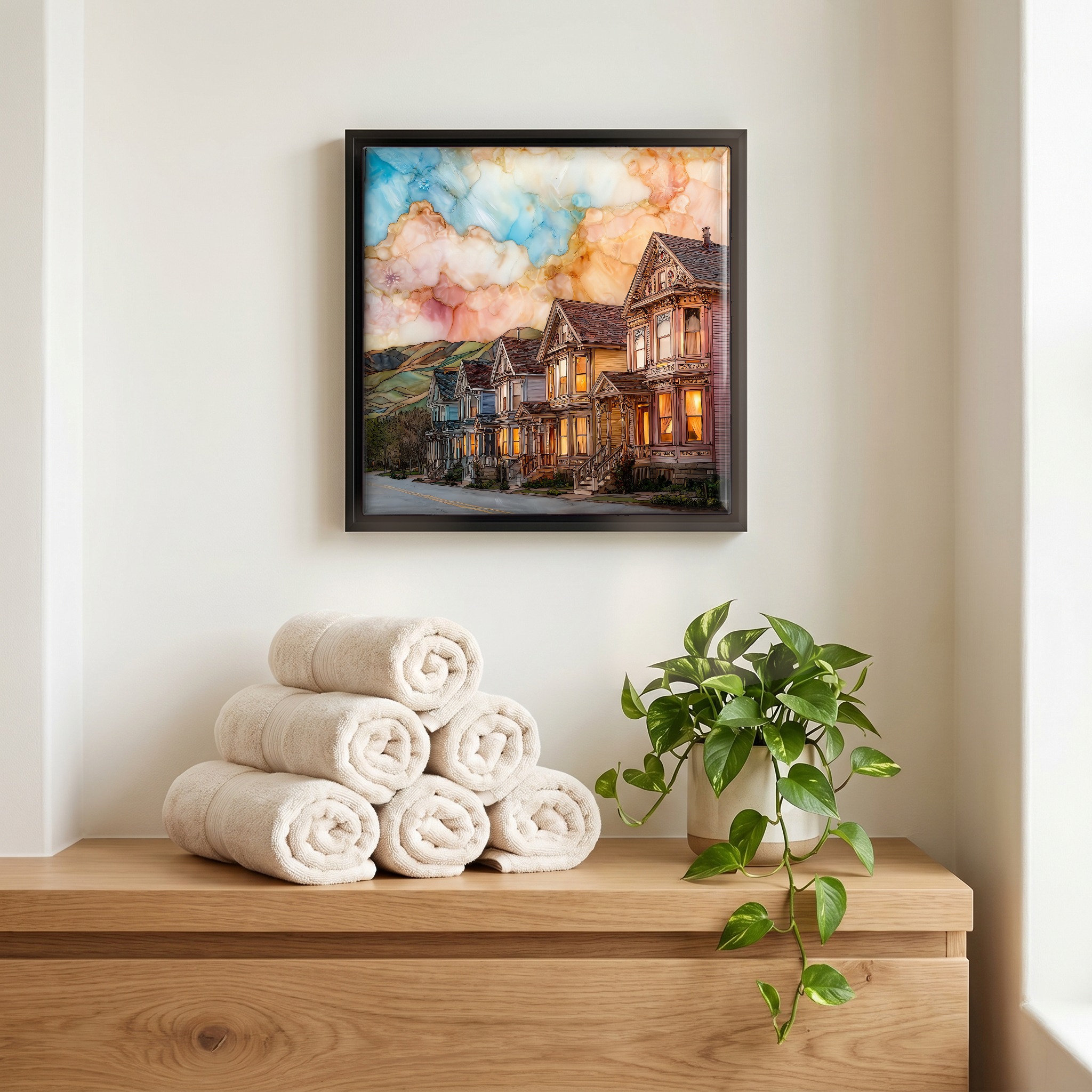
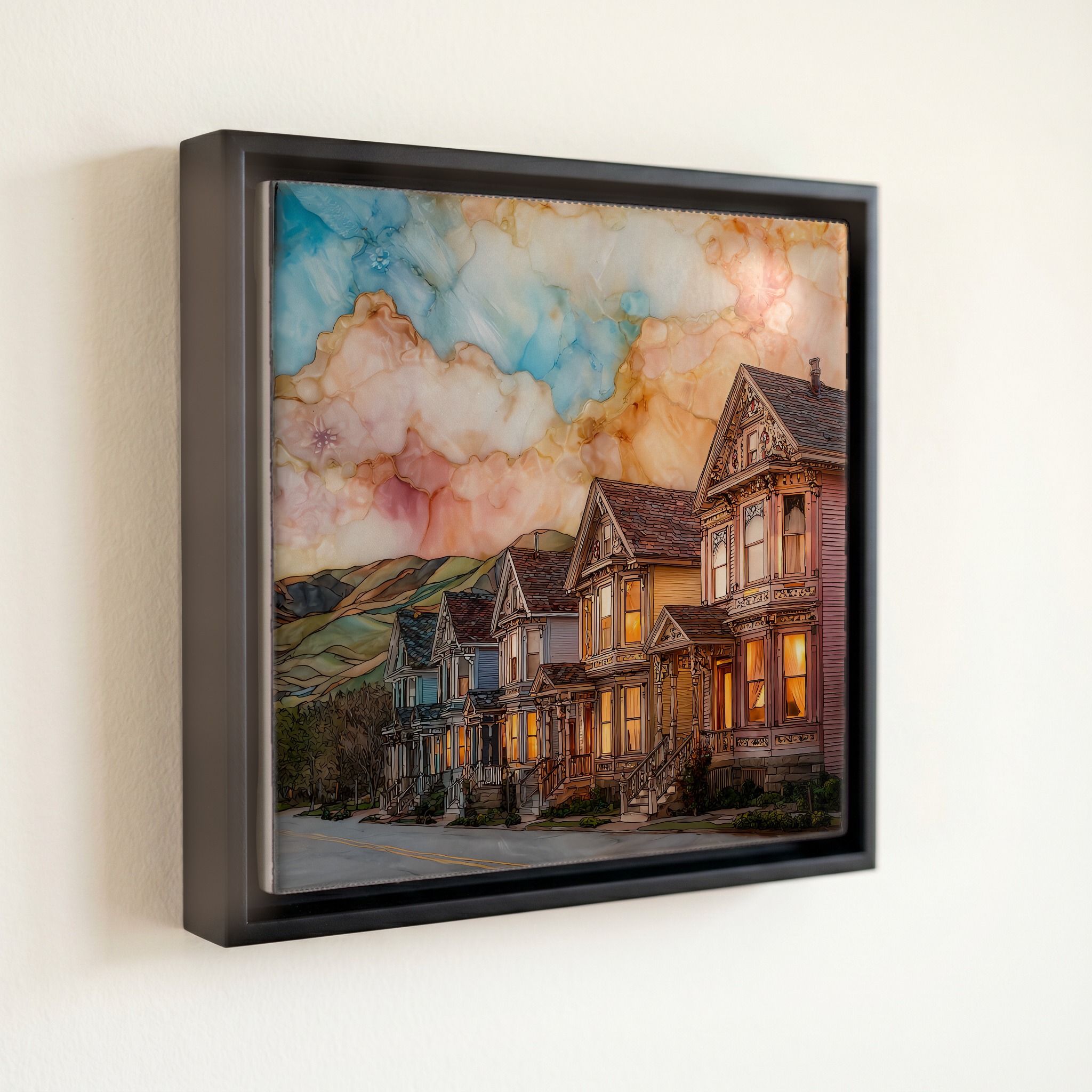
Above the linens, in a slim black surround.
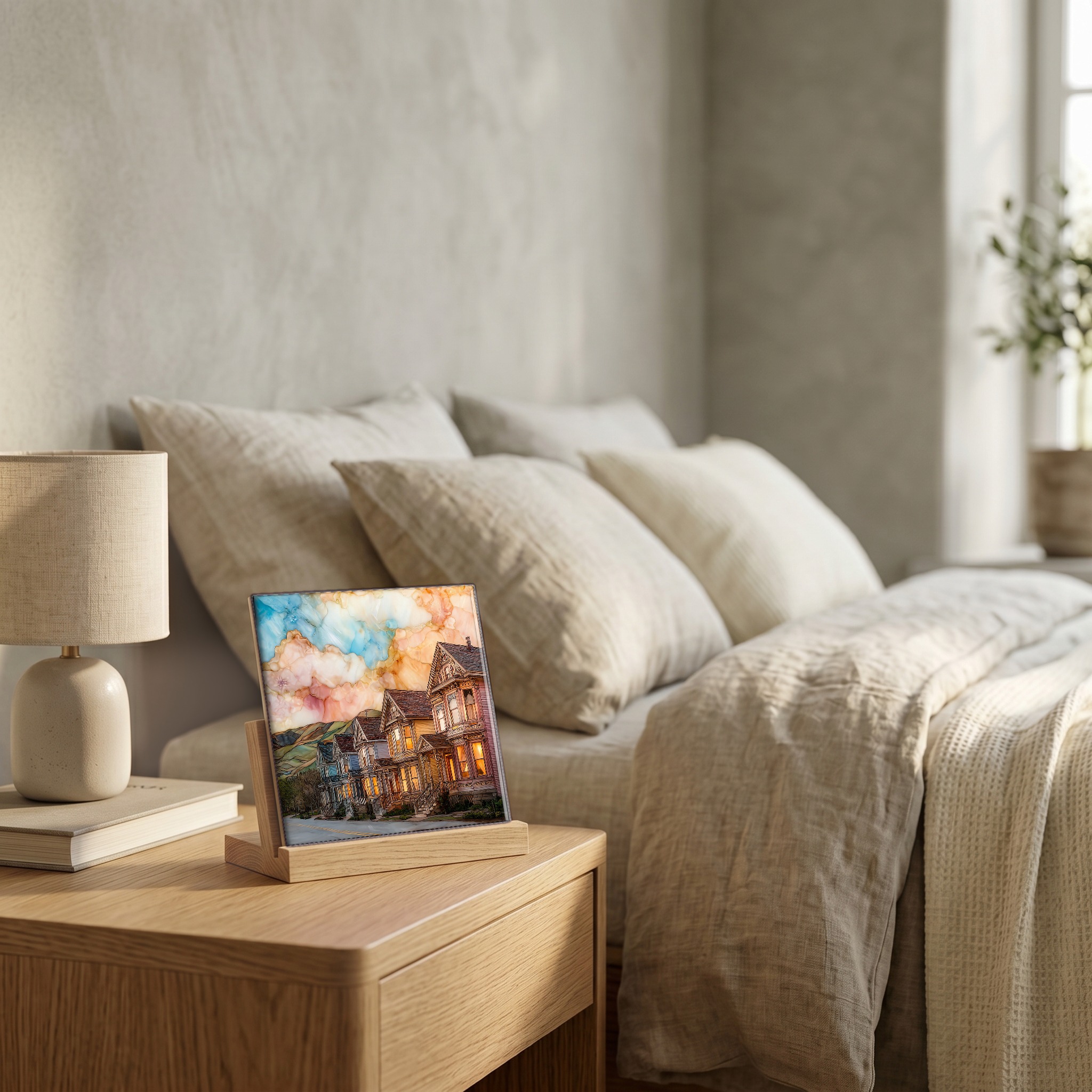
On the nightstand, on a light oak stand.
On a picture ledge, where the light comes in.
a note from the studio

Aspen's West End sits north of Main Street, a grid of nineteenth-century houses left over from the silver boom. About 261 Victorian-era buildings still stand across town, most of them on these few blocks. The streets run quiet under cottonwoods. Behind the rooflines the Elk Range carries on into the high country: Pyramid Peak, the Maroon Bells, Castle Peak, all of them past fourteen thousand feet. The boom barons built their houses to look at those mountains. The mountains, in their slow way, still hold up their end.
from the studio
shown in a slim black floating frame · 6 × 6 in
— bring it home

Sherman Avenue Aspen Victorians Elk Range Ceramic Art Tile, on ceramic.

Each tile is finished by hand in our Knoxville studio. Artwork is slowly infused into the ceramic surface under high heat and pressure, and rests beneath a thin glossy finish. The colour lives in the surface, not on top of it.

What kind of piece?
One tile — square or rectangle.
How big?
the popular one — counter, shelf, nightstand
6 × 6 in · 15 cm · 1.6 lb
Surface finish
A clear glossy finish — the artwork reads as if under resin. Ideal for show-pieces and framed wall art.
How it sits
A hidden cleat — sits ¼″ proud of the wall.
$58
Hand-finished and shipped from our studio at the foot of the Smokies. On your wall in about ten days.
size
6 × 6 in
15 cm
weighs
1.6 lb
solid in the hand
surface
ceramic, hand-finished
art rests beneath a thin glossy finish
from
Knoxville, TN
our family studio, at the foot of the Smokies
— start a Coaster Set

Pick any four 4-inch tiles — National Parks you've been to, a Smokies set, the four seasons of one place. $ for a set of , cork-backed, ready to live on the table.
comes gift-ready
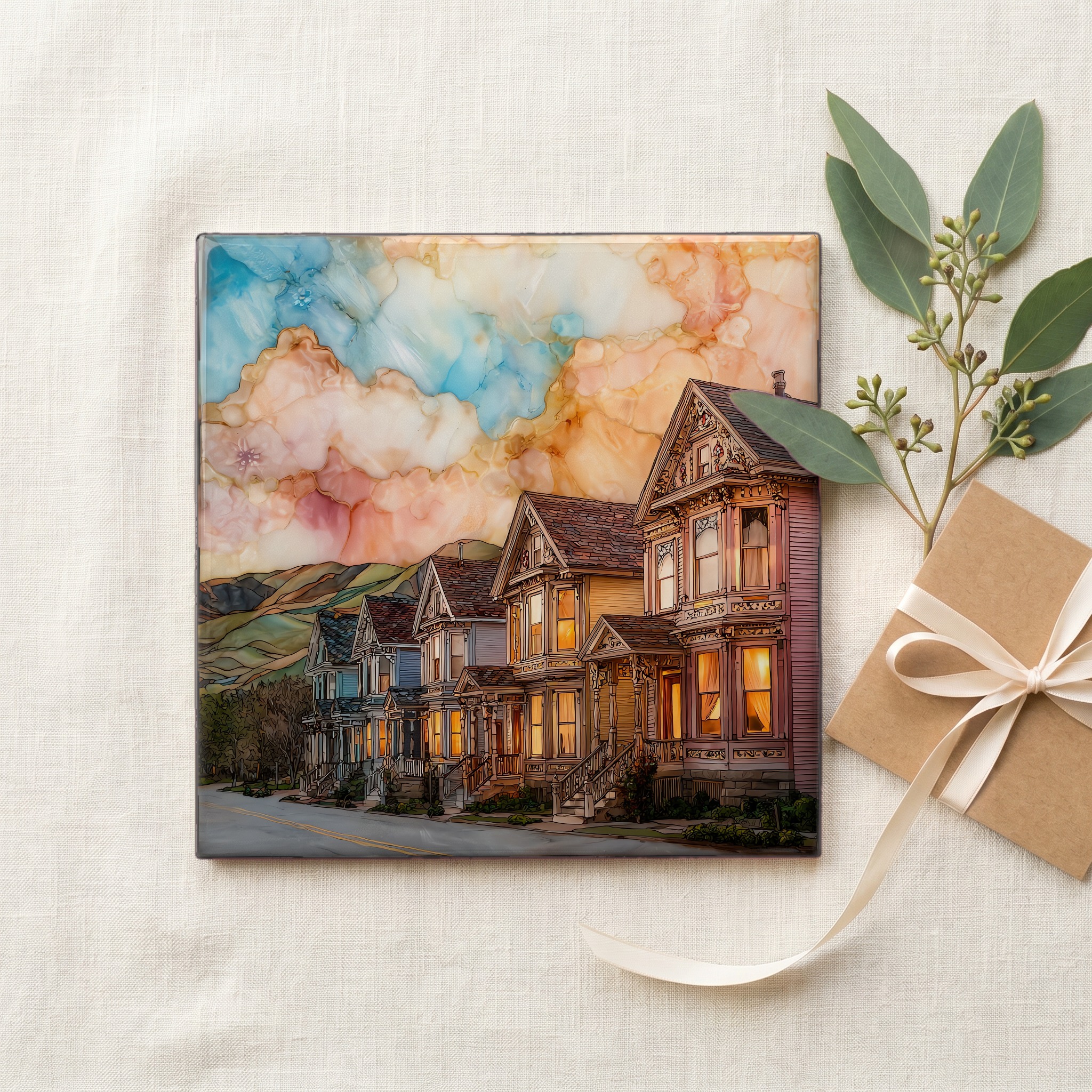
comes gift-ready

Each tile ships in a kraft box, tied with cream ribbon, with a handwritten note from the studio if you'd like to add one.
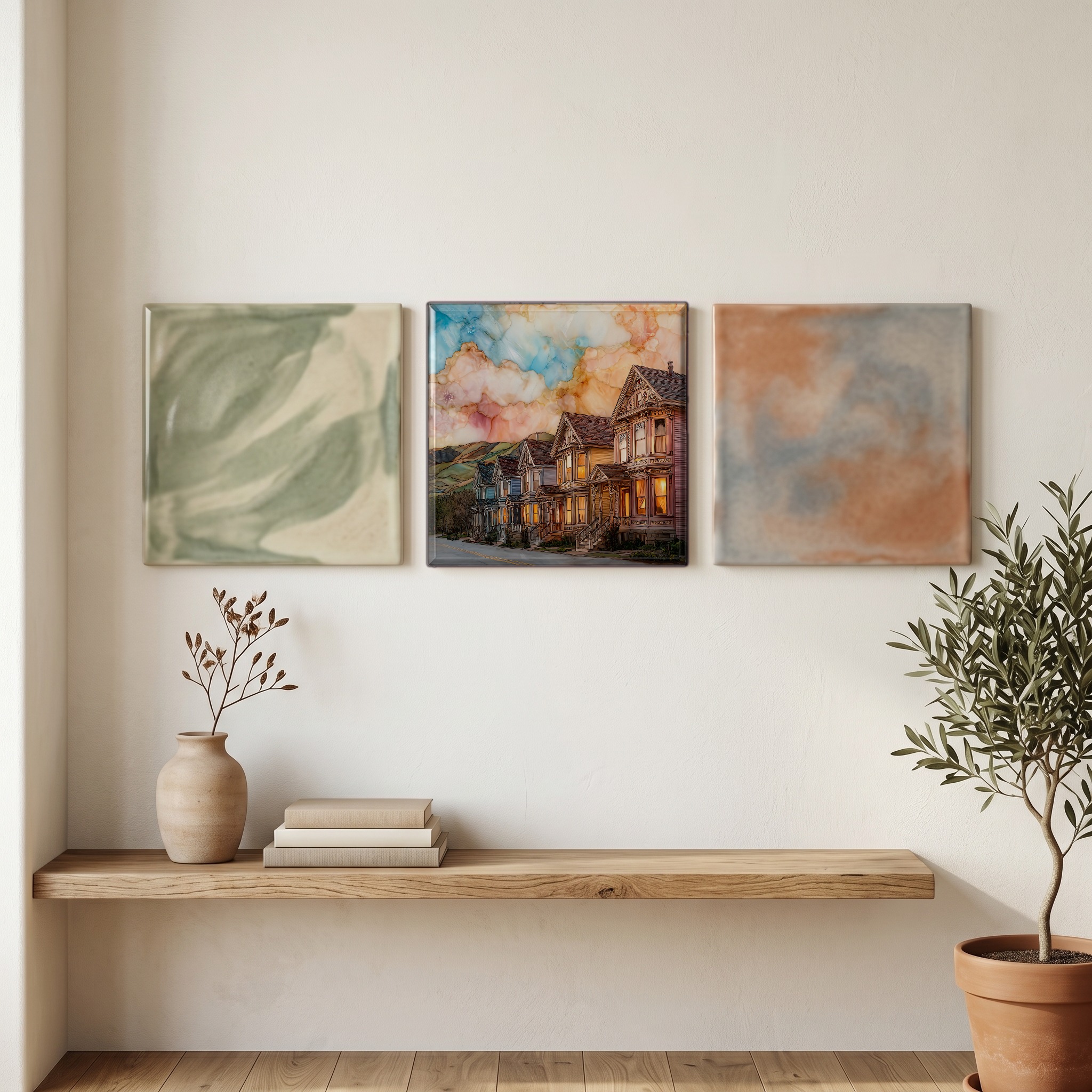
or build a grouping
or build a grouping

Three or five different vistas, hung together — a chapter of places you've been, or want to go.

about Sherman Avenue Aspen Victorians Elk Range Ceramic Art Tile

The place, in three passes.

A little of what's known, in case you fall down the rabbit hole — or want to go see it yourself.
the place

Aspen sits at 8,000 feet on a flat shelf along the Roaring Fork River, eleven miles west of the Continental Divide on Colorado's Western Slope. The West End is the historic residential quarter north of Main Street and west of the modern downtown, platted in the 1880s when the city briefly surpassed Leadville as the most productive silver-mining district in the United States. The neighbourhood sits between the Wheeler/Stallard Museum campus on its west edge and the Aspen Institute grounds along the river. The city adopted one of Colorado's earliest historic-preservation ordinances in 1972, after a citizens' group called Save the Victorians organised to slow the demolition pace.

the stone

The houses are catalogued in The Aspen Inventory of Historic Sites and Structures, the working document the city's Historic Preservation Commission consults whenever an owner wants to alter a registered property. Most date to the silver boom that peaked in 1891 and 1892, then ended in the Panic of 1893: wood-frame Victorians with gabled ells, decorated bargeboards, and turned porch posts, sized for a town that briefly held the wealthiest population per capita in Colorado. The Wheeler/Stallard House, built in 1888 for silver baron and Macy's investor Jerome B. Wheeler, sits on West Bleeker Street and was placed on the National Register of Historic Places in 1975.

the air

The Elk Range carries the southwest skyline. Six fourteeners belong to it: Castle Peak (14,265 feet, the highest), Maroon Peak, Capitol Peak, Snowmass Mountain, Pyramid Peak, and North Maroon Peak, all six standing above fourteen thousand feet. The Maroon Bells, the two peaks that are shorthand for the range, sit about twelve miles southwest of Aspen across the Maroon Creek valley. The range belongs to the Rocky Mountains on the western side of the Continental Divide, mostly in southern Pitkin and northern Gunnison counties. From the West End sidewalks the peaks come and go behind cottonwoods, taller than anything in town.

where
United States · Aspen, Pitkin County, Colorado
elevation
2,438 m · 8,000 ft
position
39.1911° N · 106.8175° W
the neighborhood

What's nearby.

A handful of named places within an hour's walk or short drive. Some we've already painted; some we will.
at the lake
Wheeler/Stallard House
house museum
1 km W
Aspen Institute
campus
1 km S
Aspen Mountain
ski mountain
at the lake
Roaring Fork River
river
19 km SW
Maroon Bells
fourteener pair
19 km SW
Pyramid Peak
fourteener
N
Sherman Avenue Aspen Victorians Elk Range Ceramic Art Tile
Wheeler/Stallard House
Aspen Institute
Aspen Mountain
Roaring Fork River
Maroon Bells
Pyramid Peak
common questions

What people ask.

A few questions we get about Sherman Avenue Aspen Victorians Elk Range Ceramic Art Tile — and about bringing the piece home.
about the place

The West End is the residential quarter north of Main Street and west of downtown Aspen, Colorado, sitting at roughly 8,000 feet on the Roaring Fork River. It holds the largest surviving concentration of Aspen's nineteenth-century houses, bounded by the Wheeler/Stallard Museum and the Aspen Institute on its western edge.

Aspen has roughly 261 Victorian-era buildings still standing, and the densest concentration sits in the West End. Most date to the silver boom of 1885 to 1893, when Aspen briefly out-produced Leadville as the country's leading silver district.

The Elk Range fills the southwest skyline. Six fourteeners belong to the range: Castle Peak (the highest at 14,265 feet), Maroon Peak, Capitol Peak, Snowmass Mountain, Pyramid Peak, and North Maroon Peak. The Maroon Bells sit about twelve miles southwest of Aspen across the Maroon Creek valley.

The houses date mostly to Aspen's silver boom of the late 1880s and early 1890s. Aspen peaked as a silver district in 1891 and 1892, then collapsed after the Panic of 1893. The boom-era houses that survived became the Victorian fabric of the West End.

Jerome B. Wheeler was a minority partner in the Macy's department store chain and an early investor in Aspen's silver mines. He built the Wheeler/Stallard House on West Bleeker Street in 1888. The house was added to the National Register of Historic Places in 1975 and now operates as the Aspen Historical Society's museum.

A citizens' group called Save the Victorians persuaded the city to act before more houses were lost. Aspen adopted one of Colorado's earliest historic-preservation ordinances in 1972 and seated a Historic Preservation Commission that still reviews any change to a registered property.

The Aspen Historical Society runs a Victorian West End Walking Tour out of the Wheeler/Stallard Museum. The streets are flat, the blocks are short, and most of the houses are visible from the public sidewalk, with the Elk Range standing behind the rooflines.

about the piece in your home

It's been a meaningful gift for our customers connected to Aspen. The West End is one of the most recognisable parts of town for locals and former residents, more so than the ski slopes. A Coaster or Small with a handwritten note from the studio carries well.

The piece sits well in mountain-modern interiors, alpine-traditional rooms with reclaimed wood and leather, and warm transitional spaces that mix antique and contemporary furniture. The Victorian rooflines and Elk Range colours give it more range than a pure landscape would offer.

Yes. Aspen and Colorado mountain interiors are running toward warmer wood tones, dimensional textiles, and art that reads as place-specific rather than generic landscape. The tile's recognisable silhouette of Victorians under the Elk Range fits that direction.

A single Large reads cleanly above a console or a narrow chest. Above a standard sofa, a four-tile Mural or a Triptych carries the wall; above a sectional or a long mantelpiece, a nine-tile Mural is the right scale.

Yes. For wet or splash-zone installations like a backsplash, a shower surround, or a powder-room wall, order the Dura Satin or Matte finish. Both are scratch-resistant and stand up to daily cleaning. Glossy is for framed display pieces.

Wipe with a soft microfibre cloth and clean water. For stubborn marks, a drop of mild dish soap. Avoid bleach, ammonia, abrasive pads, and any cleaner with grit. The colour is in the ceramic surface beneath a thin glossy finish, not painted on top.

Yes. Every WenderVista piece is original to our studio in Knoxville, Tennessee. We license nothing in and nothing out. Reid Wender chooses each place and the studio finishes every tile by hand.

if this one stayed with you

A few you might also love.

Hand-picked by the eye that found Sorapis. Same air, same kind of quiet.