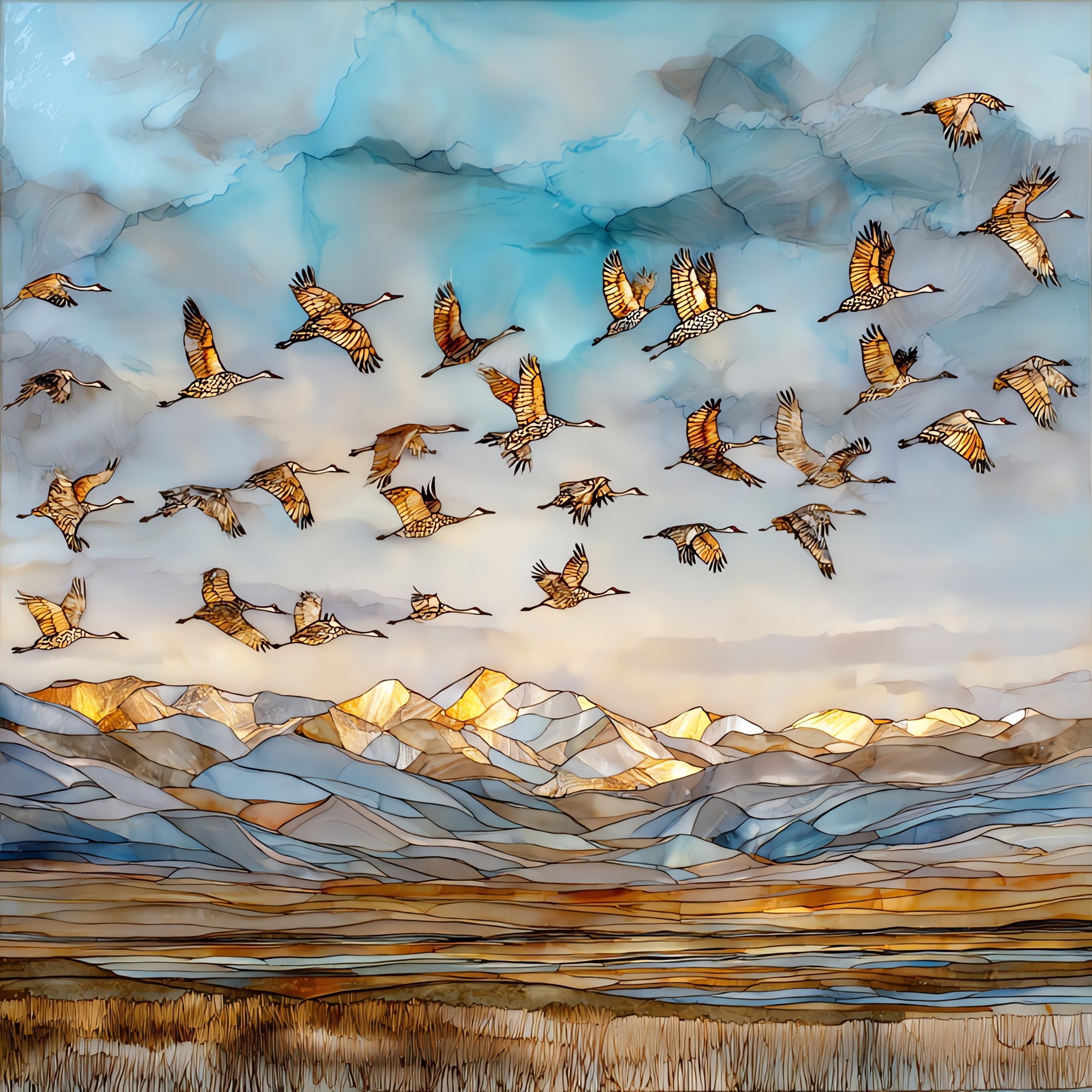
Sandhill cranes Monte Vista San Luis Valley Ceramic Art Tile
— — the morning the field lifts into the air.
Not only on a wall.
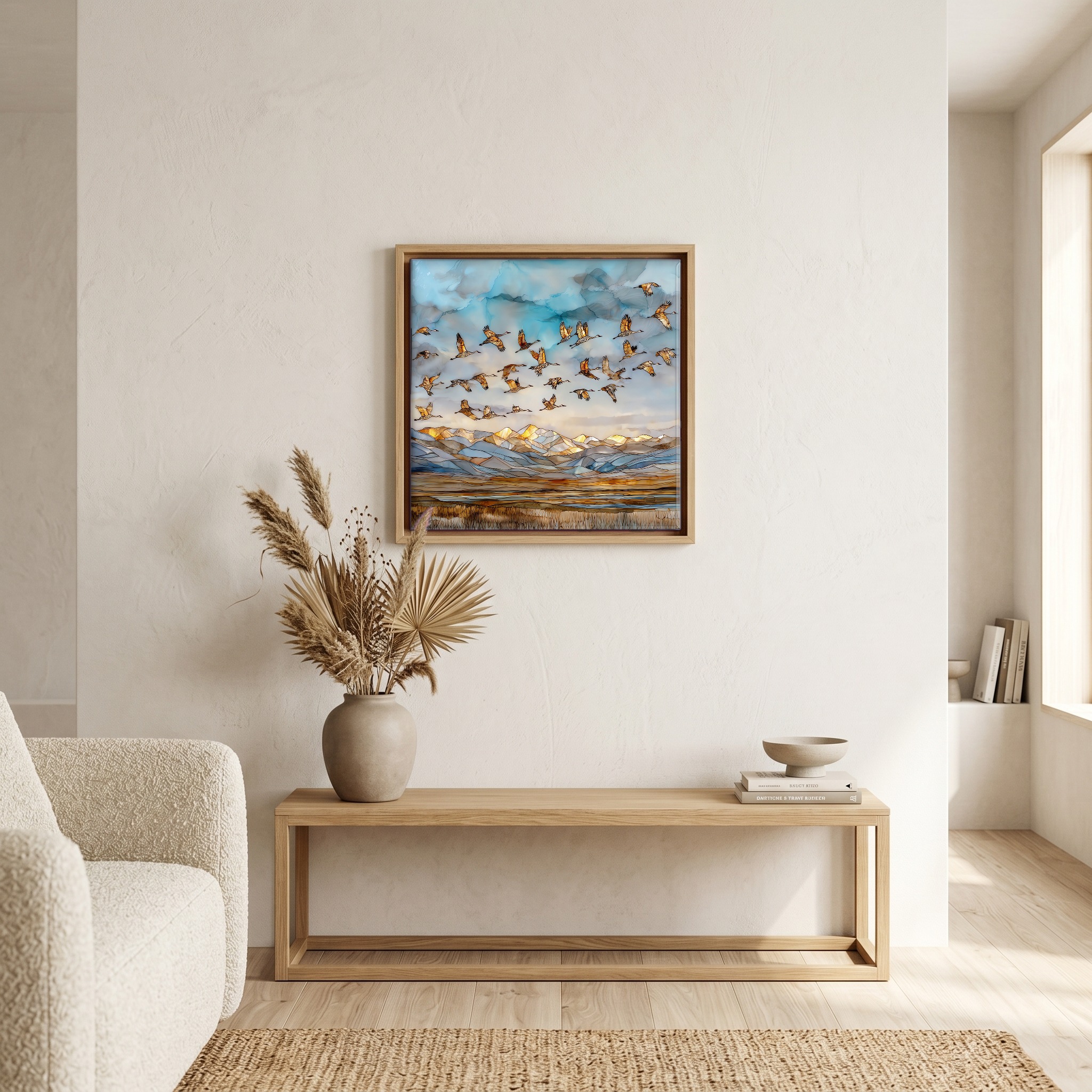
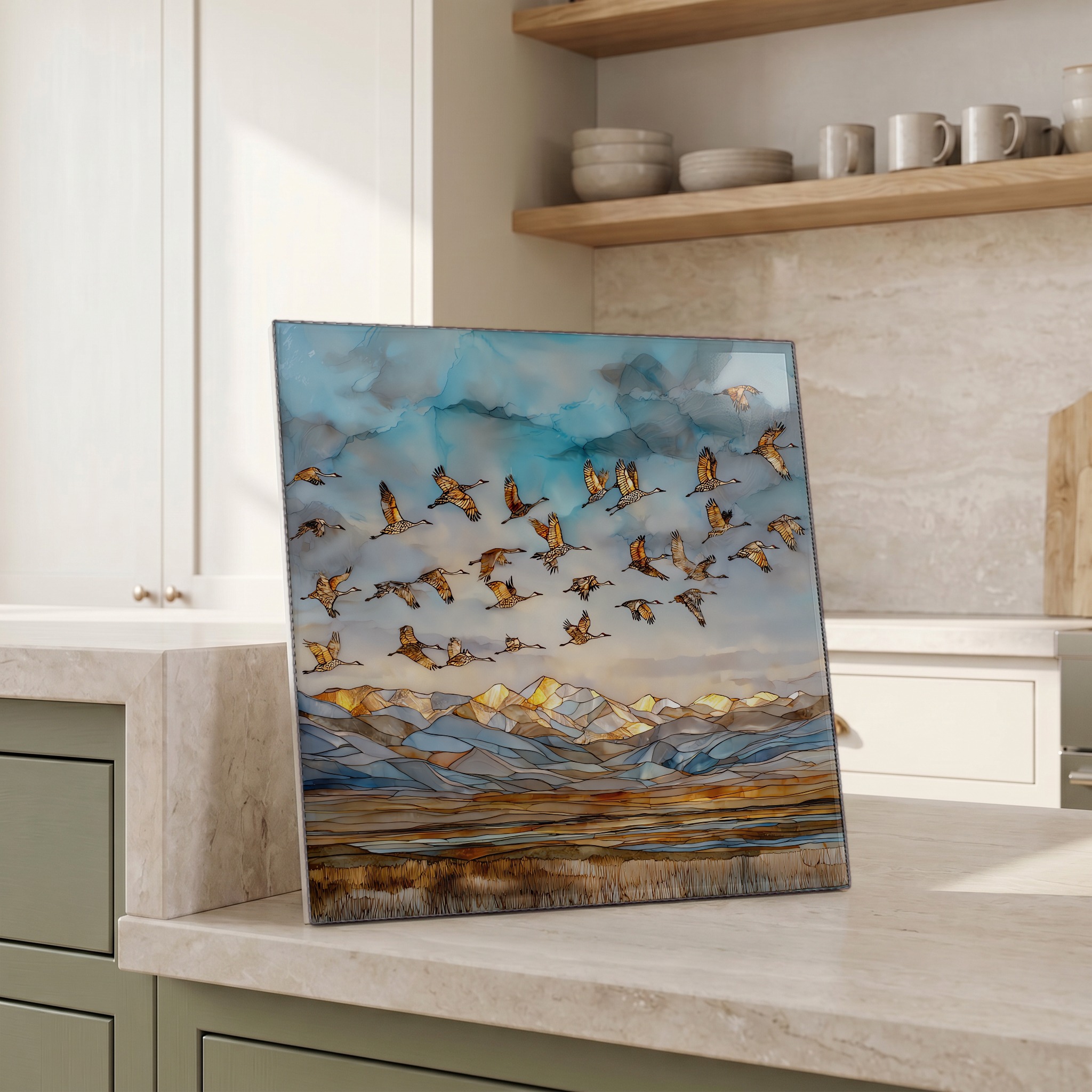
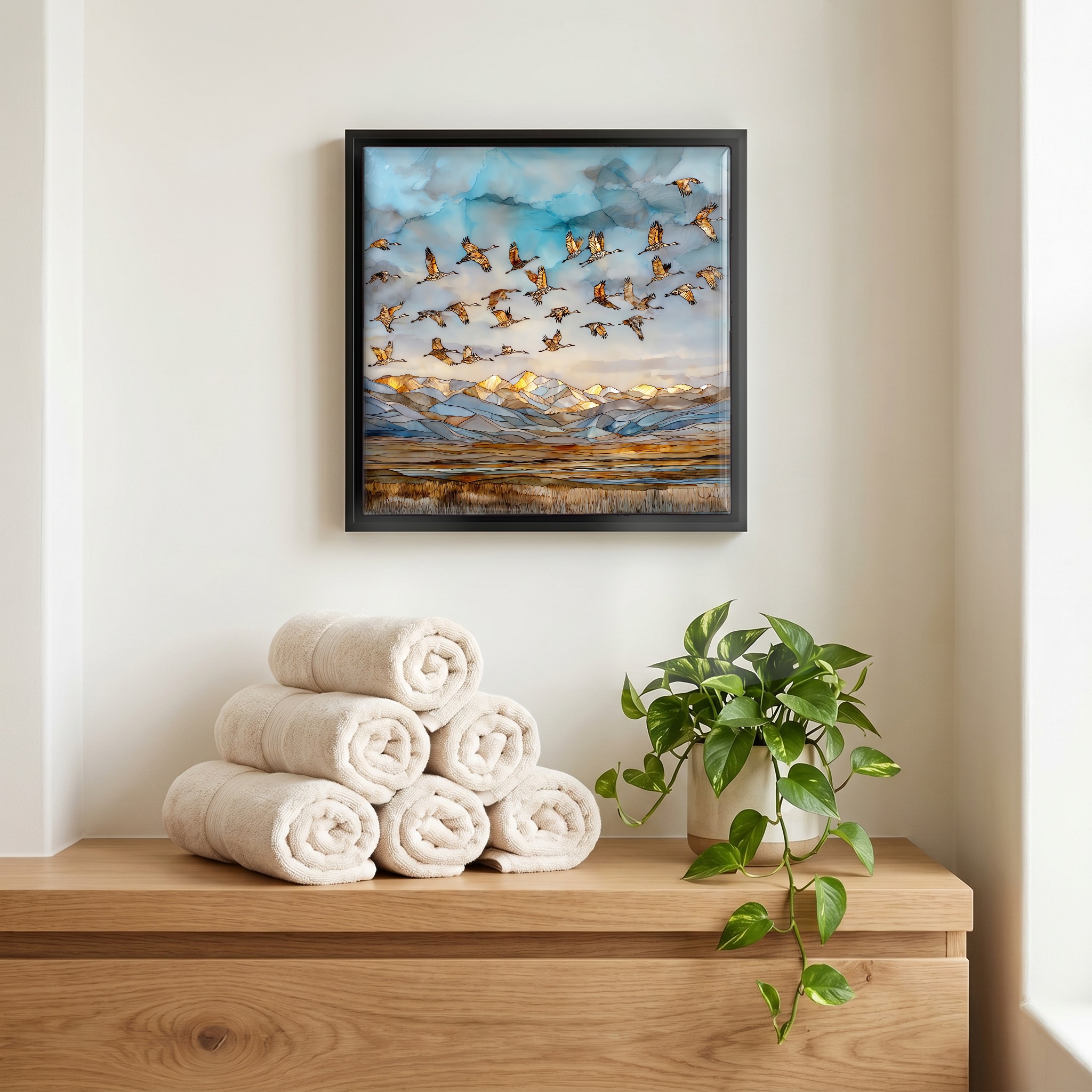

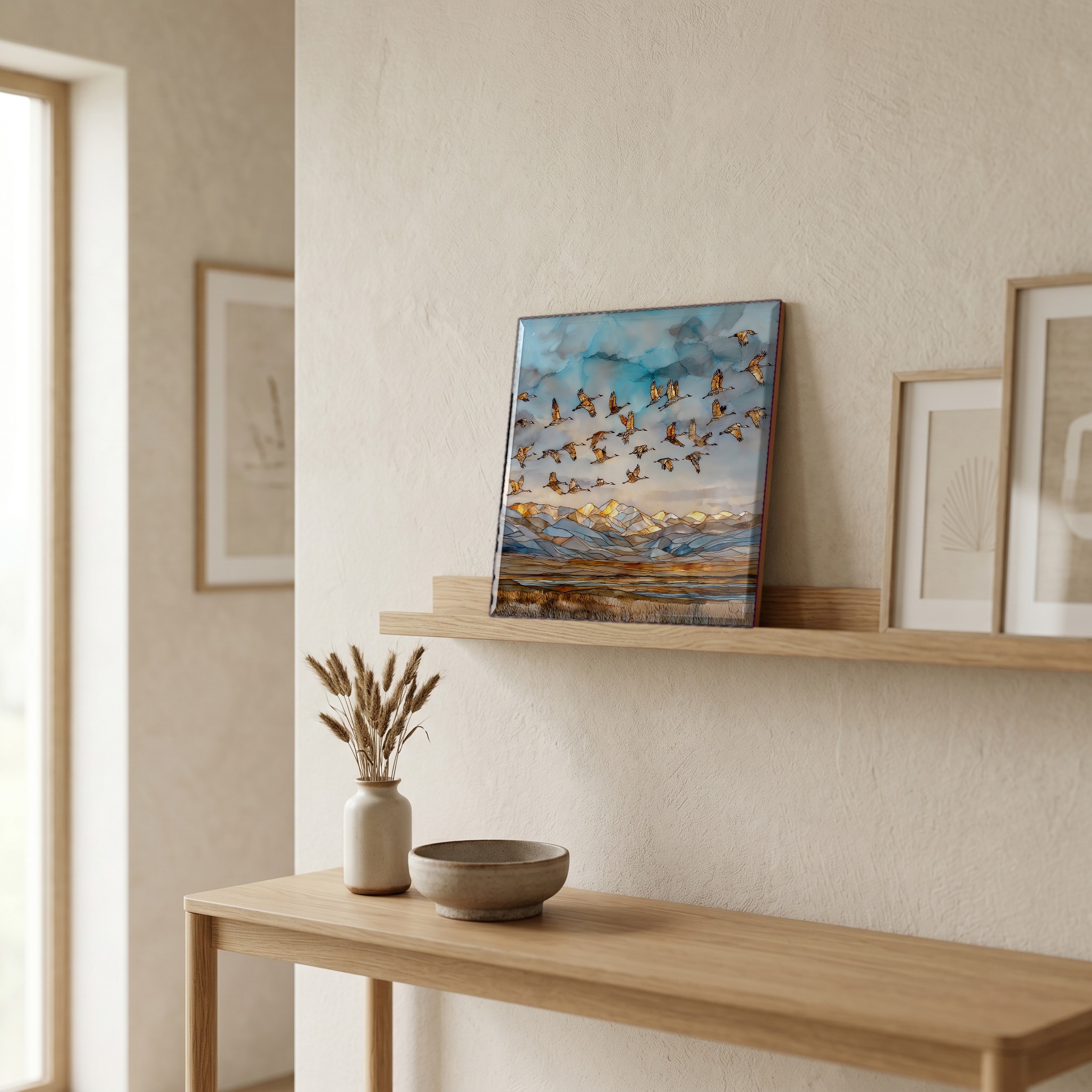
“A high valley in southern Colorado, ringed by the Sangre de Cristo Mountains and the San Juans, the valley floor held above seven thousand feet. Around twenty thousand sandhill cranes stage here every spring on the way from wintering grounds in New Mexico to their nesting country in the northern Rockies. They feed in the leftover barley fields through the day and roost in shallow flooded ponds at night. The sound carries for a long way before the light does. People drive in for the Crane Festival in March, but the cranes are here for weeks on either side of it.
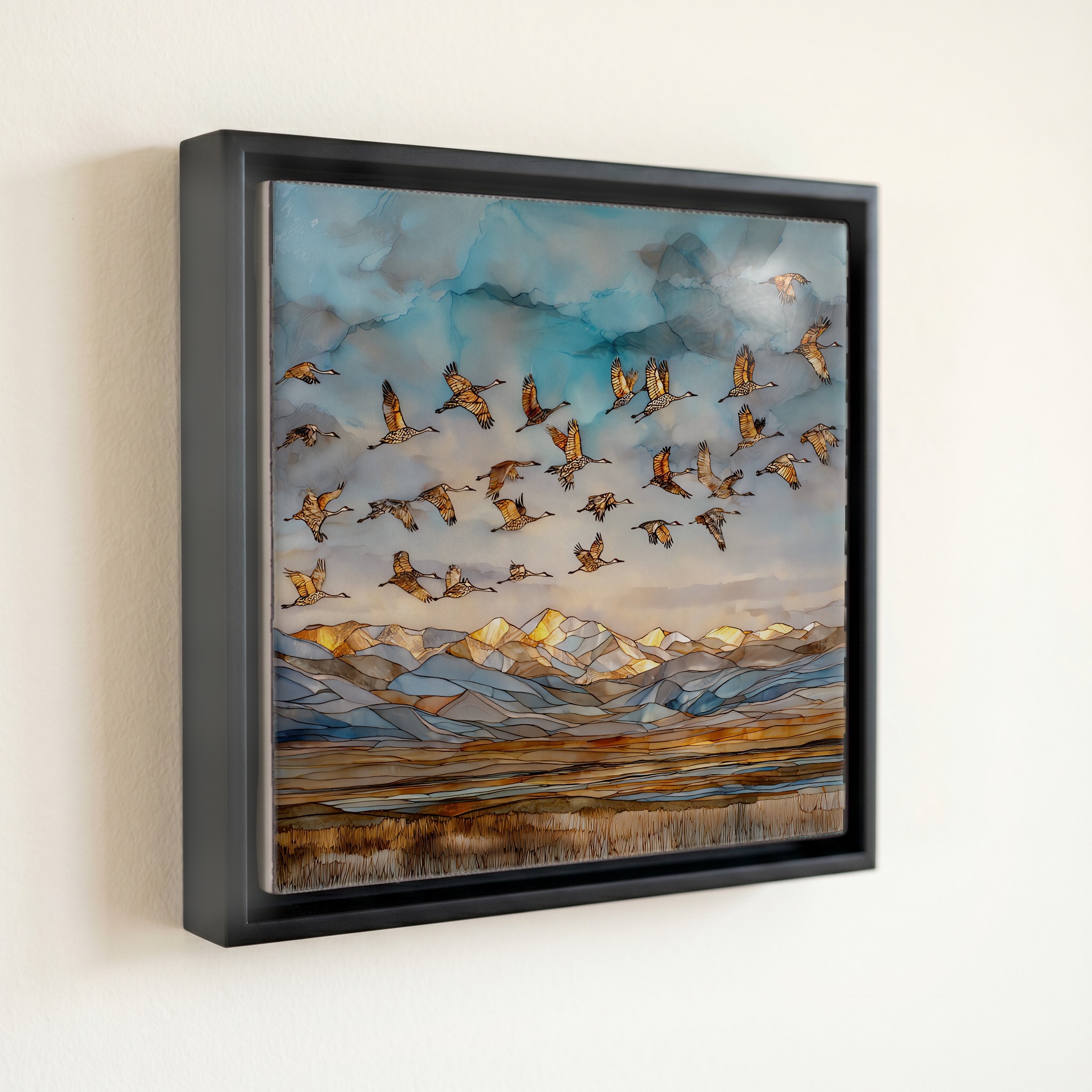
Sandhill cranes Monte Vista San Luis Valley Ceramic Art Tile, on ceramic.
Each tile is finished by hand in our Knoxville studio. Artwork is slowly infused into the ceramic surface under high heat and pressure, and rests beneath a thin glossy finish. The colour lives in the surface, not on top of it.
Pick any four 4-inch tiles — National Parks you've been to, a Smokies set, the four seasons of one place. $ for a set of , cork-backed, ready to live on the table.

Each tile ships in a kraft box, tied with cream ribbon, with a handwritten note from the studio if you'd like to add one.
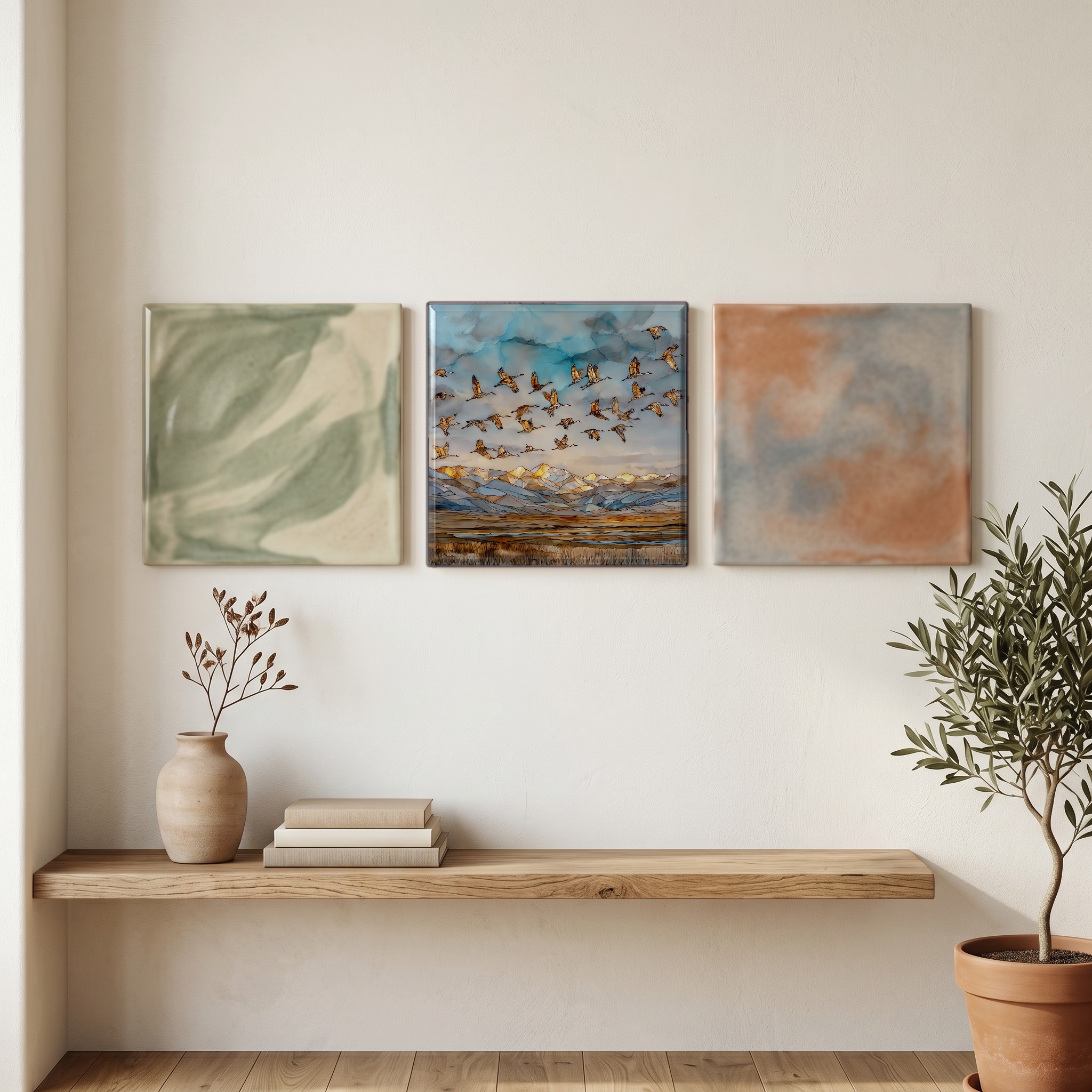
Three or five different vistas, hung together — a chapter of places you've been, or want to go.
The place, in three passes.
Monte Vista National Wildlife Refuge sits on the floor of the San Luis Valley, six miles south of the town of Monte Vista in Rio Grande County, Colorado. The valley is one of the largest alpine valleys in North America, an internal-drainage basin held above 7,500 feet between the Sangre de Cristo Mountains to the east and the San Juan Mountains to the west. The refuge was established in 1953 and now manages about 14,800 acres of flooded wet meadows, shallow ponds, and grain fields built specifically to feed migrating waterfowl and cranes. The nearest paved approach is U.S. Highway 285, which runs the length of the valley.
The spring migration peaks in March, when the Rocky Mountain population of greater sandhill cranes, about 20,000 birds in most years, stages on the valley floor for several weeks before continuing north to nesting grounds in Idaho, Wyoming, and Montana. A second, smaller wave returns in October. Outside those windows the refuge is quiet country: ducks, geese, the occasional bald eagle in winter. The Monte Vista Crane Festival, held annually in March since the 1980s, marks the visible centre of the season. The birds themselves arrive in February and the last typically leave by early April.
The refuge is open daily from sunrise to sunset and entry is free. A self-guided auto tour loops about three miles through the wet-meadow units where most of the cranes feed and roost, with pull-offs positioned for the dawn and dusk fly-ins between the roosting ponds and the surrounding barley fields. Bring a long lens and stay in the vehicle. The cranes habituate to cars but flush from people on foot. The Monte Vista Crane Festival, run from the town six miles north, adds guided tours, lectures, and field trips across a weekend in March.