Wender·Vista
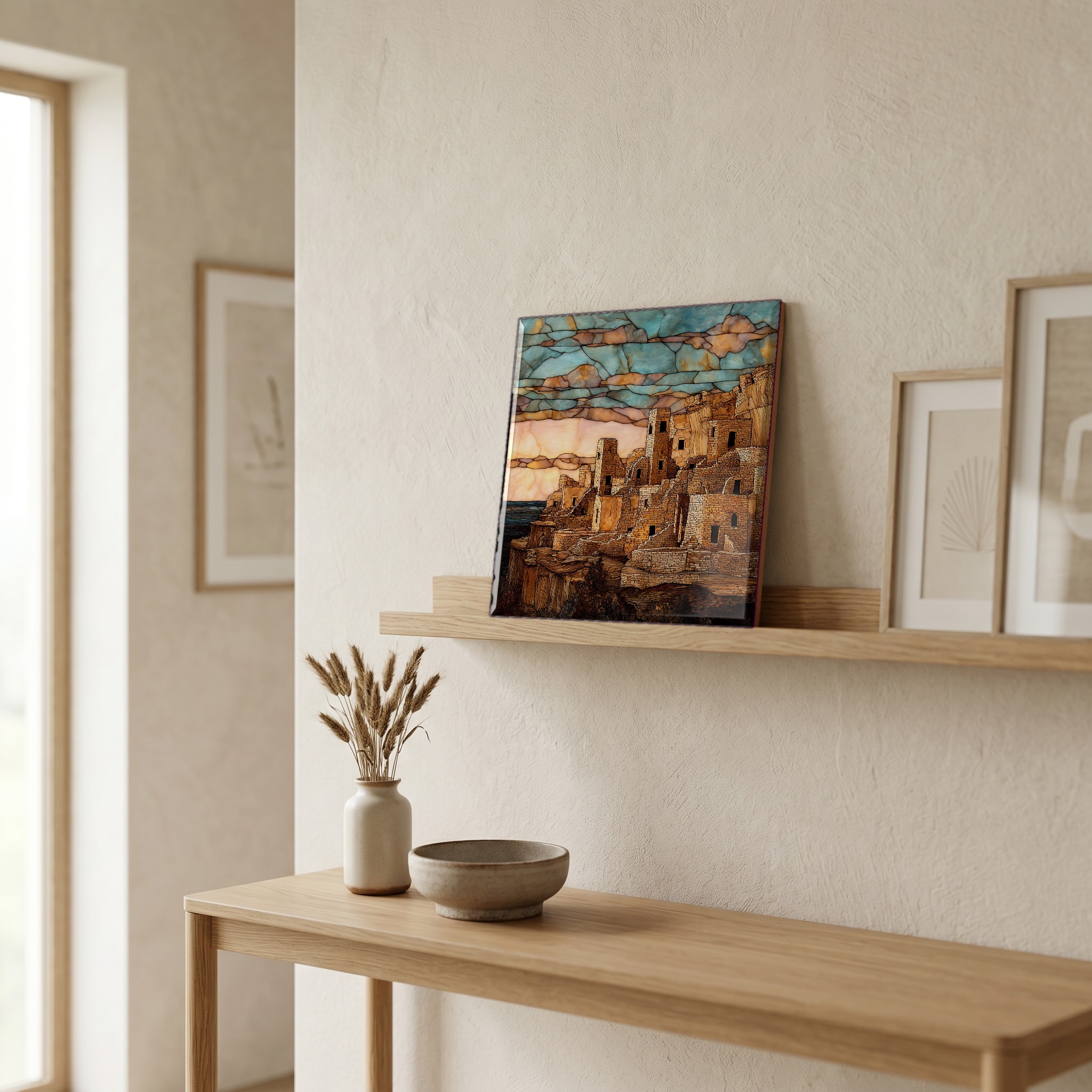
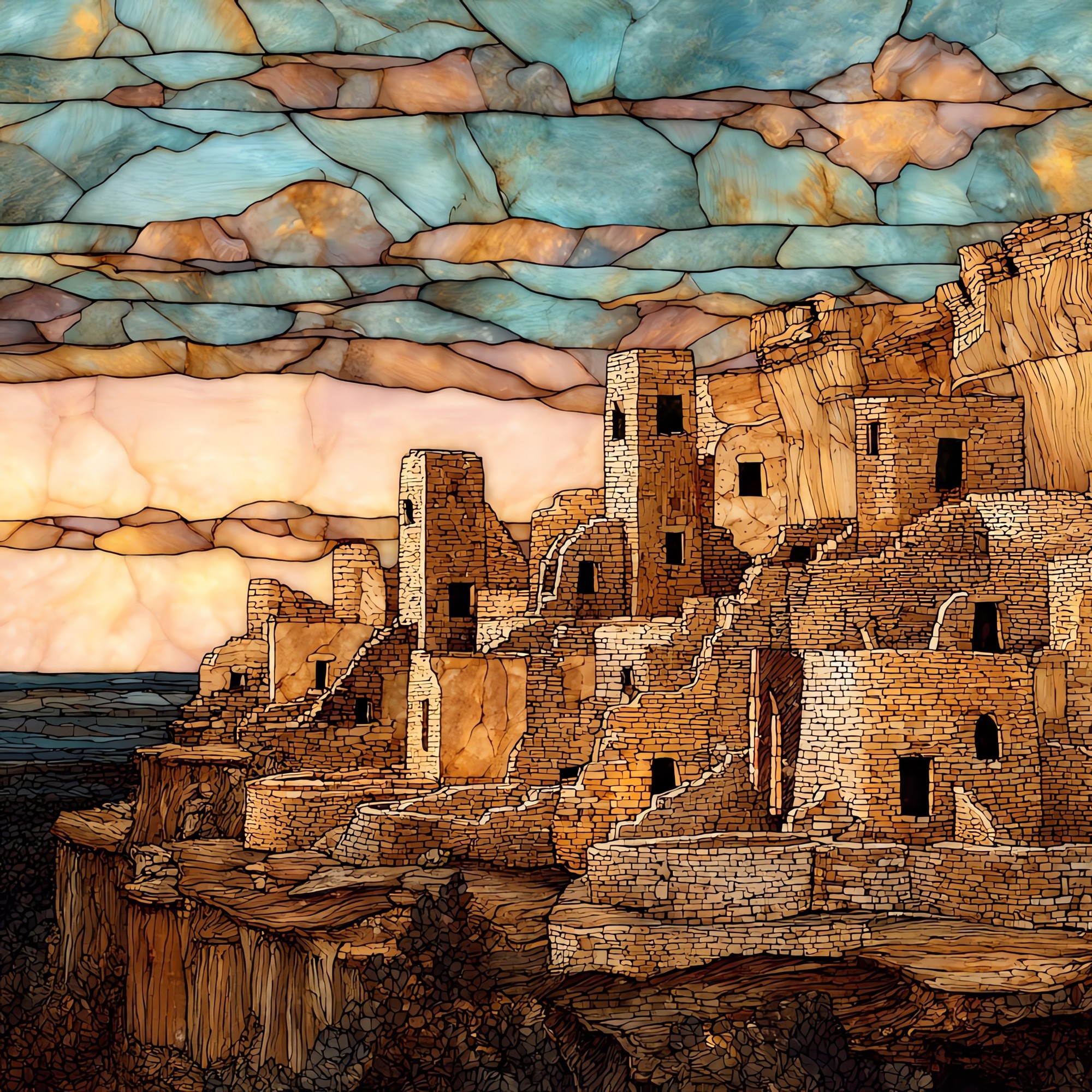
Sand Canyon Pueblo Four Corners Ceramic Art Tile
shown on ceramic, 12-inch tileColorado · United States
in the canyons west of Mesa Verde

Sand Canyon Pueblo Four Corners Ceramic Art Tile

the village that left, the spring that stayed.

Where it lives

Not only on a wall.

A small tile on the nightstand catching the morning. A larger one above the fire. Yours, wherever you spend the slow hours.
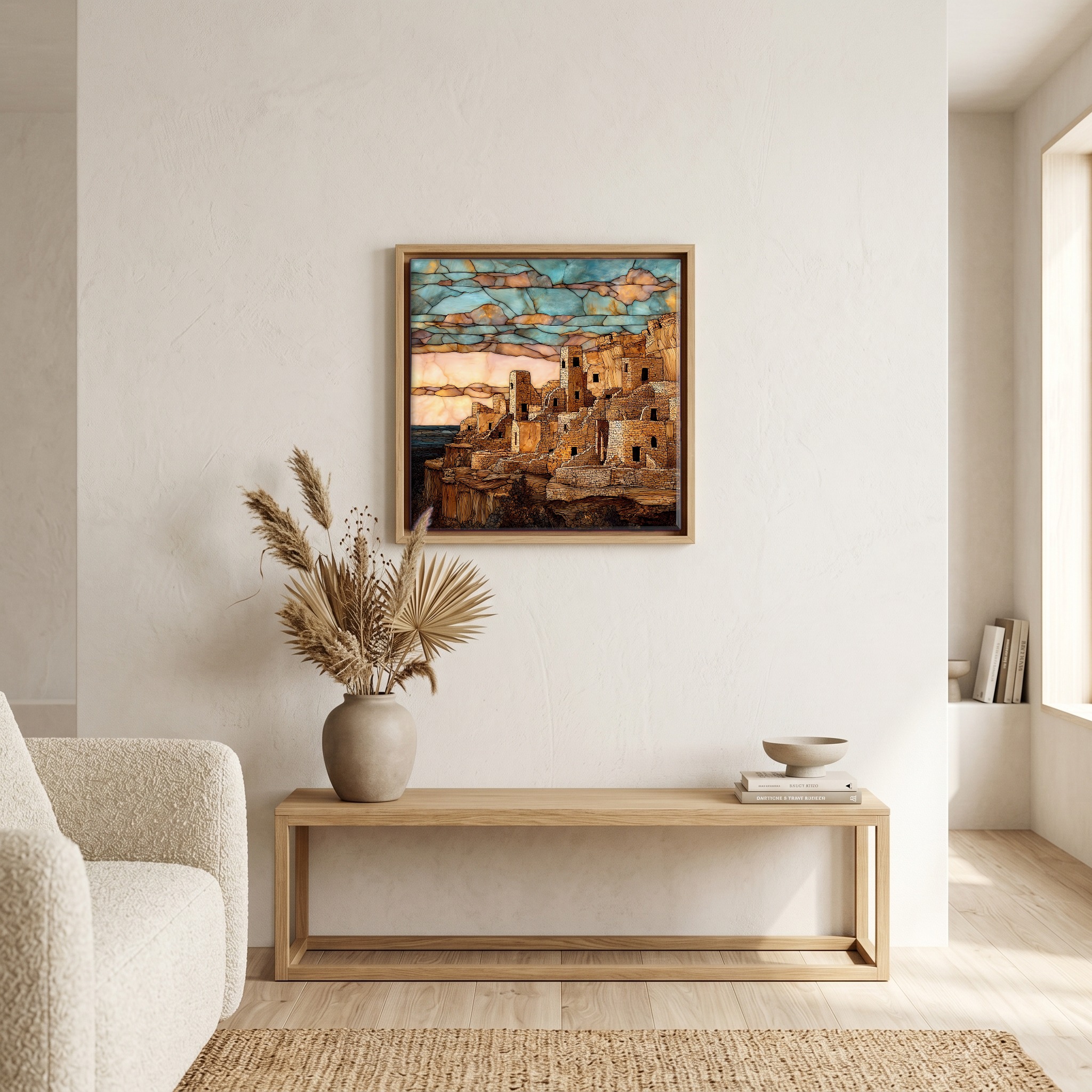
Above the bench, in a warm oak surround.
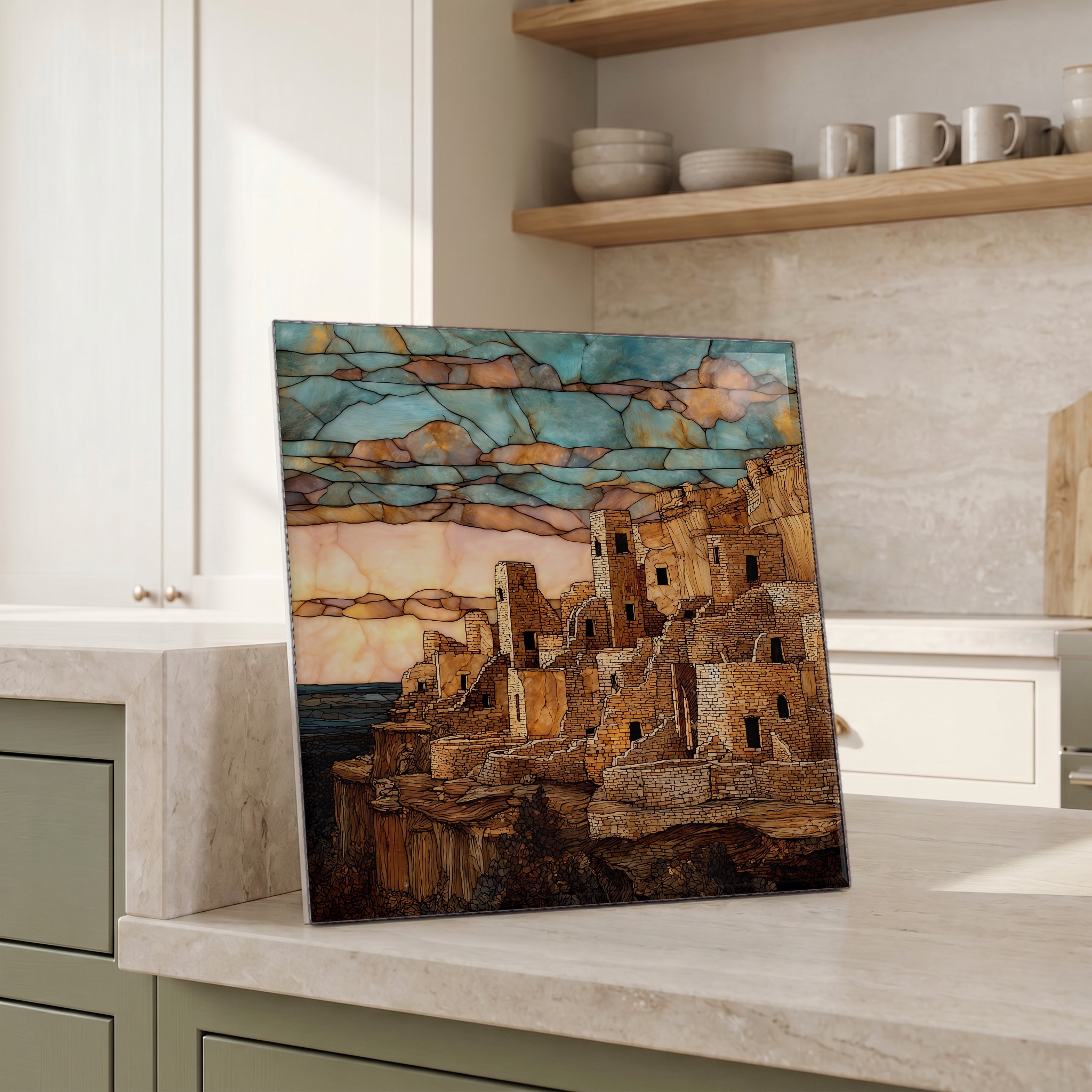
Beside the kettle, propped on the counter.
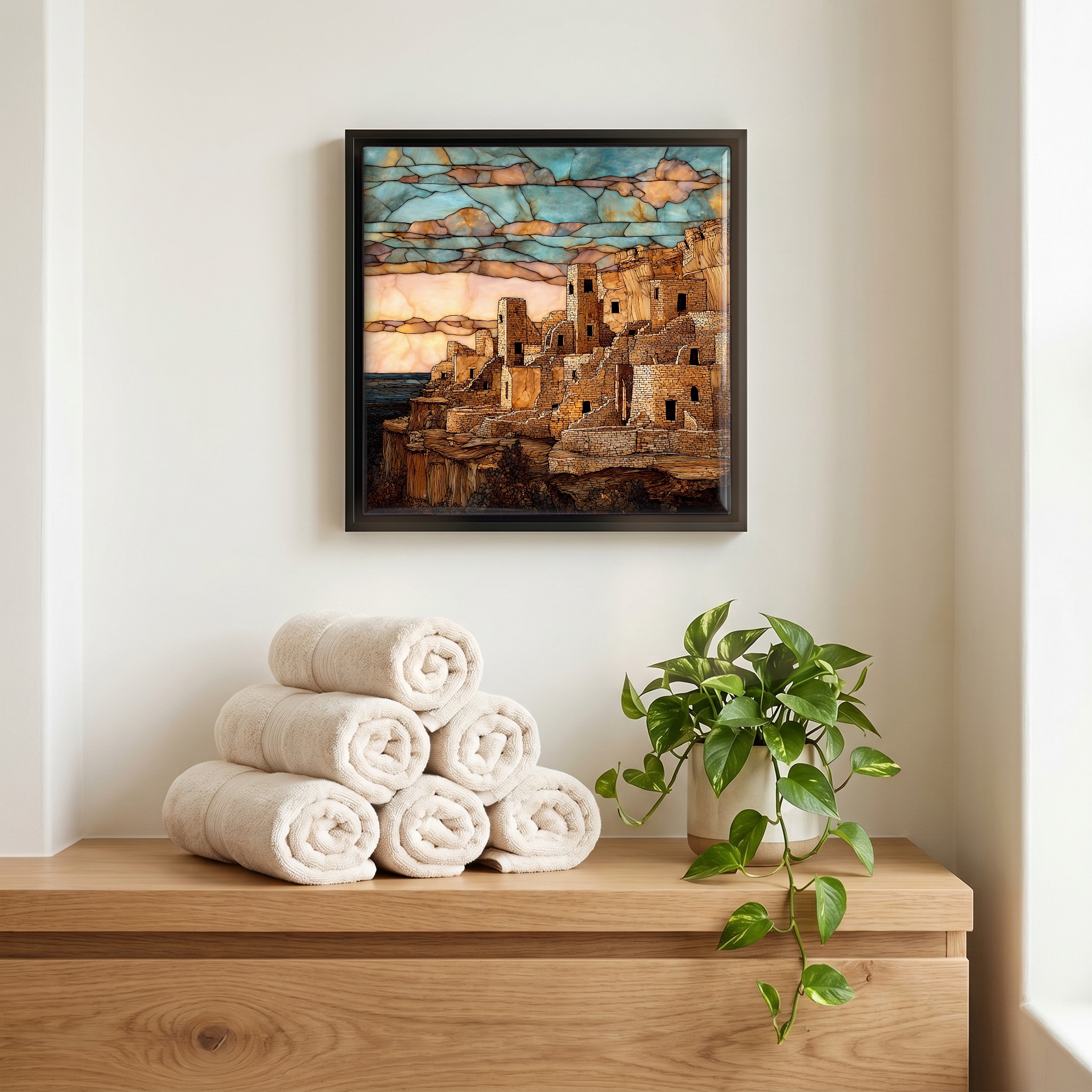
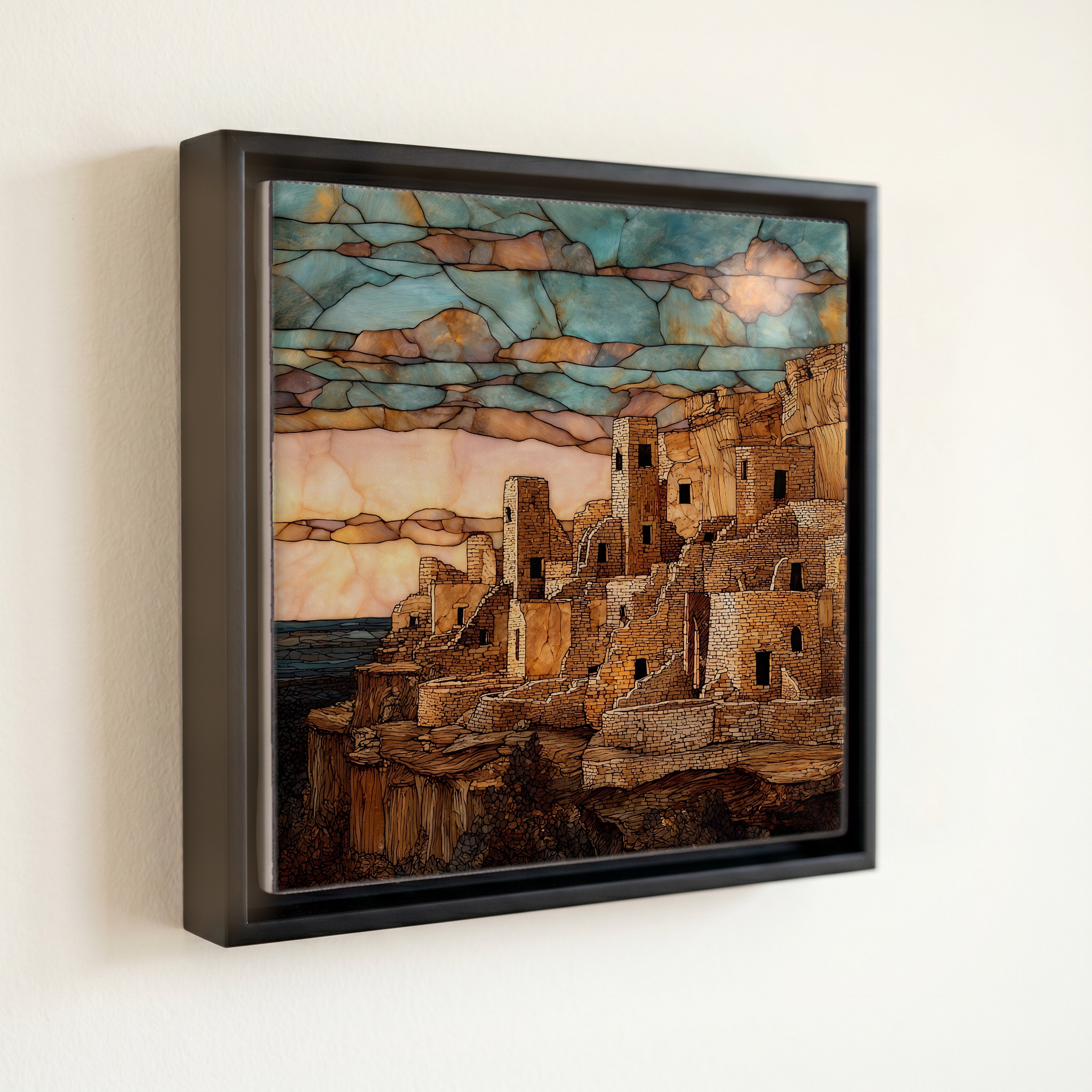
Above the linens, in a slim black surround.
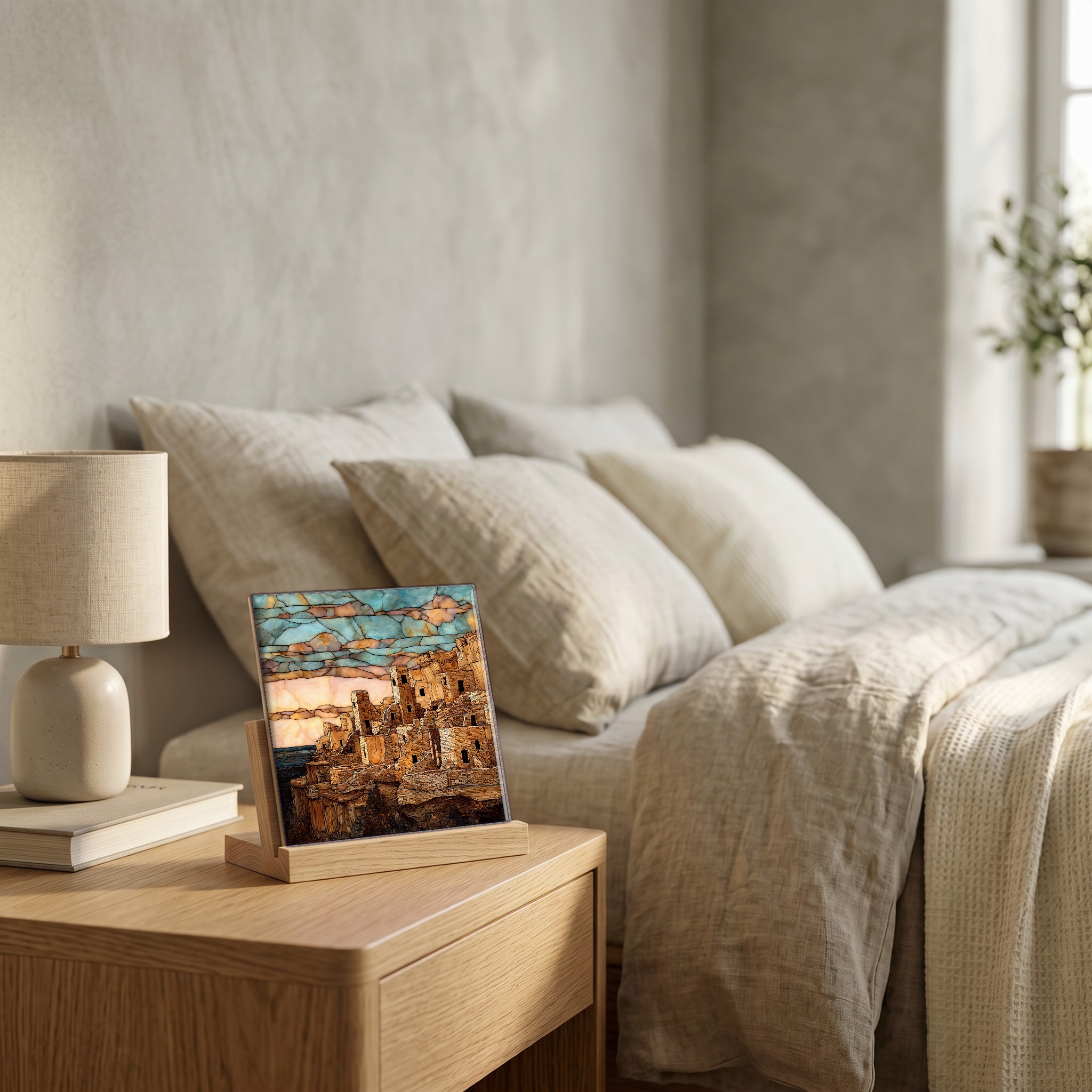
On the nightstand, on a light oak stand.
On a picture ledge, where the light comes in.
a note from the studio

On the rim of a horseshoe canyon west of Cortez, where the spring at the canyon head once held a village of more than four hundred rooms. The people built around the water, and around 1280 they went south to the Rio Grande valley, to the Hopi mesas, to the villages still there today. The walls have come down. The kivas are filled with their own collapse. The spring still flows. From the trail above, the ground holds the shape of what was there. The wind moves through the sage.
from the studio
shown in a slim black floating frame · 6 × 6 in
— bring it home

Sand Canyon Pueblo Four Corners Ceramic Art Tile, on ceramic.

Each tile is finished by hand in our Knoxville studio. Artwork is slowly infused into the ceramic surface under high heat and pressure, and rests beneath a thin glossy finish. The colour lives in the surface, not on top of it.

What kind of piece?
One tile — square or rectangle.
How big?
the popular one — counter, shelf, nightstand
6 × 6 in · 15 cm · 1.6 lb
Surface finish
A clear glossy finish — the artwork reads as if under resin. Ideal for show-pieces and framed wall art.
How it sits
A hidden cleat — sits ¼″ proud of the wall.
$58
Hand-finished and shipped from our studio at the foot of the Smokies. On your wall in about ten days.
size
6 × 6 in
15 cm
weighs
1.6 lb
solid in the hand
surface
ceramic, hand-finished
art rests beneath a thin glossy finish
from
Knoxville, TN
our family studio, at the foot of the Smokies
— start a Coaster Set

Pick any four 4-inch tiles — National Parks you've been to, a Smokies set, the four seasons of one place. $ for a set of , cork-backed, ready to live on the table.
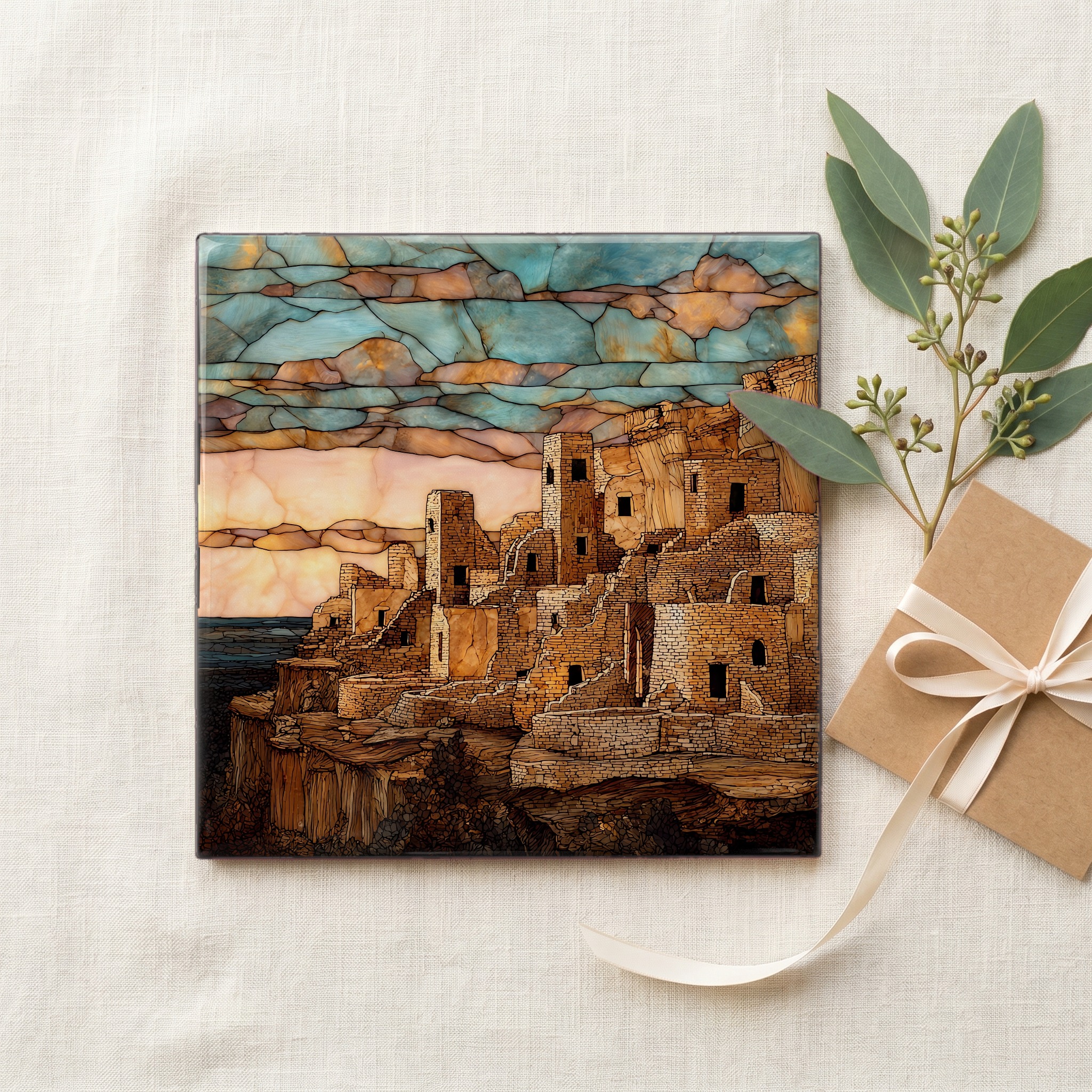
comes gift-ready
comes gift-ready

Each tile ships in a kraft box, tied with cream ribbon, with a handwritten note from the studio if you'd like to add one.
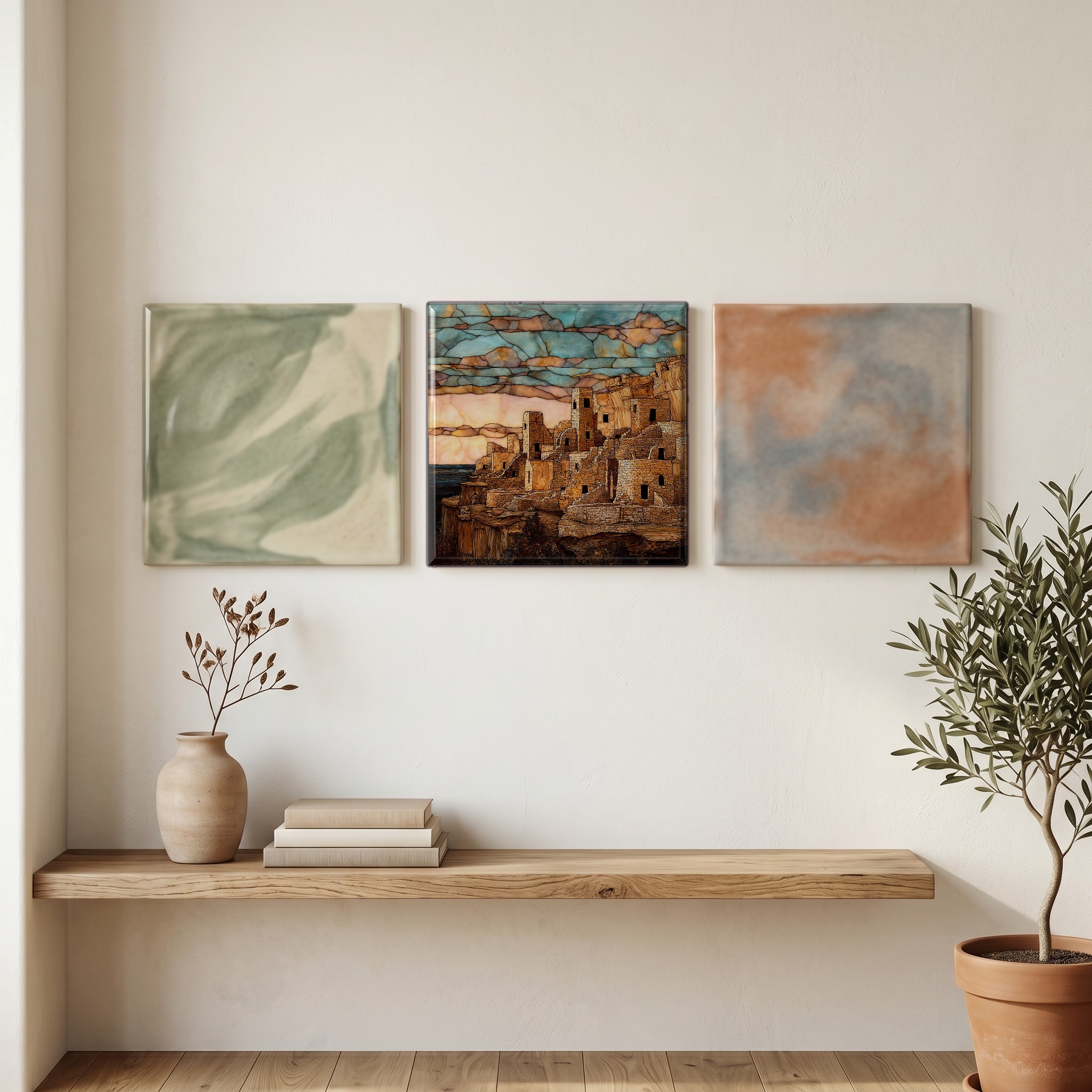
or build a grouping
or build a grouping

Three or five different vistas, hung together — a chapter of places you've been, or want to go.

about Sand Canyon Pueblo Four Corners Ceramic Art Tile

The place, in three passes.

A little of what's known, in case you fall down the rabbit hole — or want to go see it yourself.
the place

Sand Canyon Pueblo sits on the rim of a horseshoe-shaped canyon in southwestern Colorado, about twelve miles west of Cortez and inside Canyons of the Ancients National Monument, the most archaeologically dense piece of public land in the United States. The pueblo wraps the head of the canyon at roughly 6,500 feet, where a spring still flows. Built and occupied in the mid-to-late 1200s by Ancestral Puebloan farmers, the people whose descendants now live at the Hopi mesas, Zuni, and the Rio Grande pueblos, the village held more than four hundred rooms, around ninety kivas, fourteen towers, and a great kiva. The Bureau of Land Management administers the site; the Crow Canyon Archaeological Center, just up the road in Cortez, led the excavation.

the stone

The walls are dry-laid sandstone, coursed blocks of the local Dakota and Burro Canyon formations, shaped with stone tools and set with adobe mortar. The masonry at Sand Canyon belongs to the McElmo phase, the late thirteenth-century style of the central Mesa Verde region: tight-coursed, two-stone-wide walls with finished interior faces. After the Crow Canyon Archaeological Center's excavation between 1983 and 1993, the trenches were backfilled to protect what remains, and the canyon head now holds the footprint of the place above ground, room blocks against the cliff, kivas in the middle, towers at the edges, and the great kiva at the lowest point above the spring. Most walls stand only a course or two above the rubble of their own collapse.

the silence

By around 1280, the village was empty. The whole central Mesa Verde region lost its population within a single generation, with tens of thousands of people walking south to the Rio Grande valley and southwest to the Hopi mesas, where their descendants still live. Tree-ring records from the period show a long drought, but archaeologists now think the departure was as much social and ceremonial as climatic, part of a broader reorganisation of the Pueblo world. Walking the Sand Canyon Trail today, a six-mile loop maintained by the Bureau of Land Management, the loudest thing is the wind moving through pinyon and juniper. The canyon held a village of close to a thousand people and the walls are mostly down. The spring is still there.

where
United States · Montezuma County, Colorado
within
Canyons of the Ancients National Monument
elevation
1,981 m · 6,500 ft
position
37.3625° N · 108.8231° W
the neighborhood

What's nearby.

A handful of named places within an hour's walk or short drive. Some we've already painted; some we will.
8 km W
Castle Rock Pueblo
Ancestral Puebloan village
5 km NE
Goodman Point Pueblo
Ancestral Puebloan village
30 km W
Hovenweep National Monument
national monument
30 km SE
Mesa Verde National Park
national park
20 km E
Cortez, Colorado
town
35 km N
Lowry Pueblo
Ancestral Puebloan village
N
Sand Canyon Pueblo Four Corners Ceramic Art Tile
Castle Rock Pueblo
Goodman Point Pueblo
Hovenweep National Monument
Mesa Verde National Park
Cortez, Colorado
Lowry Pueblo
common questions

What people ask.

A few questions we get about Sand Canyon Pueblo Four Corners Ceramic Art Tile — and about bringing the piece home.
about the place

Sand Canyon Pueblo sits on the rim of a horseshoe-shaped canyon in southwestern Colorado, about twelve miles west of Cortez, inside Canyons of the Ancients National Monument. The site is reached by the Sand Canyon Trail from the trailhead off County Road G.

The village was built and occupied in the mid-to-late 1200s. Tree-ring dates place construction roughly between 1250 and 1280, with the population leaving the canyon by around 1280, part of the broader Pueblo departure from the Four Corners region.

Sand Canyon Pueblo held more than four hundred rooms, around ninety kivas, fourteen towers, and a great kiva, and likely housed several hundred people at peak. It is among the largest thirteenth-century pueblos in the central Mesa Verde region, comparable in scale to Yellow Jacket Pueblo and Goodman Point.

Ancestral Puebloan farmers built and occupied the village. Their descendants now live at the Hopi mesas in Arizona, Zuni in New Mexico, and the Rio Grande pueblos including Acoma and Taos. Modern Pueblo communities consider these canyons part of their ancestral homeland.

The central Mesa Verde region was depopulated within a single generation around 1280. Tree-ring records show a long drought, and archaeologists now think the departure was as much social and ceremonial as climatic, part of a broader reorganisation of the Pueblo world. The descendants are still in the Southwest today.

Yes. The site is reached by the Sand Canyon Trail in Canyons of the Ancients National Monument, a six-mile loop maintained by the Bureau of Land Management. The walls are largely backfilled to protect what remains; the trail is open in every season with no fee.

The Crow Canyon Archaeological Center, headquartered in Cortez, conducted excavation and research at the site between 1983 and 1993, one of the longest sustained digs at any Ancestral Puebloan village in the region. Their reports are the basis for the current understanding of the pueblo.

about the piece in your home

It has been a meaningful gift for customers with ties to this corner of the country: archaeologists, river guides, hikers of the Sand Canyon Trail, people who grew up in Cortez or Durango. A Small or Medium with a handwritten note from the studio carries well.

The piece reads well in Southwest Modern and Mountain-Modern rooms, against warm plaster walls or natural wood. The Voynich palette (stained-glass blues and ochres over an alcohol-ink ground) also lifts Earth-Tone Minimalist or Jewel-Tone Maximalist interiors without competing.

The current Southwest Modern direction, with earth-tone plaster walls, leather and linen furniture, and a single anchoring piece of art, is built around exactly this kind of placement. The tile reads as both contemporary art and rooted to place, which is what the trend asks for.

Above a standard sofa or eight-foot console, a single Large is the entry, a 4-tile Mural fills the wall more confidently, and a 9-tile Mural becomes the centre of the room. For a narrow console under a mirror, a Medium or a horizontal pair of Smalls reads cleaner.

Yes. Order the Dura Satin finish for a backsplash, a shower wall, or any kitchen application; it is scratch-resistant and the colour lives in the surface. Matte works the same way without the sheen. The Glossy finish is best kept to dry walls.

Microfibre cloth and water. The colour is slowly infused into the ceramic surface under high heat and pressure beneath a thin glossy finish, so household cleaners and ordinary kitchen splash do not affect it. No special sealants or rewaxing.

Yes. Every WenderVista piece is painted by Reid Wender, the curator, in the studio's stained-glass and alcohol-ink visual language, and produced in-house in Knoxville, Tennessee. The work is not licensed and is not sold through resellers.

if this one stayed with you

A few you might also love.

Hand-picked by the eye that found Sorapis. Same air, same kind of quiet.