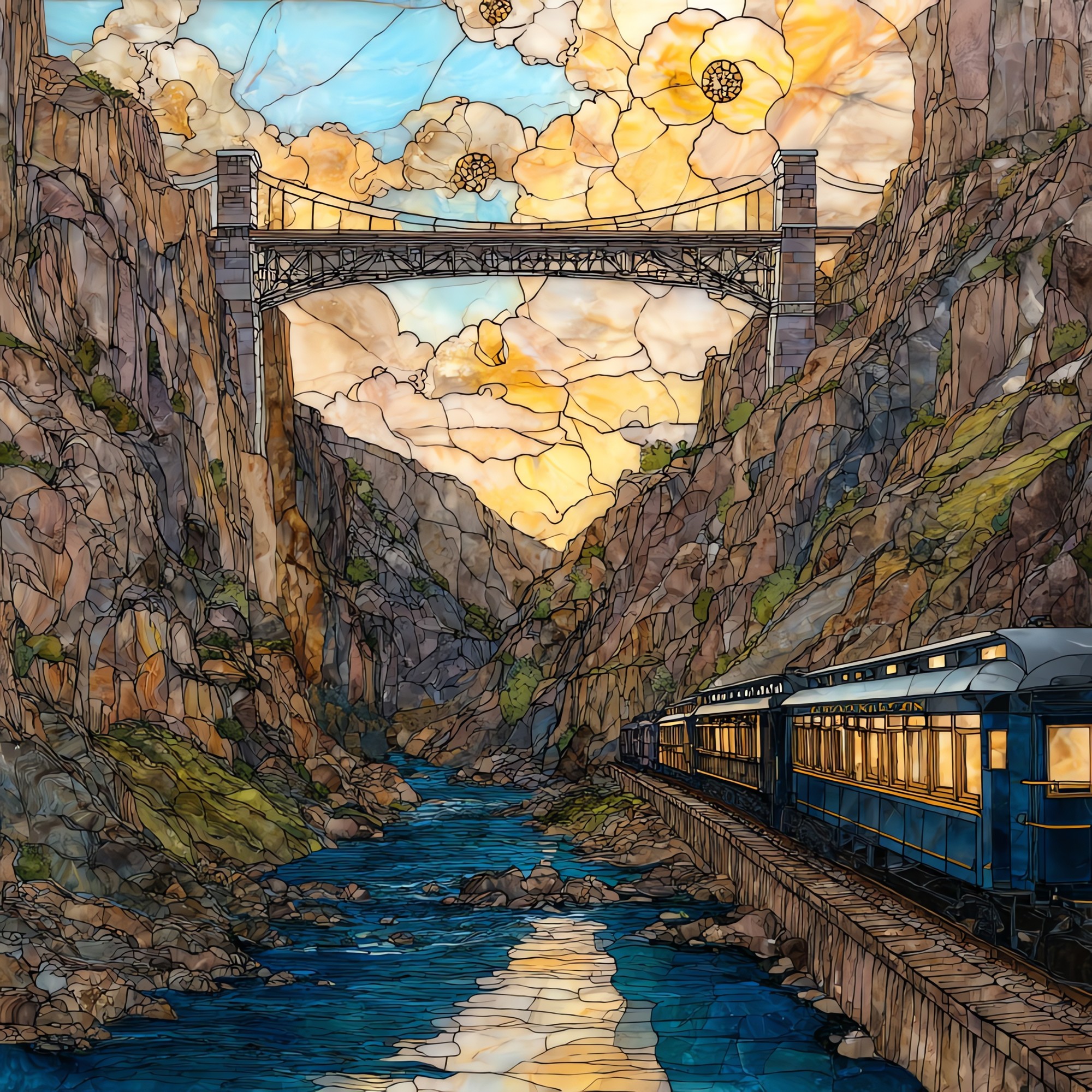
Royal Gorge Route train Ceramic Art Tile
— — the river, the rock, and a strip of sky.
Not only on a wall.
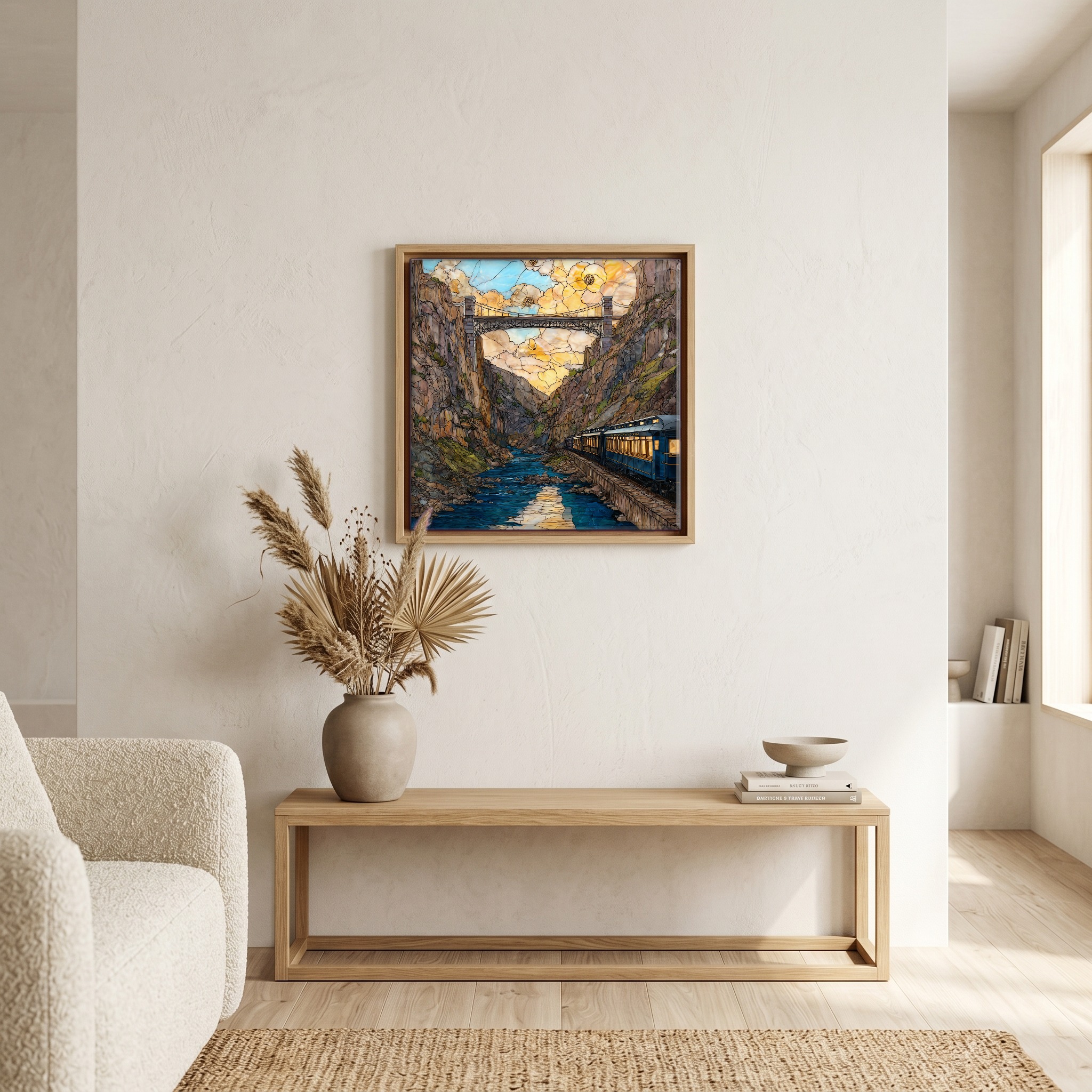
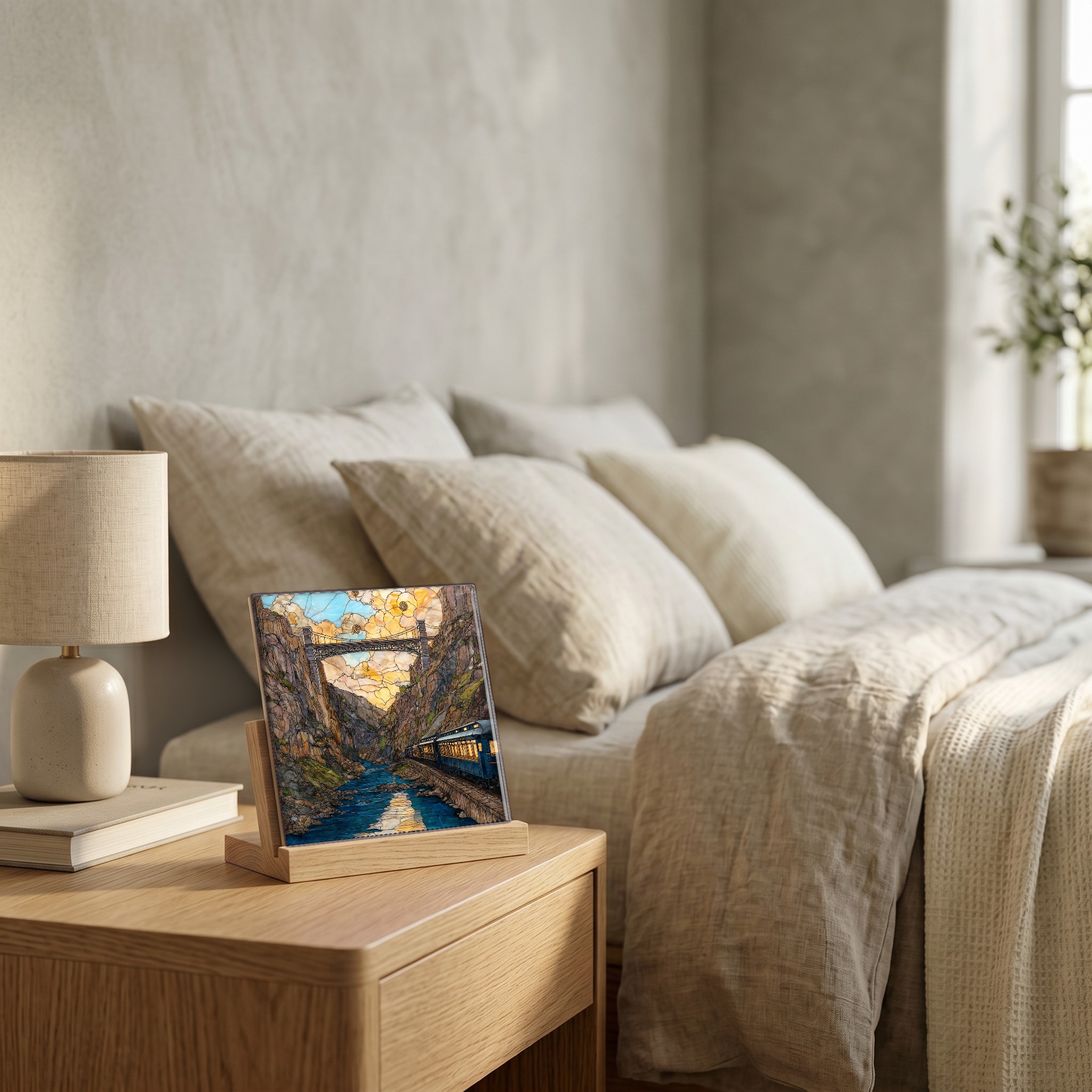
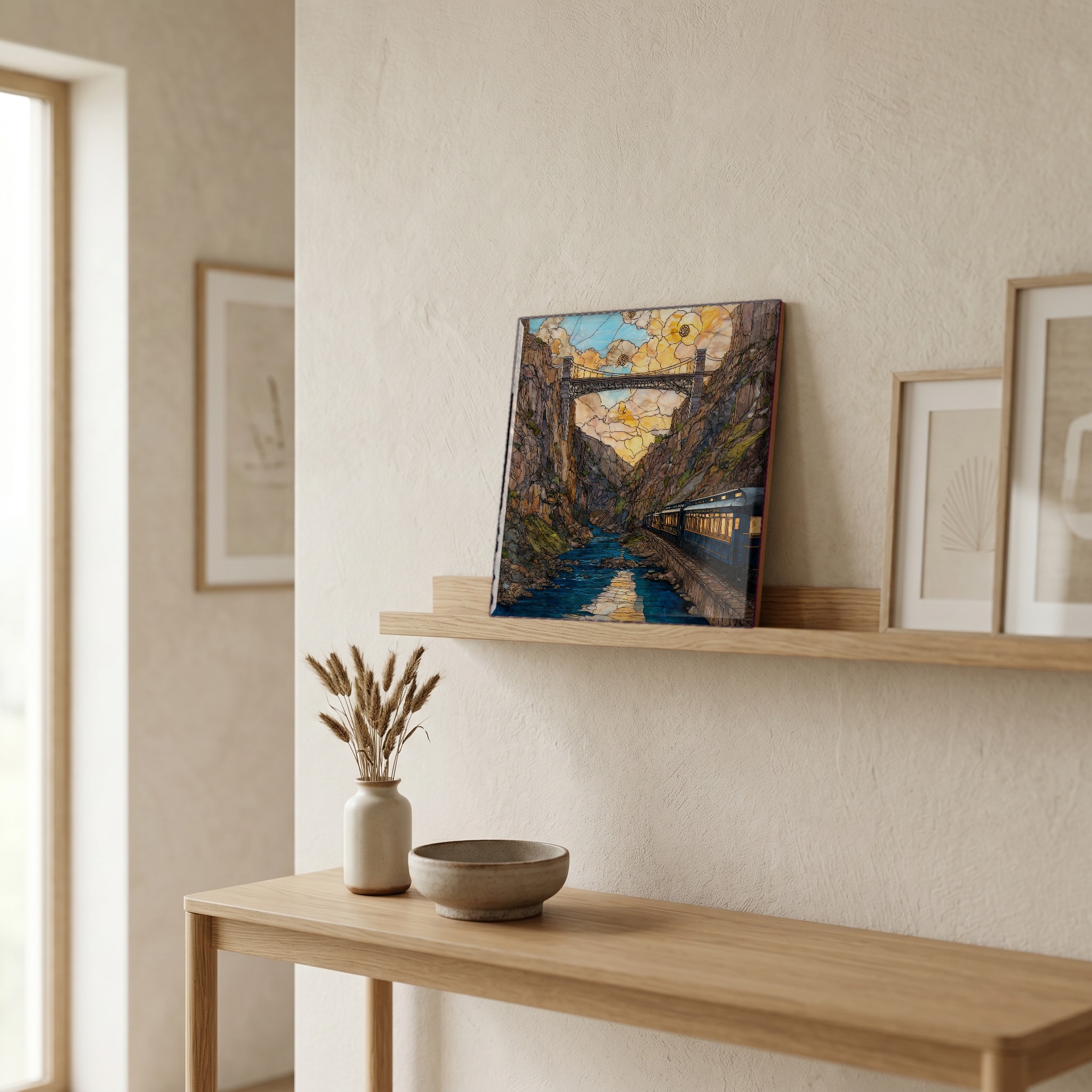
“A heritage train that follows the Arkansas River through the bottom of the Royal Gorge, a slot in the Colorado granite about a thousand feet deep. The rails were laid in 1879 in a fight over a single canyon's worth of right-of-way. One stretch, the Hanging Bridge, still rides on girders bolted into the gorge walls where the rock was too tight for a roadbed. Two hours, twenty-four miles, no shoulders to pull off on. Most of the journey is spent looking up.
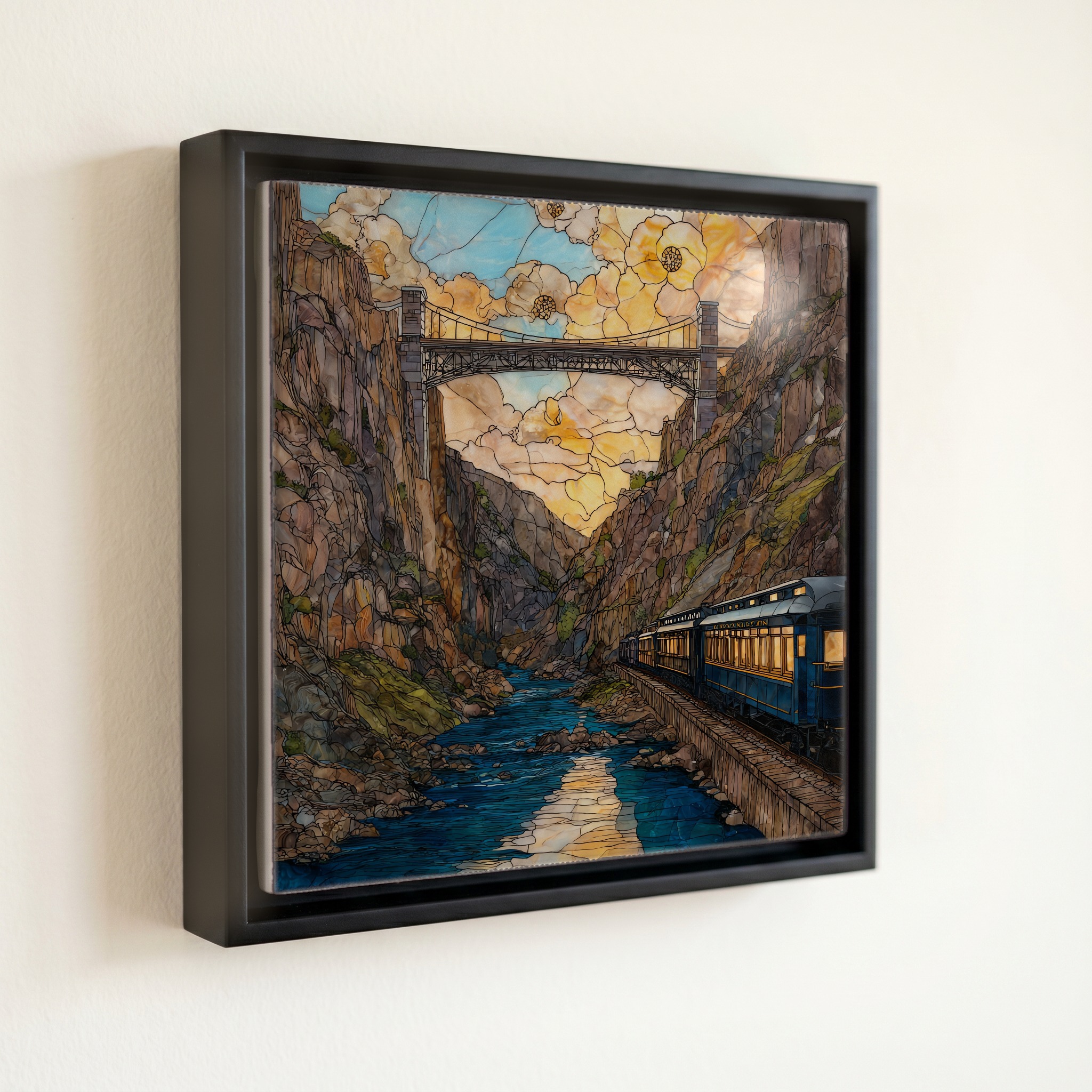
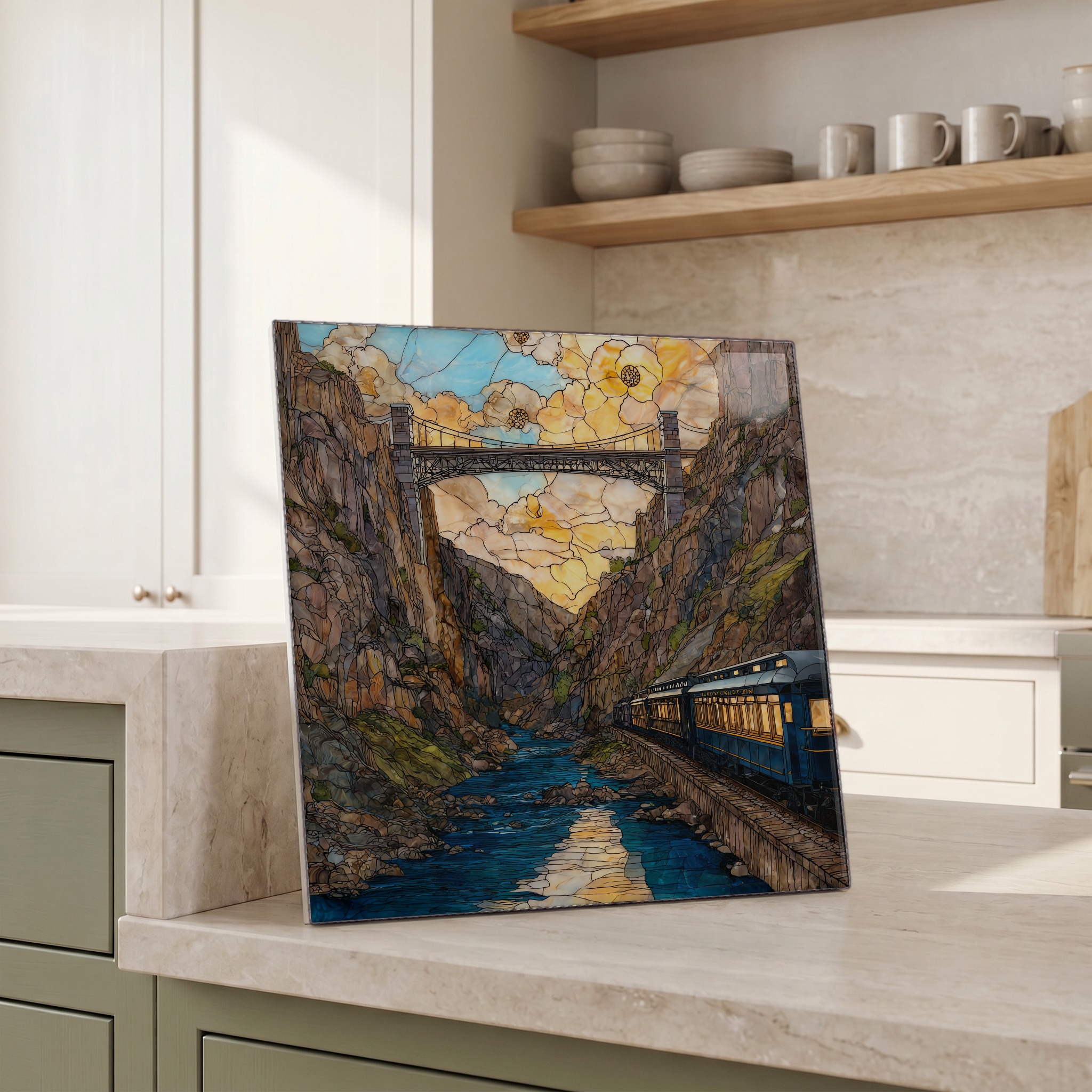
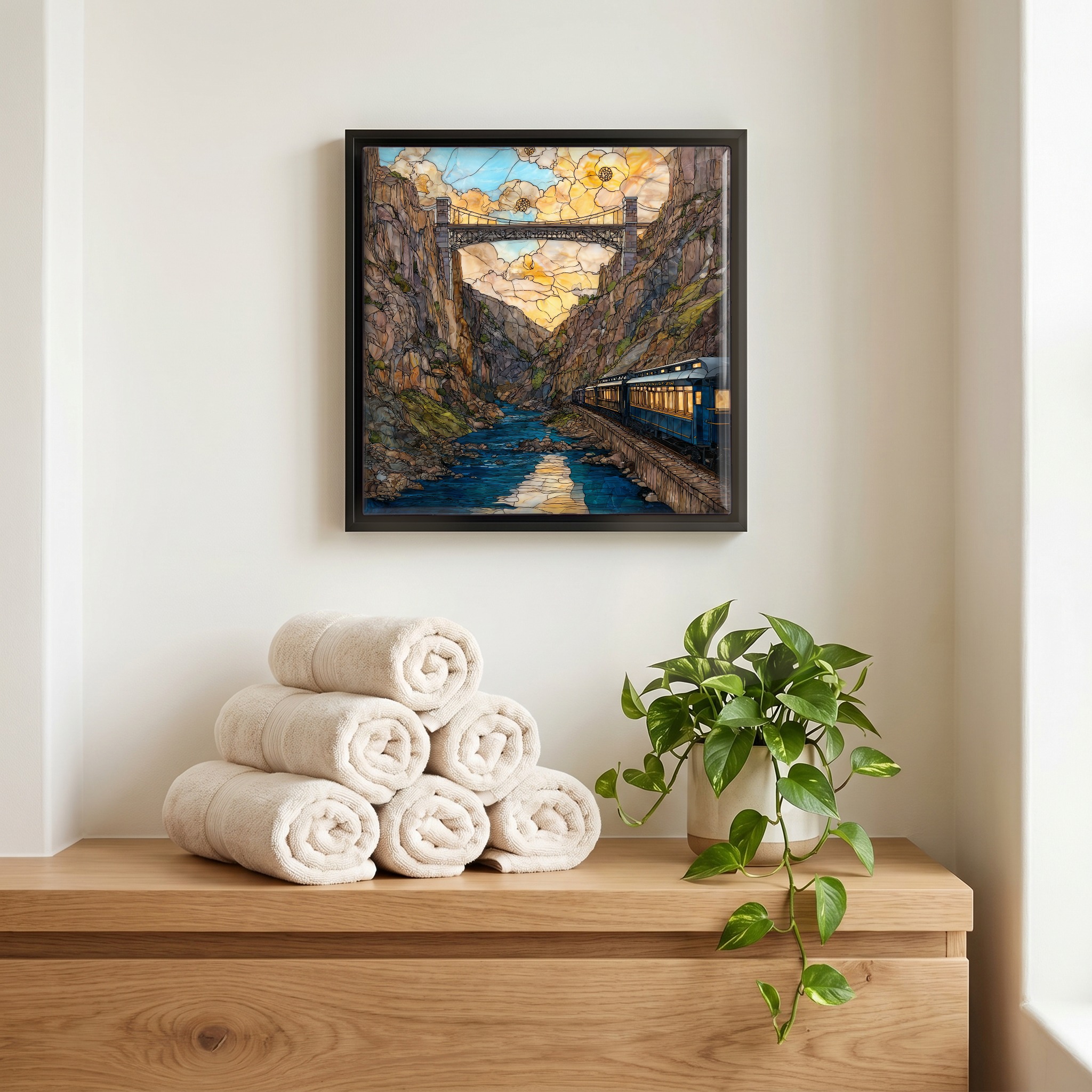
Royal Gorge Route train Ceramic Art Tile, on ceramic.
Each tile is finished by hand in our Knoxville studio. Artwork is slowly infused into the ceramic surface under high heat and pressure, and rests beneath a thin glossy finish. The colour lives in the surface, not on top of it.
Pick any four 4-inch tiles — National Parks you've been to, a Smokies set, the four seasons of one place. $ for a set of , cork-backed, ready to live on the table.
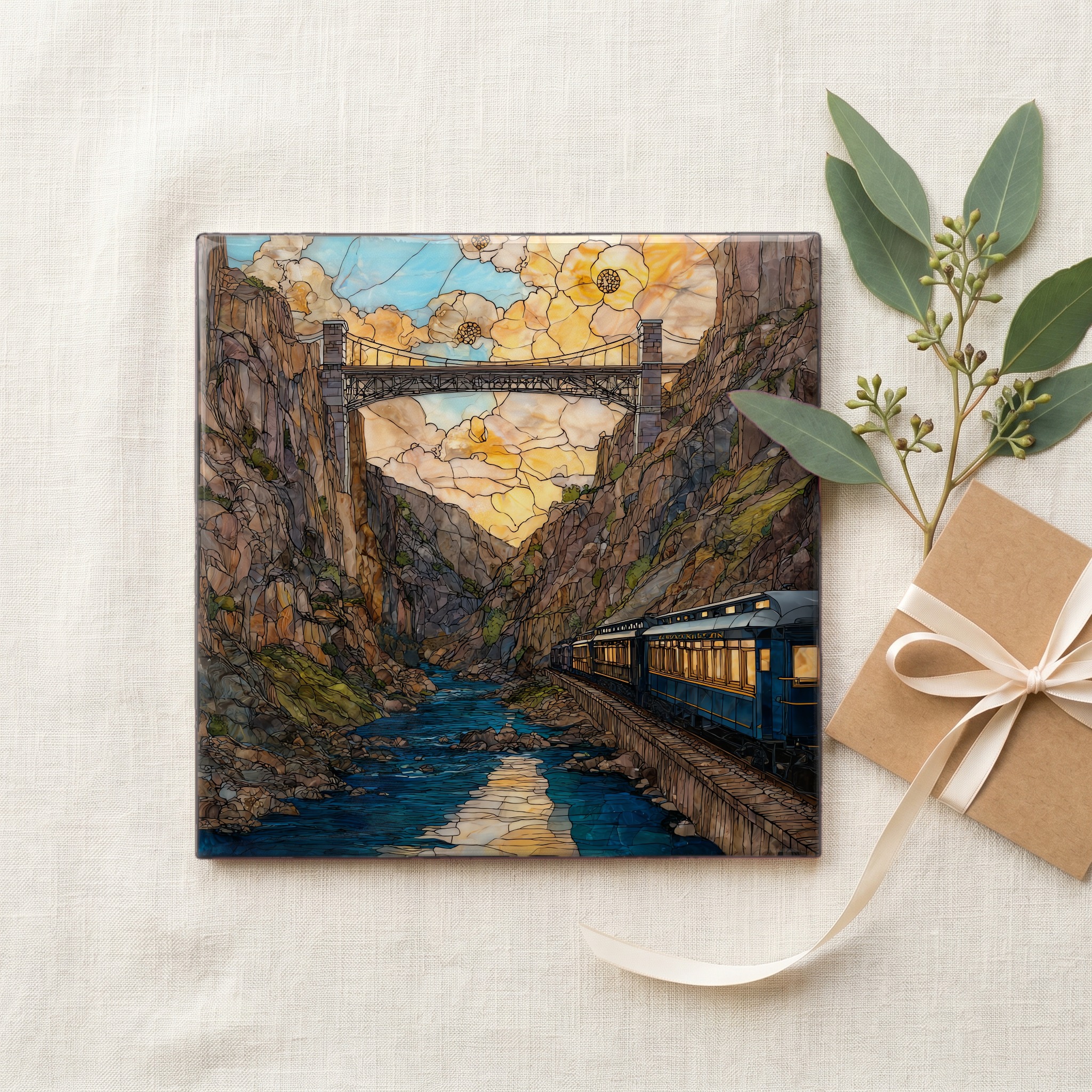
Each tile ships in a kraft box, tied with cream ribbon, with a handwritten note from the studio if you'd like to add one.

Three or five different vistas, hung together — a chapter of places you've been, or want to go.
The place, in three passes.
The Royal Gorge Route is a heritage railroad that runs 24 miles round-trip along the floor of the Royal Gorge, a granite canyon about 1,250 feet deep cut by the Arkansas River through south-central Colorado. Trains depart from the Santa Fe Depot in Cañon City, at an elevation of 5,332 feet, in Fremont County, about 45 miles west of Pueblo. The line follows the river at the bottom of the canyon, the only roadbed possible, since US Highway 50 climbs around the gorge from the rim a thousand feet above. The current excursion operation began in 1999, after the Denver and Rio Grande Western abandoned the route.
The gorge is cut into Pikes Peak granite, an exposed batholith roughly 1.08 billion years old, and the Arkansas River has been working at it for around three million years. At the canyon's narrowest, the walls close to about thirty feet apart, too tight for a roadbed alongside the river. The 1879 engineers solved it with the Hanging Bridge, a 175-foot span carried on iron girders A-braced into the gorge walls, the rails suspended over the water rather than beside it. The train still crosses it today. Above, the Royal Gorge Bridge spans the rim 956 feet over the river, completed in 1929 as the world's highest suspension bridge.
Trains depart year-round from the Santa Fe Depot at 401 Water Street in Cañon City, with multiple daily departures in summer and a reduced winter schedule. The standard journey is a 24-mile, two-hour round trip with three coach classes (Coach, Vista Dome, and Parlor) and a dinner option. Specialty runs include the Holiday Train in December, themed around The Polar Express, and the Mystery Express dinner-theatre run. The route originally belonged to the Denver and Rio Grande Western, the railroad that won the 1879 Royal Gorge War against the Atchison, Topeka and Santa Fe. Excursion service on the line resumed in 1999 after a decade of disuse.