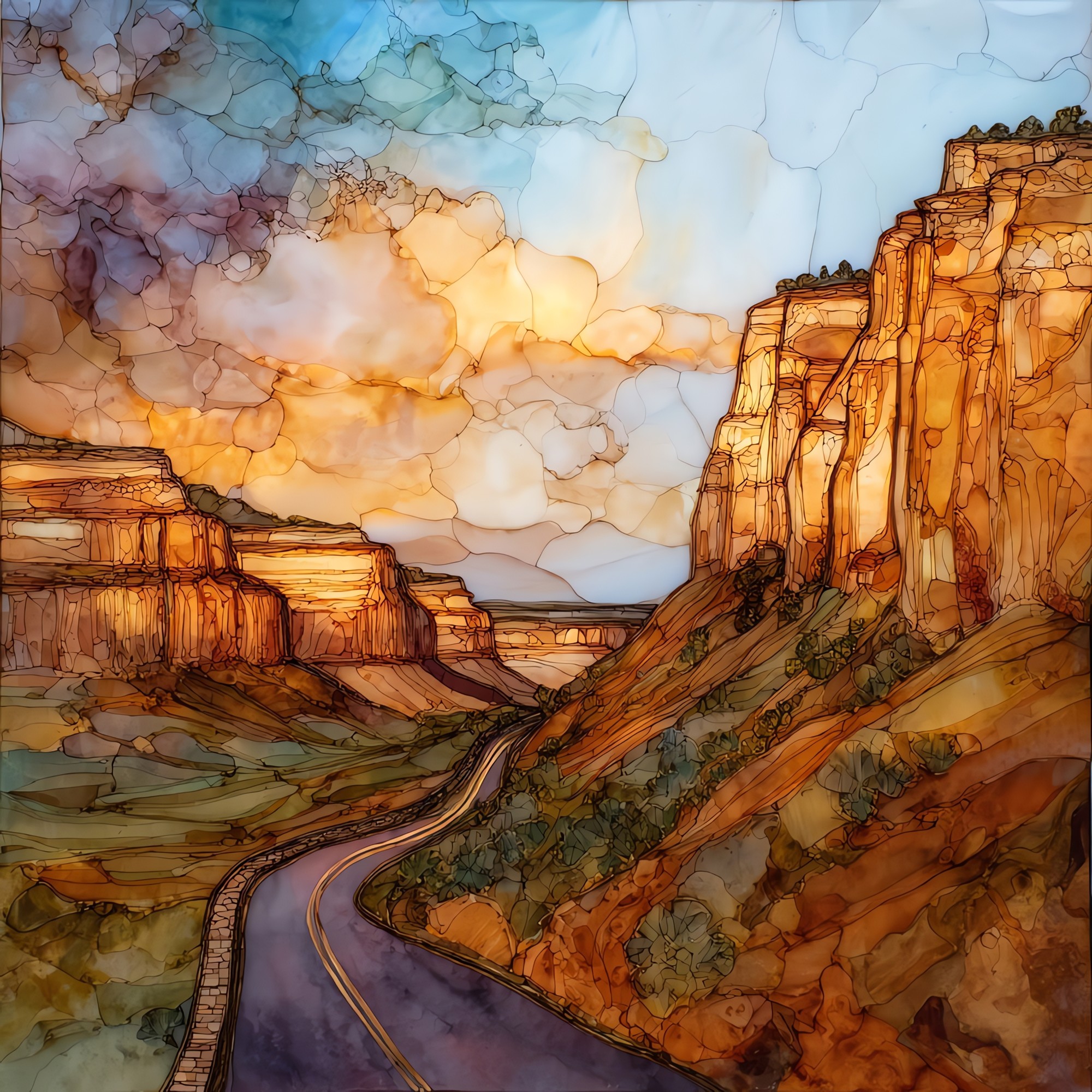
Rim Rock Drive Colorado NM Ceramic Art Tile
— — a road the canyon let through.
Not only on a wall.
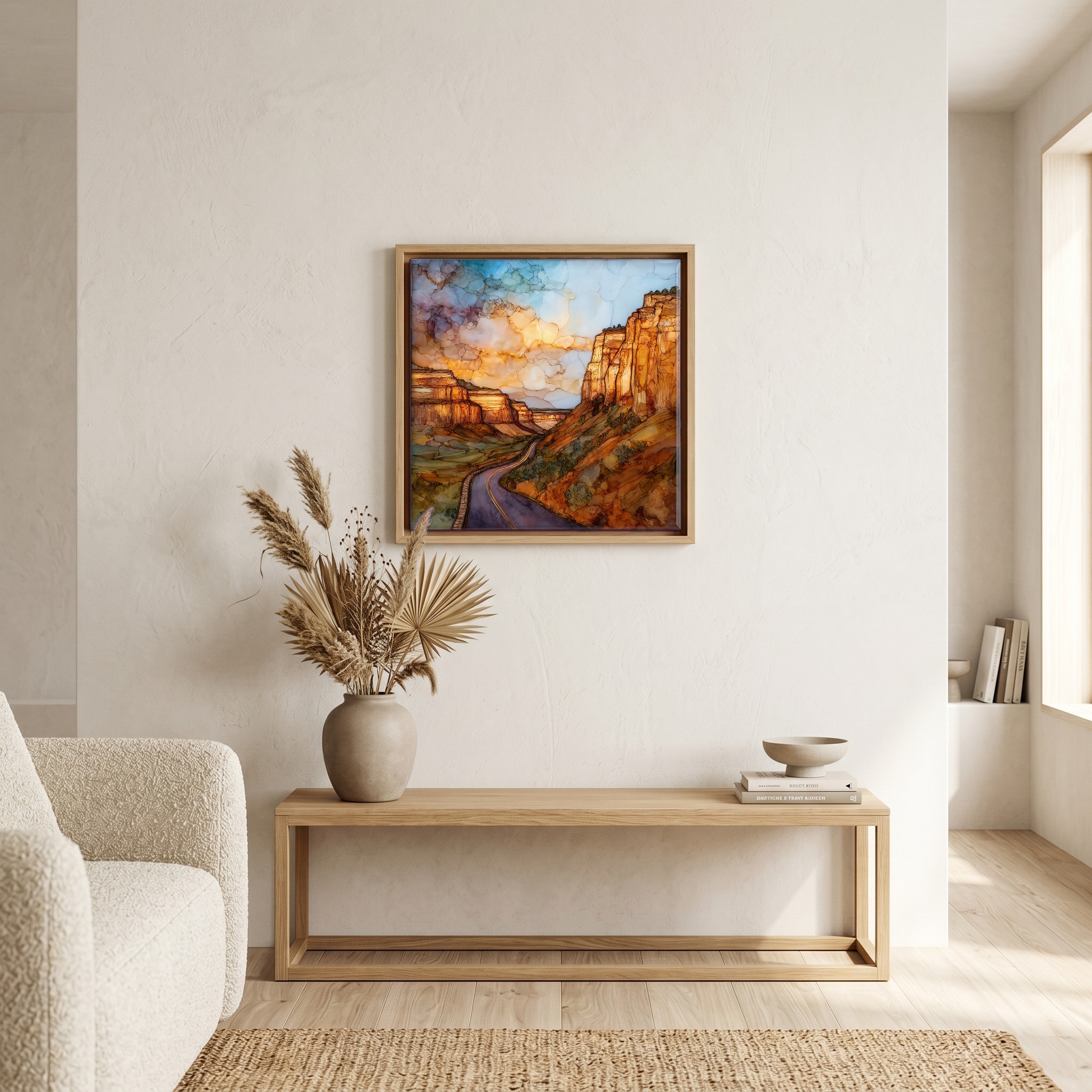
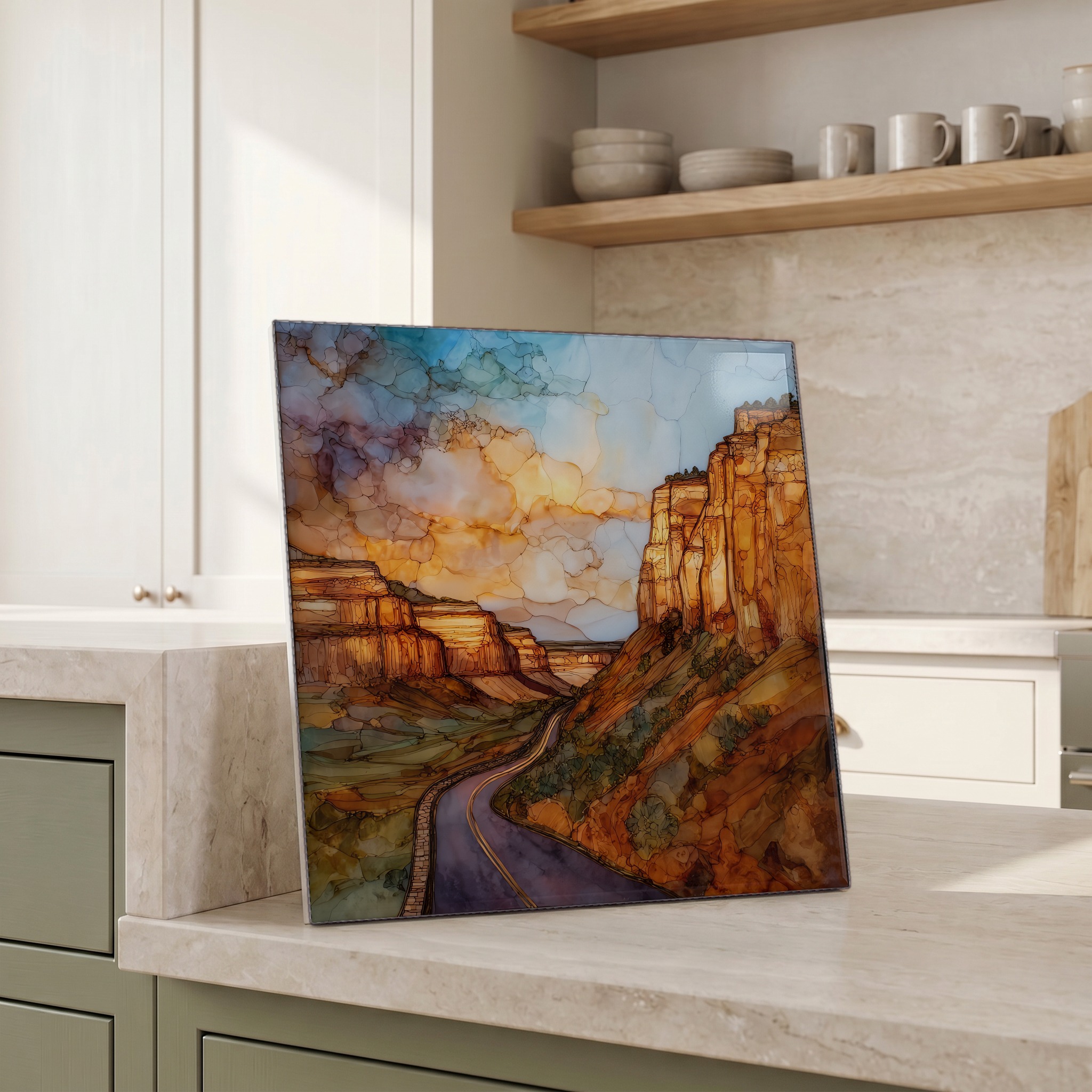
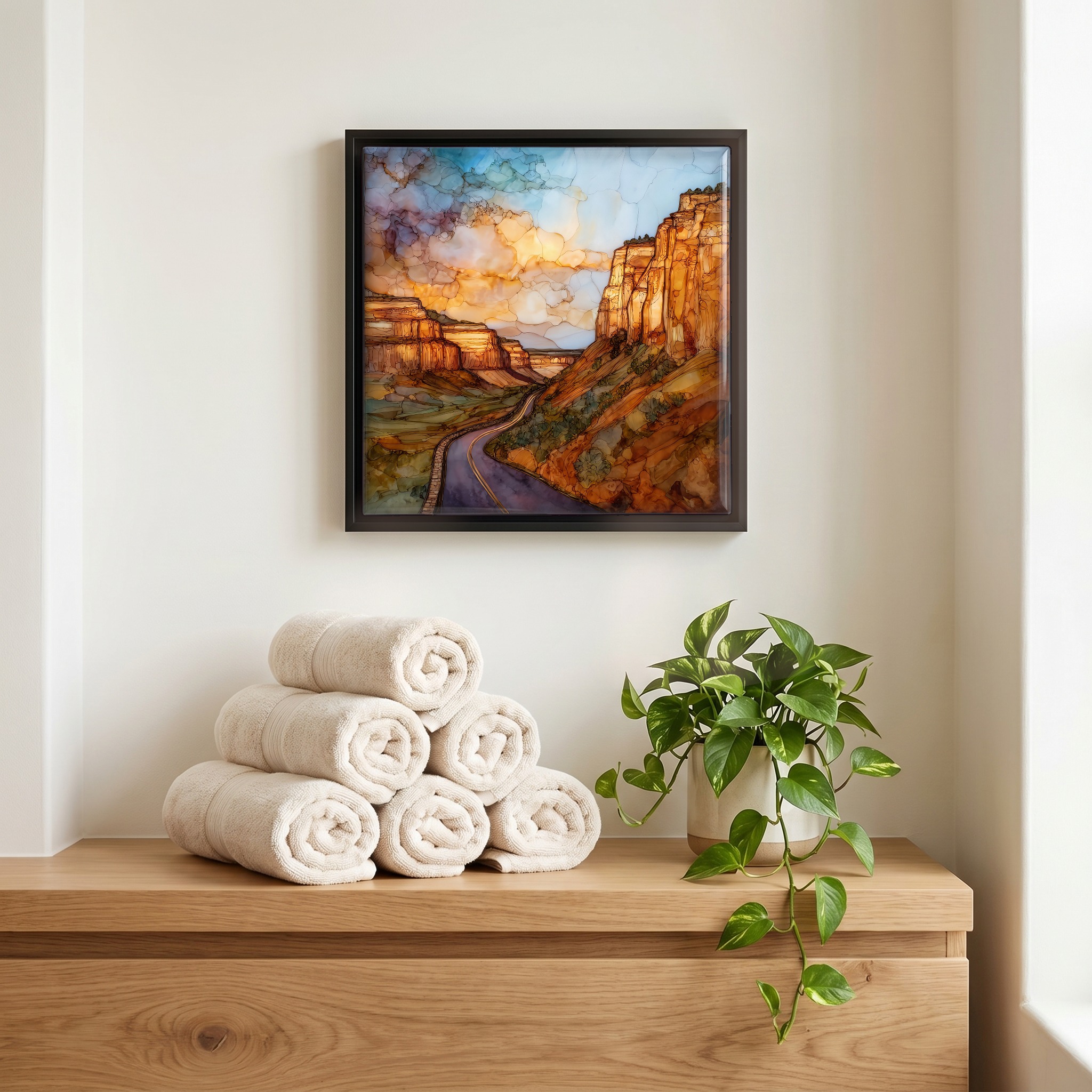

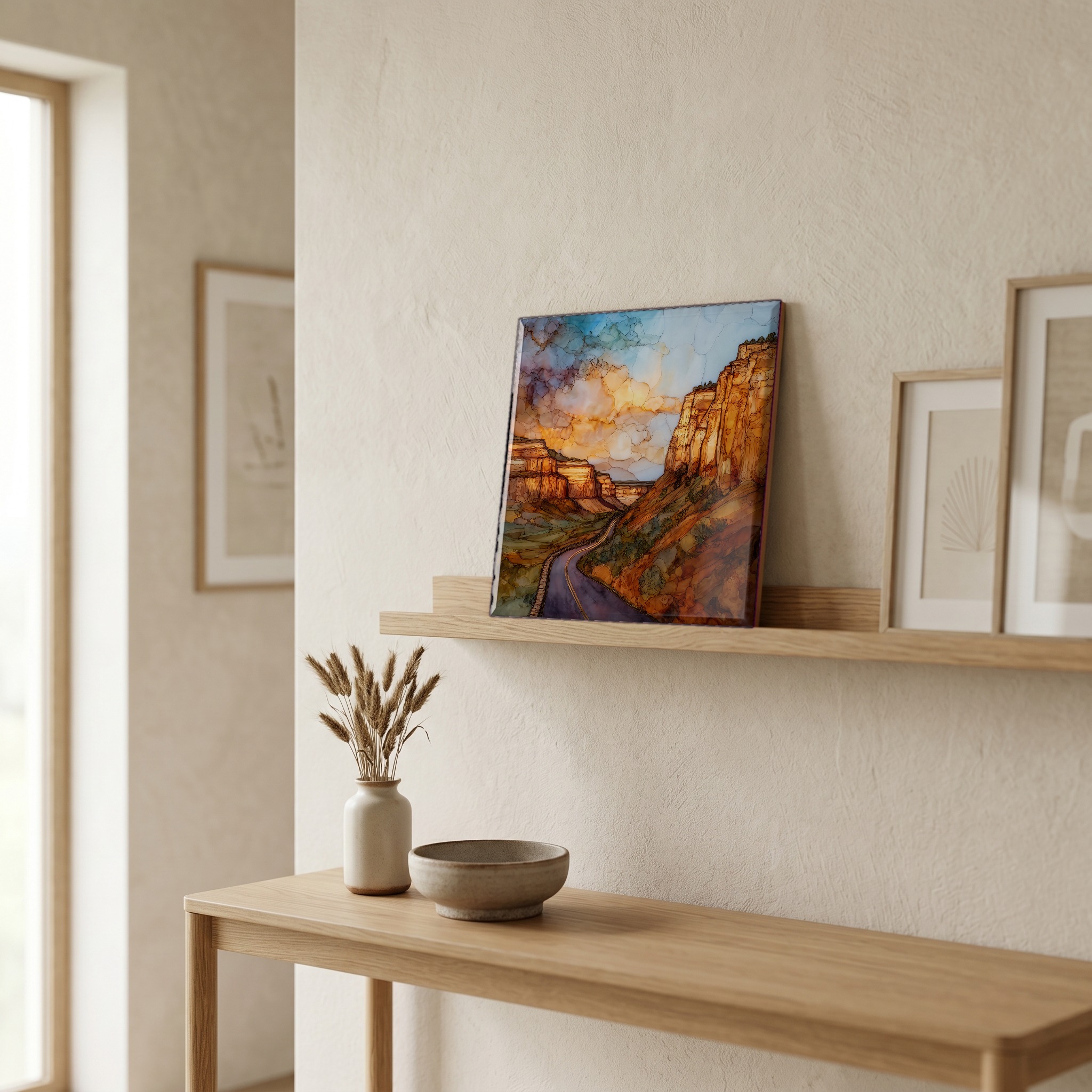
“Twenty-three miles cut into the cliff face above the Colorado River. Three tunnels, dozens of switchbacks, and an overlook every mile or so where the road steps out over Wingate sandstone towers two hundred million years old. John Otto walked into these canyons in 1906 and didn't really leave; the road came four decades later. The colour reads strongest at the edges of the day, when the sandstone goes the colour of a coal just raked. The traffic thins. The wind comes up out of Monument Canyon.
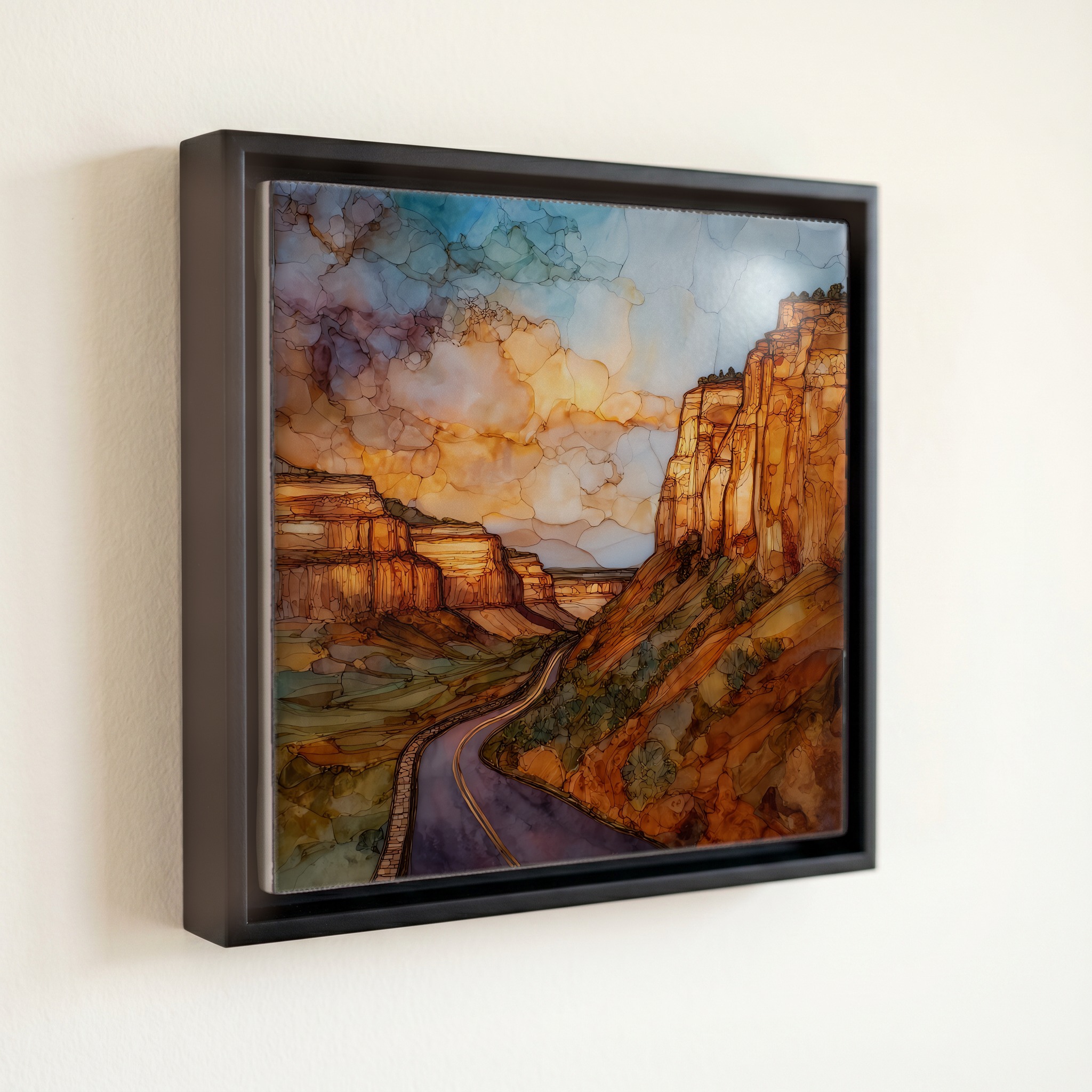
Rim Rock Drive Colorado NM Ceramic Art Tile, on ceramic.
Each tile is finished by hand in our Knoxville studio. Artwork is slowly infused into the ceramic surface under high heat and pressure, and rests beneath a thin glossy finish. The colour lives in the surface, not on top of it.
Pick any four 4-inch tiles — National Parks you've been to, a Smokies set, the four seasons of one place. $ for a set of , cork-backed, ready to live on the table.
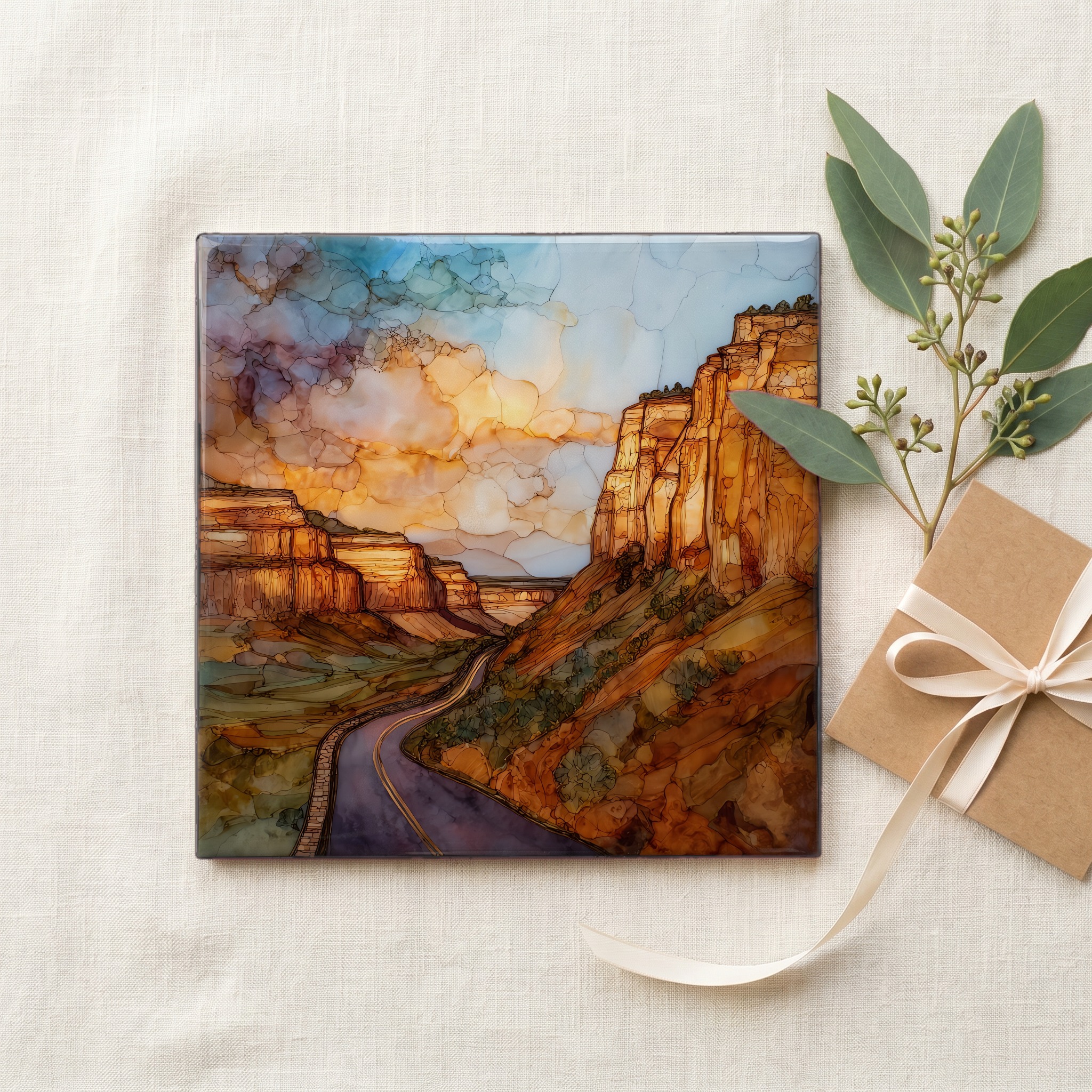
Each tile ships in a kraft box, tied with cream ribbon, with a handwritten note from the studio if you'd like to add one.

Three or five different vistas, hung together — a chapter of places you've been, or want to go.
The place, in three passes.
Colorado National Monument sits at the eastern edge of the Colorado Plateau, above the Grand Valley in Mesa County, Colorado. President William Howard Taft proclaimed the monument on May 24, 1911. Rim Rock Drive is the 23-mile scenic road that traverses it, climbing from the Fruita entrance in the west, past Saddlehorn and the visitor center at 5,790 feet, to viewpoints near Cold Shivers Point above 6,600 feet, and down to the Grand Junction entrance in the east. Construction began in 1931, led by the Civilian Conservation Corps and the Bureau of Public Roads. Work paused for the Second World War, and the road was finished in 1950.
The cliffs above Rim Rock Drive are Wingate Sandstone, an early Jurassic formation laid down as wind-blown desert dune fields nearly two hundred million years ago. The Wingate forms the vertical walls; a thin caprock of Kayenta Formation protects it from above, and softer Chinle shales below let it weather into freestanding monoliths. Independence Monument is the tallest: a 450-foot tower of Wingate that John Otto free-climbed for the first time on July 4, 1911, the same year the monument was proclaimed. The Pipe Organ, the Kissing Couple, and the Coke Ovens are the other named towers visible from the drive's overlooks.
The sandstone reads red because of iron oxide cementing the grains. The colour intensifies at first and last light, when sunlight passes through more atmosphere and the warmer wavelengths reach the rock unchallenged. Most photographers favour the first hour after sunrise: the freestanding monoliths in Monument Canyon face east, and the morning sun lights their cliff faces directly. Artist Point, Grand View, and Cold Shivers Point are the overlooks the canyon-floor towers read best from. By midday the colour flattens. By dusk, the cliffs above the Grand Valley take a second slower glow as the sun drops behind the Uncompahgre Plateau.