Wender·Vista
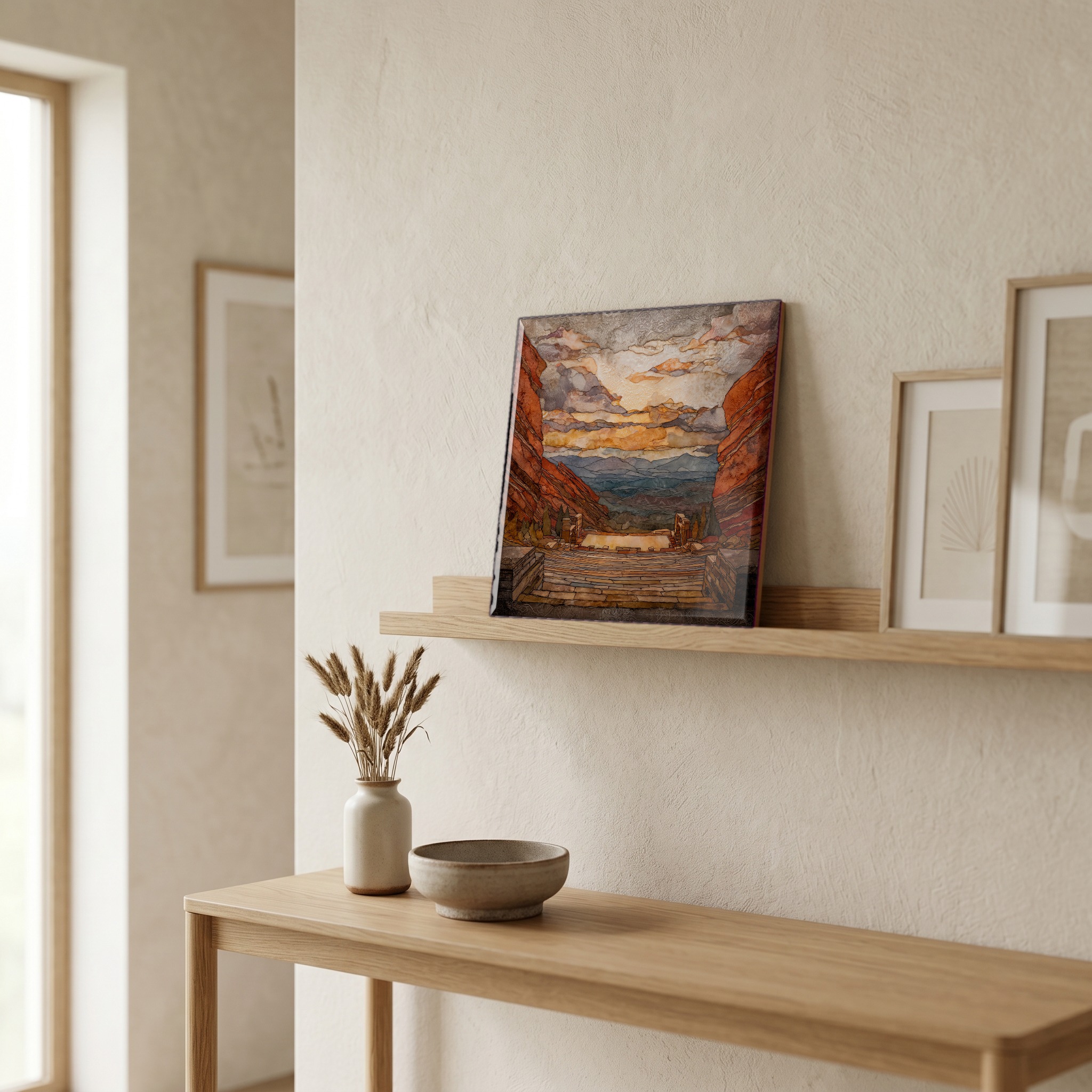
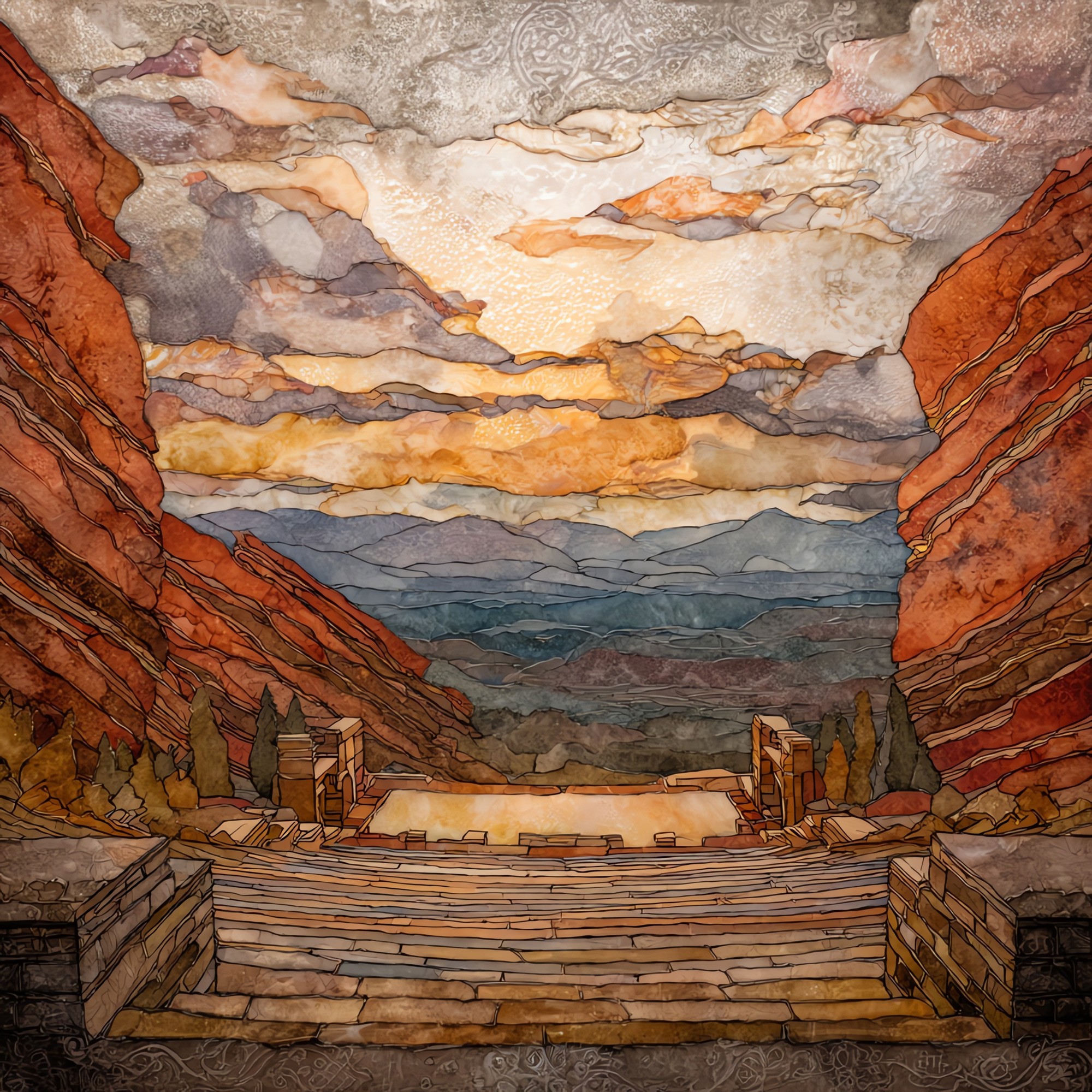
Red Rocks Amphitheatre sunrise Denver Metro Ceramic Art Tile
shown on ceramic, 12-inch tileColorado · United States
fifteen miles west of Denver, in the Front Range foothills

Red Rocks Amphitheatre sunrise Denver Metro Ceramic Art Tile

— the rock catches the light before the city does.

Where it lives

Not only on a wall.

A small tile on the nightstand catching the morning. A larger one above the fire. Yours, wherever you spend the slow hours.
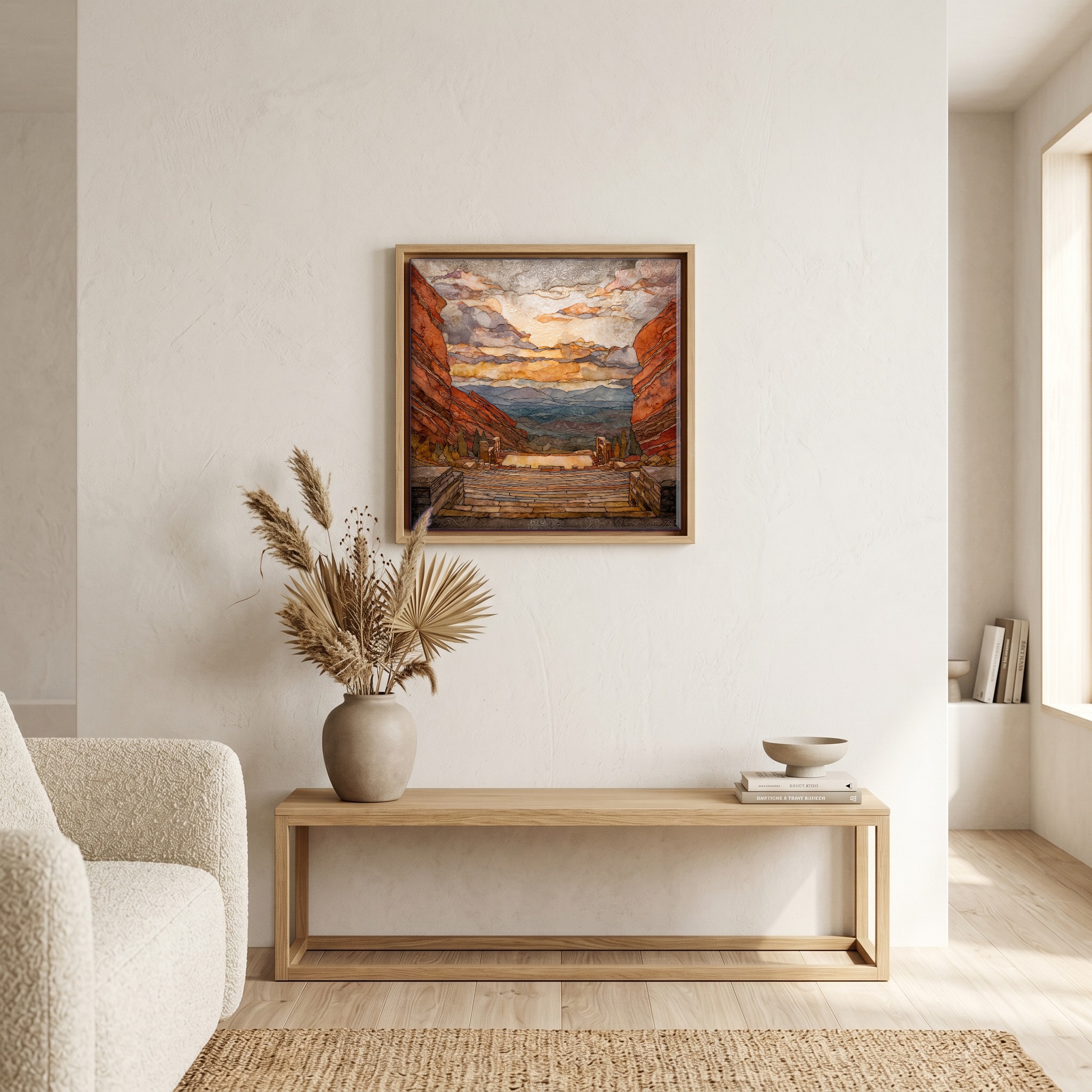
Above the bench, in a warm oak surround.
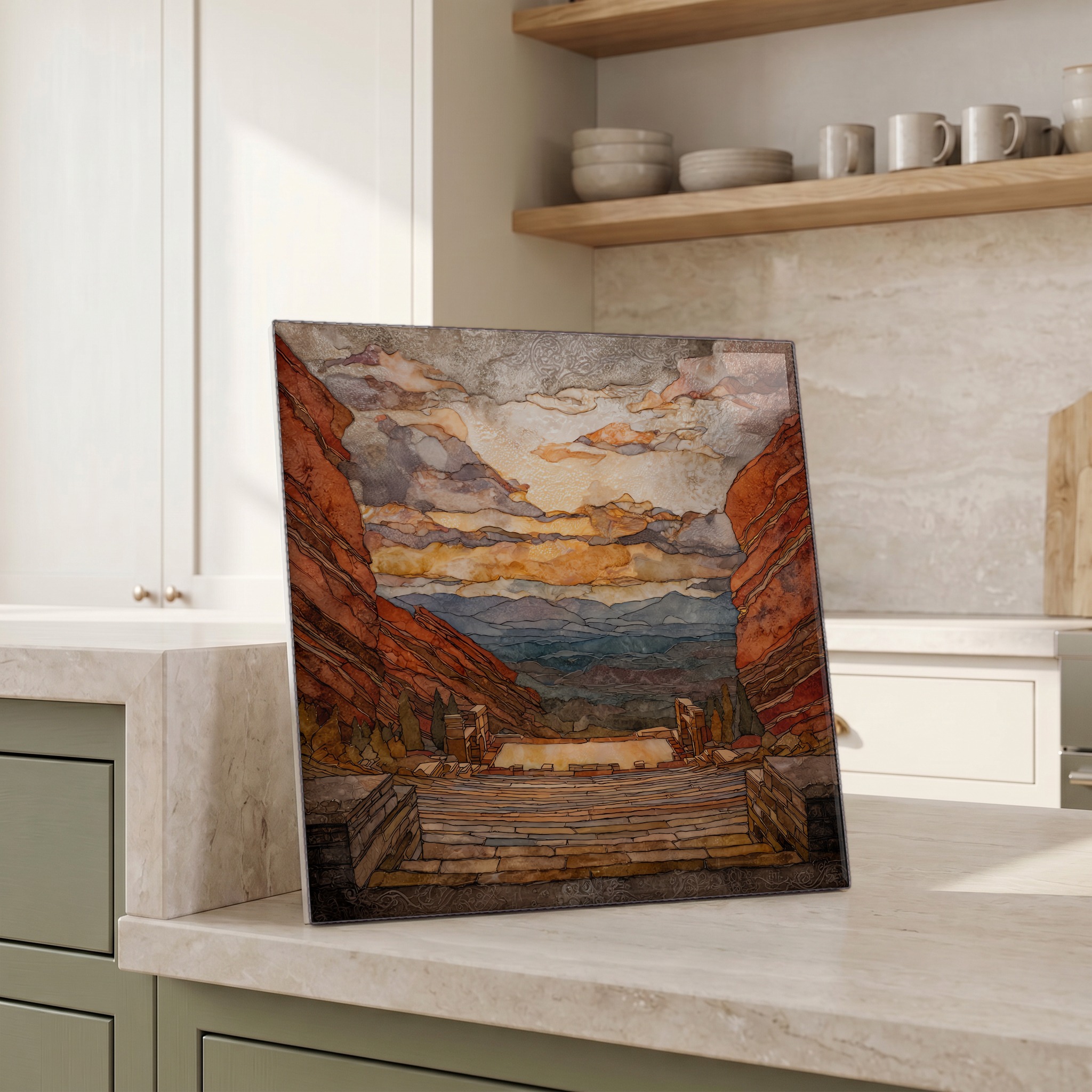
Beside the kettle, propped on the counter.
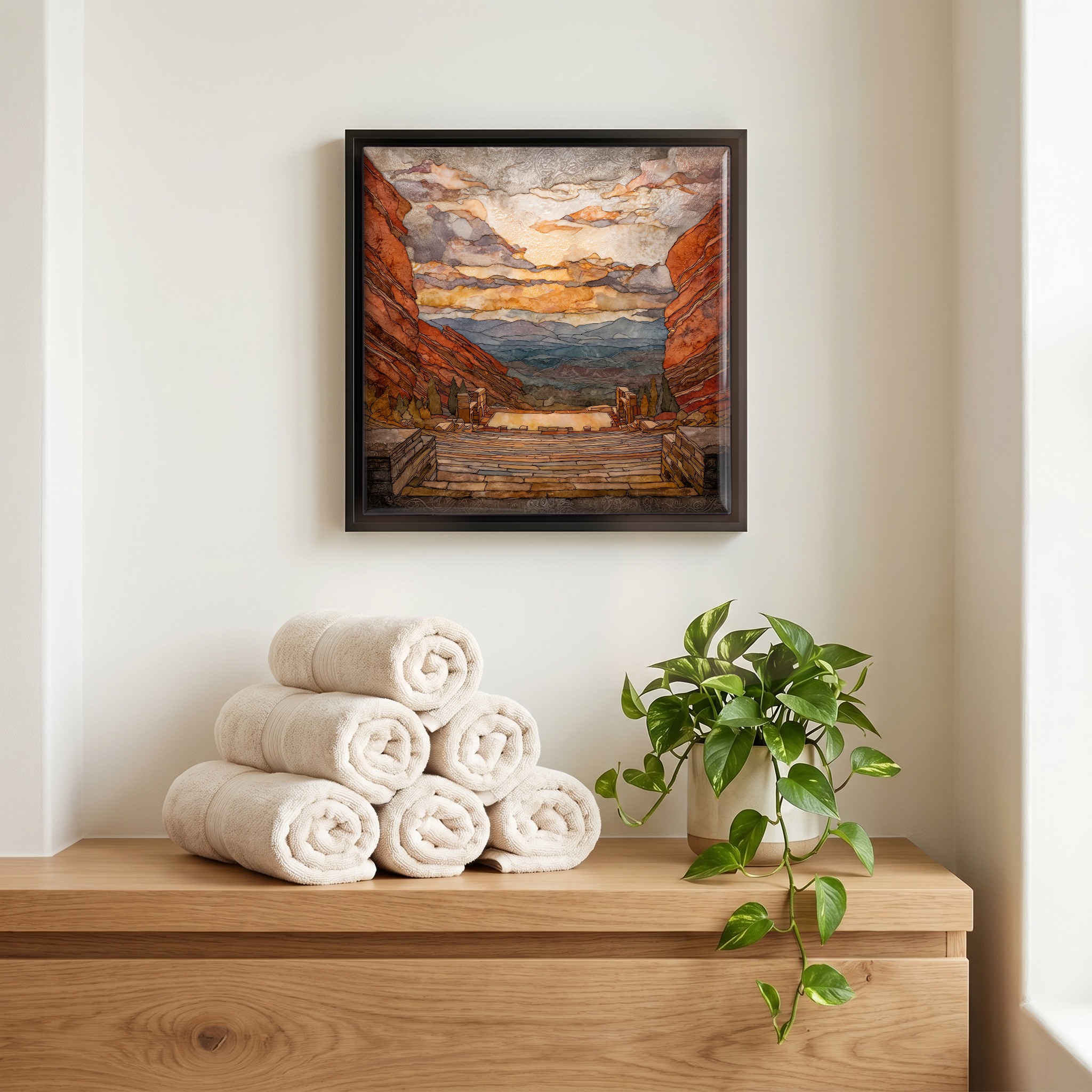
Above the linens, in a slim black surround.
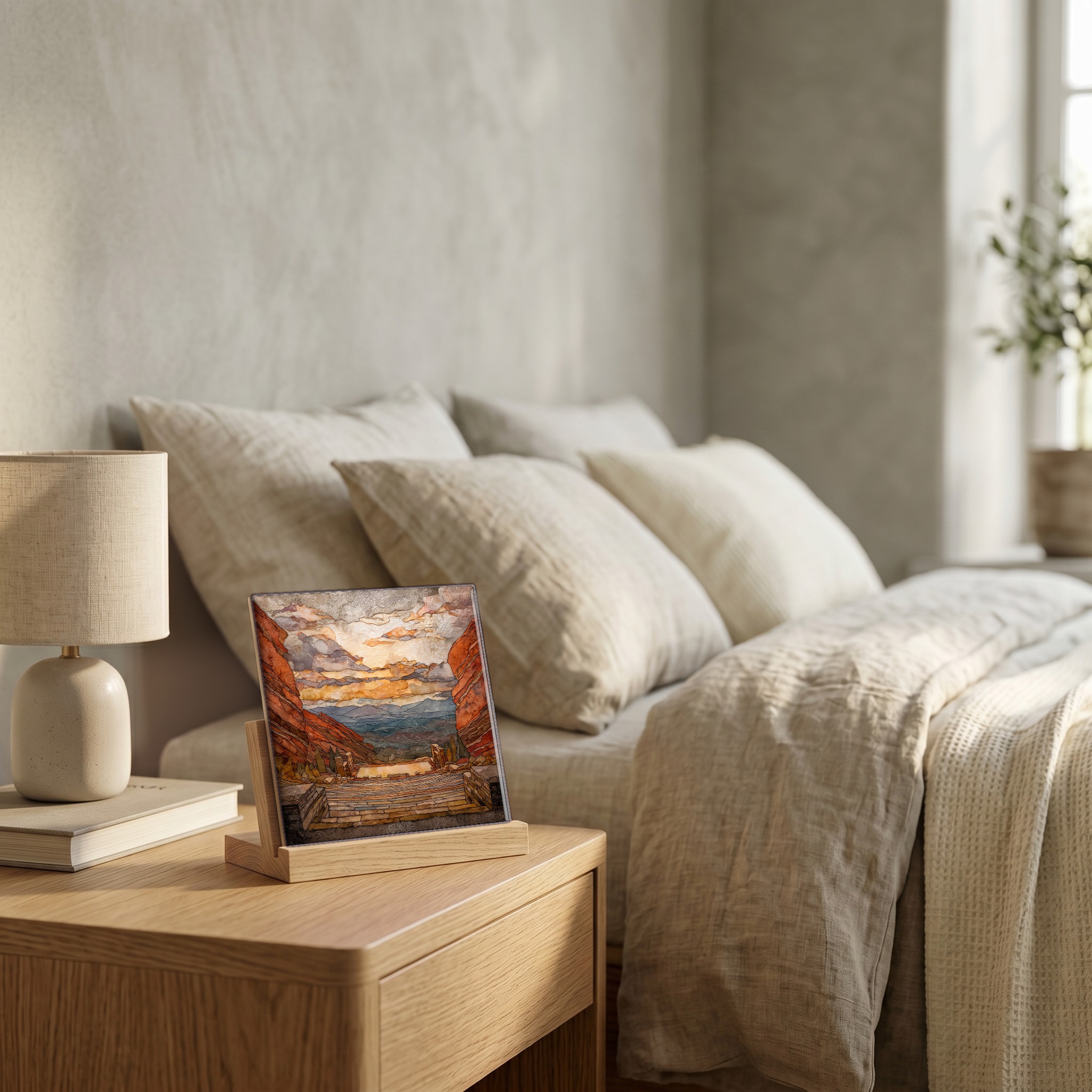
On the nightstand, on a light oak stand.
On a picture ledge, where the light comes in.
a note from the studio

Two great fins of red sandstone bracket an open-air theatre fifteen miles west of Denver. Ship Rock to the south, Creation Rock to the north, 9,525 seats between them. At sunrise the eastern plains hand the light over slowly, and the rock catches the first orange while the city below is still under shadow. Yogis come up the steps in summer. Pilgrims come up the steps on Easter morning, as they have since 1947. Most mornings, no event, no crowd, just the seats and the stone and the sound of someone's footsteps on the back row.
from the studio
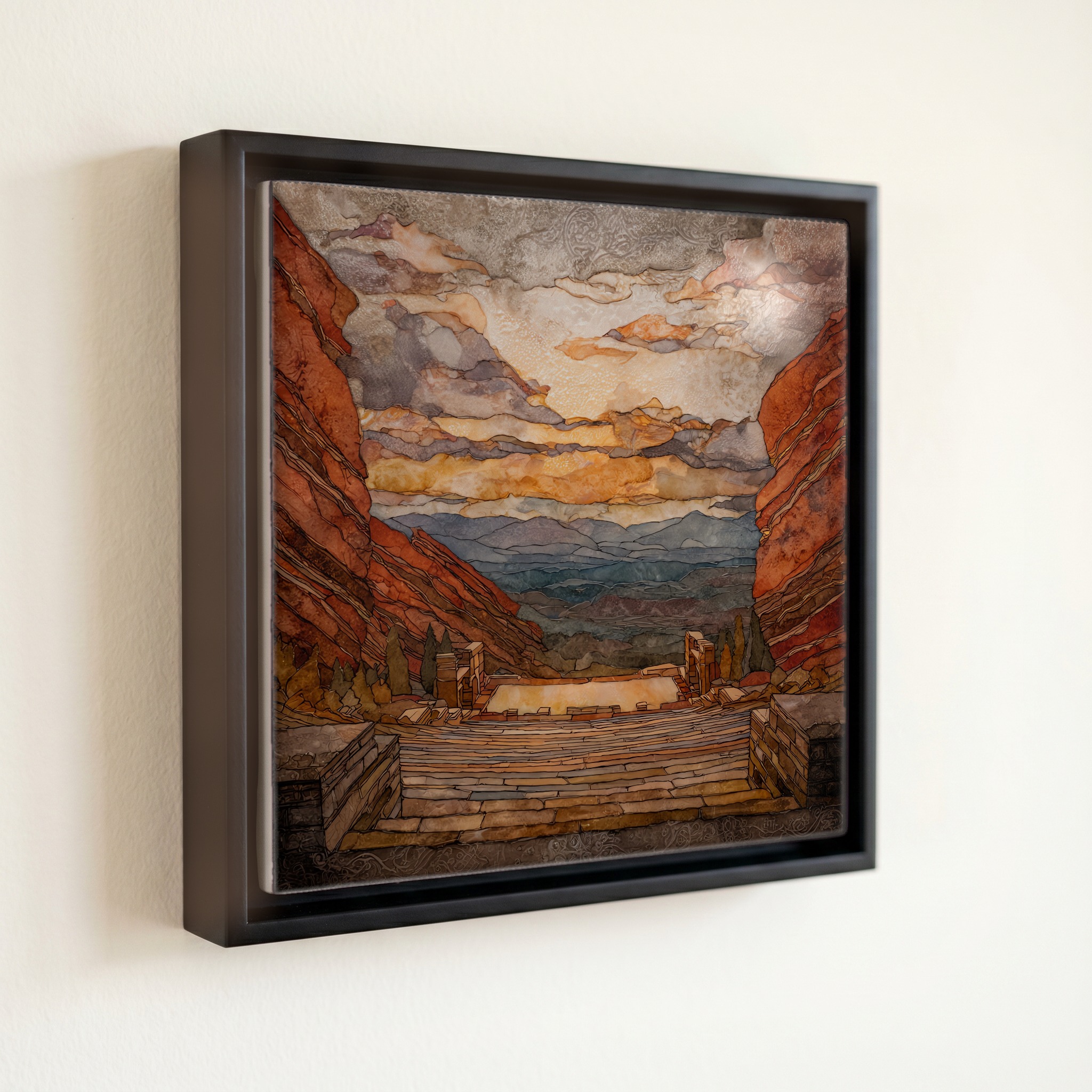
shown in a slim black floating frame · 6 × 6 in
— bring it home

Red Rocks Amphitheatre sunrise Denver Metro Ceramic Art Tile, on ceramic.

Each tile is finished by hand in our Knoxville studio. Artwork is slowly infused into the ceramic surface under high heat and pressure, and rests beneath a thin glossy finish. The colour lives in the surface, not on top of it.

What kind of piece?
One tile — square or rectangle.
How big?
the popular one — counter, shelf, nightstand
6 × 6 in · 15 cm · 1.6 lb
Surface finish
A clear glossy finish — the artwork reads as if under resin. Ideal for show-pieces and framed wall art.
How it sits
A hidden cleat — sits ¼″ proud of the wall.
$58
Hand-finished and shipped from our studio at the foot of the Smokies. On your wall in about ten days.
size
6 × 6 in
15 cm
weighs
1.6 lb
solid in the hand
surface
ceramic, hand-finished
art rests beneath a thin glossy finish
from
Knoxville, TN
our family studio, at the foot of the Smokies
— start a Coaster Set

Pick any four 4-inch tiles — National Parks you've been to, a Smokies set, the four seasons of one place. $ for a set of , cork-backed, ready to live on the table.
comes gift-ready
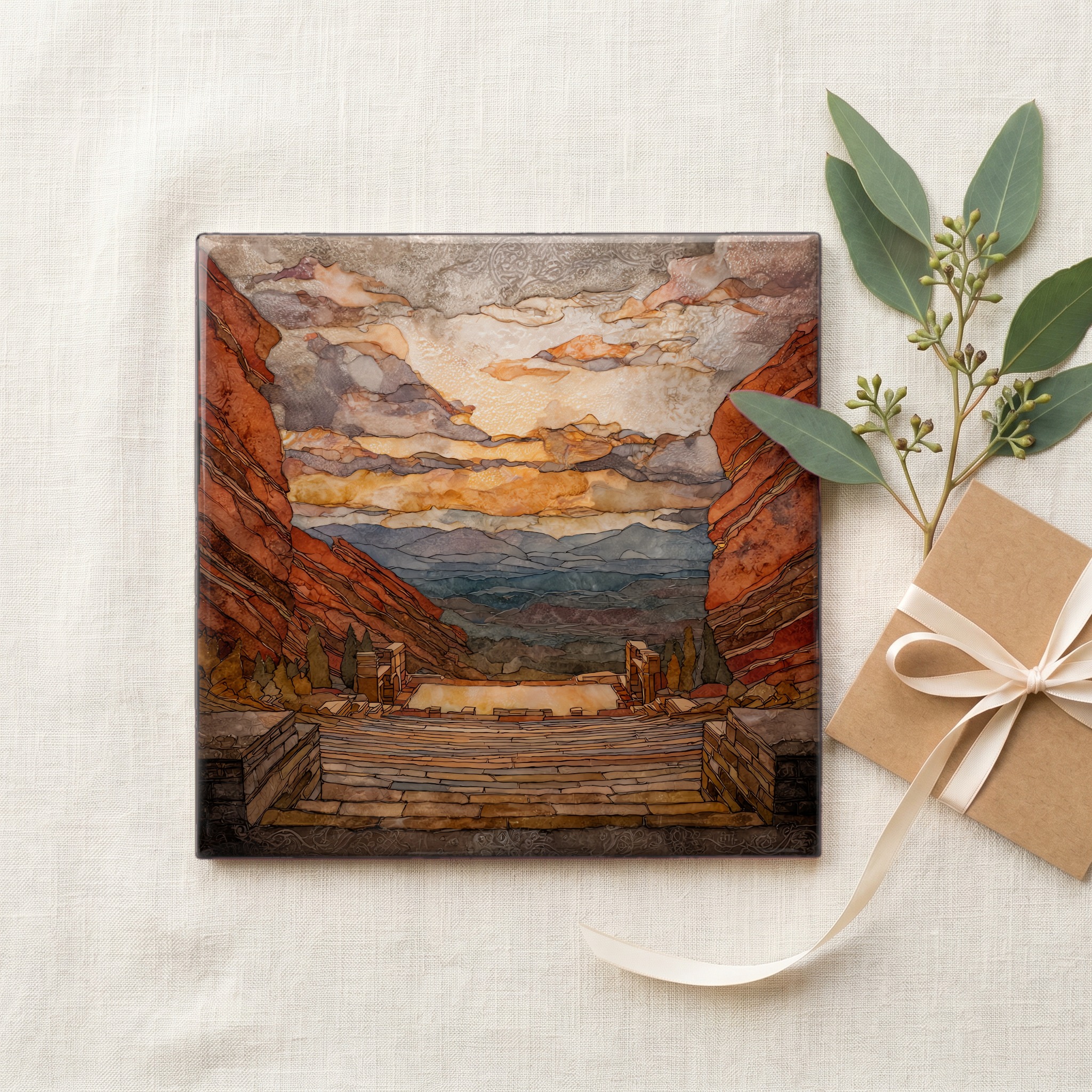
comes gift-ready

Each tile ships in a kraft box, tied with cream ribbon, with a handwritten note from the studio if you'd like to add one.
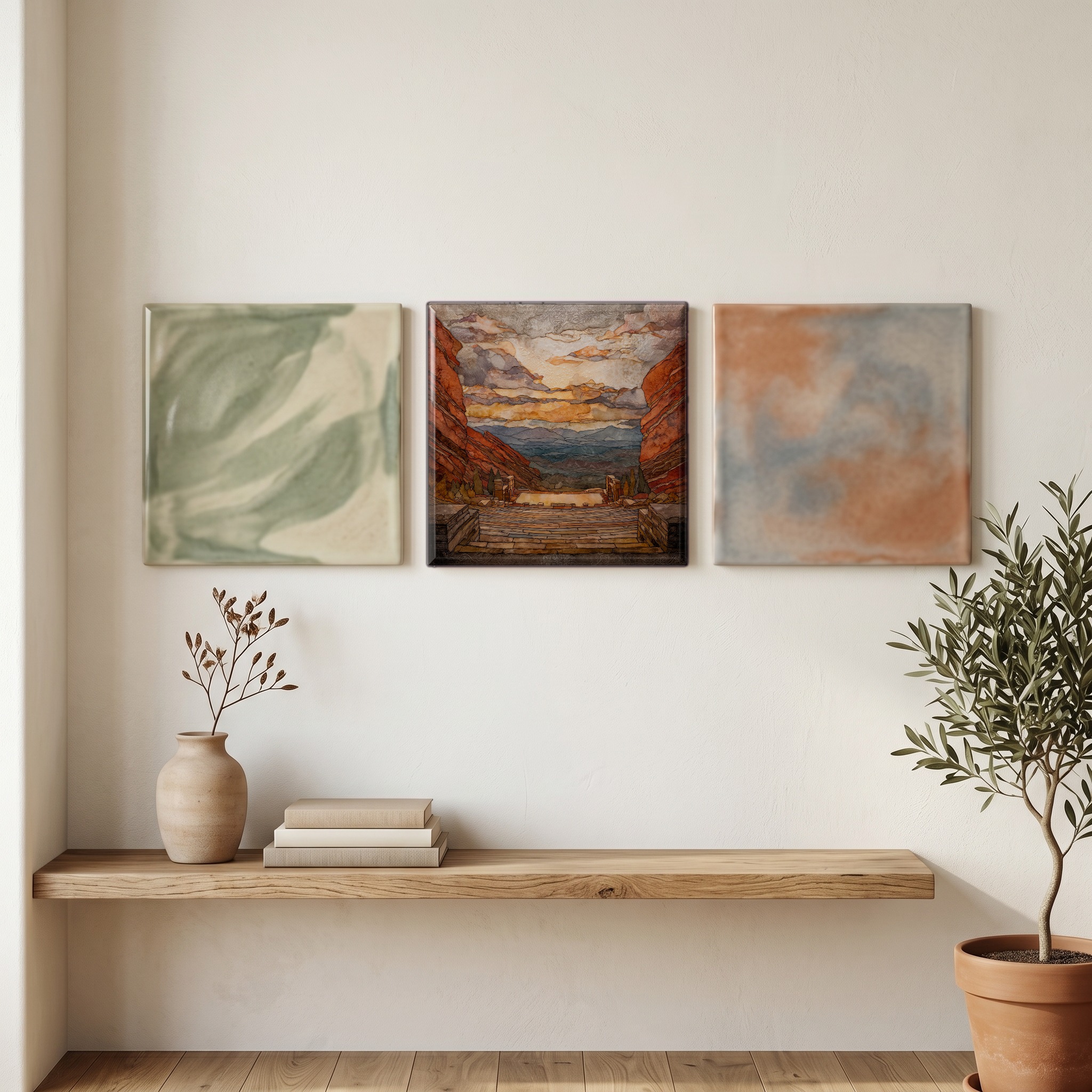
or build a grouping
or build a grouping

Three or five different vistas, hung together — a chapter of places you've been, or want to go.

about Red Rocks Amphitheatre sunrise Denver Metro Ceramic Art Tile

The place, in three passes.

A little of what's known, in case you fall down the rabbit hole — or want to go see it yourself.
the place

Red Rocks Amphitheatre sits inside Red Rocks Park, in Morrison, Colorado, about fifteen miles west of downtown Denver and roughly 6,450 feet above sea level. The Denver Mountain Parks system has held the land since 1928. The amphitheatre itself was designed by Denver architect Burnham Hoyt, built by the Civilian Conservation Corps under the New Deal, and opened on June 15, 1941. The two monoliths that form its walls, Ship Rock and Creation Rock, are exposed slabs of the Fountain Formation, sandstone laid down roughly 290 million years ago. The seating bowl holds 9,525 people. Sunrise arrives over the eastern plains, with downtown Denver visible across the foreground.

the dawn

The amphitheatre faces almost due east, with the open mouth of the bowl pointed at the Denver skyline fifteen miles off and the high plains beyond. First light reaches the top of Creation Rock well before it reaches the seats; the sandstone shifts from cool oxblood to orange to gold across the first half-hour after sunrise. The summer Yoga on the Rocks series fills the bowl on Saturday mornings in July. On Easter, the venue holds a public sunrise service that has met here every year since 1947, often drawing more than ten thousand people before the sun is fully up over the plains.

the stone

The two formations that wall the amphitheatre, Creation Rock to the north and Ship Rock to the south, are exposed slabs of the Fountain Formation, a Permian-Pennsylvanian sandstone roughly 290 million years old. The same red rock surfaces north along the Front Range at the Flatirons above Boulder and south at the Garden of the Gods near Colorado Springs. Each of the two monoliths rises about three hundred feet above the seating bowl. The natural rake of the slabs gives the venue its famed acoustic: sound reflects between the two faces and the high back wall with almost no amplification needed. Burnham Hoyt's 1941 design touched the land lightly, and almost nothing was cut.

where
United States · Morrison, Colorado
within
Red Rocks Park
elevation
1,966 m · 6,450 ft
position
39.6654° N · 105.2057° W
the neighborhood

What's nearby.

A handful of named places within an hour's walk or short drive. Some we've already painted; some we will.
2 km E
Morrison
town
3 km E
Dinosaur Ridge
fossil track site
5 km S
Mount Falcon Park
mountain park
10 km N
Lookout Mountain
peak
12 km NE
Golden
town
25 km E
Denver
city
N
Red Rocks Amphitheatre sunrise Denver Metro Ceramic Art Tile
Morrison
Dinosaur Ridge
Mount Falcon Park
Lookout Mountain
Golden
Denver
common questions

What people ask.

A few questions we get about Red Rocks Amphitheatre sunrise Denver Metro Ceramic Art Tile — and about bringing the piece home.
about the place

Red Rocks Amphitheatre sits in Morrison, Colorado, about fifteen miles west of downtown Denver, inside the City and County of Denver's Red Rocks Park. The seating bowl is at roughly 6,450 feet above sea level, against the first rise of the Front Range foothills.

Sunrise times shift through the year, from just before 5:40 a.m. near the summer solstice to a little after 7:20 a.m. near the winter solstice. The east-facing bowl catches first light directly; Creation Rock lights before the seats do.

The two monoliths that wall the amphitheatre, Creation Rock and Ship Rock, are exposed slabs of the Fountain Formation, a sandstone roughly 290 million years old. Iron oxide in the cement between the sand grains is what gives the stone its rust-red colour.

It was designed by Denver architect Burnham Hoyt and built by the Civilian Conservation Corps under the New Deal. The amphitheatre opened on June 15, 1941. The site has hosted a public Easter sunrise service every year since 1947.

Yes. Red Rocks Park and the amphitheatre are open to non-ticketed visitors during the day on most mornings the venue isn't being used. The trails, the seating bowl, and the visitor centre at the top of the venue are all free to enter.

The seating bowl holds 9,525 people. The Beatles played here on August 26, 1964, the only show on their first American tour that didn't sell out. U2 recorded the live album Under a Blood Red Sky at the venue in June 1983.

A summer series of Saturday-morning yoga classes held in the amphitheatre's seating bowl, with the stage as the front of the mat. Sessions run through July and routinely sell out; tickets are released earlier in the spring through the venue's official site.

about the piece in your home

It's been a meaningful gift for many of our customers with Front Range ties. Red Rocks sits inside the everyday Denver imagination, the place locals drive friends to the first time they visit. A Coaster Set or Small with a handwritten note from the studio carries well.

The piece runs warm: rust, oxblood, and dawn gold against a cool sky. It sits comfortably with mountain-modern, southwestern, and earth-toned interiors, and lifts a room with a lot of cool grey or unfinished wood. It is less at home in pure coastal or all-white palettes.

Yes. Mountain-modern continues to lean on warm reds, unfinished wood, and stone, and Red Rocks reads as the canonical Front Range image. The Medium or Large works above a leather sofa or a console with black iron hardware; the Coaster Set complements a kitchen island in walnut or oak.

Above a standard three-seat sofa or a long console, the Large or a four-tile Mural sits best. For a higher ceiling or a wide great-room wall, the nine-tile Mural reads from across the room without crowding the seating area beneath it.

Yes, in Dura Satin or Matte. Both finishes resist scratches and humidity and work for a bathroom backsplash, a kitchen accent wall, or a covered patio. The Glossy finish is reserved for framed wall pieces in dry interior rooms.

Wipe with a microfibre cloth and water. The colour is slowly infused into the ceramic surface under high heat and pressure, then rests beneath a thin glossy finish, so the surface won't fade or scratch under normal cleaning. Avoid abrasive scrubbers and bleach-based sprays.

Yes. Every piece in the WenderVista atlas is the work of Reid Wender, the curator of the line, and is hand-finished by the studio in Knoxville, Tennessee. We do not license artwork from other studios or photographers.

if this one stayed with you

A few you might also love.

Hand-picked by the eye that found Sorapis. Same air, same kind of quiet.