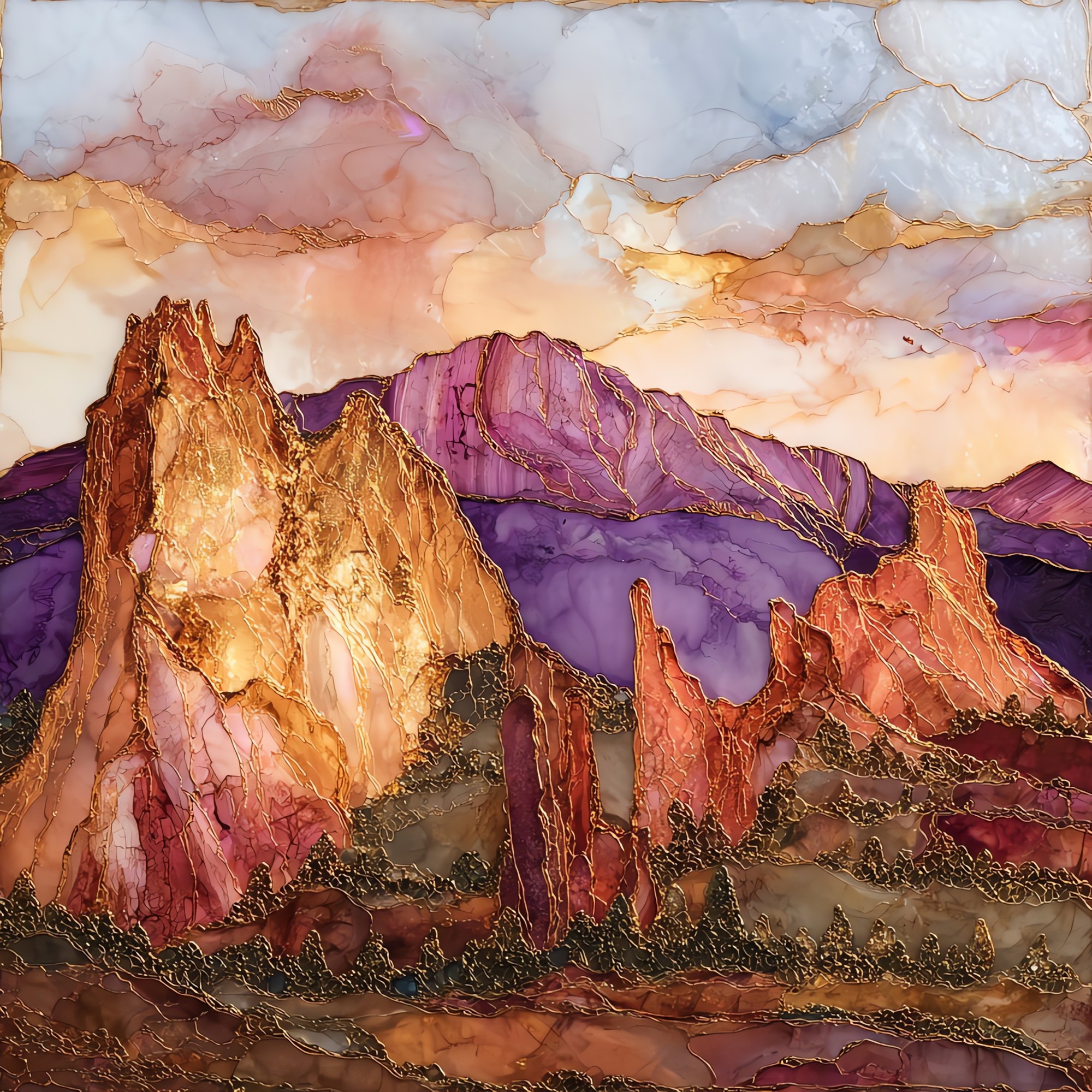
Pikes Peak from Garden of the Gods Front Range Ceramic Art Tile
— a fourteener held in red sandstone.
Not only on a wall.
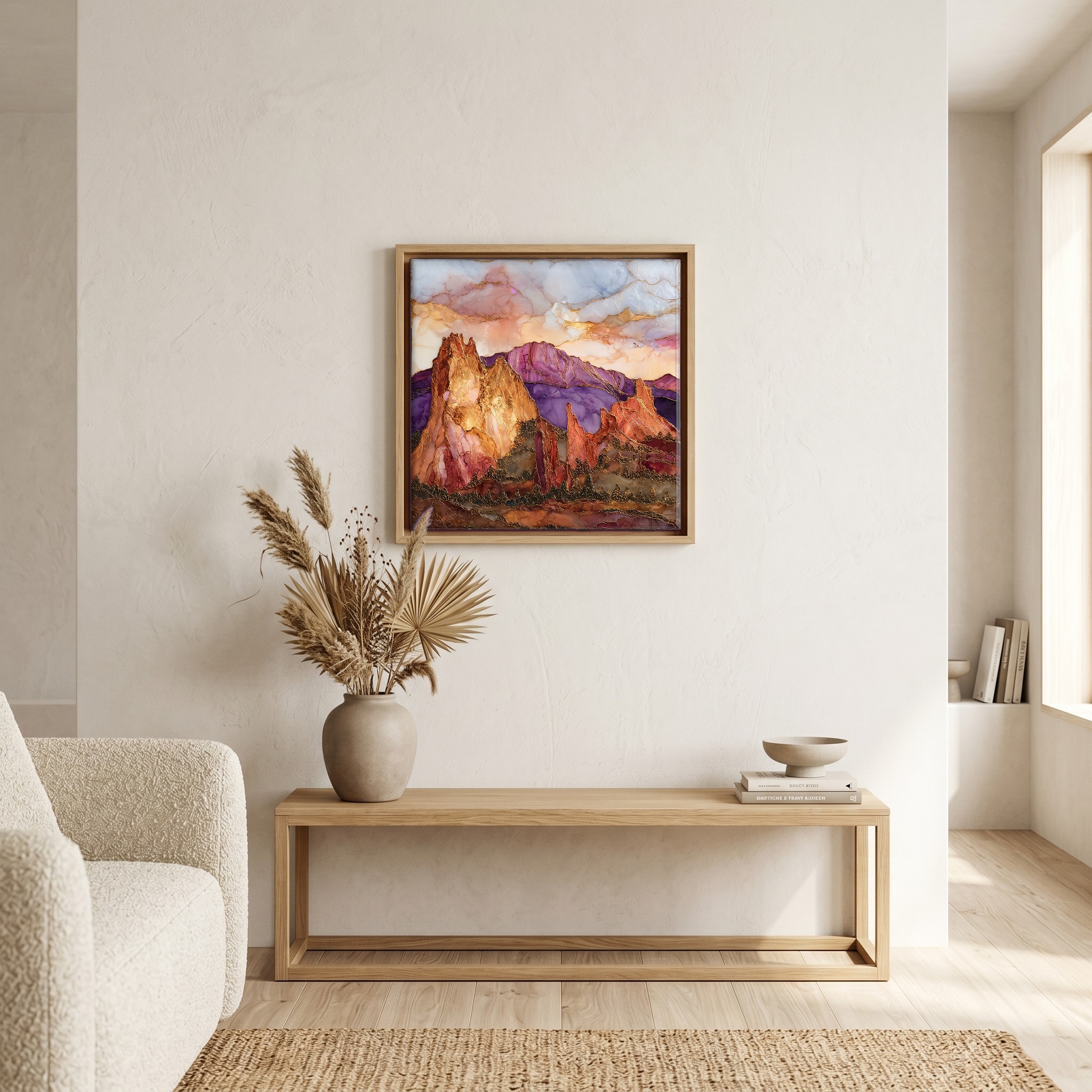
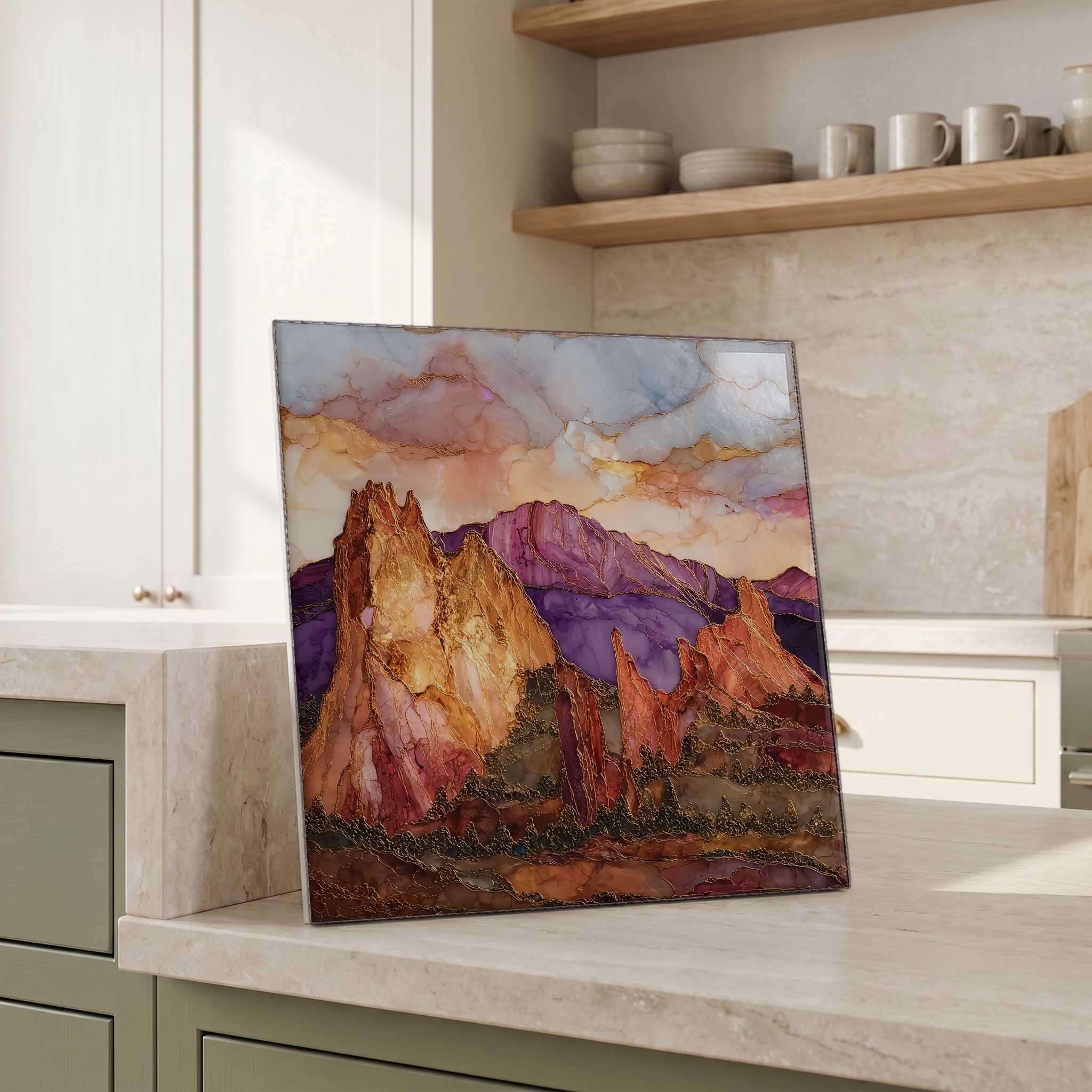
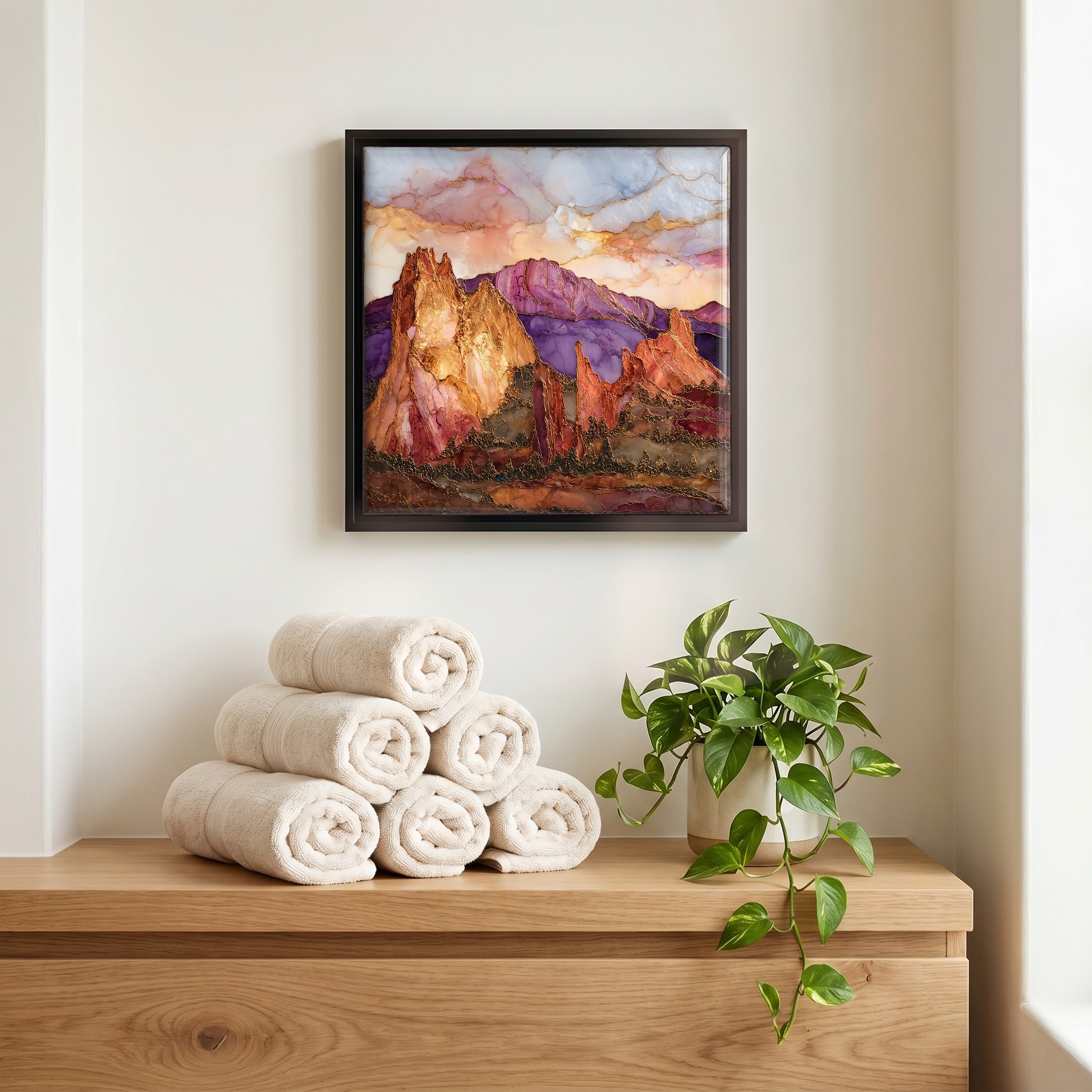

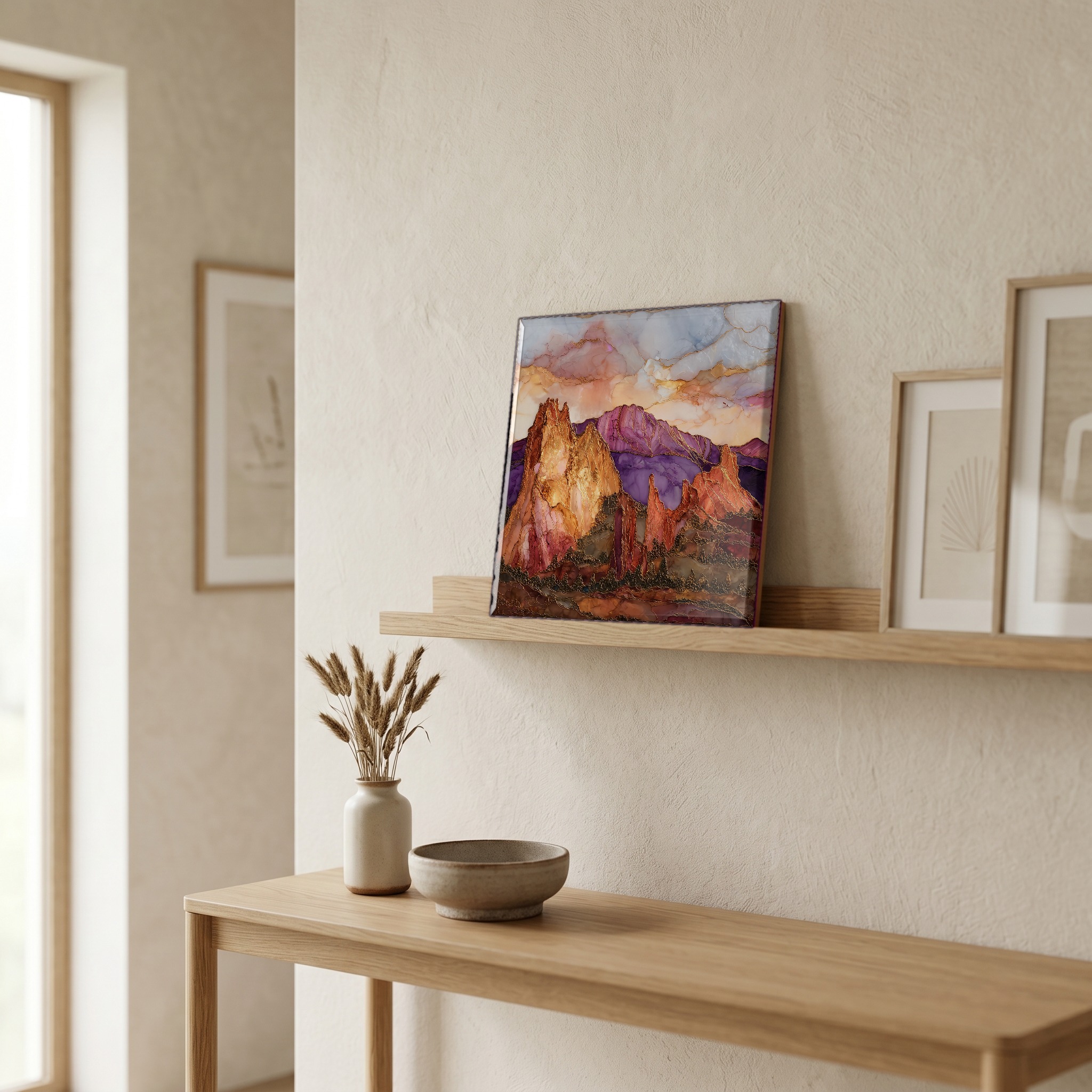
“The classic Colorado view: Pikes Peak rising 14,115 feet behind the tilted red sandstone of Garden of the Gods. The rocks here are about 290 million years old, tipped on edge during the same uplift that pushed the Front Range. Charles Elliott Perkins' children gave the park to the city of Colorado Springs in 1909 with one condition: that it remain free, forever. It still is. Katharine Lee Bates reached the summit of the peak in 1893 and came down with the first lines of America the Beautiful. The red rocks were already there, waiting.
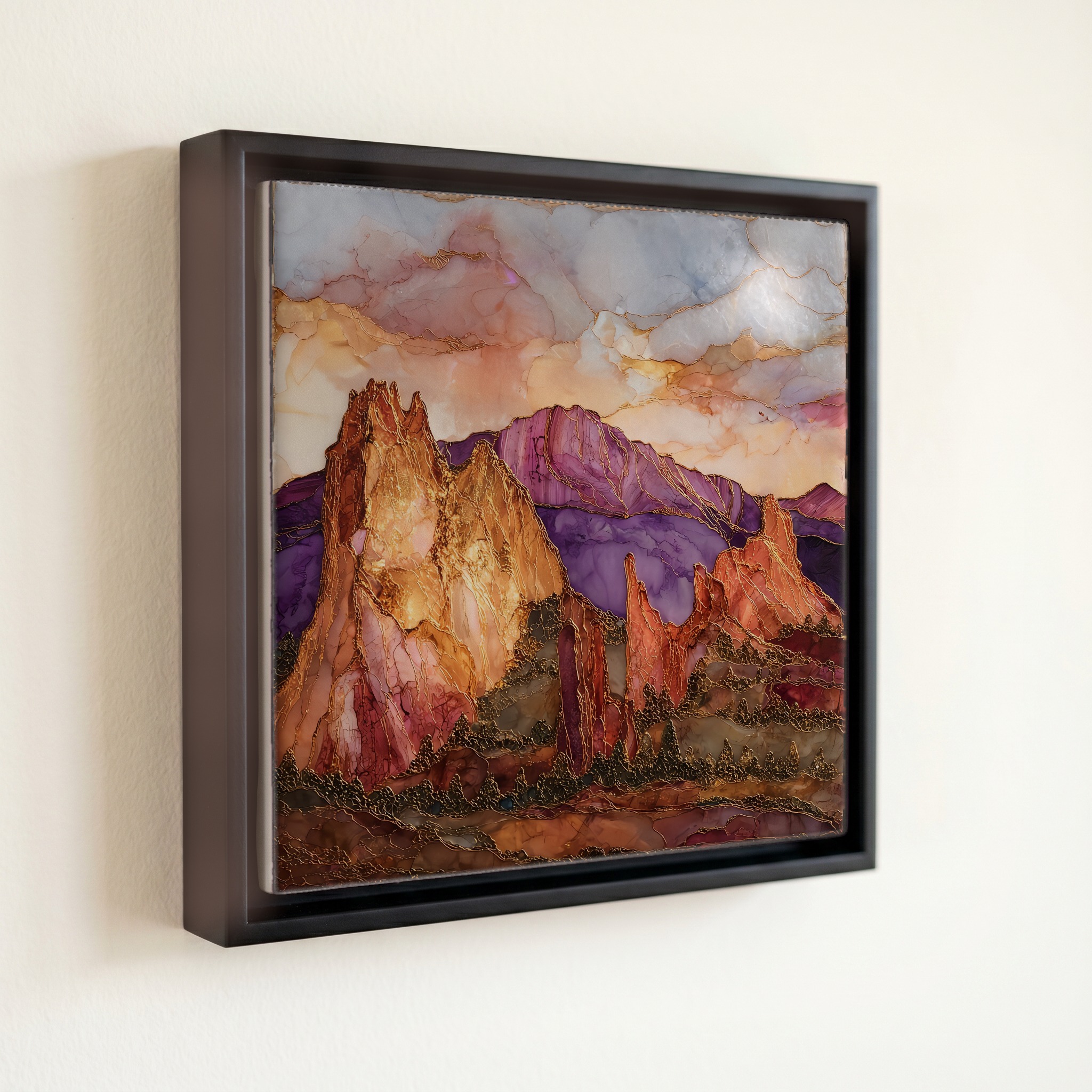
Pikes Peak from Garden of the Gods Front Range Ceramic Art Tile, on ceramic.
Each tile is finished by hand in our Knoxville studio. Artwork is slowly infused into the ceramic surface under high heat and pressure, and rests beneath a thin glossy finish. The colour lives in the surface, not on top of it.
Pick any four 4-inch tiles — National Parks you've been to, a Smokies set, the four seasons of one place. $ for a set of , cork-backed, ready to live on the table.
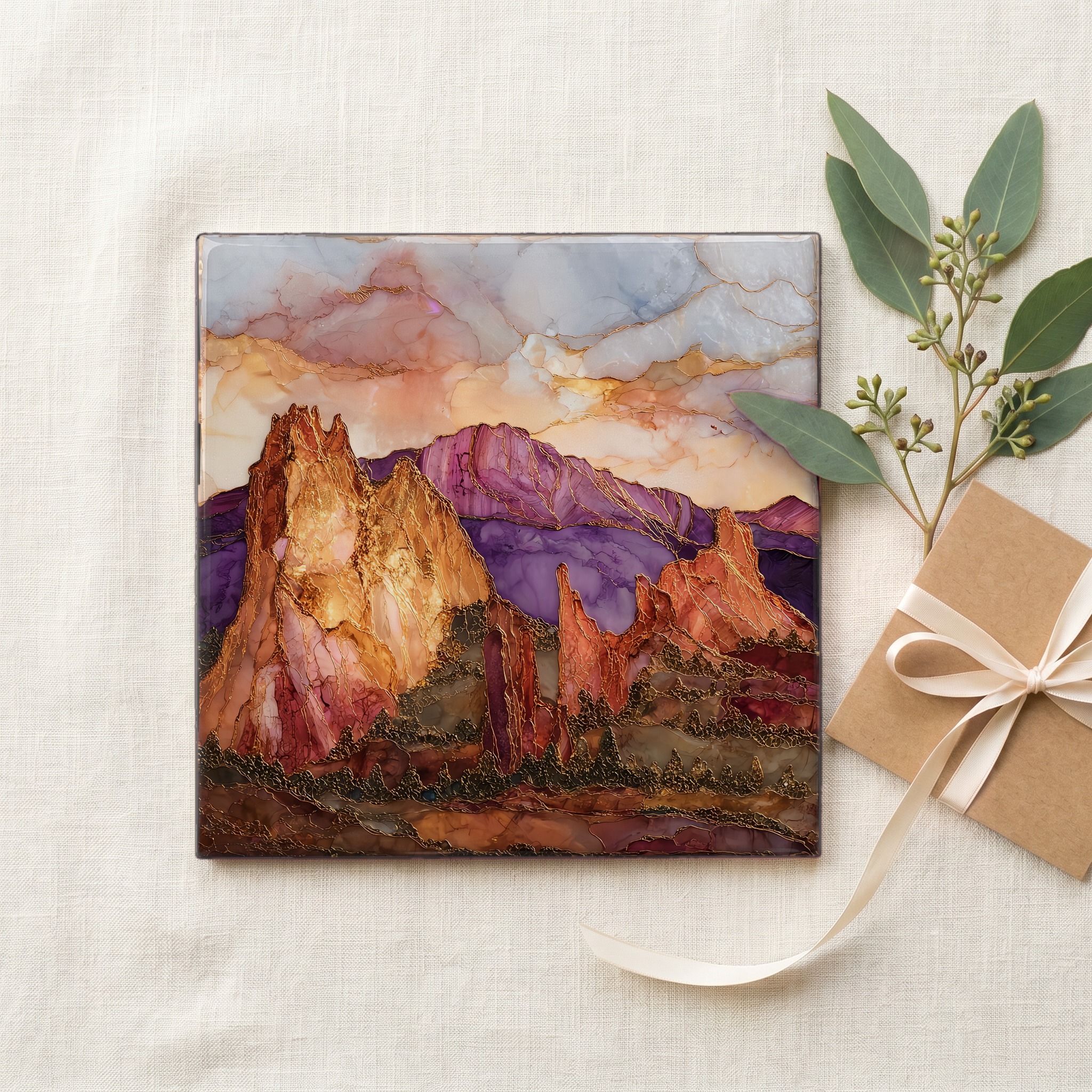
Each tile ships in a kraft box, tied with cream ribbon, with a handwritten note from the studio if you'd like to add one.

Three or five different vistas, hung together — a chapter of places you've been, or want to go.
The place, in three passes.
Garden of the Gods is a 1,367-acre public park on the western edge of Colorado Springs, Colorado, at the foot of the Front Range of the Rocky Mountains. Pikes Peak rises about twelve miles to the west, summit at 14,115 feet, the southernmost of Colorado's high Front Range fourteeners. The park is free, open daily, and run by the city; the entrance sits a few minutes from downtown. Charles Elliott Perkins, a Burlington Railroad executive, bought the land in 1879 and meant to build a house on it; his children deeded the ground to Colorado Springs in 1909 with the condition that it remain free and open to the public. The site was designated a National Natural Landmark in 1971.
The vertical red fins are Fountain Formation sandstone, deposited about 290 million years ago when an older range called the Ancestral Rockies eroded into a coastal plain. The horizontal beds tilted to near-vertical roughly 65 million years ago during the Laramide orogeny, the same long uplift that raised the modern Rockies and Pikes Peak. Iron oxide coats the quartz grains, which is what makes the rock read so red against the snow on the peak. Pikes Peak itself is granite, a coarse pink intrusion roughly 1.08 billion years old that gives the summit its own pink-grey cast in raking light. Two stones, two epochs, framed in one view.
The view runs east to west: red Fountain rocks in the foreground, Pikes Peak the distant frame. The peak catches alpenglow before sunrise and again at last light, when the snow on the summit turns pink while the floor of the park is already in shadow. In summer, afternoon convection builds clouds that cap the peak by one o'clock, which is why most photographers shoot this view in the first hour after sunrise. Katharine Lee Bates rode to the summit on a wagon road in July 1893 and wrote the first lines of America the Beautiful from what she saw there. The verse came down the mountain; the view it named is still here.