Wender·Vista
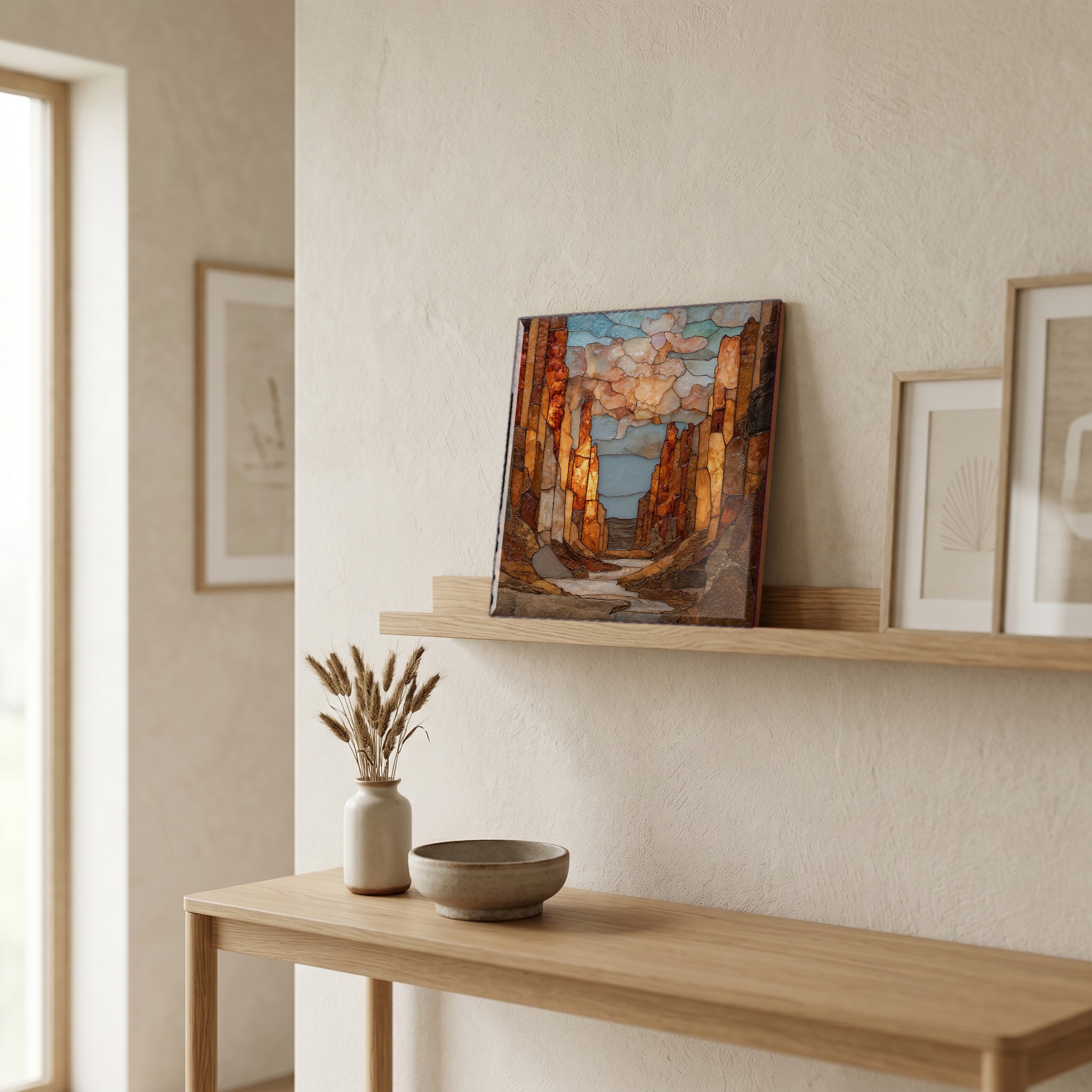
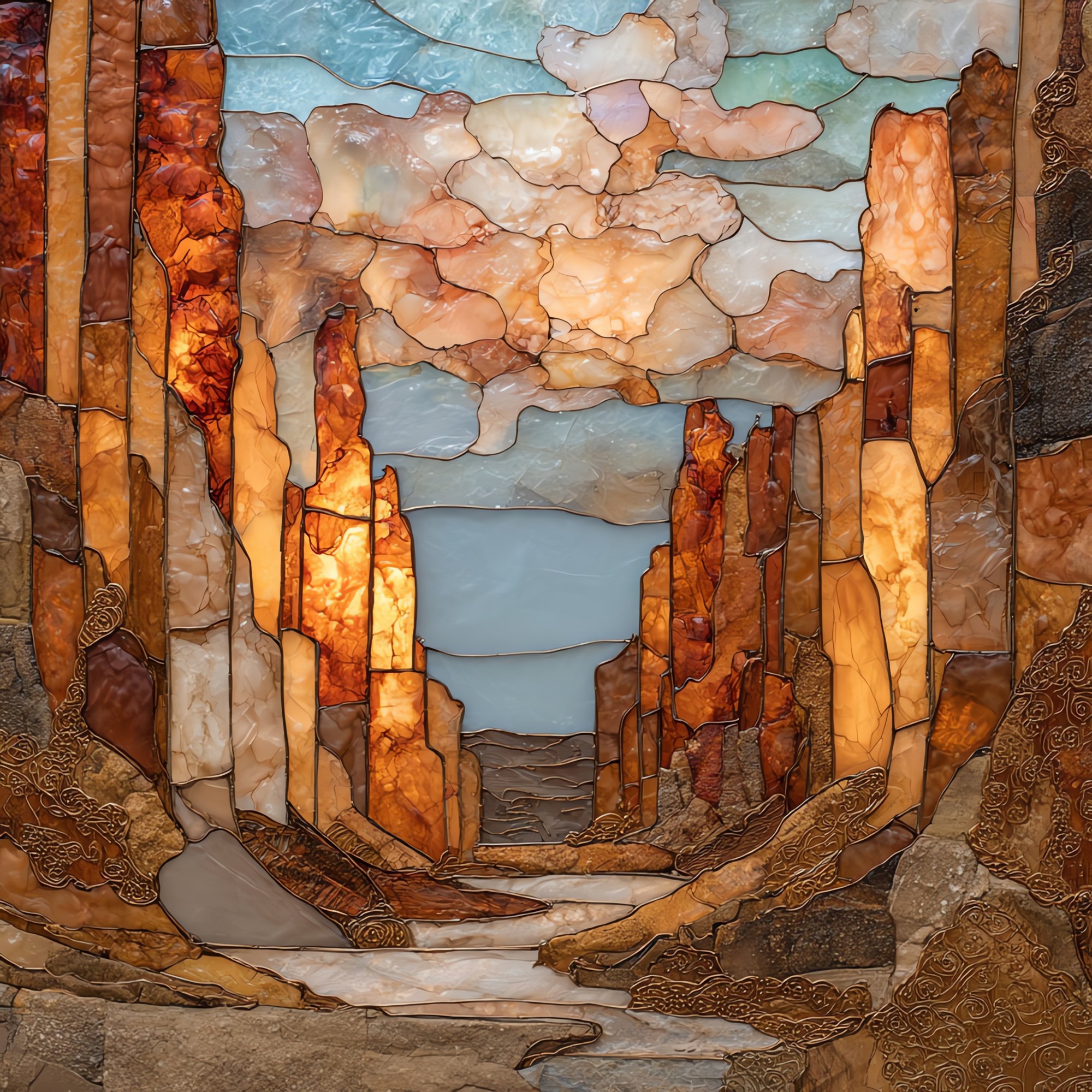
Picture Canyon petroglyphs Ceramic Art Tile
shown on ceramic, 12-inch tileColorado · United States
in the Comanche Grassland of southeast Colorado, just shy of Oklahoma

Picture Canyon petroglyphs Ceramic Art Tile

the wall the sunrise still finds, twice a year.

Where it lives

Not only on a wall.

A small tile on the nightstand catching the morning. A larger one above the fire. Yours, wherever you spend the slow hours.
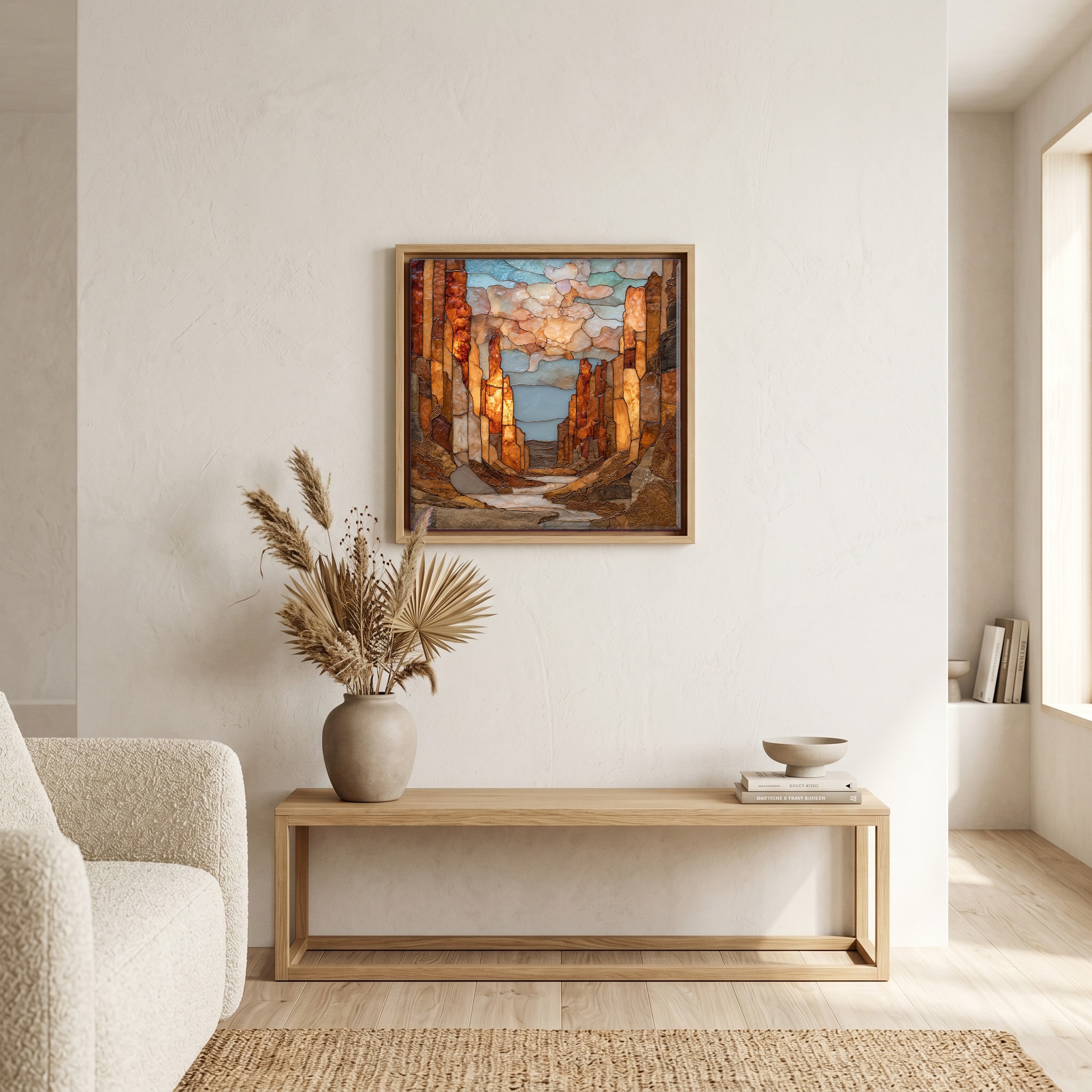
Above the bench, in a warm oak surround.
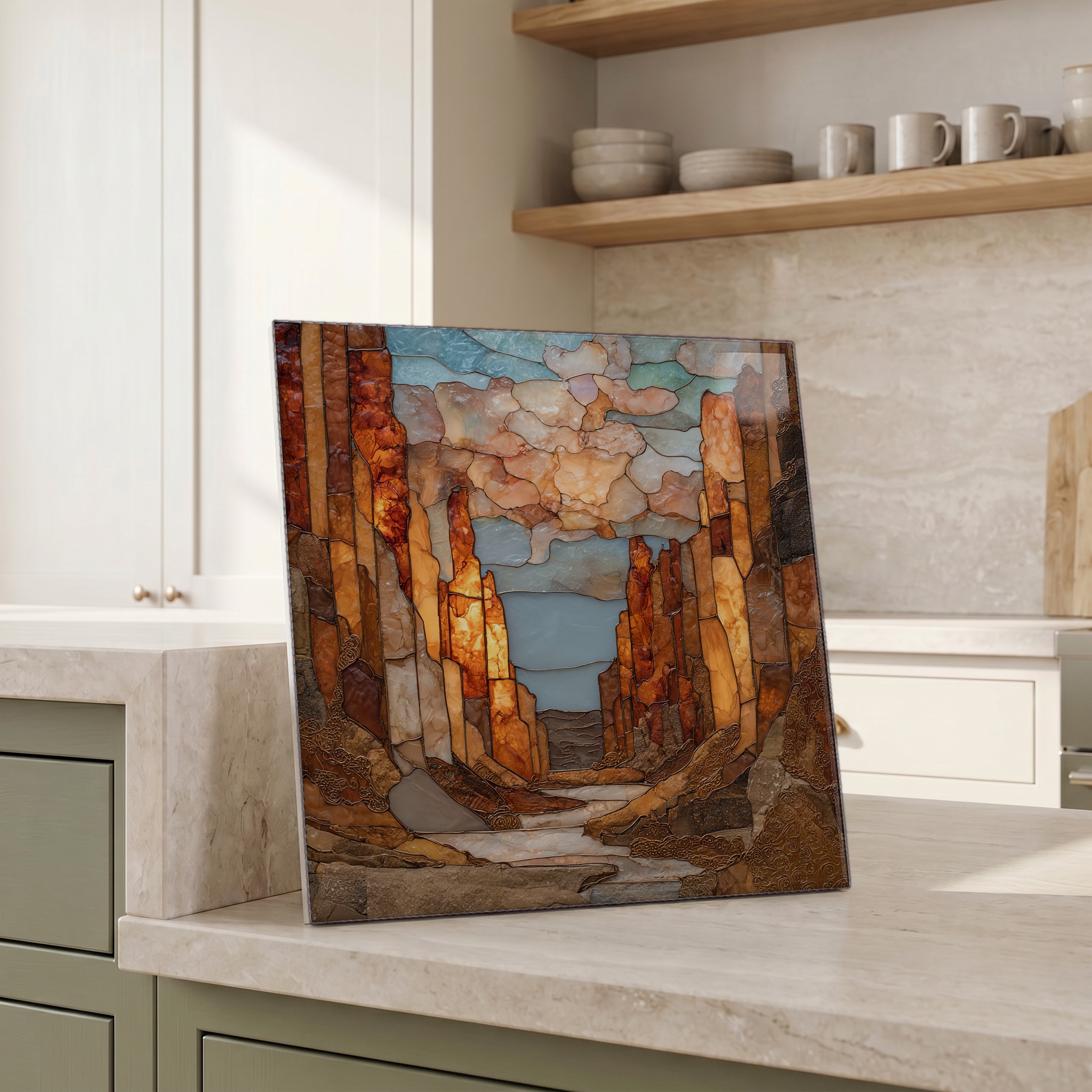
Beside the kettle, propped on the counter.
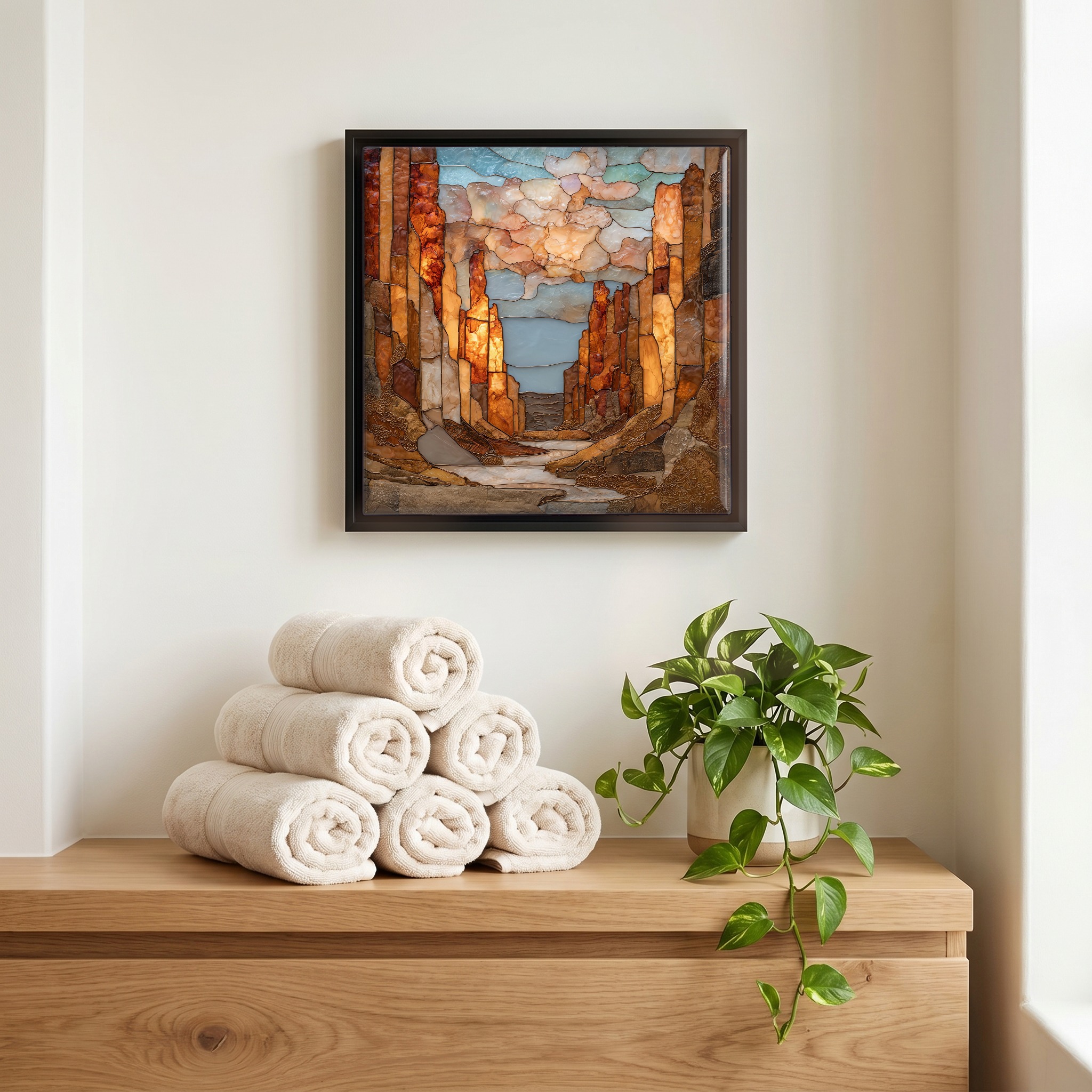
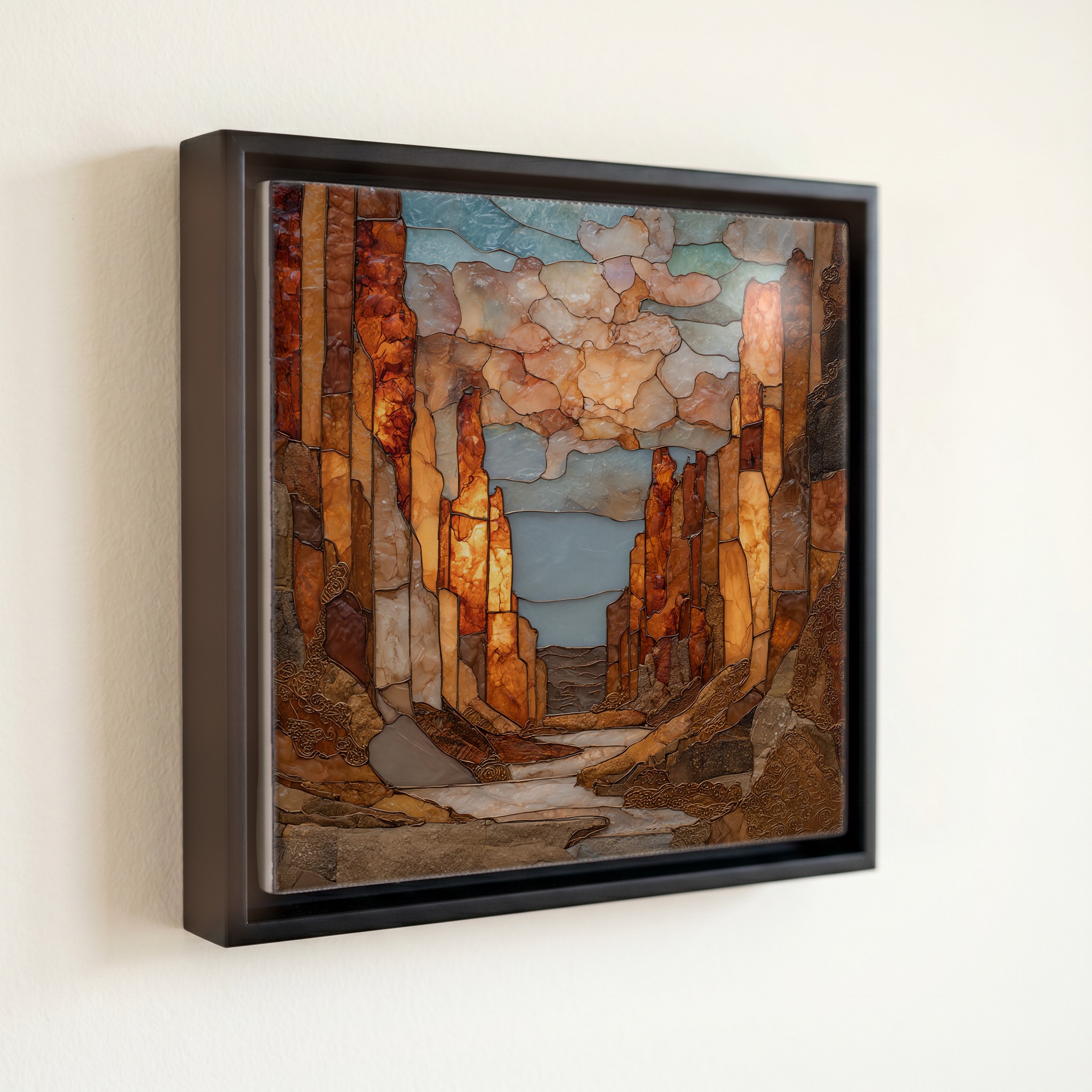
Above the linens, in a slim black surround.
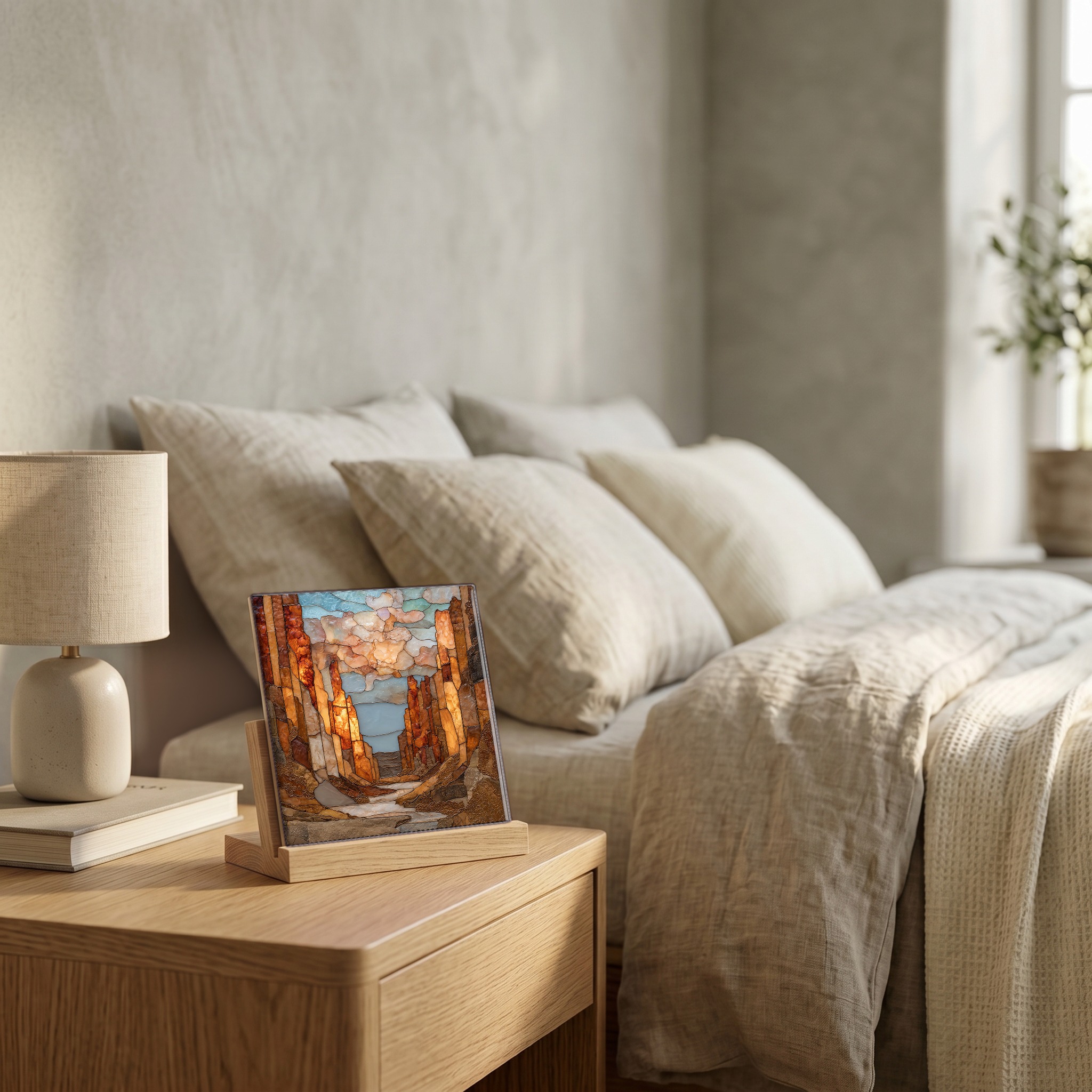
On the nightstand, on a light oak stand.
On a picture ledge, where the light comes in.
a note from the studio

A four-mile loop through a sandstone canyon on the Comanche Grassland, almost in Oklahoma. The south walls hold red and black pictographs and the cut figures of animals and people, most of them made by Plains hands in the seventeenth and eighteenth centuries. One narrow rock chamber called Crack Cave, kept locked the rest of the year, opens to a beam of sunrise light at the spring and fall equinox; the markings inside read clear for a few minutes. The Forest Service unlocks the gate for those two mornings. Nobody comes out here much. The wind takes most things; what stayed got cut deep.
from the studio
shown in a slim black floating frame · 6 × 6 in
— bring it home

Picture Canyon petroglyphs Ceramic Art Tile, on ceramic.

Each tile is finished by hand in our Knoxville studio. Artwork is slowly infused into the ceramic surface under high heat and pressure, and rests beneath a thin glossy finish. The colour lives in the surface, not on top of it.

What kind of piece?
One tile — square or rectangle.
How big?
the popular one — counter, shelf, nightstand
6 × 6 in · 15 cm · 1.6 lb
Surface finish
A clear glossy finish — the artwork reads as if under resin. Ideal for show-pieces and framed wall art.
How it sits
A hidden cleat — sits ¼″ proud of the wall.
$58
Hand-finished and shipped from our studio at the foot of the Smokies. On your wall in about ten days.
size
6 × 6 in
15 cm
weighs
1.6 lb
solid in the hand
surface
ceramic, hand-finished
art rests beneath a thin glossy finish
from
Knoxville, TN
our family studio, at the foot of the Smokies
— start a Coaster Set

Pick any four 4-inch tiles — National Parks you've been to, a Smokies set, the four seasons of one place. $ for a set of , cork-backed, ready to live on the table.
comes gift-ready
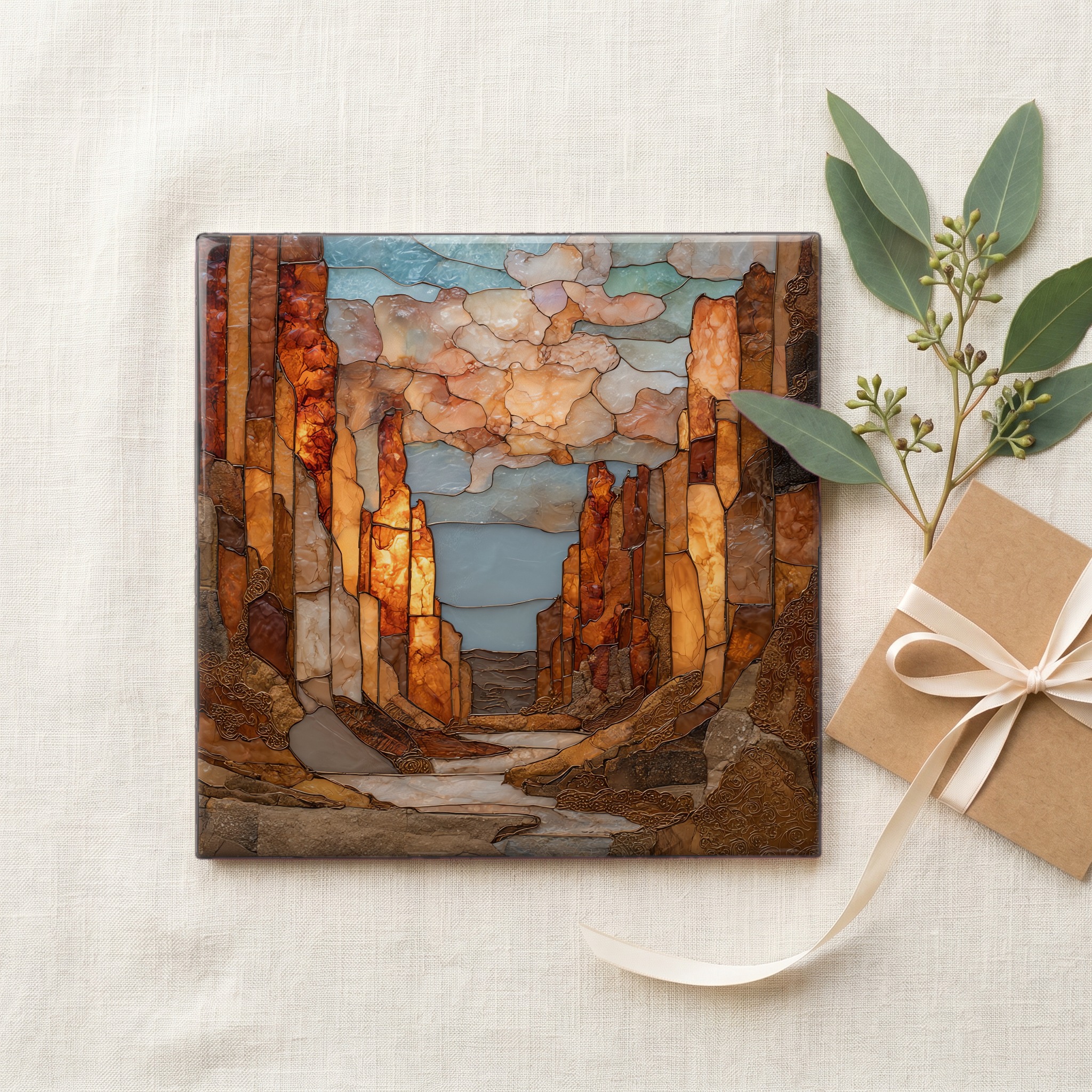
comes gift-ready

Each tile ships in a kraft box, tied with cream ribbon, with a handwritten note from the studio if you'd like to add one.
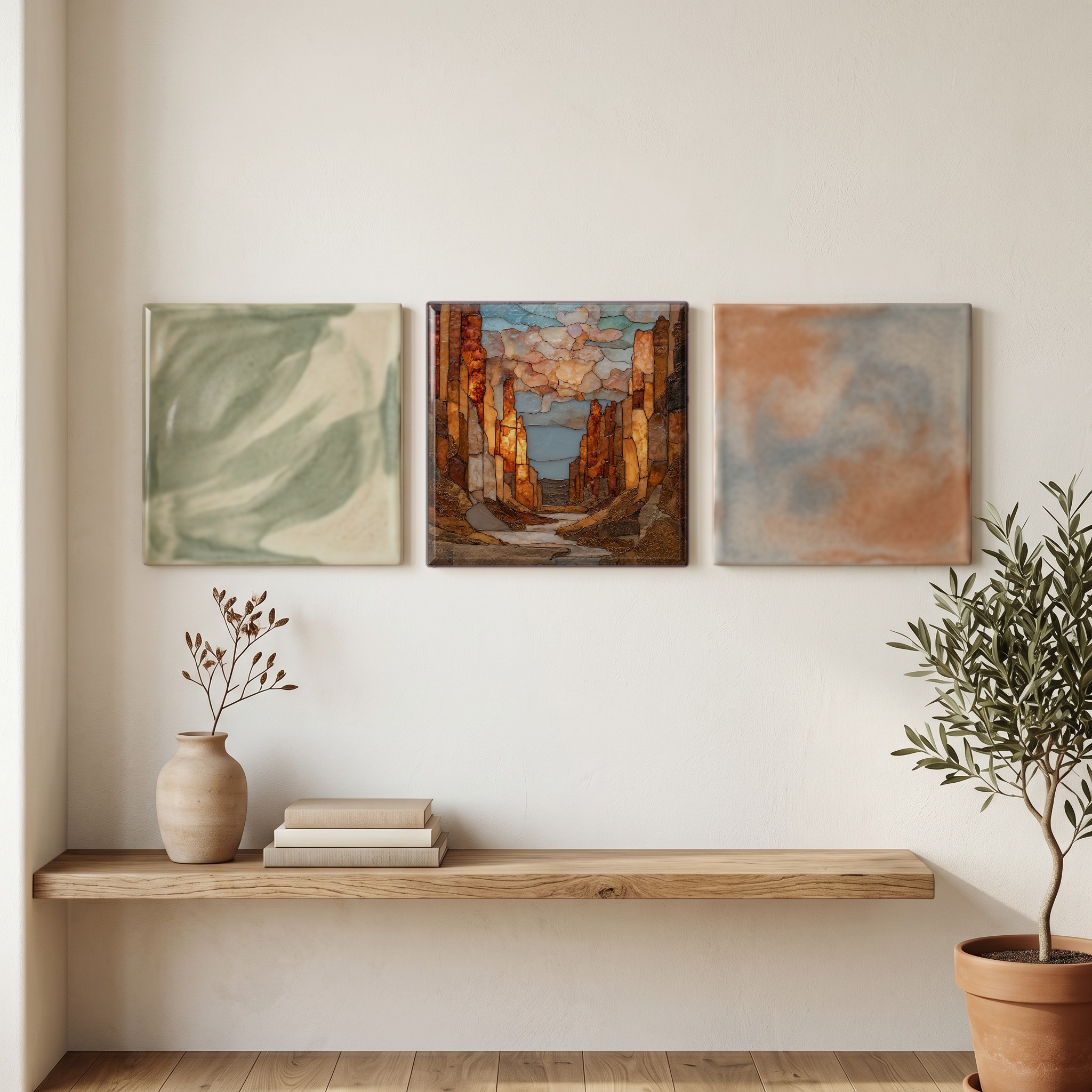
or build a grouping
or build a grouping

Three or five different vistas, hung together — a chapter of places you've been, or want to go.

about Picture Canyon petroglyphs Ceramic Art Tile

The place, in three passes.

A little of what's known, in case you fall down the rabbit hole — or want to go see it yourself.
the place

Picture Canyon sits in the Comanche National Grassland of southeastern Colorado, in Baca County, about a mile north of the Oklahoma state line and roughly forty miles south of Springfield. The grassland is administered by the U.S. Forest Service as part of the Pike-San Isabel National Forests jurisdiction and covers more than 440,000 acres of shortgrass prairie cut by sandstone canyons. The canyon itself is reached by graded county road; a small trailhead opens onto a roughly four-mile loop with picnic tables, seeps, and named features including Balanced Rock and Crack Cave. The terrain is gentle by canyon standards, with elevations ranging from about 4,235 to 4,315 feet. Pronghorn cross the grass above the rim.

the stone

The canyon's south walls are pale sandstone, the same family of bedrock that surfaces across the southern High Plains, and they hold the rock art the canyon is named for. Most of the figures are pictographs in red and black mineral pigment alongside petroglyphs cut shallowly into the rock face: animals, human figures, hands, geometric panels. Archaeologists attribute the bulk of the visible work to Plains Indian peoples of the seventeenth and early eighteenth centuries. Older traces tie the canyon to ancestors who left tipi rings on the grassland through about A.D. 1350, with Paleo-Indian visitors documented earlier still. The pigments survive because the south-facing overhangs shield them from rain and the dry plains climate slows everything that erases stone.

— informed by Wikipedia
the light

Crack Cave, the narrow rock shelter near the head of the canyon, is the reason most visitors plan their trips. On the spring and fall equinoxes, close to March 20 and September 22 each year, a beam of sunrise light enters through the cleft and tracks across the back wall, lighting markings cut there more than a thousand years ago for a few minutes before the angle shifts and the chamber returns to shadow. The Forest Service keeps the cave gated against vandalism and runs free ranger-led tours on those two mornings only. The rest of the year the wall waits. The cycle is consistent enough that volunteers and archaeologists return every equinox to watch it happen.

where
United States · Baca County, Colorado
within
Comanche National Grassland
elevation
1,311 m · 4,300 ft
position
37.0097° N · 102.7483° W
the neighborhood

What's nearby.

A handful of named places within an hour's walk or short drive. Some we've already painted; some we will.
10 km E
Campo
town
40 km W
Carrizo Canyon
rock art canyon
55 km N
Springfield
county seat
N
Picture Canyon petroglyphs Ceramic Art Tile
Campo
Carrizo Canyon
Springfield
common questions

What people ask.

A few questions we get about Picture Canyon petroglyphs Ceramic Art Tile — and about bringing the piece home.
about the place

Picture Canyon is in the Comanche National Grassland in Baca County, southeastern Colorado, about a mile north of the Oklahoma state line and roughly forty miles south of Springfield. It sits at around 4,300 feet on the shortgrass plains.

Archaeologists attribute the visible rock art primarily to Plains Indian peoples of the seventeenth and early eighteenth centuries, with older marks tied to earlier ancestors. Some markings inside Crack Cave have been dated to more than a thousand years before present.

On the spring and fall equinoxes, a beam of sunrise light enters Crack Cave and illuminates ancient markings on the back wall for a few minutes. The U.S. Forest Service unlocks the gate and runs free ranger-led tours on those two mornings.

The Picture Canyon loop is about four miles on easy slopes, with around eighty feet of total elevation gain. Shorter walks are possible from the trailhead if you only want to see the main rock art panels and Balanced Rock.

Spring and fall are most comfortable; the canyon sits exposed on the plains and summer afternoons can be hot. The two equinox mornings, in late March and late September, are the only days Crack Cave itself is opened to visitors.

There is no entrance fee and no visitor center. The trailhead sits on Forest Service land with picnic tables and pit toilets but no drinking water. The nearest fuel, groceries, and lodging are in Springfield, about forty miles north.

about the piece in your home

It carries well as a gift for someone who knows that country. Picture Canyon is one of the quiet places people from Baca County, the Oklahoma Panhandle, and the southern High Plains tend to keep close. A Small or Medium with a handwritten note from the studio is a comfortable size for a desk or shelf.

The palette reads earth and ember: rust, ochre, dark indigo, parchment. It sits naturally with Southwestern, mountain-modern, and warm-minimalist rooms. The piece works against plaster walls, weathered wood, and unbleached linen. It is less at home in high-gloss modern or pastel coastal interiors.

The piece fits the broader Southwestern-modern direction that has been steady in mountain-region interiors for the last few years: earth-toned, hand-touched, attentive to place. It also reads well in the older Santa Fe and adobe-traditional vocabularies that never really left.

Above a standard sofa or a long console, a single Large carries the wall at conversational scale. For a larger room, a four-tile Mural opens the image into one broad piece, and a nine-tile Mural becomes the room's anchor.

Yes. For bathroom or kitchen installation, choose the Dura Satin or Matte finish; both are scratch-resistant and suited to vertical surfaces, backsplashes, and shower walls. The Glossy finish is reserved for framed wall art and showpieces away from steady moisture.

A soft microfibre cloth with plain water is enough for routine care. Avoid abrasive pads and acidic cleaners. The colour is slowly infused into the ceramic surface beneath a thin protective finish, so the image will not fade under normal cleaning.

Yes. Every WenderVista piece is composed in-house by Reid Wender and produced as a single hand-finished run at Wender Studios in Knoxville, Tennessee. There is no third-party licensing and no stock-art behind any image in the atlas.

if this one stayed with you

A few you might also love.

Hand-picked by the eye that found Sorapis. Same air, same kind of quiet.