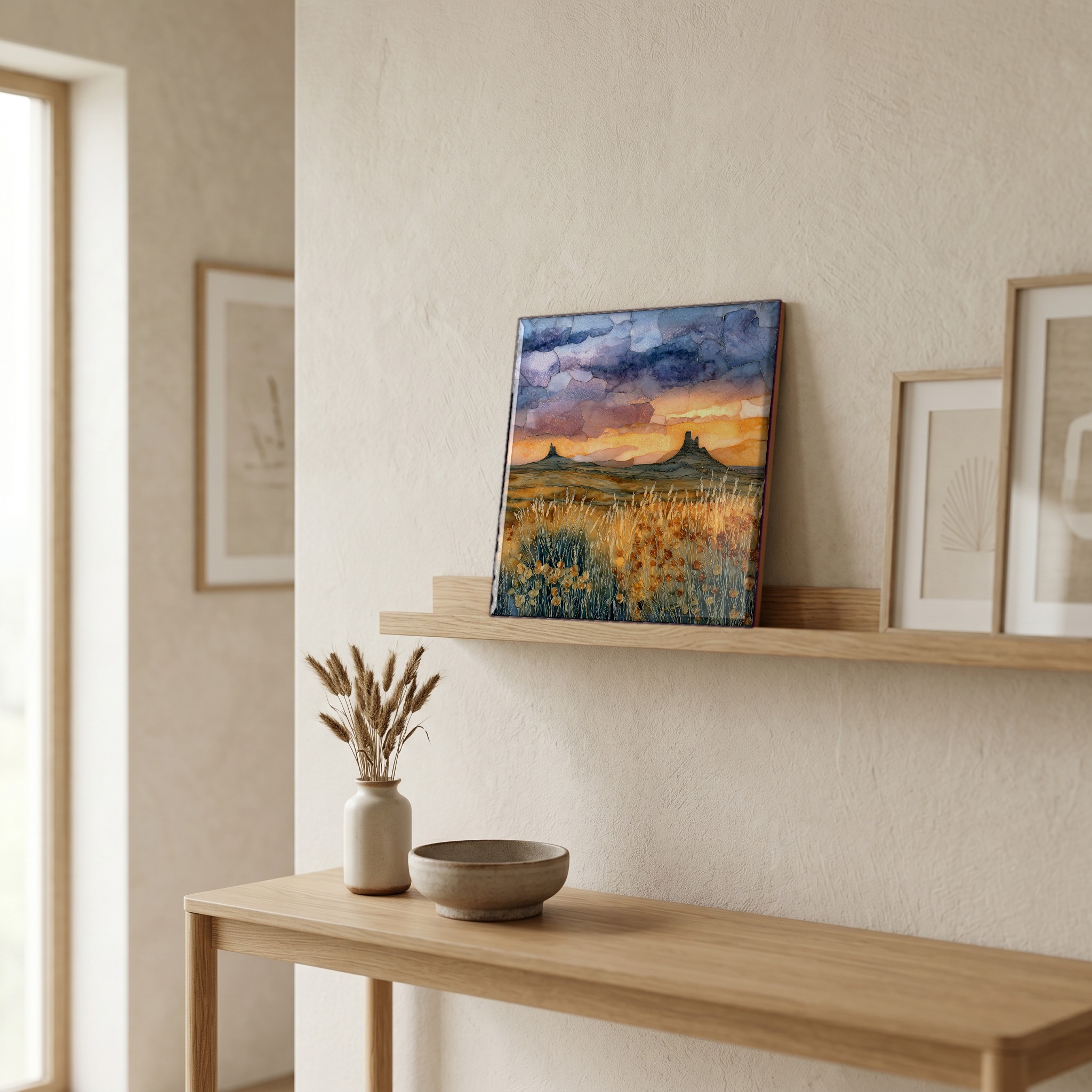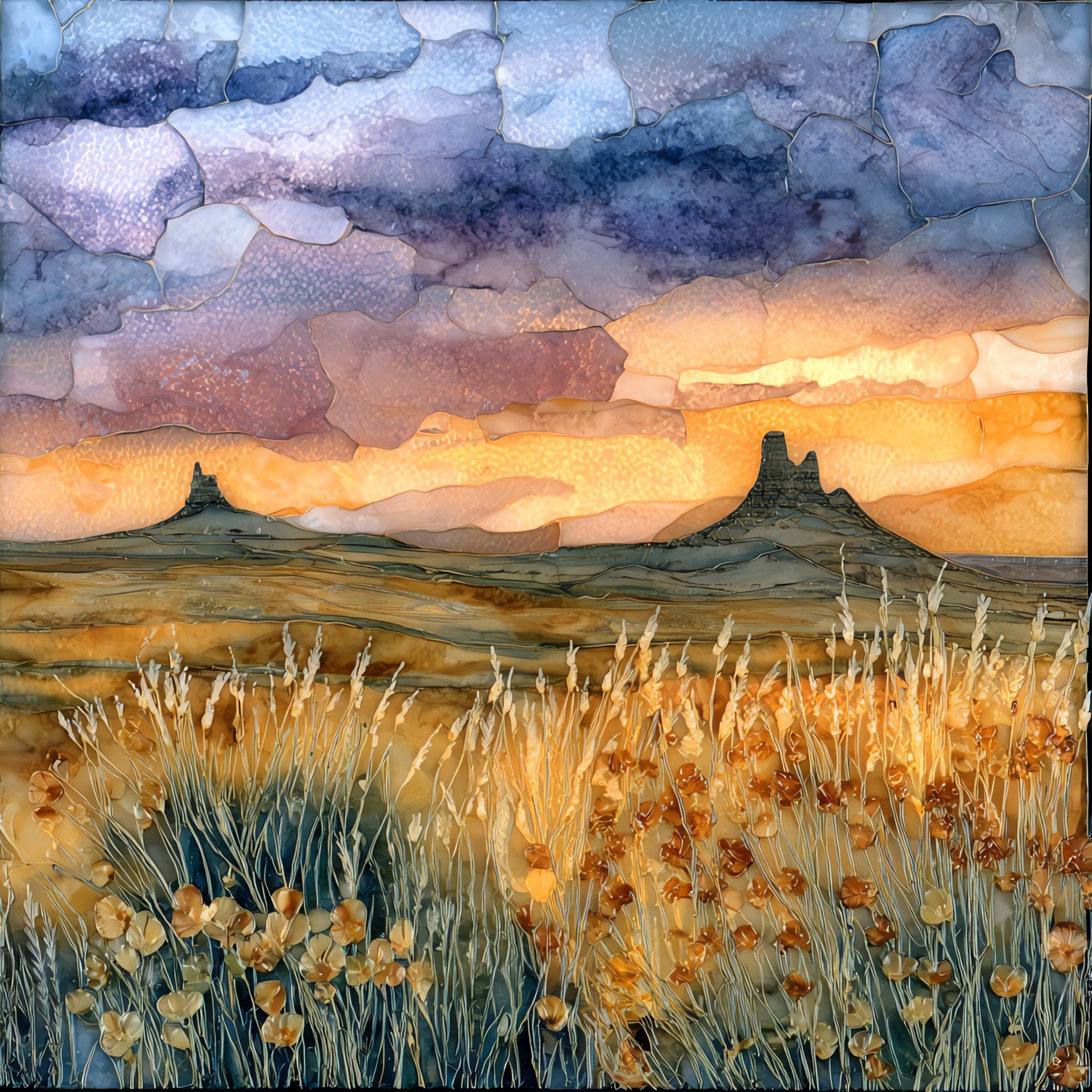
Wender·Vista
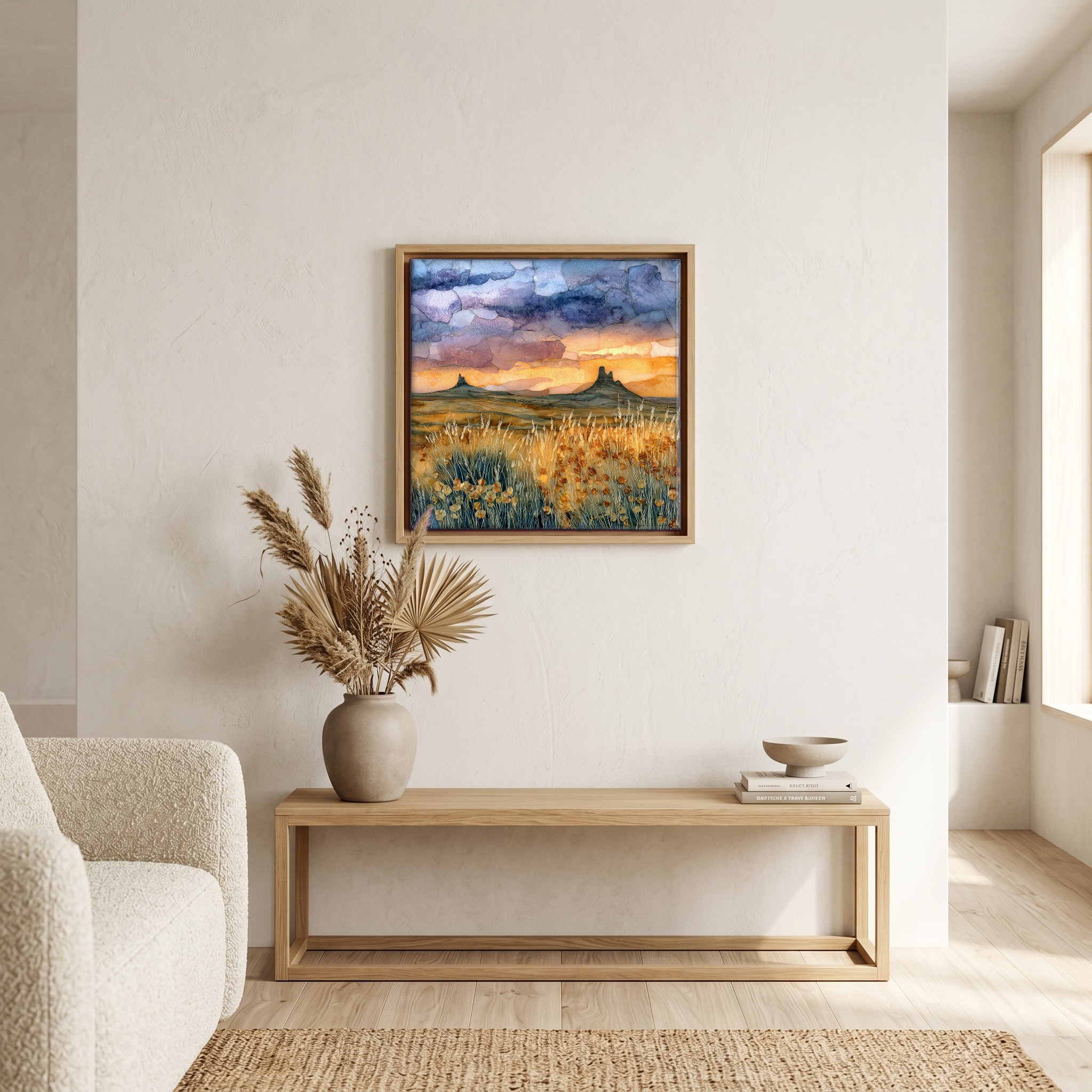
Pawnee National Grassland Ceramic Art Tile
shown on ceramic, 12-inch tileColorado · United States
on the high plains of northeastern Colorado

Pawnee National Grassland Ceramic Art Tile

two buttes and a horizon that doesn't stop.

Where it lives

Not only on a wall.

A small tile on the nightstand catching the morning. A larger one above the fire. Yours, wherever you spend the slow hours.
Above the bench, in a warm oak surround.
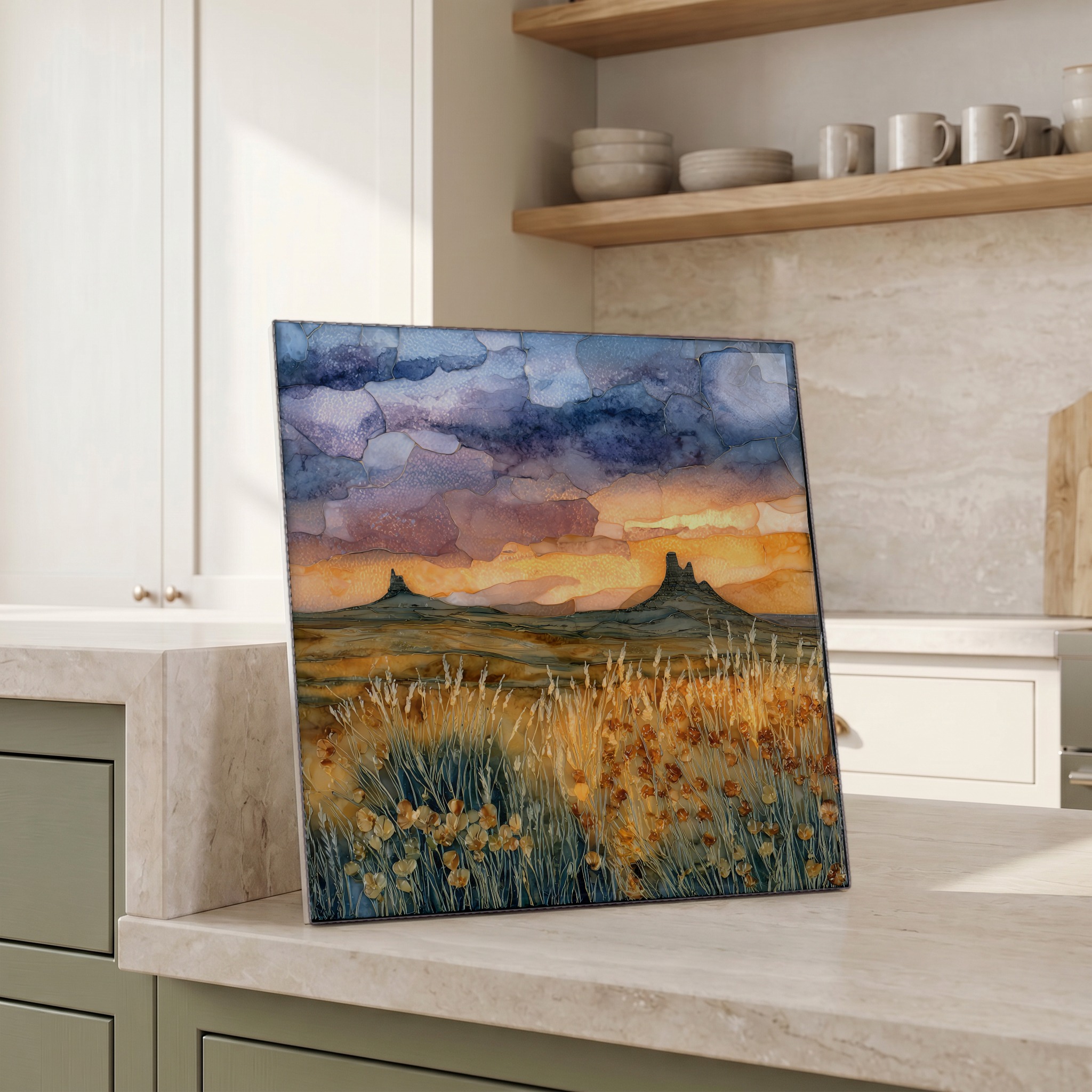
Beside the kettle, propped on the counter.
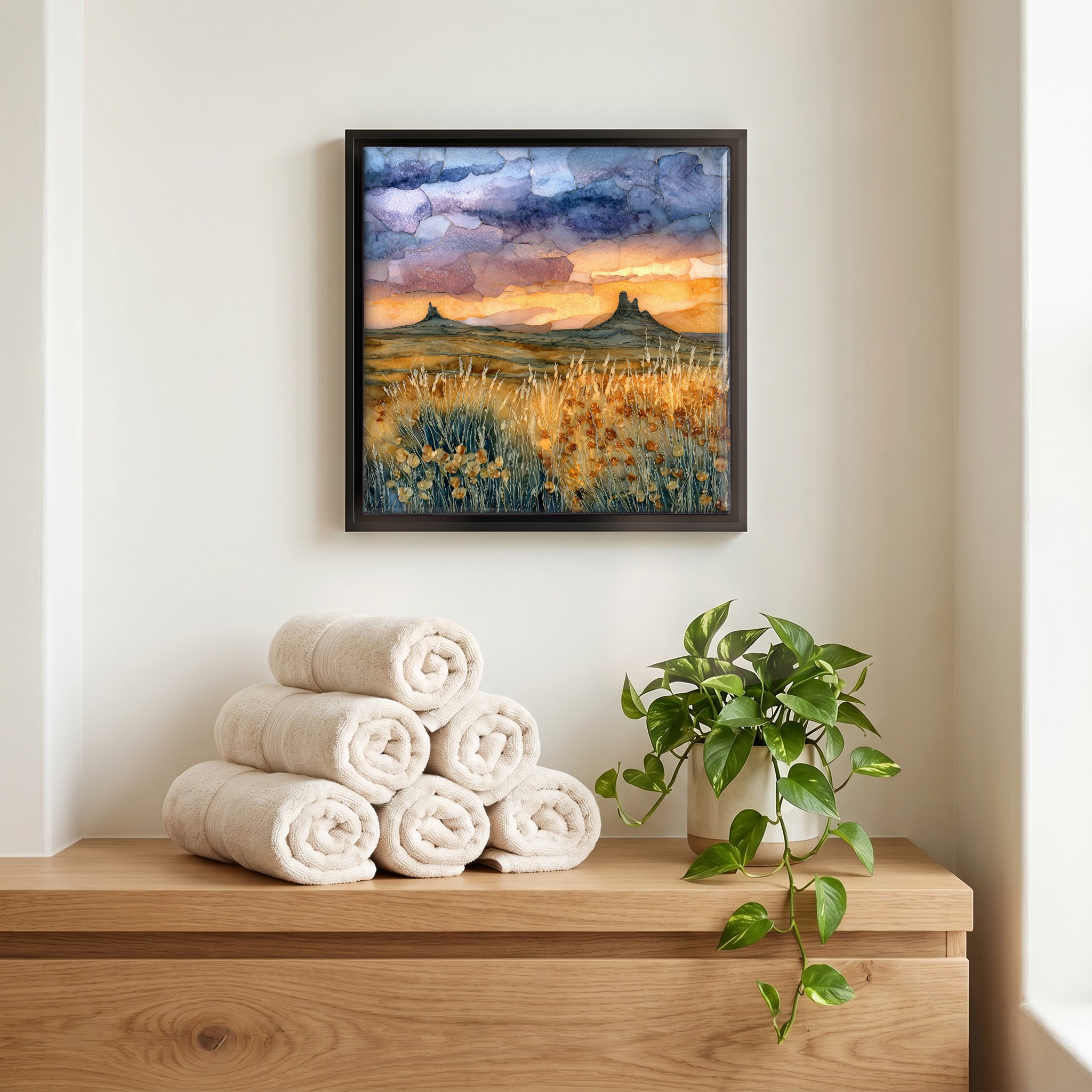
Above the linens, in a slim black surround.
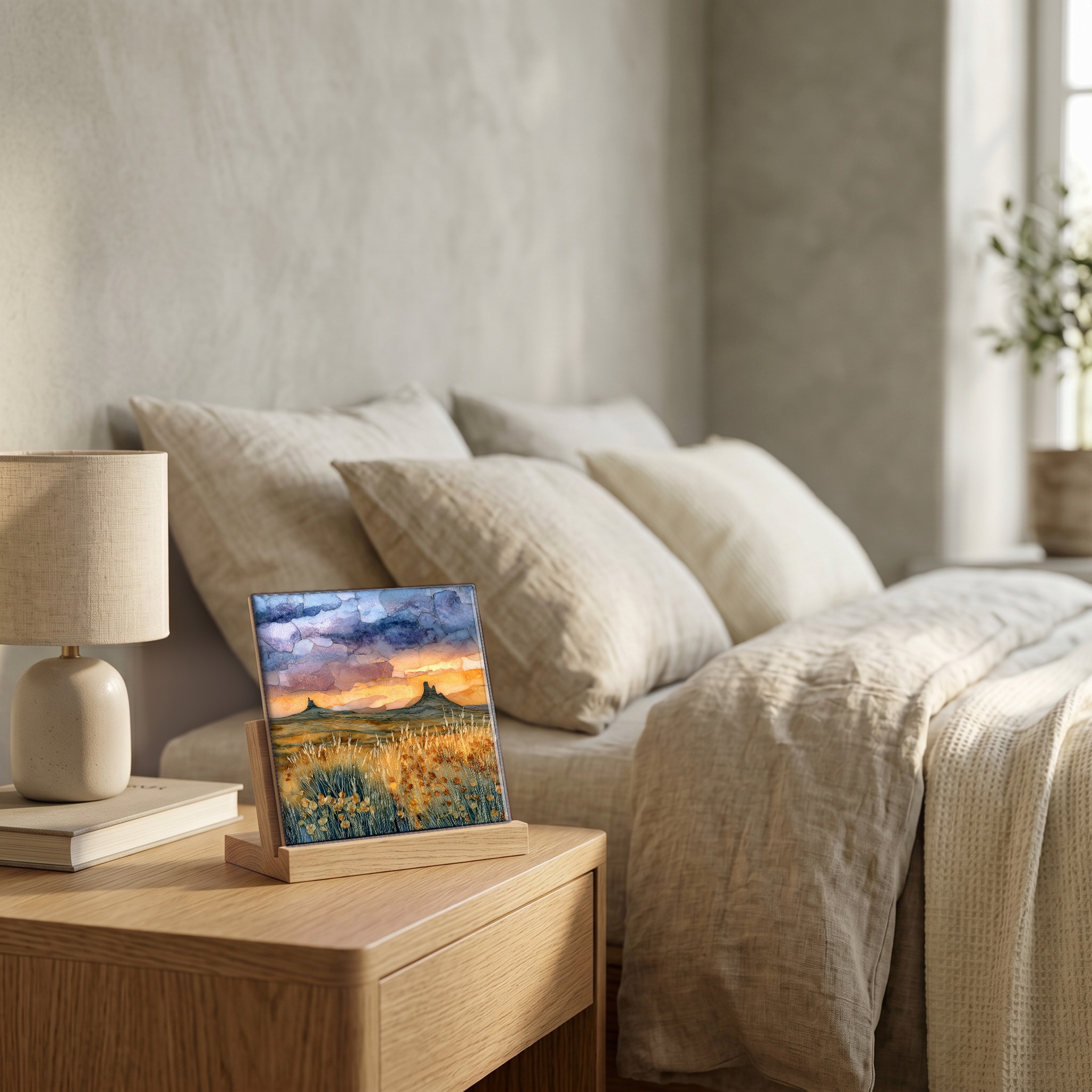
On the nightstand, on a light oak stand.
On a picture ledge, where the light comes in.
a note from the studio

A piece of the high plains east of Greeley, where the Rockies fall away and the country opens. Two sandstone buttes rise about 250 feet above the prairie, the last harder pieces of an older landscape the wind hasn't carried off. The grass is short and the sky is large. From March through June the cliffs belong to the nesting raptors and the path turns back early. The rest of the year the trail walks the open mile to the base of the west butte, with the kind of wind that has nothing to push against.
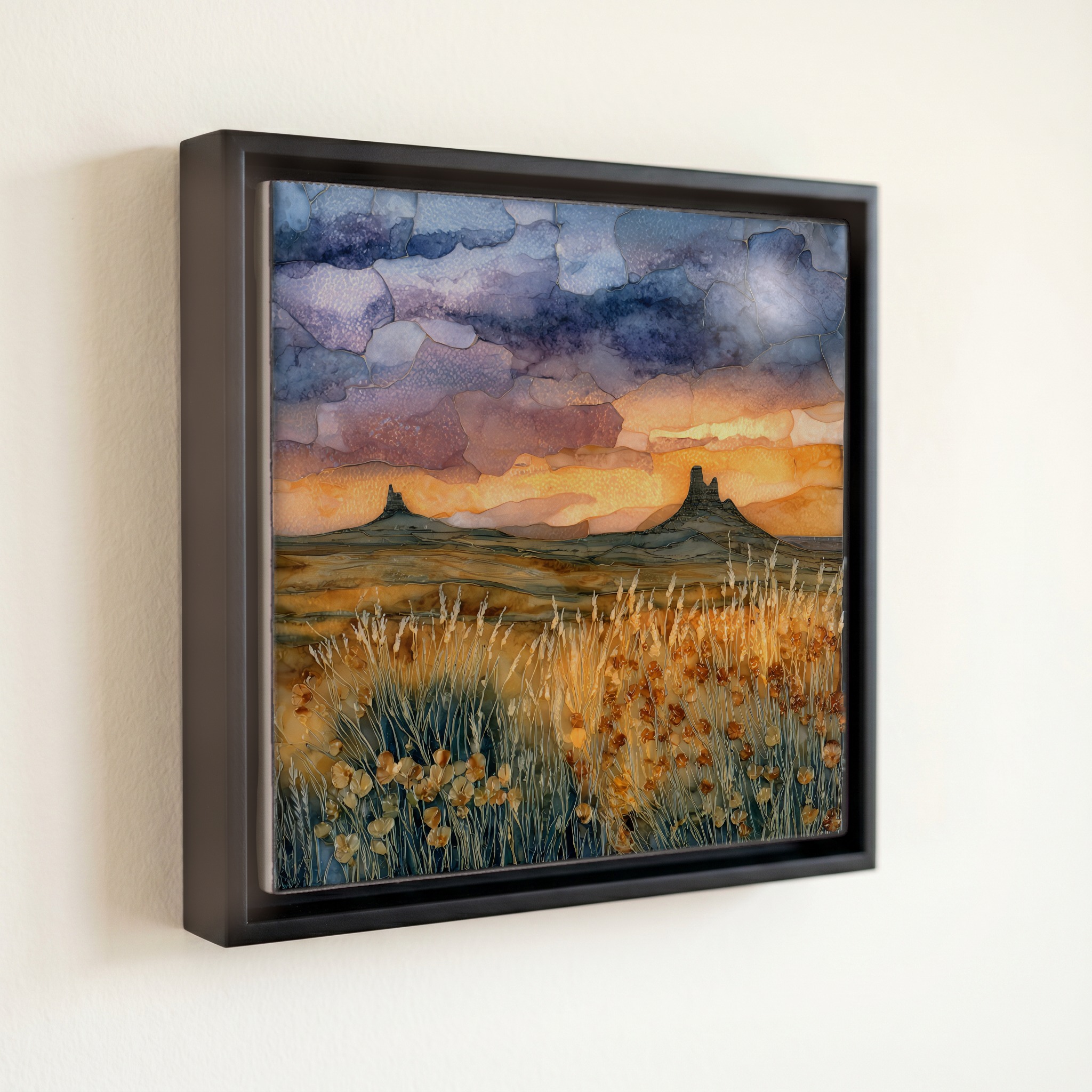
from the studio
shown in a slim black floating frame · 6 × 6 in
— bring it home

Pawnee National Grassland Ceramic Art Tile, on ceramic.

Each tile is finished by hand in our Knoxville studio. Artwork is slowly infused into the ceramic surface under high heat and pressure, and rests beneath a thin glossy finish. The colour lives in the surface, not on top of it.

What kind of piece?
One tile — square or rectangle.
How big?
the popular one — counter, shelf, nightstand
6 × 6 in · 15 cm · 1.6 lb
Surface finish
A clear glossy finish — the artwork reads as if under resin. Ideal for show-pieces and framed wall art.
How it sits
A hidden cleat — sits ¼″ proud of the wall.
$58
Hand-finished and shipped from our studio at the foot of the Smokies. On your wall in about ten days.
size
6 × 6 in
15 cm
weighs
1.6 lb
solid in the hand
surface
ceramic, hand-finished
art rests beneath a thin glossy finish
from
Knoxville, TN
our family studio, at the foot of the Smokies
— start a Coaster Set

Pick any four 4-inch tiles — National Parks you've been to, a Smokies set, the four seasons of one place. $ for a set of , cork-backed, ready to live on the table.
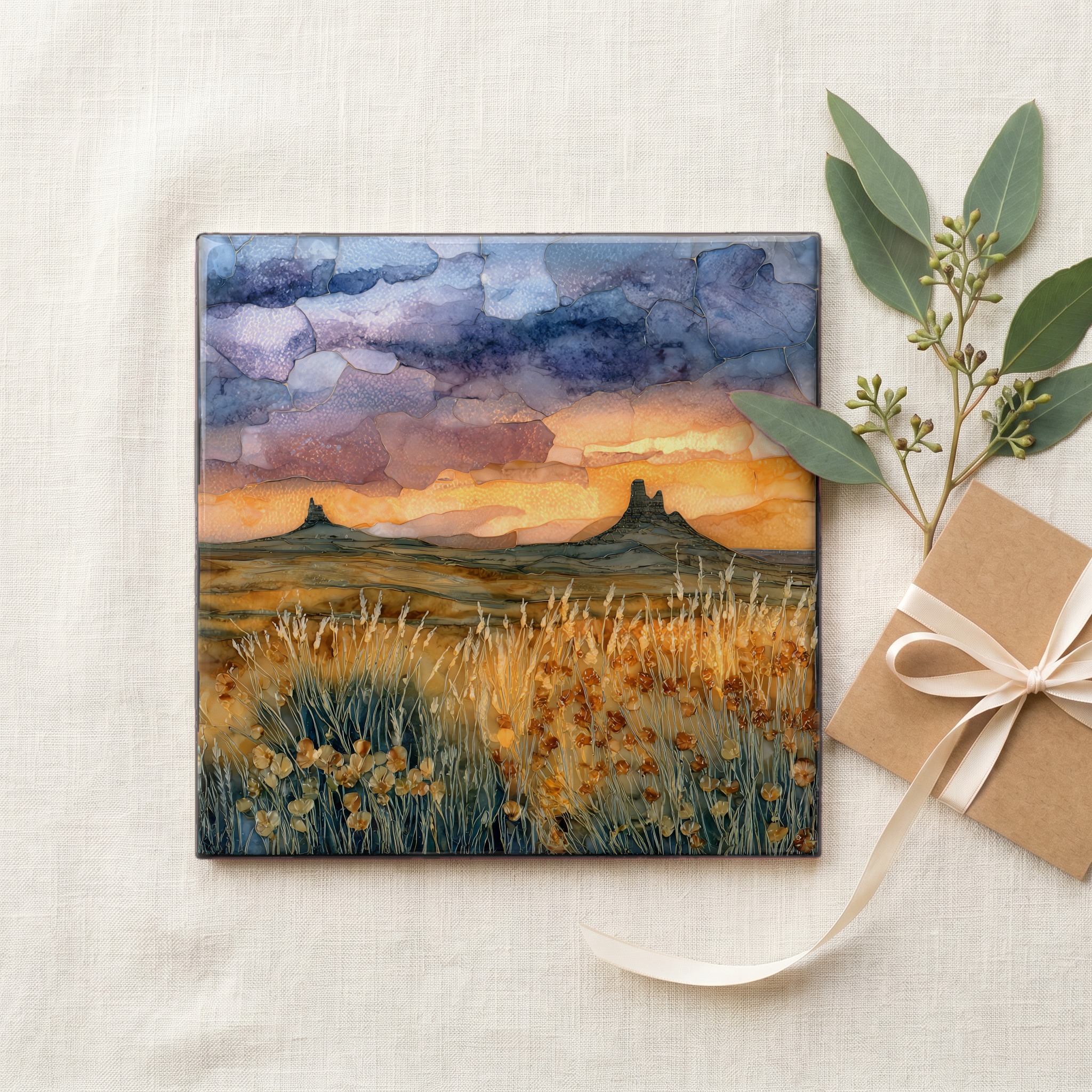
comes gift-ready
comes gift-ready

Each tile ships in a kraft box, tied with cream ribbon, with a handwritten note from the studio if you'd like to add one.
or build a grouping
or build a grouping

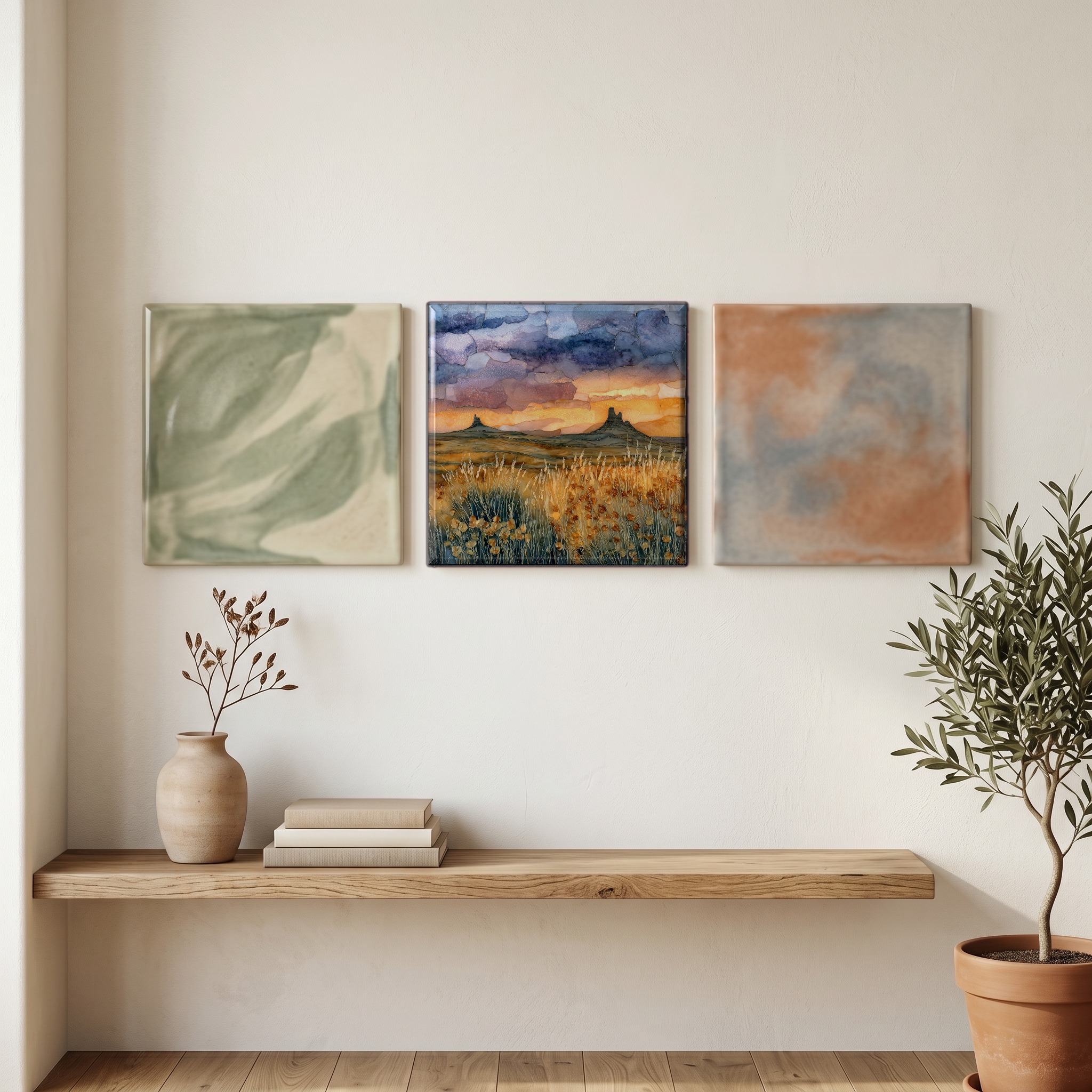
Three or five different vistas, hung together — a chapter of places you've been, or want to go.

about Pawnee National Grassland Ceramic Art Tile

The place, in three passes.

A little of what's known, in case you fall down the rabbit hole — or want to go see it yourself.
the place

Pawnee National Grassland covers about 193,060 acres of shortgrass prairie in Weld County, in the far northeastern corner of Colorado, managed by the US Forest Service as part of the Arapaho and Roosevelt National Forests. The land was assembled by the federal government during the 1930s under the Bankhead-Jones Farm Tenant Act, buying back farmland the Dust Bowl had ruined, and was designated a National Grassland in 1960. The Forest Service office sits in Greeley, about 35 miles southwest of the Pawnee Buttes themselves. The grassland is reached by county roads off Colorado State Highway 14 east of Briggsdale, where pavement gives way to graded dirt and the country opens out toward Nebraska.

the stone

The Pawnee Buttes rise about 250 feet above the surrounding prairie floor, two flat-topped sandstone towers left behind as the High Plains around them eroded away. The harder cap is Ogallala Formation rock, deposited as river gravels and sands washed off the rising Rockies during the Miocene. Below the cap, the softer Brule Formation siltstones and clays from the Oligocene weather faster and have given the surrounding country its slow downward slope. Geologists call landforms of this kind erosional remnants. The west butte is the one the public trail reaches, about a mile and a half from the trailhead off County Road 110. The east butte sits on private land and is admired from a distance.

the season

From March 1 through June 30 the Forest Service closes the cliff approaches near the buttes to protect nesting raptors. Ferruginous hawks, prairie falcons, and golden eagles raise their broods on the rock walls during those four months, and the published trail turns back at a posted boundary well before the base of the west butte. The grassland itself stays open all year. July through October is the easier season for the full hike, with cooler mornings, lark buntings on the wires, and pronghorn at long distance. Winter is open and severe: wind, drifted dirt, ground blizzards along the section-line roads. The grassland is recognised by the National Audubon Society as an Important Bird Area for breeding shortgrass passerines.

where
United States · Weld County, Colorado
within
Pawnee National Grassland
elevation
1,650 m · 5,420 ft
position
40.8100° N · 103.9900° W
the neighborhood

What's nearby.

A handful of named places within an hour's walk or short drive. Some we've already painted; some we will.
20 km WNW
Grover
plains town
33 km SW
Briggsdale
gateway hamlet
40 km SW
Crow Valley Recreation Area
grassland campground
N
Pawnee National Grassland Ceramic Art Tile
Grover
Briggsdale
Crow Valley Recreation Area
common questions

What people ask.

A few questions we get about Pawnee National Grassland Ceramic Art Tile — and about bringing the piece home.
about the place

Pawnee National Grassland sits in the far northeastern corner of Colorado, in Weld County, about 35 miles east of Greeley and roughly two hours northeast of Denver. It covers about 193,060 acres of shortgrass prairie and is managed by the US Forest Service as part of the Arapaho and Roosevelt National Forests.

The Pawnee Buttes are two flat-topped sandstone towers that rise about 250 feet above the surrounding prairie. They are erosional remnants: the harder Ogallala Formation caps on top have protected the softer Brule Formation rock beneath while the rest of the High Plains has worn down around them.

Yes. The Pawnee Buttes Trail is about a mile and a half each way from the trailhead off County Road 110, reaching the base of the west butte. The east butte sits on private land. The cliff approach is closed from March 1 through June 30 to protect nesting raptors.

July through October is the most open window. Mornings are cool, the raptor closure has lifted, lark buntings and burrowing owls are still on the grassland, and the dirt roads remain passable. Winter is open but severe, with ground blizzards along the section-line roads. Spring keeps the cliff approach closed.

The land was bought back by the federal government in the 1930s under the Bankhead-Jones Farm Tenant Act, after Dust Bowl farming ruined the soil. It was formally designated as Pawnee National Grassland in 1960 and is now managed by the US Forest Service for grazing, recreation, and wildlife.

Pawnee is a recognised Important Bird Area. Breeding species include the mountain plover, lark bunting (the Colorado state bird), burrowing owl, ferruginous hawk, prairie falcon, and golden eagle. The shortgrass prairie supports passerines that nest nowhere else in Colorado in such density.

The Pawnee Buttes are about 110 miles northeast of Denver, roughly a two-hour drive. The closest gateway towns are Briggsdale and Grover, where pavement gives way to graded dirt county roads that lead the last ten or twelve miles to the trailhead.

about the piece in your home

It has been a meaningful piece for our customers who know the country east of the Front Range, who grew up in Weld County, who work the land out there, or who come back to the buttes every autumn. A Keepsake or Small with a handwritten note from the studio carries well.

The piece sits naturally with prairie-modern, Western-modern, and warm minimalist interiors. The colours pull from a shortgrass and dry-sky palette of buff, ochre, slate, and soft turquoise. It also reads well in jewel-tone maximalist rooms that want one quiet anchor.

Yes. Western-modern has carried into mainstream design over the last few years, and pieces that read as land rather than as cliché Americana have led the shift. The Pawnee tile reads as land first, with no cowboy iconography and no logo-Western styling.

For a sofa, a single Large or a four-tile Mural anchors the wall without crowding it. Over a console, a Medium reads well at eye level. For a long entry wall, a nine-tile Mural carries the whole horizon line of the buttes and the open prairie.

Yes. For a bathroom, kitchen backsplash, or any vertical wet surface, order the Dura Satin or Matte finish. Both are scratch-resistant and hold up to steam and splash. The glossy finish is reserved for framed wall installations in dry rooms.

A soft microfibre cloth and warm water. The colour lives in the ceramic surface, beneath a thin glossy or satin finish, so household dust, cooking film, or bathroom condensation wipe off cleanly. Skip abrasive cleaners and any pad rougher than microfibre.

Yes. The Pawnee Buttes piece is original to the studio, one of more than 30,000 places in the WenderVista atlas. The work is hand-finished in-house in Knoxville, Tennessee. The studio does not license artwork from outside artists.

if this one stayed with you

A few you might also love.

Hand-picked by the eye that found Sorapis. Same air, same kind of quiet.