Wender·Vista
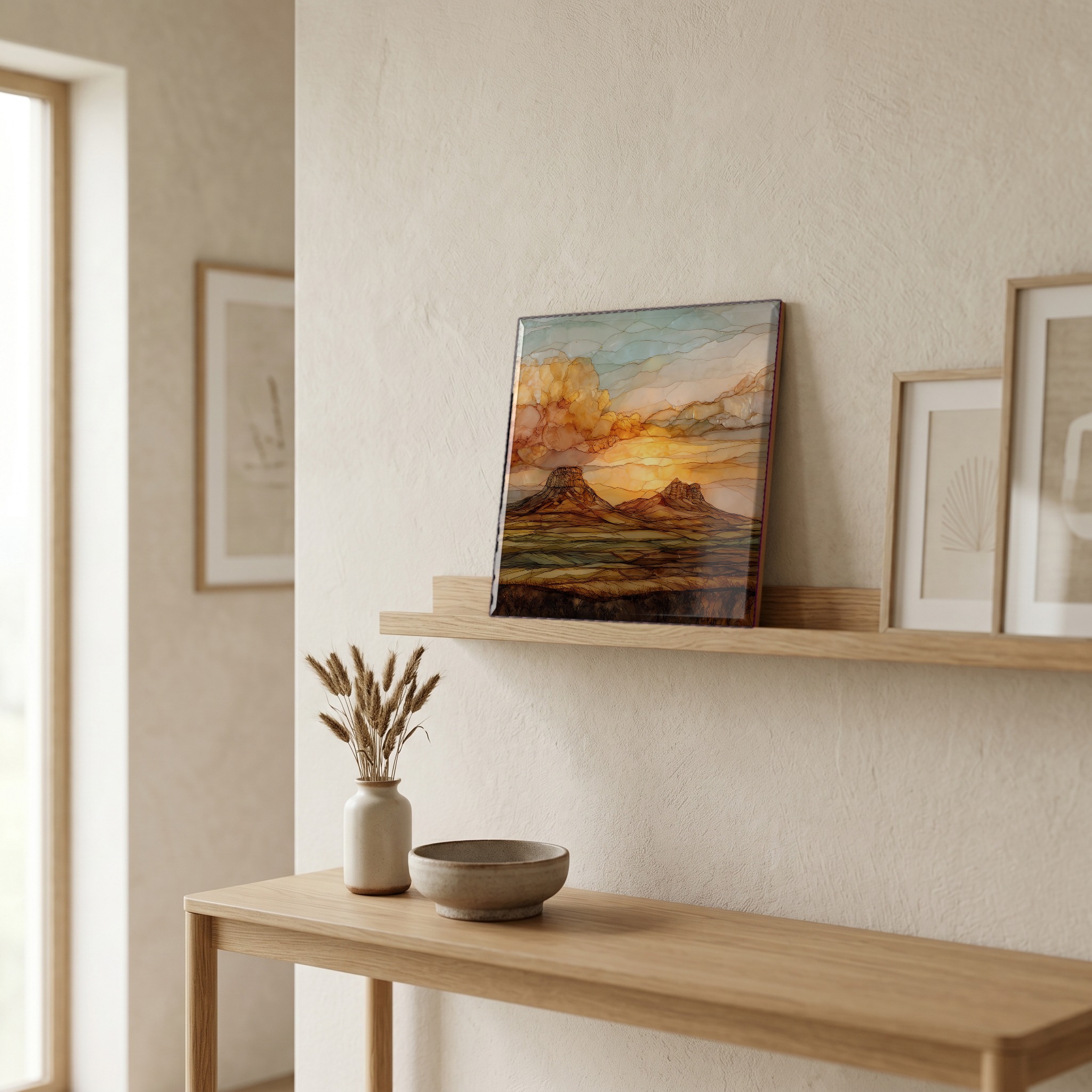
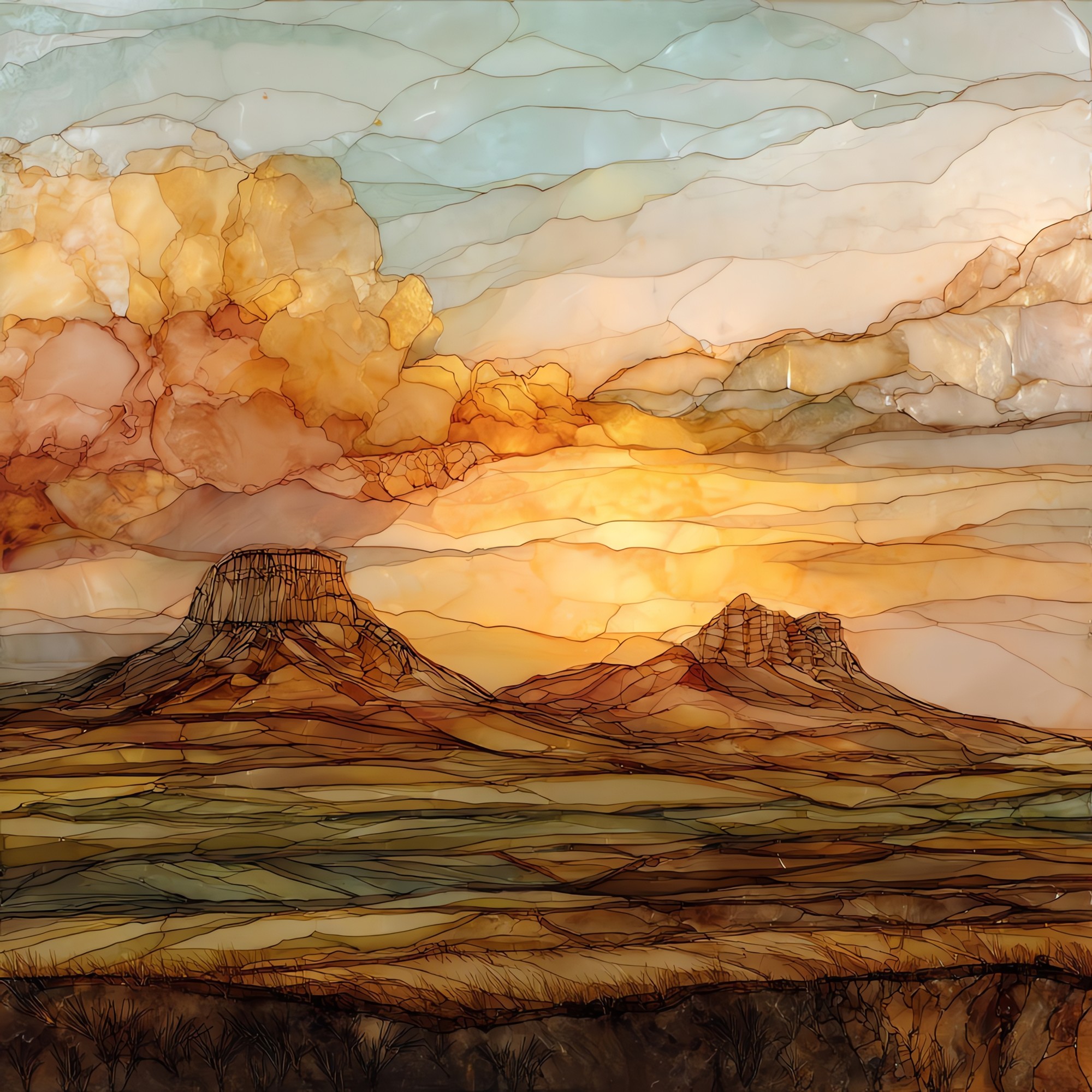
Pawnee Buttes on the plains Ceramic Art Tile
shown on ceramic, 12-inch tileColorado · United States
on the shortgrass plains of northeastern Colorado

Pawnee Buttes on the plains Ceramic Art Tile

— what was left after the wind took everything else.

Where it lives

Not only on a wall.

A small tile on the nightstand catching the morning. A larger one above the fire. Yours, wherever you spend the slow hours.
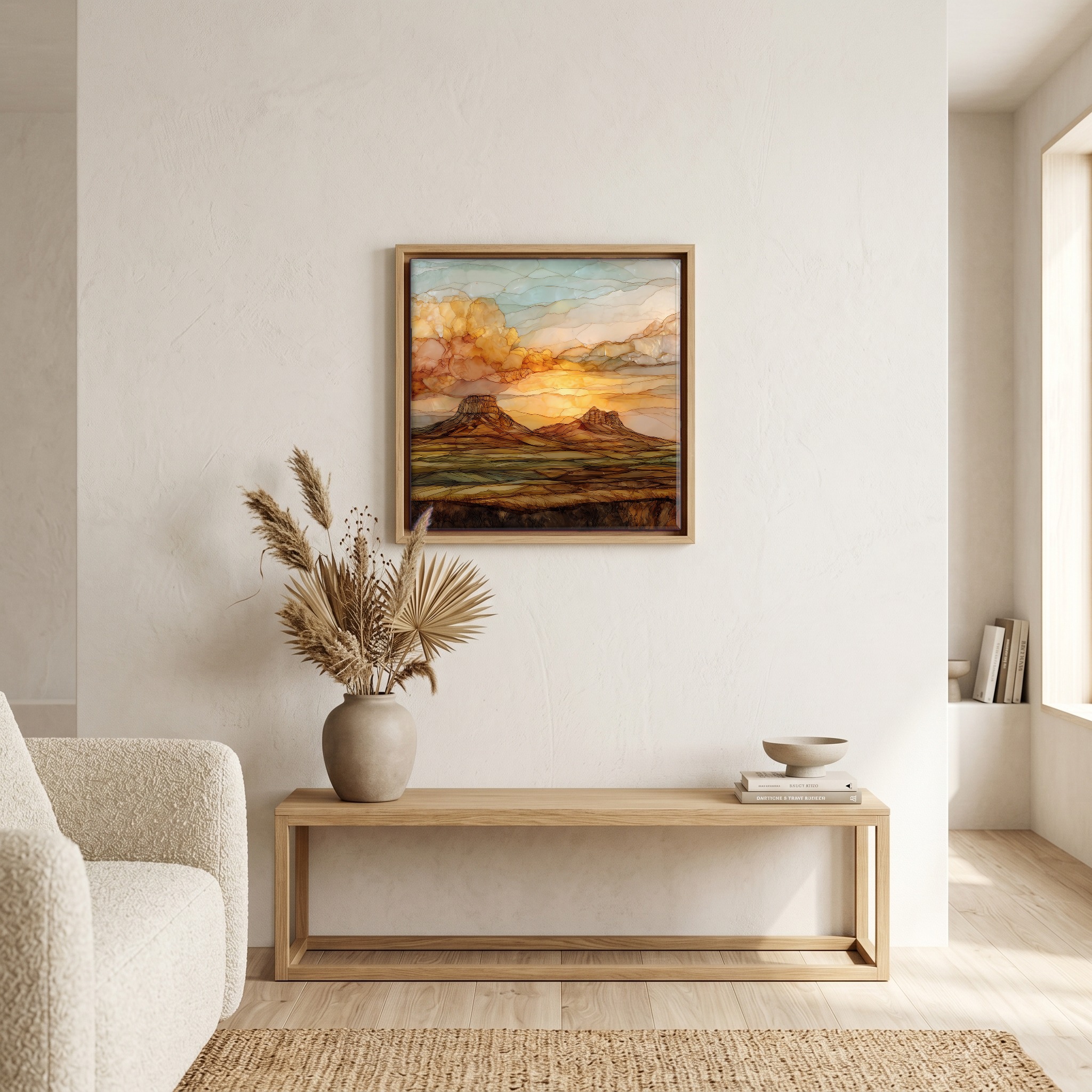
Above the bench, in a warm oak surround.
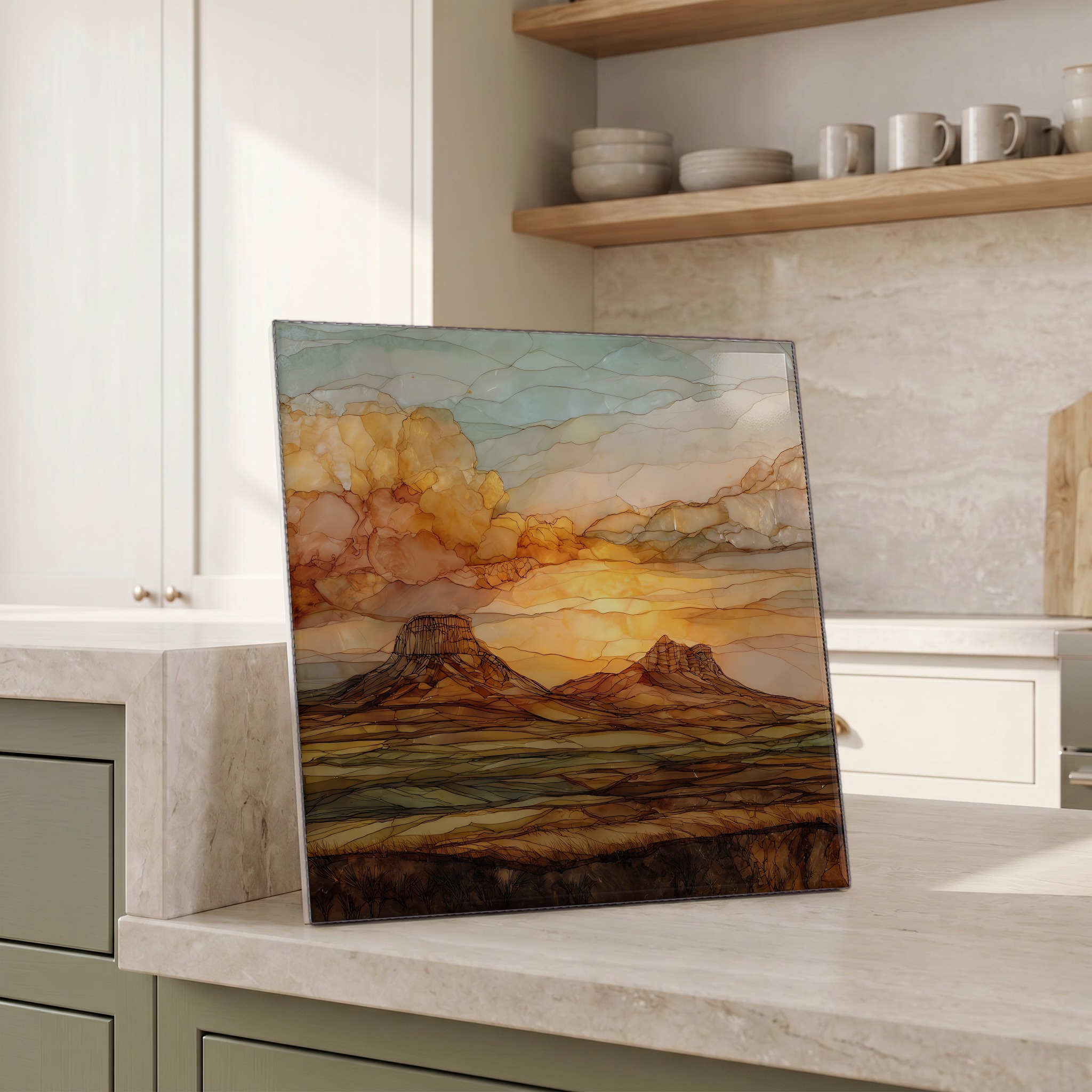
Beside the kettle, propped on the counter.
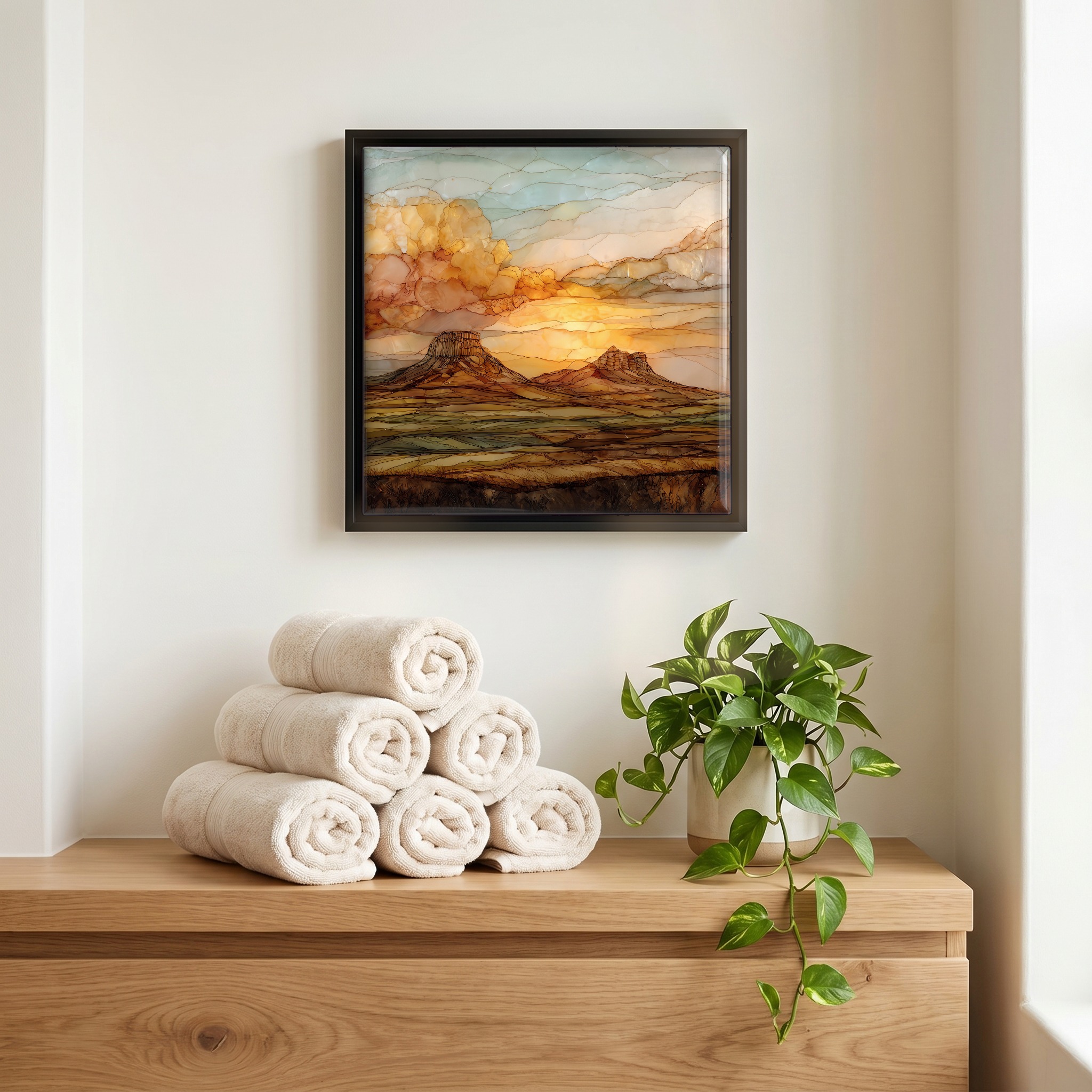
Above the linens, in a slim black surround.
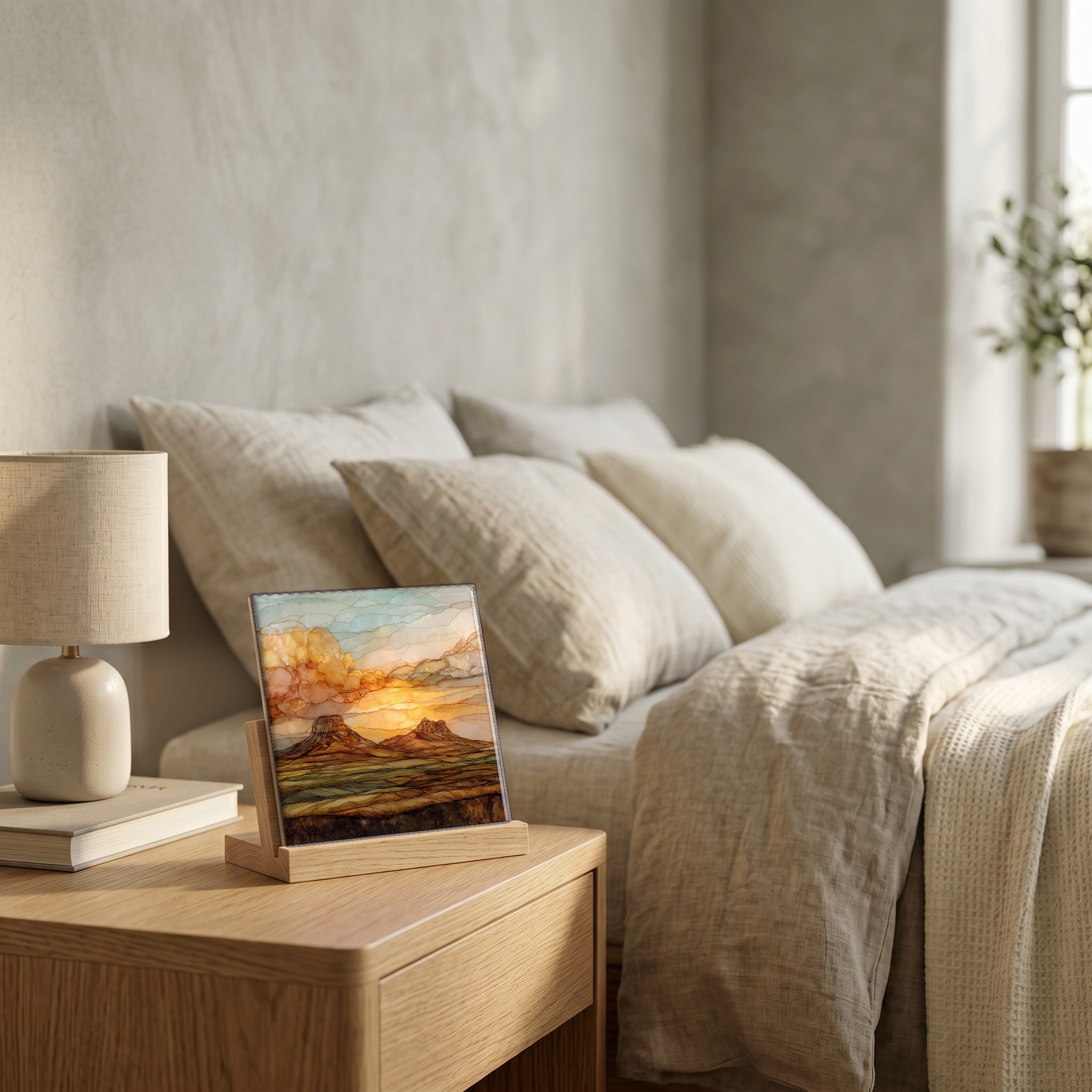
On the nightstand, on a light oak stand.
On a picture ledge, where the light comes in.
a note from the studio

Two sandstone-capped buttes rising about 250 feet above the shortgrass plains of Weld County, northeastern Colorado. From the trailhead the path drops into a small wash and the buttes appear one at a time, the way they do when you come at them on foot. James Michener used them in Centennial; he called them Rattlesnake Buttes. Most of the year you can walk to the base of the west butte. From March through June the north side closes for the raptors nesting in the cliffs: golden eagles, prairie falcons, ferruginous hawks. No shade. No water. Bring both.
from the studio
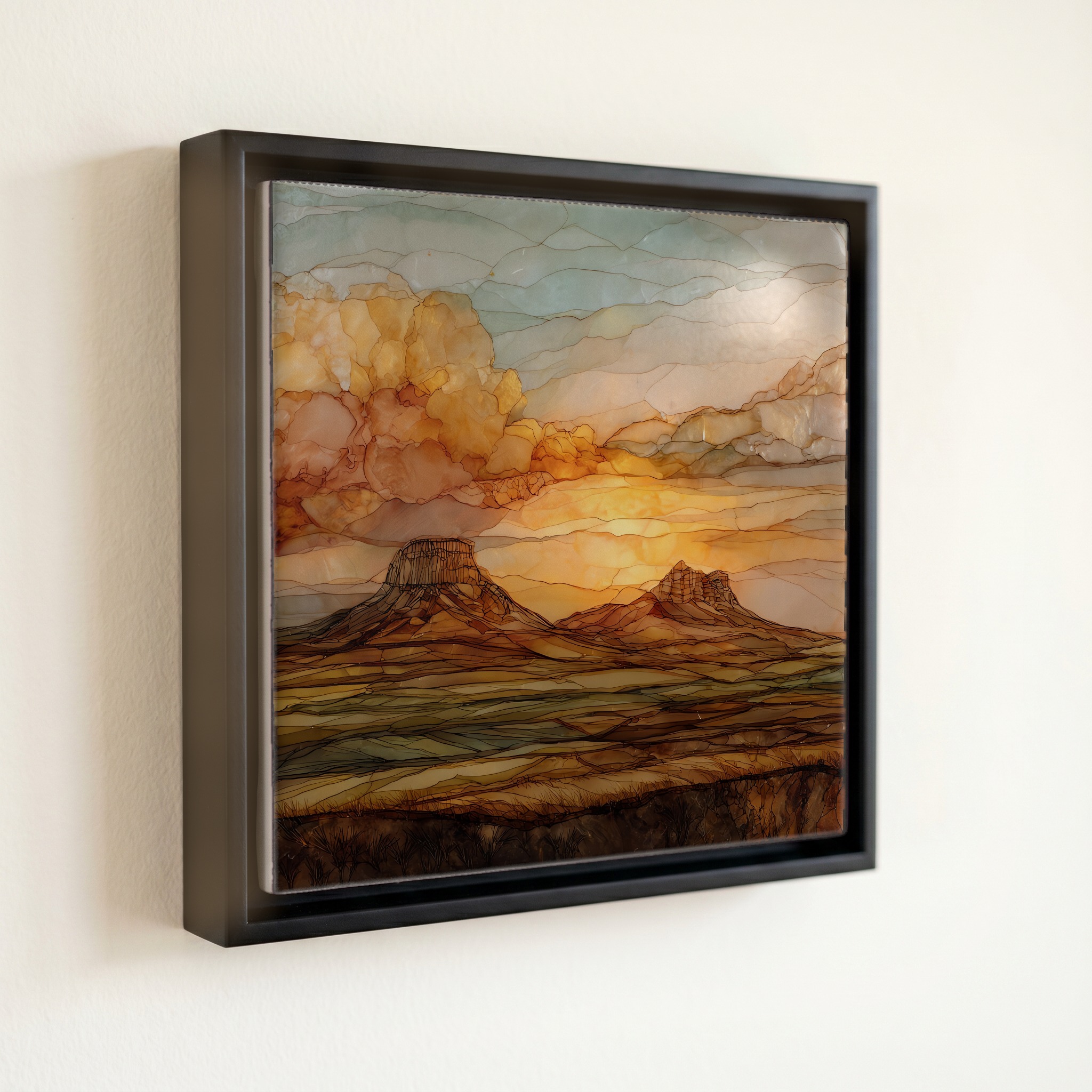
shown in a slim black floating frame · 6 × 6 in
— bring it home

Pawnee Buttes on the plains Ceramic Art Tile, on ceramic.

Each tile is finished by hand in our Knoxville studio. Artwork is slowly infused into the ceramic surface under high heat and pressure, and rests beneath a thin glossy finish. The colour lives in the surface, not on top of it.

What kind of piece?
One tile — square or rectangle.
How big?
the popular one — counter, shelf, nightstand
6 × 6 in · 15 cm · 1.6 lb
Surface finish
A clear glossy finish — the artwork reads as if under resin. Ideal for show-pieces and framed wall art.
How it sits
A hidden cleat — sits ¼″ proud of the wall.
$58
Hand-finished and shipped from our studio at the foot of the Smokies. On your wall in about ten days.
size
6 × 6 in
15 cm
weighs
1.6 lb
solid in the hand
surface
ceramic, hand-finished
art rests beneath a thin glossy finish
from
Knoxville, TN
our family studio, at the foot of the Smokies
— start a Coaster Set

Pick any four 4-inch tiles — National Parks you've been to, a Smokies set, the four seasons of one place. $ for a set of , cork-backed, ready to live on the table.
comes gift-ready
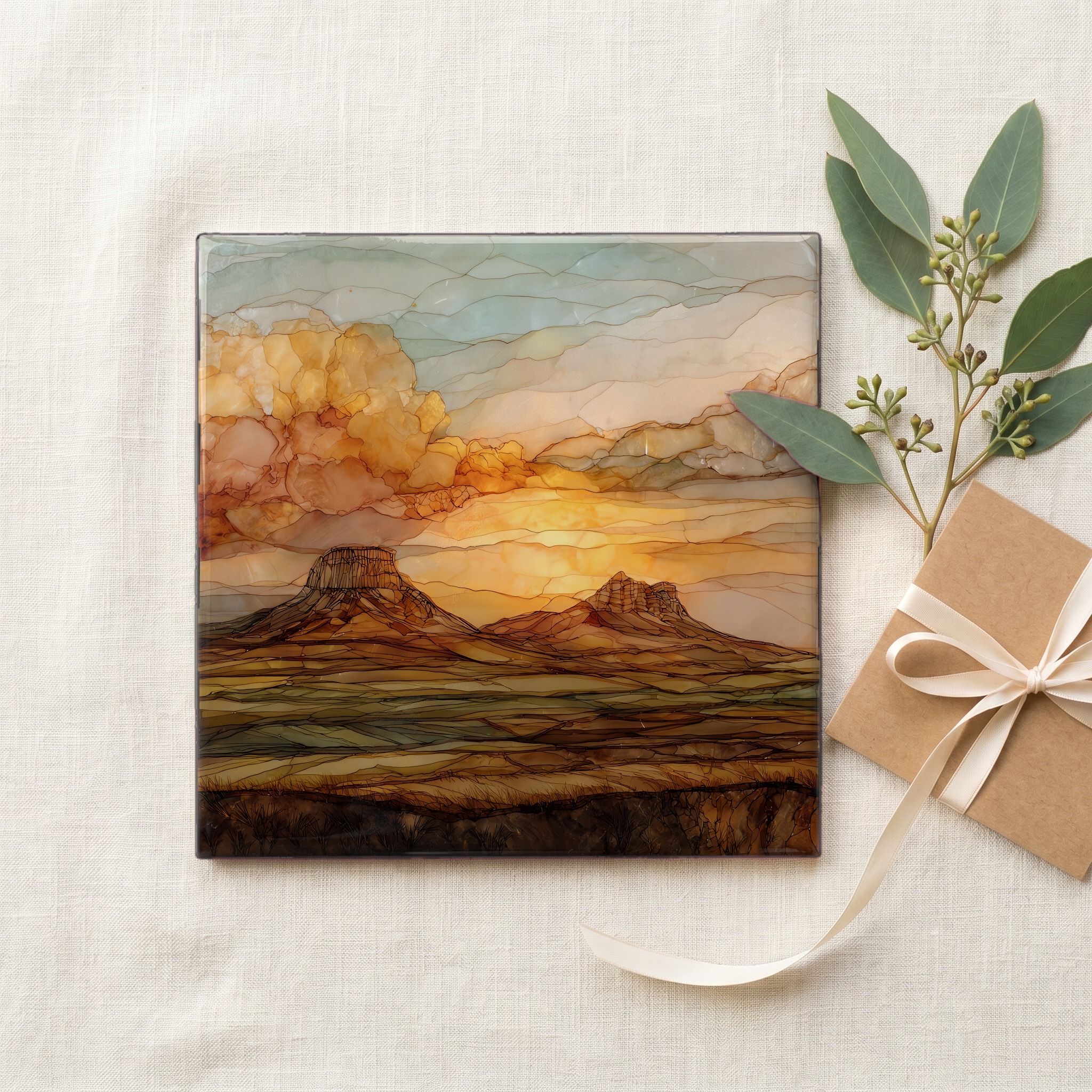
comes gift-ready

Each tile ships in a kraft box, tied with cream ribbon, with a handwritten note from the studio if you'd like to add one.
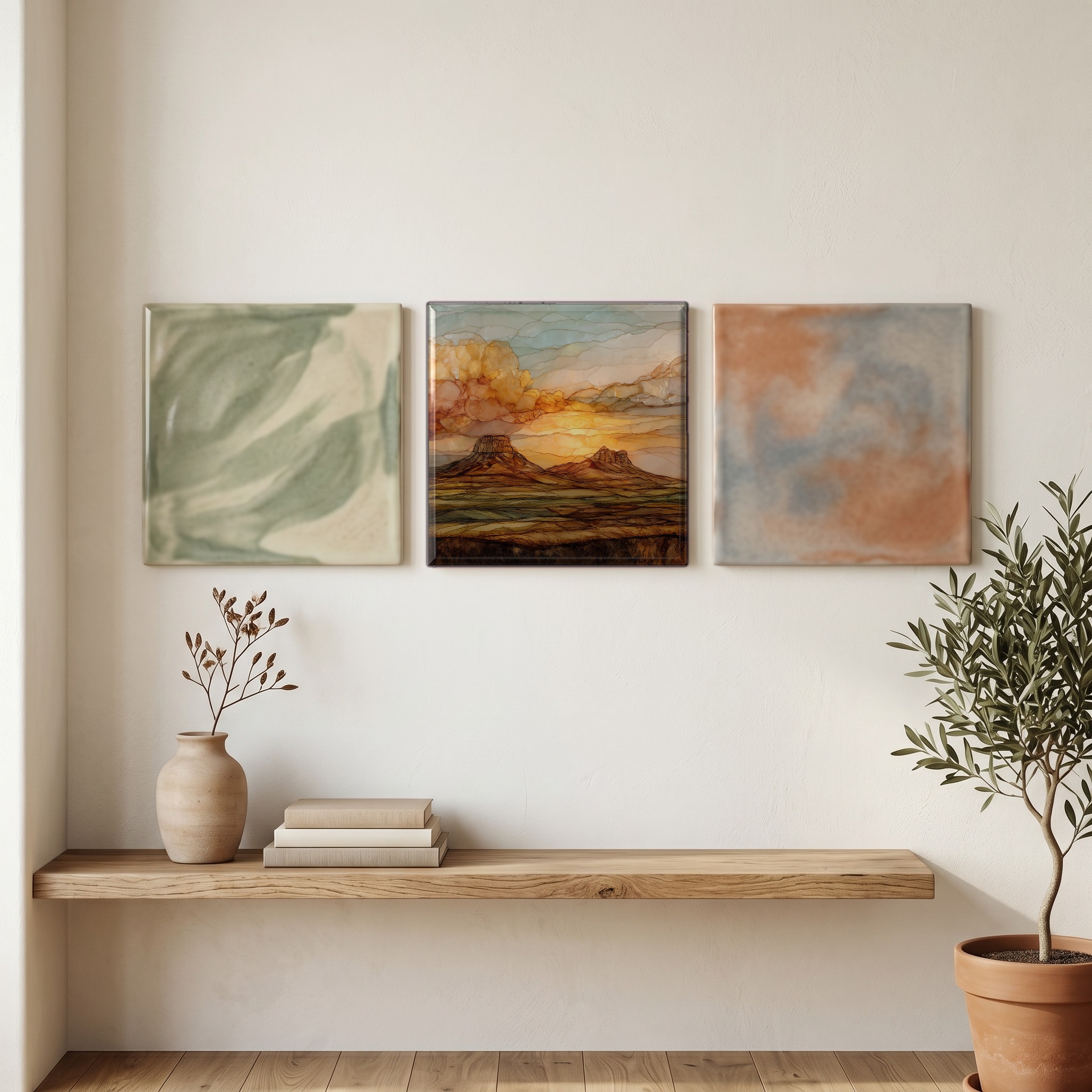
or build a grouping
or build a grouping

Three or five different vistas, hung together — a chapter of places you've been, or want to go.

about Pawnee Buttes on the plains Ceramic Art Tile

The place, in three passes.

A little of what's known, in case you fall down the rabbit hole — or want to go see it yourself.
the place

The Pawnee Buttes rise from the shortgrass prairie of the Pawnee National Grassland, a 193,000-acre tract in Weld County, northeastern Colorado, administered by the U.S. Forest Service through the Arapaho and Roosevelt National Forests. The two buttes, known locally as West Pawnee Butte and East Pawnee Butte, stand roughly 250 feet above the surrounding plain at summit elevations near 5,375 feet. The site sits about 40 miles east of Greeley, reached by Colorado Highway 14 to the small town of Briggsdale and then roughly 15 miles of gravel county road to the trailhead. The Pawnee Buttes Trail runs about 1.5 miles each way from the parking area, dropping through a shallow wash before emerging on the open plain.

the stone

The buttes are erosional remnants: pillars of softer Brule and Chadron Formation siltstone and claystone, capped by a more resistant layer of Ogallala Formation sandstone and conglomerate roughly five million years old. Without that cap, the underlying strata would have weathered away with the rest of the plain. Geologists call the mechanism differential erosion, and the same process built the hoodoos of Bryce Canyon and the toadstool rocks of southern Utah. The Pawnee escarpment, a long bluff just north of the buttes, exposes the same layer cake in section. Walk close and you can see the soft chalky bands of the lower formations crumbling out from beneath the harder cap.

the visit

The trailhead lies at the end of roughly 15 miles of well-graded gravel road north of Briggsdale; passenger cars manage it in dry weather, but rain turns the bentonite-rich surface slick. The Pawnee Buttes Trail is open year-round, but the U.S. Forest Service closes the north overlook spur and the area beneath the cliffs from March 1 through June 30 each year to protect nesting raptors: ferruginous hawks, prairie falcons, and golden eagles among them. There is no water at the trailhead, no shade on the trail, and cell service is unreliable. Early morning and late afternoon in spring and fall are kindest. Summer afternoons regularly clear 95°F on the open plain.

where
United States · Weld County, Colorado
within
Pawnee National Grassland
elevation
1,638 m · 5,375 ft
position
40.8110° N · 103.9870° W
the neighborhood

What's nearby.

A handful of named places within an hour's walk or short drive. Some we've already painted; some we will.
at the lake
Pawnee National Grassland
national grassland
24 km SW
Briggsdale
town
24 km NW
Grover
town
26 km SW
Crow Valley Recreation Area
recreation area
64 km WSW
Greeley
city
N
Pawnee Buttes on the plains Ceramic Art Tile
Pawnee National Grassland
Briggsdale
Grover
Crow Valley Recreation Area
Greeley
common questions

What people ask.

A few questions we get about Pawnee Buttes on the plains Ceramic Art Tile — and about bringing the piece home.
about the place

The Pawnee Buttes are in the Pawnee National Grassland in Weld County, northeastern Colorado, about 40 miles east of Greeley and roughly 90 miles northeast of Denver. The trailhead sits at the end of about 15 miles of gravel road north of Briggsdale on Colorado Highway 14.

The two buttes rise roughly 250 feet above the surrounding plain, with summit elevations near 5,375 feet. They are erosional remnants of an older land surface, preserved by a resistant caprock of Ogallala Formation sandstone and conglomerate that the surrounding terrain has long since lost.

The U.S. Forest Service closes the north overlook spur and the area beneath the cliffs from March 1 through June 30 each year to protect nesting raptors. Ferruginous hawks, prairie falcons, and golden eagles use the cliff faces, and human presence during incubation can cause adults to abandon eggs.

The Pawnee Buttes Trail runs roughly 1.5 miles each way from the small parking area to the base of the west butte. The path drops through a shallow wash, climbs onto open prairie, and is generally easy walking with about 100 feet of elevation change.

Yes. In the 1974 novel Centennial, Michener fictionalized the formations as Rattlesnake Buttes and used them as a recurring landmark for the imagined town of Centennial, Colorado. The novel drew on the real geology and grassland ecology of the area he came to know while teaching in Greeley.

The 193,000-acre grassland is one of the largest tracts of intact shortgrass prairie in the United States. It supports pronghorn, mule deer, swift fox, and burrowing owls alongside the cliff-nesting raptors. The mountain plover, a state species of concern, breeds on the short grazed grasses.

about the piece in your home

It can be. The Pawnee Buttes are a quiet landmark for people who grew up in the High Plains or spent time at the University of Northern Colorado in Greeley. A Small or Medium with a handwritten studio note carries well; for a wedding or retirement gift, the Large does the room.

The earth-toned palette and stained-glass treatment sit well in Western-modern, mountain-modern, and Southwestern-inflected rooms. It also reads at home inside warm minimalism, where the colour pulls against bone-white walls and natural oak. Pair it with warm timber, rust textiles, and leather; it will fight a cool grey scheme.

The piece reads as new-Western: landscape-forward, regionally specific, and not literal. It belongs alongside the work coming out of Marfa, Bozeman, and Jackson right now, where heritage subject meets contemporary surface. It will not date quickly because the source is a real landform with a real cultural memory behind it.

Above a standard 84-inch sofa, a single Large reads cleanly; for more presence, the 4-tile Mural fills the wall without crowding. Above a console or entryway bench, the Medium is the usual choice. The 9-tile Mural is built for a stair landing or a single feature wall.

Yes. Order the Dura Satin or Matte finish for any wet or splash-prone area: behind a sink, in a shower surround, as a backsplash. The Glossy finish is for dry display only: framed pieces, gallery walls, mantel installations.

A microfibre cloth and warm water. The colour is slowly infused into the ceramic surface under high heat and pressure, beneath a thin glossy finish, so it does not lift, fade, or scratch with ordinary cleaning. Avoid abrasive pads and bleach-based sprays, which can dull the surface over time.

Yes. Every WenderVista piece originates with Reid Wender, the curator, and is hand-finished in our Knoxville studio. The art is not licensed from a stock library. The place itself is part of our atlas: chosen, painted, written for.

if this one stayed with you

A few you might also love.

Hand-picked by the eye that found Sorapis. Same air, same kind of quiet.