Wender·Vista
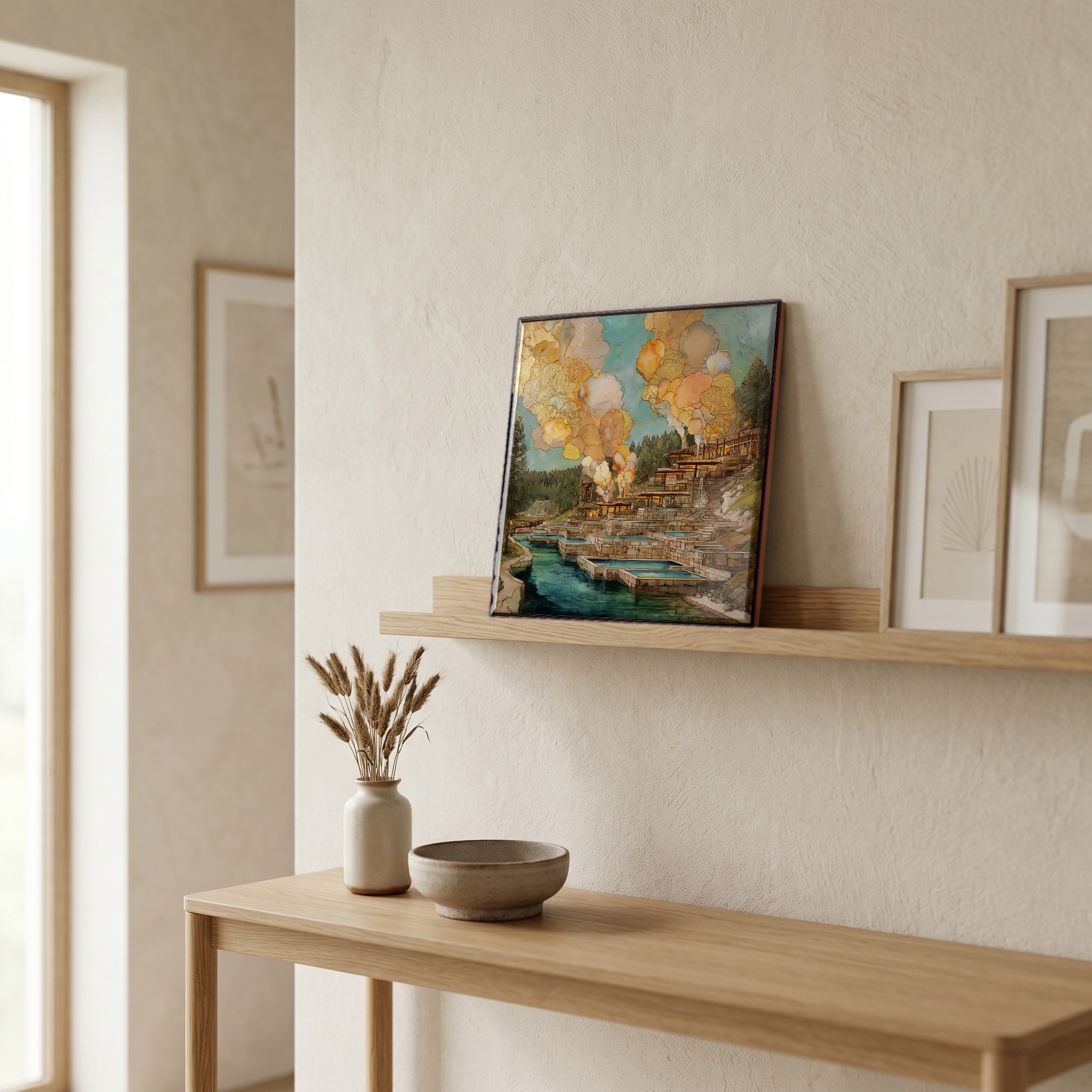
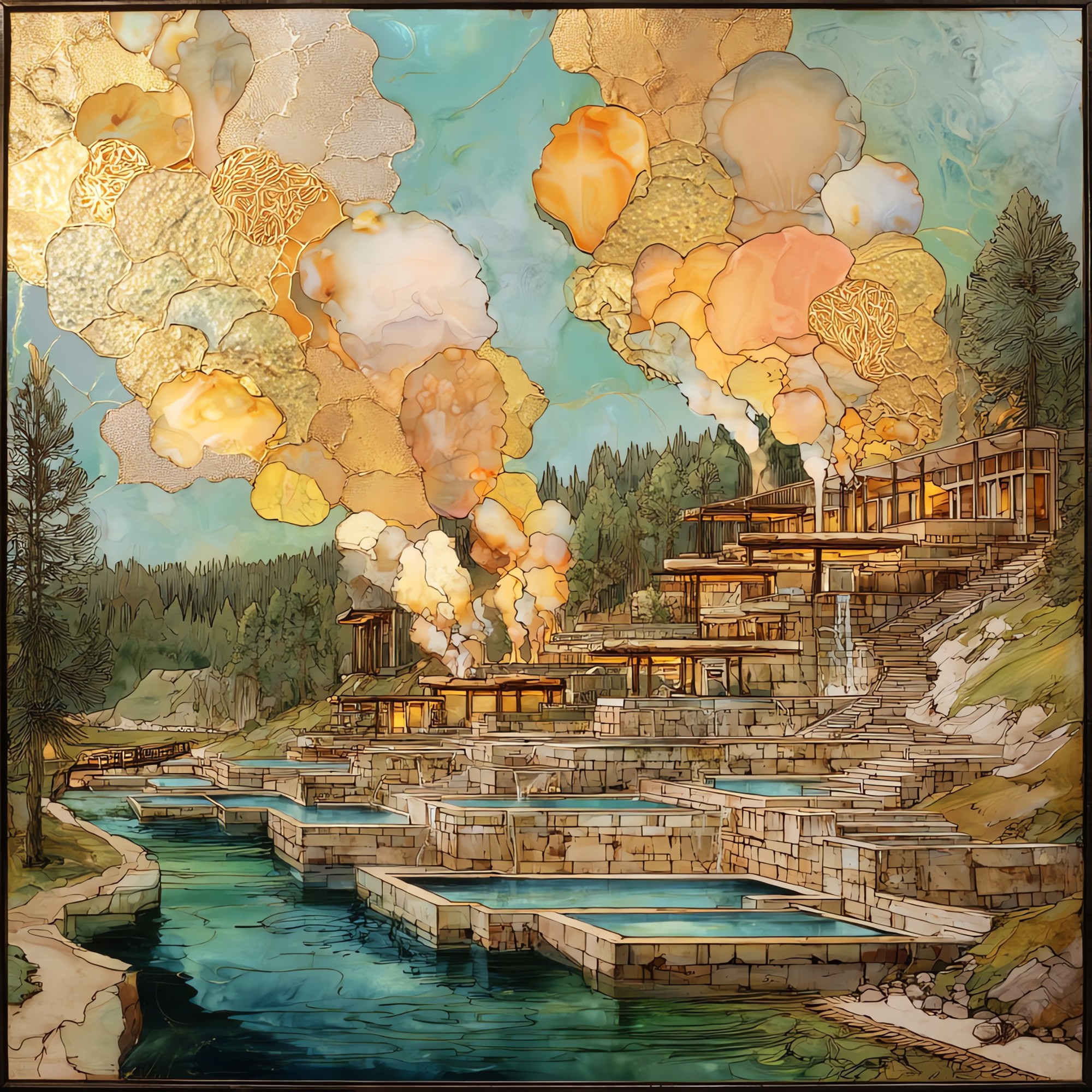
Pagosa Hot Springs Resort San Juans Ceramic Art Tile
shown on ceramic, 12-inch tileColorado · United States
in the southern San Juans, where the river runs warm

Pagosa Hot Springs Resort San Juans Ceramic Art Tile

— the steam the river breathes in winter.

Where it lives

Not only on a wall.

A small tile on the nightstand catching the morning. A larger one above the fire. Yours, wherever you spend the slow hours.
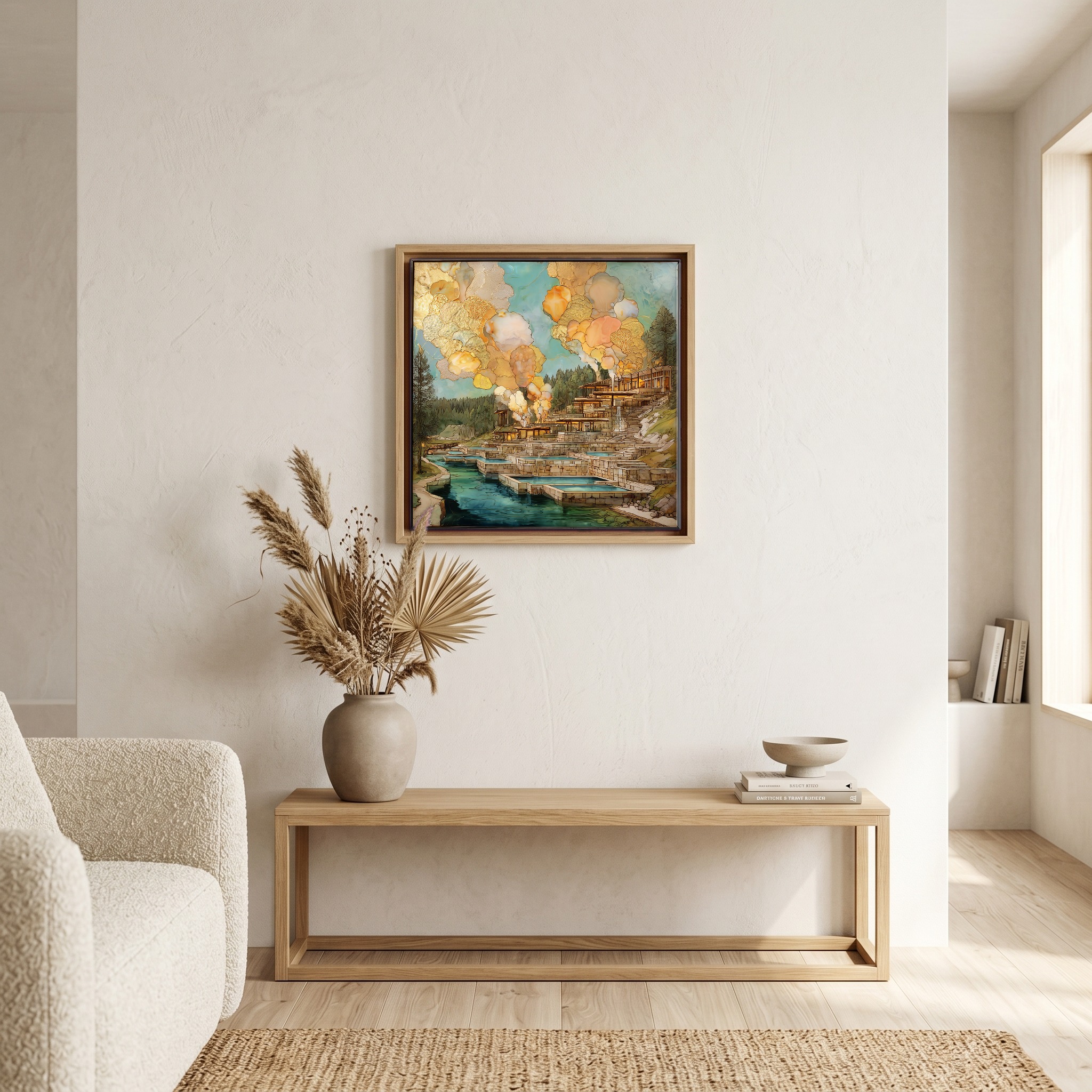
Above the bench, in a warm oak surround.
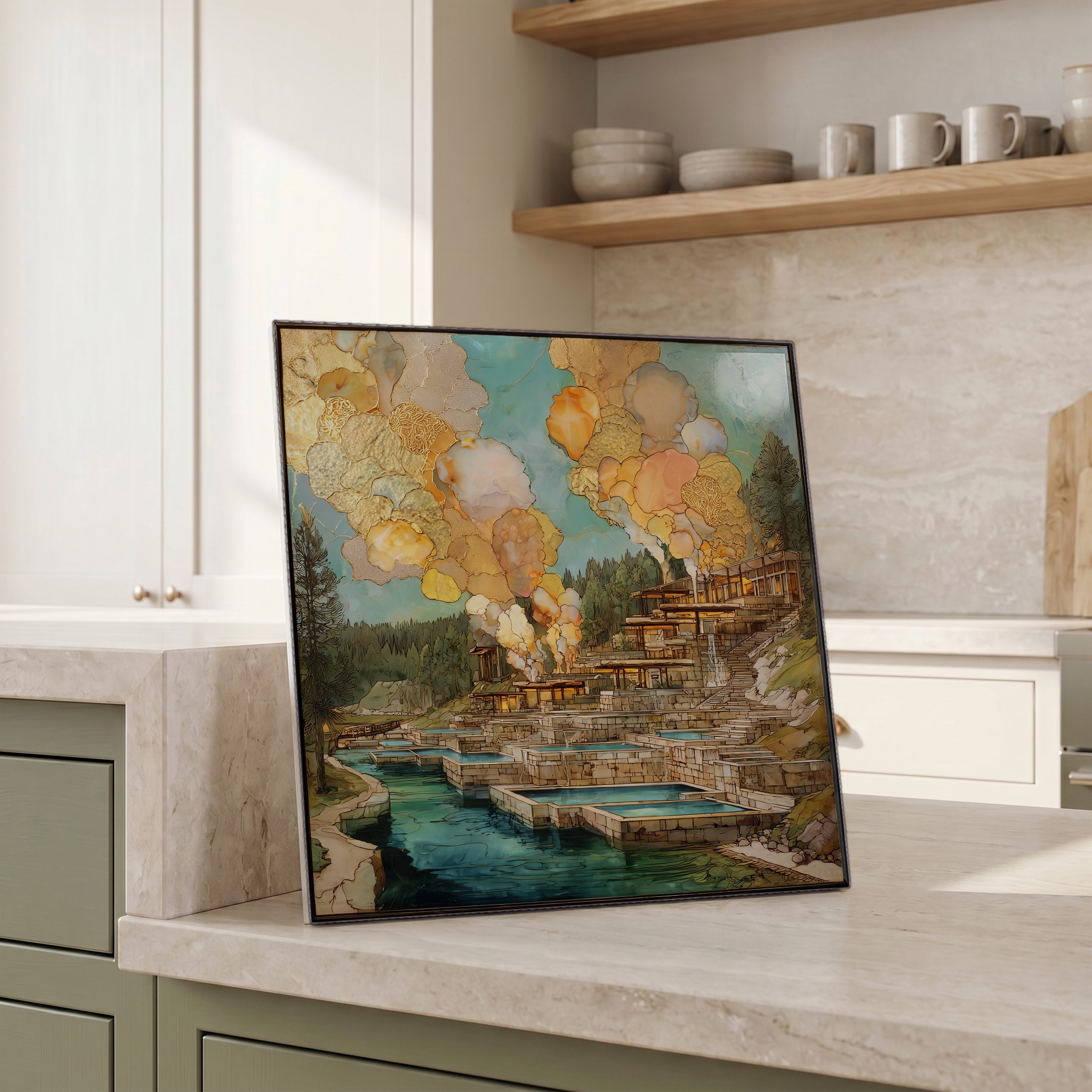
Beside the kettle, propped on the counter.
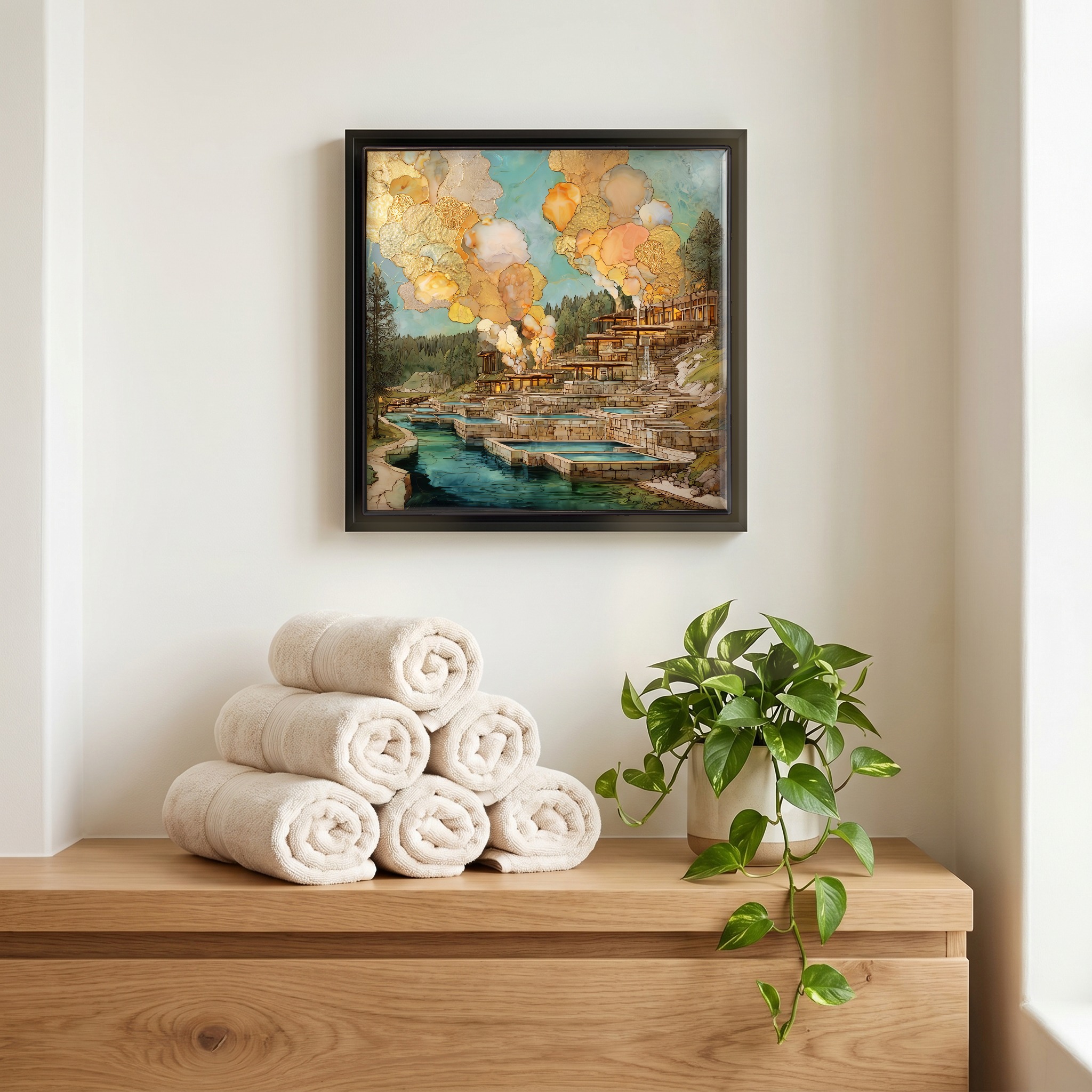
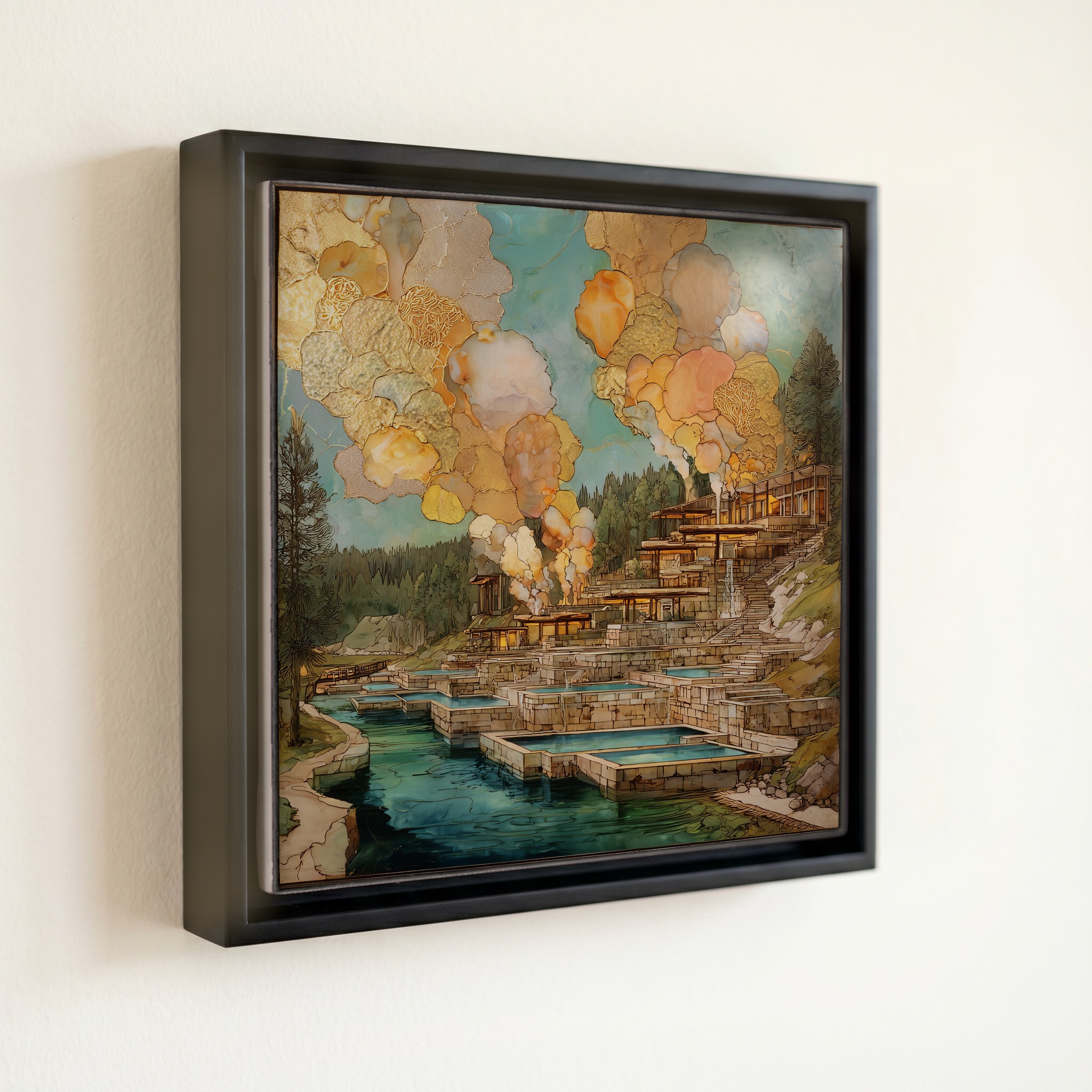
Above the linens, in a slim black surround.
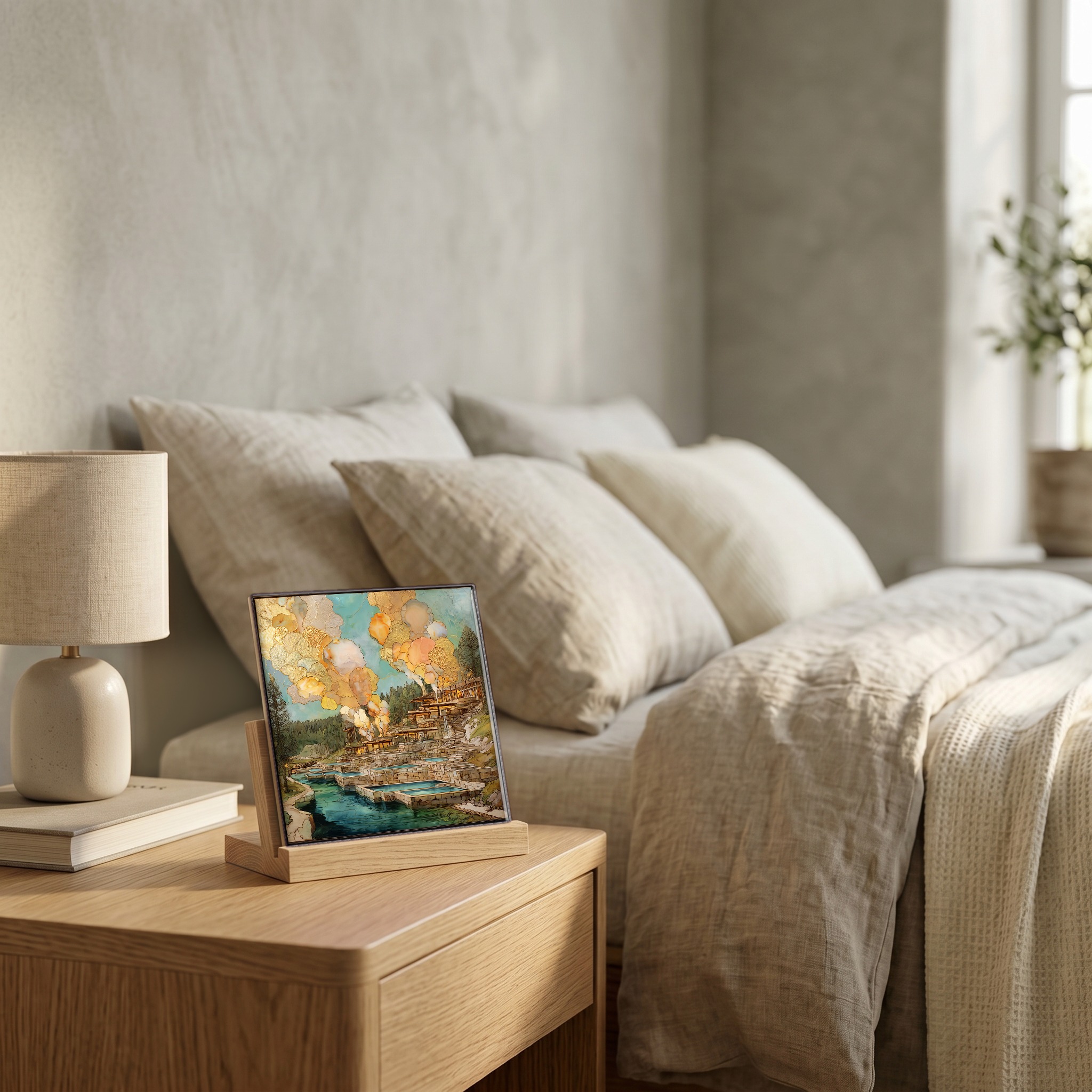
On the nightstand, on a light oak stand.
On a picture ledge, where the light comes in.
a note from the studio

The river bends through Pagosa Springs and the steam rises off the water in every season. At the centre of the resort the Mother Spring is the deepest geothermal hot spring measured anywhere; a state-run sounding lowered a line past 1,002 feet without striking bottom. Twenty-three pools terrace down to the San Juan River, each held at a different temperature, the colour shifting with the minerals. In January the steam meets the snow above the bank and the whole property reads as one slow exhalation. The Utes called it Pagosah: healing waters.
from the studio
shown in a slim black floating frame · 6 × 6 in
— bring it home

Pagosa Hot Springs Resort San Juans Ceramic Art Tile, on ceramic.

Each tile is finished by hand in our Knoxville studio. Artwork is slowly infused into the ceramic surface under high heat and pressure, and rests beneath a thin glossy finish. The colour lives in the surface, not on top of it.

What kind of piece?
One tile — square or rectangle.
How big?
the popular one — counter, shelf, nightstand
6 × 6 in · 15 cm · 1.6 lb
Surface finish
A clear glossy finish — the artwork reads as if under resin. Ideal for show-pieces and framed wall art.
How it sits
A hidden cleat — sits ¼″ proud of the wall.
$58
Hand-finished and shipped from our studio at the foot of the Smokies. On your wall in about ten days.
size
6 × 6 in
15 cm
weighs
1.6 lb
solid in the hand
surface
ceramic, hand-finished
art rests beneath a thin glossy finish
from
Knoxville, TN
our family studio, at the foot of the Smokies
— start a Coaster Set

Pick any four 4-inch tiles — National Parks you've been to, a Smokies set, the four seasons of one place. $ for a set of , cork-backed, ready to live on the table.
comes gift-ready
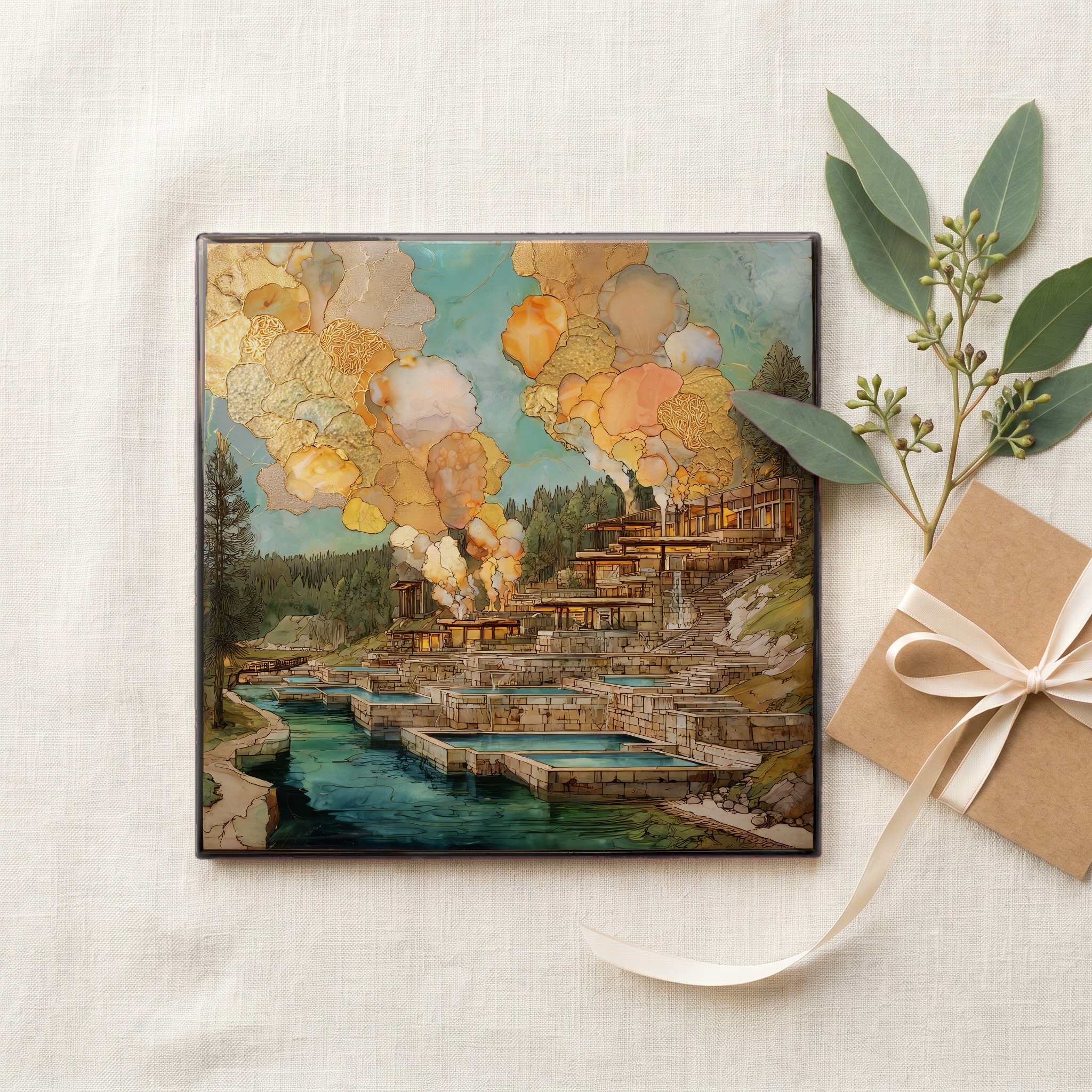
comes gift-ready

Each tile ships in a kraft box, tied with cream ribbon, with a handwritten note from the studio if you'd like to add one.
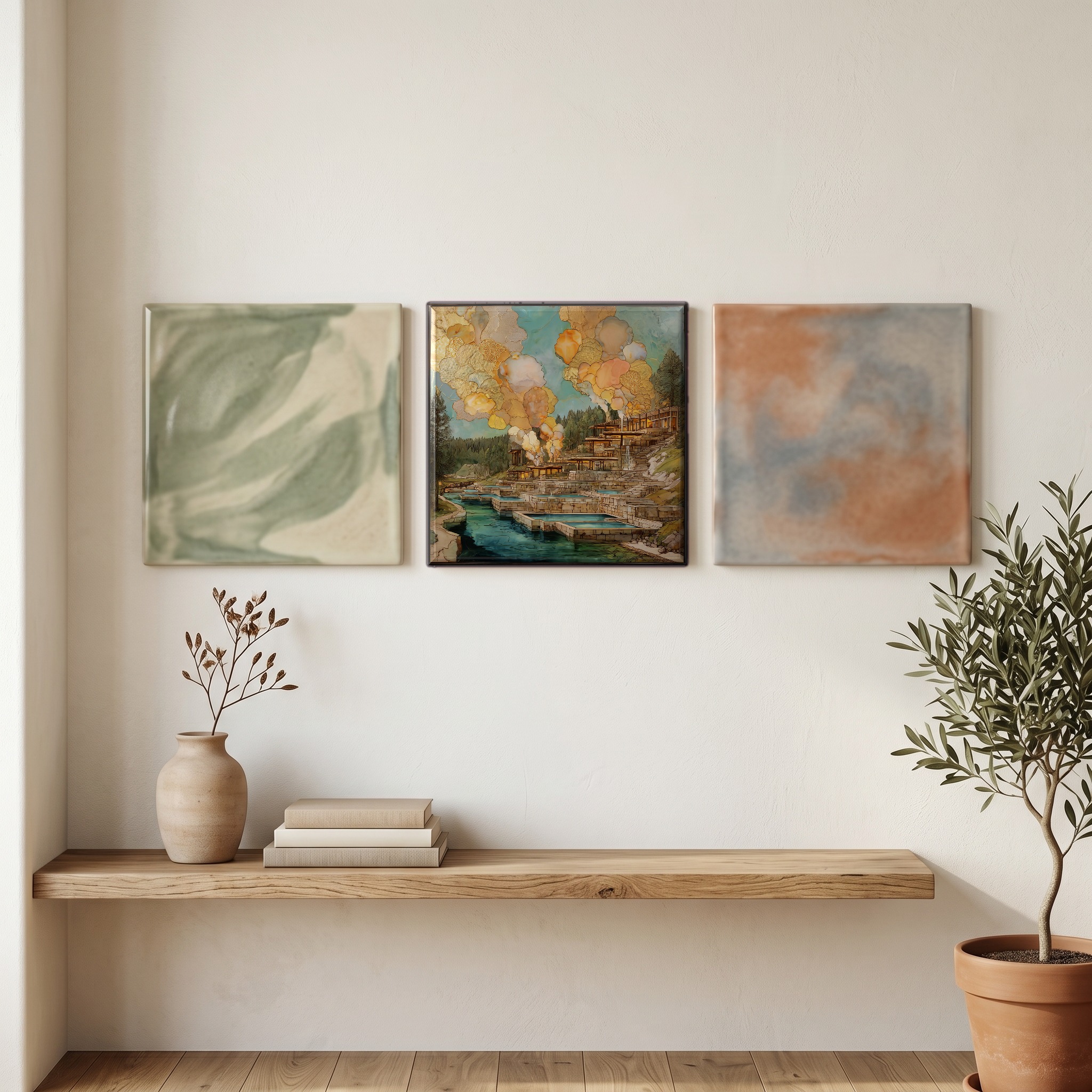
or build a grouping
or build a grouping

Three or five different vistas, hung together — a chapter of places you've been, or want to go.

about Pagosa Hot Springs Resort San Juans Ceramic Art Tile

The place, in three passes.

A little of what's known, in case you fall down the rabbit hole — or want to go see it yourself.
the place

Pagosa Springs sits in Archuleta County in southwestern Colorado, where US Highway 160 crosses the San Juan River at roughly 7,126 feet of elevation. The town carries about 1,700 year-round residents and lies thirty-five miles east of Durango, an hour west of Wolf Creek Pass, one of the snowiest highway summits in the lower forty-eight. The Springs Resort & Spa occupies the south bank of the river at the centre of town, with twenty-three terraced mineral pools dropping toward the water. The geothermal field beneath the town is fed by a deep fault system at the western edge of the Rio Grande Rift; the resort sits directly above the Mother Spring, the source vent for the entire field. The Ute name Pagosah translates roughly as healing waters.

the water

The Mother Spring at the centre of the resort is the deepest geothermal hot spring measured anywhere on record. A state-run weighted-line sounding descended past 1,002 feet without striking bottom; Guinness World Records logs it as the deepest known. Surface temperature at the source vent reaches about 144 degrees Fahrenheit, too hot to enter, so the water is cooled and routed through twenty-three terraced pools held between roughly 83 and 114 degrees. The mineral profile is dominated by sodium bicarbonate and sulphates, with measurable lithium and trace iron. The colour shifts with the chemistry: a pale teal at the cooler pools, a slow grey-blue at the warmer ones.

the season

The pools run through every season, but the place reads most clearly in winter. Snow falls heavy along the San Juan front. Wolf Creek Ski Area, twenty-three miles east of town at the pass summit, averages more than 430 inches a season, the most of any major Colorado resort, and runs one of the longest ski calendars in the state. When the air drops below freezing, steam rises off the twenty-three pools and the open San Juan River in plumes that hang in the bowl of the town. Summer brings the snowmelt run-off and a different crowd, the same hot water less visible against warmer air. Spring is the quietest stretch; the aspen are still bare.

where
United States · Pagosa Springs, Archuleta County, Colorado
elevation
2,172 m · 7,126 ft
position
37.2695° N · 107.0098° W
the neighborhood

What's nearby.

A handful of named places within an hour's walk or short drive. Some we've already painted; some we will.
18 km NW
Pagosa Peak
12,640-ft peak
37 km E
Wolf Creek Pass
mountain pass
24 km E
Treasure Falls
waterfall
27 km W
Chimney Rock National Monument
Ancestral Puebloan site
32 km W
Piedra River
wilderness river
35 km N
Williams Creek Reservoir
national-forest reservoir
N
Pagosa Hot Springs Resort San Juans Ceramic Art Tile
Pagosa Peak
Wolf Creek Pass
Treasure Falls
Chimney Rock National Monument
Piedra River
Williams Creek Reservoir
common questions

What people ask.

A few questions we get about Pagosa Hot Springs Resort San Juans Ceramic Art Tile — and about bringing the piece home.
about the place

Pagosa Springs sits in southwestern Colorado, in Archuleta County, about 35 miles east of Durango and 60 miles west of Alamosa. US Highway 160 runs through the centre of town, with the San Juan River curling along the south side and the San Juan Mountains rising to the north.

The Mother Spring is the source vent for the entire Pagosa geothermal field. A state-run weighted-line sounding descended past 1,002 feet without striking bottom, and Guinness World Records logs it as the deepest measured geothermal hot spring on record. The Springs Resort sits directly above it.

No. The water at the source vent runs around 144 degrees Fahrenheit, too hot for direct contact. The Springs Resort draws from the Mother Spring and cools the water through twenty-three terraced pools held between roughly 83 and 114 degrees, each open to soakers.

Pagosa comes from the Ute word Pagosah, often translated as healing waters or boiling waters. The Ute people treated the springs as sacred ground long before US settlement, and the name carried through to the town's founding in 1880.

The pools run through every season, but the steam-on-snow effect is sharpest from late November through March. Wolf Creek Ski Area, twenty-three miles east, runs one of the longest ski calendars in Colorado, often opening in early November and closing in mid-April.

The geothermal field is fed by a deep fault system at the western edge of the Rio Grande Rift. Surface water sinks miles down, heats against basement rock, and rises back through the Mother Spring vent. The chemistry is dominated by sodium bicarbonate and sulphates.

Durango lies 35 miles west on US 160, with Mesa Verde National Park about 60 miles beyond. Chimney Rock National Monument, an Ancestral Puebloan site, sits 17 miles west of Pagosa. Wolf Creek Pass and Treasure Falls fall 23 and 15 miles east respectively.

about the piece in your home

It has carried well for customers with a history at the Springs Resort or the surrounding San Juans. The piece holds the steam-on-snow signature of the place rather than a postcard view, and a Small or Medium with a handwritten note from the studio travels well.

The blue and steam palette sits naturally in Mountain Modern interiors, Coastal Modern rooms that lean cool, and Jewel-Tone Maximalist spaces. The stained-glass visual language reads as a painted artefact rather than a print, which lets it carry a wall alongside ceramics and wood.

Yes. The current cycle in mountain-home interiors favours hand-finished materials, painterly art, and cooler palettes built around steel-blue, slate, and natural wood. The Pagosa tile reads cleanly against white plaster, oak, or weathered stone, and Mural sizing scales for great-room walls.

A single Large holds above a console table or a narrow sofa. A four-tile Mural sizes for a standard three-seat sofa or a king-bed headboard wall. A nine-tile Mural is the great-room scale, meant to be read from across the room.

Yes. Order the Dura Satin or Matte finish for either room. Both are scratch-resistant and handle the humidity of a steam-heavy bathroom or the splash zone of a kitchen. The Glossy finish is reserved for framed wall pieces in dry rooms.

A soft microfibre cloth with water is enough for everyday dust and fingerprints. For a kitchen tile with cooking residue, a drop of dish soap on a damp cloth wipes clean. The colour is slowly infused into the ceramic surface under high heat and pressure and will not lift with ordinary cleaning.

Yes. Every WenderVista piece is painted by Reid Wender at the studio in Knoxville, Tennessee, in our own stained-glass visual language, and hand-finished in-house. We do not license the art to anyone. The Pagosa Springs tile exists only here.

if this one stayed with you

A few you might also love.

Hand-picked by the eye that found Sorapis. Same air, same kind of quiet.