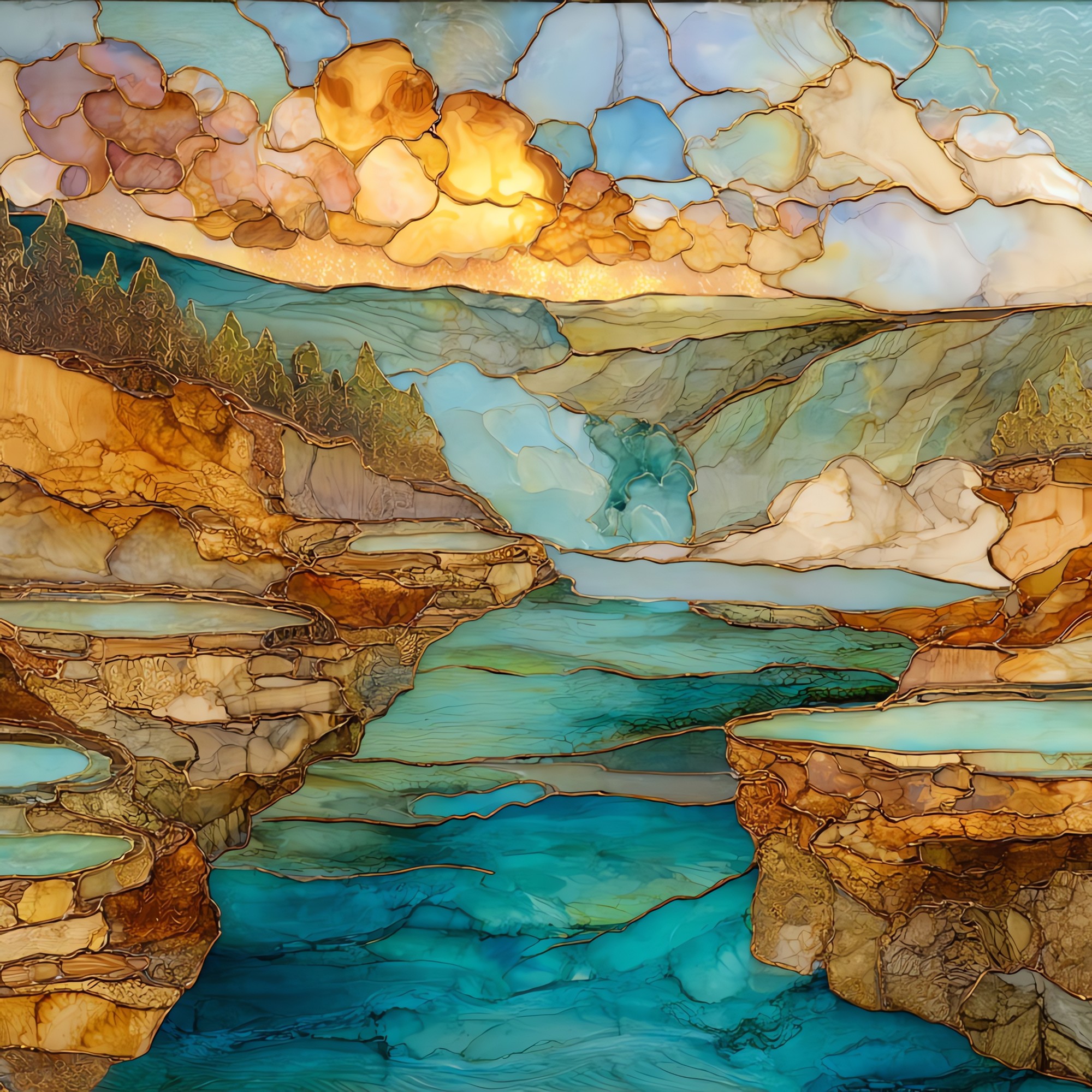
Pagosa Springs hot pools San Juans Ceramic Art Tile
— — the warmth the mountain has been keeping.
Not only on a wall.

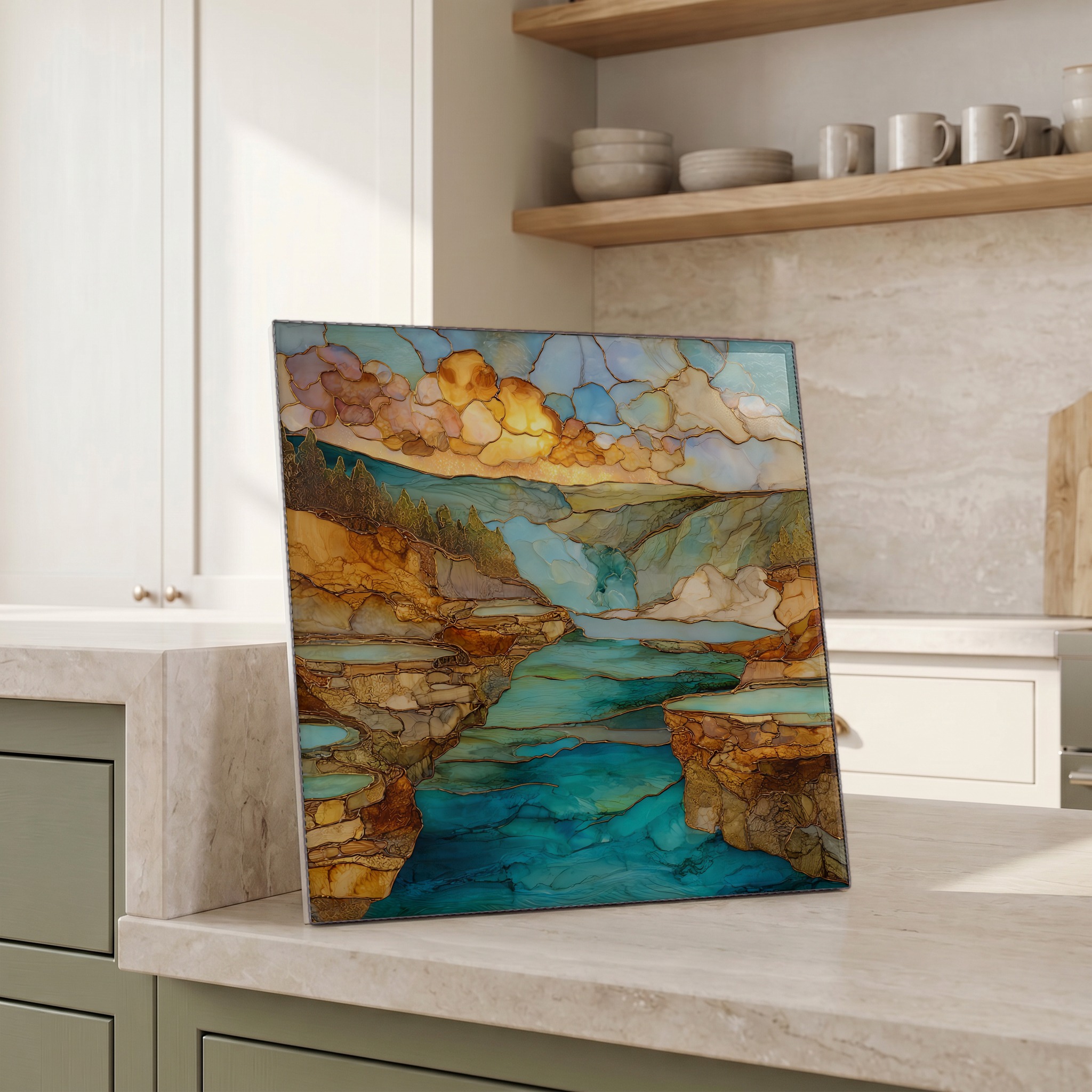


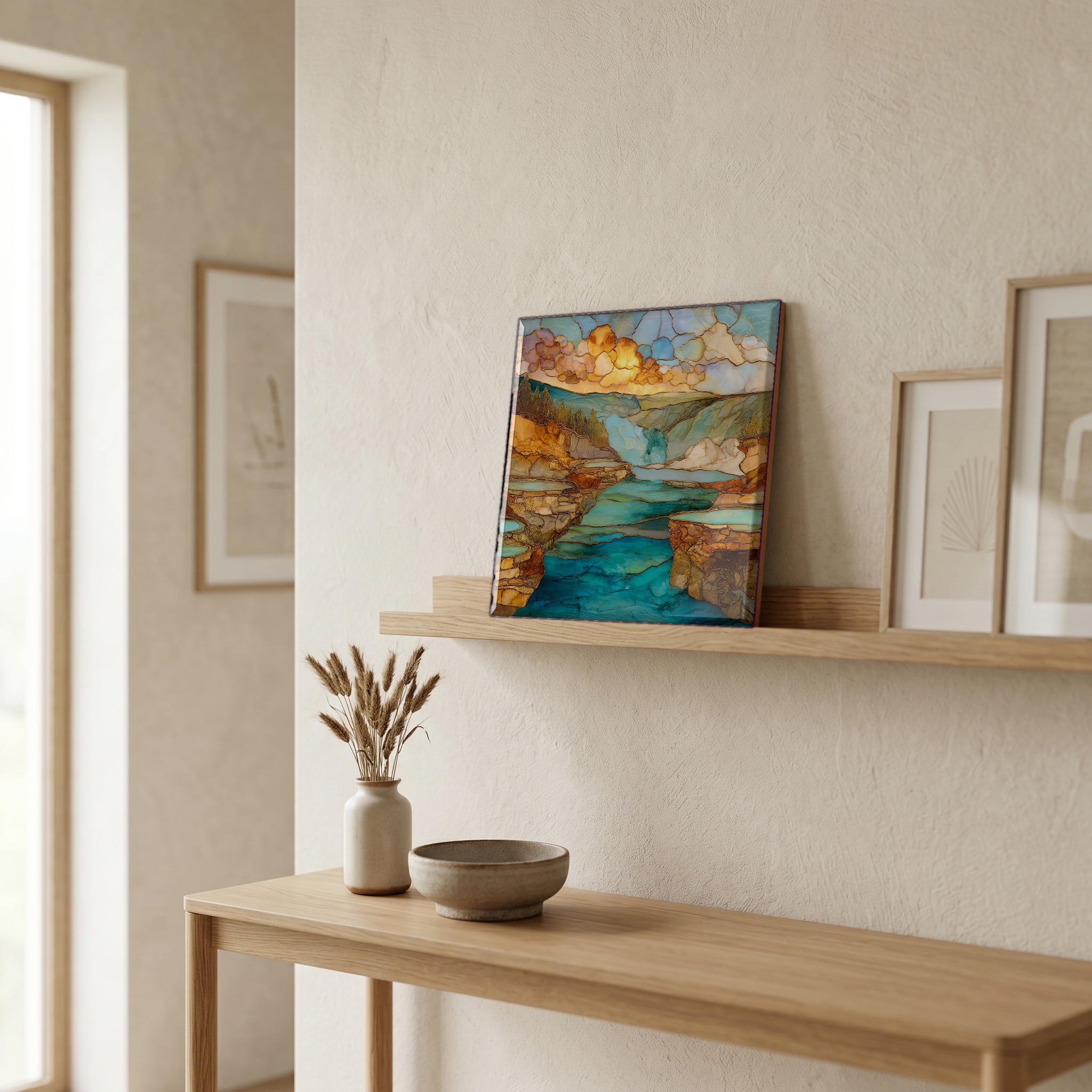
“A town in the southern San Juans where the San Juan River carries something warmer than it should. More than twenty terraced pools step down the bank above the water, and on cold mornings steam moves through the air the way smoke moves above a banked fire. The Ute called the place Pah gosah, meaning healing waters. Wolf Creek Pass rises east of town, and on winter weekends the same people drive up to ski and back down to soak. The deepest of the springs has never been measured to its bottom: a plumb line went down more than a thousand feet and never reached it.
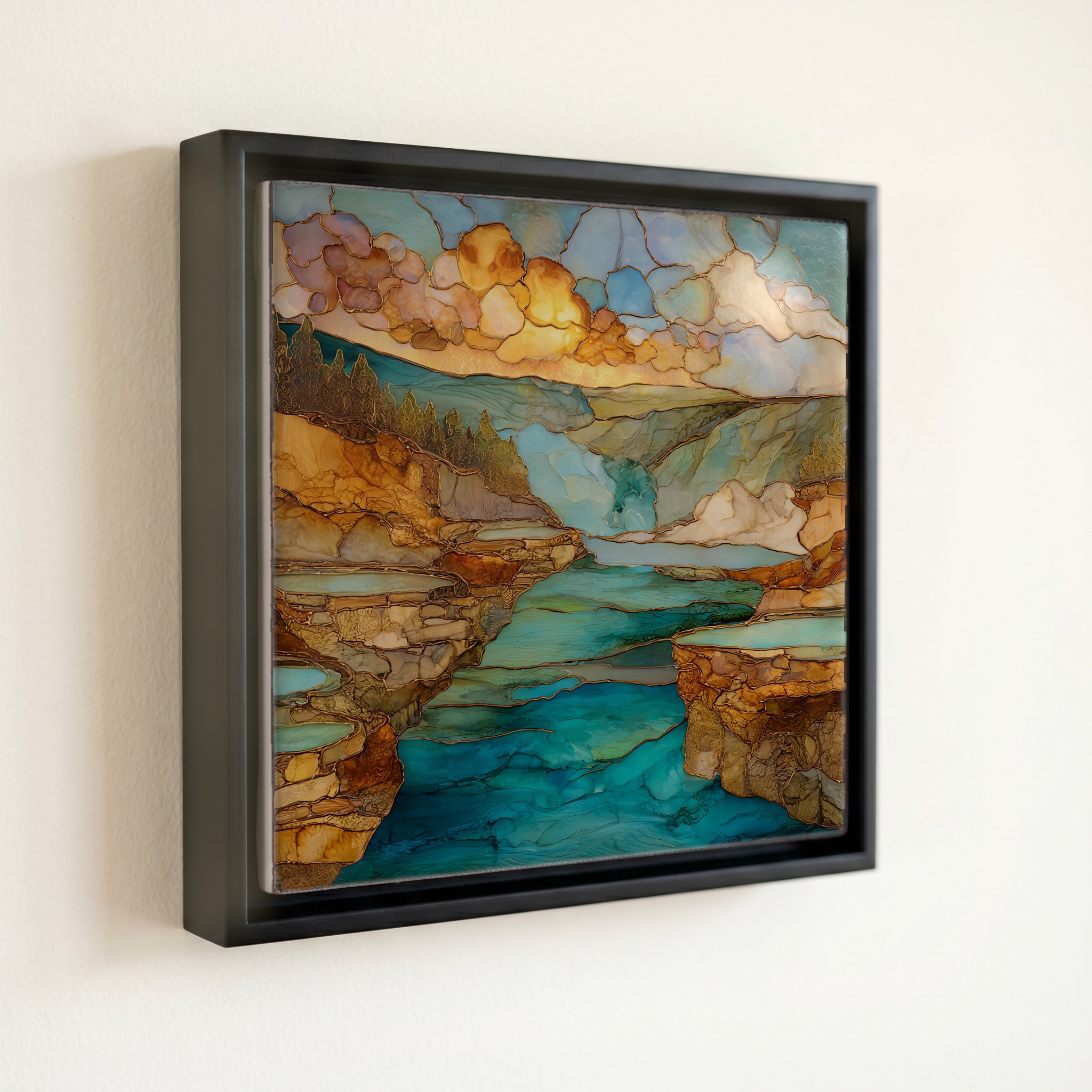
Pagosa Springs hot pools San Juans Ceramic Art Tile, on ceramic.
Each tile is finished by hand in our Knoxville studio. Artwork is slowly infused into the ceramic surface under high heat and pressure, and rests beneath a thin glossy finish. The colour lives in the surface, not on top of it.
Pick any four 4-inch tiles — National Parks you've been to, a Smokies set, the four seasons of one place. $ for a set of , cork-backed, ready to live on the table.

Each tile ships in a kraft box, tied with cream ribbon, with a handwritten note from the studio if you'd like to add one.

Three or five different vistas, hung together — a chapter of places you've been, or want to go.
The place, in three passes.
Pagosa Springs sits in southwestern Colorado, in Archuleta County, on the banks of the San Juan River at an elevation of about 7,126 feet (2,172 m). The town is named for the geothermal springs at its centre, from the Ute word Pah gosah, meaning healing waters. The Mother Spring, the source of the system, is recognised by Guinness World Records as the world's deepest measured geothermal hot spring; a plumb line dropped more than 1,002 feet without finding bottom. The town is the seat of Archuleta County and the western gateway to Wolf Creek Pass, which carries U.S. Highway 160 over the Continental Divide at 10,857 feet.
The water rises from the Mother Spring at the centre of town at about 144°F (62°C), among the hottest mineral waters in the United States. It carries a notable sulphur content and a measurable trace of more than a dozen minerals, including sodium, calcium, magnesium, and lithium, which give the pools their faint mineral scent. The aquifer that feeds it is geologically distinct: heated by deep circulation along a fault rather than by a shallow magma source, which is why the system produces no associated steam vents and why the surface deposits stay so quiet. The Springs Resort, on the south bank of the San Juan River, distributes the water across more than twenty terraced pools, cooled in stages from the source down toward the river.
The springs are open every day of the year, and winter is when the steam is most theatrical. Wolf Creek Ski Area, about twenty-three miles east at the head of Wolf Creek Pass, averages around 430 inches of snowfall annually, the deepest natural snowpack of any Colorado ski hill, and the town fills on weekends between December and March with skiers who soak after the lifts close. Summer brings monsoon afternoons that build over the San Juans and break by evening; the pools cool late under thunderhead light. Pagosa Springs sits at the southern edge of the San Juan National Forest, which means most of the surrounding terrain is public land and reachable from a trailhead within fifteen minutes of town.