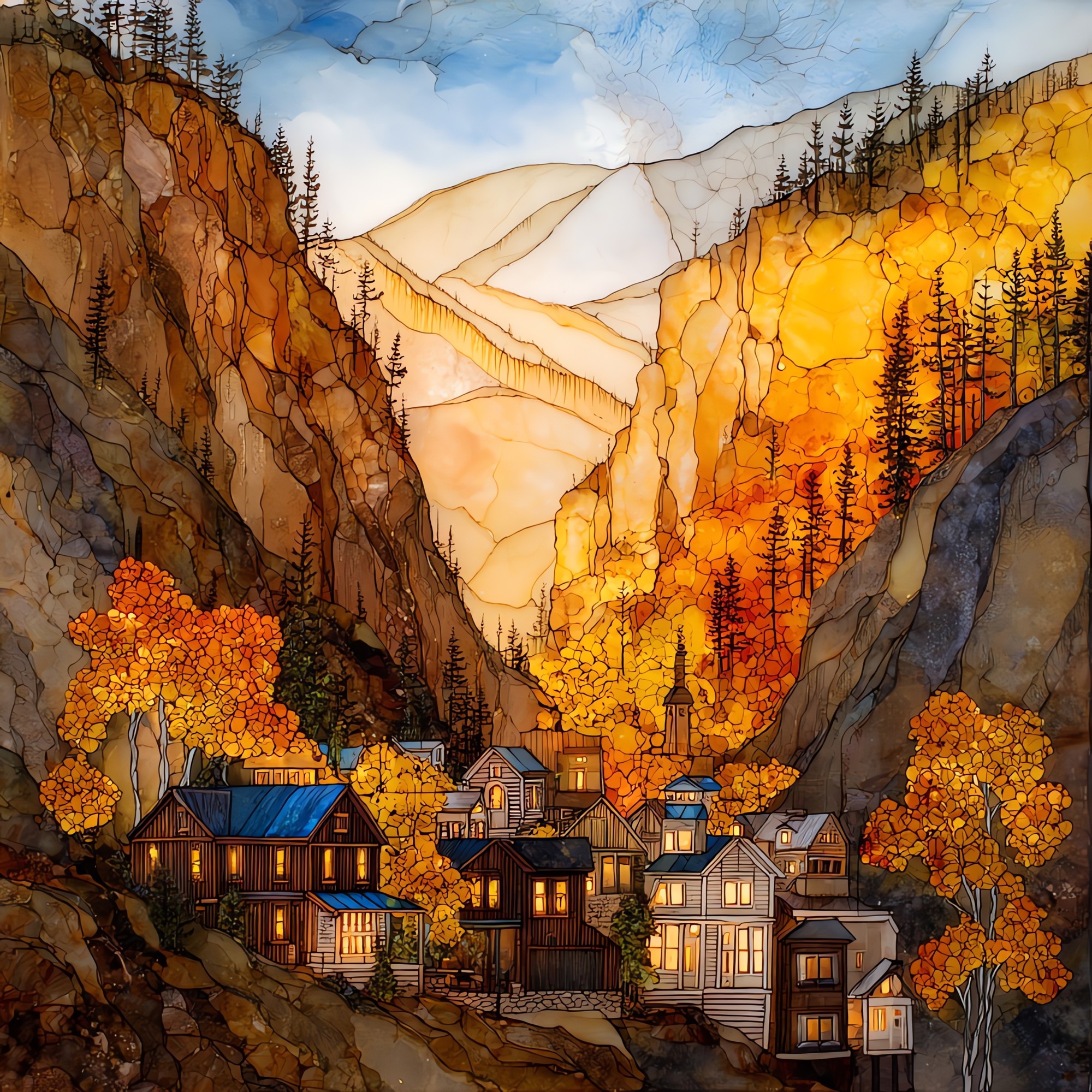
Ouray box-canyon town San Juans Ceramic Art Tile
— — a town the canyon agreed to keep.
Not only on a wall.
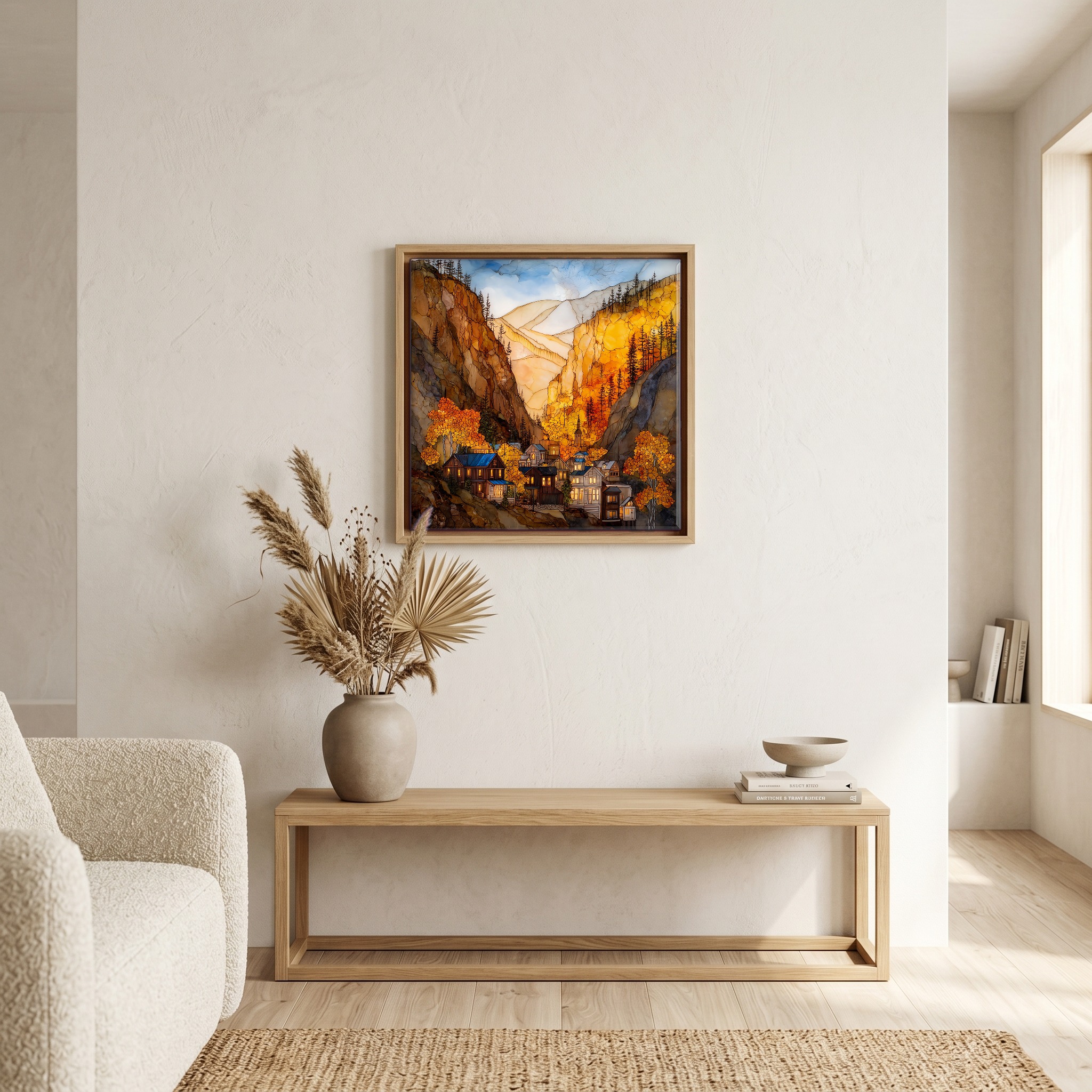
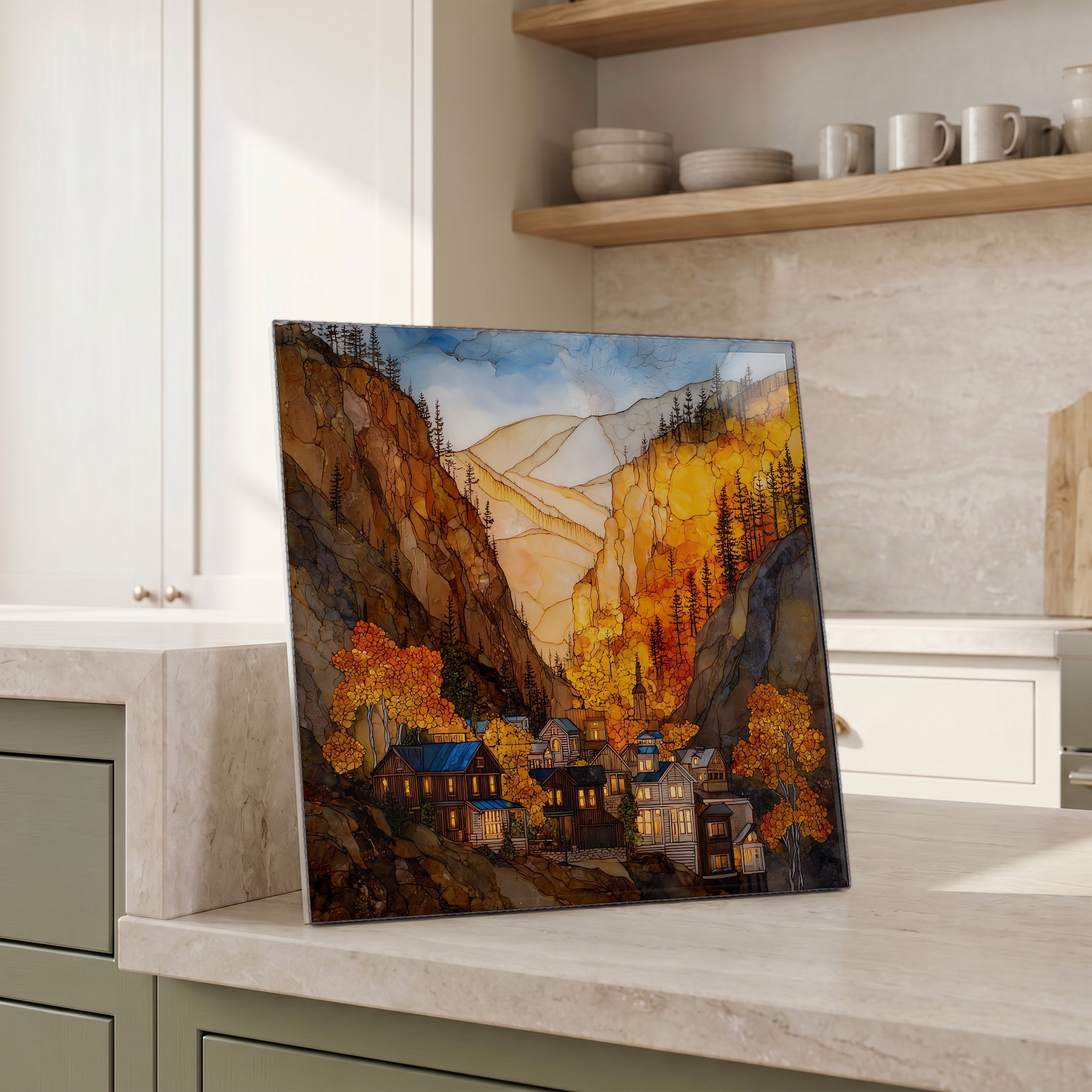
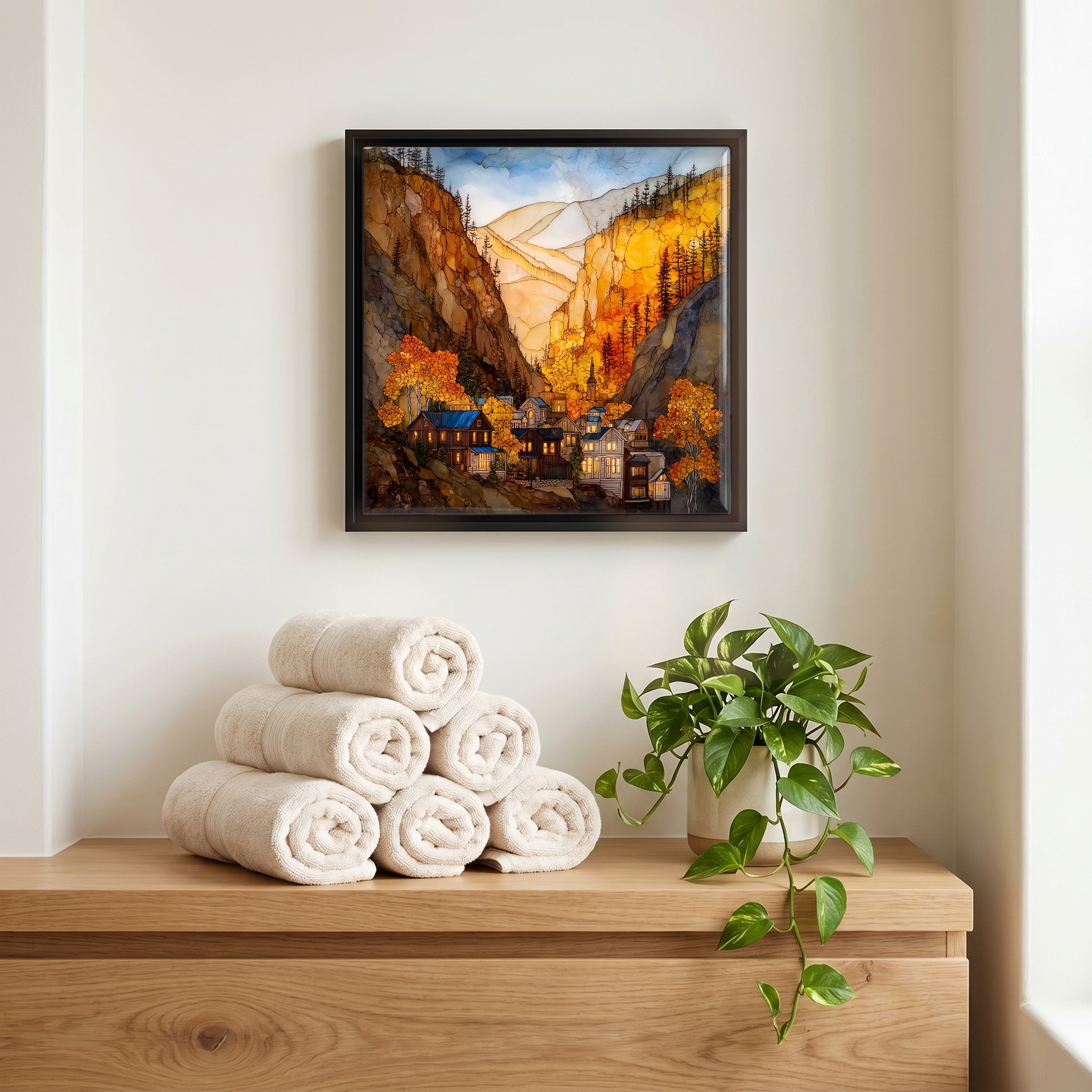
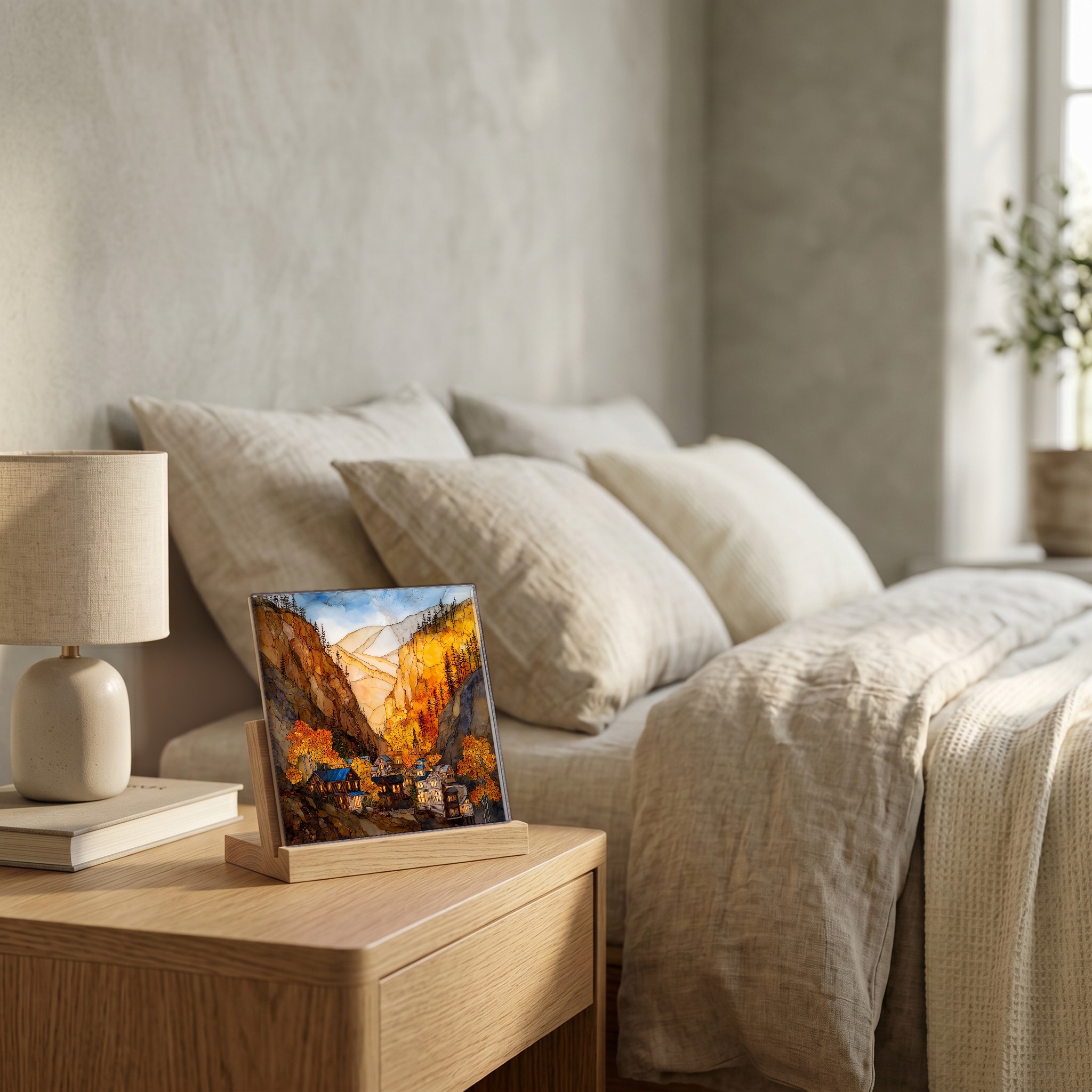
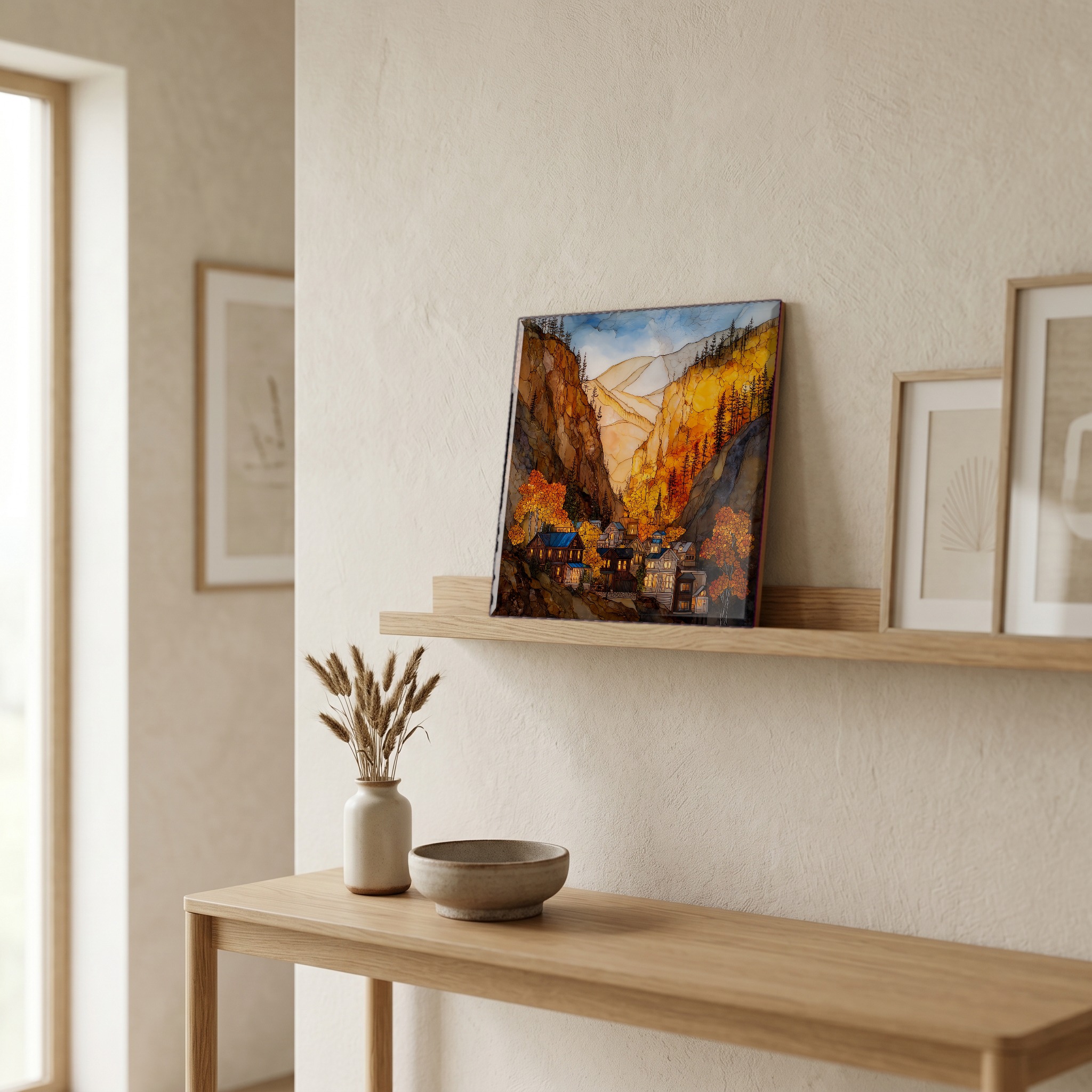
“A town of about nine hundred people at the head of the Uncompahgre, walled in on three sides by quartzite cliffs that climb straight from the back fences. Miners settled the bottom of the box in 1876 and named the place for the Ute chief who had signed away the San Juans two years earlier. The hot springs steam off in winter. The ice park hangs frozen ropes down the south gorge from December until late March. Locals have called it the Switzerland of America for a hundred and fifty years.
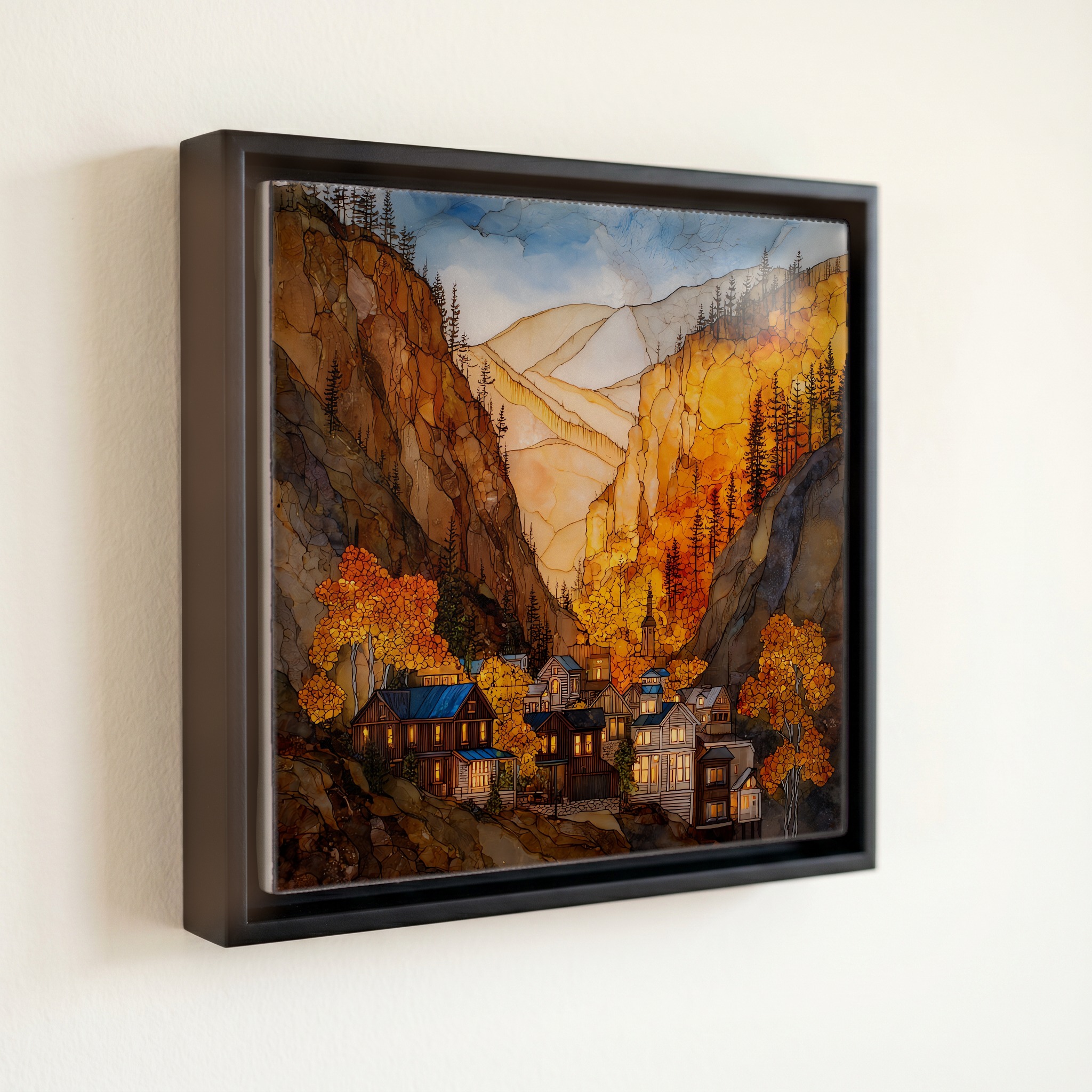
Ouray box-canyon town San Juans Ceramic Art Tile, on ceramic.
Each tile is finished by hand in our Knoxville studio. Artwork is slowly infused into the ceramic surface under high heat and pressure, and rests beneath a thin glossy finish. The colour lives in the surface, not on top of it.
Pick any four 4-inch tiles — National Parks you've been to, a Smokies set, the four seasons of one place. $ for a set of , cork-backed, ready to live on the table.
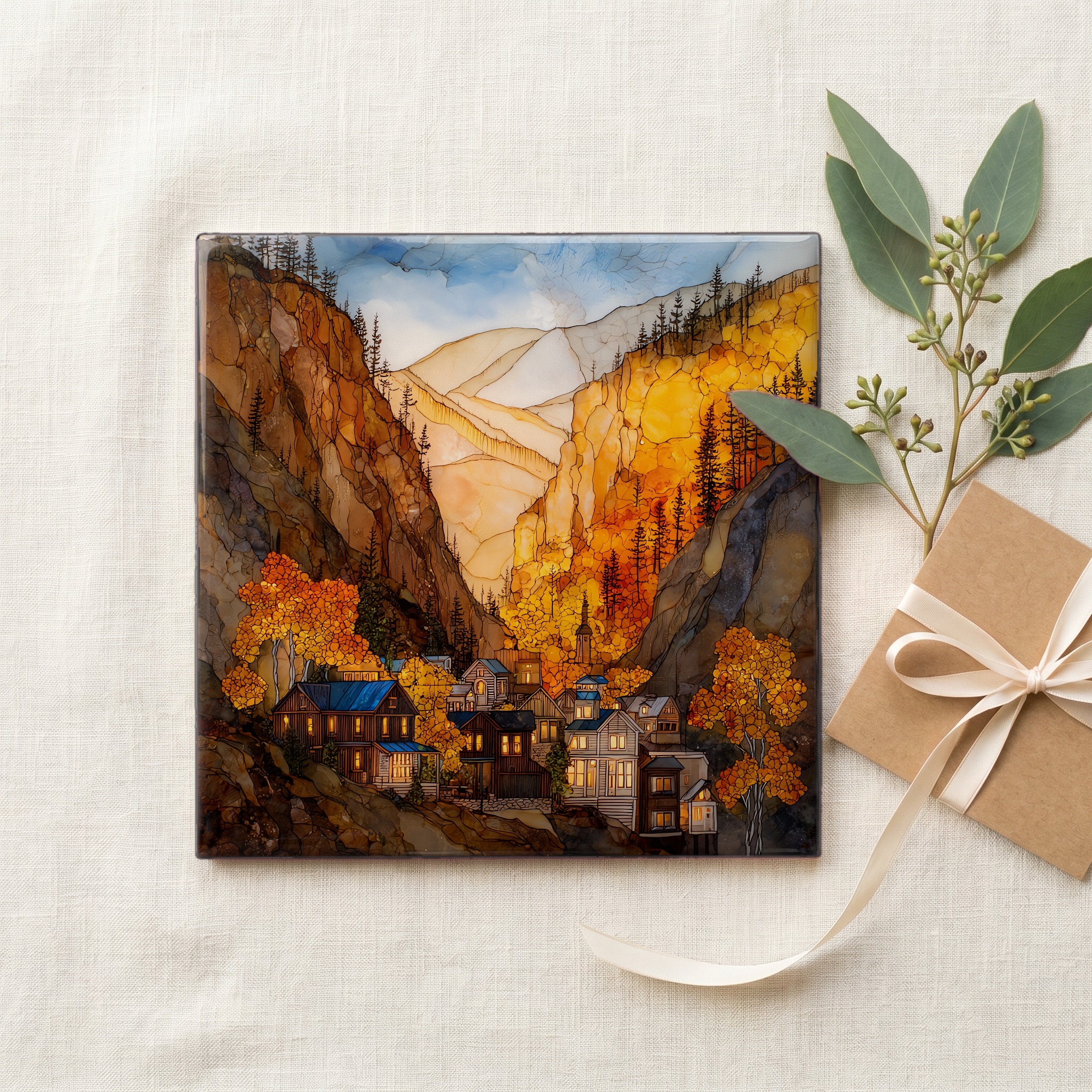
Each tile ships in a kraft box, tied with cream ribbon, with a handwritten note from the studio if you'd like to add one.
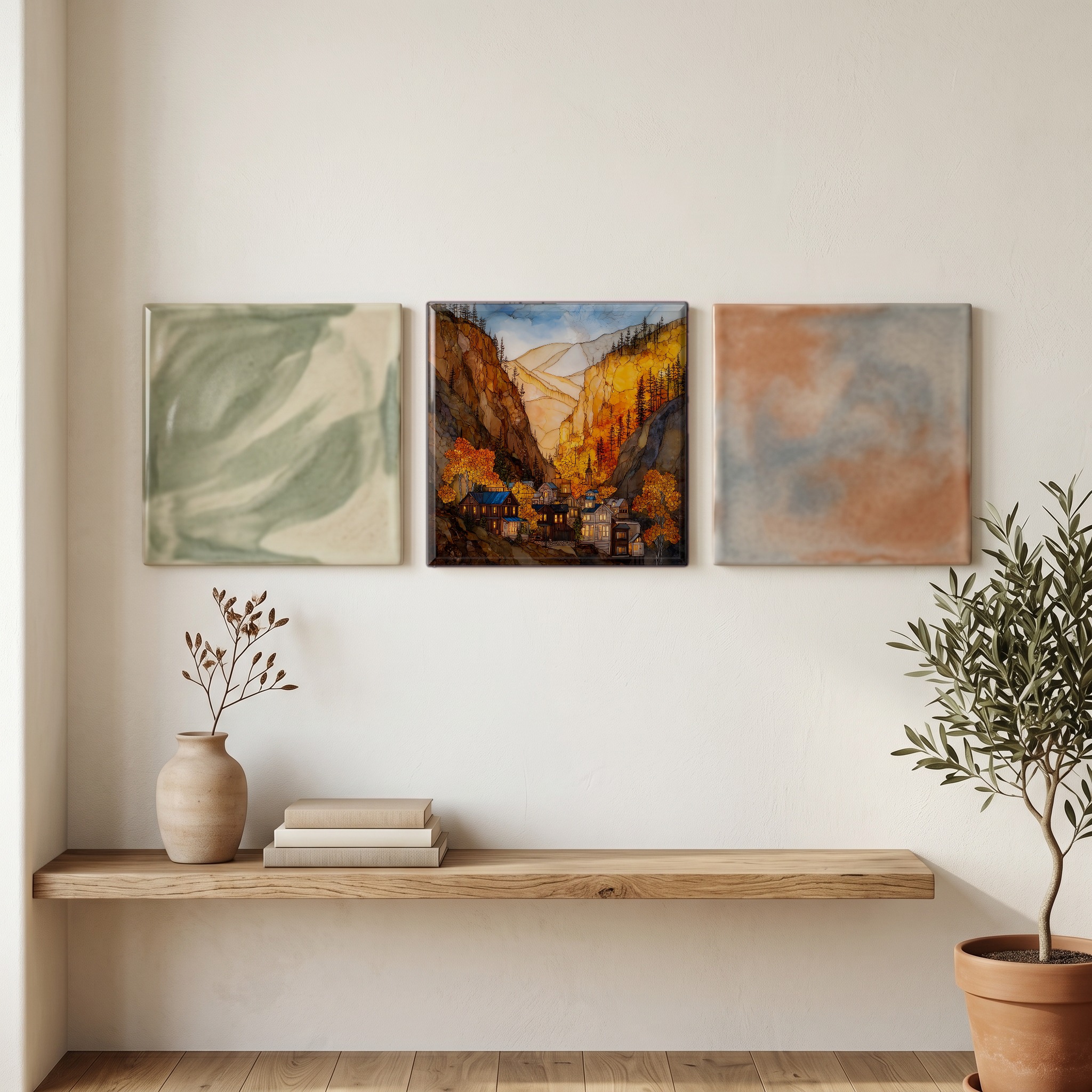
Three or five different vistas, hung together — a chapter of places you've been, or want to go.
The place, in three passes.
Ouray sits at 7,792 feet at the head of the Uncompahgre River in southwestern Colorado, where the San Juan Mountains pinch into a steep box canyon barely wide enough for the town's eight square blocks. The population was 898 at the 2020 census. Prospectors arrived in 1875; the town was incorporated in October 1876 and became the seat of newly carved Ouray County the following January. The name honors the Ute chief who signed the 1873 Brunot Agreement ceding the San Juans to mining interests. US Highway 550 climbs south from here to Silverton across Red Mountain Pass; the stretch has been known since the 1920s as the Million Dollar Highway.
The walls that close Ouray on three sides are Precambrian quartzite. Canyon Creek has cut Box Canyon, on the southwest edge of town, through that same hard, glittering rock; the waterfall inside drops 285 feet between walls less than ten feet apart at the narrows. Above the town the San Juan range holds some of the richest sulfide-ore veins in Colorado, and the Camp Bird Mine, opened in 1896 by Thomas Walsh six miles up Canyon Creek, became one of the most productive gold mines in the American West. The quartzite reads slate-grey in cloud light and copper-red where iron in the surrounding shales has stained it after a long rain.
Ouray's visiting year runs in two seasons. From mid-December into late March, Canyon Creek is dammed and sprayed nightly to grow the ice columns of the Ouray Ice Park, a free, nonprofit climbing venue at the south end of town with more than 200 routes across about a mile of gorge; the Ouray Ice Festival fills the first weekend of January. From late May through October, the road over Red Mountain Pass is reliably open and the town fills with hikers, soakers and Jeep travelers running the Alpine Loop. Three commercial hot springs sit inside city limits, with pool water between roughly 98 and 112°F. Box Canyon Park stays open through the year; admission is a few dollars.