Wender·Vista
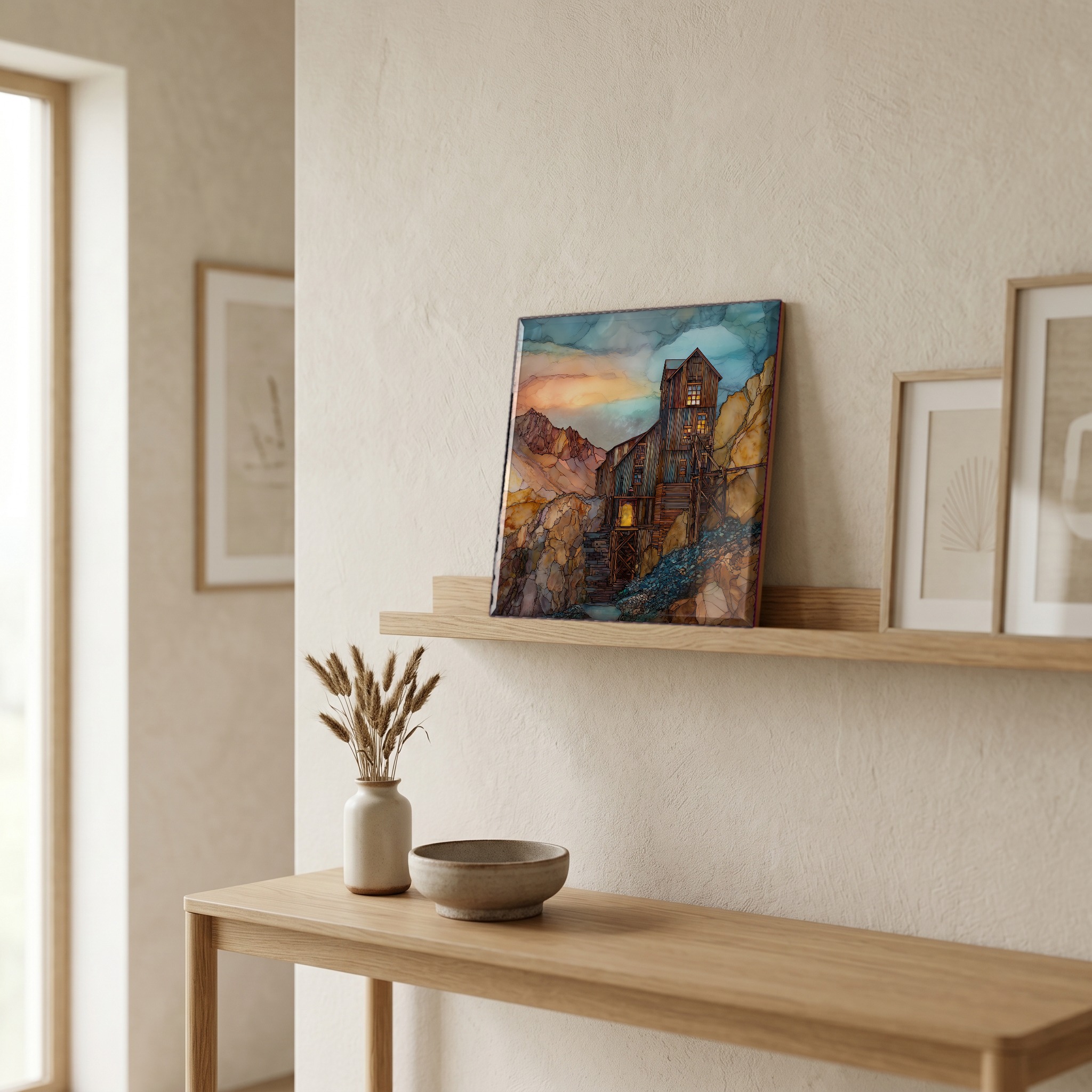
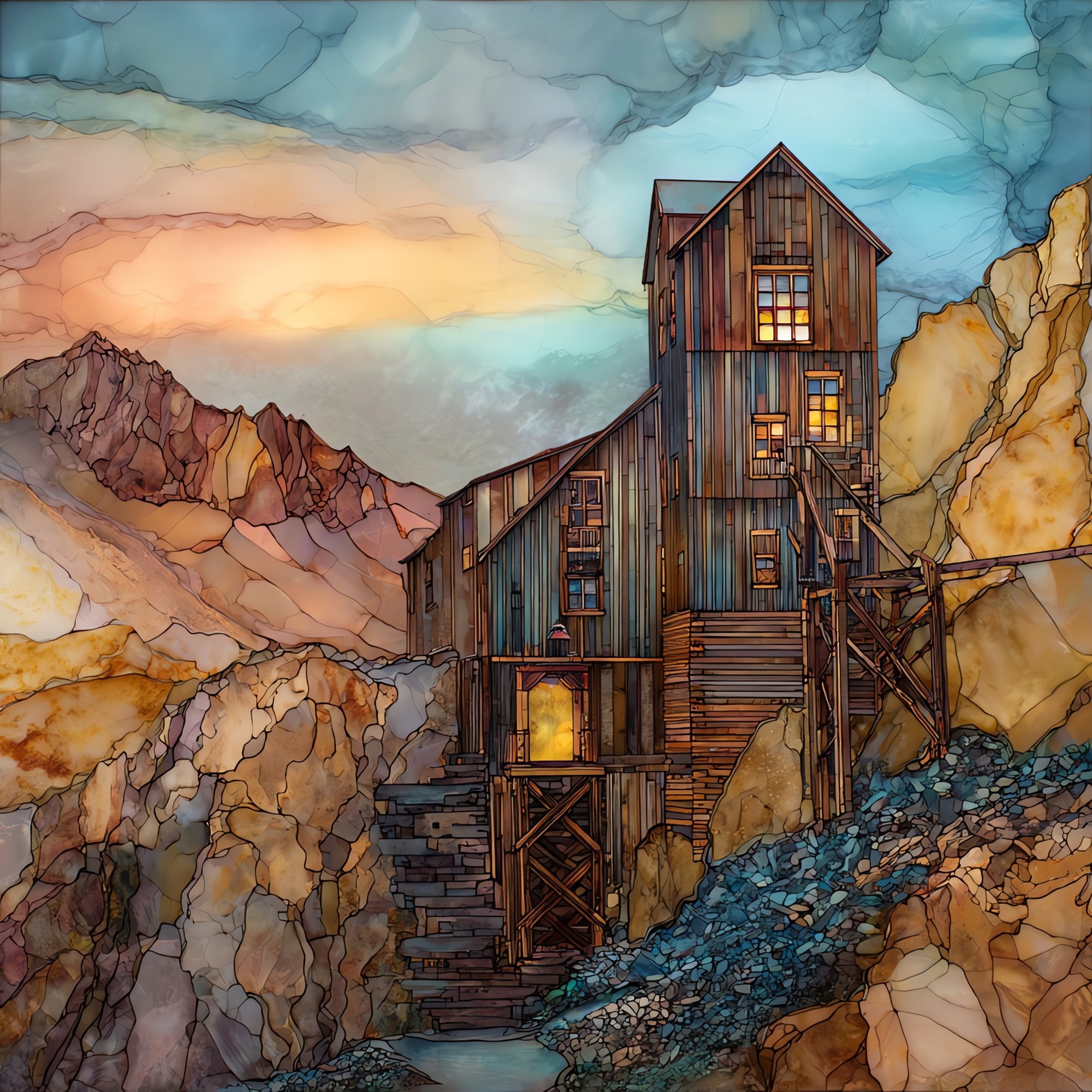
Old Hundred Mine Silverton San Juans Ceramic Art Tile
shown on ceramic, 12-inch tileColorado · United States
above Cunningham Gulch, in the San Juans

Old Hundred Mine Silverton San Juans Ceramic Art Tile

— still up there, after everyone left.

Where it lives

Not only on a wall.

A small tile on the nightstand catching the morning. A larger one above the fire. Yours, wherever you spend the slow hours.
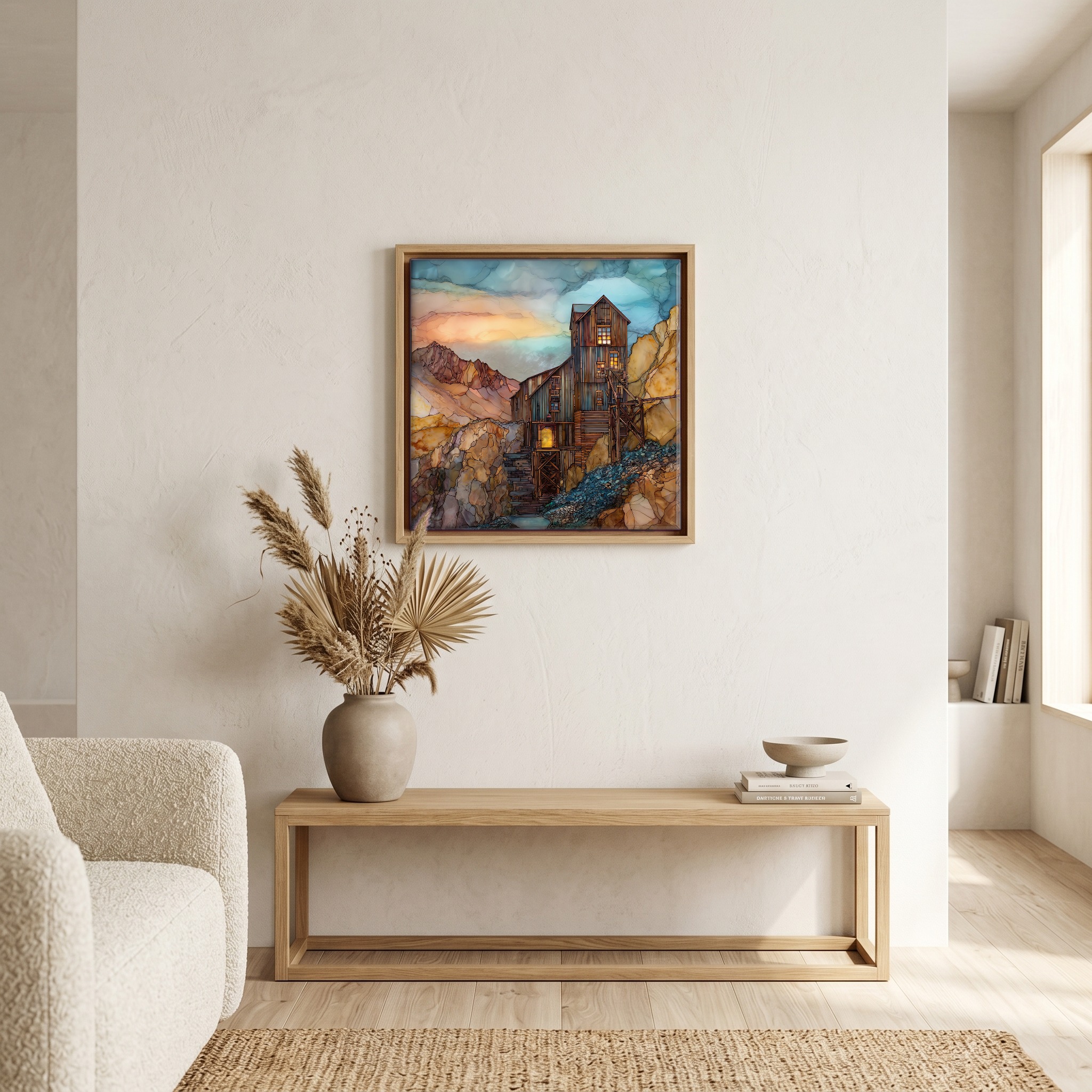
Above the bench, in a warm oak surround.
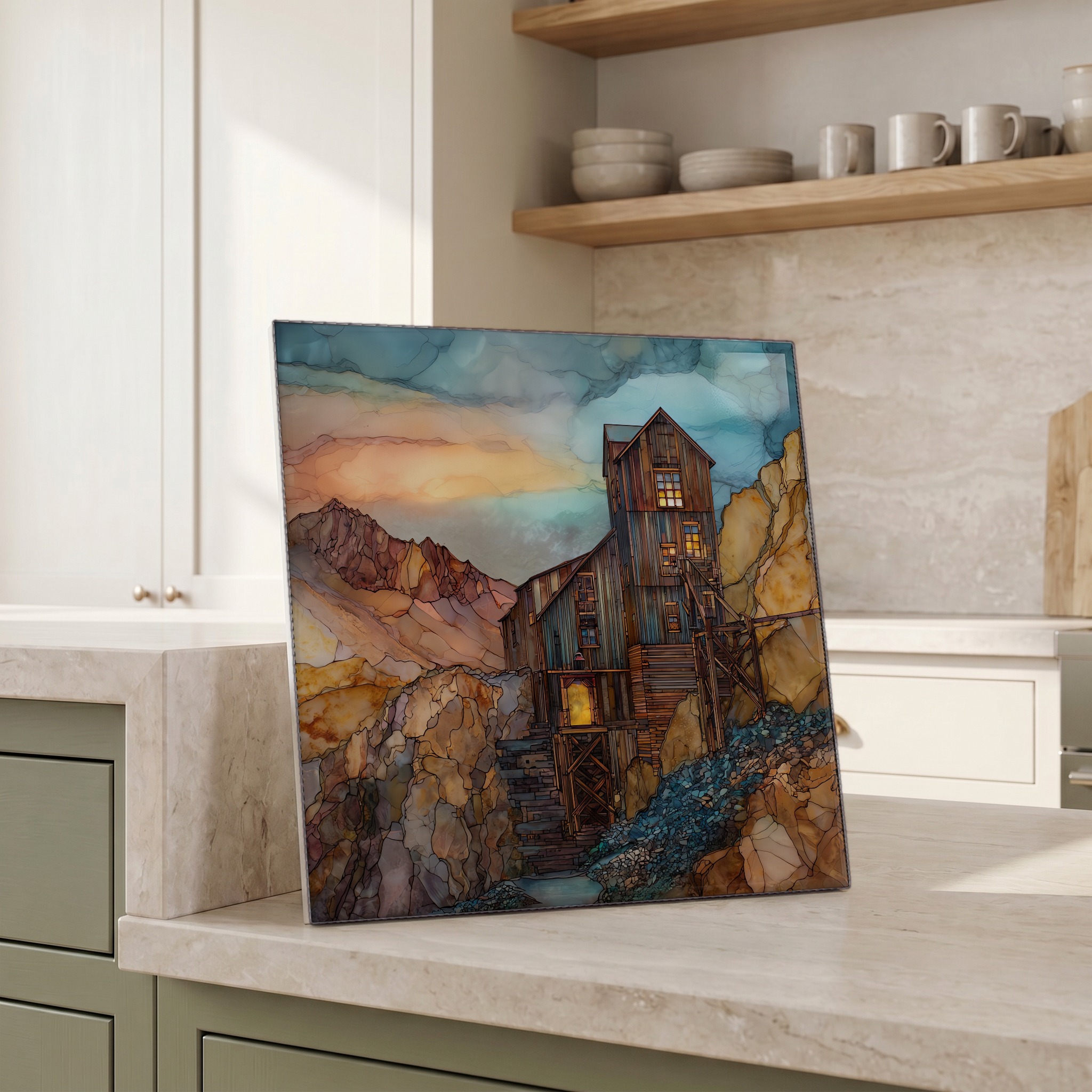
Beside the kettle, propped on the counter.
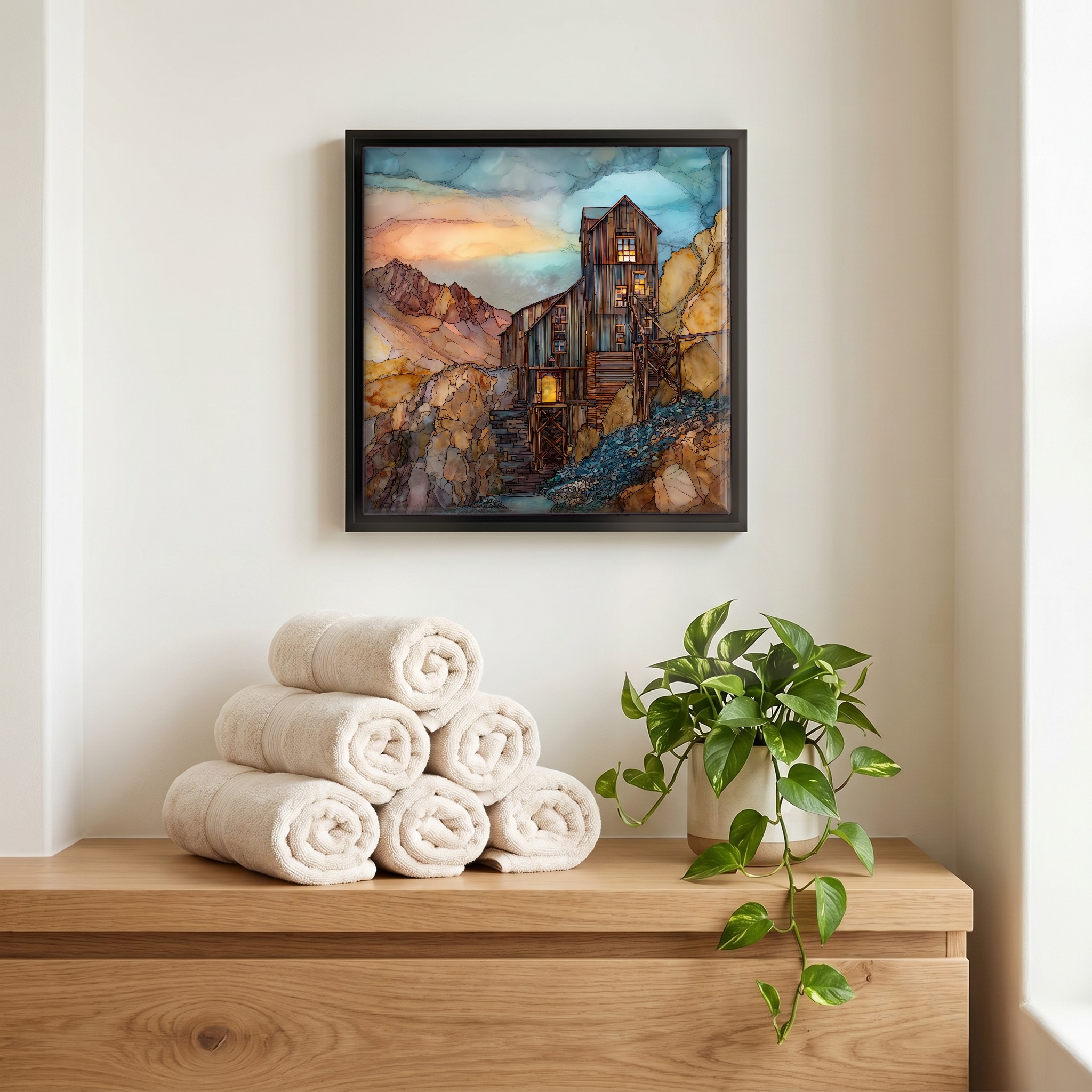
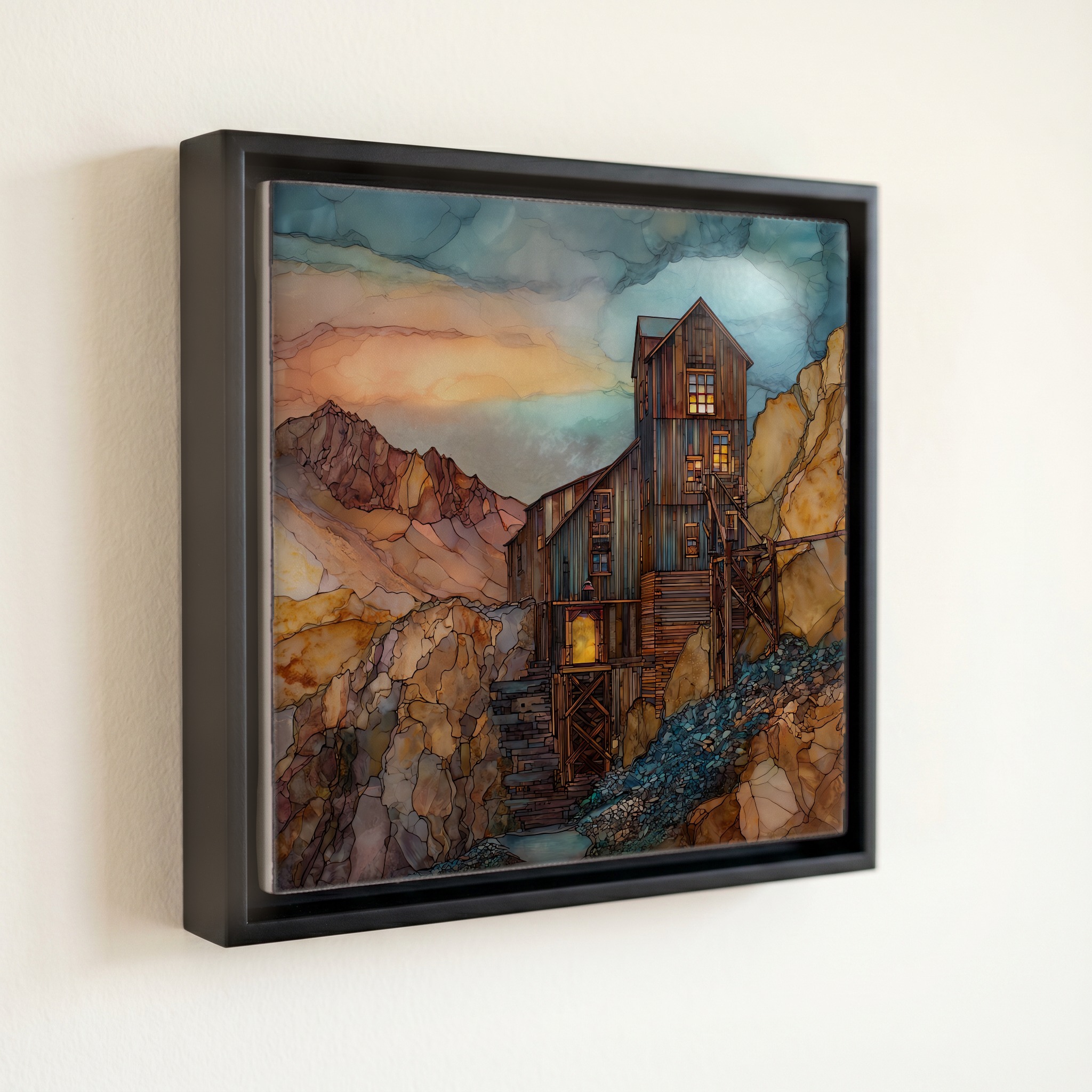
Above the linens, in a slim black surround.
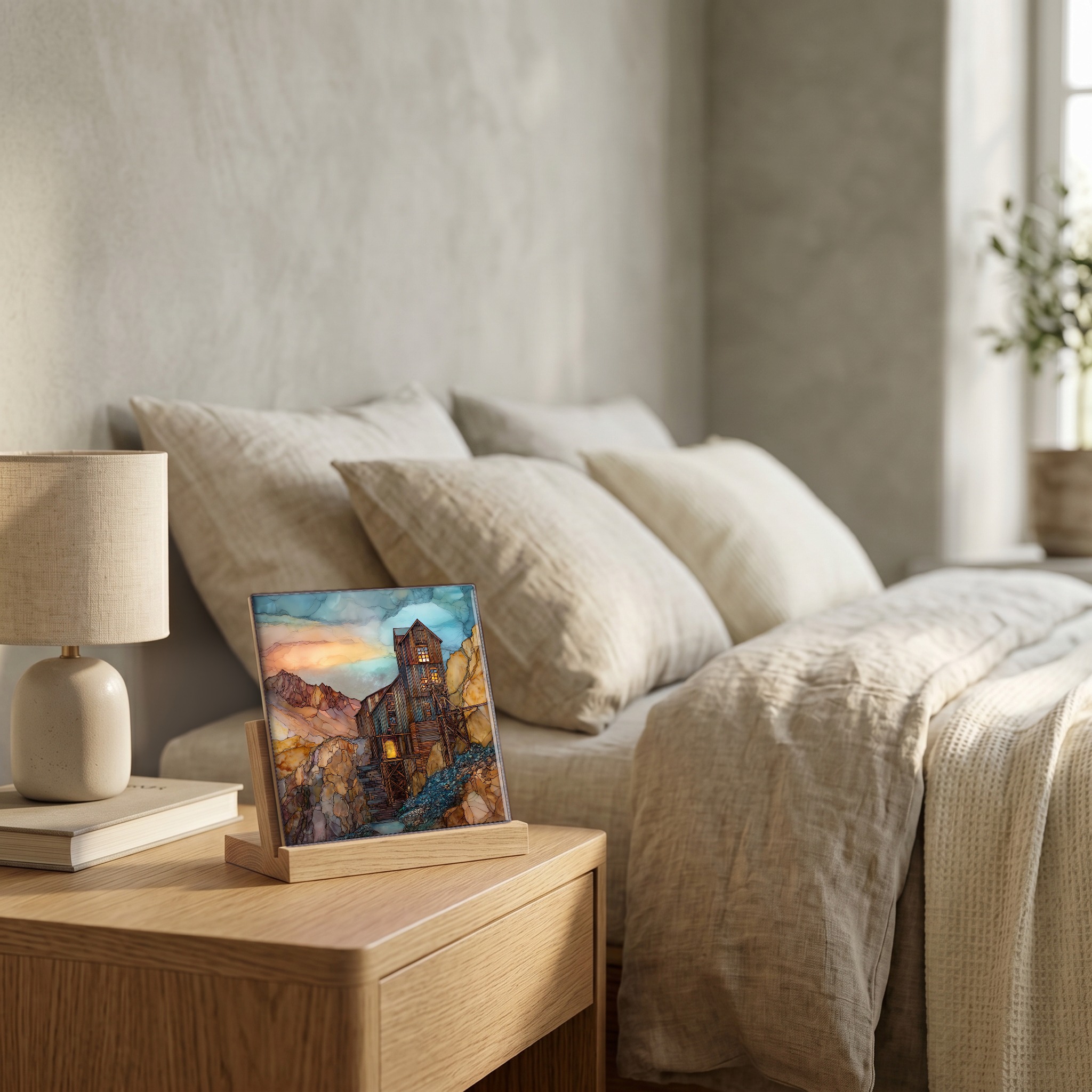
On the nightstand, on a light oak stand.
On a picture ledge, where the light comes in.
a note from the studio

A wooden boarding house pinned to a cliff above Cunningham Gulch, five miles northeast of Silverton. The Niegold brothers staked the first claim here in 1872. The mine that grew up around it produced gold, silver, lead, and zinc, and the boarding house you see from the road was set high enough that miners walked to work along a tramline before sunrise. The portal at the bottom of the gulch is open as a tour now. The boarding house stays where it was left. Spruce and scree, and the kind of quiet that settles where a town once tried to be.
from the studio
shown in a slim black floating frame · 6 × 6 in
— bring it home

Old Hundred Mine Silverton San Juans Ceramic Art Tile, on ceramic.

Each tile is finished by hand in our Knoxville studio. Artwork is slowly infused into the ceramic surface under high heat and pressure, and rests beneath a thin glossy finish. The colour lives in the surface, not on top of it.

What kind of piece?
One tile — square or rectangle.
How big?
the popular one — counter, shelf, nightstand
6 × 6 in · 15 cm · 1.6 lb
Surface finish
A clear glossy finish — the artwork reads as if under resin. Ideal for show-pieces and framed wall art.
How it sits
A hidden cleat — sits ¼″ proud of the wall.
$58
Hand-finished and shipped from our studio at the foot of the Smokies. On your wall in about ten days.
size
6 × 6 in
15 cm
weighs
1.6 lb
solid in the hand
surface
ceramic, hand-finished
art rests beneath a thin glossy finish
from
Knoxville, TN
our family studio, at the foot of the Smokies
— start a Coaster Set

Pick any four 4-inch tiles — National Parks you've been to, a Smokies set, the four seasons of one place. $ for a set of , cork-backed, ready to live on the table.
comes gift-ready
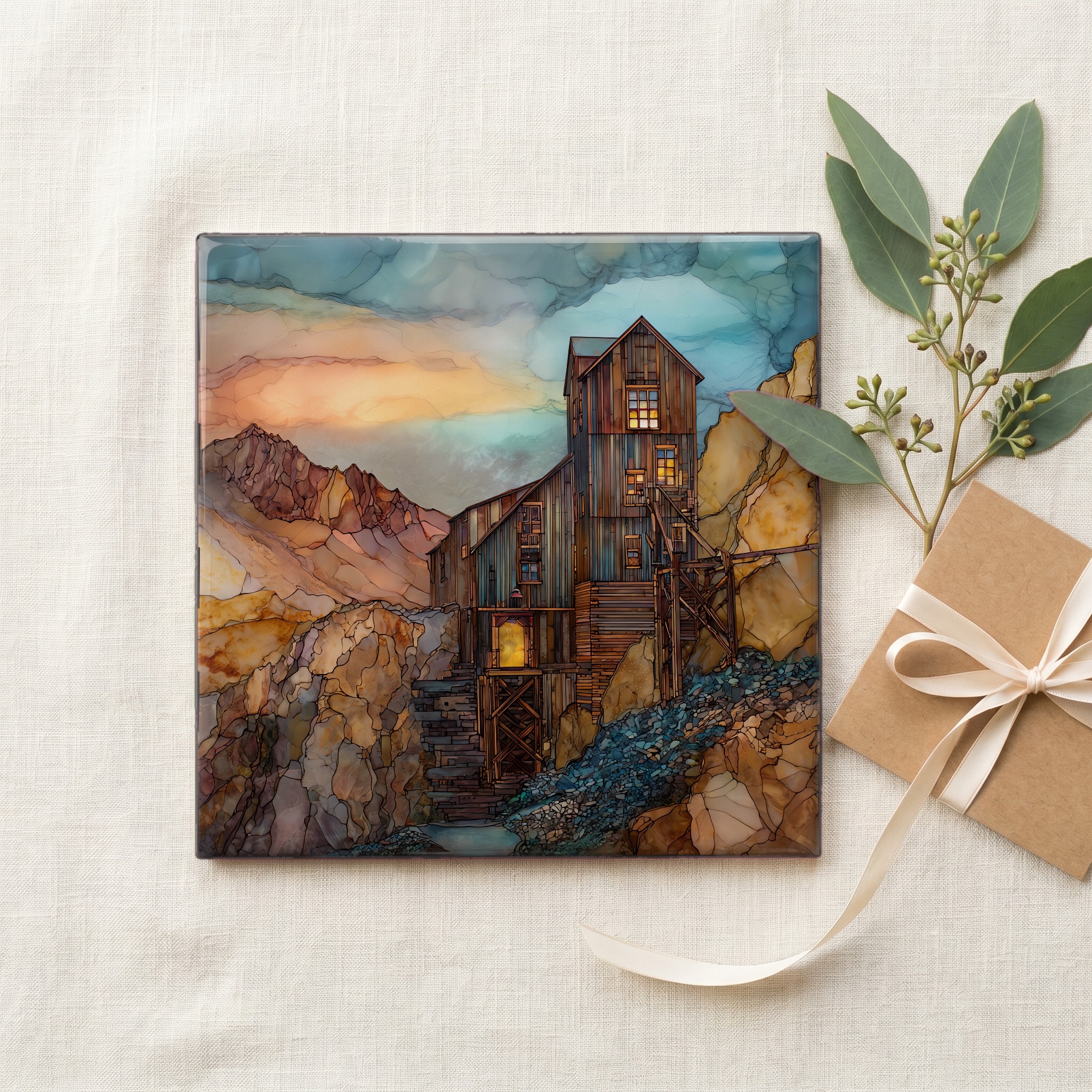
comes gift-ready

Each tile ships in a kraft box, tied with cream ribbon, with a handwritten note from the studio if you'd like to add one.
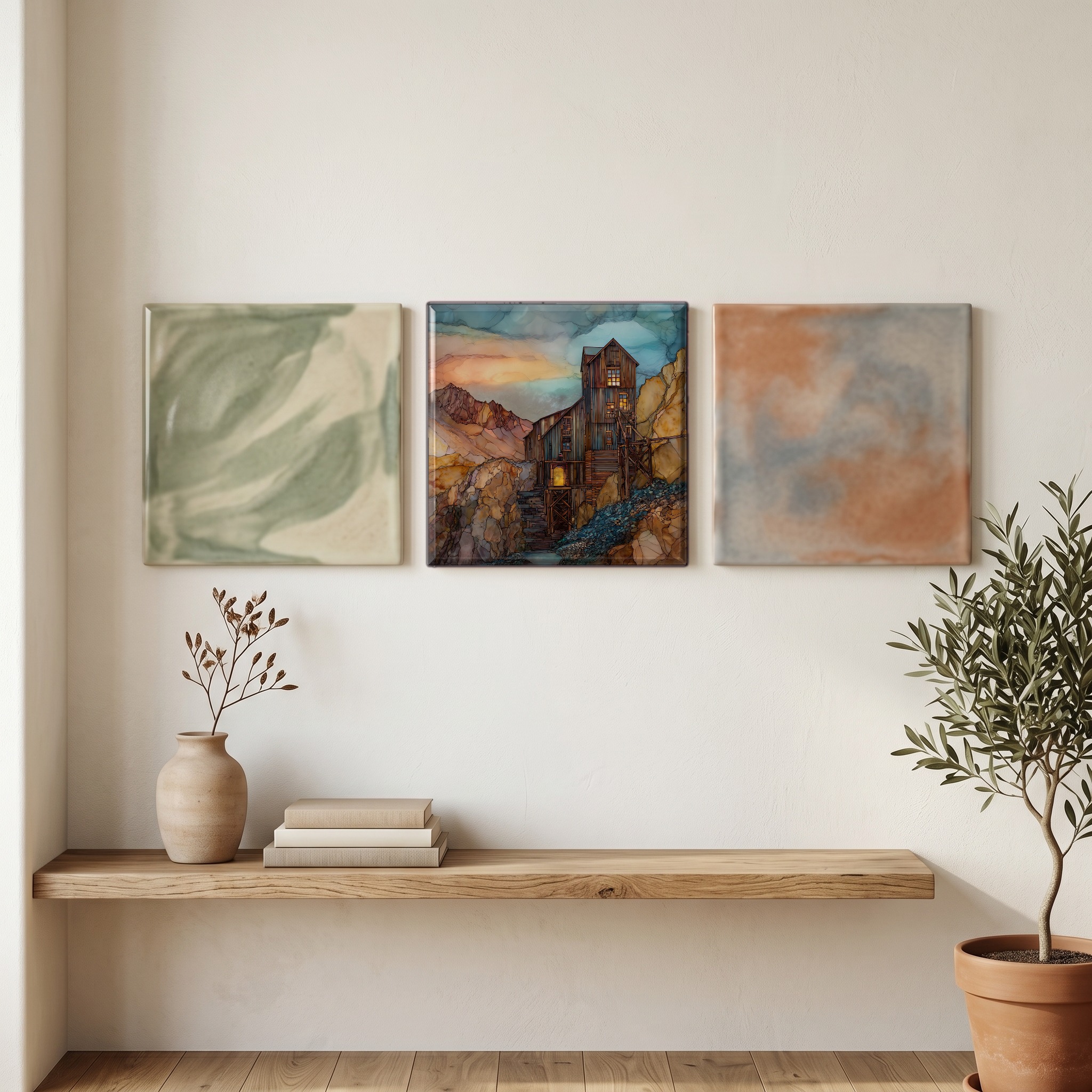
or build a grouping
or build a grouping

Three or five different vistas, hung together — a chapter of places you've been, or want to go.

about Old Hundred Mine Silverton San Juans Ceramic Art Tile

The place, in three passes.

A little of what's known, in case you fall down the rabbit hole — or want to go see it yourself.
the place

The Old Hundred Gold Mine sits in Cunningham Gulch in the western San Juan Mountains of southwestern Colorado, about five miles northeast of Silverton, the county seat of San Juan County. The portal opens off a forest road in the gulch, at roughly 10,200 feet of elevation. Silverton itself, at 9,318 feet, is one of the highest incorporated towns in the United States and the southern terminus of the Million Dollar Highway, U.S. Route 550, which crosses Red Mountain Pass from Ouray. The mine is now operated as a working tour mine from late May into early October. The original boarding house remains visible on the cliff above, pinned to the rock where the miners left it.

the stone

The mountain above Cunningham Gulch lies in the San Juan volcanic field, an enormous expanse of layered ash and andesite that erupted roughly 35 to 23 million years ago and now holds one of the richest mineral districts in North America. The Old Hundred vein carries gold, silver, lead, copper, and zinc in narrow fissures cutting the volcanic rock. The Niegold brothers, three German immigrants, staked the original claim in 1872 and worked the upper levels by tramline for the next several decades. The mine's name has been read two ways over the years: the hymn 'Old Hundredth' the Niegolds were said to sing, and the consolidation of roughly a hundred individual claims under one ownership.

the visit

The tour mine operates from late May through early October. Visitors board a battery-electric mine train at the portal in Cunningham Gulch and ride roughly 1,500 feet into the mountain along Level 5, the lowest of the workings. Inside, retired miners demonstrate the air-leg drills, slushers, and stope equipment that defined hard-rock mining in the San Juans through the twentieth century. The mine interior holds steady near 47 degrees Fahrenheit year-round, so a jacket is part of the experience. The boarding house on the cliff above is not part of the tour and is best read from the road through the gulch.

where
United States · San Juan County, Colorado
the neighborhood

What's nearby.

A handful of named places within an hour's walk or short drive. Some we've already painted; some we will.
2 km W
Howardsville
ghost town
6 km E
Stony Pass
mountain pass
8 km SW
Silverton
historic mining town
11 km NW
Eureka
ghost town
17 km N
Animas Forks
ghost town
N
Old Hundred Mine Silverton San Juans Ceramic Art Tile
Howardsville
Stony Pass
Silverton
Eureka
Animas Forks
common questions

What people ask.

A few questions we get about Old Hundred Mine Silverton San Juans Ceramic Art Tile — and about bringing the piece home.
about the place

The Old Hundred Gold Mine sits in Cunningham Gulch in the western San Juan Mountains of southwestern Colorado, about five miles northeast of Silverton in San Juan County. It is reached by a county road that runs up Cunningham Gulch from State Highway 110, which leaves U.S. 550 just north of downtown Silverton.

Three German immigrant brothers named Niegold staked the original claim in 1872 on the steep ground above Cunningham Gulch. The surname 'Niegold' translates roughly as 'never gold' in German, an irony the family is said to have enjoyed once the vein began to pay.

Two stories survive. One holds that the Niegold brothers, who were religious, named the workings after the hymn 'Old Hundredth,' the tune of the Doxology. The other is that the consolidated operation eventually brought roughly a hundred separate claims under one ownership. Both versions persist in San Juan County histories.

Gold, silver, lead, copper, and zinc, in narrow fissure veins cutting the andesite and ash-flow tuff of the San Juan volcanic field. The deposits are typical of the broader Silverton mining district, which produced base and precious metals for more than a century before the last commercial mines closed in the late twentieth century.

Yes. The mine is open as a tour mine from late May through early October. Visitors ride a battery-electric mine train roughly 1,500 feet into the mountain along Level 5 and watch retired miners demonstrate the air-leg drills, slushers, and stope equipment used in hard-rock mining through the twentieth century.

The wooden structure perched on the cliff above Cunningham Gulch is the original Old Hundred Mine boarding house, built so miners working the upper levels could live near the work. It is visible from the road below but is not part of the visitor tour, which runs through the lower portal.

About five miles northeast, by way of State Highway 110 and a county road up Cunningham Gulch. Silverton, at 9,318 feet, is the seat of San Juan County and the southern terminus of the Million Dollar Highway, U.S. Route 550, which crosses Red Mountain Pass from Ouray.

about the piece in your home

It's been a meaningful gift for customers with ties to San Juan County. The boarding house above Cunningham Gulch is one of the most recognized images in southwestern Colorado mining country, and anyone who has ridden the Durango-Silverton railroad or driven the Alpine Loop will know it on sight. A Coaster or Small with a handwritten studio note carries well.

The piece reads as Mountain-modern most directly, with the warm ore tones of the artwork sitting easily against wood, leather, and brushed iron. It also fits Jewel-tone Maximalist rooms that want a window onto wilder country, and Industrial-rustic interiors where the boarding house's wood frame echoes the rest of the room.

Yes. Alpine-modern rooms lean on natural wood, wrought iron, and one or two pieces of art that hold the room's altitude. The Old Hundred tile, with its high-country palette and the boarding house framed against the cliff, sits well in that form. A Large or a Triptych above a low cabinet is the usual placement.

Above a sofa, a single Large or a 4-tile Mural carries the wall. Above a console, a Medium is usually right; a 9-tile Mural reads as a statement piece on a longer wall, eight to ten feet wide. The Coaster and Keepsake sizes are for desks, nightstands, and small shelves.

Yes, with the right finish. For a backsplash, shower wall, or any humid or splashable surface, choose Dura Satin or Matte. Both are scratch-resistant and stand up to daily use. The Glossy finish is reserved for framed wall art and showpieces in dry rooms.

A microfibre cloth and water. The colour is slowly infused into the ceramic surface under high heat and pressure, so there is no painted layer to wear off. No solvents, no abrasives, no special sealers.

Yes. Every piece in the WenderVista atlas is made in our studio in Knoxville, Tennessee, under Reid Wender's eye. The artwork is not licensed from a stock library and is not reproduced anywhere else. Each tile is hand-finished in-house before it ships.

if this one stayed with you

A few you might also love.

Hand-picked by the eye that found Sorapis. Same air, same kind of quiet.