Wender·Vista
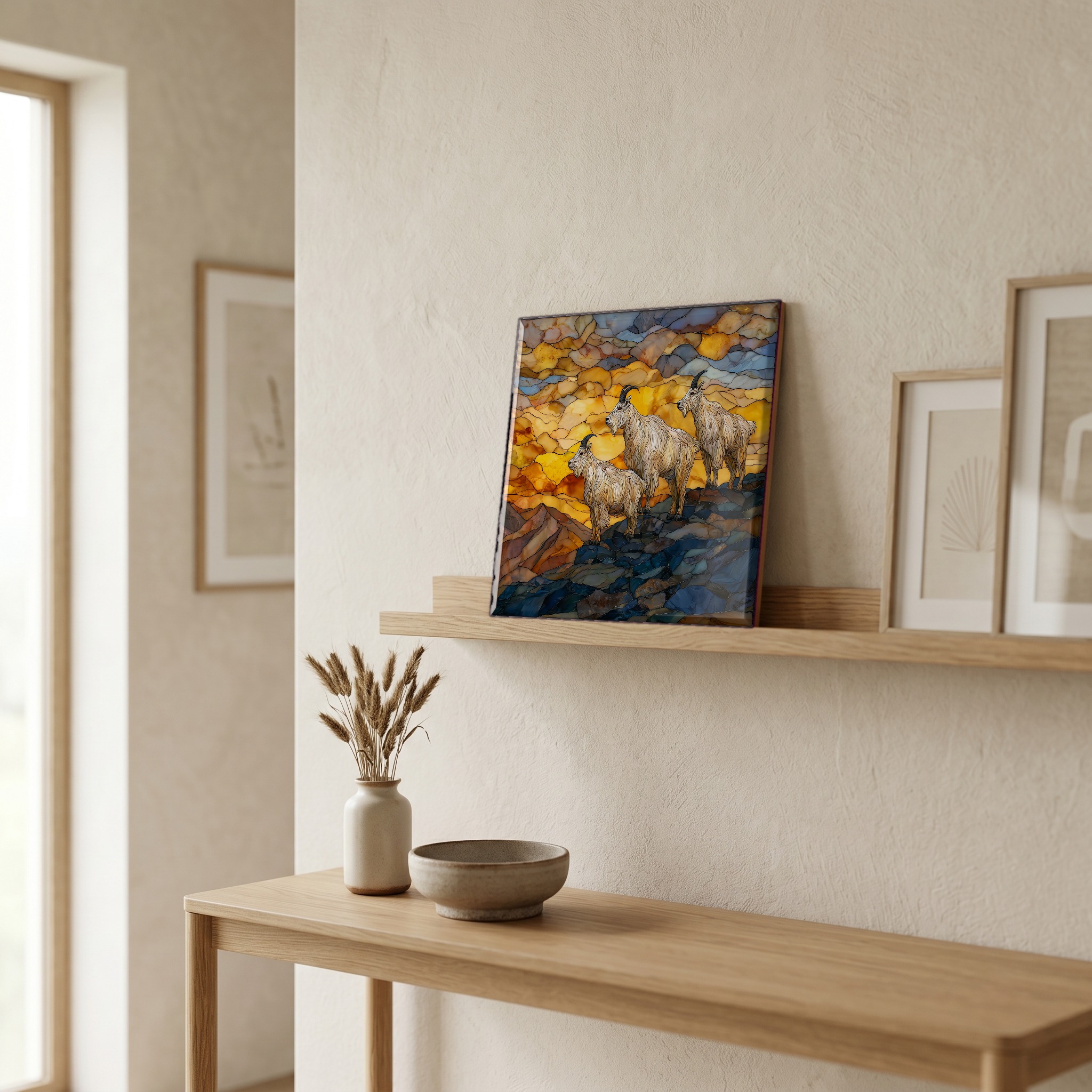
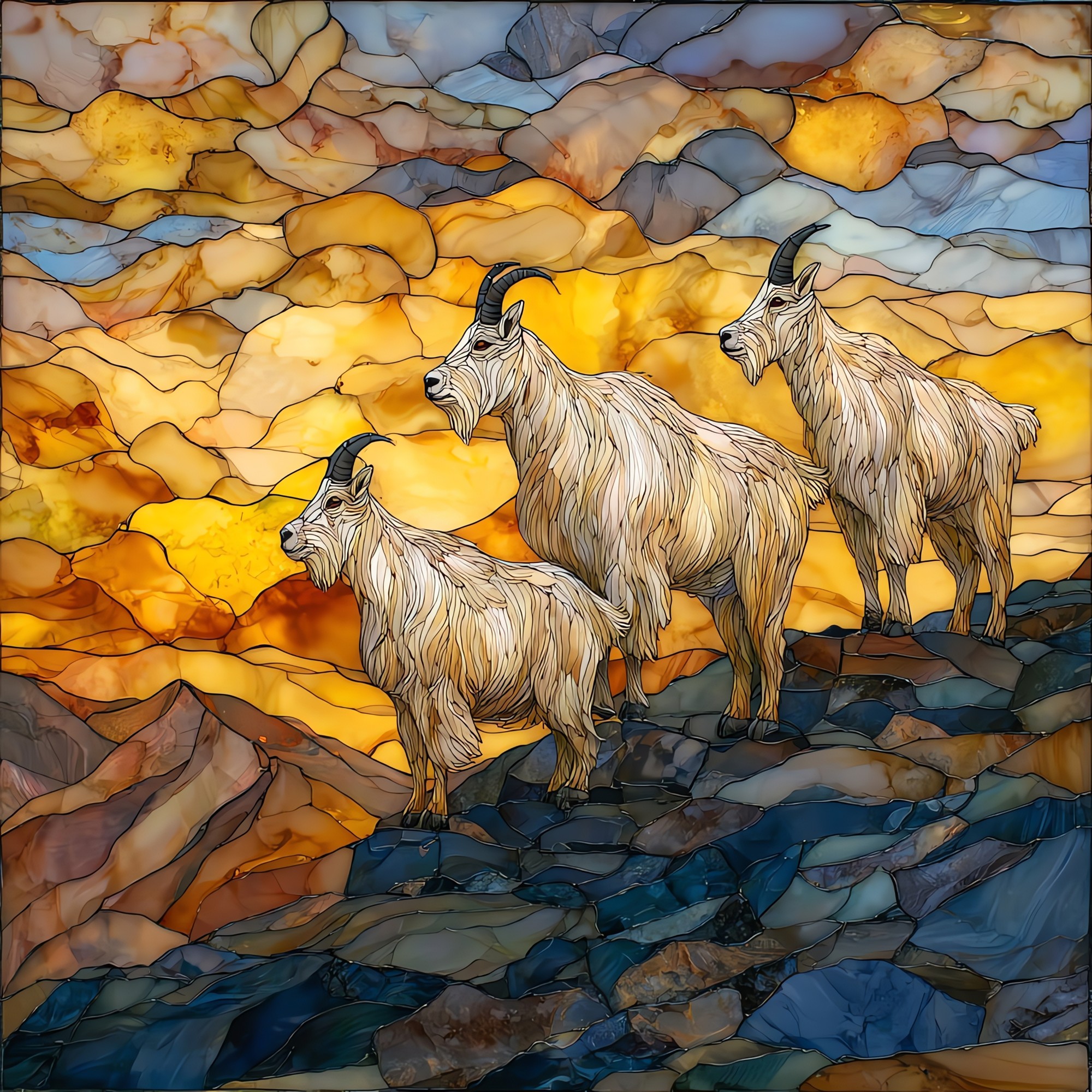
Mountain goats on Bierstadt Front Range Ceramic Art Tile
shown on ceramic, 12-inch tileColorado · United States
in the Front Range, an hour west of Denver

Mountain goats on Bierstadt Front Range Ceramic Art Tile

the herd that finds you above the willows.

Where it lives

Not only on a wall.

A small tile on the nightstand catching the morning. A larger one above the fire. Yours, wherever you spend the slow hours.
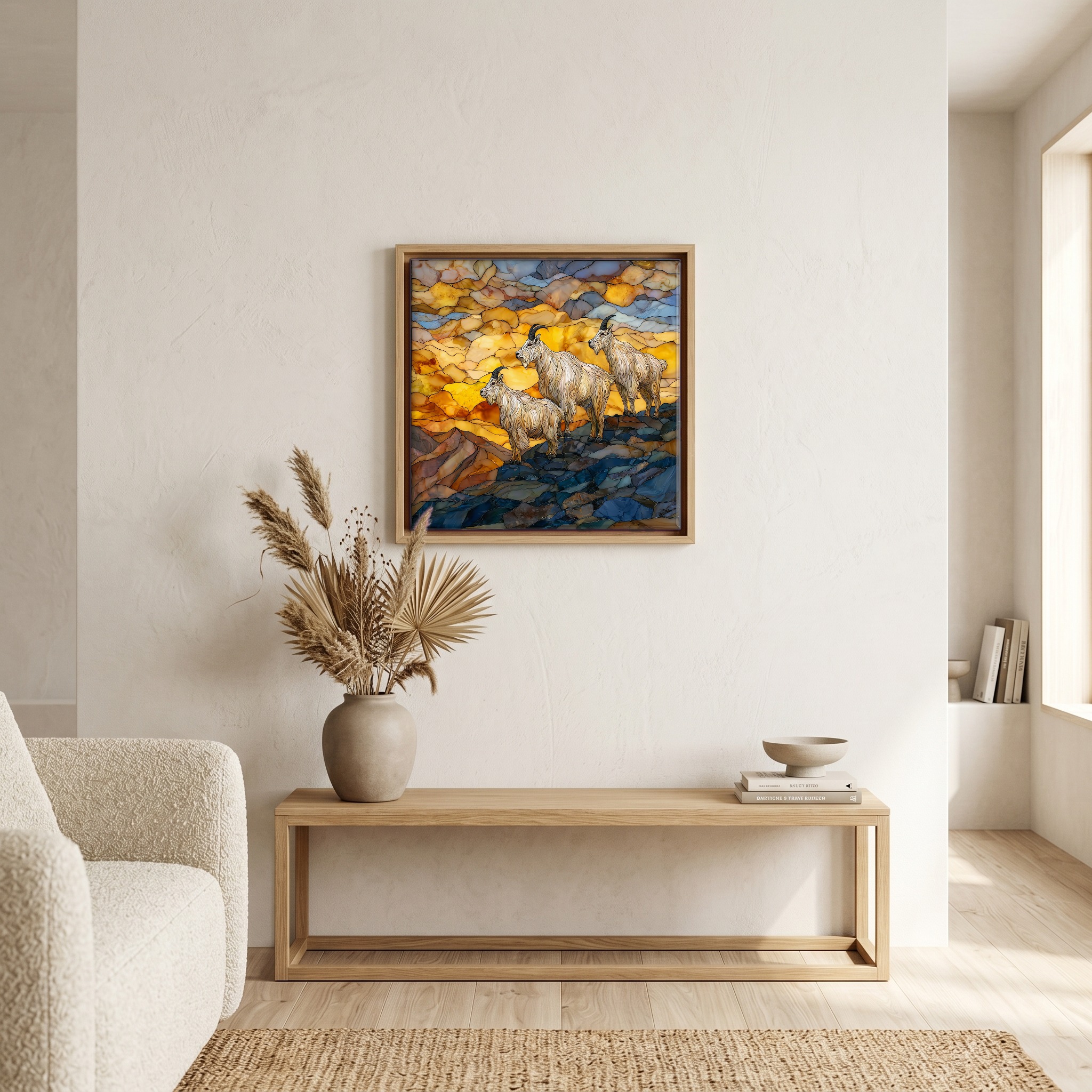
Above the bench, in a warm oak surround.
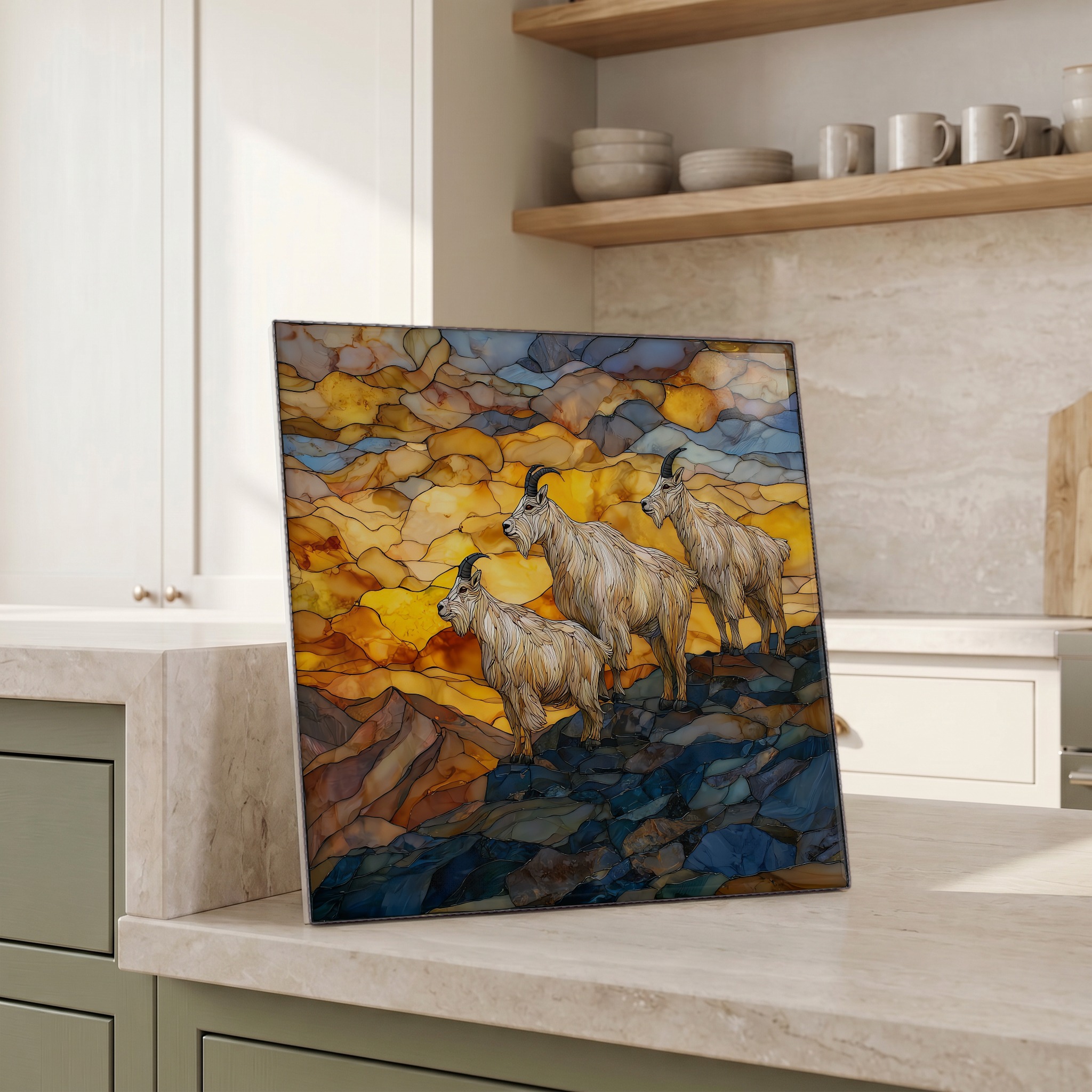
Beside the kettle, propped on the counter.
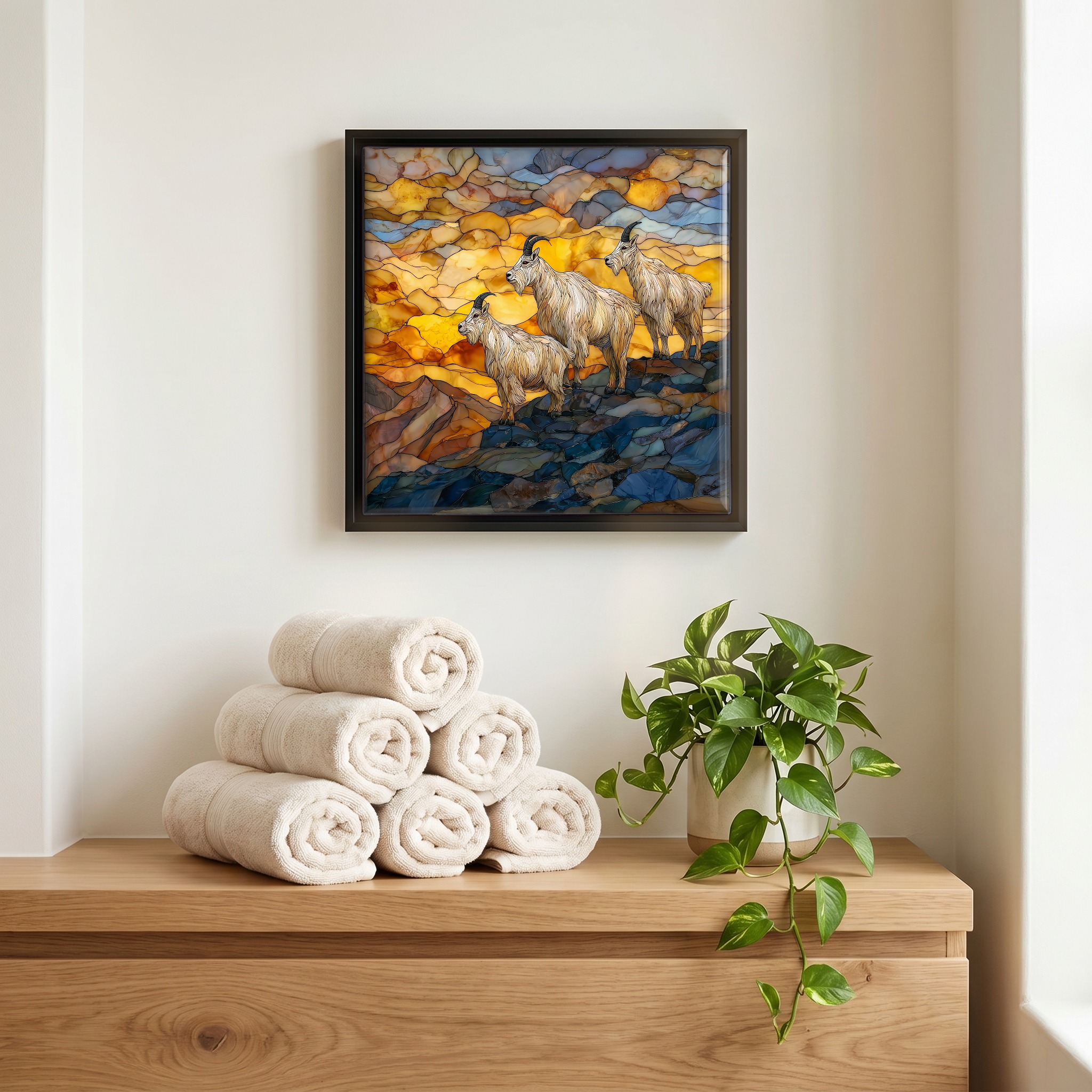
Above the linens, in a slim black surround.
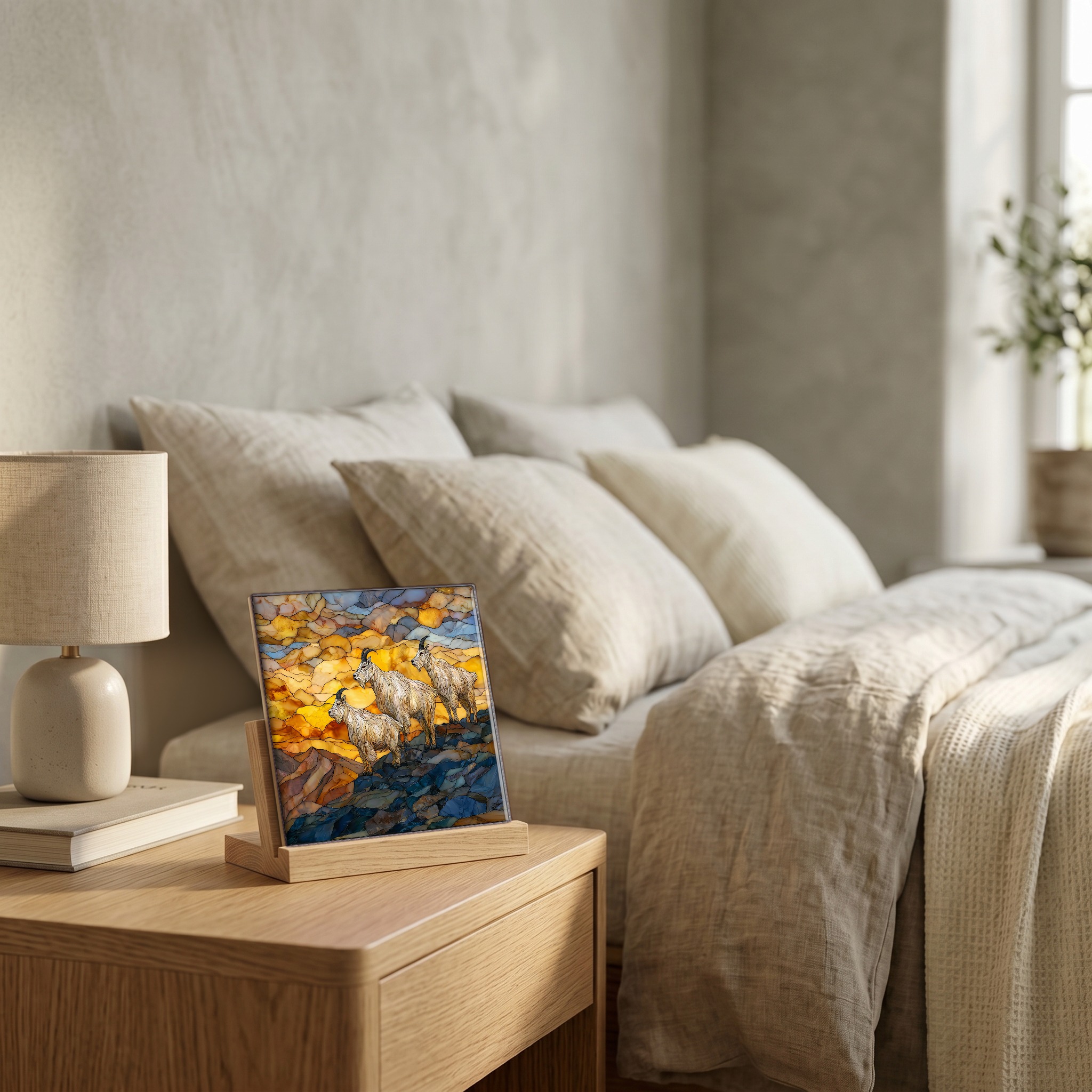
On the nightstand, on a light oak stand.
On a picture ledge, where the light comes in.
a note from the studio

The hike begins in a knee-high willow bog above Guanella Pass and climbs into the bouldered upper third where the mountain goats live. They are not afraid of people anymore. A small band, sometimes a dozen, sometimes thirty, will work the talus a hundred feet off the trail, then drift across the path between summit pushes. The white coats look impossible against the slate-grey rock and the sky that thin air gives back. The goats are not native to Colorado; the state seeded them in the 1940s and they took. The atlas wants Bierstadt for the meeting, not the summit.
from the studio
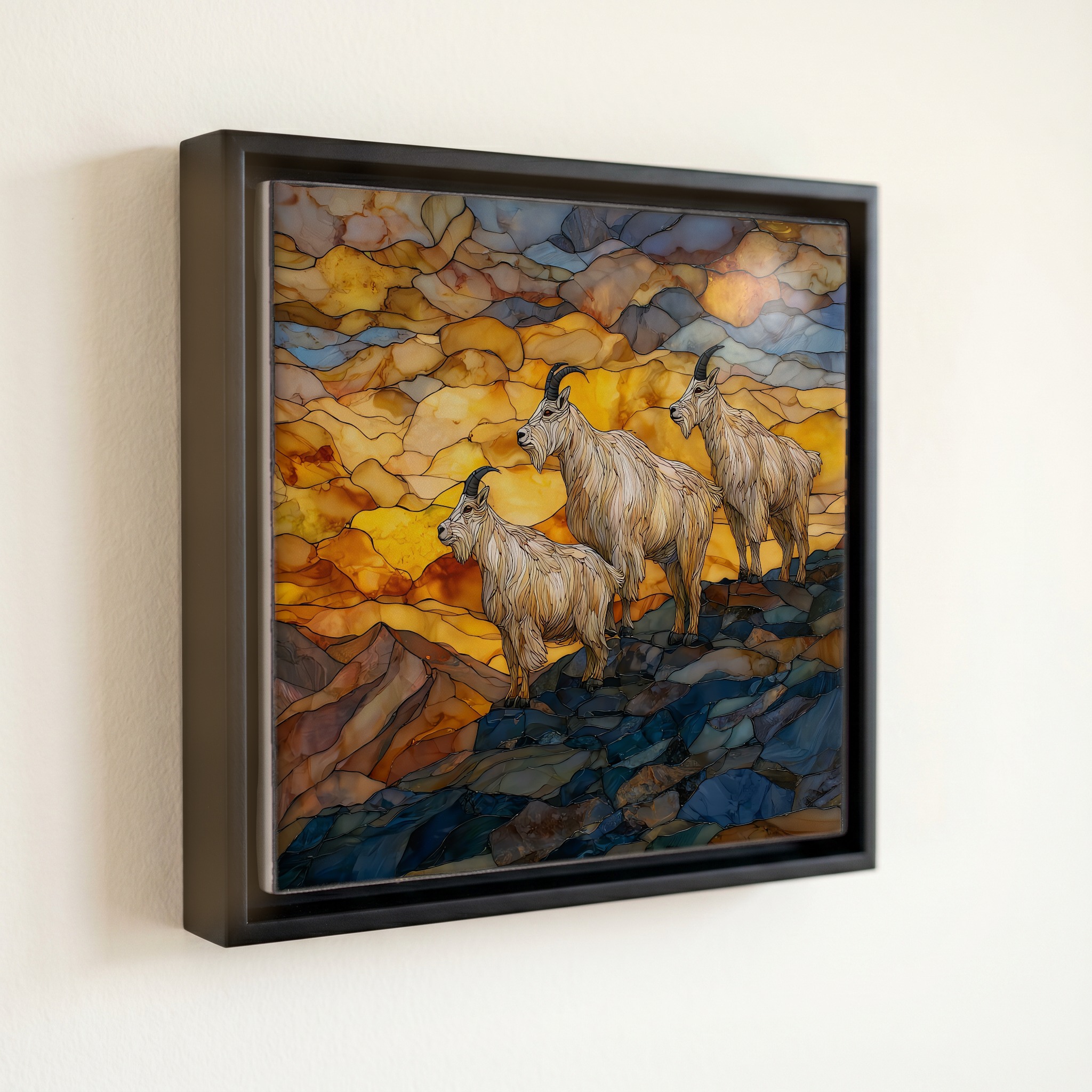
shown in a slim black floating frame · 6 × 6 in
— bring it home

Mountain goats on Bierstadt Front Range Ceramic Art Tile, on ceramic.

Each tile is finished by hand in our Knoxville studio. Artwork is slowly infused into the ceramic surface under high heat and pressure, and rests beneath a thin glossy finish. The colour lives in the surface, not on top of it.

What kind of piece?
One tile — square or rectangle.
How big?
the popular one — counter, shelf, nightstand
6 × 6 in · 15 cm · 1.6 lb
Surface finish
A clear glossy finish — the artwork reads as if under resin. Ideal for show-pieces and framed wall art.
How it sits
A hidden cleat — sits ¼″ proud of the wall.
$58
Hand-finished and shipped from our studio at the foot of the Smokies. On your wall in about ten days.
size
6 × 6 in
15 cm
weighs
1.6 lb
solid in the hand
surface
ceramic, hand-finished
art rests beneath a thin glossy finish
from
Knoxville, TN
our family studio, at the foot of the Smokies
— start a Coaster Set

Pick any four 4-inch tiles — National Parks you've been to, a Smokies set, the four seasons of one place. $ for a set of , cork-backed, ready to live on the table.
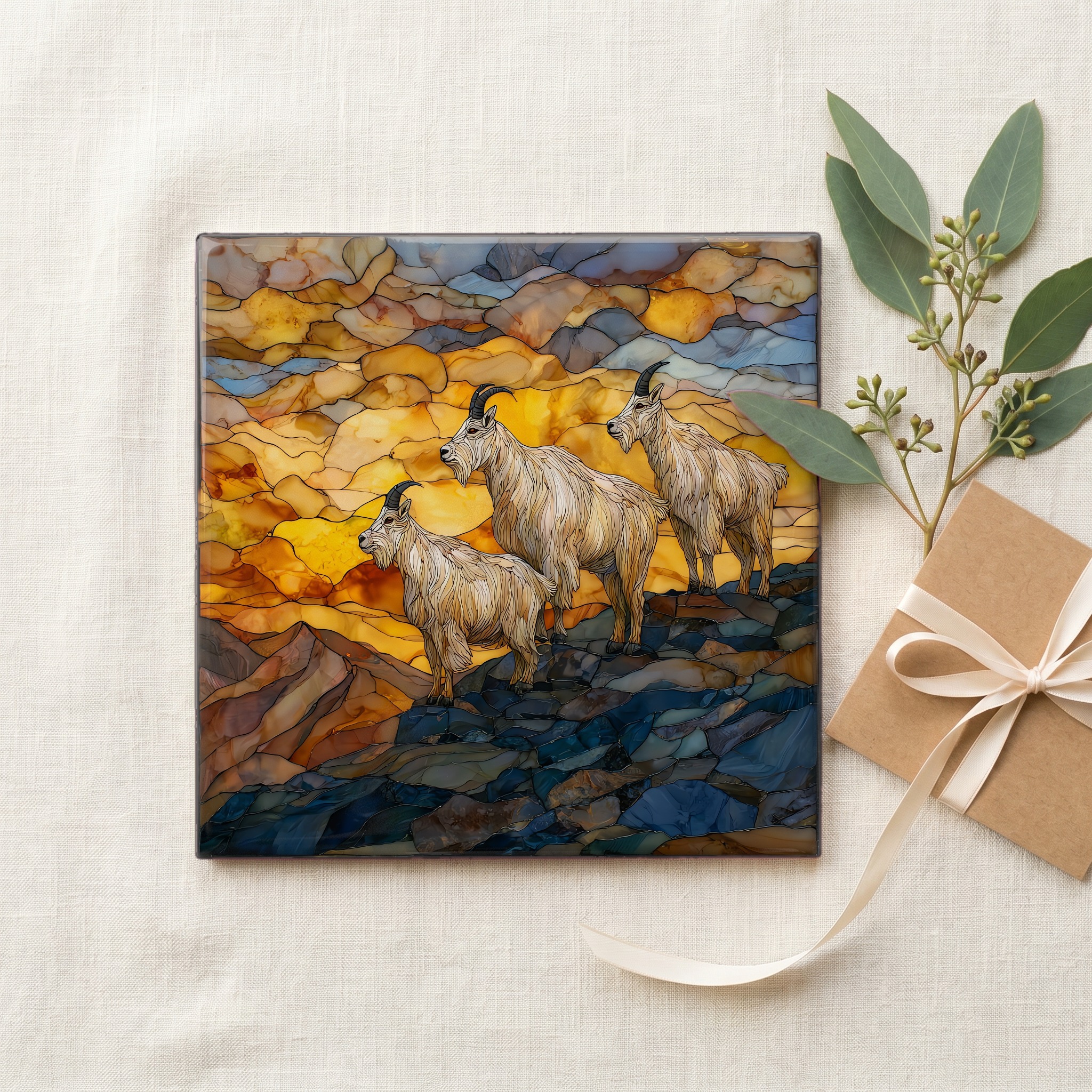
comes gift-ready
comes gift-ready

Each tile ships in a kraft box, tied with cream ribbon, with a handwritten note from the studio if you'd like to add one.
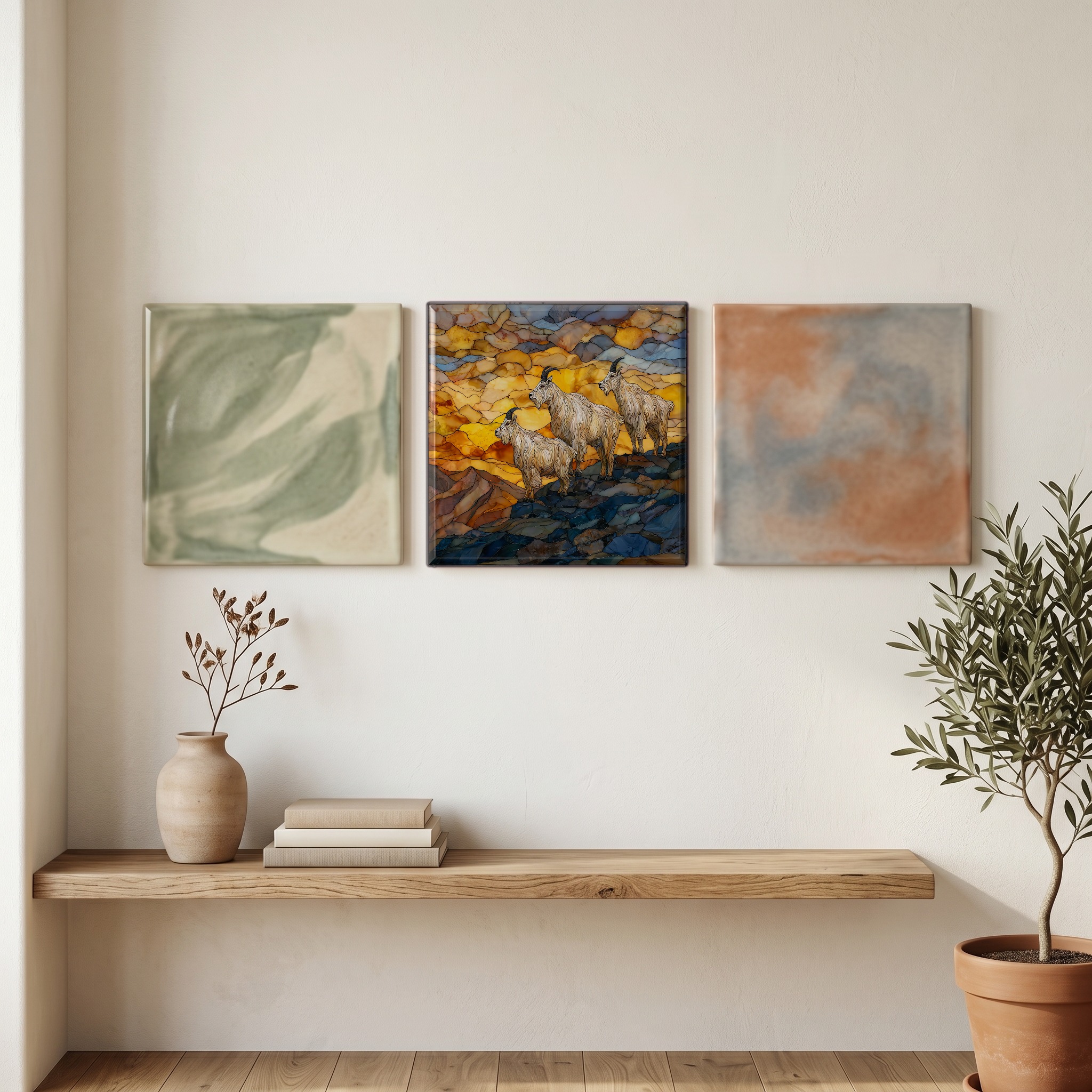
or build a grouping
or build a grouping

Three or five different vistas, hung together — a chapter of places you've been, or want to go.

about Mountain goats on Bierstadt Front Range Ceramic Art Tile

The place, in three passes.

A little of what's known, in case you fall down the rabbit hole — or want to go see it yourself.
the place

Mount Bierstadt rises to 14,065 feet (4,287 m) on the Continental Divide flank of the Colorado Front Range, about an hour west of Denver in the Mount Blue Sky Wilderness (renamed from Mount Evans Wilderness in 2023). The standard trail leaves the parking area on Guanella Pass at 11,669 feet and climbs roughly 2,850 feet across willow flats, talus, and a steep upper boulder field to the summit, a round trip of about seven miles. The peak is named for Albert Bierstadt, the Hudson River School painter whose 1863 ascent with the surveyor Ferdinand Hayden was its first recorded climb.

the air

Above the willow line on Bierstadt, the trail enters the alpine tundra zone where oxygen at the summit is about 60 percent of what it is at sea level. The mountain goat, Oreamnos americanus, is built for this air: a hollow double coat, cloven hooves with rubbery pads for traction on wet rock, and a circulatory system that holds onto oxygen at altitude. The Bierstadt herd is one of the most-visible in the state, regularly grazing the same talus fields the trail crosses near 13,500 feet. They were not here before 1947; the Colorado Game and Fish Department began transplanting Montana and Idaho stock that year, and the population spread south through the Sawatch and the Front Range.

the visit

The Bierstadt trail is one of the most-hiked fourteeners in the country because the Guanella Pass road brings cars to 11,669 feet, leaving only the upper third of the mountain to do on foot. The parking lot fills before dawn on summer weekends; climbers typically start by five in the morning to be off the ridge before the afternoon thunderstorms that build daily in July and August. The road closes from the Georgetown side in late October and reopens after the snowmelt in May, leaving roughly five months for the climb. Mountain-goat encounters happen most often on the upper boulder field. Stay back fifty yards, do not feed them, and let the goats decide whether to cross the trail.

where
United States · Clear Creek County, Colorado
within
Mount Blue Sky Wilderness
elevation
4,287 m · 14,065 ft
position
39.5828° N · 105.6685° W
the neighborhood

What's nearby.

A handful of named places within an hour's walk or short drive. Some we've already painted; some we will.
4 km NE
Mount Blue Sky
fourteener
2 km N
Guanella Pass
mountain pass
4 km W
Square Top Mountain
thirteener
7 km S
Argentine Peak
thirteener
15 km N
Georgetown
mining town
N
Mountain goats on Bierstadt Front Range Ceramic Art Tile
Mount Blue Sky
Guanella Pass
Square Top Mountain
Argentine Peak
Georgetown
common questions

What people ask.

A few questions we get about Mountain goats on Bierstadt Front Range Ceramic Art Tile — and about bringing the piece home.
about the place

Mount Bierstadt is a 14,065-foot peak in the Front Range of the Colorado Rocky Mountains, about an hour's drive west of Denver. It sits inside the Mount Blue Sky Wilderness (renamed from the Mount Evans Wilderness in 2023) on the Continental Divide flank.

The mountain goats on Bierstadt are descended from animals the Colorado Game and Fish Department transplanted from Montana and Idaho starting in 1947. They are not native to Colorado but have thrived in the alpine zone, and the Bierstadt herd is among the most-visible in the state.

The standard West Slopes route from Guanella Pass is about seven miles round trip with roughly 2,850 feet of elevation gain. The trail starts at 11,669 feet and climbs through willow flats, talus, and a steep upper boulder field to the 14,065-foot summit.

Mid-July through September. The Guanella Pass road on the Georgetown side closes in late October and reopens after snowmelt in May. Most climbers start before dawn so they are off the ridge before the afternoon thunderstorms that build daily through July and August.

The peak is named for Albert Bierstadt, the German-American landscape painter associated with the Hudson River School. He climbed the mountain in 1863 with the geologist Ferdinand Hayden during one of the early scientific surveys of the Colorado Rockies.

Mountain goats are generally calm around hikers but they are wild animals with sharp horns and powerful hind legs. Colorado Parks & Wildlife asks visitors to stay at least fifty yards back, never feed them, and yield the trail if a goat decides to use it.

The Sawtooth is the jagged connecting ridge between Mount Bierstadt and Mount Blue Sky (formerly Mount Evans). Strong scramblers traverse it to bag both fourteeners in a single day; the route is class-three and exposed, and is not part of the standard Bierstadt hike.

about the piece in your home

It tends to land well with Front Range hikers and Colorado fourteener climbers. The goat encounter is the souvenir most Bierstadt summiters carry home, and seeing it in alcohol-ink stained glass on a ceramic tile brings the day back. A Small or Medium with a handwritten note from the studio carries the moment.

The slate, snow-white, and high-altitude blue palette reads cleanly in Mountain-modern interiors, Coloradan rustic-modern cabins, and Minimalist alpine spaces. The stained-glass treatment also holds up in Jewel-tone Maximalist rooms where strong colour against a deep wall is the point.

Yes. Alpine modern and mountain-modern have moved toward warmer woods, deeper blues, and one or two strong art pieces rather than a wall of small framed prints. A Large or a four-tile Mural of Bierstadt becomes the room's focal point and reads from across an open-concept great room.

For a standard sofa or console, the Large reads at the right scale on its own. Above a long sectional or a wide entry console, a four-tile Mural is the better choice; for a stairwell or a tall entry wall, a nine-tile Mural carries the full vertical run.

Yes, with the Dura Satin or Matte finish. Both are scratch-resistant and humidity-stable, and the Bierstadt palette holds up well against white subway tile, soapstone, and warm-wood vanities. The Glossy finish is for framed wall art rather than wet rooms.

A soft microfibre cloth, slightly damp with water, is all the tile needs. The colour is slowly infused into the ceramic surface under high heat and pressure, so it will not lift or fade with normal cleaning. Skip abrasive pads and ammonia-based sprays.

Yes. Reid Wender created the Bierstadt piece in the studio's signature stained-glass, alcohol-ink, and oil visual language. The Wender Studios atlas is a single-studio program; no images are licensed in or out, and every tile is hand-finished in Knoxville, Tennessee.

if this one stayed with you

A few you might also love.

Hand-picked by the eye that found Sorapis. Same air, same kind of quiet.