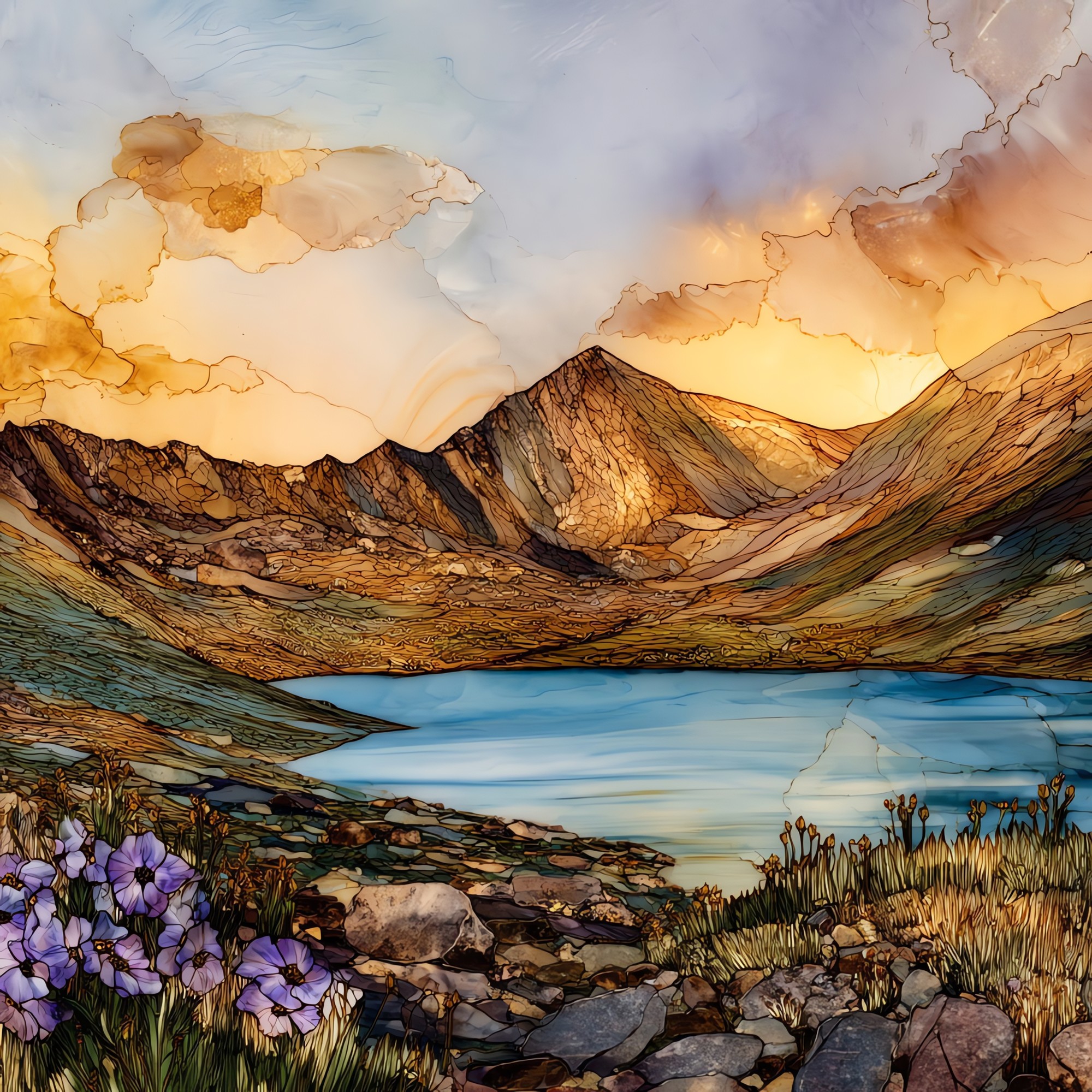
Mount Evans Summit Lake Front Range Ceramic Art Tile
— the last water before the summit.
Not only on a wall.




“Summit Lake sits at nearly thirteen thousand feet on the northeast shoulder of Mount Blue Sky, the peak Coloradans still call Mount Evans. The Mount Evans Scenic Byway, the highest paved road in North America, runs past the water before climbing the last two miles to the summit. Mountain goats step down the talus. The lake is fed by what stays of last winter's snow. The road opens in late May. By the Tuesday after Labor Day, it is closed again. Most people pull off, walk a few yards from the car, and stand a minute.
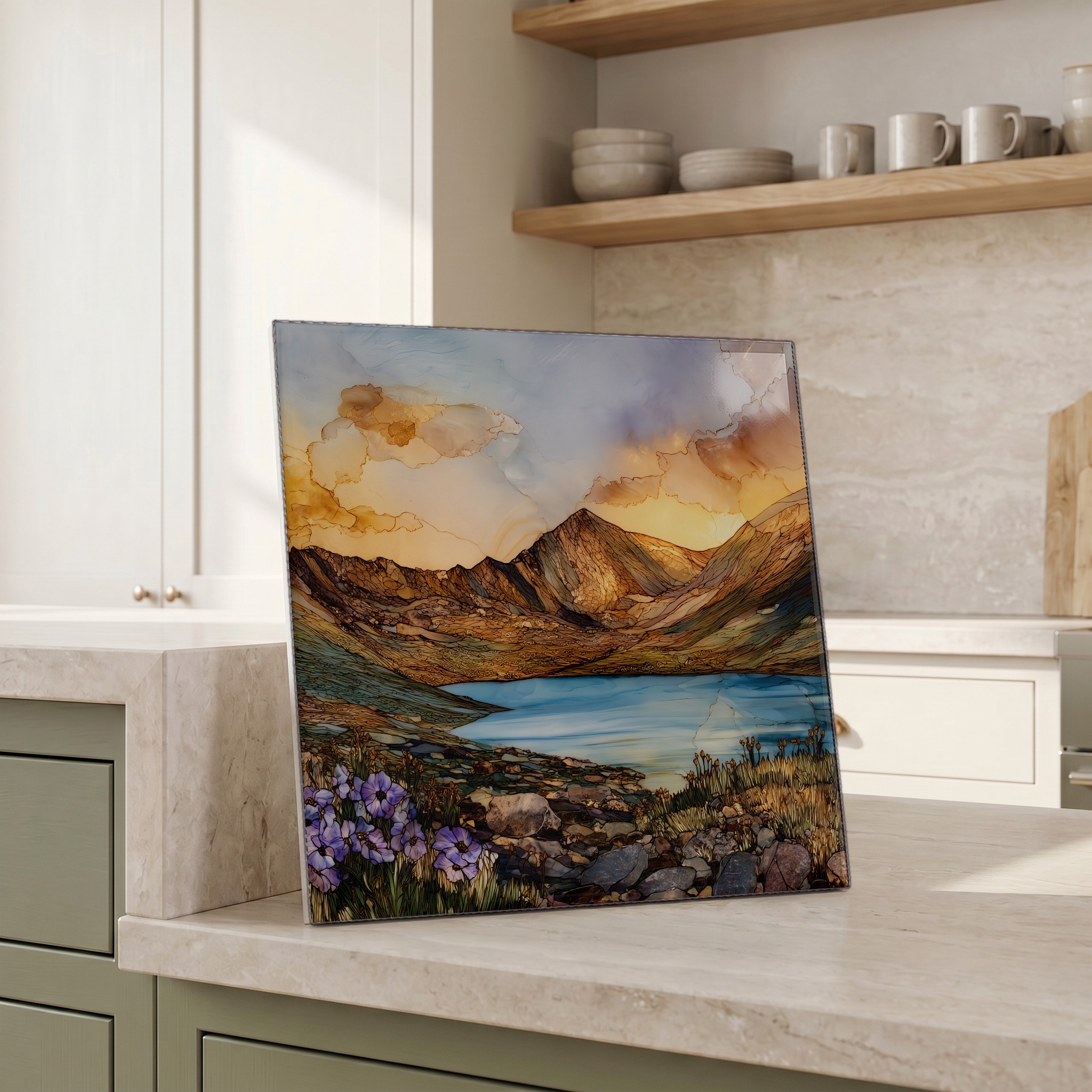
Mount Evans Summit Lake Front Range Ceramic Art Tile, on ceramic.
Each tile is finished by hand in our Knoxville studio. Artwork is slowly infused into the ceramic surface under high heat and pressure, and rests beneath a thin glossy finish. The colour lives in the surface, not on top of it.
Pick any four 4-inch tiles — National Parks you've been to, a Smokies set, the four seasons of one place. $ for a set of , cork-backed, ready to live on the table.

Each tile ships in a kraft box, tied with cream ribbon, with a handwritten note from the studio if you'd like to add one.

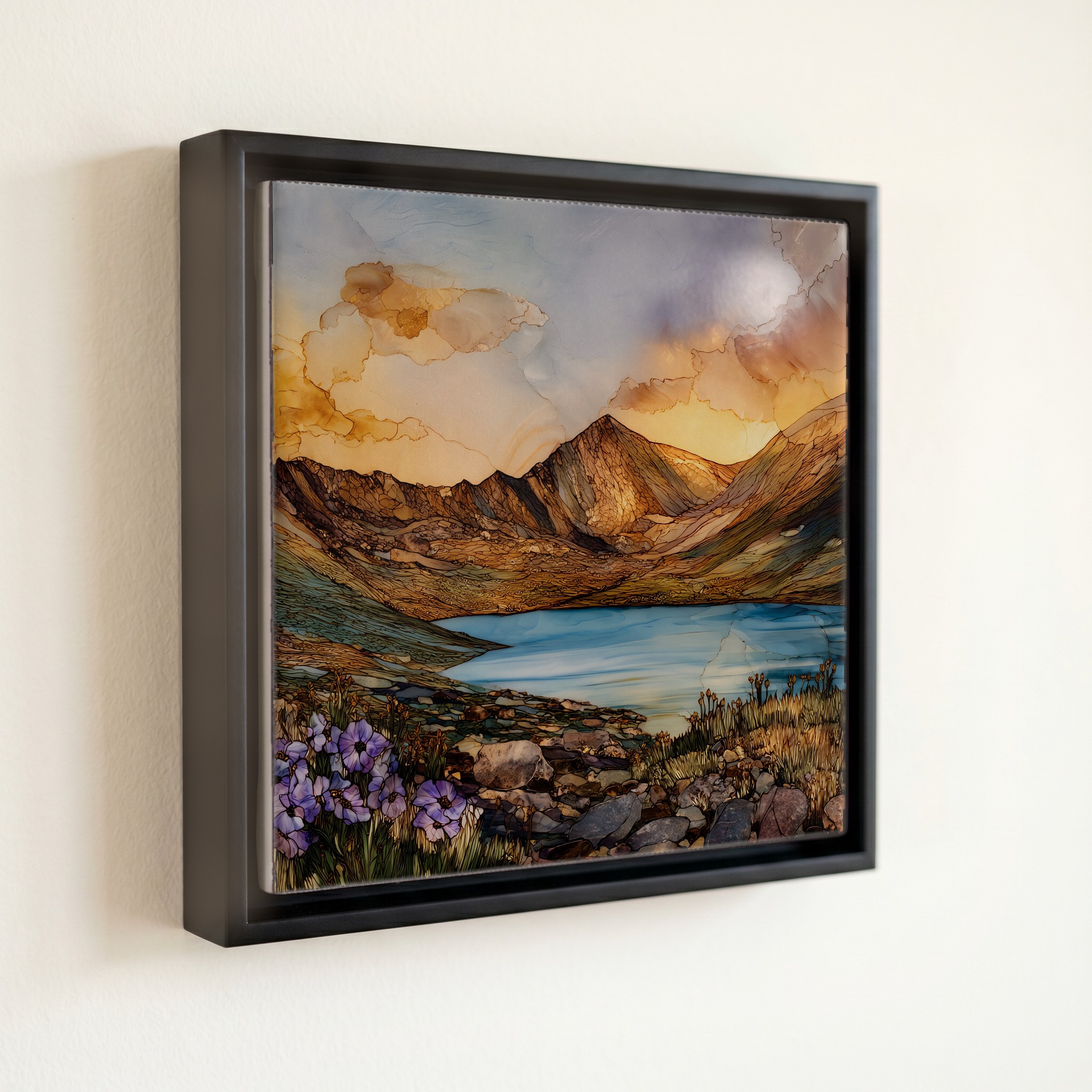
Three or five different vistas, hung together — a chapter of places you've been, or want to go.
The place, in three passes.
Summit Lake sits at 12,836 feet on the northeast slope of Mount Blue Sky, the Front Range fourteener formerly named Mount Evans before the United States Board on Geographic Names approved the change in September 2023. The lake is the centrepiece of Summit Lake Park, a Denver Mountain Park designated a National Natural Landmark in 1965 for its rare arctic-alpine tundra. The surrounding Mount Evans Wilderness, within the Arapaho National Forest, lies about fifty miles west of Denver in Clear Creek County. Idaho Springs, on Interstate 70, is the gateway town and the start of Colorado State Highway 5, the byway that climbs the final fourteen miles past the lake to the summit parking area at 14,130 feet.
At nearly thirteen thousand feet, Summit Lake holds the kind of arctic-alpine tundra ecosystem more common in Alaska than the contiguous United States, which is why the National Park Service designated it a National Natural Landmark in 1965. Mountain goats and bighorn sheep work the talus around the basin; yellow-bellied marmots and American pikas hold the cracks. Alpine forget-me-not, sky pilot, and moss campion bloom for about six weeks in July and early August. The air carries roughly sixty percent of the oxygen available at sea level. Weather changes inside an hour: a windless mid-July morning can turn to graupel and lightning by noon, which is why rangers tell visitors to be off the upper byway by early afternoon.
Access is by Colorado State Highway 5, the Mount Evans Scenic Byway, which leaves Echo Lake near Idaho Springs and climbs fourteen miles to the summit. At 14,130 feet the parking lot is the highest in North America, sixty feet below the 14,265-foot summit cairn. The byway is seasonal: the gate opens in late May once plows have cleared the upper switchbacks, and the road closes the Tuesday after Labor Day. A timed-entry reservation through Recreation.gov is required during peak summer, with an entry fee per vehicle. Summit Lake Park, the National Natural Landmark, sits about two miles below the summit and has a small pull-off, vault toilets, and short interpretive trails kept on boardwalk to protect the tundra.