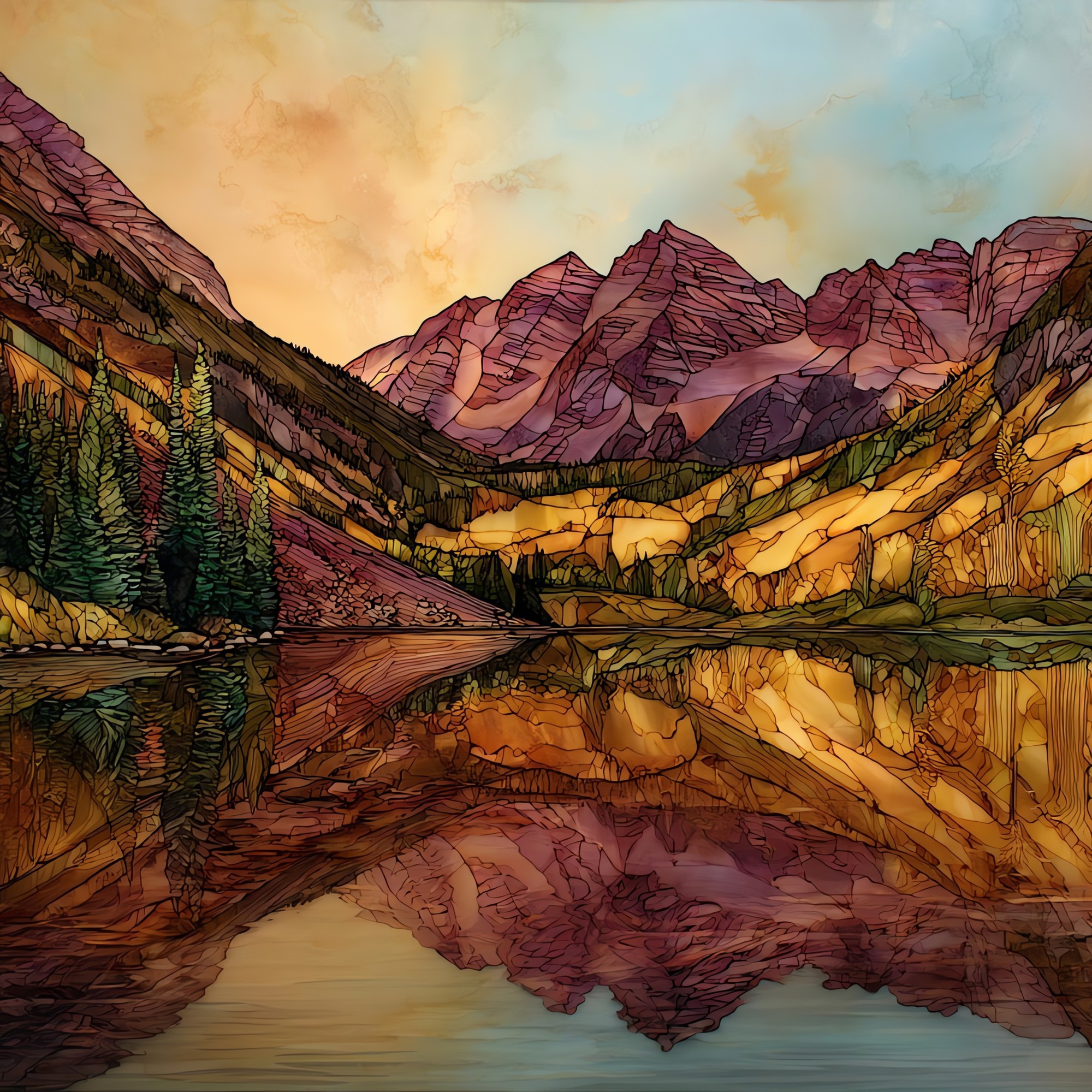
Maroon Lake reflection Elk Range Ceramic Art Tile
— the morning the Bells stand twice.
Not only on a wall.
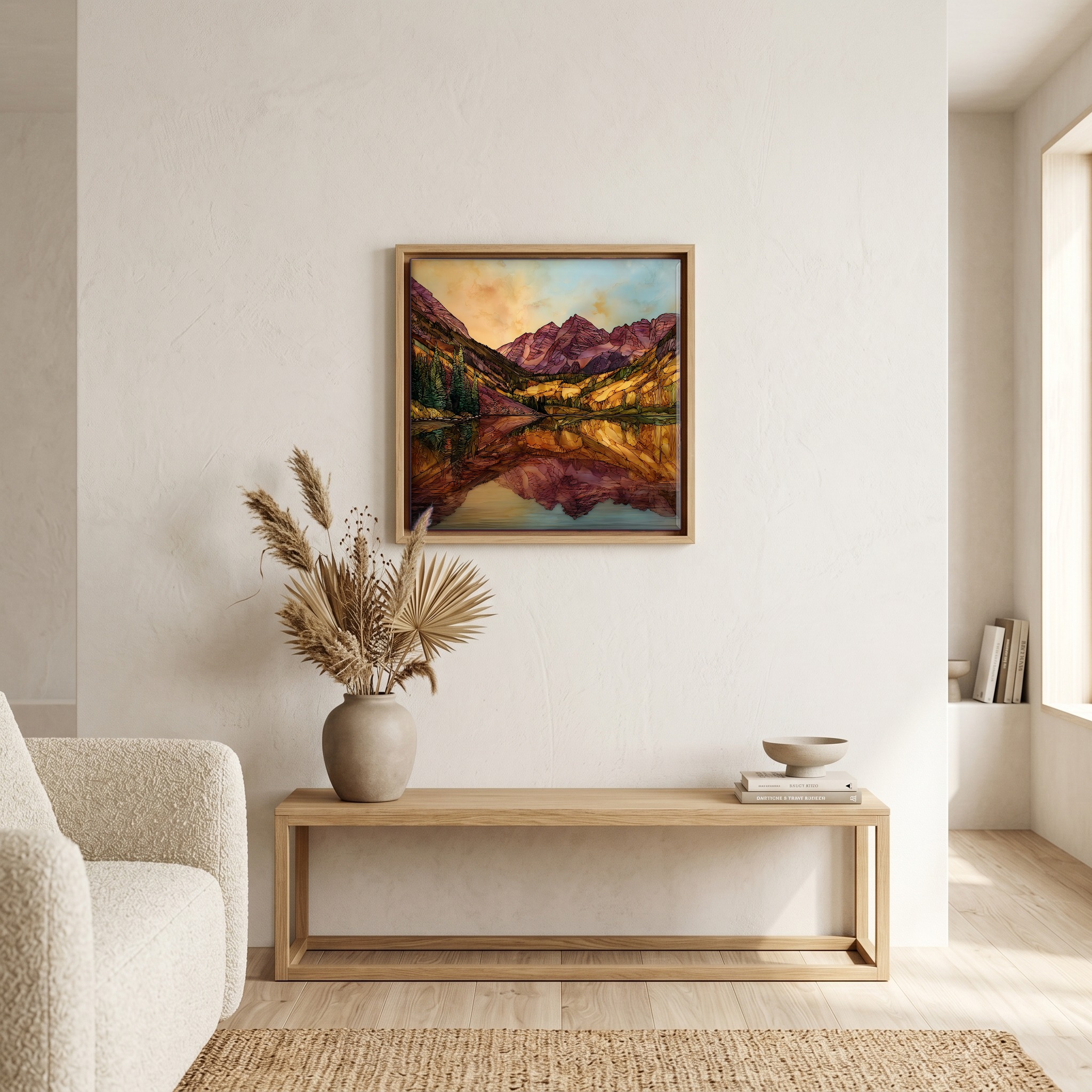
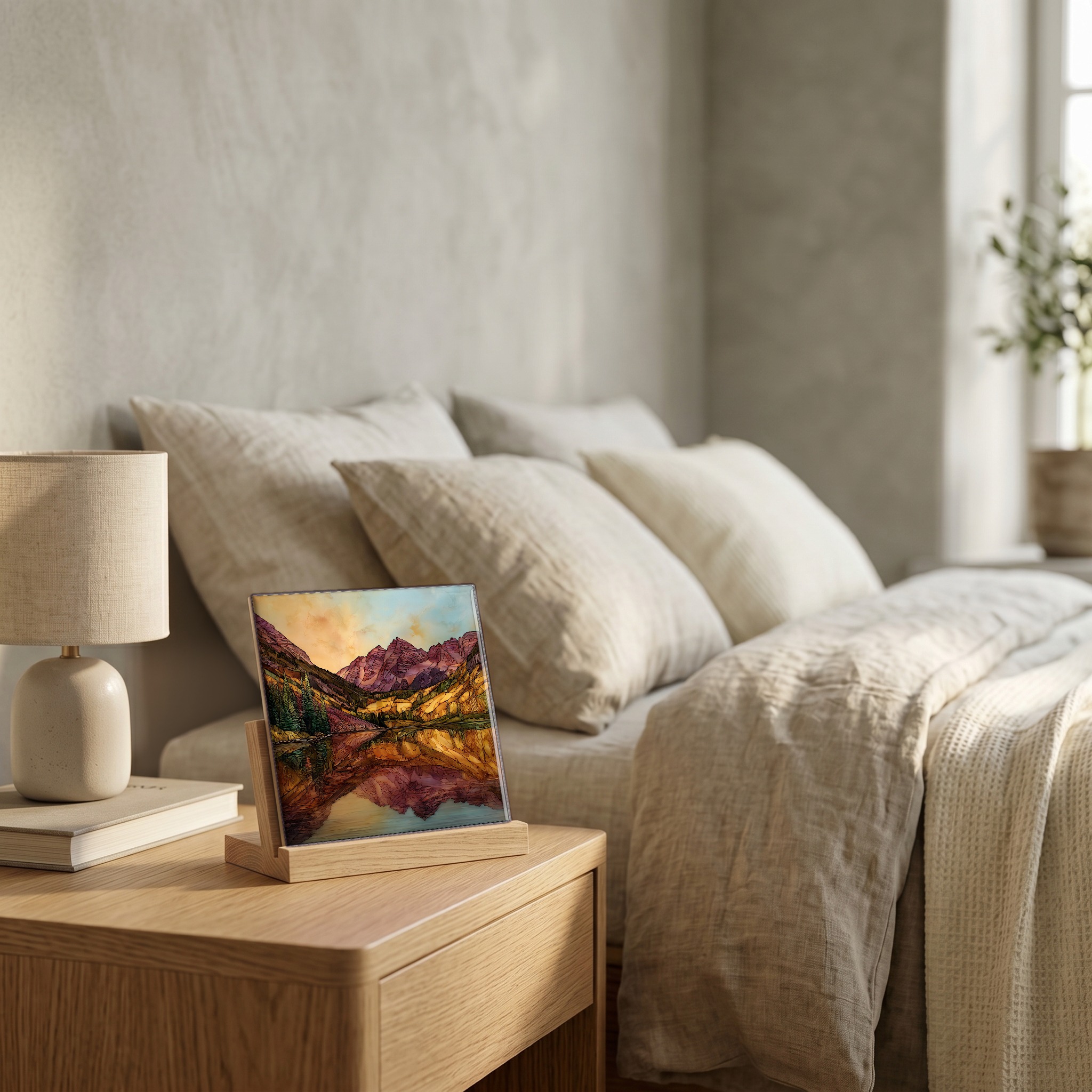
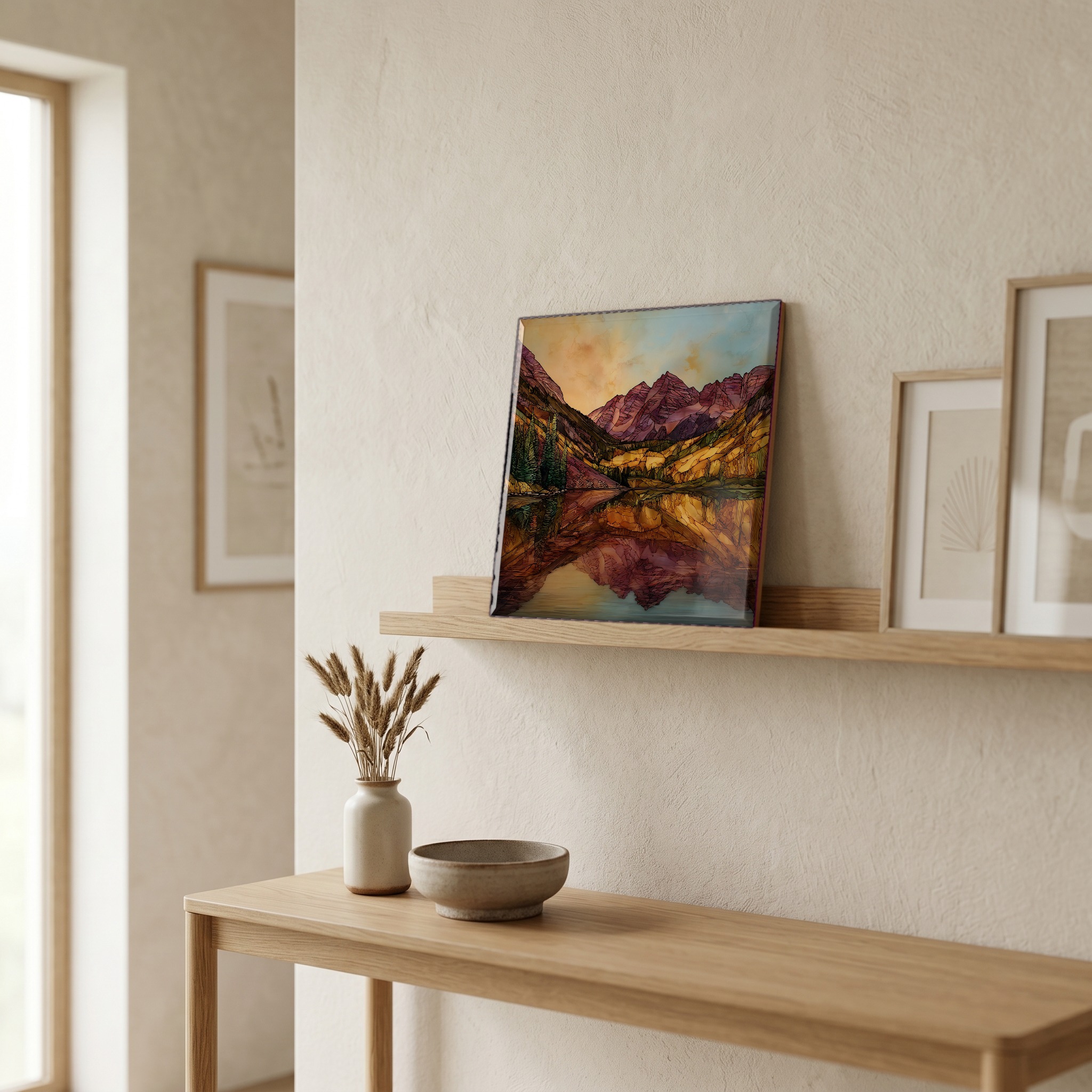
“The small alpine lake at the base of the Maroon Bells, where the rock and the water do the same trick at first light. The Bells are sedimentary, Maroon Formation mudstone, the colour of dried brick. The lake is glacier-fed, sheltered, and on the right pre-dawn morning it goes flat enough to read as a mirror. Photographers gather on the eastern boardwalk before the shuttle arrives at the trailhead. By mid-morning the wind comes up and the doubled peaks dissolve. Most people only see the reflection in pictures and assume it must be retouched. The picture is right. The water does that.
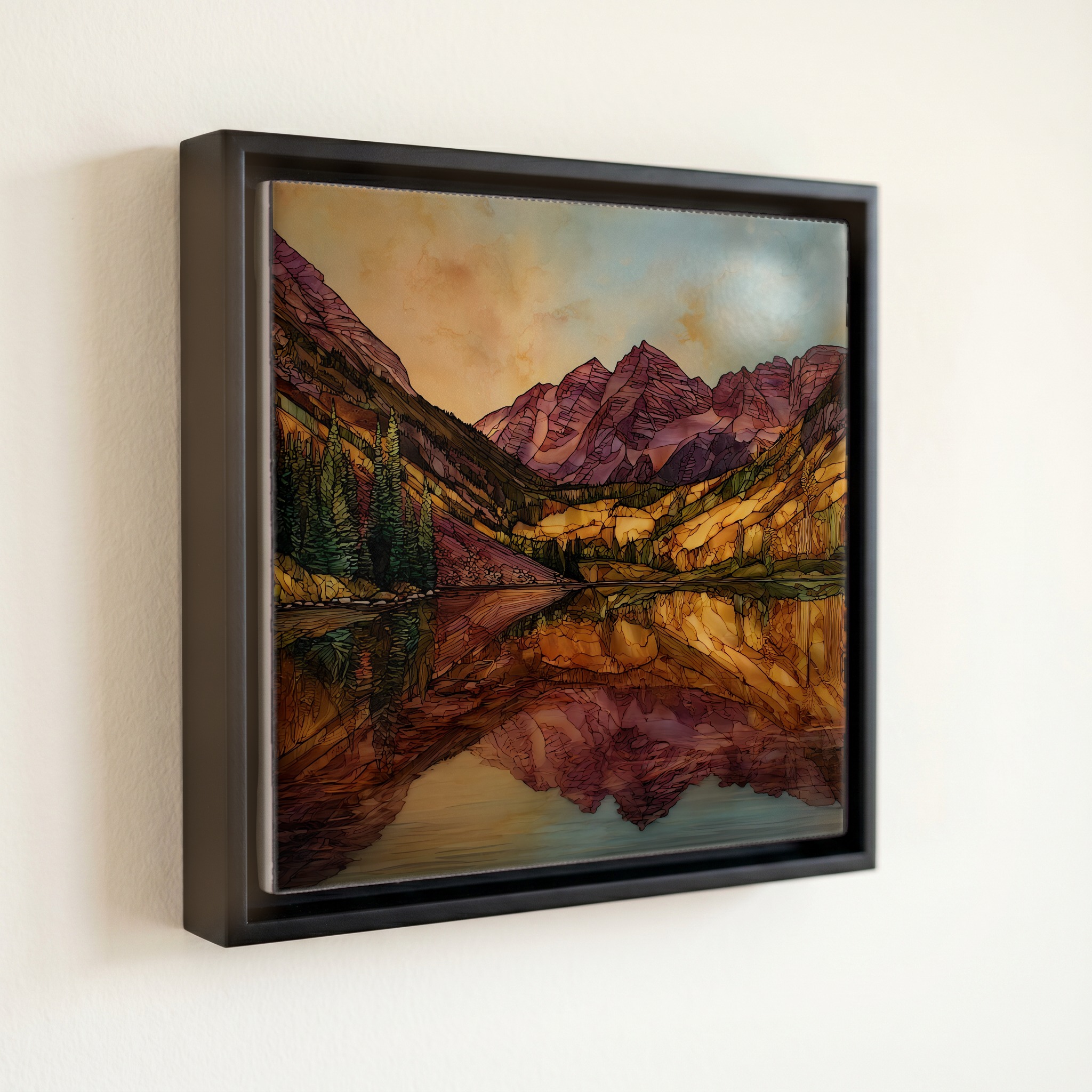
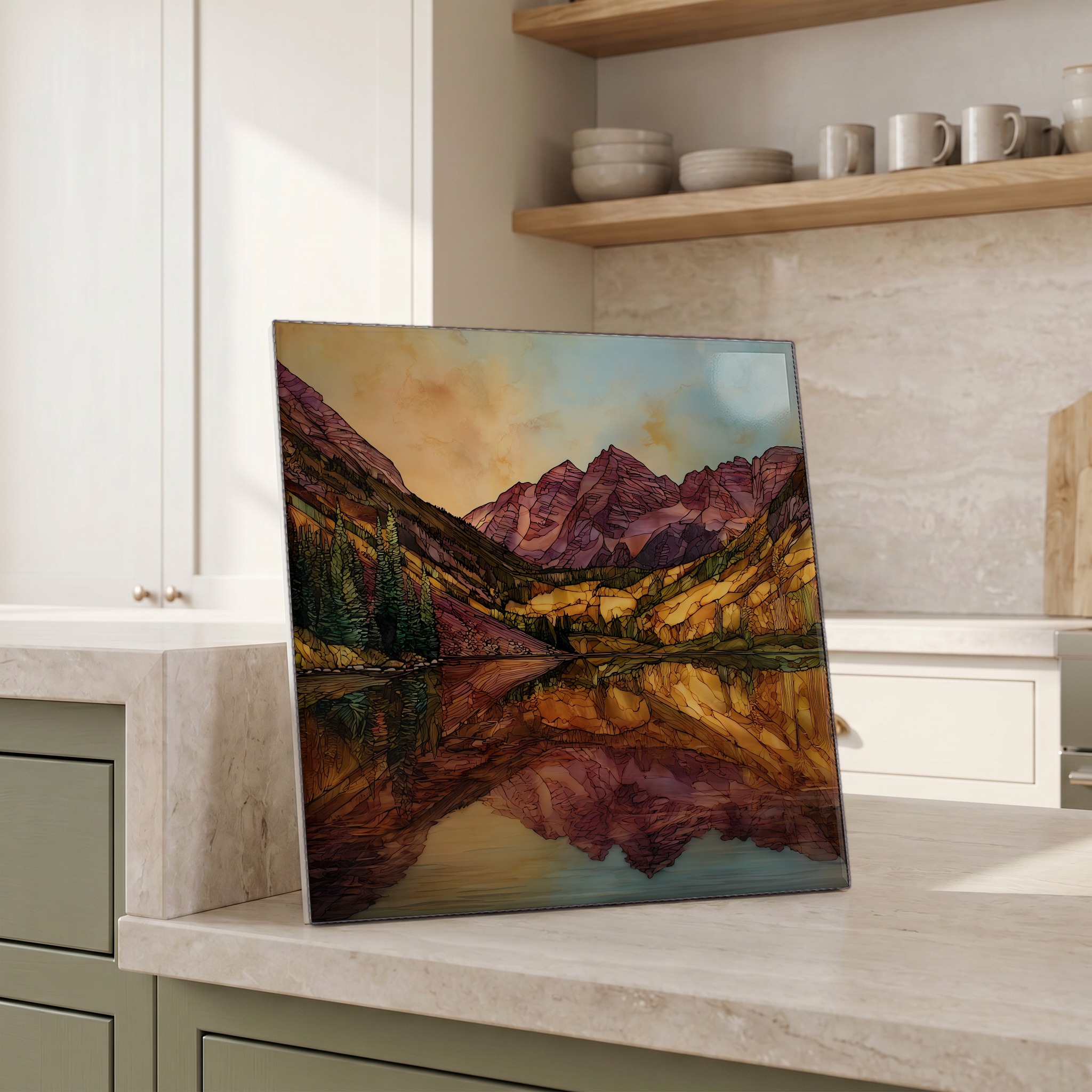
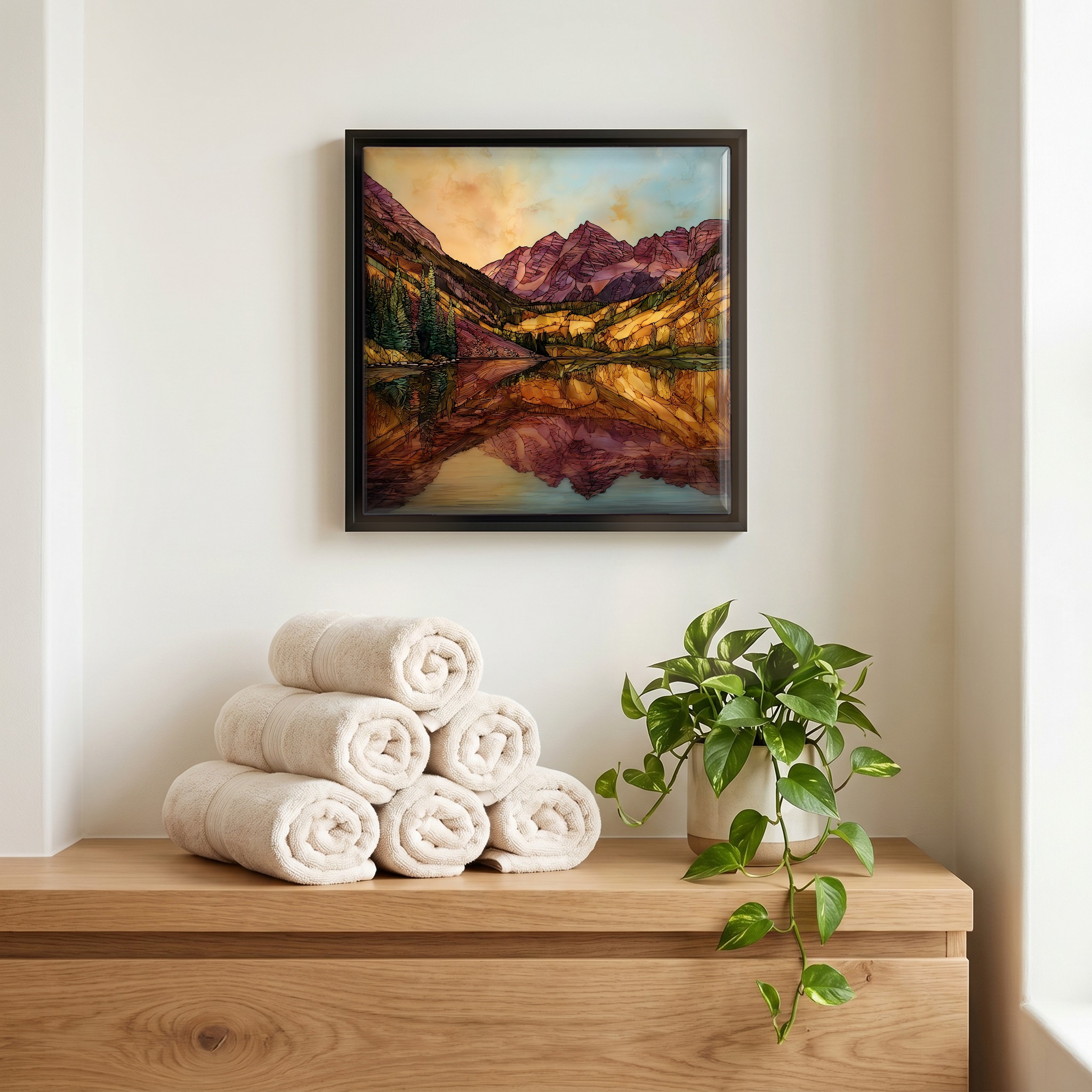
Maroon Lake reflection Elk Range Ceramic Art Tile, on ceramic.
Each tile is finished by hand in our Knoxville studio. Artwork is slowly infused into the ceramic surface under high heat and pressure, and rests beneath a thin glossy finish. The colour lives in the surface, not on top of it.
Pick any four 4-inch tiles — National Parks you've been to, a Smokies set, the four seasons of one place. $ for a set of , cork-backed, ready to live on the table.
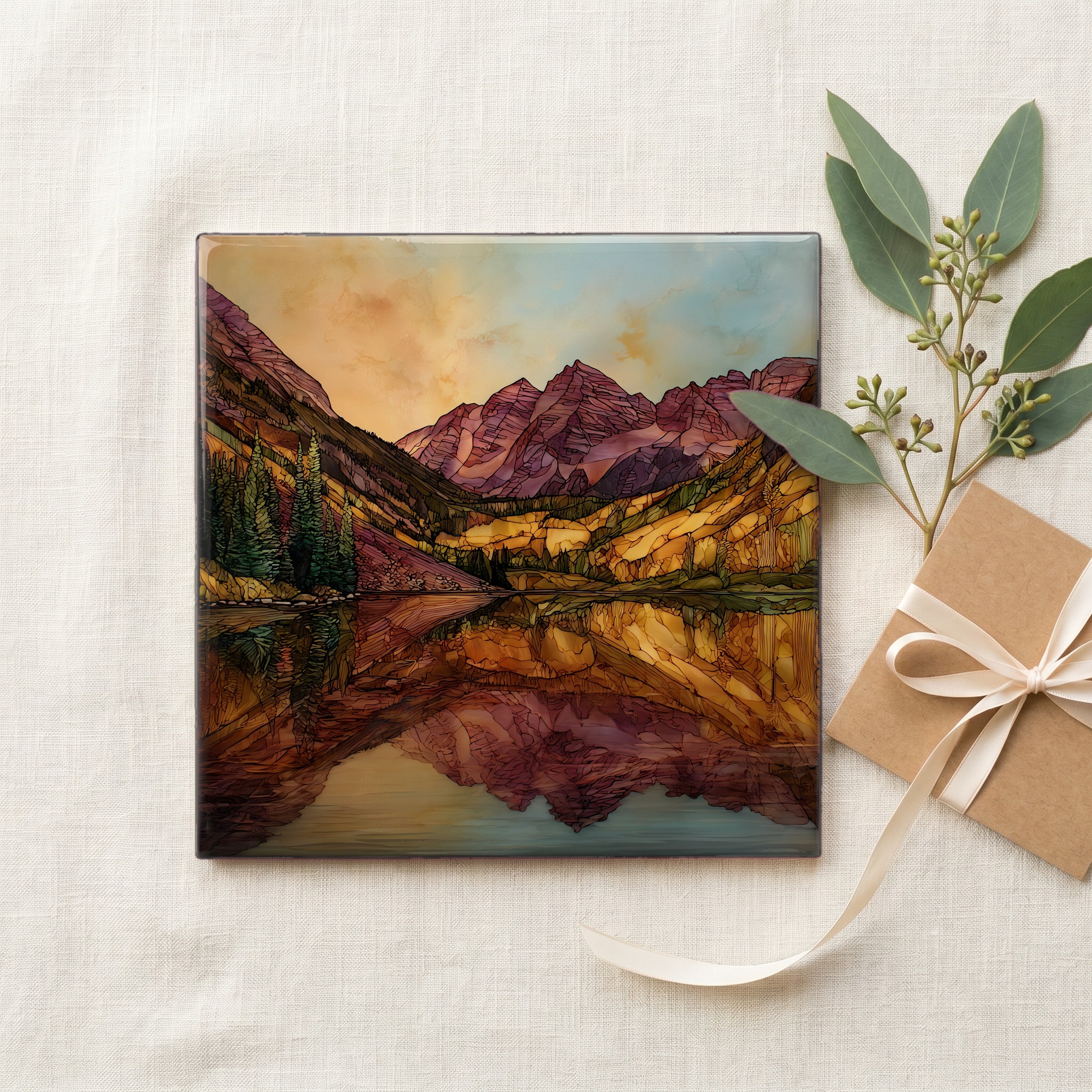
Each tile ships in a kraft box, tied with cream ribbon, with a handwritten note from the studio if you'd like to add one.
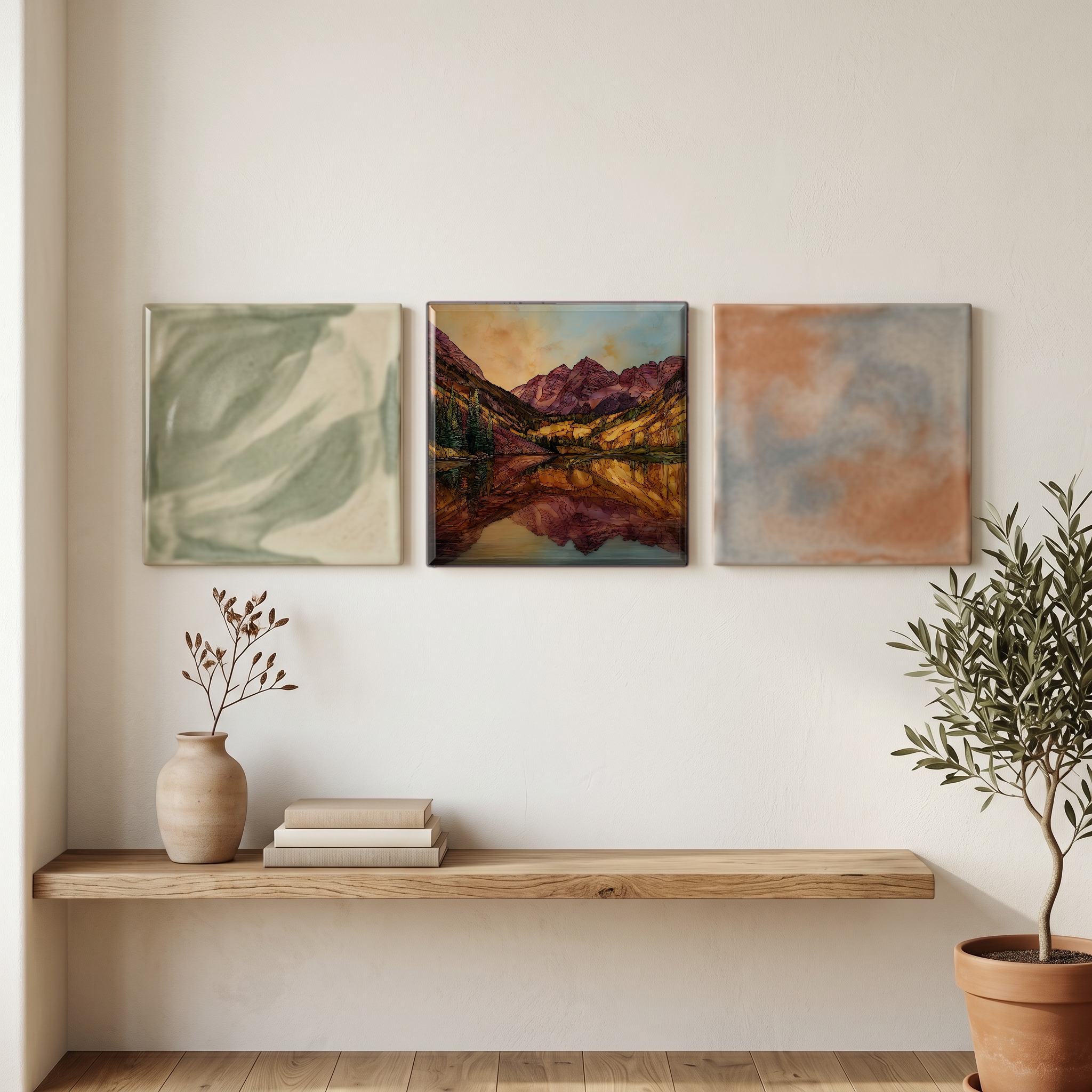
Three or five different vistas, hung together — a chapter of places you've been, or want to go.
The place, in three passes.
Maroon Lake is a small glacial lake at 9,580 feet in the White River National Forest, ten miles southwest of Aspen in Colorado's Elk Mountains. It is fed by Maroon Creek and held in a basin scooped between Maroon Peak (14,163 feet) and North Maroon Peak (14,019 feet), the two summits whose reflection the lake is known for. From the trailhead parking, the boardwalk on the eastern shore is a six-minute walk and gives the canonical view. The basin lies inside the Maroon Bells-Snowmass Wilderness, one of the five original wildernesses designated when the Wilderness Act passed in 1964. Pitkin County's Maroon Creek Road dead-ends at the lake.
The reflection is reliable for about an hour after sunrise, before the basin's daily upslope wind reaches the surface. The lake faces east, and at first light the alpenglow on the Bells turns the western face from charcoal to ember while the eastern shore is still in shadow. Photographers arrive before dawn during the shuttle-free shoulder weeks or by overnight permit. The Roaring Fork Transit Authority shuttle from Aspen Highlands begins running about 8 a.m. in summer; by then the upslope wind is usually moving and the mirror is gone. The same dynamic governs most alpine lakes in the Rockies, but the Bells give the reflection its colour.
The water is glacier-fed and cold even in August, with surface temperatures rarely climbing above the mid-fifties Fahrenheit. The lake is shallow at the eastern shore, where the boardwalk side reaches only a few feet, and deeper toward the western inlet where Maroon Creek enters. Because the inflow runs through a sheltered upper basin, the lake holds its glass surface longer than larger Colorado lakes at the same elevation. By late October the surface begins to freeze in patches, and through winter the lake locks up entirely; access then is by touring ski up the closed Maroon Creek Road from Aspen Highlands.