Wender·Vista
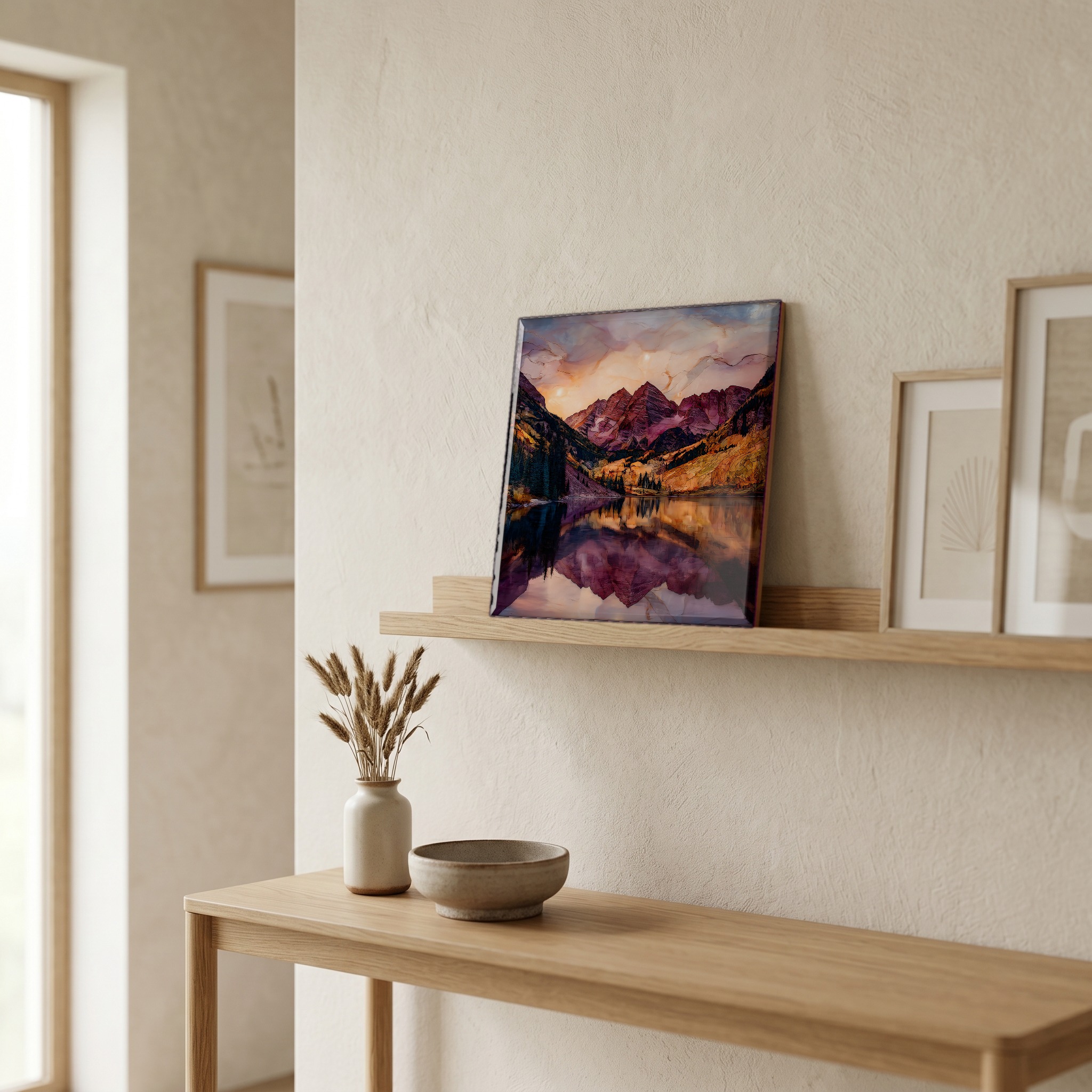
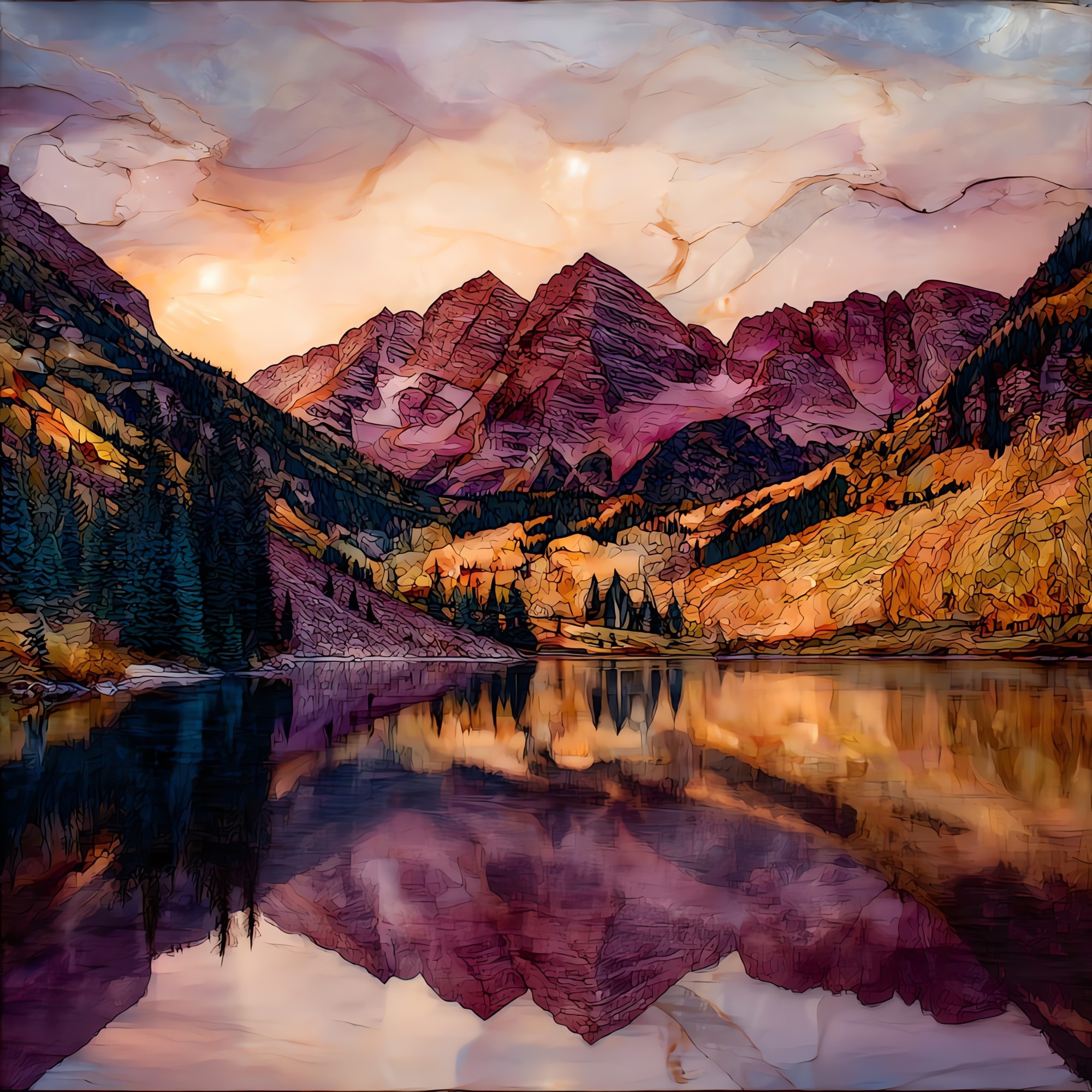
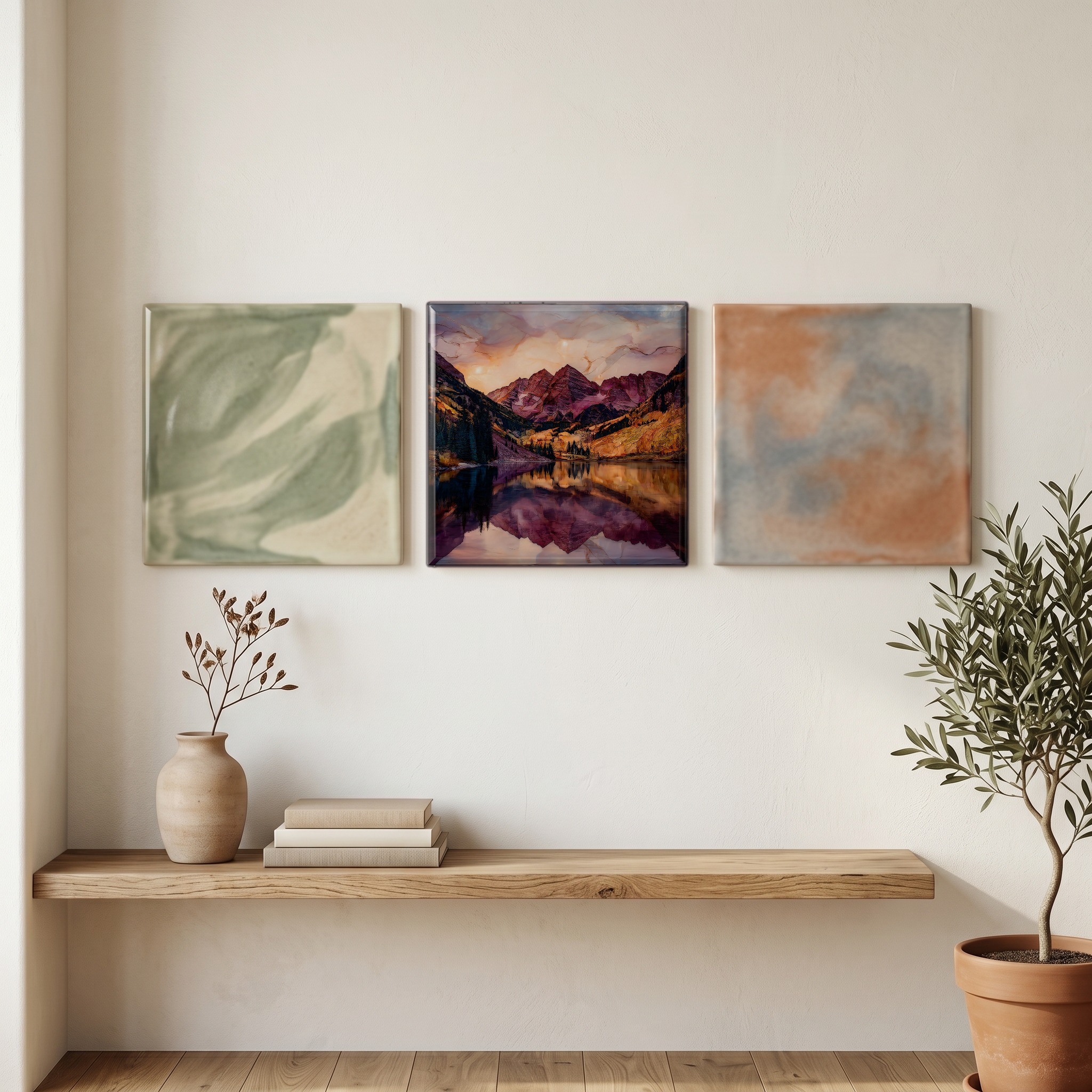
Maroon Bells reflection Elk Range Ceramic Art Tile
shown on ceramic, 12-inch tileColorado · United States
in the Elk Mountains, west of Aspen

Maroon Bells reflection Elk Range Ceramic Art Tile

the iron red the lake holds before the wind.

Where it lives

Not only on a wall.

A small tile on the nightstand catching the morning. A larger one above the fire. Yours, wherever you spend the slow hours.
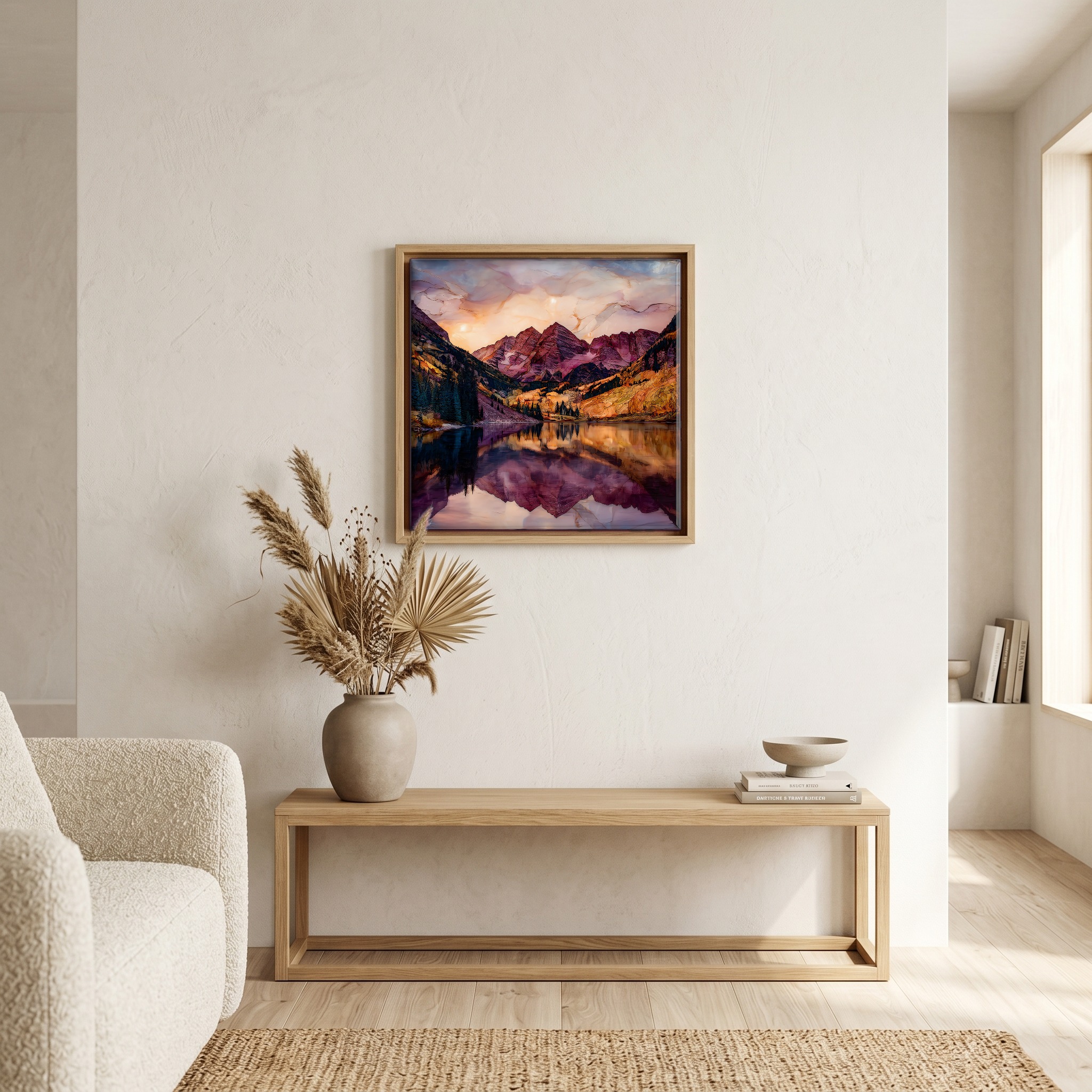
Above the bench, in a warm oak surround.
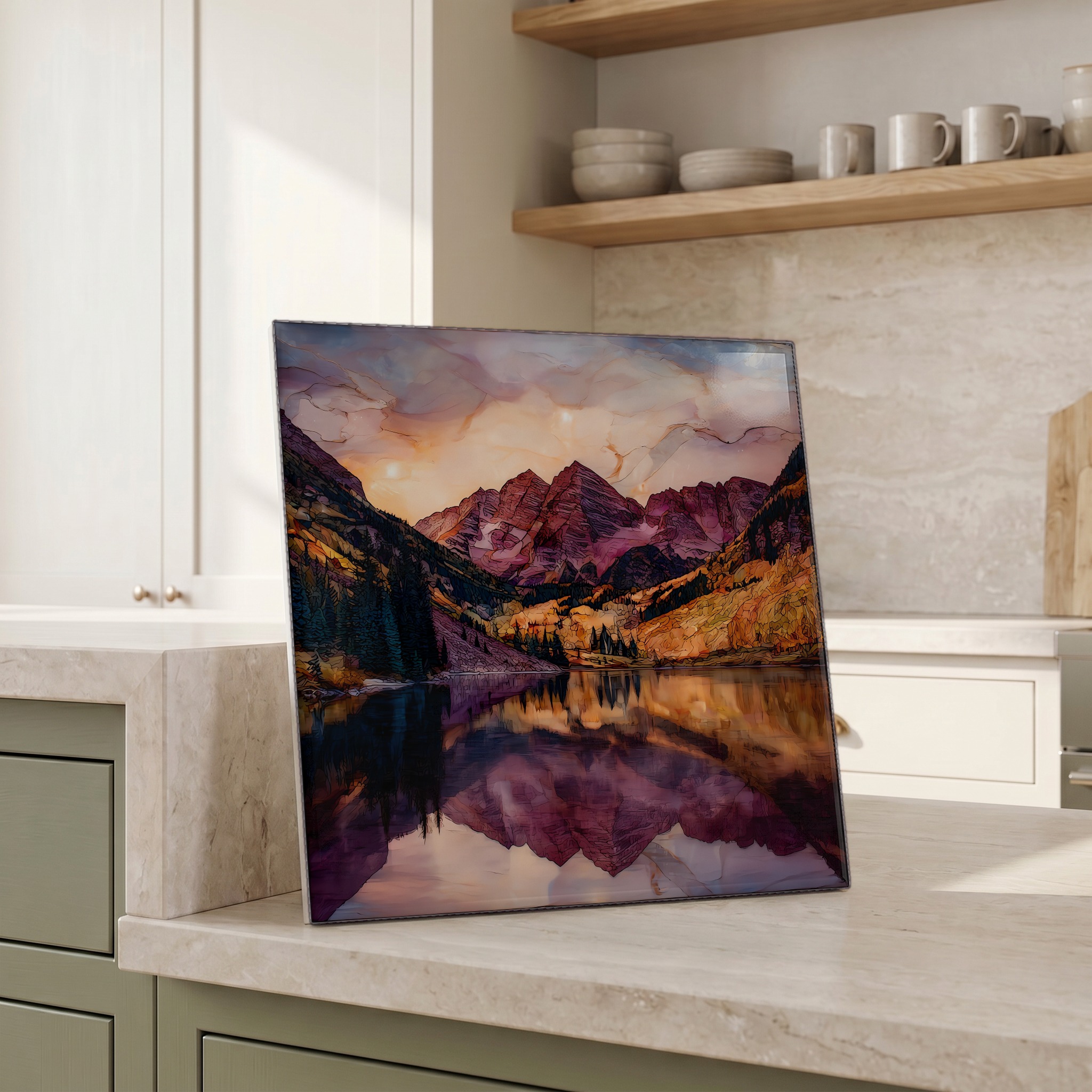
Beside the kettle, propped on the counter.
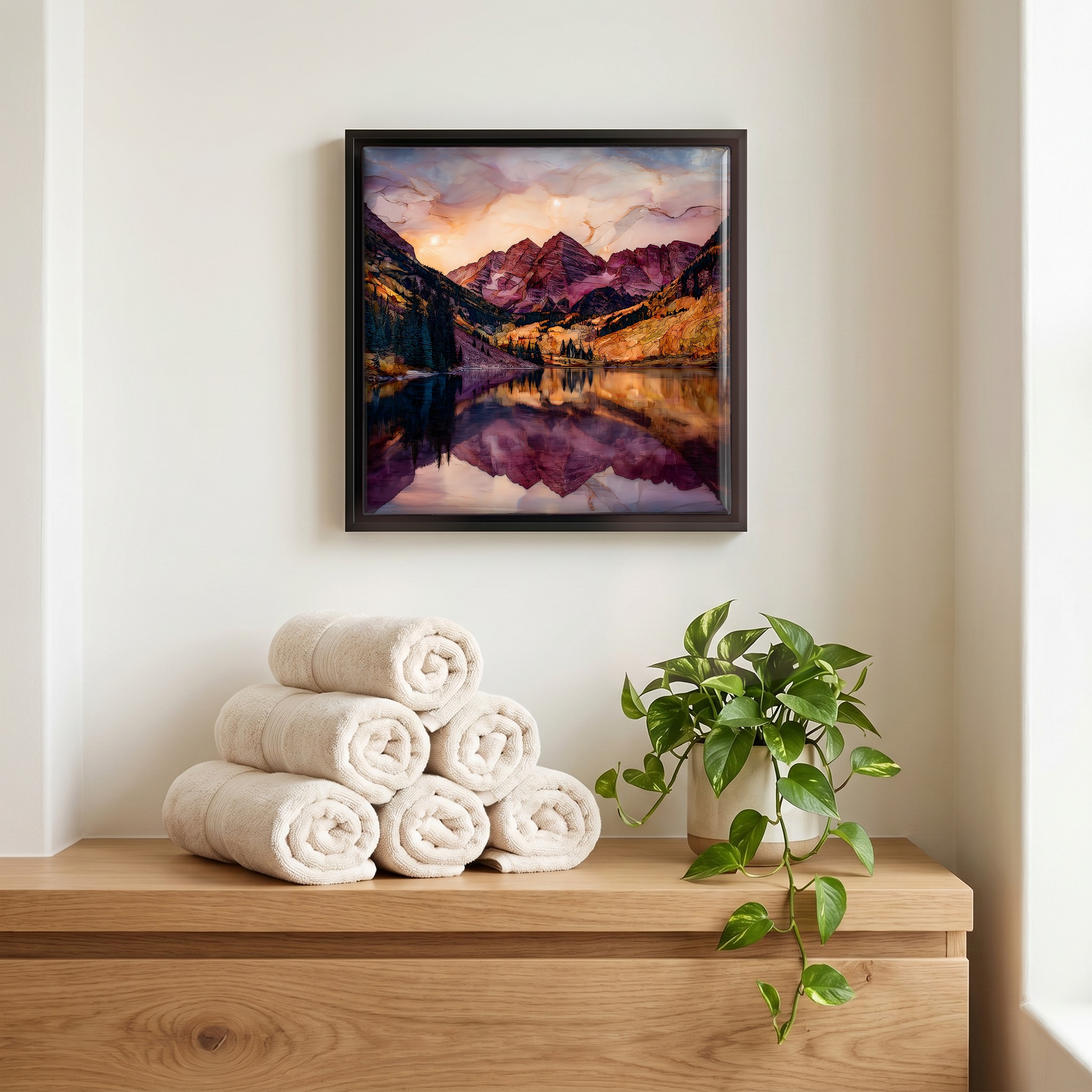
Above the linens, in a slim black surround.
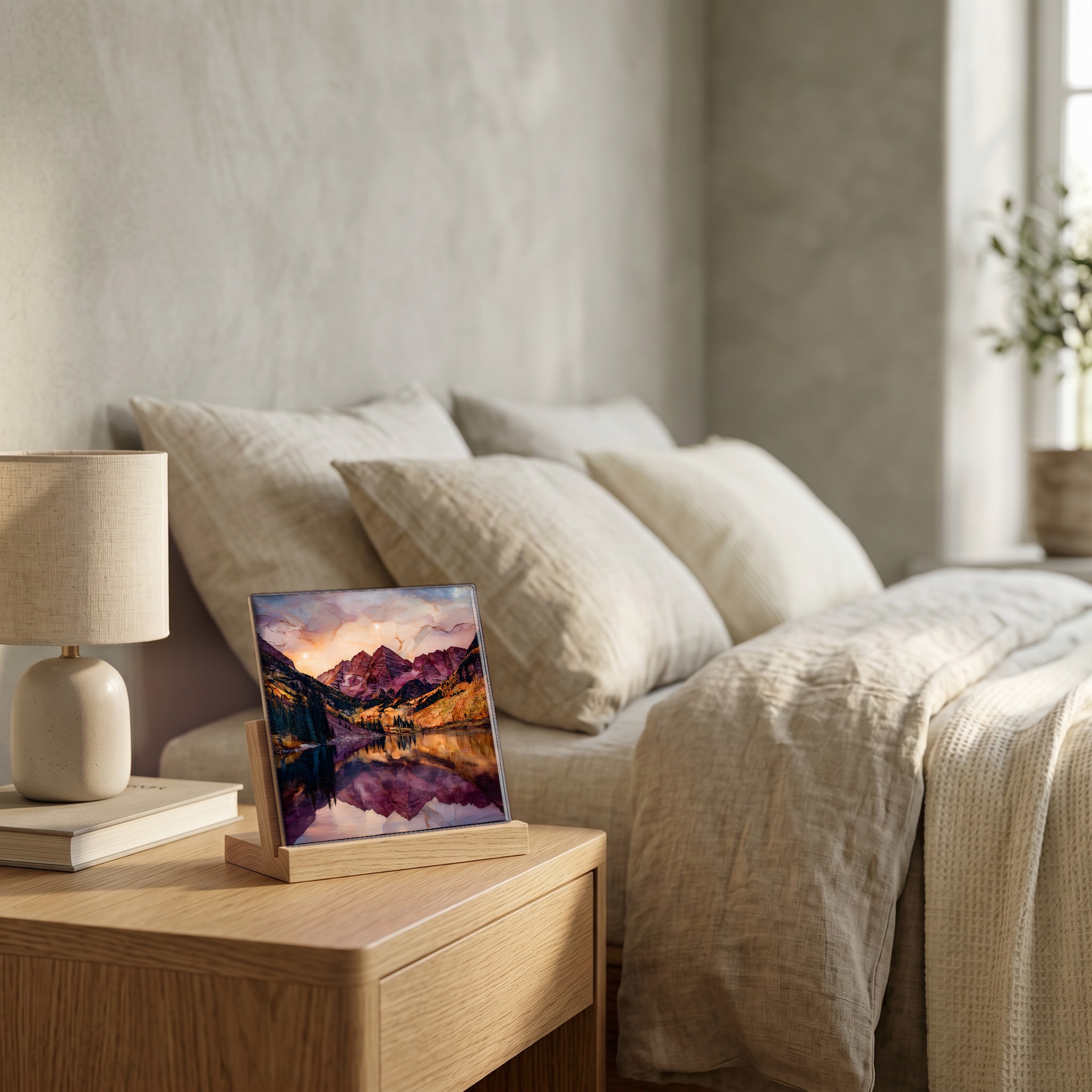
On the nightstand, on a light oak stand.
On a picture ledge, where the light comes in.
a note from the studio

Two peaks above Maroon Lake, west of Aspen, in a glacial bowl walked by everyone who ever wanted to photograph a mountain. The reflection only holds for about the first half-hour after sunrise, before the wind reaches the water. After that the bells stay maroon all day, but the doubled image is gone. Photographers come up the road from Aspen Highlands before light, set their tripods along the north shore, and wait without saying much. The aspens behind them turn gold the third week of September.
from the studio
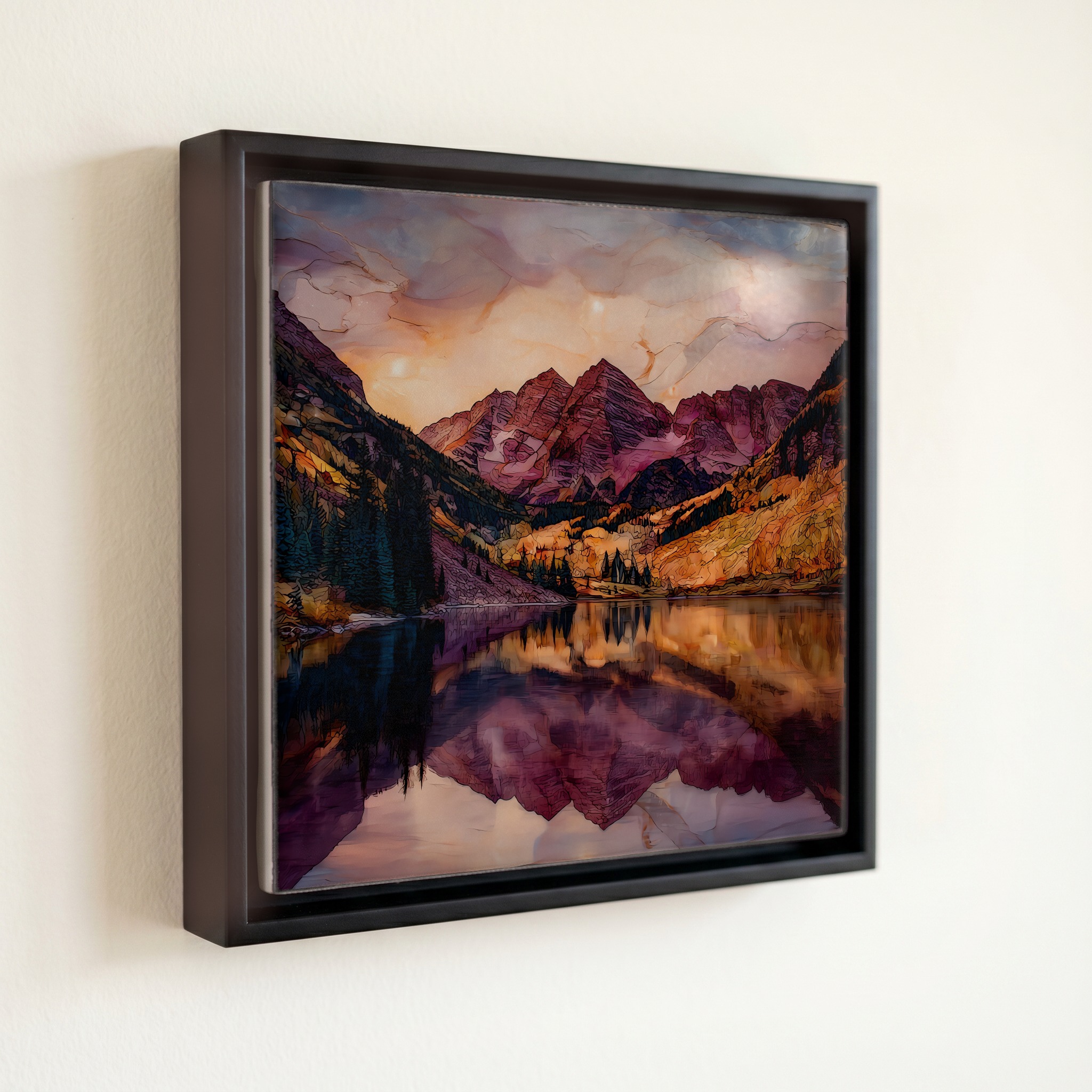
shown in a slim black floating frame · 6 × 6 in
— bring it home

Maroon Bells reflection Elk Range Ceramic Art Tile, on ceramic.

Each tile is finished by hand in our Knoxville studio. Artwork is slowly infused into the ceramic surface under high heat and pressure, and rests beneath a thin glossy finish. The colour lives in the surface, not on top of it.

What kind of piece?
One tile — square or rectangle.
How big?
the popular one — counter, shelf, nightstand
6 × 6 in · 15 cm · 1.6 lb
Surface finish
A clear glossy finish — the artwork reads as if under resin. Ideal for show-pieces and framed wall art.
How it sits
A hidden cleat — sits ¼″ proud of the wall.
$58
Hand-finished and shipped from our studio at the foot of the Smokies. On your wall in about ten days.
size
6 × 6 in
15 cm
weighs
1.6 lb
solid in the hand
surface
ceramic, hand-finished
art rests beneath a thin glossy finish
from
Knoxville, TN
our family studio, at the foot of the Smokies
— start a Coaster Set

Pick any four 4-inch tiles — National Parks you've been to, a Smokies set, the four seasons of one place. $ for a set of , cork-backed, ready to live on the table.
comes gift-ready
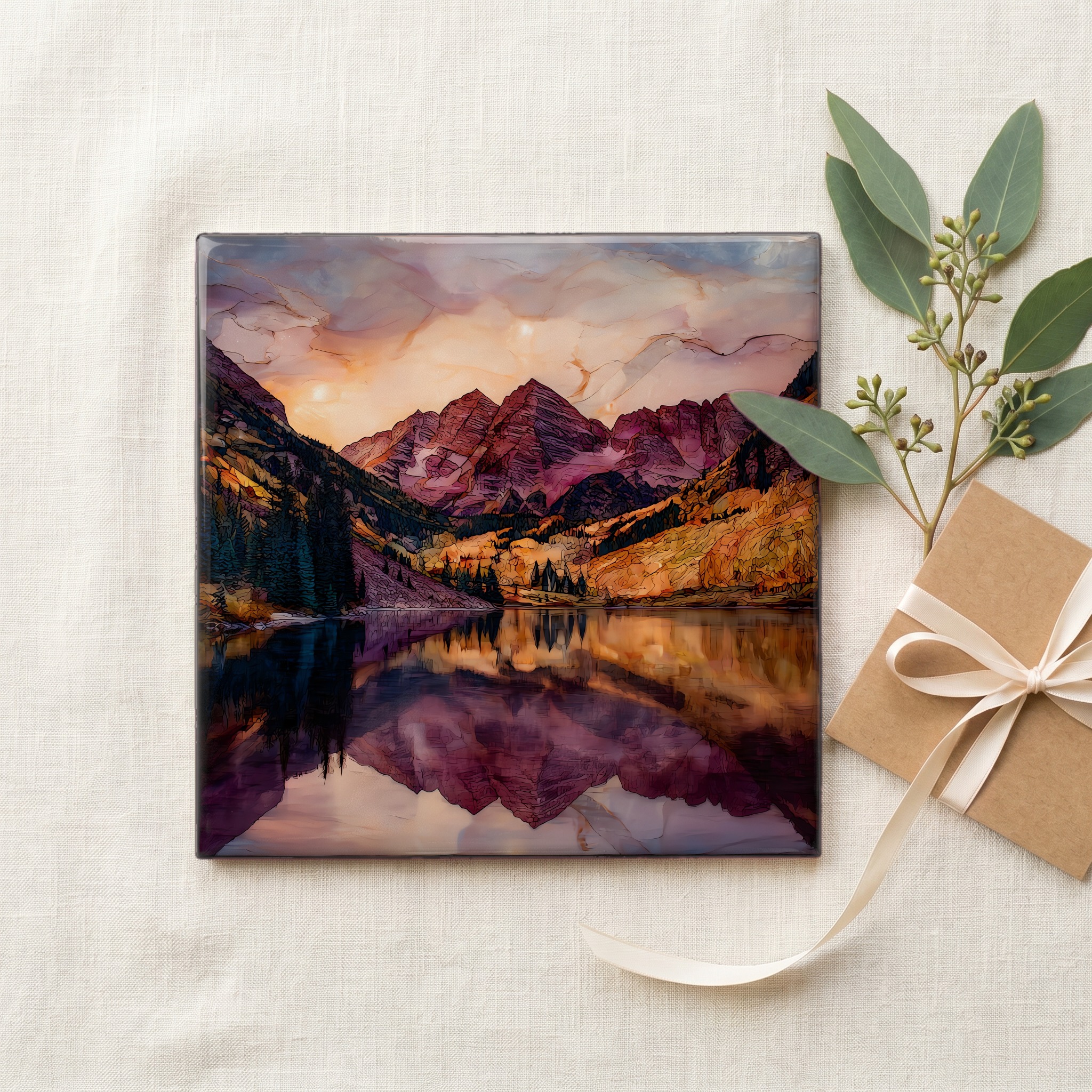
comes gift-ready

Each tile ships in a kraft box, tied with cream ribbon, with a handwritten note from the studio if you'd like to add one.
or build a grouping
or build a grouping

Three or five different vistas, hung together — a chapter of places you've been, or want to go.

about Maroon Bells reflection Elk Range Ceramic Art Tile

The place, in three passes.

A little of what's known, in case you fall down the rabbit hole — or want to go see it yourself.
the place

Two peaks at the head of Maroon Creek, in the Elk Mountains of Colorado's White River National Forest. Maroon Peak rises to 14,163 feet (4,316 m); North Maroon Peak to 14,019 feet (4,273 m), separated by about a third of a mile of ridge. The pair sits roughly ten miles west of Aspen, reflected in Maroon Lake at an elevation of about 9,580 feet (2,920 m). Both peaks lie inside the Maroon Bells–Snowmass Wilderness, designated in 1964 under the original Wilderness Act and now covering about 181,000 acres of the White River National Forest. Access from Aspen Highlands runs up Maroon Creek Road, which carries a shuttle-and-permit system during the summer and autumn months.

the stone

The maroon comes from the rock itself. The Bells are carved from the Maroon Formation, a Pennsylvanian-to-early-Permian sedimentary sequence of mudstone, siltstone, and sandstone laid down roughly 300 million years ago when this part of Colorado lay near the equator. Hematite, an iron oxide, gives the rock its red-brown cast and holds the colour the same wet or dry, summer or winter. The same formation runs north through the Roaring Fork valley and shows along Schofield Pass, but on the Bells it stands higher than anywhere else it surfaces in the state. Climbers know the rock is also brittle and poorly cemented, the reason the U.S. Forest Service has long called the pair the Deadly Bells on its trailhead sign.

— informed by Wikipedia, Wikipedia
the visit

Maroon Creek Road, the only paved road in, is closed to private vehicles during the high season, generally from mid-May through late October between 8 a.m. and 5 p.m. Visitors during those hours park at Aspen Highlands and ride the Roaring Fork Transportation Authority shuttle the ten miles to Maroon Lake. A separate parking reservation is required outside shuttle hours and during the shoulder window when the road reopens to cars; reservations are issued through Recreation.gov and tend to sell out within minutes during fall colour weekends in mid-to-late September. There is a per-person fee for the shuttle and a per-vehicle fee for the road, with proceeds going to the White River National Forest and to wilderness maintenance.

where
United States · Pitkin County, Colorado
within
Maroon Bells–Snowmass Wilderness
elevation
2,920 m · 9,580 ft
position
39.1028° N · 106.9403° W
the neighborhood

What's nearby.

A handful of named places within an hour's walk or short drive. Some we've already painted; some we will.
16 km E
Aspen
town
3 km W
Crater Lake
alpine lake
4 km E
Pyramid Peak
fourteener peak
12 km NW
Snowmass Mountain
fourteener peak
18 km NW
Capitol Peak
fourteener peak
16 km SE
Castle Peak
fourteener peak
14 km SE
Conundrum Hot Springs
hot springs
14 km E
Aspen Highlands
ski area
N
Maroon Bells reflection Elk Range Ceramic Art Tile
Aspen
Crater Lake
Pyramid Peak
Snowmass Mountain
Capitol Peak
Castle Peak
Conundrum Hot Springs
common questions

What people ask.

A few questions we get about Maroon Bells reflection Elk Range Ceramic Art Tile — and about bringing the piece home.
about the place

In the Elk Mountains of Colorado, at the head of Maroon Creek about ten miles west of Aspen. The pair forms the western wall of the Maroon Bells–Snowmass Wilderness inside White River National Forest, and is reflected in Maroon Lake at about 9,580 feet.

The peaks are carved from the Maroon Formation, a 300-million-year-old sedimentary sequence of mudstone and sandstone rich in hematite. The iron oxide gives the rock its red-brown cast and holds the same colour wet or dry, summer or winter.

Two summits, both over 14,000 feet. Maroon Peak is 14,163 feet (4,316 m); North Maroon Peak is 14,019 feet (4,273 m). They sit about a third of a mile apart along the same ridge above Maroon Lake.

The reflection holds for roughly the first half-hour after sunrise, before the wind reaches the lake. Photographers favour the last week of September and the first week of October, when the aspens around the lake turn gold and the air is usually still at dawn.

Yes. From mid-May through late October, Maroon Creek Road is closed to private cars between 8 a.m. and 5 p.m.; visitors park at Aspen Highlands and ride the Roaring Fork Transportation Authority shuttle. Vehicle and shuttle reservations are issued through Recreation.gov and sell out fast in fall.

The U.S. Forest Service posts the name at the trailhead. The Maroon Formation rock is brittle and poorly cemented, breaking off in loose plates underfoot and making the high pitches dangerous. Multiple fatal climbing accidents in the 1960s prompted the warning that still stands.

The Maroon Bells–Snowmass Wilderness, designated in 1964 under the original Wilderness Act and now covering about 181,000 acres of the White River National Forest. The boundary holds several fourteeners, including Pyramid Peak, Snowmass Mountain, and Capitol Peak.

about the piece in your home

Yes. The reflection from Maroon Lake is the image most people carry of the Aspen high country, and it reads across generations of family. A Small or Medium with a handwritten note from the studio works well for someone who skis Highlands or has hiked to Crater Lake.

The iron-red of the peaks and the cool blue-green of the reflected water sit comfortably in mountain-modern, jewel-tone maximalist, and warm minimalist rooms. It pairs especially well against pale oak, raw plaster, and unpainted brick, where the maroon can carry the temperature of the wall.

It is. Mountain-modern and alpine-modern have been the through-line of the last several years' Colorado interiors, and a recognised Colorado fourteener anchors the room rather than ornamenting it. The tile carries the place name into a room without spelling it out.

Above a sofa or a long console, a single Large or a 4-tile Mural reads from across the room. For a wider wall behind a sectional, the 9-tile Mural carries the image at landscape scale and matches the way Maroon Lake actually opens up in front of you.

Yes. Order the Dura Satin or Matte finish for any installation that will see water or steam. The colour lives in the surface itself, so the image will not fade from moisture or from sun off a bathroom window.

A soft microfibre cloth and water. Avoid abrasive pads and bleach-based cleaners. The colour lives in the ceramic itself, so the image does not sit on top to be scratched off, and routine cleaning will not wear the surface down over time.

Yes. Every WenderVista piece is original to the studio in Knoxville, Tennessee, hand-finished in-house. No third-party licensing, no stock imagery. The Maroon Bells reflection is part of an atlas of place-specific works curated by Reid Wender.

if this one stayed with you

A few you might also love.

Hand-picked by the eye that found Sorapis. Same air, same kind of quiet.