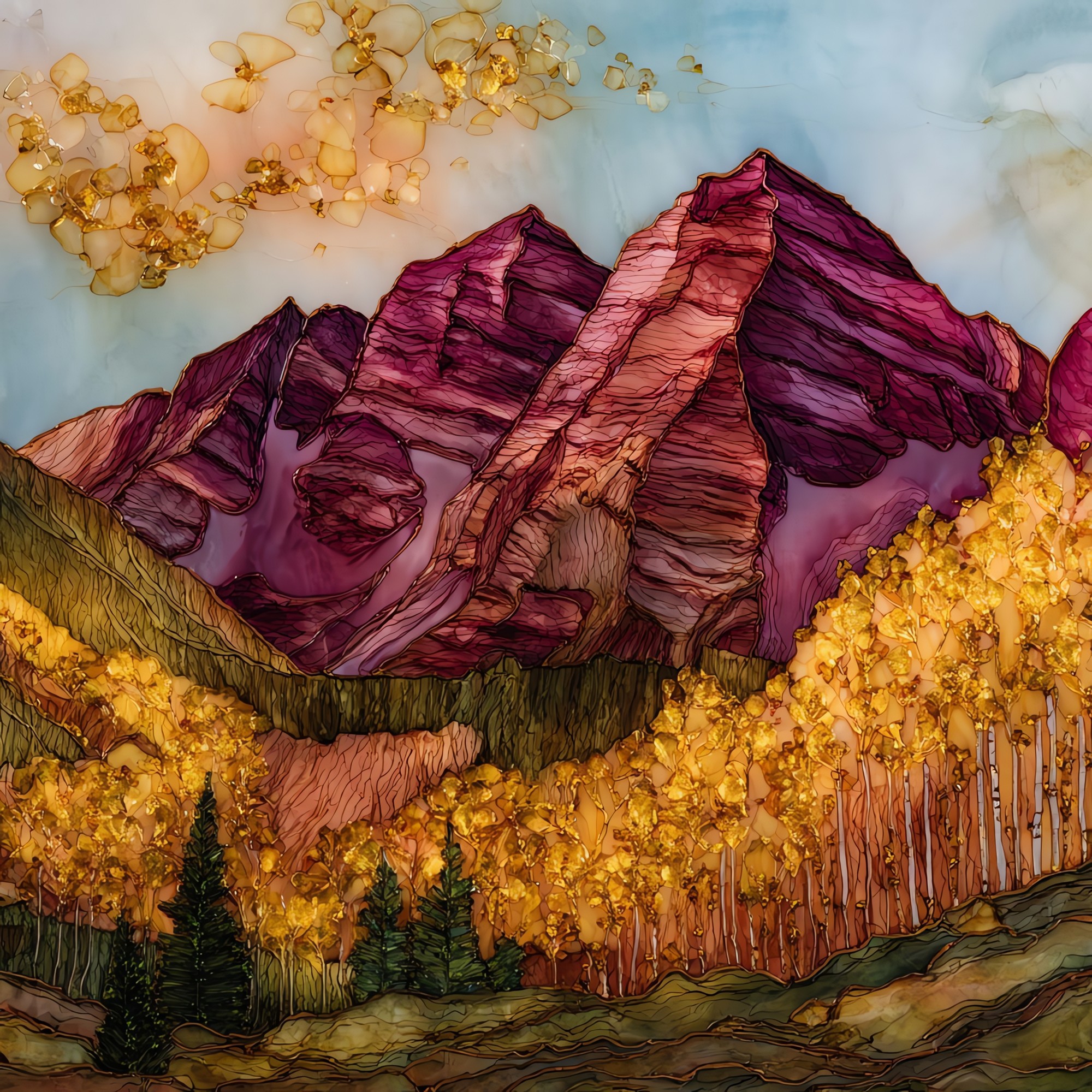
Maroon Bells autumn aspens Elk Range Ceramic Art Tile
— the week the aspens turn gold against the maroon.
Not only on a wall.
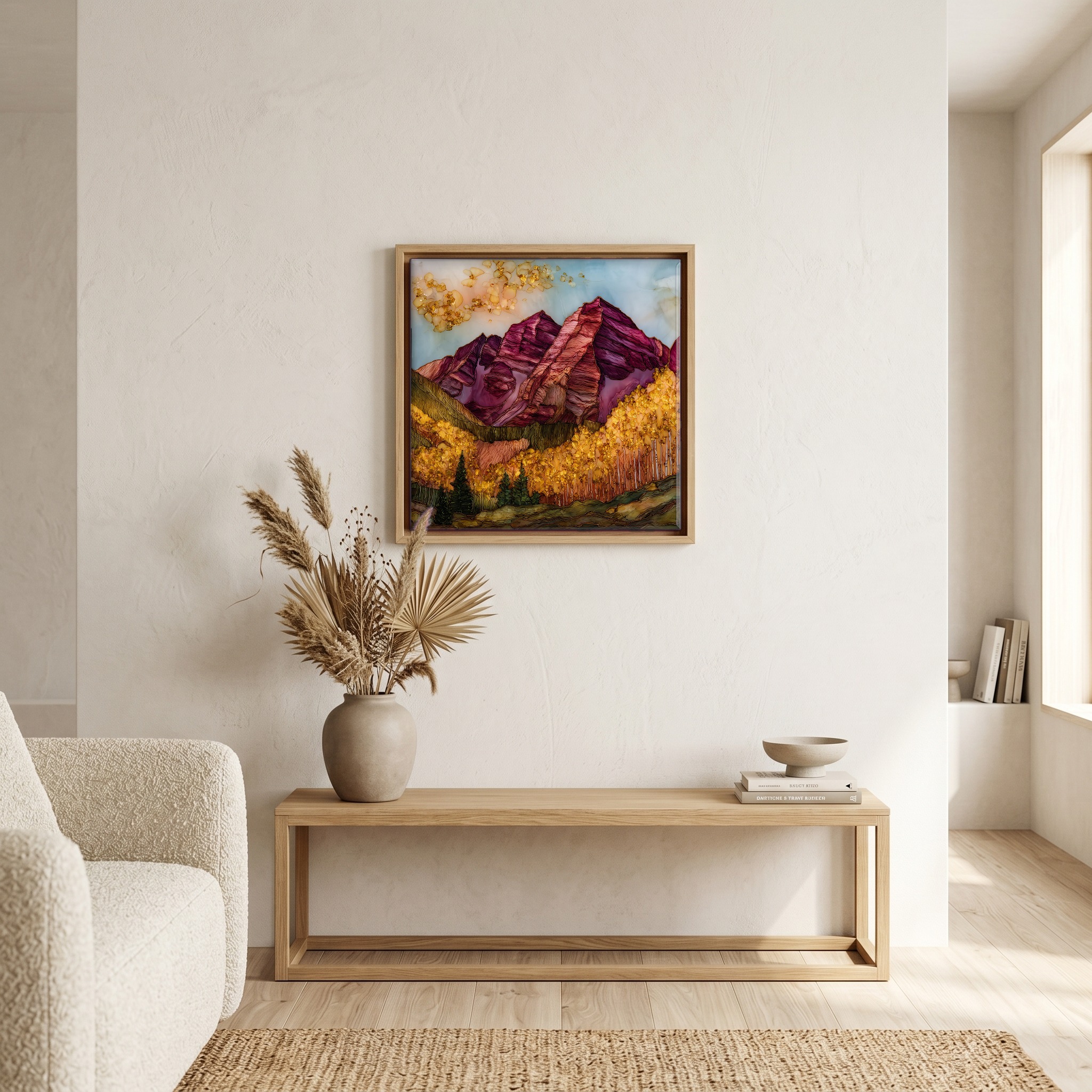
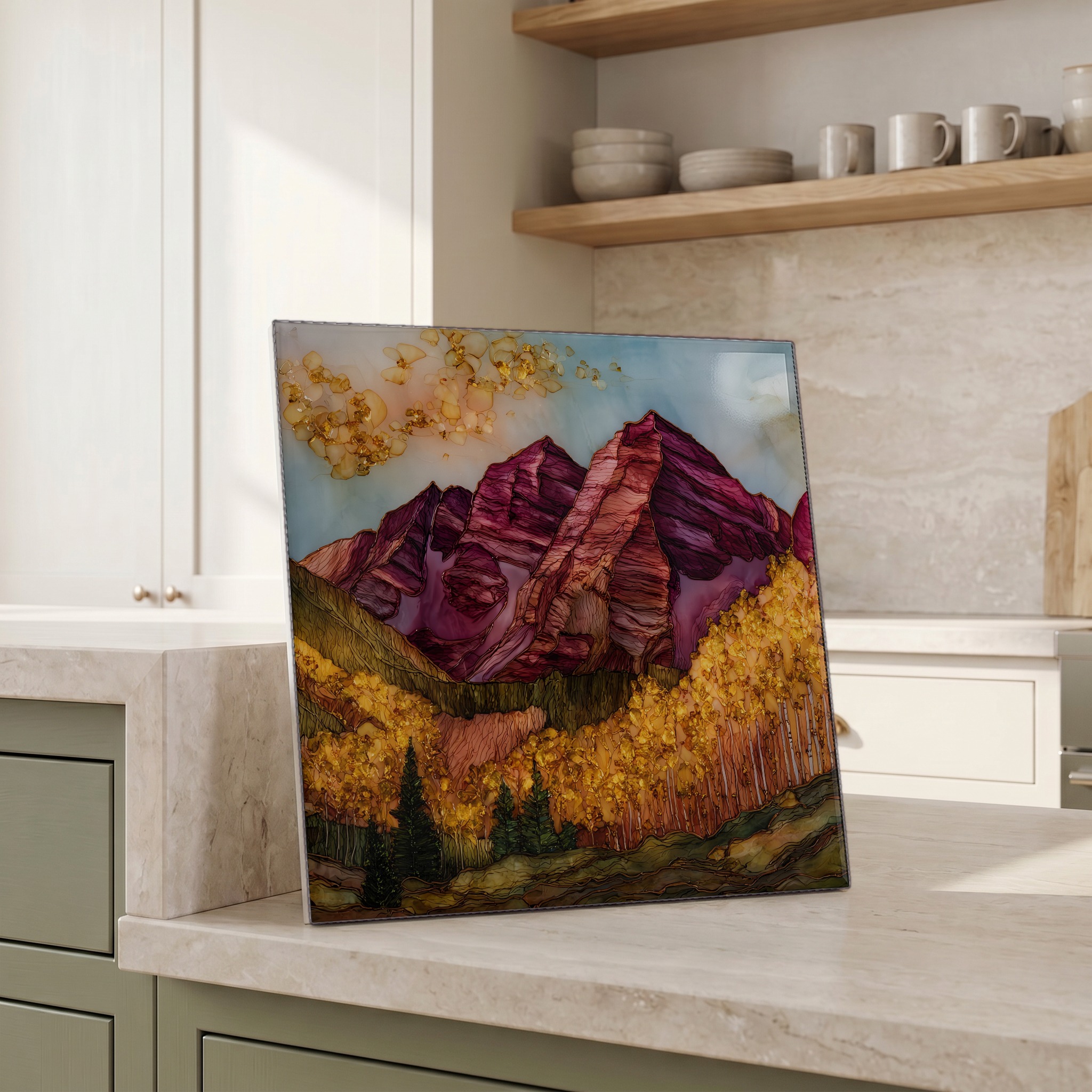
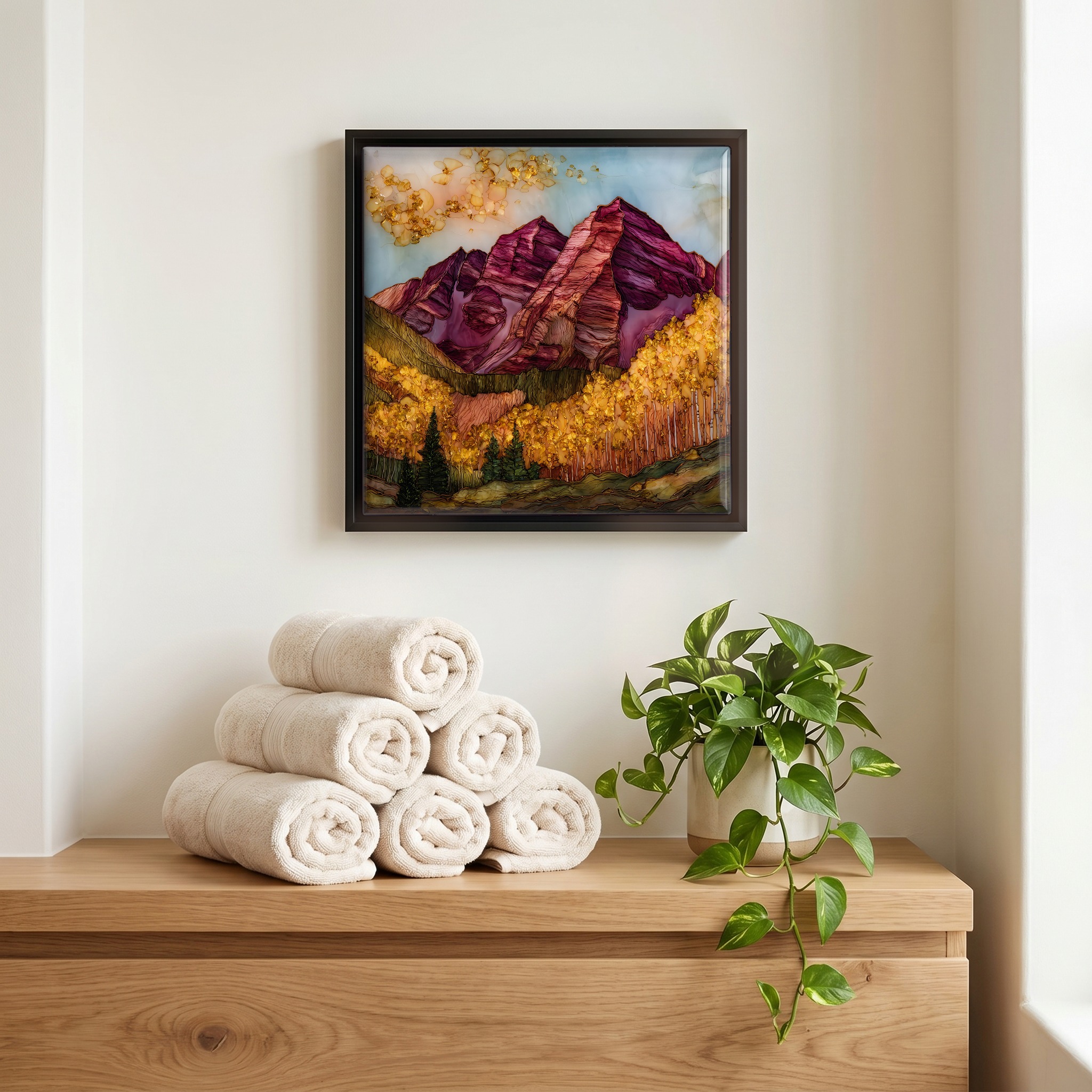

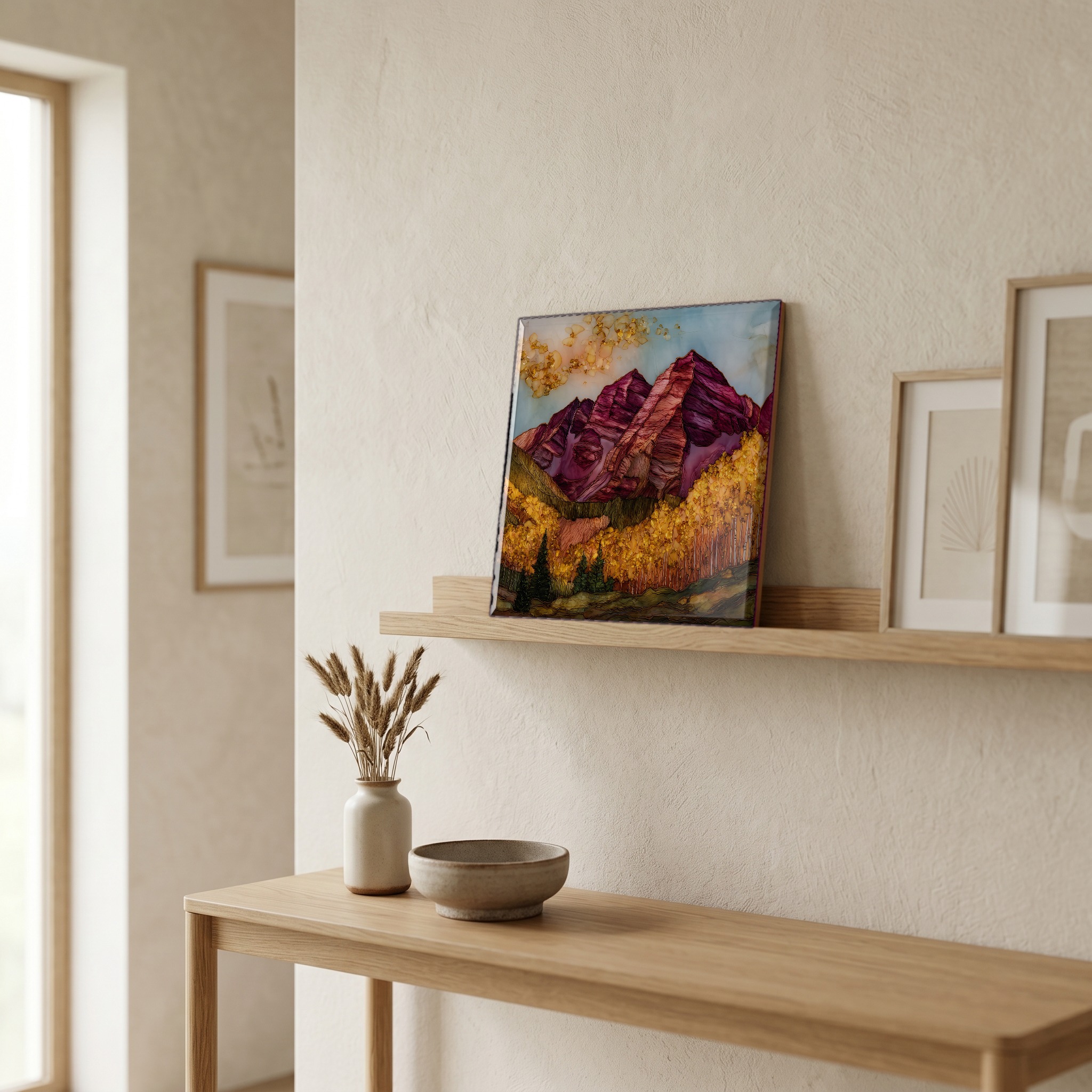
“Two maroon peaks at the head of a high valley west of Aspen, reflected in a lake too cold to swim in. The red is real: iron in the rock, set 300 million years before the Rockies pushed it up. In the last week of September the aspens that ring the lake all turn at once, and the road fills with cars before sunrise. The shuttle from Aspen Highlands lets you off at a half-mile meadow trail. Photographers come for the twenty minutes after dawn. Then the day belongs to the wind.
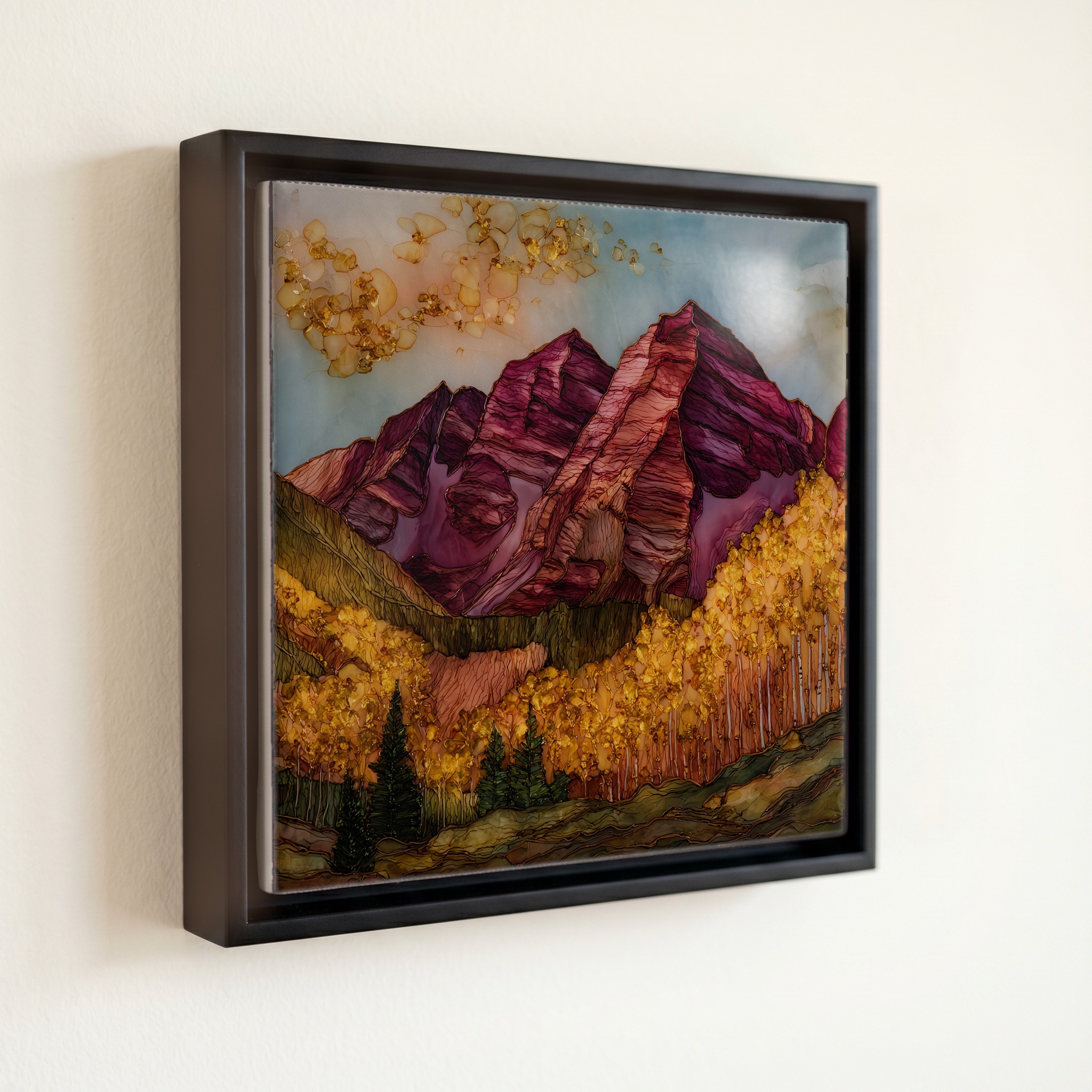
Maroon Bells autumn aspens Elk Range Ceramic Art Tile, on ceramic.
Each tile is finished by hand in our Knoxville studio. Artwork is slowly infused into the ceramic surface under high heat and pressure, and rests beneath a thin glossy finish. The colour lives in the surface, not on top of it.
Pick any four 4-inch tiles — National Parks you've been to, a Smokies set, the four seasons of one place. $ for a set of , cork-backed, ready to live on the table.
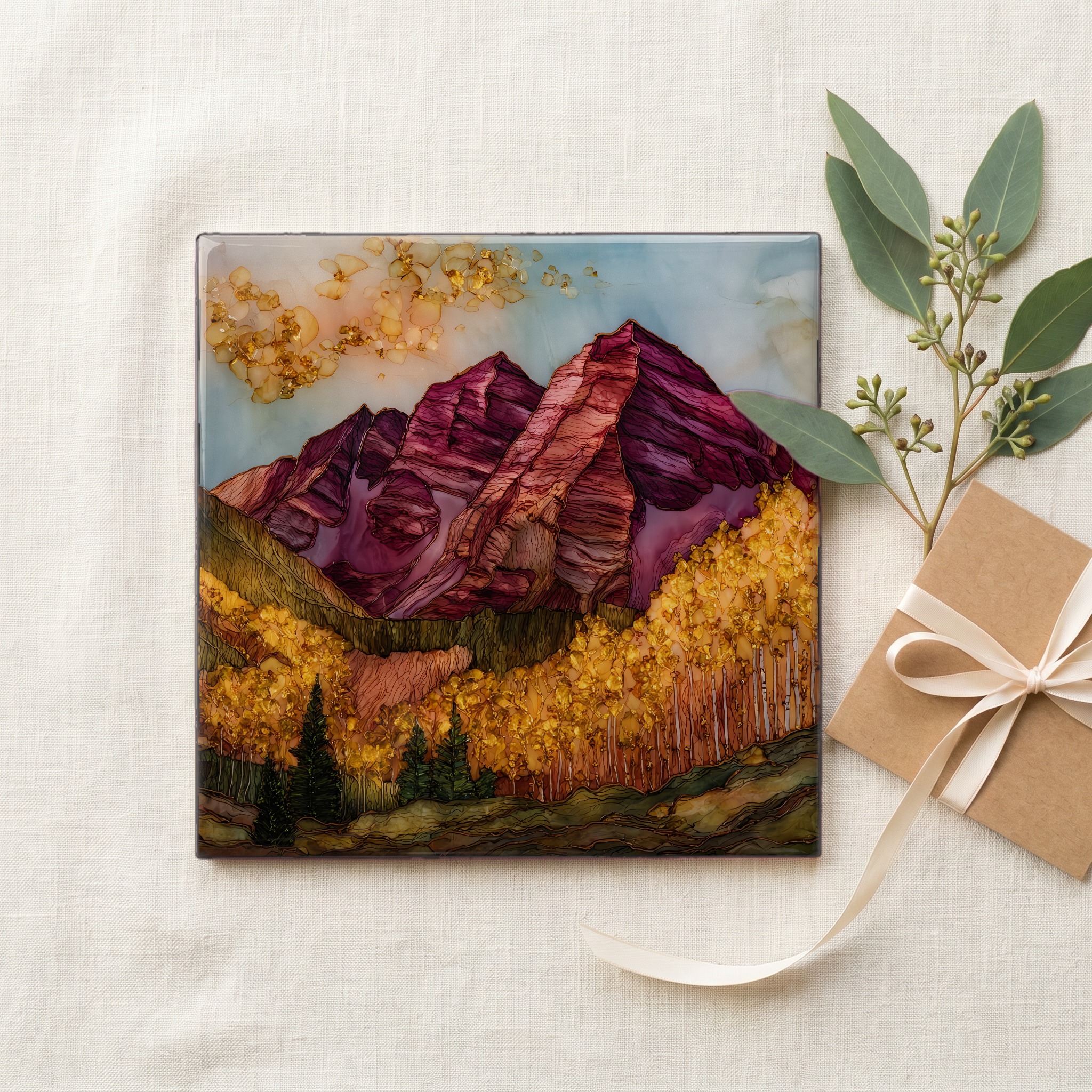
Each tile ships in a kraft box, tied with cream ribbon, with a handwritten note from the studio if you'd like to add one.
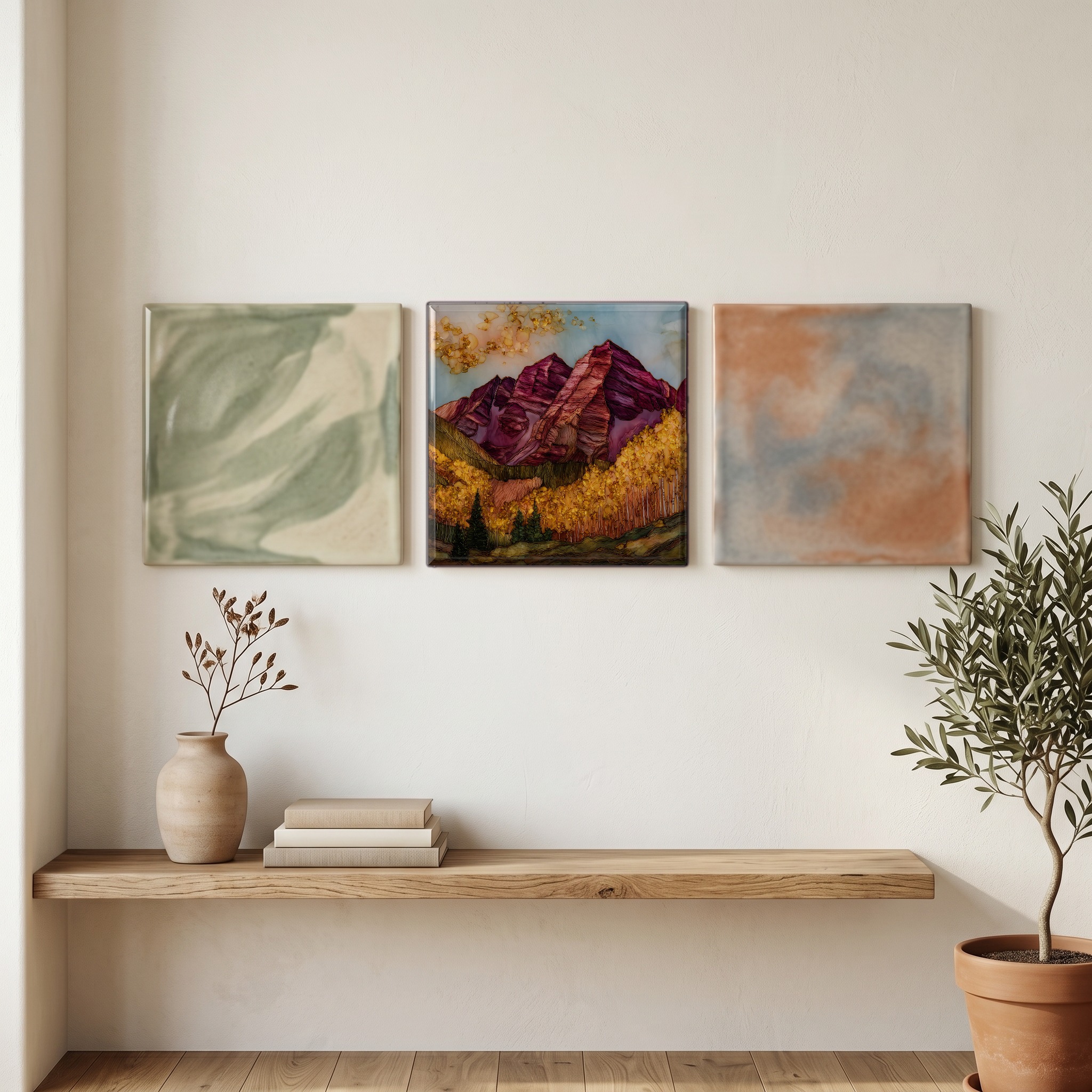
Three or five different vistas, hung together — a chapter of places you've been, or want to go.
The place, in three passes.
The Maroon Bells are two fourteen-thousand-foot peaks at the head of Maroon Creek, about ten miles southwest of Aspen, Colorado. Maroon Peak rises to 14,163 feet and North Maroon to 14,019 feet, joined by a high saddle that climbers cross to traverse between them. They are the namesake peaks of the Maroon Bells-Snowmass Wilderness, a 181,000-acre area in the White River National Forest, designated by Congress in 1964. The viewpoint at Maroon Lake, 9,580 feet, lies half a mile from the shuttle stop and is among the most photographed places in North America.
The peaks read maroon because they are. The rock is the Maroon Formation: sedimentary mudstone, sandstone, and shale laid down between 280 and 300 million years ago, stained red by iron oxide from oxidising hematite. Most of Colorado's fourteen-thousand-foot peaks are granite or volcanic. The Bells are an outlier, soft and layered, holding colour where harder ranges hold ice. The same rock makes them dangerous to climb: it crumbles under boot and rope. The US Forest Service calls them the Deadly Bells in its signage. In late September the gold aspens at the lake set the maroon off, complementary on the colour wheel and side by side in the meadow.
The aspens at Maroon Lake turn in the last ten days of September, give or take three days for the year's temperature. Aspen, Colorado sits at 7,907 feet, and the lake another 1,700 feet above it, so colour arrives at the lake before it arrives in town. The window is short, usually under two weeks from first gold to bare branches. Maroon Creek Road is closed to private vehicles between 8 AM and 5 PM from mid-May through October. Visitors ride the Maroon Bells Scenic Shuttle from Aspen Highlands, about twenty minutes each way. Mornings are the photograph; afternoons are the wind. Snow can close the road by early November.