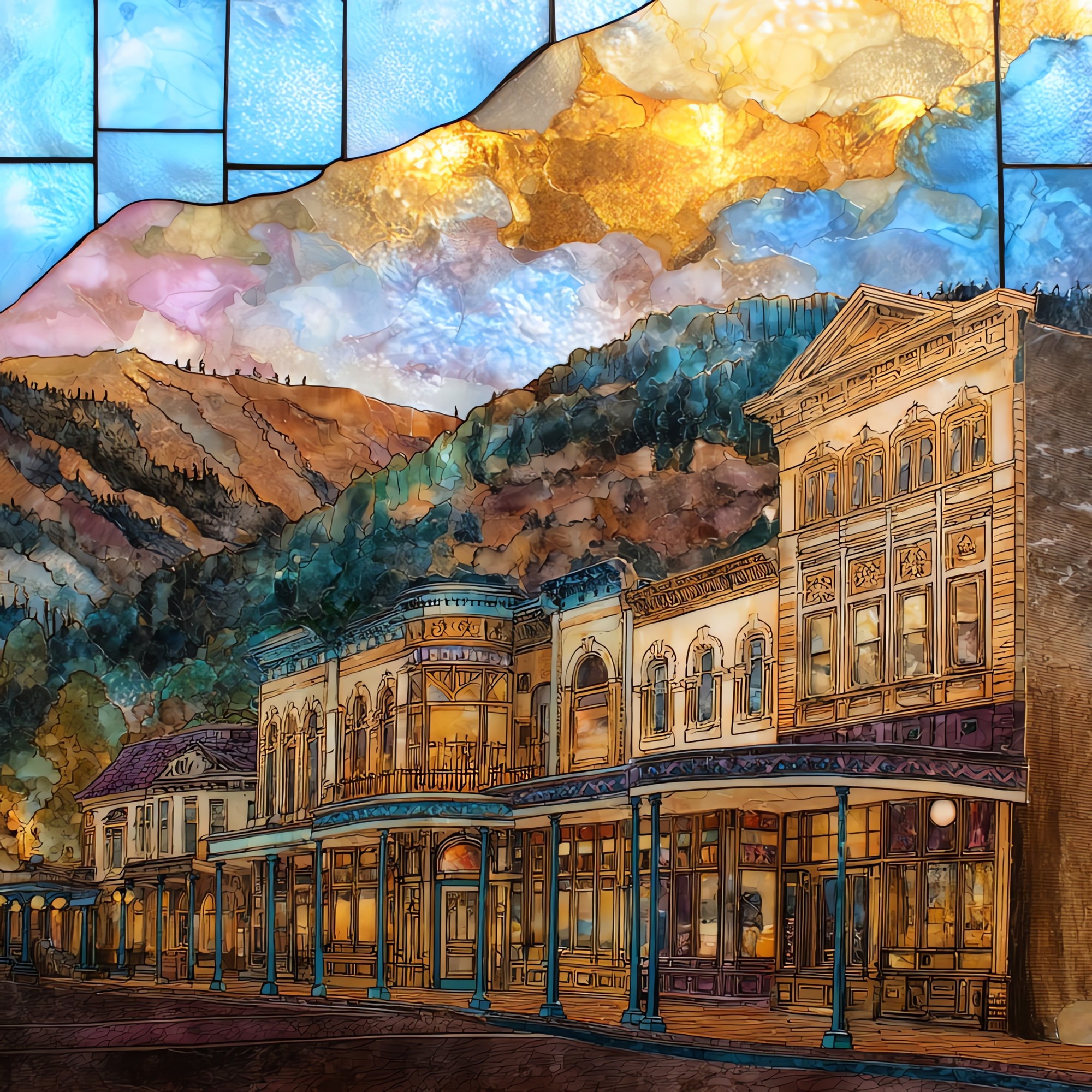
Manitou Springs at base of Pikes Front Range Ceramic Art Tile
— — soda water from the rock, peak in the window.
Not only on a wall.

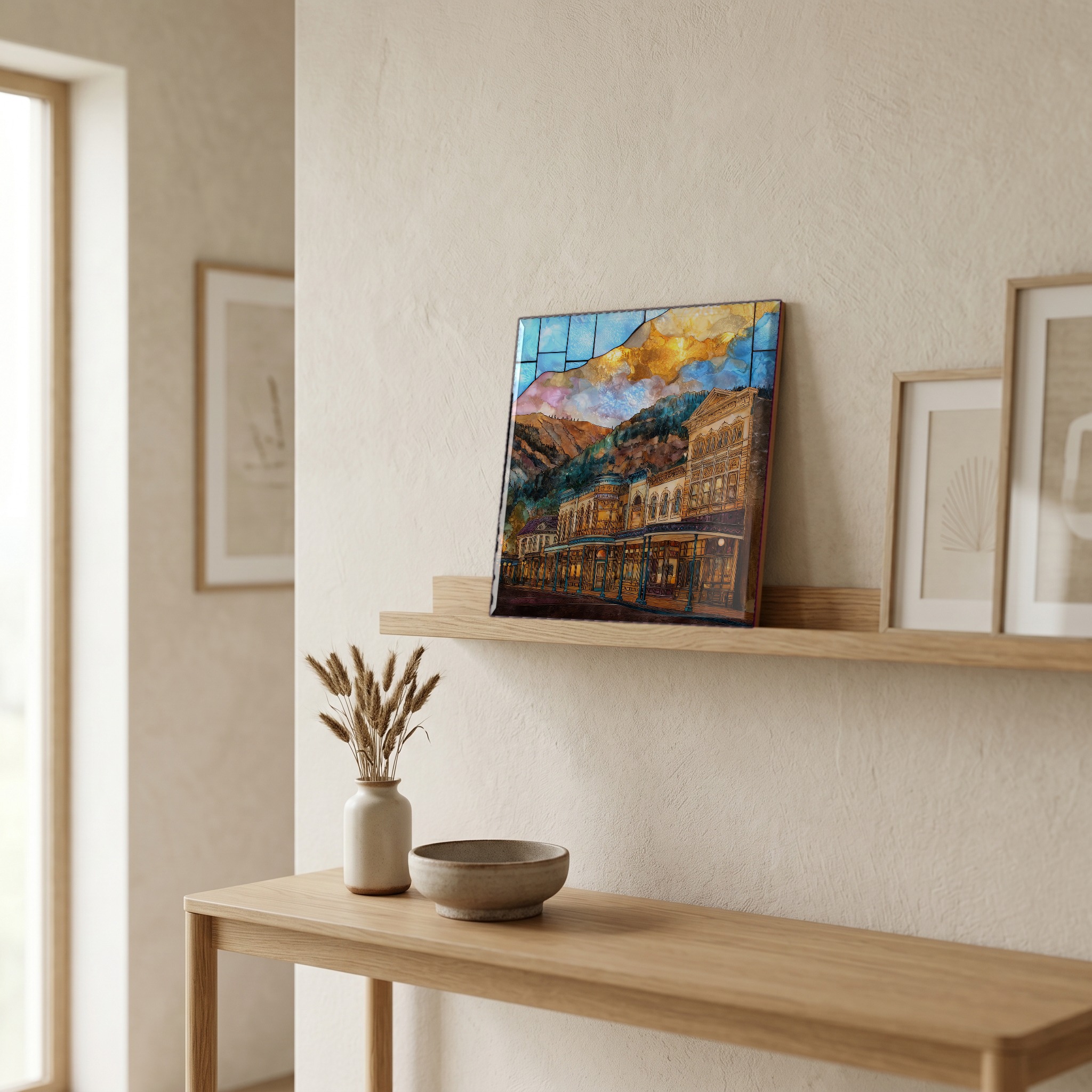
“A small Victorian town at the eastern foot of Pikes Peak, where eight natural springs come up cold and carbonated through the red rock. The Ute called this water sacred long before the resort hotels arrived in the 1870s. The main street still has the gingerbread porches and iron drinking fountains. The cog railway still climbs from town to the 14,115-foot summit, about an hour up and an hour back. Late afternoon, the peak holds the last of the light; the town below holds quiet.
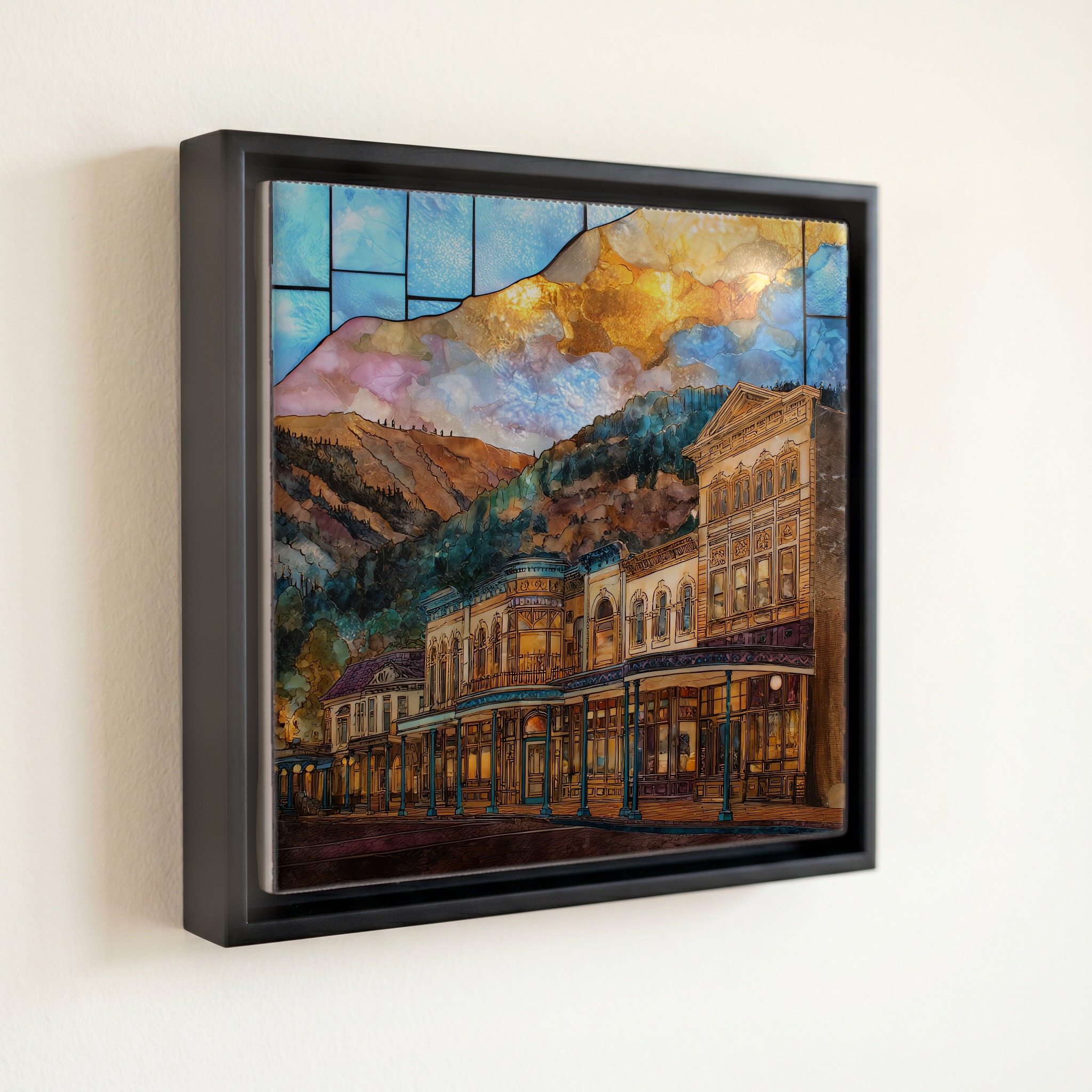
Manitou Springs at base of Pikes Front Range Ceramic Art Tile, on ceramic.
Each tile is finished by hand in our Knoxville studio. Artwork is slowly infused into the ceramic surface under high heat and pressure, and rests beneath a thin glossy finish. The colour lives in the surface, not on top of it.
Pick any four 4-inch tiles — National Parks you've been to, a Smokies set, the four seasons of one place. $ for a set of , cork-backed, ready to live on the table.
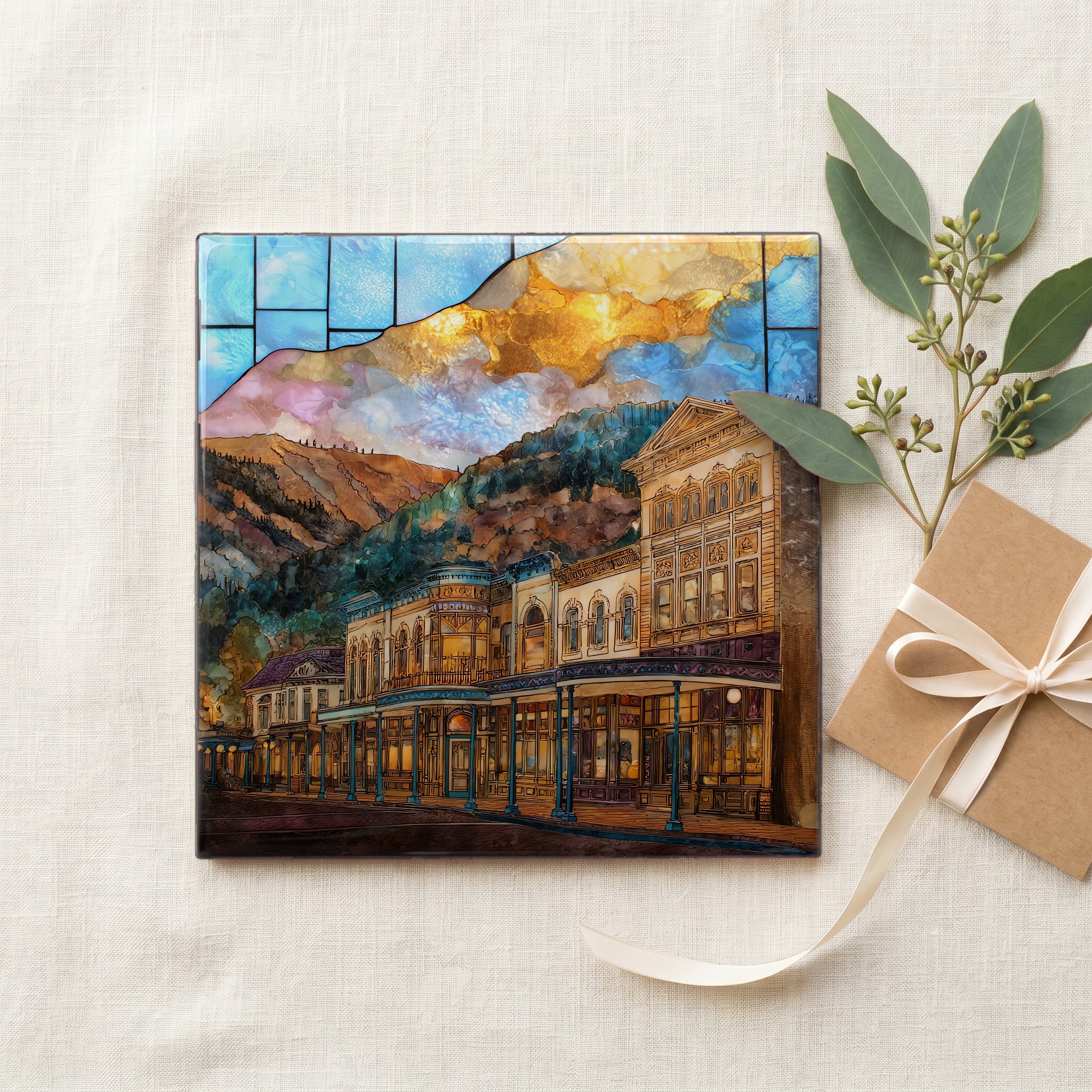
Each tile ships in a kraft box, tied with cream ribbon, with a handwritten note from the studio if you'd like to add one.
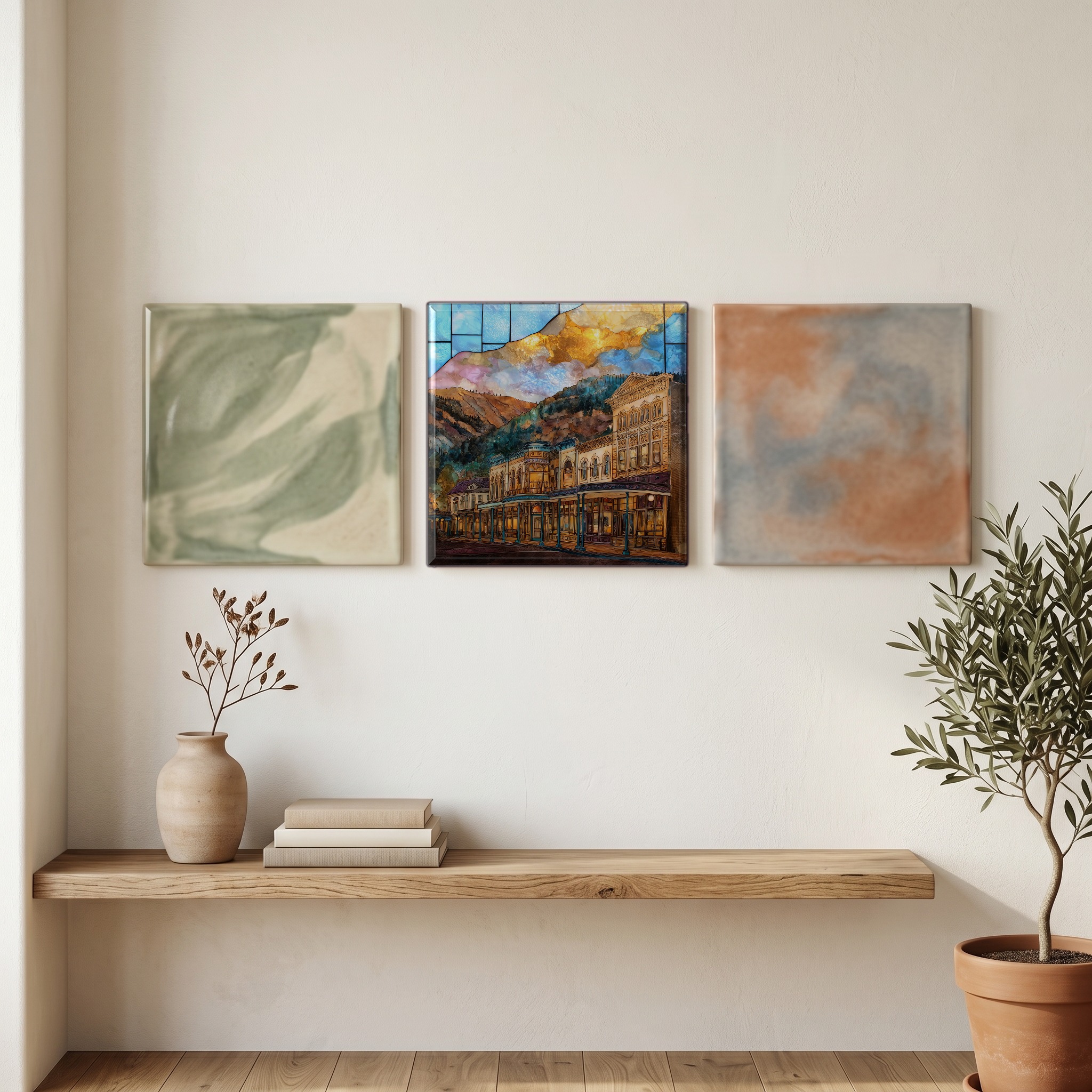
Three or five different vistas, hung together — a chapter of places you've been, or want to go.
The place, in three passes.
Manitou Springs sits at 6,412 feet at the eastern foot of Pikes Peak, the easternmost 14,000-foot summit of the Front Range and the mountain that anchors the southern Rockies above the Colorado plains. The town was founded in 1872 by Dr. William Bell and General William Jackson Palmer as a railway-era resort built around its naturally carbonated mineral springs, and the entire downtown is listed as the Manitou Springs Historic District on the National Register of Historic Places. From Colorado Springs the drive is about six miles west on Highway 24; from the town a cog railway and a toll road both climb to the 14,115-foot summit. The Pikes Peak granite that gives the Front Range its blush starts here.
Eight named springs surface within the town's seven-block downtown: Cheyenne, Navajo, Soda, Twin, Wheeler, Shoshone, Stratton, and Iron. Each is piped to a public drinking fountain on a different corner. The water is naturally effervescent, formed when rainwater and snowmelt from the slopes of Pikes Peak descend through fractures in the Pikes Peak Granite, dissolve carbonates from buried limestone, and rise back to the surface charged with carbon dioxide. The Ute people called the place Manitou, the Algonquian word for spirit, and considered the water sacred for centuries before Dr. William Bell laid out the resort streets in 1872. The Mineral Springs Foundation maintains the fountains today, and the water is free to anyone who walks up with a bottle.
From downtown, three things draw most visitors. The Pikes Peak Cog Railway leaves Ruxton Avenue and climbs 7,500 vertical feet over nine miles to the 14,115-foot summit; the ride is about three hours round trip, after a full track rebuild completed in 2021. The Manitou Incline, a former funicular bed laid bare in 1990, gains 2,000 feet over 2,768 railroad ties in less than a mile and now requires a free reservation. Garden of the Gods, the Colorado Springs city park whose red sandstone fins are visible from town, lies four miles east and charges no entry fee. The mineral-springs walking loop covers all eight fountains in about ninety minutes on foot.