Wender·Vista
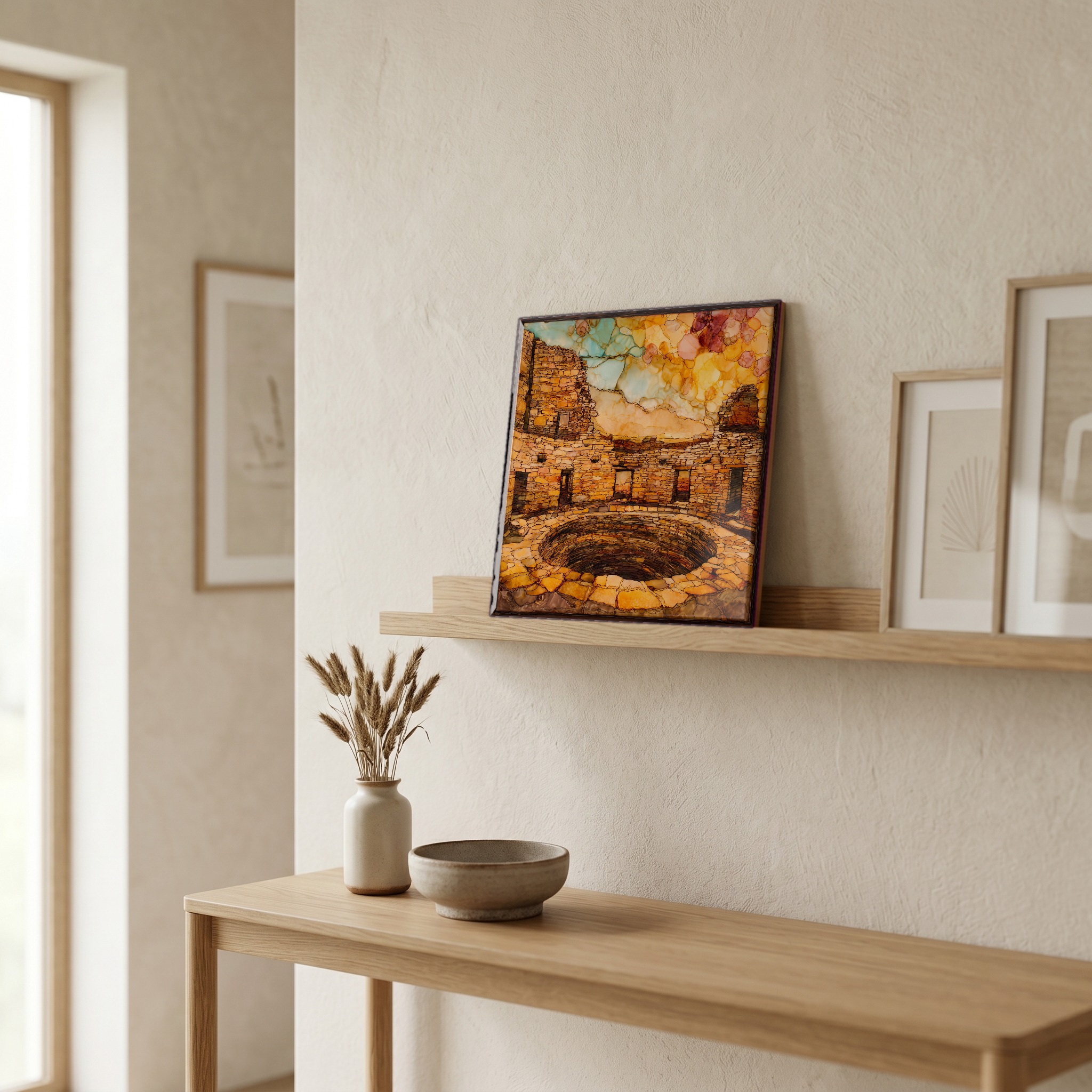
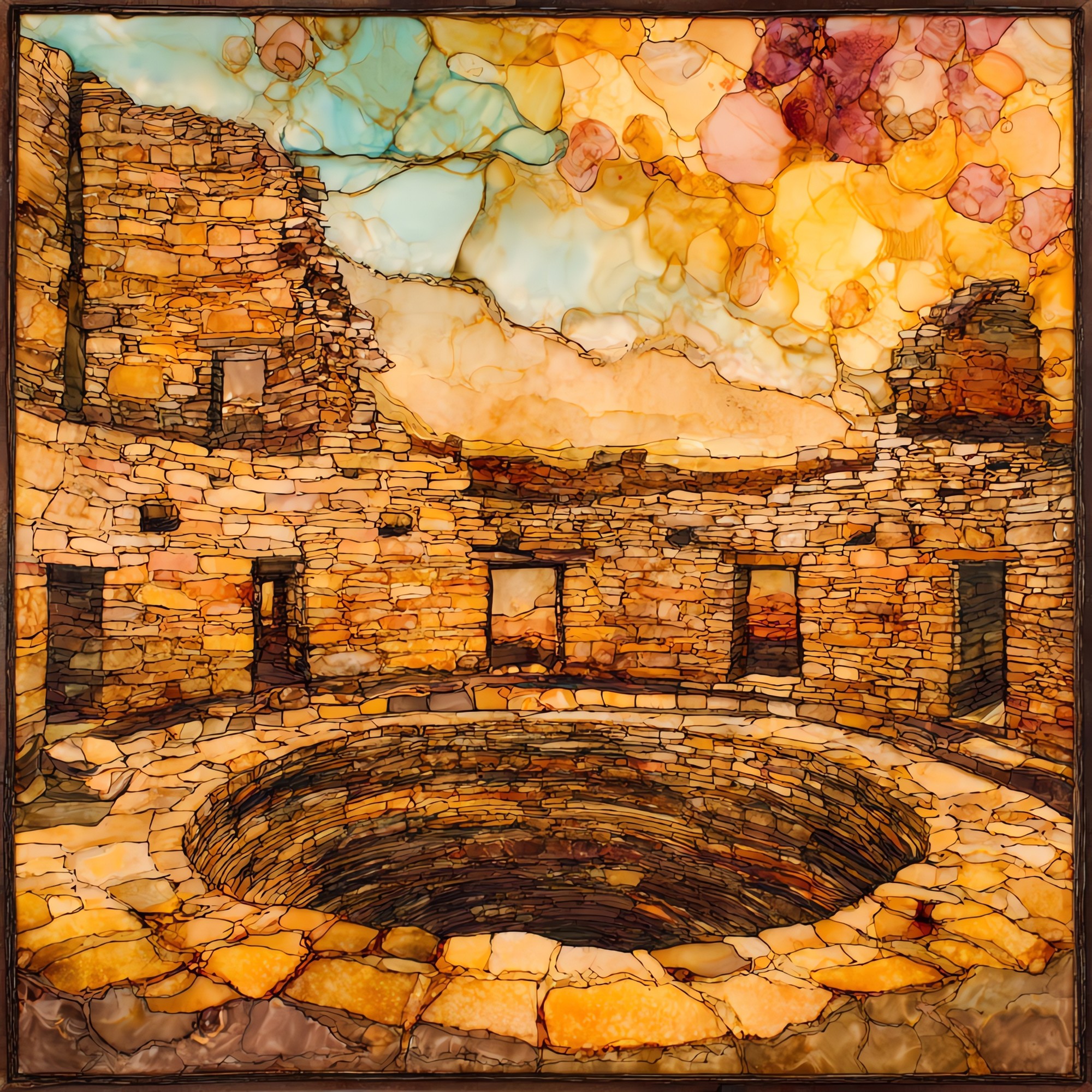
Lowry Pueblo great kiva Four Corners Ceramic Art Tile
shown on ceramic, 12-inch tileColorado · United States
northwest of Mesa Verde, on the Great Sage Plain

Lowry Pueblo great kiva Four Corners Ceramic Art Tile

a great kiva, sunk into the plain, painted in layers.

Where it lives

Not only on a wall.

A small tile on the nightstand catching the morning. A larger one above the fire. Yours, wherever you spend the slow hours.
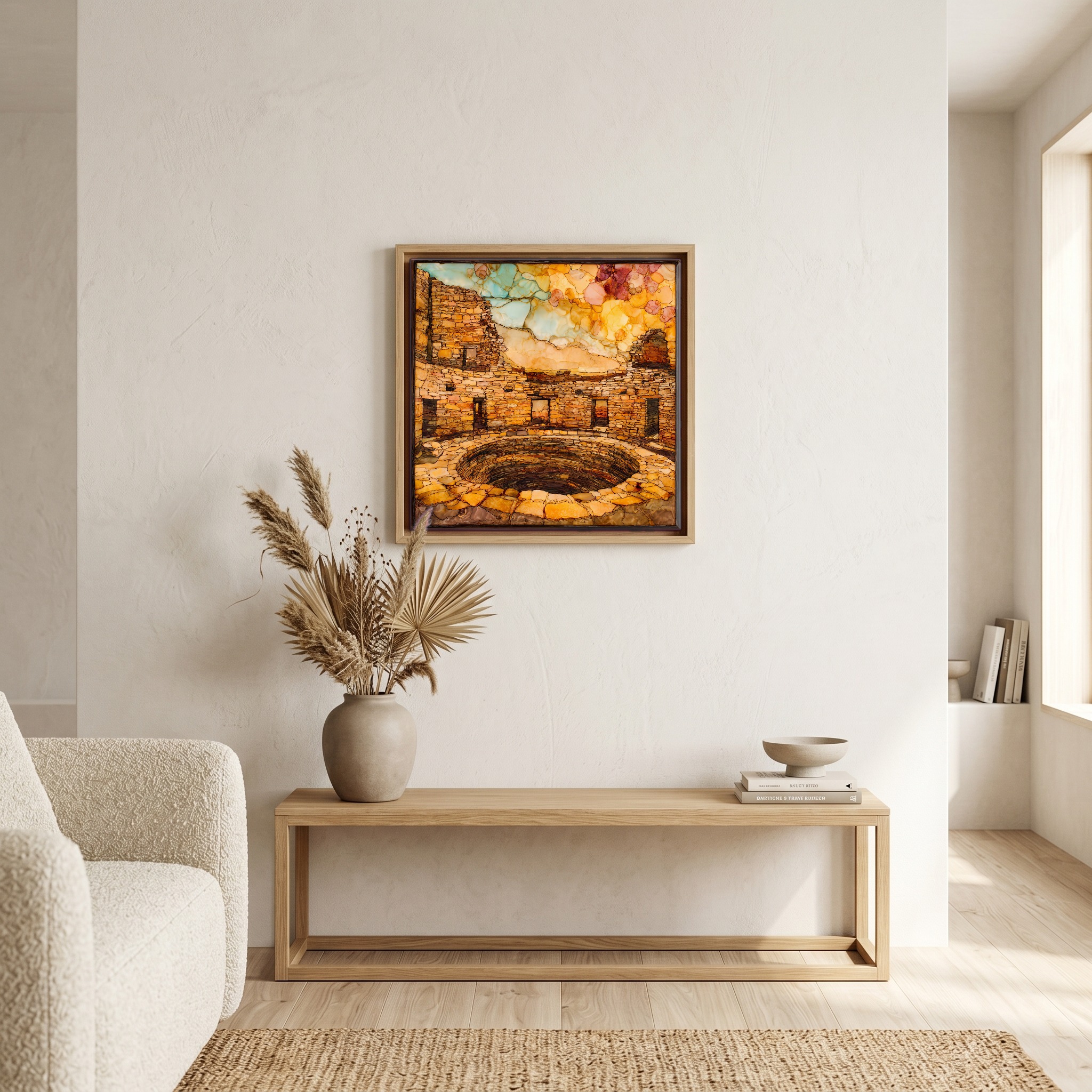
Above the bench, in a warm oak surround.
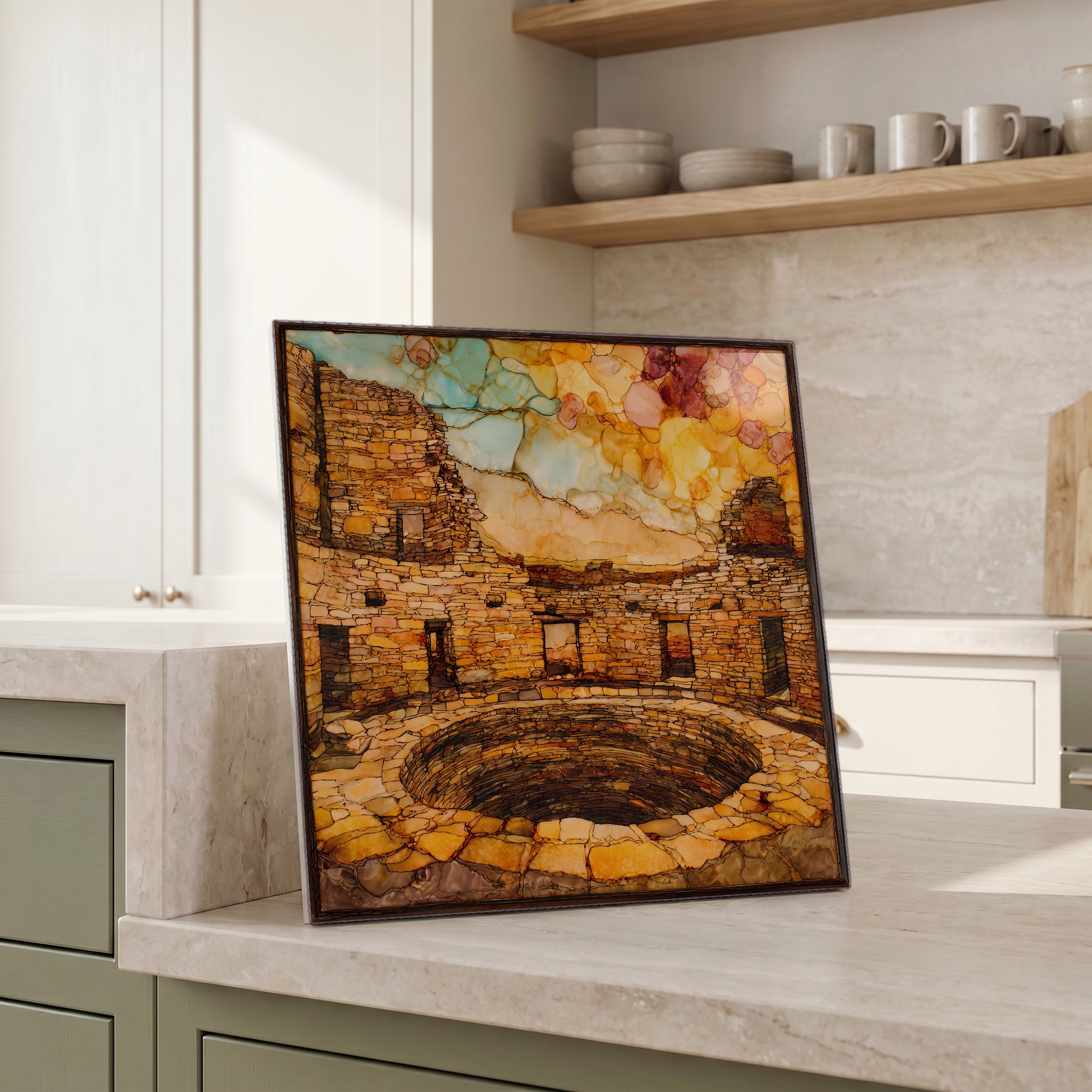
Beside the kettle, propped on the counter.
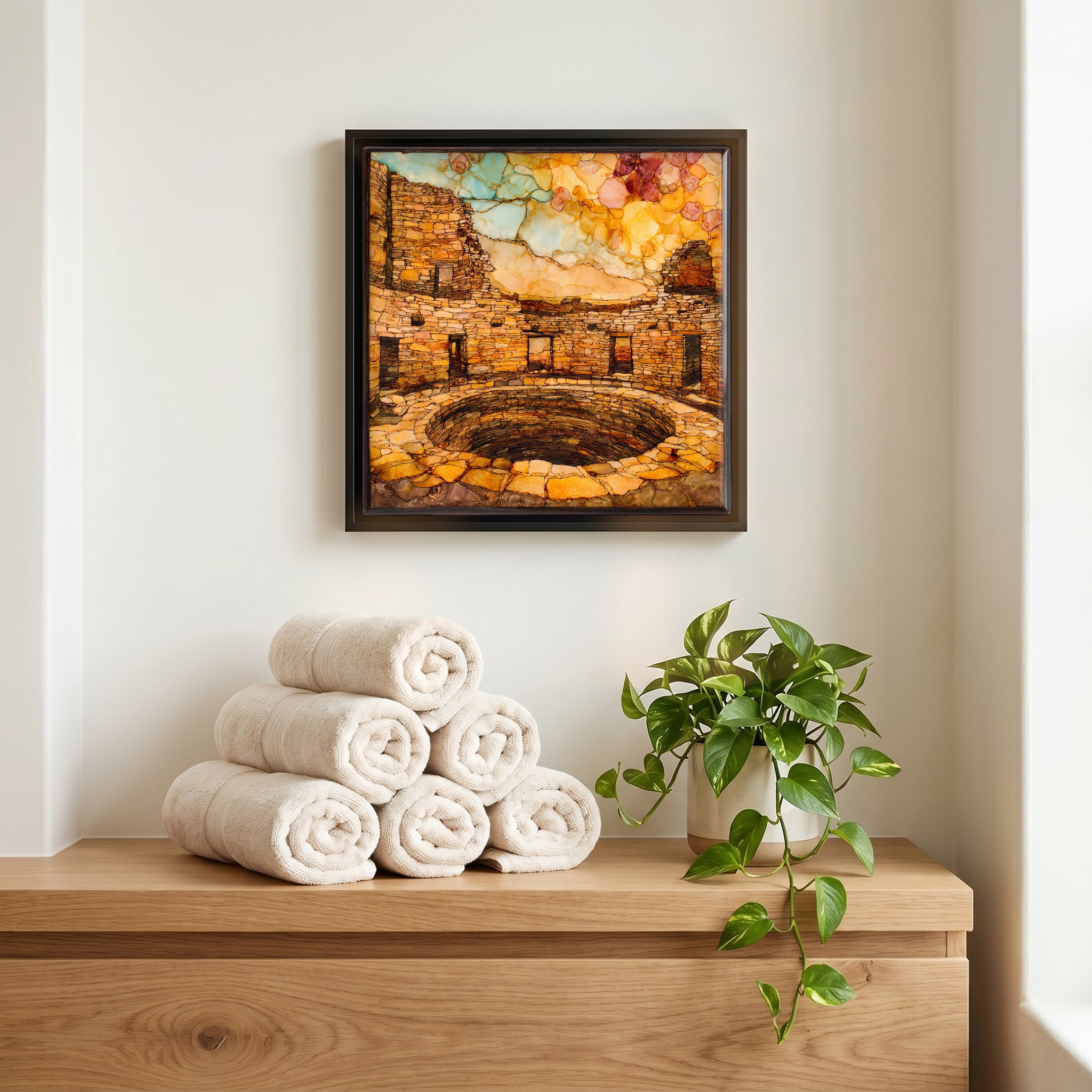
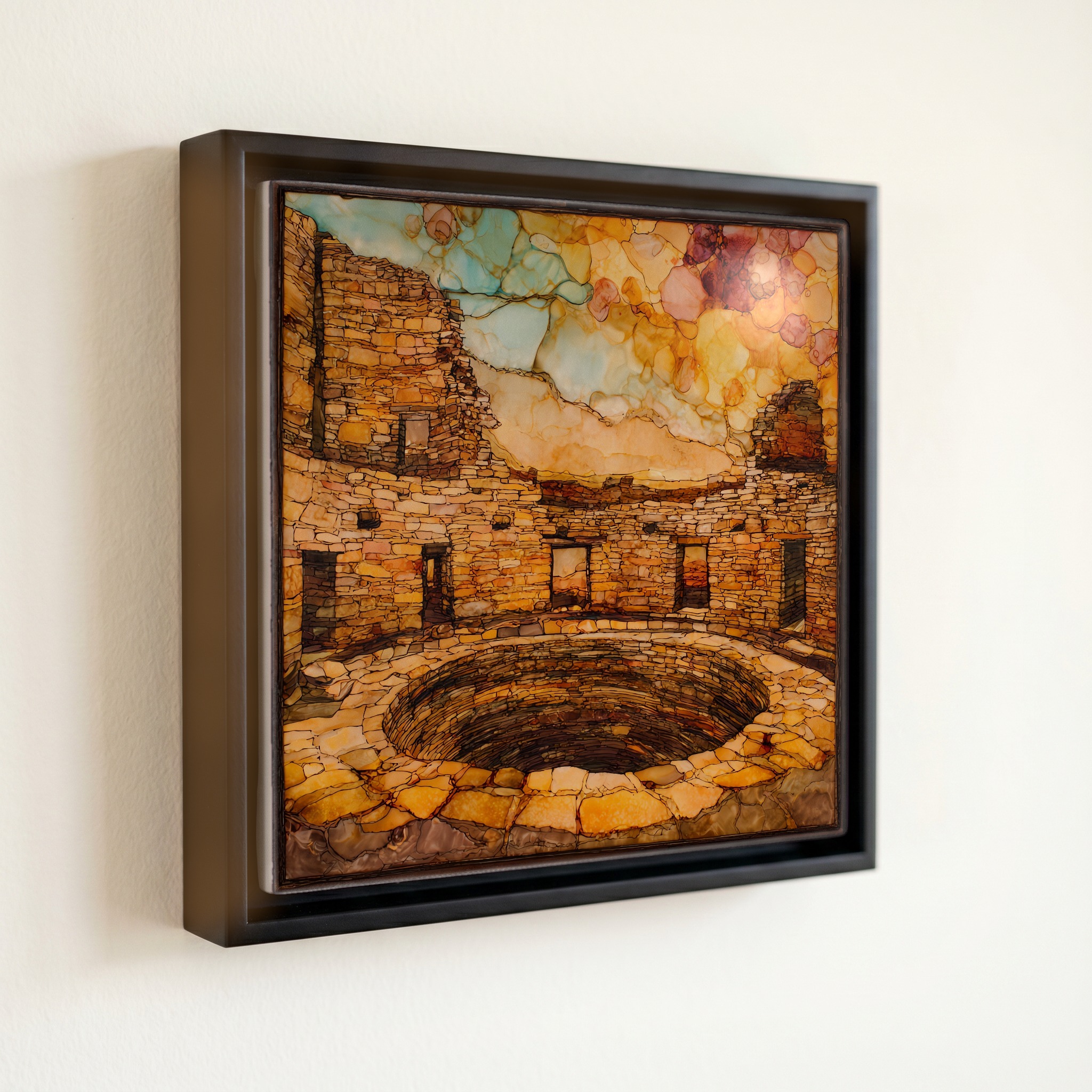
Above the linens, in a slim black surround.
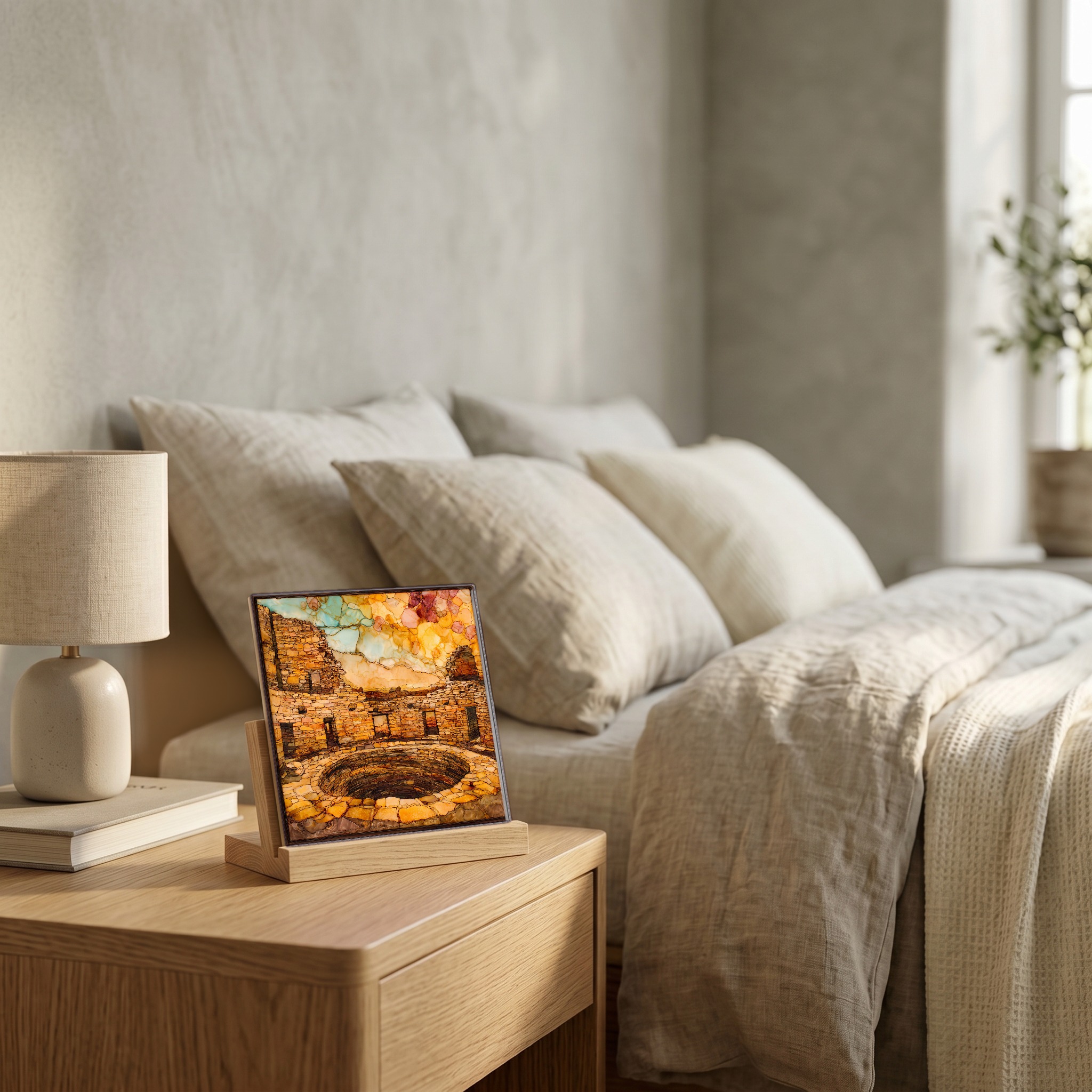
On the nightstand, on a light oak stand.
On a picture ledge, where the light comes in.
a note from the studio

A small pueblo on the Great Sage Plain, the kind of road that turns to dirt before the gate. Forty rooms above ground, eight kivas, and a great kiva sunk underground, built around 1090 and repainted in geometric murals across five layers of plaster. People lived here for a hundred and sixty-five years. They kept coming back, kept building higher, kept painting over the same walls. It sits about a hundred miles north of Chaco, near the northern edge of where the old roads ran. The BLM keeps it quietly. Most days the road in is empty.
from the studio
shown in a slim black floating frame · 6 × 6 in
— bring it home

Lowry Pueblo great kiva Four Corners Ceramic Art Tile, on ceramic.

Each tile is finished by hand in our Knoxville studio. Artwork is slowly infused into the ceramic surface under high heat and pressure, and rests beneath a thin glossy finish. The colour lives in the surface, not on top of it.

What kind of piece?
One tile — square or rectangle.
How big?
the popular one — counter, shelf, nightstand
6 × 6 in · 15 cm · 1.6 lb
Surface finish
A clear glossy finish — the artwork reads as if under resin. Ideal for show-pieces and framed wall art.
How it sits
A hidden cleat — sits ¼″ proud of the wall.
$58
Hand-finished and shipped from our studio at the foot of the Smokies. On your wall in about ten days.
size
6 × 6 in
15 cm
weighs
1.6 lb
solid in the hand
surface
ceramic, hand-finished
art rests beneath a thin glossy finish
from
Knoxville, TN
our family studio, at the foot of the Smokies
— start a Coaster Set

Pick any four 4-inch tiles — National Parks you've been to, a Smokies set, the four seasons of one place. $ for a set of , cork-backed, ready to live on the table.
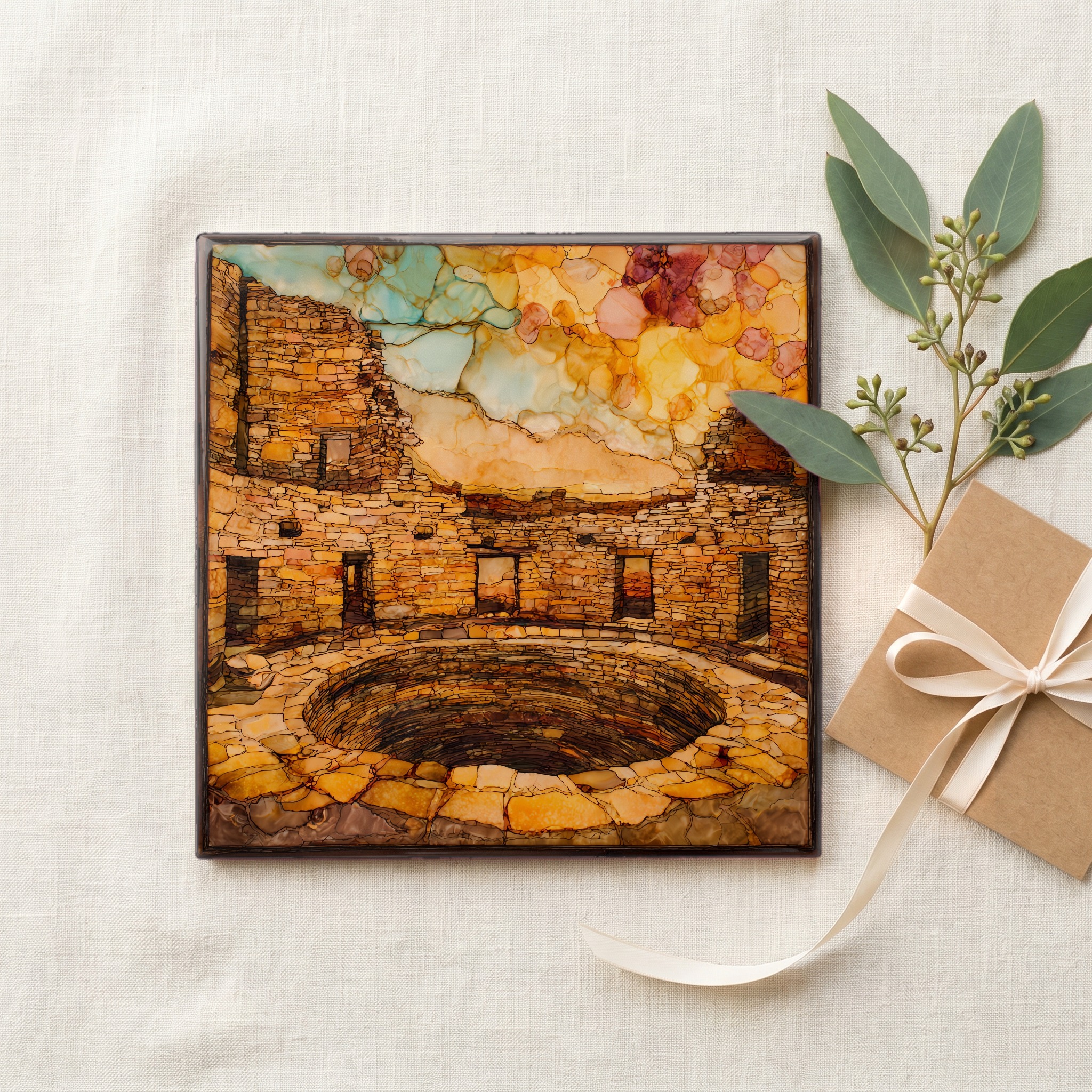
comes gift-ready
comes gift-ready

Each tile ships in a kraft box, tied with cream ribbon, with a handwritten note from the studio if you'd like to add one.
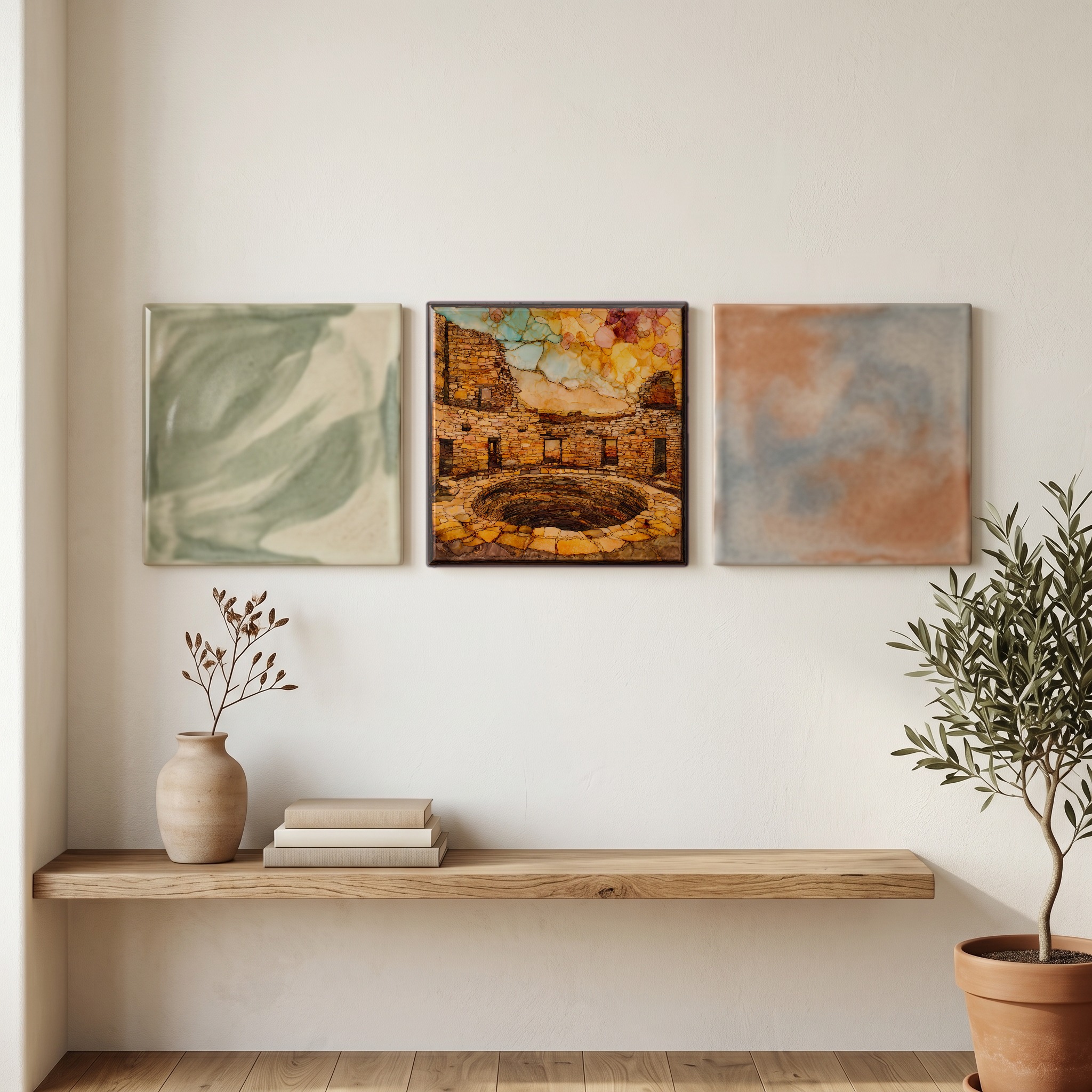
or build a grouping
or build a grouping

Three or five different vistas, hung together — a chapter of places you've been, or want to go.

about Lowry Pueblo great kiva Four Corners Ceramic Art Tile

The place, in three passes.

A little of what's known, in case you fall down the rabbit hole — or want to go see it yourself.
the place

Lowry Pueblo sits on the Great Sage Plain in Montezuma County, Colorado, about forty-five miles northwest of Cortez and near the small farming town of Pleasant View. The site is a three-acre cluster of forty rooms, eight kivas, and one great kiva, built between roughly 1060 and 1170 AD on top of the remains of an earlier pithouse village. It is one of the northernmost large pueblos with Chaco-style architecture, sitting about a hundred miles north of Chaco Canyon. The Bureau of Land Management has held the site for decades, and Lowry was incorporated into Canyons of the Ancients National Monument when that monument was established in 2000. The nearest interpretive center is the Anasazi Heritage Center in Dolores.

the stone

The great kiva at Lowry was built around 1090 AD, sunk into the earth, with murals re-plastered and re-painted across at least five successive layers. Excavations led by Paul Sidney Martin of the Field Museum, conducted over five seasons between 1930 and 1934, exposed the geometric patterns and the post sockets that once carried the roof. A great kiva at this latitude is unusual; most kivas at this scale sit closer to Chaco Canyon, where the architectural form first cohered. The pueblo above ground rose to three stories at its peak. The walls are masonry of shaped sandstone, the joints chinked with smaller stones, the same construction logic that runs through Mesa Verde and Hovenweep.

the visit

Access is by gravel and dirt road from Pleasant View, rough after rain. The site is open during daylight hours, no fee, and the BLM maintains a small picnic shelter and a pit toilet on the grounds. Lowry has been a National Historic Landmark since 1964 and a unit of Canyons of the Ancients National Monument since 2000. Interpretation lives at the Anasazi Heritage Center in Dolores, southeast of the site. Spring and autumn are the steadier seasons; summer afternoons bring storm cells across the plain, and winter snow can close the access road for stretches. The painted kiva is sheltered by a small ramada, and visitors are asked to keep their hands off the walls.

where
United States · Montezuma County, Colorado
within
Canyons of the Ancients National Monument
position
37.5845° N · 108.9197° W
the neighborhood

What's nearby.

A handful of named places within an hour's walk or short drive. Some we've already painted; some we will.
60 km S
Mesa Verde National Park
Ancestral Puebloan cliff dwellings
25 km W
Hovenweep National Monument
Ancestral Puebloan stone towers
40 km SE
Anasazi Heritage Center
Ancestral Puebloan museum
30 km S
Sand Canyon Pueblo
Ancestral Puebloan pueblo
40 km SE
Cortez
Four Corners gateway town
N
Lowry Pueblo great kiva Four Corners Ceramic Art Tile
Mesa Verde National Park
Hovenweep National Monument
Anasazi Heritage Center
Sand Canyon Pueblo
Cortez
common questions

What people ask.

A few questions we get about Lowry Pueblo great kiva Four Corners Ceramic Art Tile — and about bringing the piece home.
about the place

Lowry Pueblo sits on the Great Sage Plain in Montezuma County, southwestern Colorado, about forty-five miles northwest of Cortez and near the small town of Pleasant View. It is part of Canyons of the Ancients National Monument, managed by the Bureau of Land Management.

The great kiva is an underground ceremonial chamber built around 1090 AD, large enough to gather a community of forty to a hundred people. Its plastered walls were repainted in geometric murals across at least five successive layers, making it one of the most-documented painted kivas in the Four Corners region.

Ancestral Puebloan farmers built Lowry beginning around 1060 AD, on top of an earlier pithouse village. The community expanded the structure twice, around 1103 and 1120, eventually reaching forty rooms three stories high, eight kivas, and one great kiva. They occupied the site for roughly a hundred and sixty-five years before leaving in the early 1200s.

Lowry sits about a hundred miles north of Chaco Canyon and shares enough architectural detail with Chaco-era sites, including the great kiva, the masonry style, and the multi-story planning, to be read as part of the late Chacoan network. It is one of the northernmost large pueblos with that architectural signature.

The site is open during daylight hours every day, with no entry fee. Spring and autumn are the steadier seasons; the access road can be impassable during winter snow or after summer storms. The painted kiva is protected by a ramada, and there is a small picnic shelter and a pit toilet on the grounds.

Yes. Lowry Pueblo was designated a National Historic Landmark on July 19, 1964, and added to the National Register of Historic Places on October 15, 1966. The site was incorporated into Canyons of the Ancients National Monument when that monument was established in 2000.

Paul Sidney Martin of the Field Museum in Chicago led excavations at Lowry over five summer seasons from 1930 to 1934. His team exposed the great kiva, recorded the layers of painted plaster, and mapped the surface room blocks. The Field Museum still holds much of the recovered material.

about the piece in your home

It has been a meaningful gift for customers who grew up around Mesa Verde, Cortez, and the Canyons of the Ancients, and for hikers who have spent time in southwestern Colorado's high desert. A Small or Medium in glossy reads as a framed piece in a study or hallway. A Coaster with a handwritten studio note travels well.

The piece carries deep ochre, indigo, and dust-red tones in the studio's stained-glass linework, so it sits well in Southwestern, Desert-modern, and Earth-tone Maximalist rooms. It also reads against a clean white wall in a more minimalist setting where the colour is allowed to be the focal point.

Yes. Hand-finished ceramic and stained-glass references are both running in current Southwestern and Desert-modern interior schemes, alongside warm plaster walls, wool textiles, and aged wood. A Large above a credenza or a 4-tile Mural over a low bench grounds the room without crowding it.

For a console or a reading bench, a single Large in glossy reads at the right scale. Above a sofa, a 4-tile Mural or a 9-tile Mural carries the wall without feeling lonely. Most customers go up one size from their first instinct.

Yes, with the Dura Satin or Matte finish. Both are scratch-resistant and stand up to moisture, steam, and the occasional splash. The colour lives in the surface, not in a coating, so cleaning leaves the artwork untouched. The glossy finish is for show-pieces and framed wall art, not wet rooms.

A soft microfibre cloth and water are enough. For stubborn marks on a Dura Satin or Matte tile, a drop of mild dish soap is fine. The colour is slowly infused into the ceramic surface under high heat and pressure, so it does not lift or fade with normal cleaning.

Yes. Every WenderVista piece is original work, hand-finished in our Knoxville studio. We do not license, reprint, or carry stock images. Reid Wender is the curator and the eye behind every place that enters the atlas, including this great kiva at Lowry Pueblo.

if this one stayed with you

A few you might also love.

Hand-picked by the eye that found Sorapis. Same air, same kind of quiet.