Wender·Vista
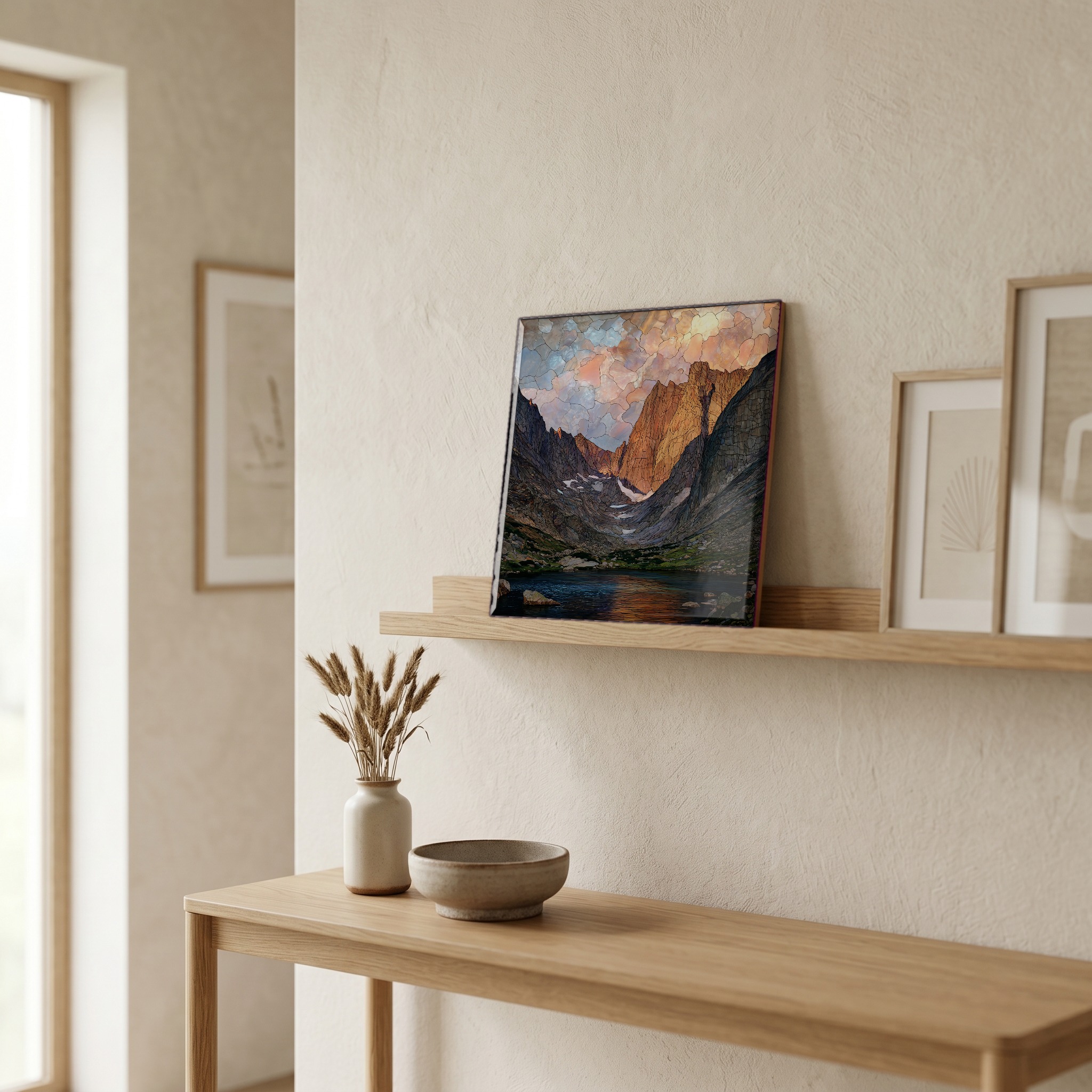
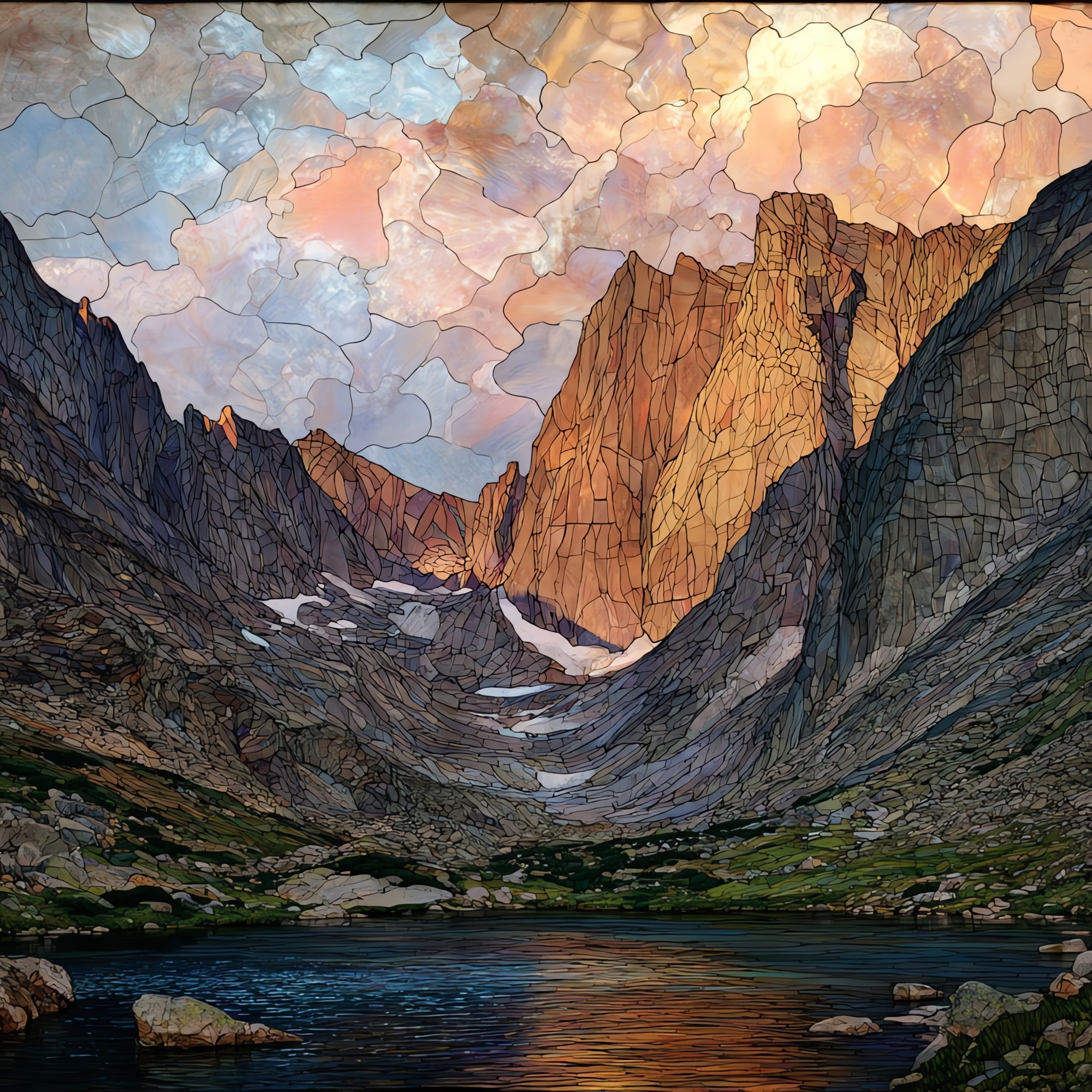
Longs Peak Diamond face Rocky Mountain National Park Ceramic Art Tile
shown on ceramic, 12-inch tileColorado · United States
above Chasm Lake, in Rocky Mountain National Park

Longs Peak Diamond face Rocky Mountain National Park Ceramic Art Tile

— the wall the morning finds first.

Where it lives

Not only on a wall.

A small tile on the nightstand catching the morning. A larger one above the fire. Yours, wherever you spend the slow hours.
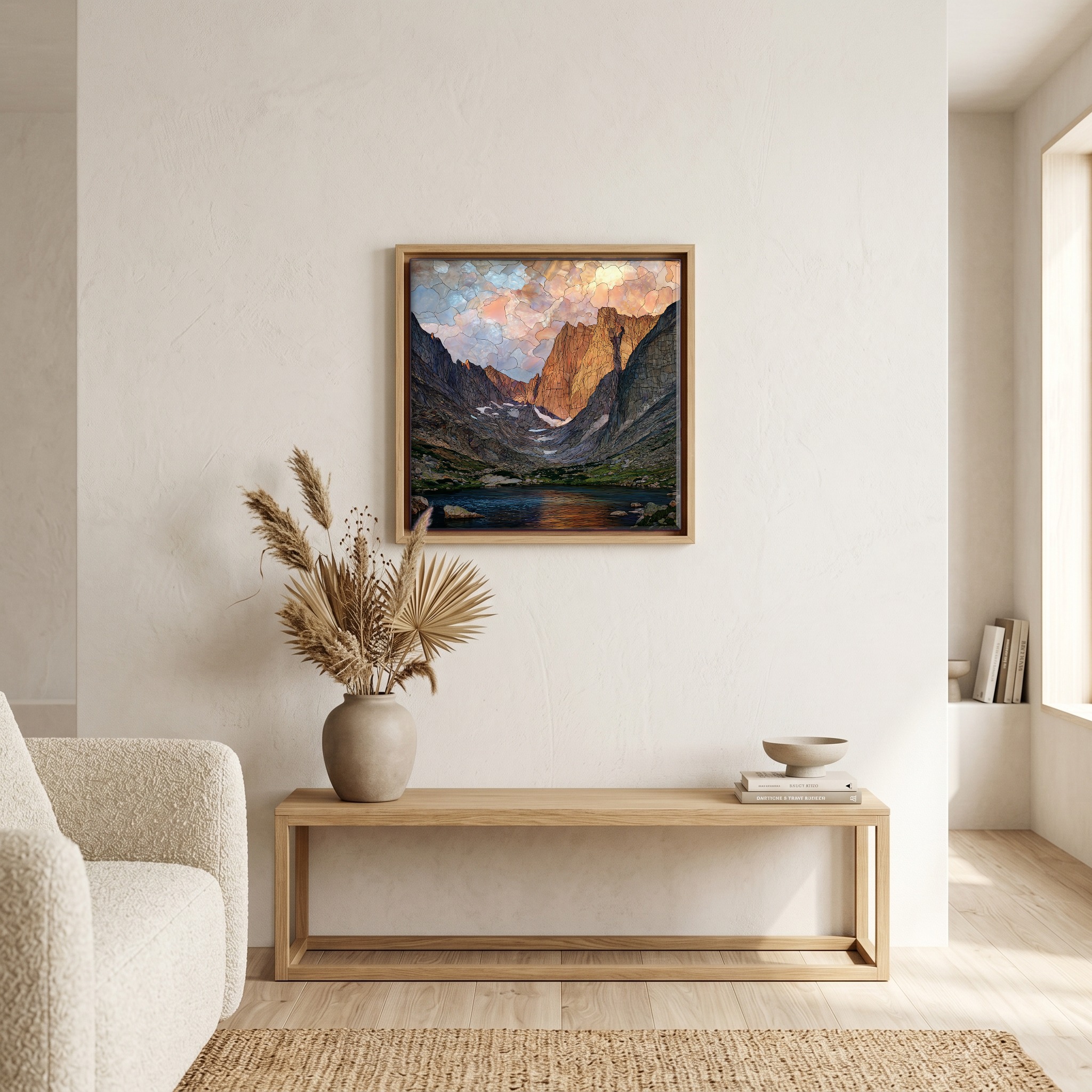
Above the bench, in a warm oak surround.
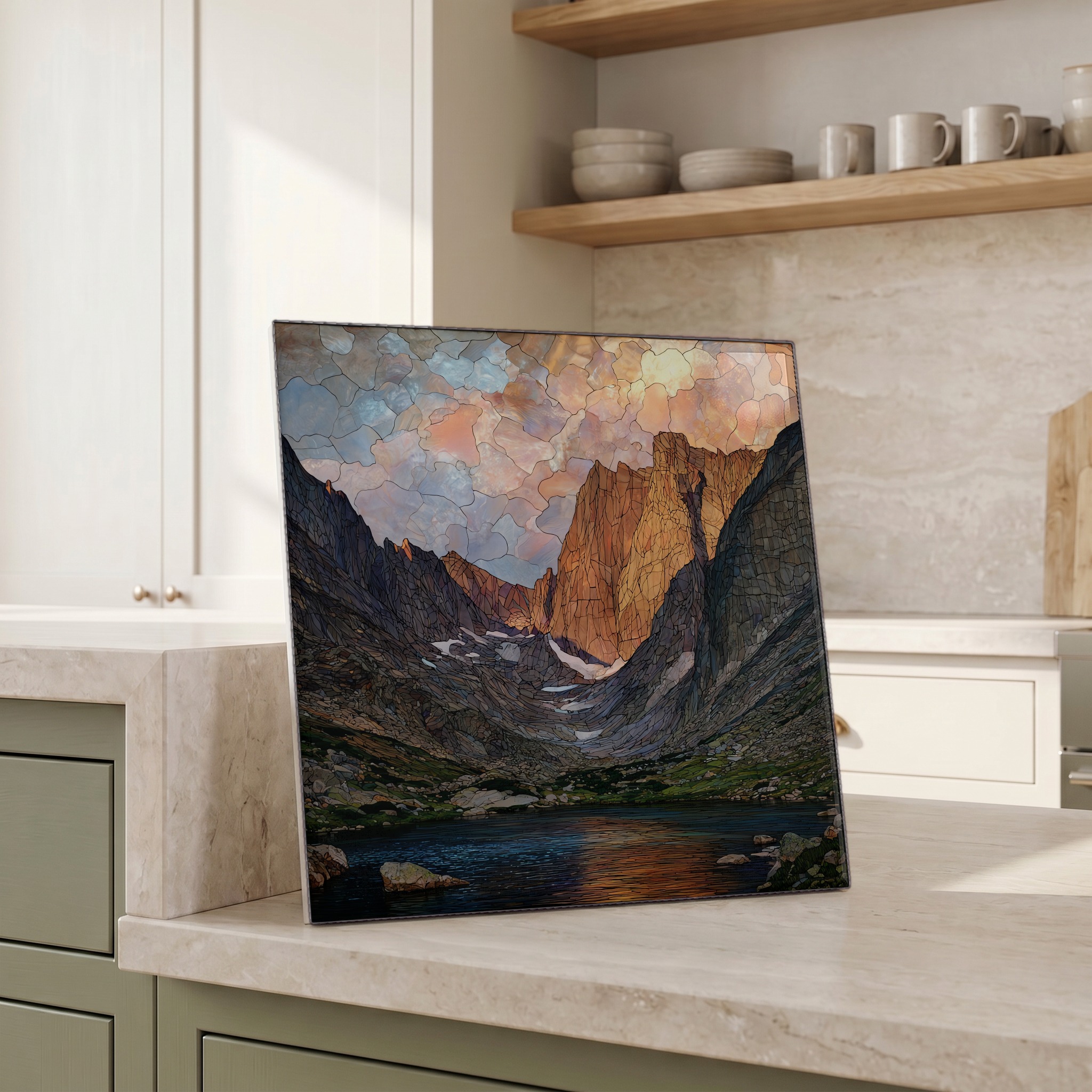
Beside the kettle, propped on the counter.
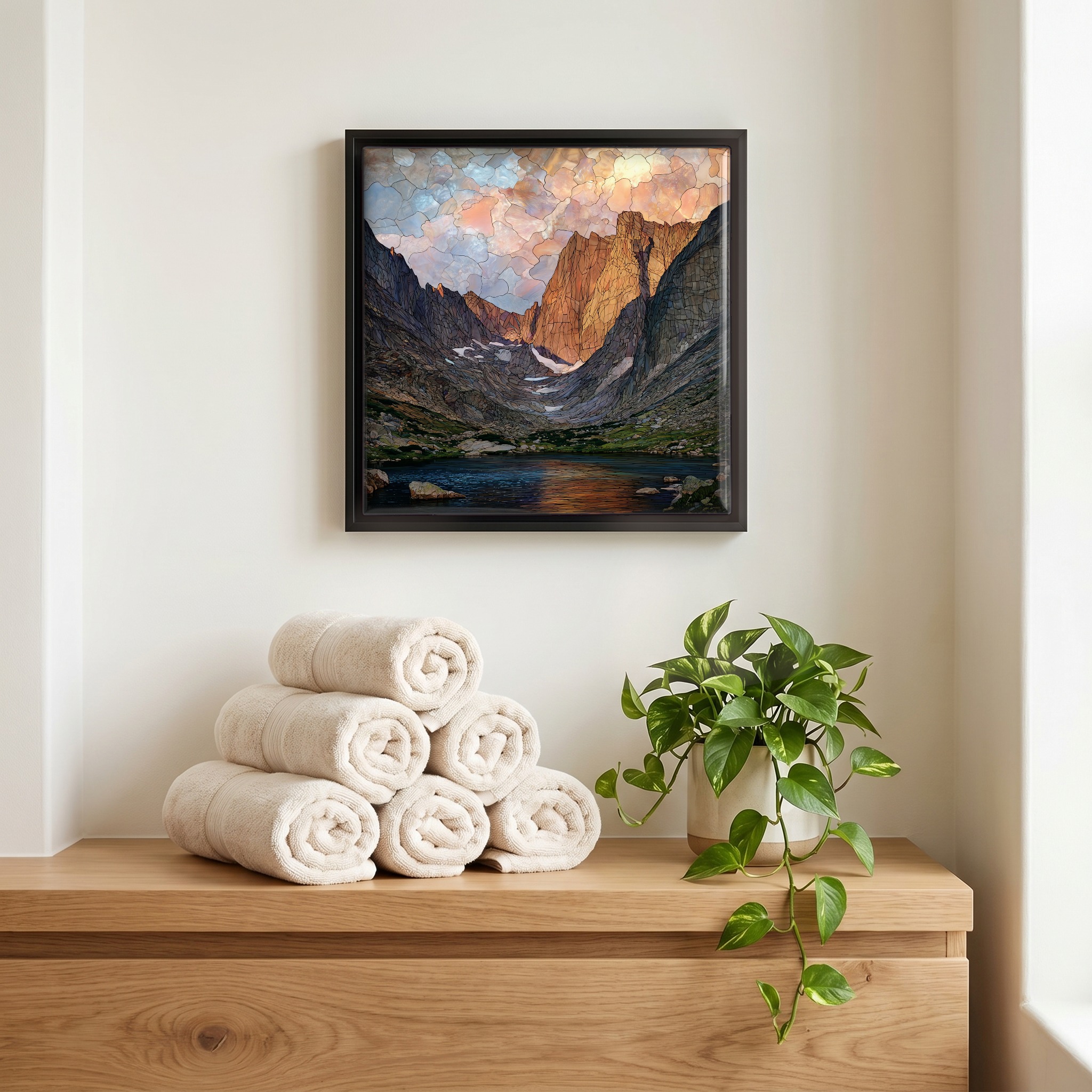
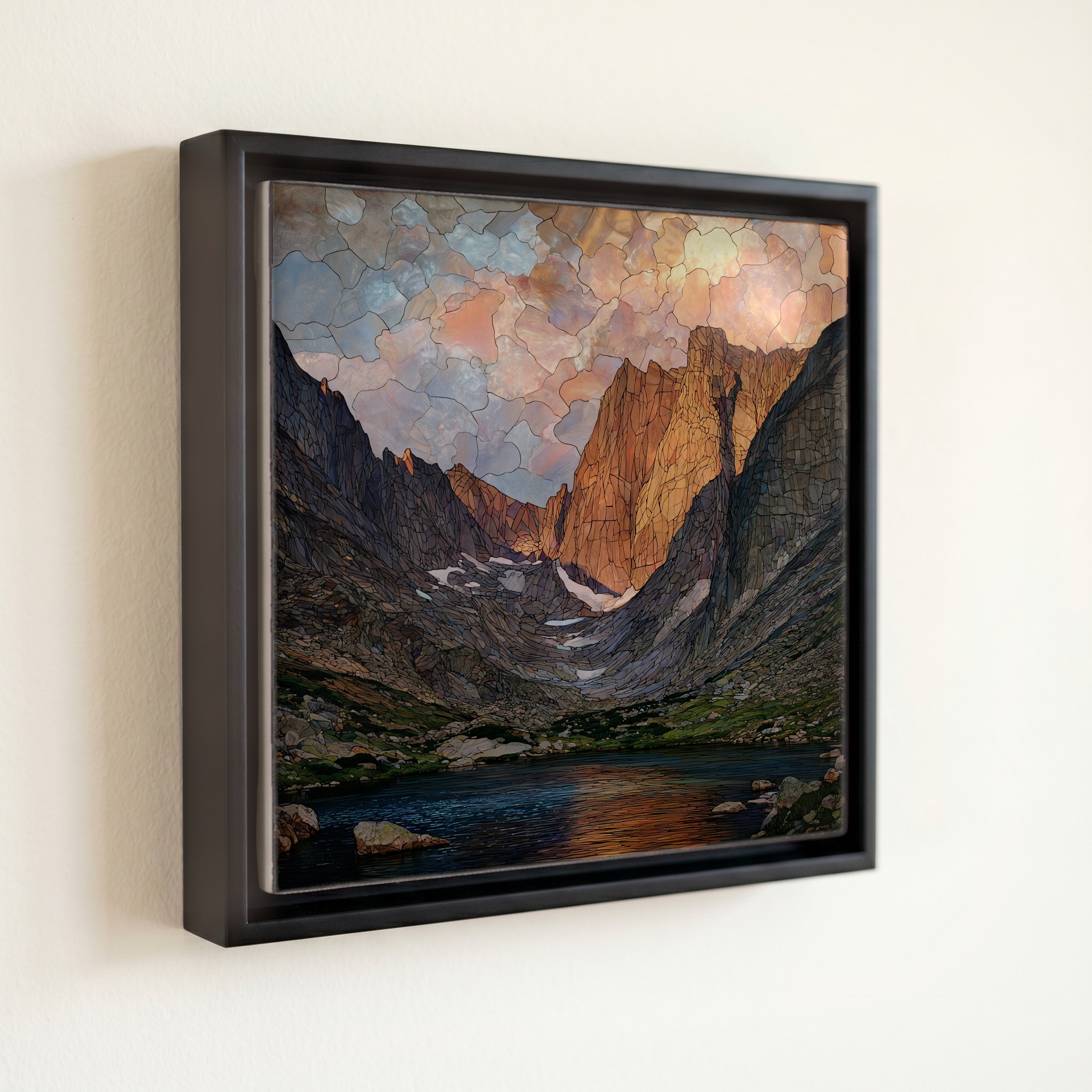
Above the linens, in a slim black surround.
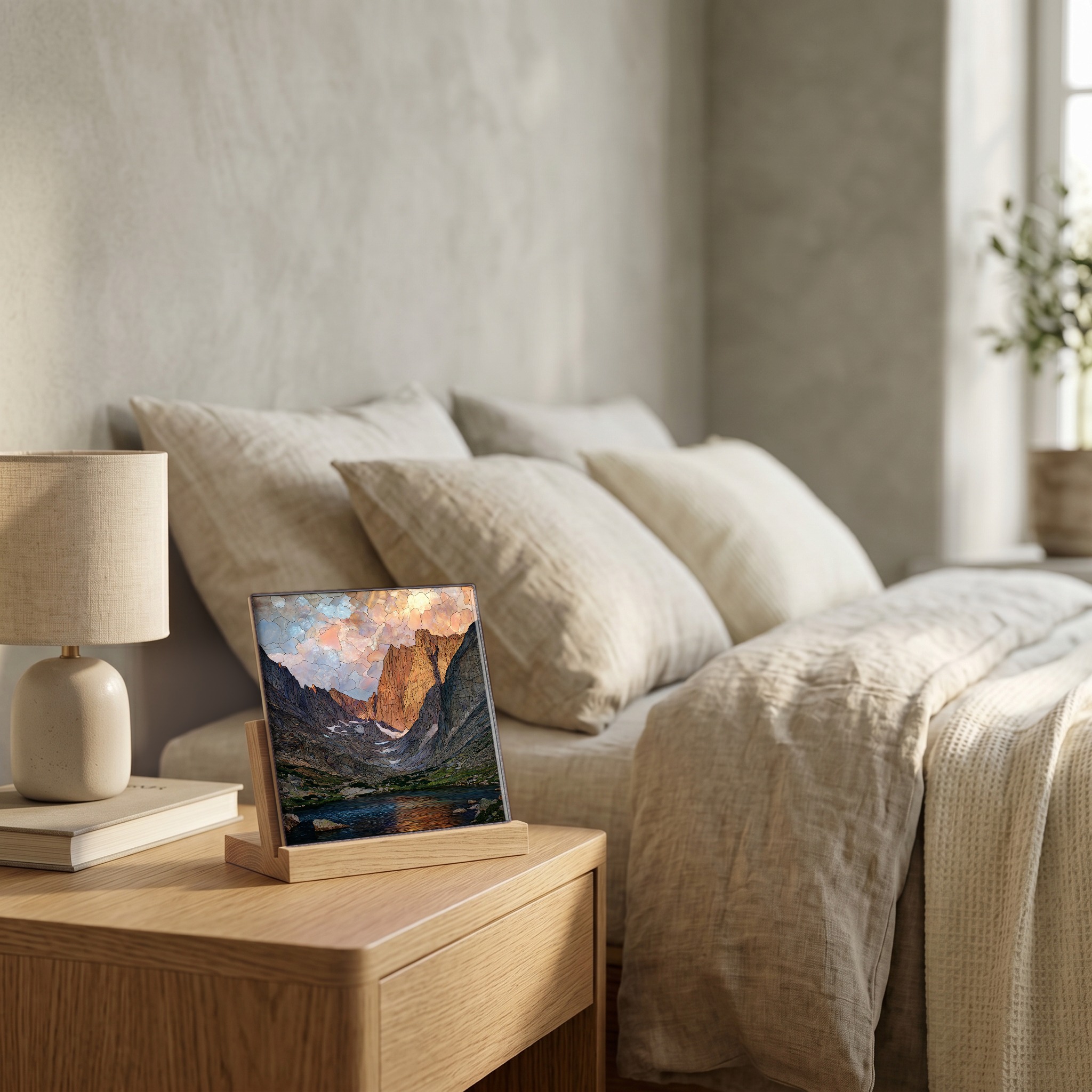
On the nightstand, on a light oak stand.
On a picture ledge, where the light comes in.
a note from the studio

A thousand-foot wall of pale granite at the head of Chasm Lake. The east face of Longs Peak, set back behind a ledge climbers call Broadway. The Diamond catches the morning before the valley does. A few minutes of pink and gold on cold rock at fourteen thousand feet. Climbers come in July and August when the snow has gone and the route is dry. From the lake below, the wall reads as a single sheet, no obvious break. The first ascent was in August 1960, by two climbers who took three days. It still looks the way it did then.
from the studio
shown in a slim black floating frame · 6 × 6 in
— bring it home

Longs Peak Diamond face Rocky Mountain National Park Ceramic Art Tile, on ceramic.

Each tile is finished by hand in our Knoxville studio. Artwork is slowly infused into the ceramic surface under high heat and pressure, and rests beneath a thin glossy finish. The colour lives in the surface, not on top of it.

What kind of piece?
One tile — square or rectangle.
How big?
the popular one — counter, shelf, nightstand
6 × 6 in · 15 cm · 1.6 lb
Surface finish
A clear glossy finish — the artwork reads as if under resin. Ideal for show-pieces and framed wall art.
How it sits
A hidden cleat — sits ¼″ proud of the wall.
$58
Hand-finished and shipped from our studio at the foot of the Smokies. On your wall in about ten days.
size
6 × 6 in
15 cm
weighs
1.6 lb
solid in the hand
surface
ceramic, hand-finished
art rests beneath a thin glossy finish
from
Knoxville, TN
our family studio, at the foot of the Smokies
— start a Coaster Set

Pick any four 4-inch tiles — National Parks you've been to, a Smokies set, the four seasons of one place. $ for a set of , cork-backed, ready to live on the table.
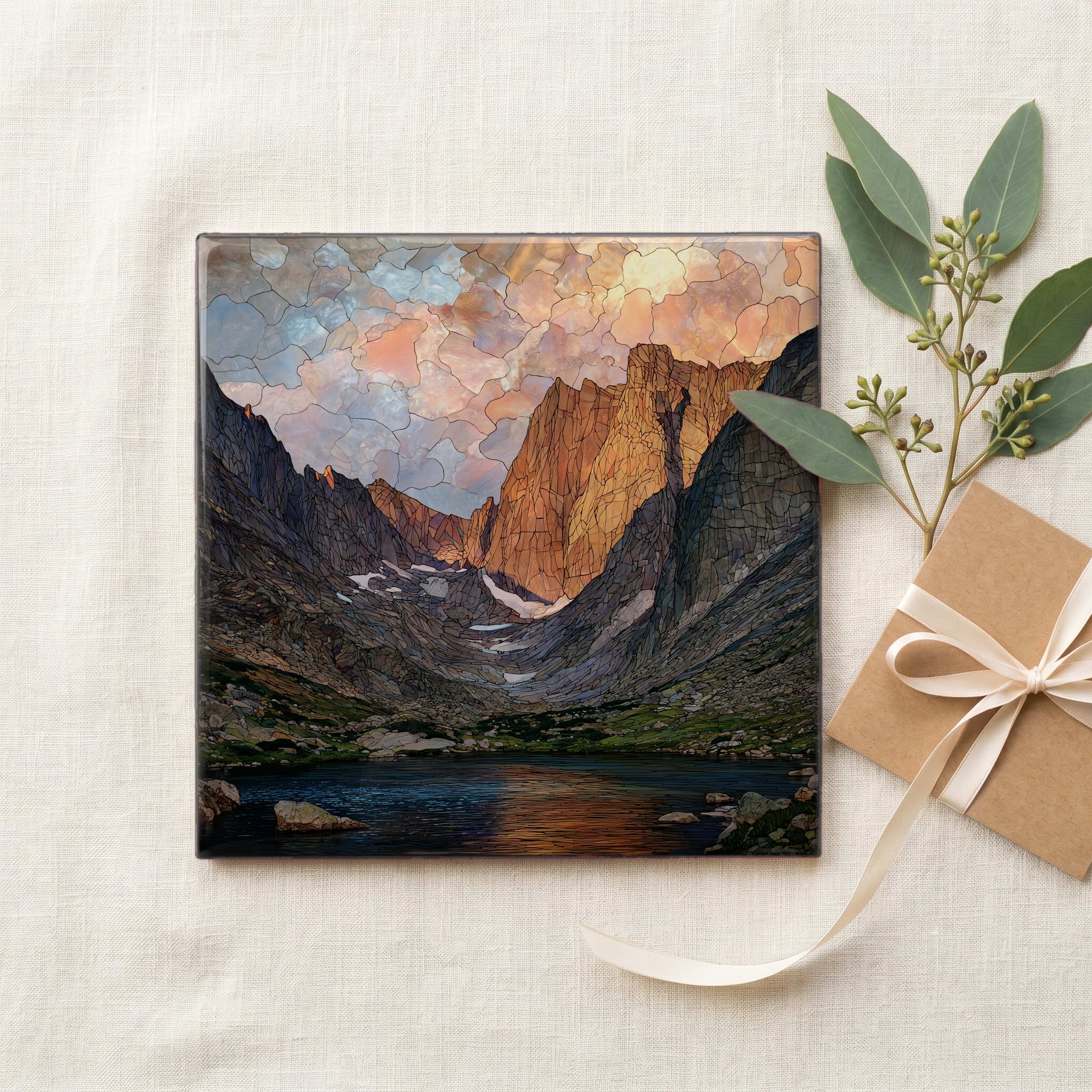
comes gift-ready
comes gift-ready

Each tile ships in a kraft box, tied with cream ribbon, with a handwritten note from the studio if you'd like to add one.
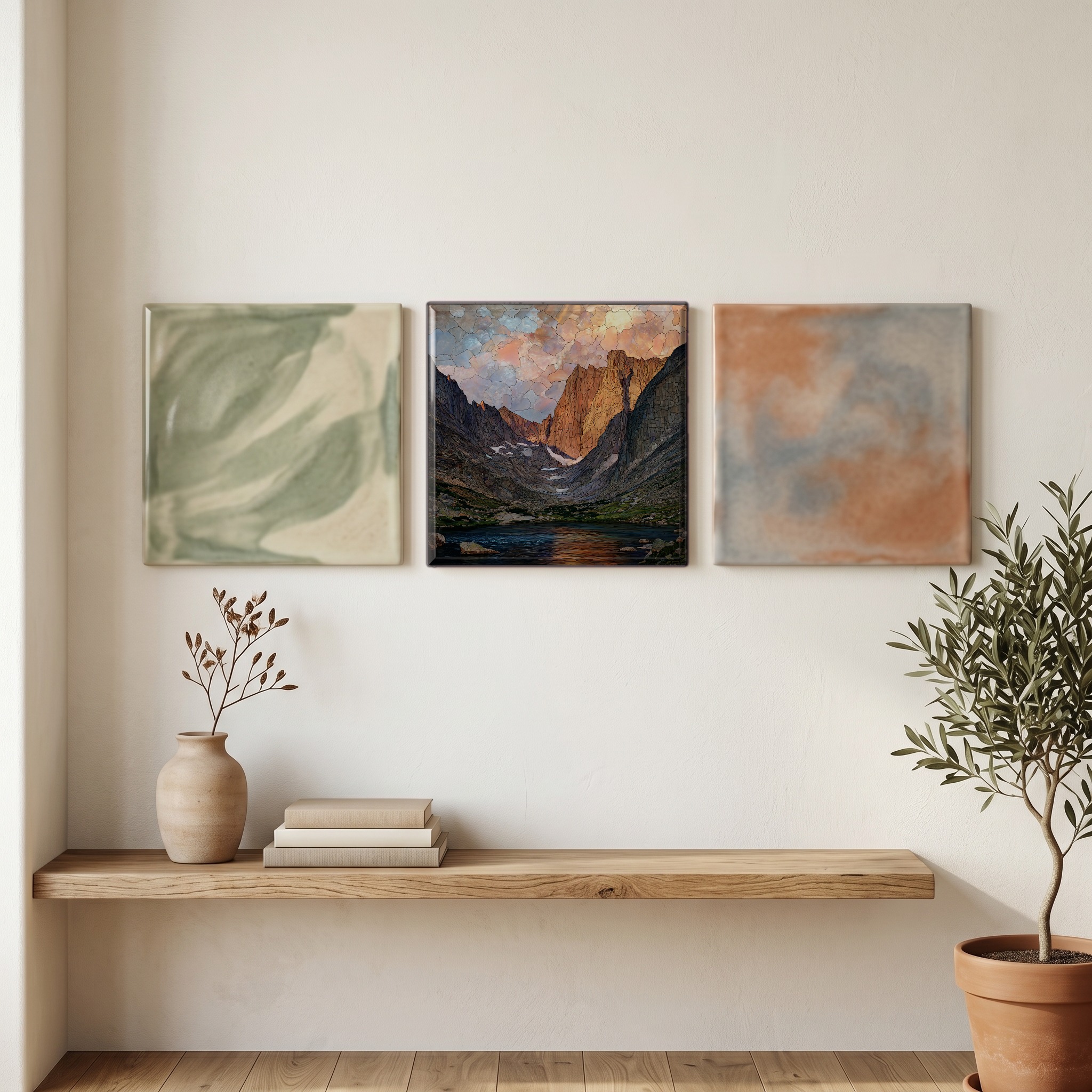
or build a grouping
or build a grouping

Three or five different vistas, hung together — a chapter of places you've been, or want to go.

about Longs Peak Diamond face Rocky Mountain National Park Ceramic Art Tile

The place, in three passes.

A little of what's known, in case you fall down the rabbit hole — or want to go see it yourself.
the place

Longs Peak rises to 14,259 feet in Rocky Mountain National Park, the highest summit in the park and the northernmost fourteener in the Rocky Mountains. The Diamond is the upper east face, a near-vertical wall of Silver Plume granite that rises roughly 1,000 feet from a ledge called Broadway to the summit ridge. The face sits above Chasm Lake at about 11,760 feet, reached by a 4.2-mile trail from the Longs Peak Trailhead off Colorado Highway 7, about ten miles south of Estes Park. The mountain is named for Stephen Harriman Long, the army explorer who recorded it during the 1820 Yellowstone Expedition along the South Platte River.

the stone

The Diamond is Silver Plume granite, a pale intrusive rock about 1.4 billion years old that makes up much of the Longs Peak massif. The face presents as a single near-uninterrupted sheet, around 1,000 feet tall, broken only by thin cracks and the occasional dihedral. The first ascent was made on August 1-3, 1960, by David Rearick and Bob Kamps, climbing the line now known as D1. Before 1960 the National Park Service forbade technical climbing on the face. The rock is known for clean edges and reliable cracks, though weather above 13,000 feet keeps the climbing window short. Most ascents go in five to ten pitches, with parties bivouacking on Broadway or at Chasm View.

the dawn

The Diamond faces east, and at first light the granite turns the colour of rusted copper for about ten minutes before the rest of the cirque catches up. The face is roughly 1,000 feet of high-angle rock above 13,000 feet of elevation, so the sun reaches it long before it reaches Chasm Lake below. Climbers on the wall describe the moment as the rock going warm under the hands. Photographers shoot from the Chasm Lake outlet or from the meadows near Peacock Pool, an hour's walk in. The alpenglow window is short, twenty minutes around the equinoxes, and longest in late summer, when storm-clear mornings reliably follow afternoon thunder.

where
United States · Boulder County, Colorado
within
Rocky Mountain National Park
elevation
4,346 m · 14,259 ft
position
40.2549° N · 105.6160° W
the neighborhood

What's nearby.

A handful of named places within an hour's walk or short drive. Some we've already painted; some we will.
1 km SE
Mount Meeker
thirteener
2 km E
Chasm Lake
alpine lake
1 km NW
Pagoda Mountain
thirteener
6 km E
Twin Sisters Peaks
ridge
9 km NE
Lily Lake
small lake
14 km N
Estes Park
gateway town
N
Longs Peak Diamond face Rocky Mountain National Park Ceramic Art Tile
Mount Meeker
Chasm Lake
Pagoda Mountain
Twin Sisters Peaks
Lily Lake
Estes Park
common questions

What people ask.

A few questions we get about Longs Peak Diamond face Rocky Mountain National Park Ceramic Art Tile — and about bringing the piece home.
about the place

The Diamond is the upper east face of Longs Peak, in Rocky Mountain National Park, Colorado. It rises about 1,000 feet from a ledge called Broadway to near the summit at 14,259 feet. The base sits above Chasm Lake at about 11,760 feet.

The face takes its name from its rough four-sided shape, which reads like a cut diamond from the floor of the cirque. The name has been used by climbers since at least the 1950s, before the first technical ascent in August 1960.

David Rearick and Bob Kamps made the first ascent over three days, August 1-3, 1960, climbing the line now known as D1. The National Park Service had forbidden technical climbing on the face until earlier that year.

Hike about 4.2 miles from the Longs Peak Trailhead off Colorado Highway 7, south of Estes Park. The trail climbs roughly 2,400 feet through subalpine forest and high meadows to the lake at about 11,760 feet, directly under the face.

Late June through September, before snow returns. The granite catches alpenglow for about ten minutes at sunrise. Afternoon thunderstorms are common in July and August, so most visitors are on the trail before dawn and off the upper terrain by noon.

Silver Plume granite, a pale intrusive rock about 1.4 billion years old that makes up much of the Longs Peak massif. The face presents as a near-uninterrupted sheet broken by thin cracks and shallow corners.

Longs Peak rises to 14,259 feet (4,346 m), the highest summit in Rocky Mountain National Park and the northernmost fourteener in the Rocky Mountains. The Diamond accounts for roughly the top thousand feet of the east side.

about the piece in your home

It's been a meaningful gift for our customers with ties to Rocky Mountain National Park. The Diamond is the part of the mountain climbers remember, the alpenglow on the granite at first light. A Medium or Large in a glossy finish carries the colour well; a Coaster or Small with a handwritten note from the studio suits a more personal exchange.

The piece reads well in Mountain-modern interiors and warm Minimalist rooms. Cool granite greys sit against alpenglow pinks. It also belongs in Alpine-modern and Earth-tone Maximalist spaces, where the saturated copper hour gives a room a single point of warmth.

Yes. Mountain-modern leans on stone textures, dawn-light palettes, and references to specific peaks rather than generic landscape. The Diamond reads as a named place, Rocky Mountain National Park's signature face, which gives the piece more weight in a room than a generic alpine print.

Above a standard sofa, a single Large reads well from across the room. For a wider wall, a 4-tile Mural carries the alpenglow across a longer field. Above a console table, a Medium or a Small works at conversational distance.

Yes, in our Dura Satin or Matte finish. Both are scratch-resistant and stand up to humidity and steam. The glossy finish is intended for framed wall pieces and is not recommended for vertical wet-area installation.

A microfibre cloth and water. No abrasive pads, no chemical cleaners. The colour lives in the ceramic surface beneath a thin protective finish and does not need to be polished or sealed.

Yes. The painting is original to Wender Studios, made for our atlas of places. Reid Wender, the studio's curator, chooses every place in the line. We do not license artwork from outside sources.

if this one stayed with you

A few you might also love.

Hand-picked by the eye that found Sorapis. Same air, same kind of quiet.