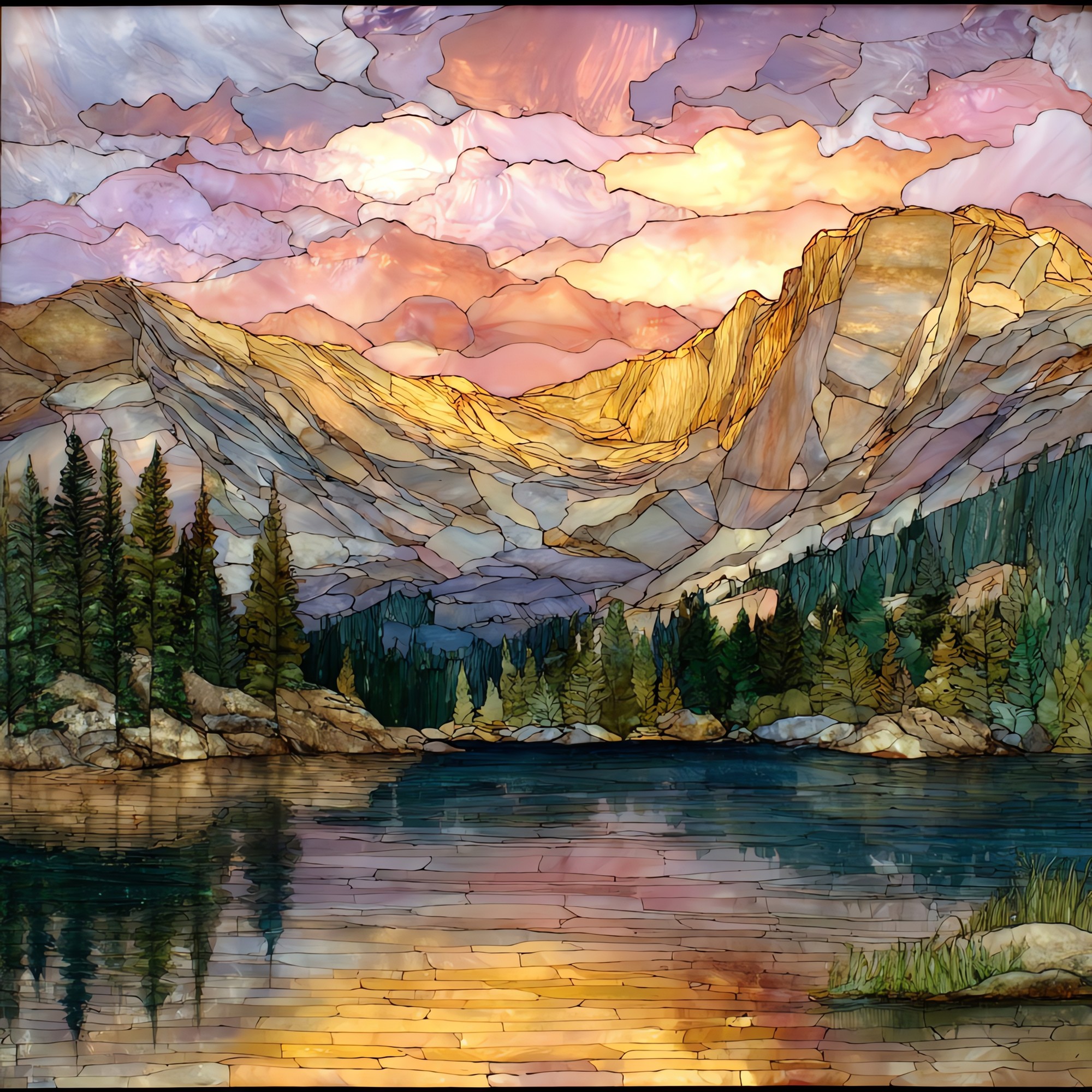
Longs Peak from Bear Lake Front Range Ceramic Art Tile
— — the dark face the dawn finds first.
Not only on a wall.

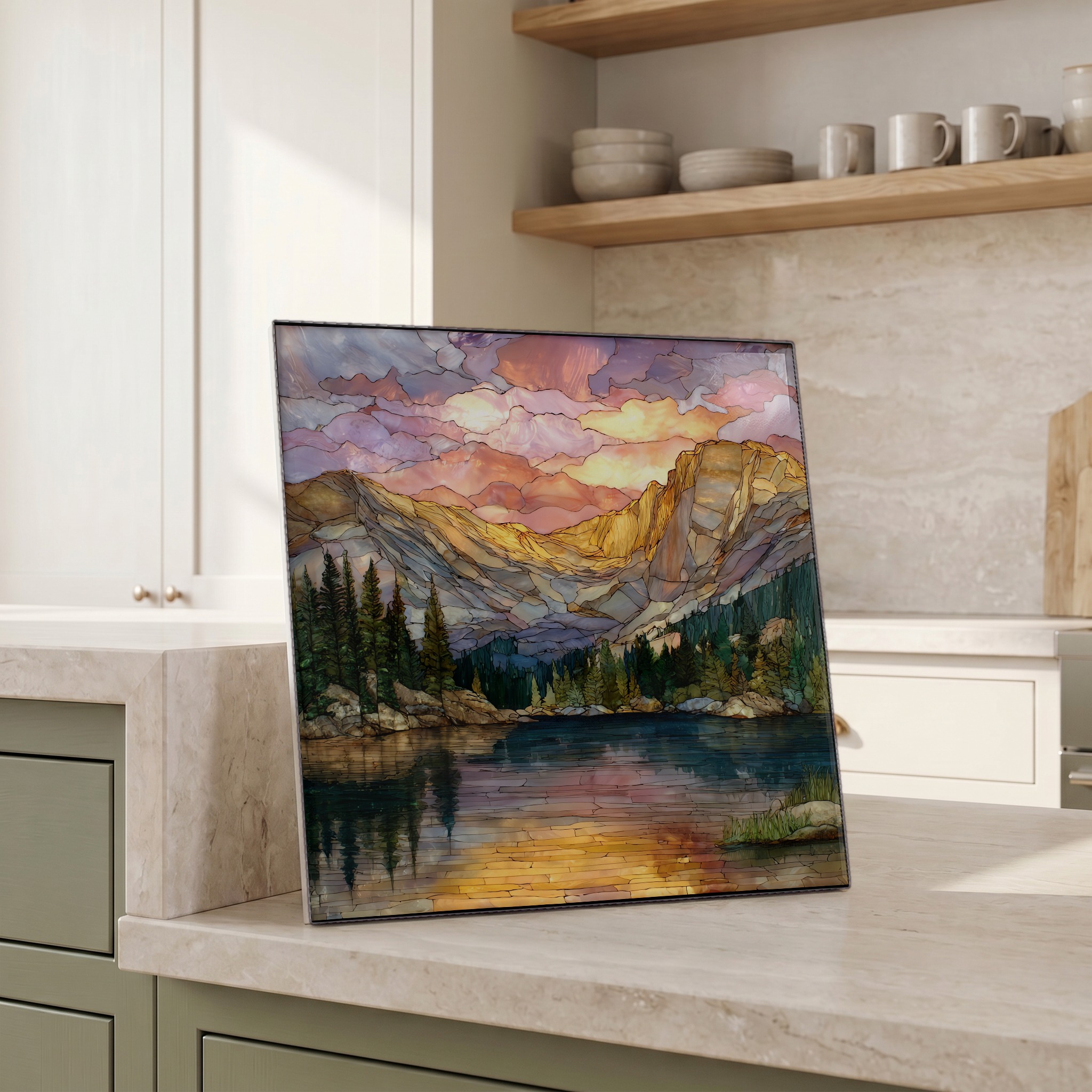



“A subalpine lake at 9,475 feet, ringed by lodgepole pine and quaking aspen. Longs Peak rises to the south, the highest peak in Rocky Mountain National Park at 14,259 feet. Its east face, the Diamond, glows in the first dawn light. The half-mile loop around Bear Lake is paved and walkable in twenty minutes. Visitors walk it once and then linger on a bench, watching the light move across the mountain.
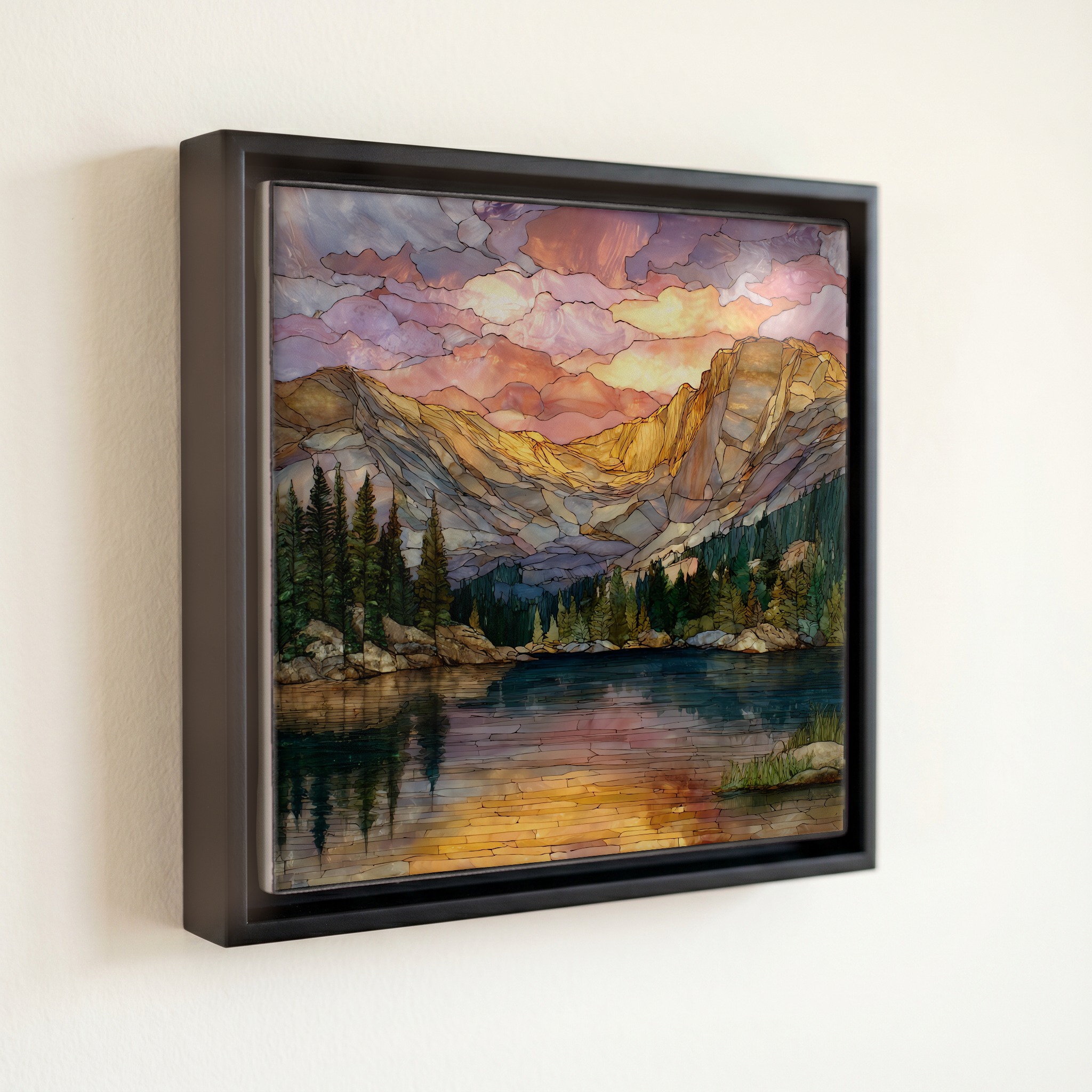
Longs Peak from Bear Lake Front Range Ceramic Art Tile, on ceramic.
Each tile is finished by hand in our Knoxville studio. Artwork is slowly infused into the ceramic surface under high heat and pressure, and rests beneath a thin glossy finish. The colour lives in the surface, not on top of it.
Pick any four 4-inch tiles — National Parks you've been to, a Smokies set, the four seasons of one place. $ for a set of , cork-backed, ready to live on the table.

Each tile ships in a kraft box, tied with cream ribbon, with a handwritten note from the studio if you'd like to add one.

Three or five different vistas, hung together — a chapter of places you've been, or want to go.
The place, in three passes.
Bear Lake sits at 9,475 feet on the east side of the Continental Divide, in Rocky Mountain National Park. The lake is at the terminus of Bear Lake Road, roughly nine miles in from the Beaver Meadows entrance station outside Estes Park. From its south shore, the view opens to Longs Peak on the southern skyline, the highest peak in the park at 14,259 feet and the northernmost fourteener in Colorado's Front Range. Hallett Peak and Flattop Mountain form the closer western wall above the lake. A free park shuttle runs from the Park-and-Ride to the Bear Lake trailhead in summer and reduces pressure on the small parking lot at the end of the road.
The east face of Longs Peak, called the Diamond, is a near-vertical wall of Silver Plume granite rising about 1,000 feet from Broadway Ledge to the summit. It was first climbed in 1960 by David Rearick and Robert Kamps, after years of debate over whether technical climbing on a national park's signature peak should be permitted. The Diamond now holds dozens of established routes and is one of the most photographed alpine walls in North America. From the Bear Lake area, the wall is visible as a dark vertical face below the summit ridge, especially at dawn when the rising sun catches its edges. The standard non-technical route, the Keyhole, gains nearly 5,000 feet over roughly fifteen miles round-trip and is rated Class 3.
Bear Lake Road is plowed to the lake year-round, making this one of the few alpine lake viewpoints in the Colorado Rockies reachable on foot in every season. Mid-June through mid-September brings the heaviest visitation, and Rocky Mountain National Park requires timed-entry permits for the Bear Lake corridor between late May and mid-October. Wildflowers in the surrounding meadows peak in July. Aspens along the Bear Lake Road corridor turn gold in the third week of September. Snow returns to the high country by early October and the lake freezes by late November, holding ice well into May. Longs Peak retains snow on its upper north and east faces into July.