Wender·Vista
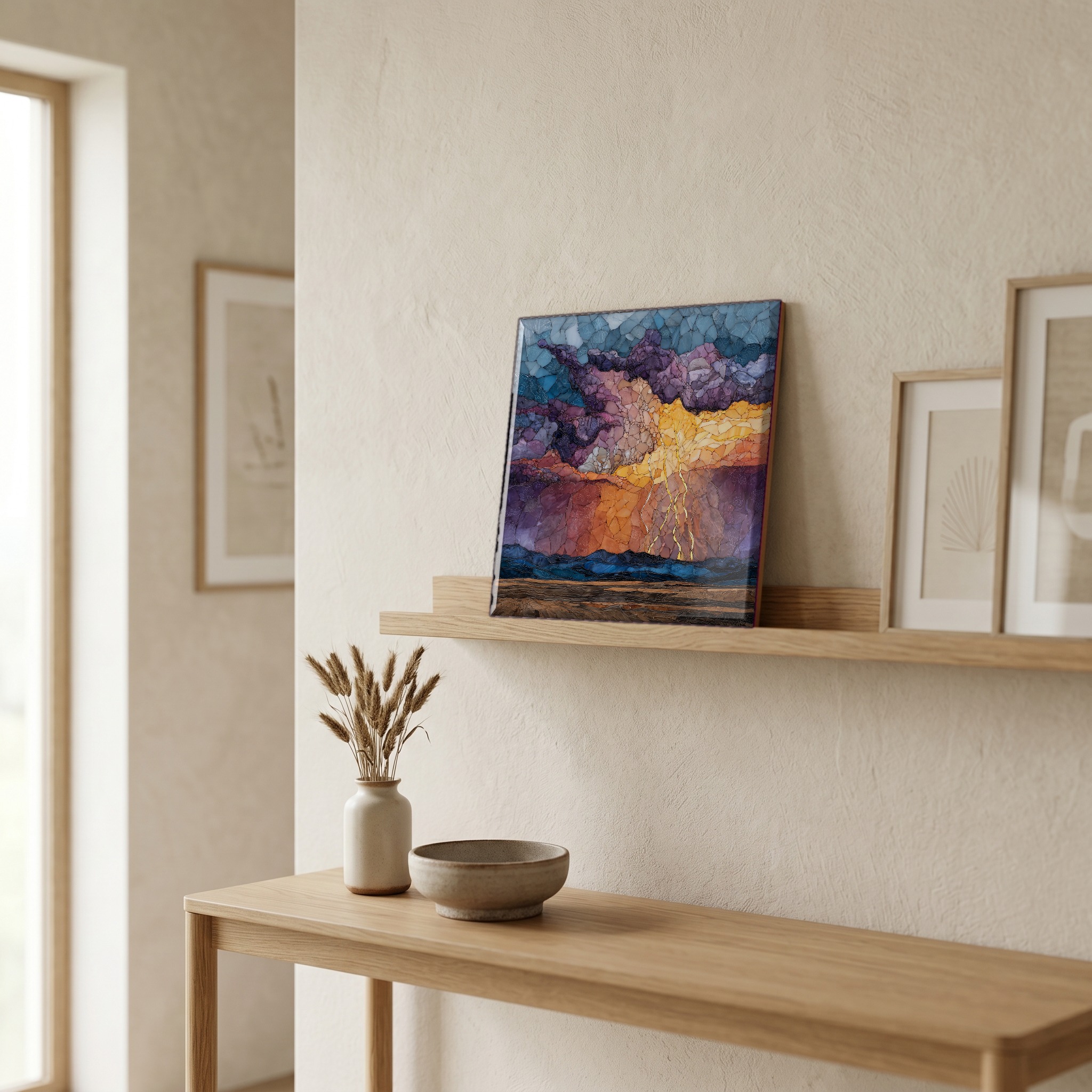
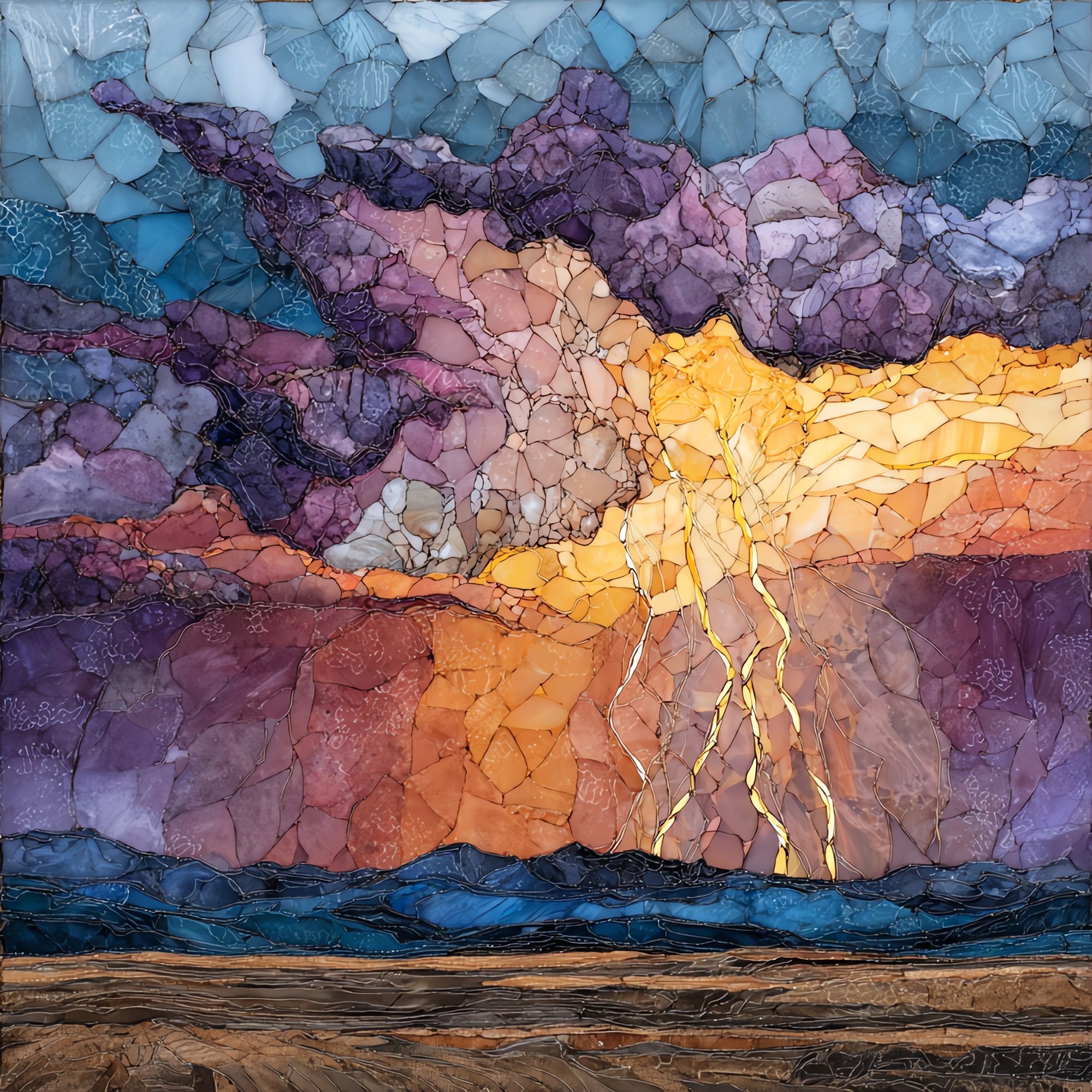
Lightning over the plains Ceramic Art Tile
shown on ceramic, 12-inch tileColorado · United States
the high plains east of the Front Range

Lightning over the plains Ceramic Art Tile

the white instant before the thunder catches up.

Where it lives

Not only on a wall.

A small tile on the nightstand catching the morning. A larger one above the fire. Yours, wherever you spend the slow hours.
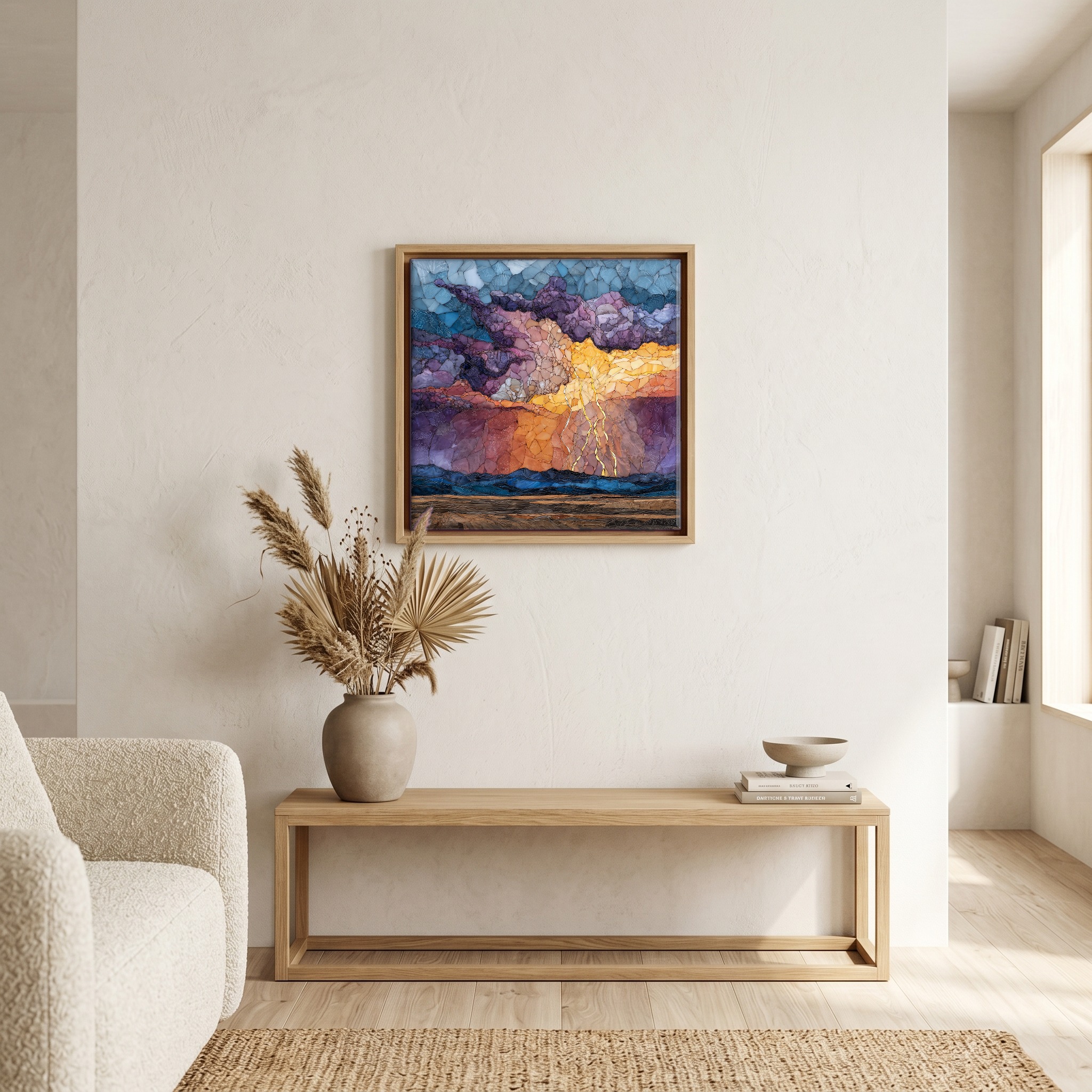
Above the bench, in a warm oak surround.
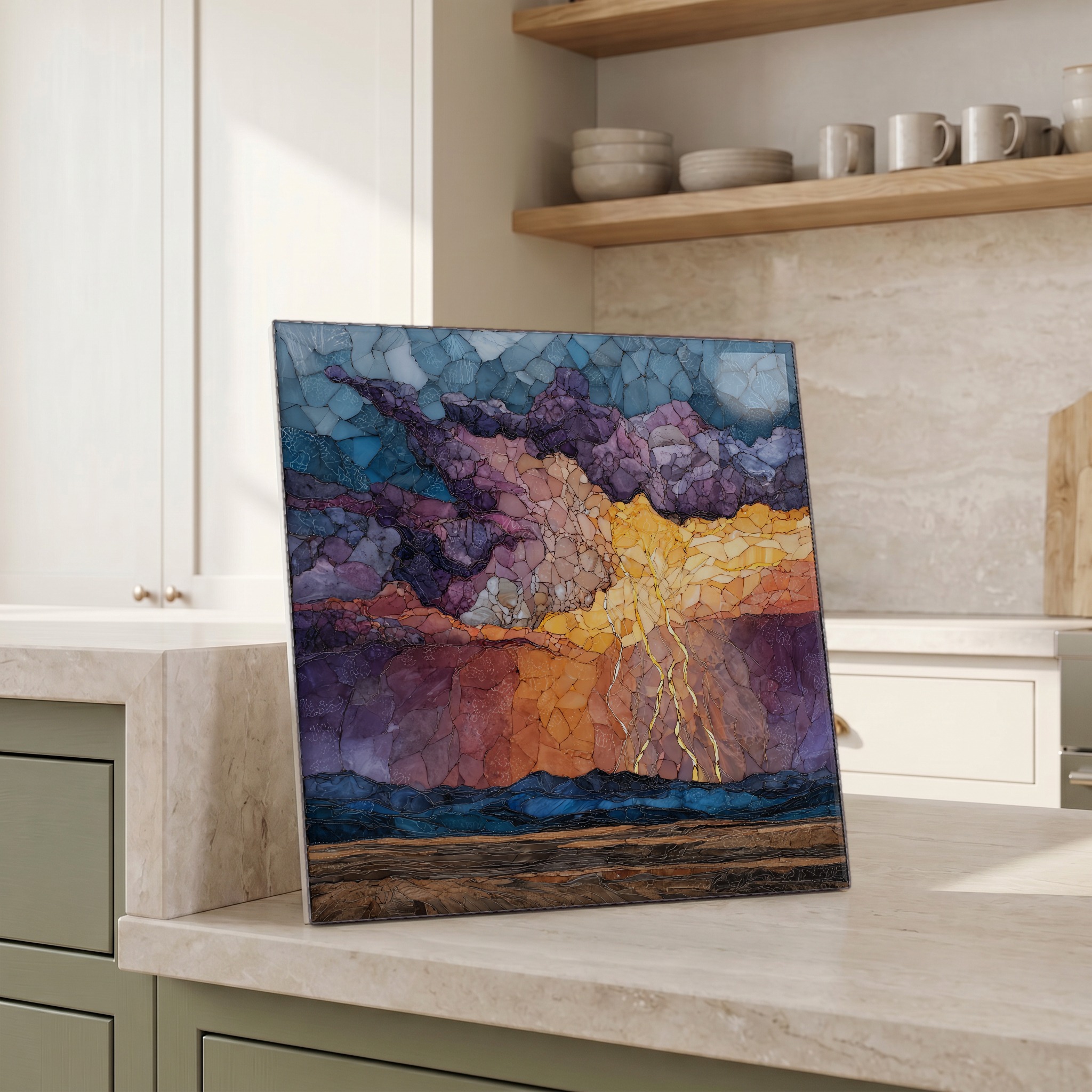
Beside the kettle, propped on the counter.
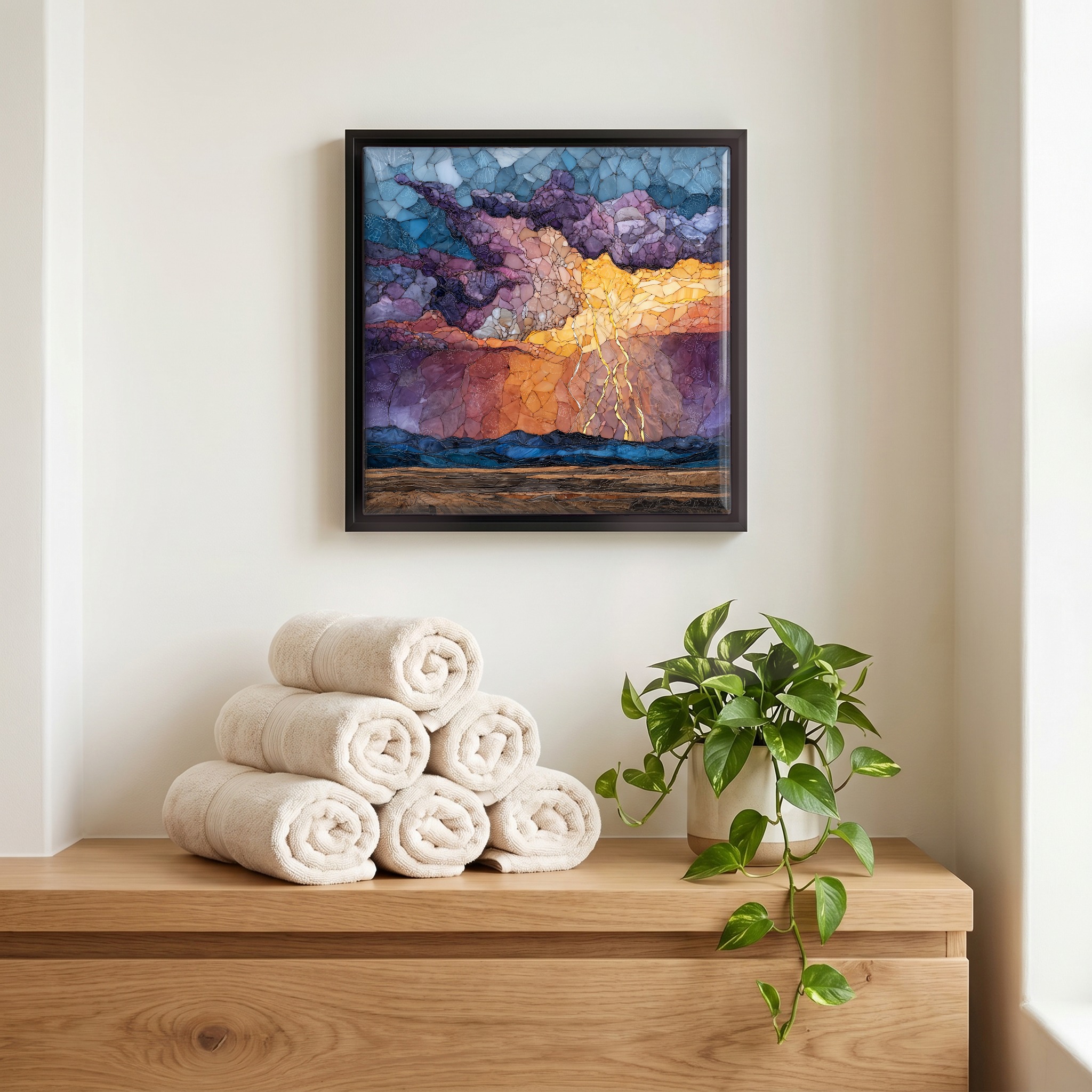
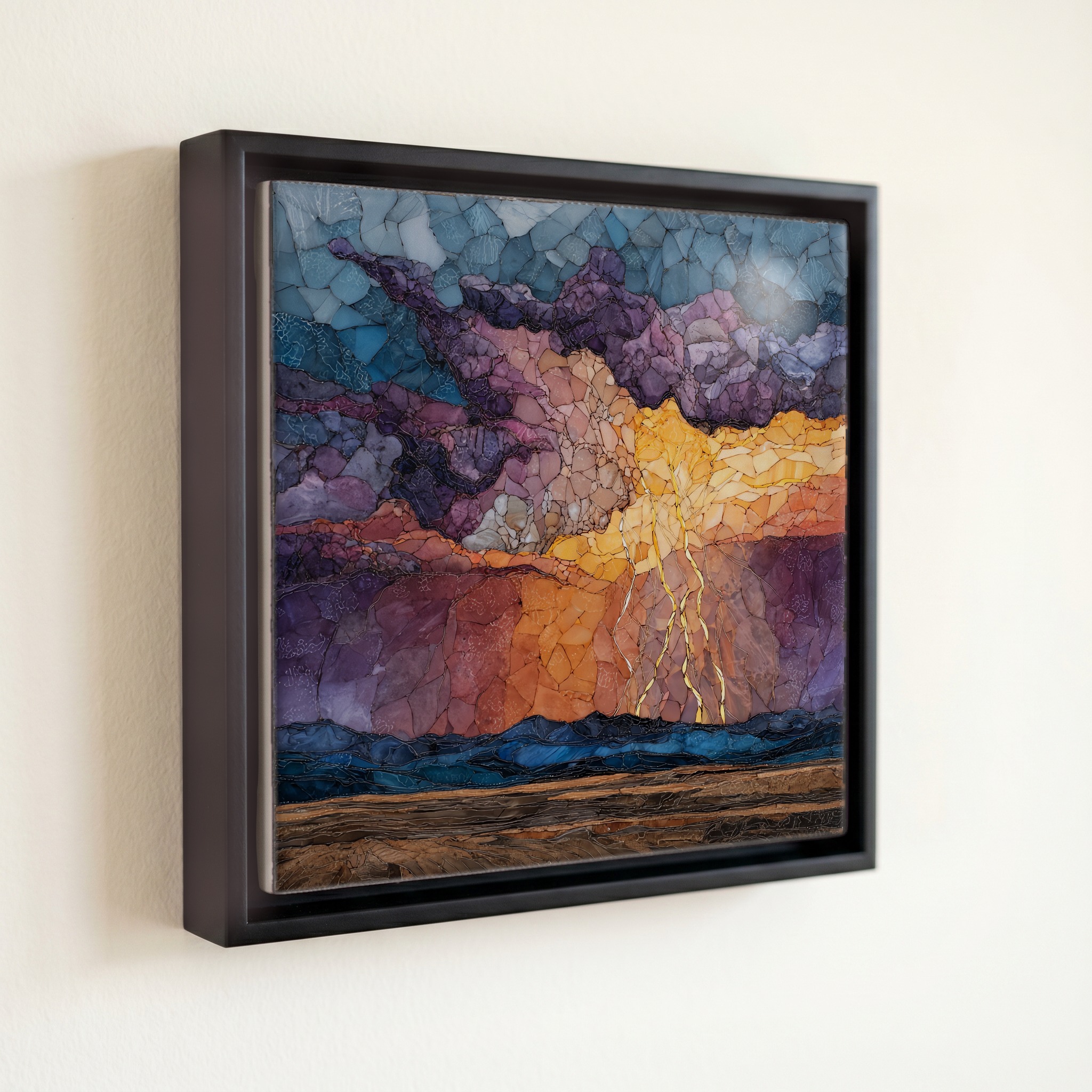
Above the linens, in a slim black surround.
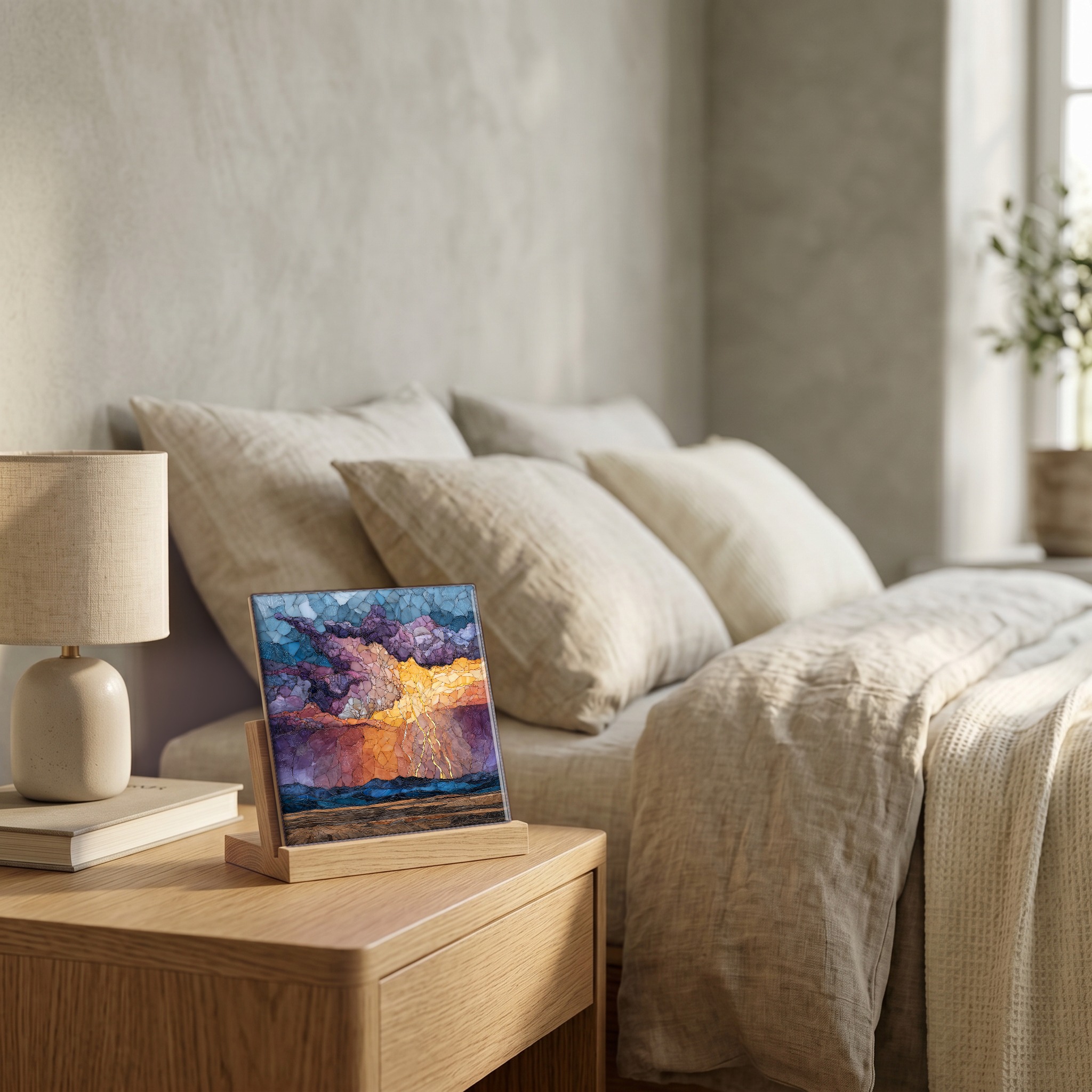
On the nightstand, on a light oak stand.
On a picture ledge, where the light comes in.
a note from the studio

The high plains east of the Front Range. Summer storms build all afternoon over the Rockies, then drift out onto the prairie around dinnertime, anvil-topped and dragging a hard shadow. The high plains see some of the heaviest cloud-to-ground lightning in the western United States. The strikes come faster than the thunder, which is the part that stays: a long bright stitch, three seconds of silence, then the crack arrives. Cattle don't lift their heads. The wheat keeps moving. Out toward the Kansas line the storms can run for hours, throwing light across forty miles of grass.
from the studio
shown in a slim black floating frame · 6 × 6 in
— bring it home

Lightning over the plains Ceramic Art Tile, on ceramic.

Each tile is finished by hand in our Knoxville studio. Artwork is slowly infused into the ceramic surface under high heat and pressure, and rests beneath a thin glossy finish. The colour lives in the surface, not on top of it.

What kind of piece?
One tile — square or rectangle.
How big?
the popular one — counter, shelf, nightstand
6 × 6 in · 15 cm · 1.6 lb
Surface finish
A clear glossy finish — the artwork reads as if under resin. Ideal for show-pieces and framed wall art.
How it sits
A hidden cleat — sits ¼″ proud of the wall.
$58
Hand-finished and shipped from our studio at the foot of the Smokies. On your wall in about ten days.
size
6 × 6 in
15 cm
weighs
1.6 lb
solid in the hand
surface
ceramic, hand-finished
art rests beneath a thin glossy finish
from
Knoxville, TN
our family studio, at the foot of the Smokies
— start a Coaster Set

Pick any four 4-inch tiles — National Parks you've been to, a Smokies set, the four seasons of one place. $ for a set of , cork-backed, ready to live on the table.
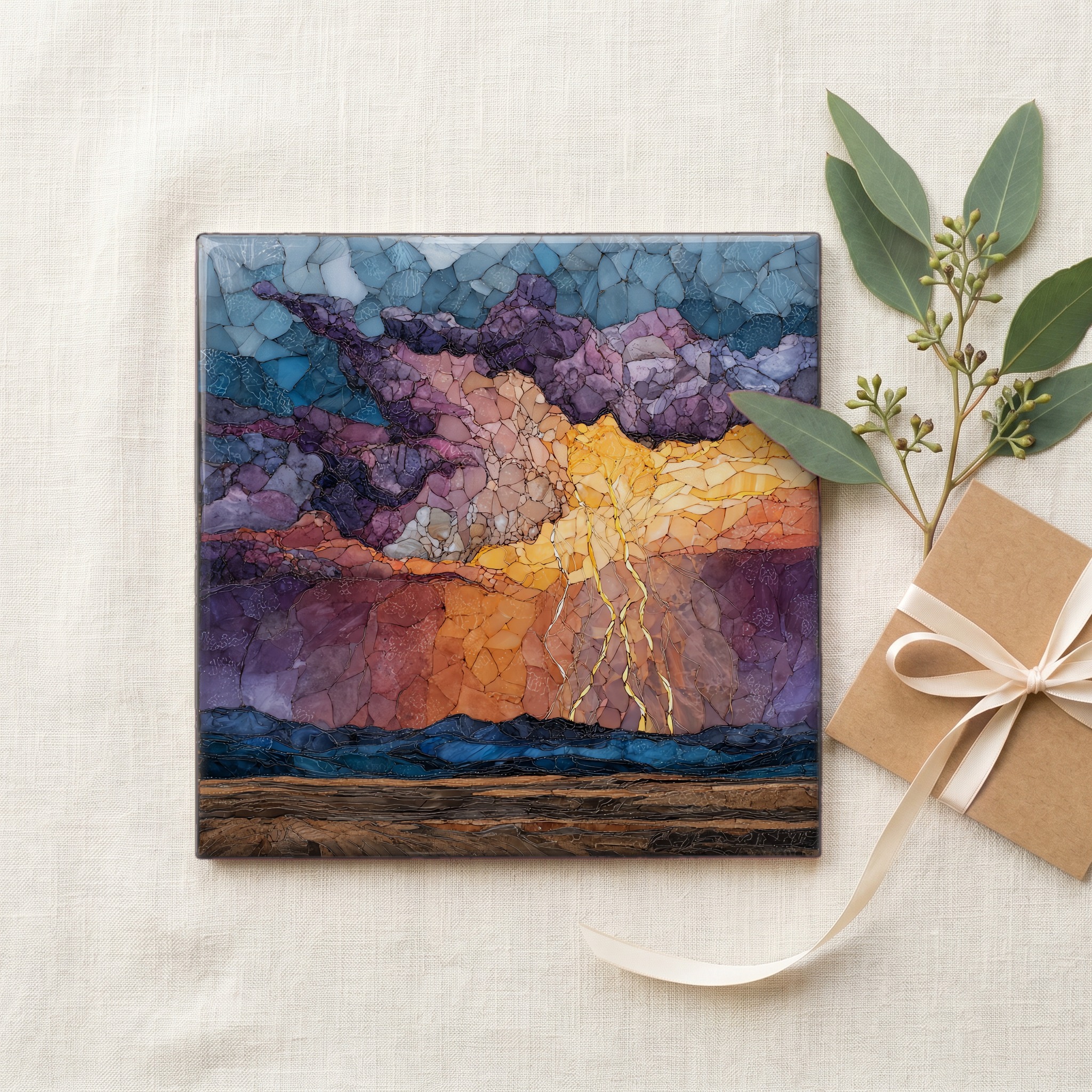
comes gift-ready
comes gift-ready

Each tile ships in a kraft box, tied with cream ribbon, with a handwritten note from the studio if you'd like to add one.
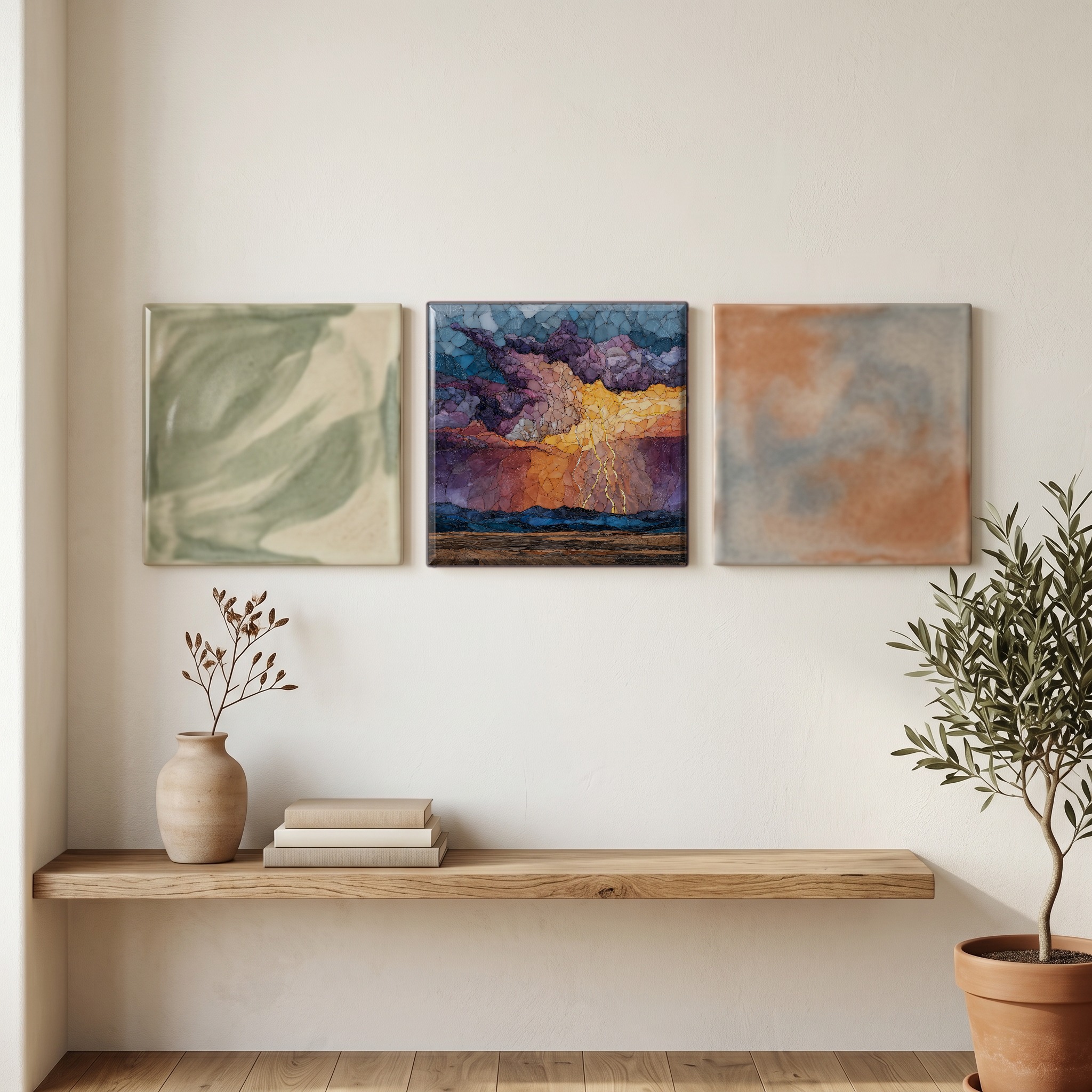
or build a grouping
or build a grouping

Three or five different vistas, hung together — a chapter of places you've been, or want to go.

about Lightning over the plains Ceramic Art Tile

The place, in three passes.

A little of what's known, in case you fall down the rabbit hole — or want to go see it yourself.
the place

The Eastern Plains of Colorado run from the foot of the Front Range to the Kansas, Nebraska, and Oklahoma borders, covering roughly 40 percent of the state. The terrain is high prairie, shortgrass and dryland wheat at elevations between 3,500 and 6,000 feet, rising gently west toward the Rockies. Two federal grasslands sit here: Pawnee National Grassland in Weld County, about 193,060 acres, and Comanche National Grassland in the southeast. The largest plains town is Greeley; long stretches between are quiet ranch country. The region forms the western edge of the Great Plains and the leeward side of the Rocky Mountain rain shadow, which is the climatic fact that shapes everything else.

the light

Colorado averages around half a million cloud-to-ground lightning strikes per year, with the high plains in the eastern half of the state taking a large share between June and August. A single channel is roughly the diameter of a thumb, surrounded by a hot blue corona, gone in about thirty microseconds. The afterimage holds for seconds. From a porch fifteen miles east of Limon, a storm anchored over Yuma County will throw light to the horizon and never reach the ear. The plains' flatness is the reason: the curve of the earth swallows the thunder before it can travel that far.

the season

Lightning on the plains is summer business. Storm season runs from late May through early September, with peak frequency in July. The mechanism is the dryline, a moisture boundary that drifts east from the Rockies most afternoons, lifting warm Gulf air over cooler, drier air from the Great Basin. The result is the high plains supercell: an isolated, slow-moving thunderhead that can stretch 60,000 feet tall and live for hours. Eastern Colorado sits inside Hail Alley, the highest-frequency hail zone in North America. The first storms usually fire between 3 and 5 p.m., the second wave after dark. By late September the dryline retreats and the prairie quiets through October.

where
United States · Eastern Plains, Colorado
the neighborhood

What's nearby.

A handful of named places within an hour's walk or short drive. Some we've already painted; some we will.
175 km N
Pawnee Buttes
sandstone formations
130 km WSW
Pikes Peak
14,115-foot peak
195 km S
Comanche National Grassland
shortgrass prairie
at the lake
Limon
plains town
N
Lightning over the plains Ceramic Art Tile
Pawnee Buttes
Pikes Peak
Comanche National Grassland
Limon
common questions

What people ask.

A few questions we get about Lightning over the plains Ceramic Art Tile — and about bringing the piece home.
about the place

Storms typically build over the Front Range and the Palmer Divide in the afternoon, then drift east onto the plains by early evening. The leeward side of the Rockies is the trigger; warm Gulf moisture meeting drier air along the dryline is the fuel. Anvil tops are usually visible by 5 p.m.

The high plains sit downwind of the Rockies, where afternoon convection lifts warm moist Gulf air over cooler dry air. The collision builds tall supercell thunderstorms. Colorado records roughly half a million cloud-to-ground strikes a year, and the state has one of the highest lightning fatality rates per capita in the United States.

Late May through early September, peaking in July. The first storms of the day typically fire between 3 and 5 p.m., often followed by a second wave after dark. By late September the dryline retreats east, the air dries out, and the prairie quiets through October.

Yes. Eastern Colorado sits on the western edge of Tornado Alley and squarely inside Hail Alley, the highest-frequency hail zone in North America. Weld County often leads the state in tornado reports. Most tornadoes here are short-lived; the larger threat is hail and straight-line wind from supercells.

The largest is Greeley, in Weld County. South of it, Limon sits on I-70 about ninety miles east of Denver. Further out, Yuma, Wray, Lamar, and Burlington dot the wheat belt running to the Kansas and Nebraska lines. They are small ranching and farming towns, spread thin across the prairie.

Yes, often. From east-facing porches or the downtown rooftops, supercells fifty to a hundred miles out are visible across the plains. The Denver skyline is regularly framed by towering anvils on summer evenings, with the cells slowly drifting east toward the Kansas line.

about the piece in your home

It's a piece that often lands well with that recipient. Plains-state weather is its own kind of memory: the smell of ozone, the wait between flash and crack, the way light moves over wheat. A Small or Medium with a handwritten note from the studio carries the feeling well.

The piece reads strongest in rooms with warm wood, leather, and natural texture. Mountain-modern, prairie-modern, and Maximalist interiors all hold it well. The deep indigo and violet of the storm read as a near-neutral against oak, hide, and rough plaster. It anchors a wall without competing with what's around it.

It sits inside the broader move toward Western-modern and prairie-modern interiors, a quieter cousin to the cabin look that draws on plains landscape rather than mountain. Storm imagery has also found a place in Maximalist rooms that lean into weather and atmosphere as a design element.

Above a standard sofa, a single Large reads well; for a longer wall, a four-tile Mural or a nine-tile Mural fills the space with more presence. Above a console table, a Medium or a pair of Smalls is the usual choice. A Keepsake works on a shelf or a nightstand.

Yes, with the Dura Satin or Matte finish. Both are scratch-resistant and handle steam and splash; Dura Satin keeps a soft sheen, Matte is fully flat. The Glossy finish is for framed wall art and show-pieces, away from heavy moisture.

A soft microfibre cloth and warm water are all that's needed. The colour is slowly infused into the ceramic surface under high heat and pressure and lives in the surface itself, so there is no painted layer to lift. Avoid abrasive scouring pads and harsh solvents.

Yes. Every WenderVista piece is made in our Knoxville studio. The art is original, the surface work is hand-finished, and nothing is licensed in. Reid Wender is the curator and chooses every place that enters the atlas.

if this one stayed with you

A few you might also love.

Hand-picked by the eye that found Sorapis. Same air, same kind of quiet.