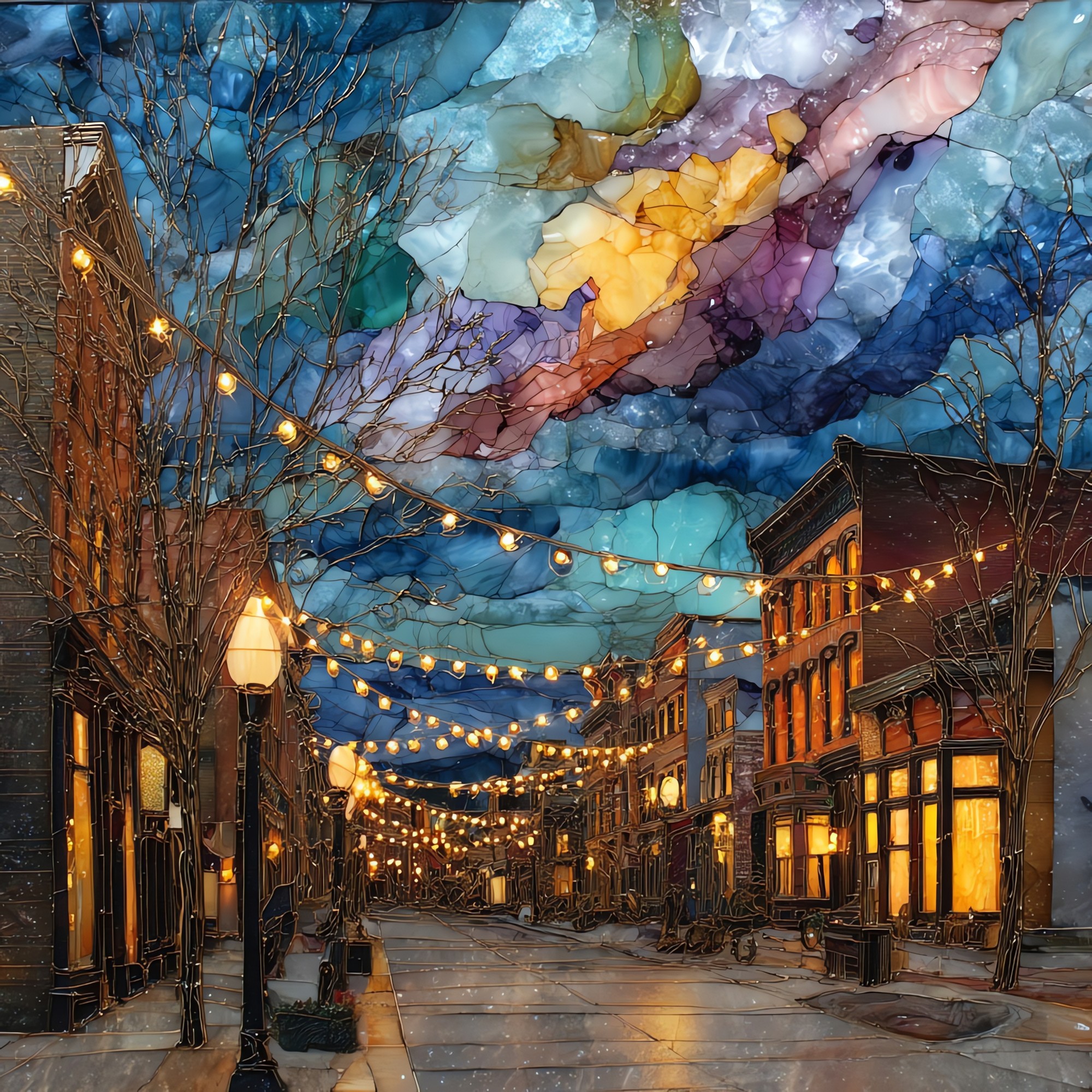
Larimer Square at twilight Denver Metro Ceramic Art Tile
— the half-hour the bulbs and the sky trade places.
Not only on a wall.
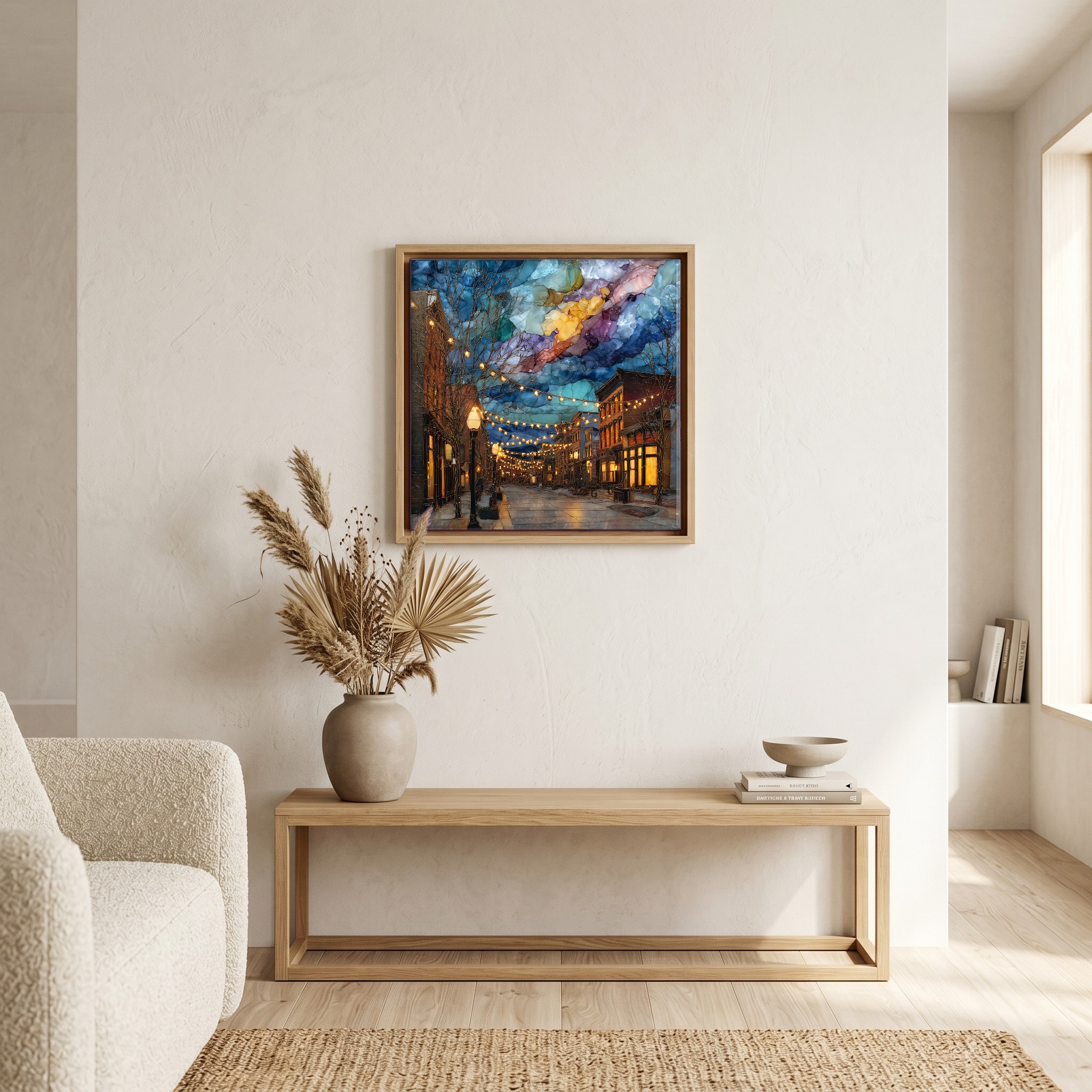
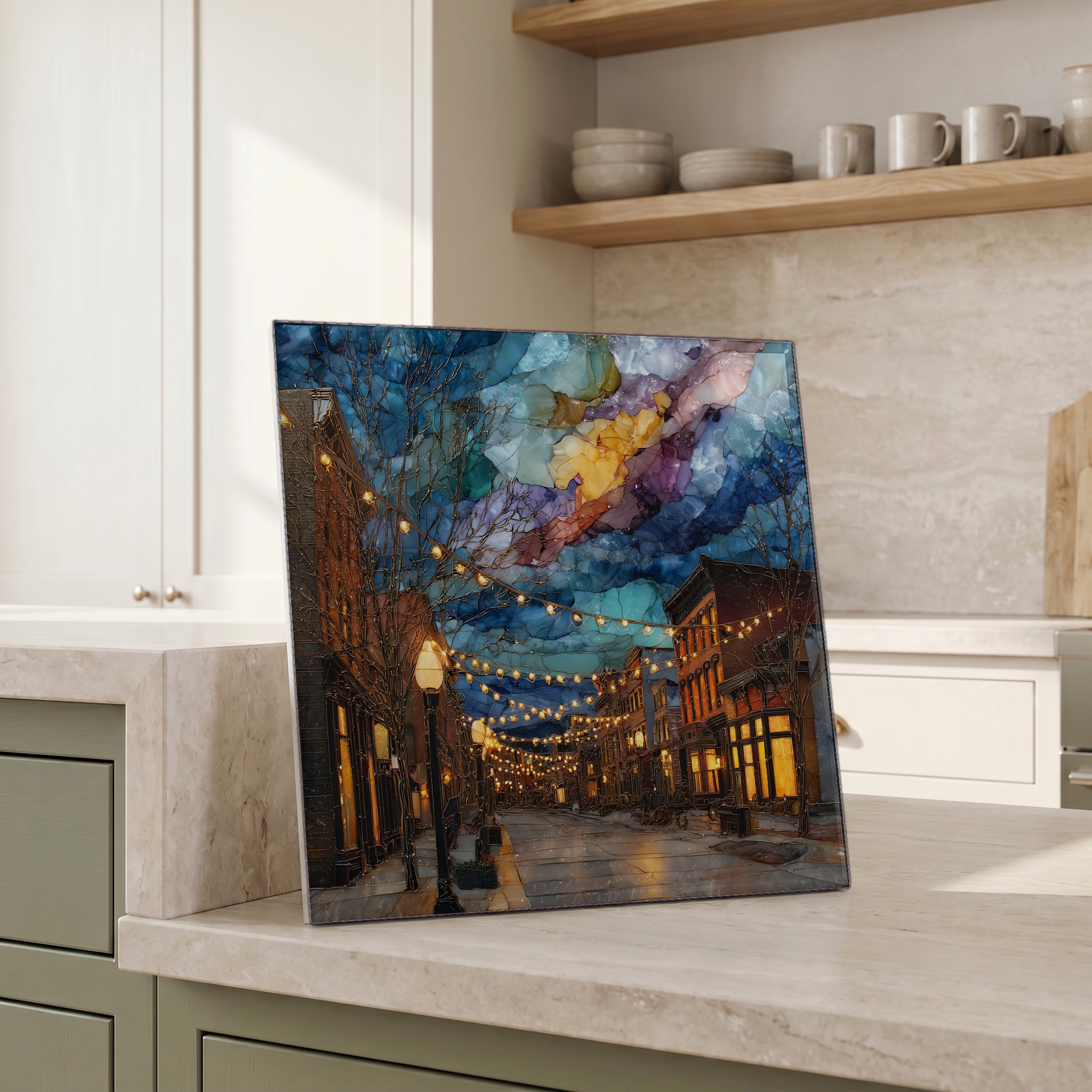
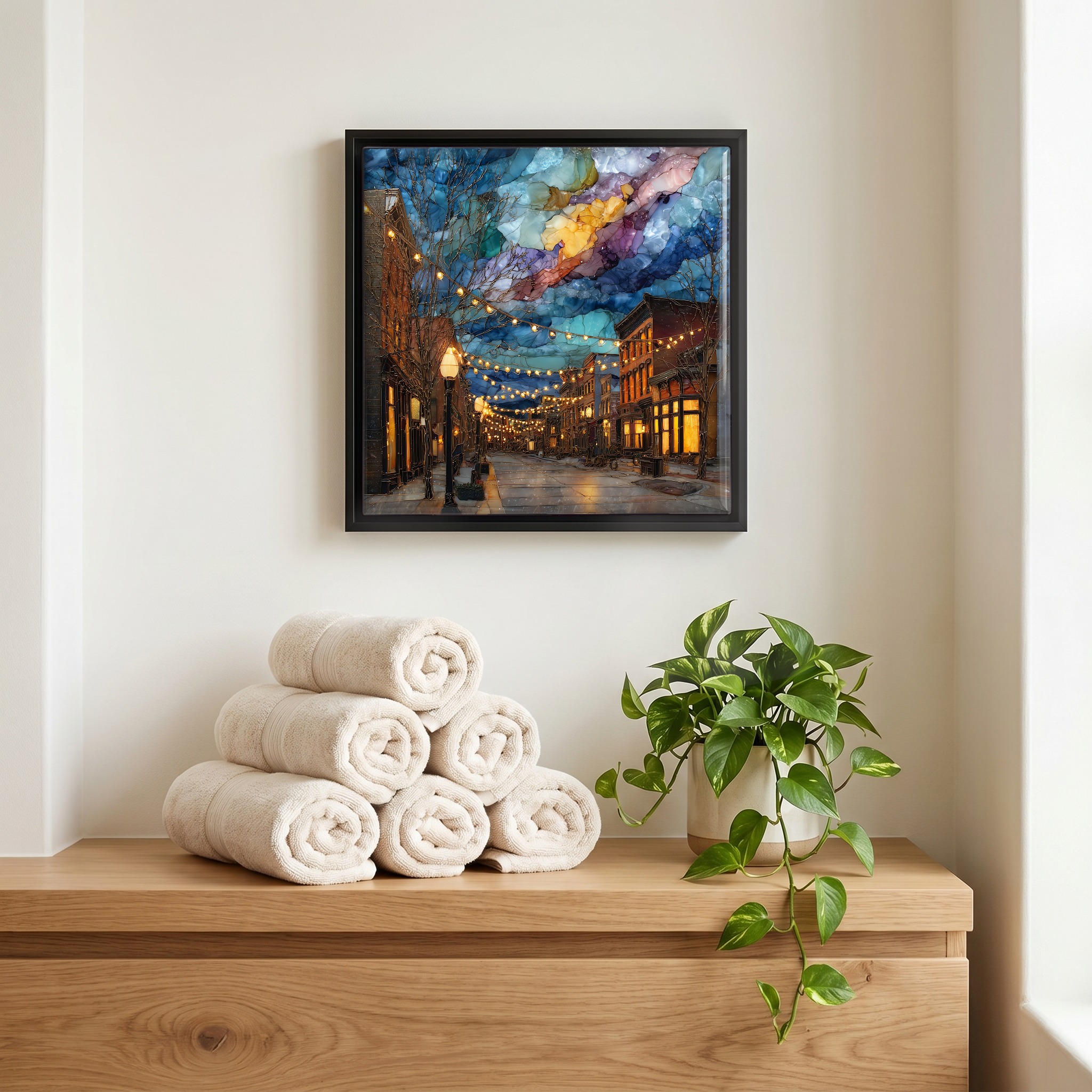
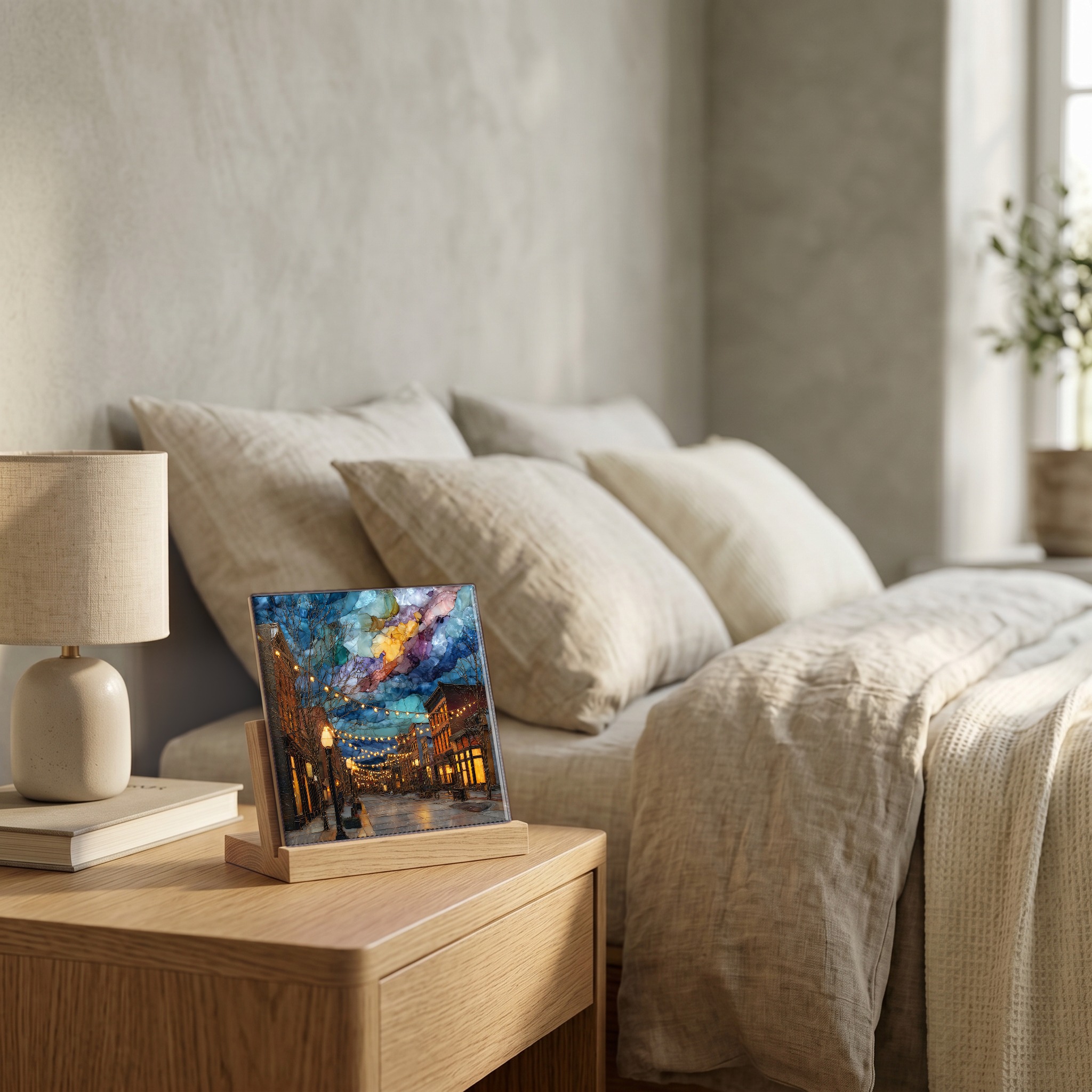
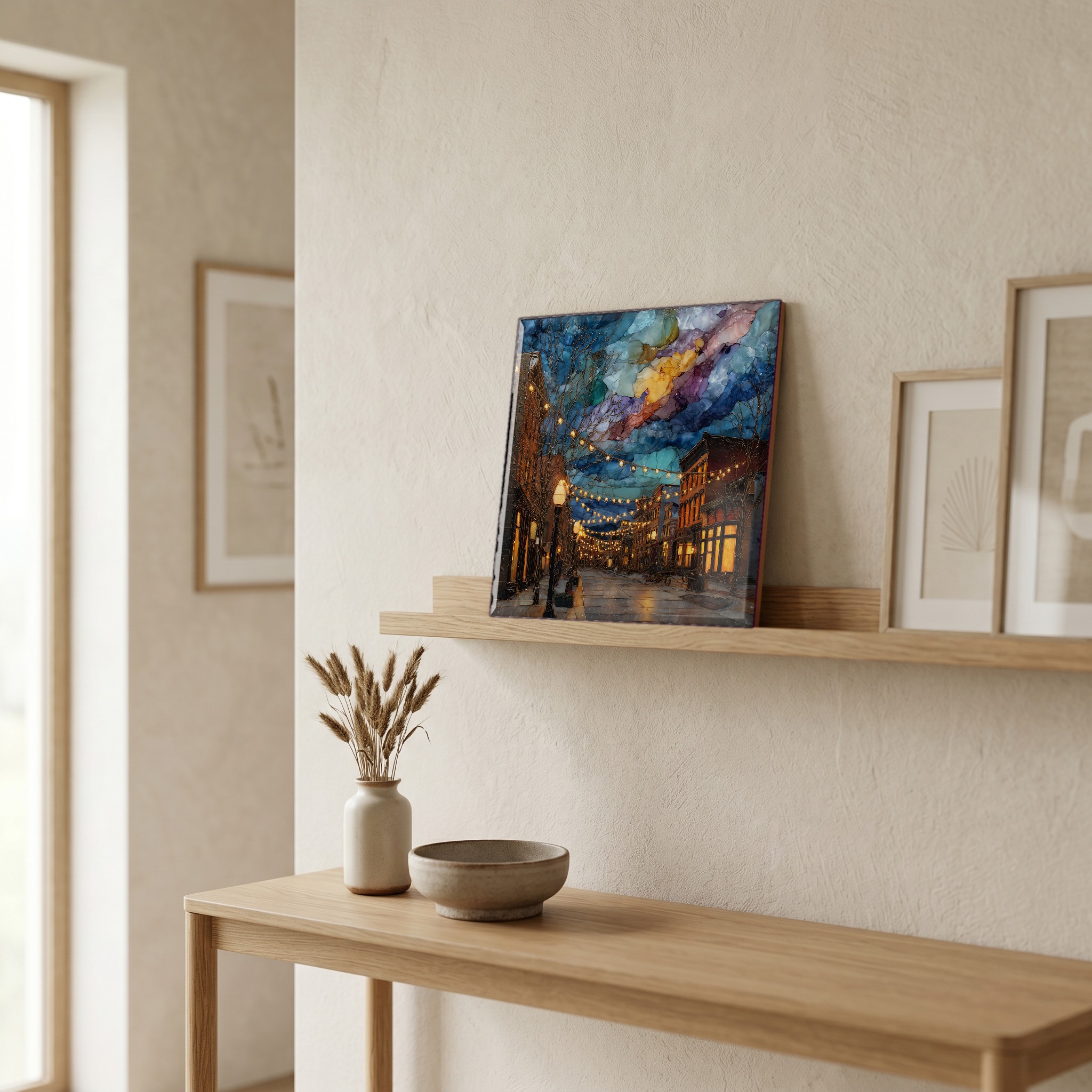
“One block of Victorian brick and cast-iron storefronts, kept off the wrecking ball in 1965 by a woman named Dana Crawford. Between 14th and 15th, the old façades hold the line. Above the street, the strung lights run cornice to cornice. The sky goes cobalt, the bulbs come up, and for about half an hour they share the evening. By full dark the block belongs to the bulbs, and to the slow movement of people who came down for dinner.
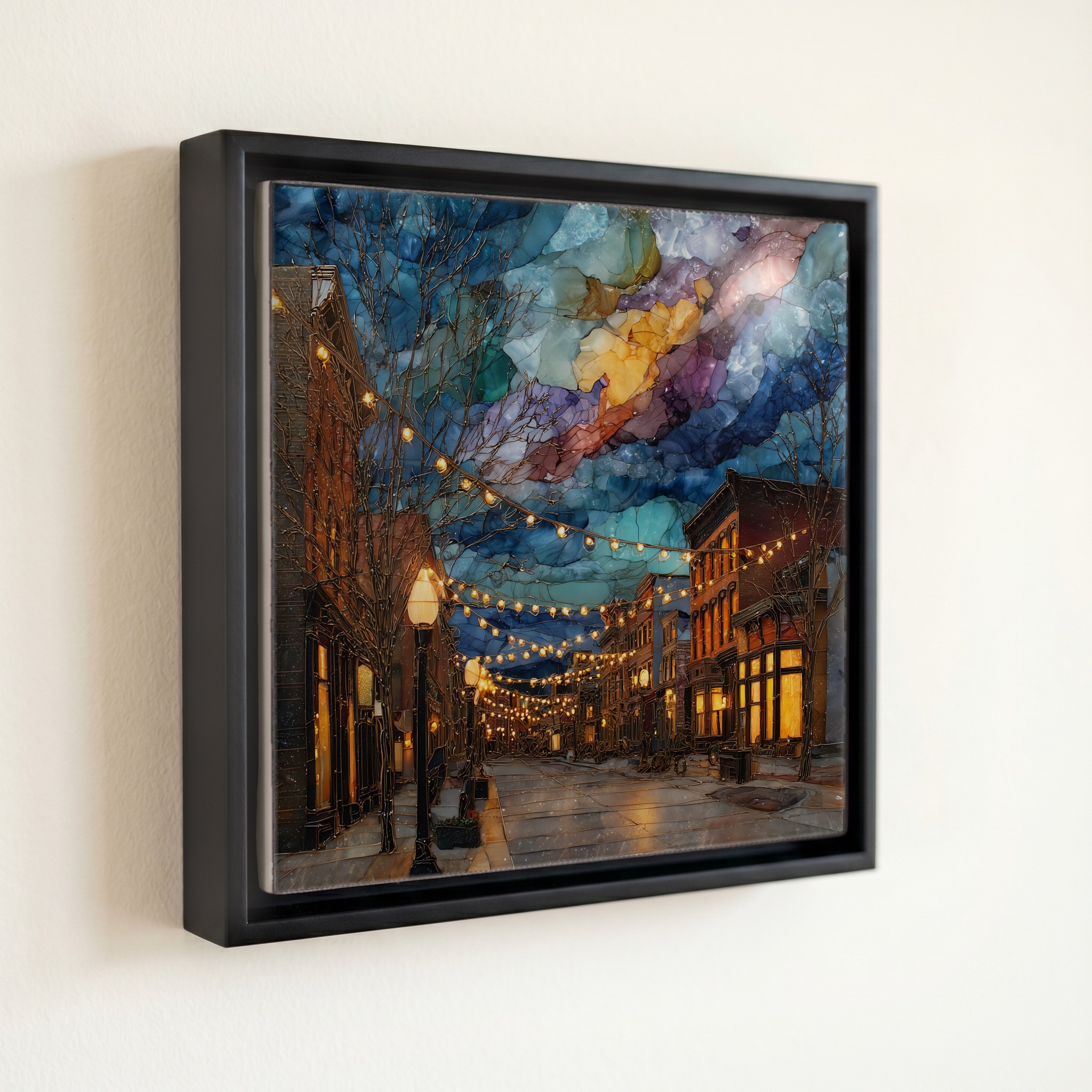
Larimer Square at twilight Denver Metro Ceramic Art Tile, on ceramic.
Each tile is finished by hand in our Knoxville studio. Artwork is slowly infused into the ceramic surface under high heat and pressure, and rests beneath a thin glossy finish. The colour lives in the surface, not on top of it.
Pick any four 4-inch tiles — National Parks you've been to, a Smokies set, the four seasons of one place. $ for a set of , cork-backed, ready to live on the table.
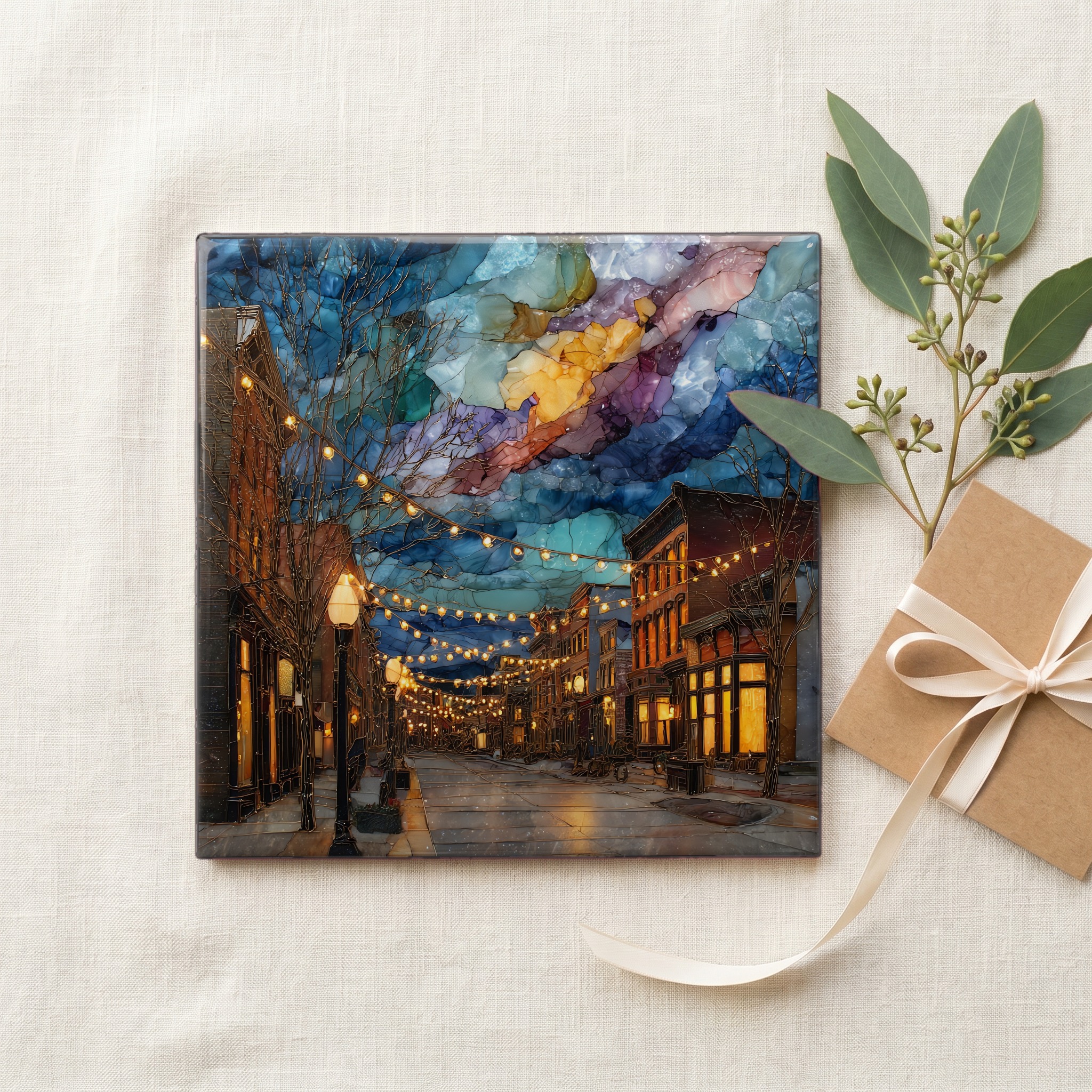
Each tile ships in a kraft box, tied with cream ribbon, with a handwritten note from the studio if you'd like to add one.
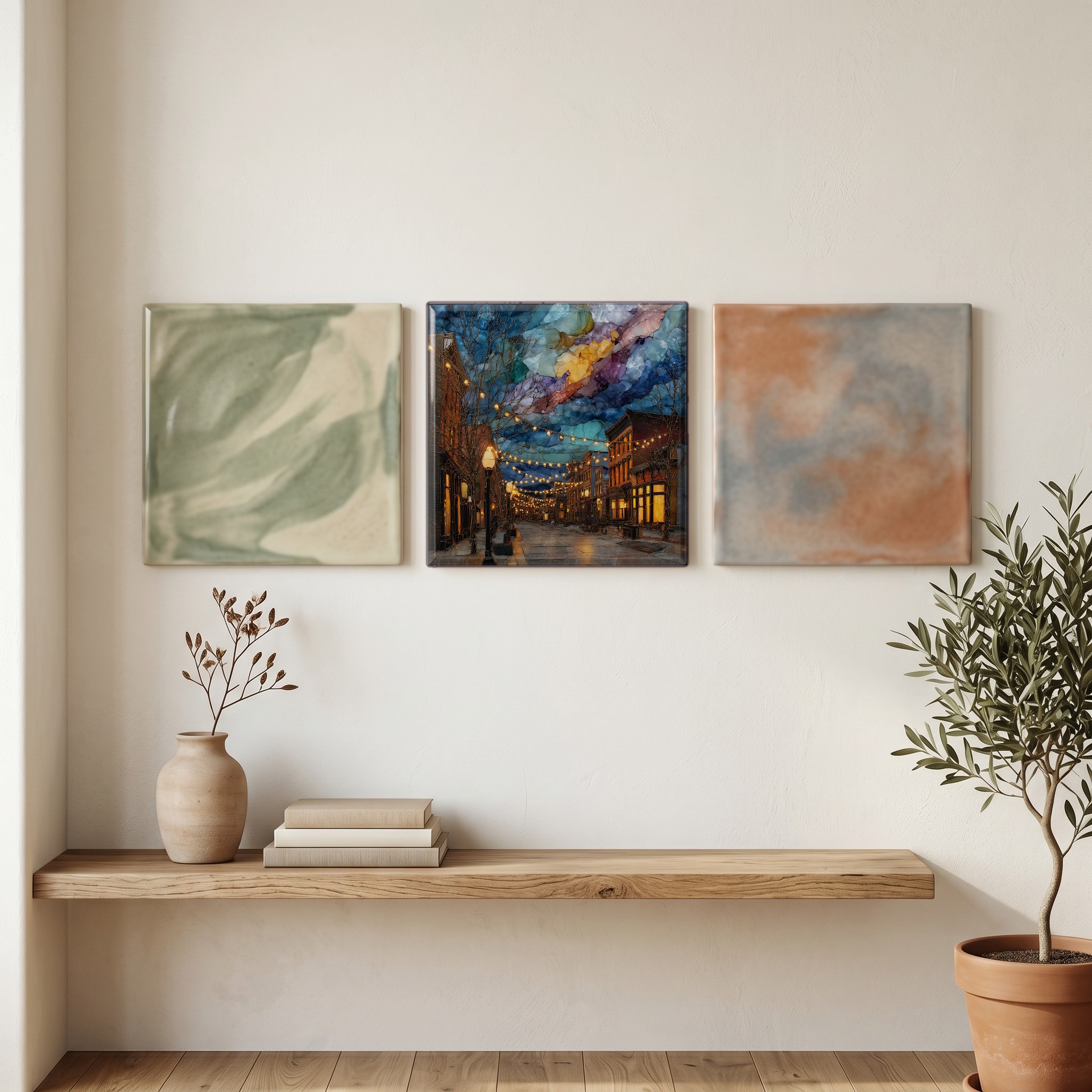
Three or five different vistas, hung together — a chapter of places you've been, or want to go.
The place, in three passes.
Larimer Square is a single city block on Larimer Street in Lower Downtown Denver, between 14th and 15th. The street is the city's oldest, surveyed in 1858 by General William Larimer Jr., who staked the original townsite that became Denver. By the early 1960s the block of Victorian commercial buildings was scheduled for demolition under urban renewal. The preservationist Dana Crawford bought it in 1965 and slowly restored its façades. In 1971 the block became Denver's first designated historic district, and in 1973 it was added to the National Register of Historic Places. The city sits at 5,280 feet, one mile above sea level.
What gives the block its evening signature is the canopy of bulbs strung cornice to cornice above the street. The lights catch fire at dusk, just as the sky behind the brick goes cobalt. For a stretch of about thirty minutes the daylight and the bulbs hold equal weight, and the block sits in two lights at once. By full dark the strung lights carry the block alone. The effect is best seen from the centre of the block, looking west along the line of restored Victorian façades that stand on the original 1858 street line surveyed by General William Larimer Jr.
The block holds about a dozen surviving Victorian commercial buildings from the 1870s and 1880s, when Denver's frontier-era main street was being rebuilt in brick after the original wooden storefronts. The façades carry the layered idiom of the period: red brick fields, stone or cast-iron lintels, ornamented cornices, second-storey window bays. Restoration after 1965 stripped accumulated paint and false fronts back to the original masonry. The block today reads roughly as it did when General Larimer's surveyed grid first filled in, and remains the most intact piece of nineteenth-century commercial Denver.