Wender·Vista
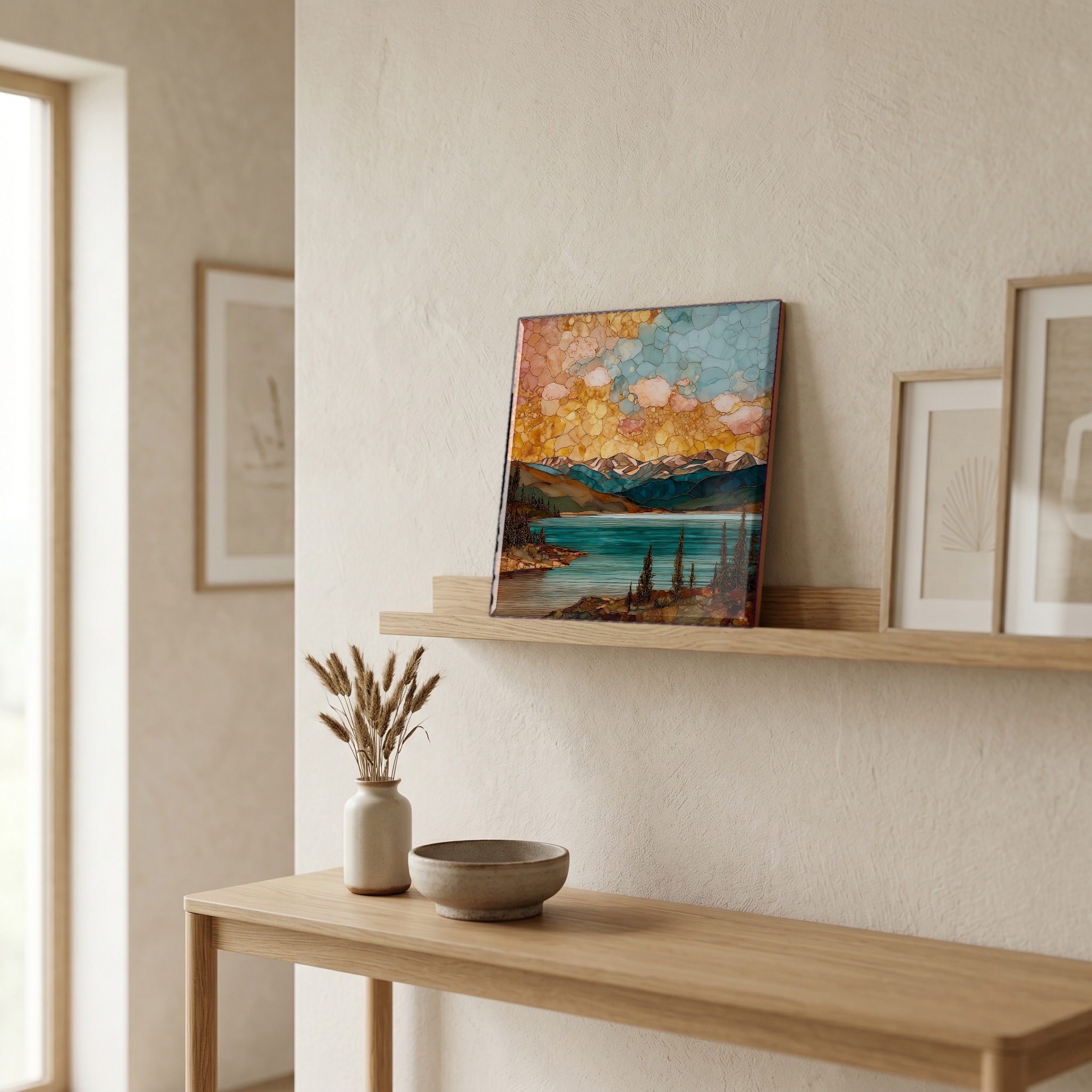
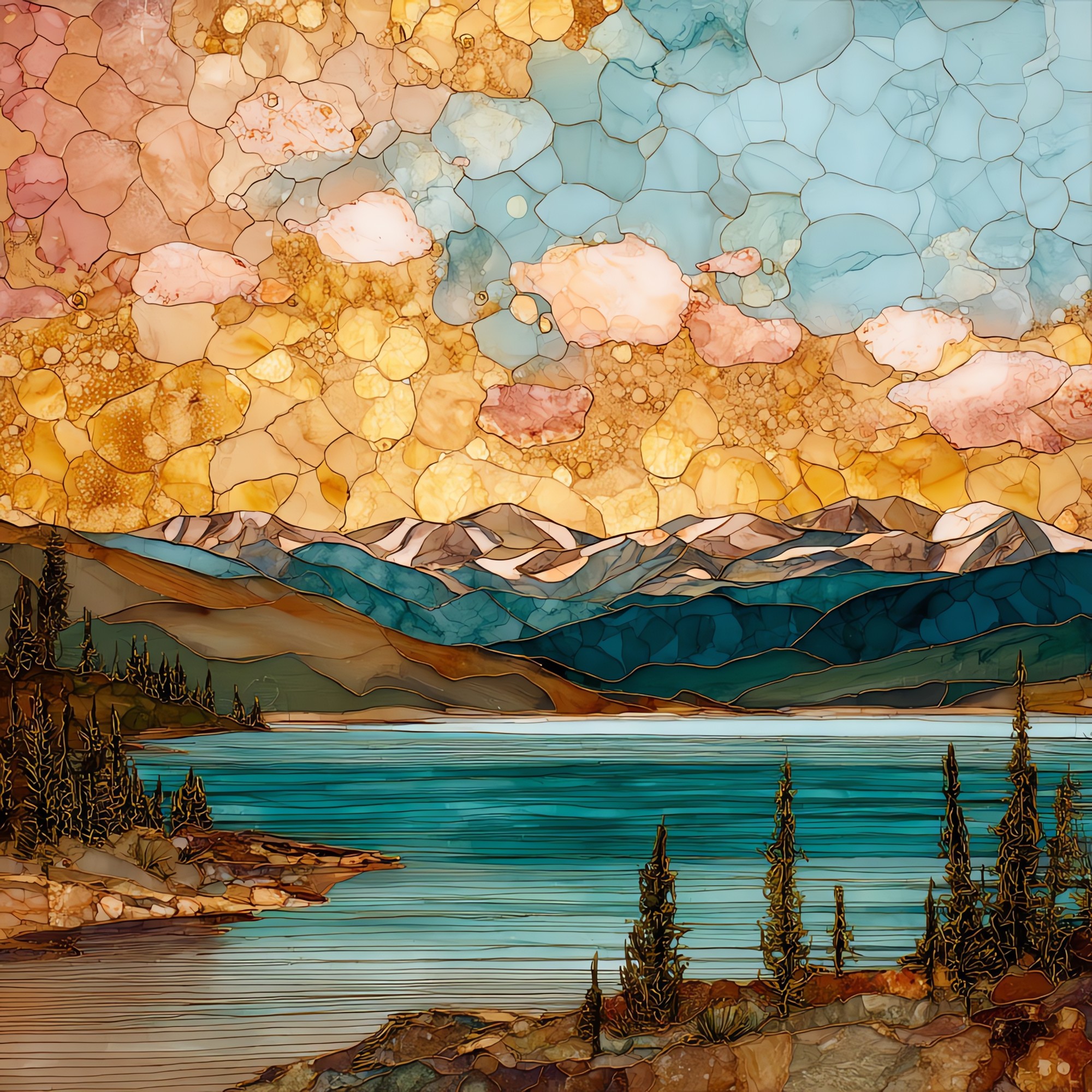
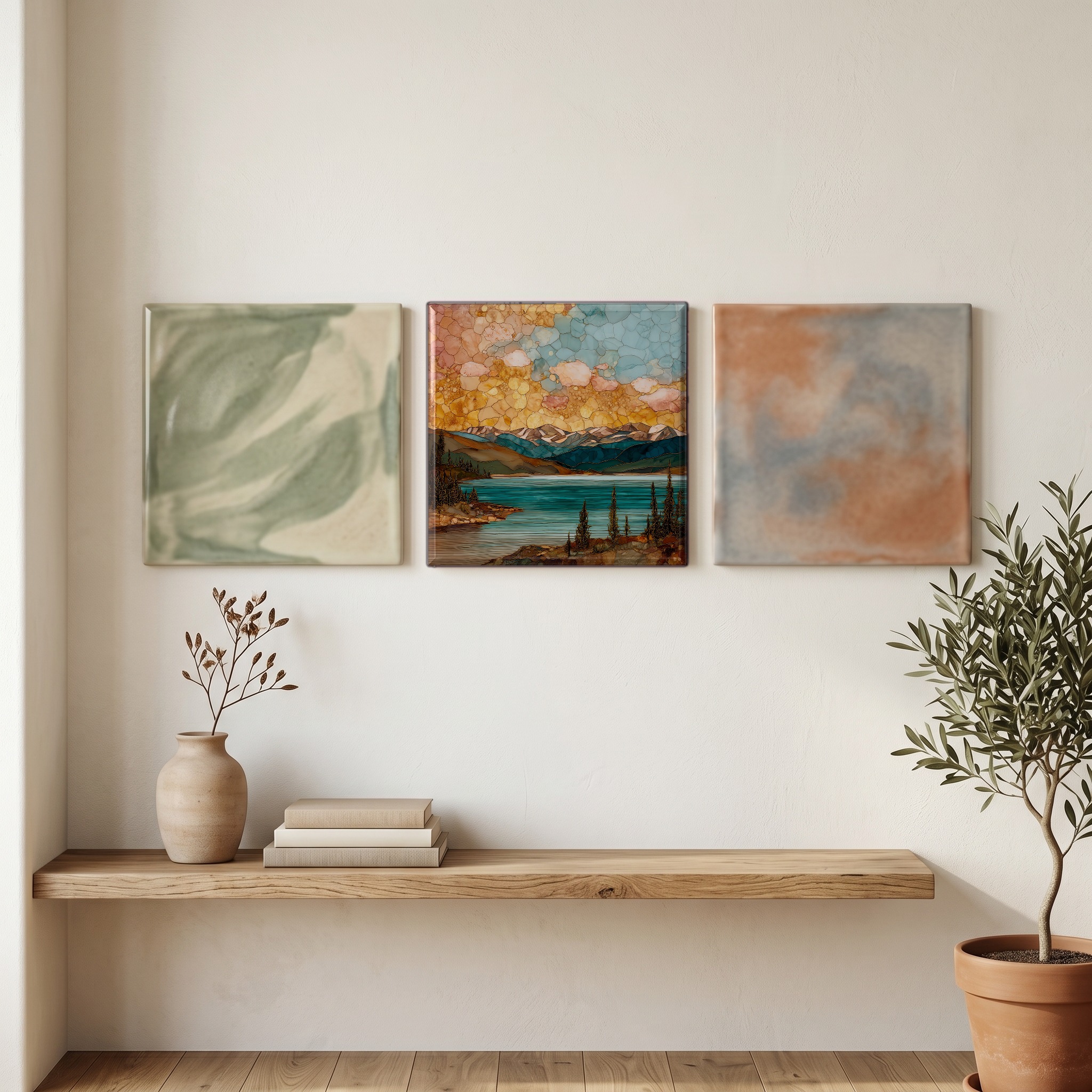
Lake Granby Indian Peaks Front Range Ceramic Art Tile
shown on ceramic, 12-inch tileColorado · United States
west of the Continental Divide, below the Indian Peaks

Lake Granby Indian Peaks Front Range Ceramic Art Tile

— the morning the divide doubles on the water.

Where it lives

Not only on a wall.

A small tile on the nightstand catching the morning. A larger one above the fire. Yours, wherever you spend the slow hours.
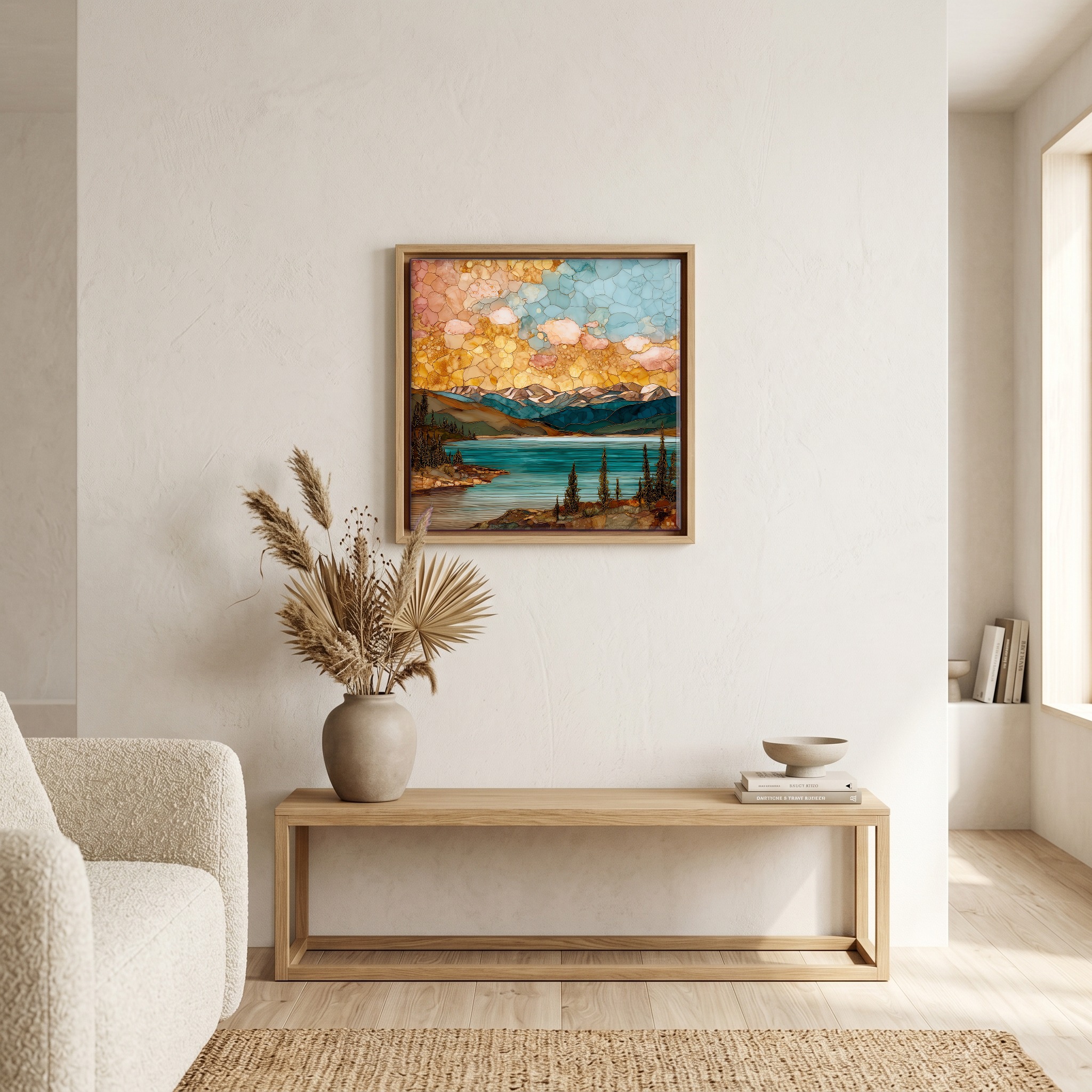
Above the bench, in a warm oak surround.
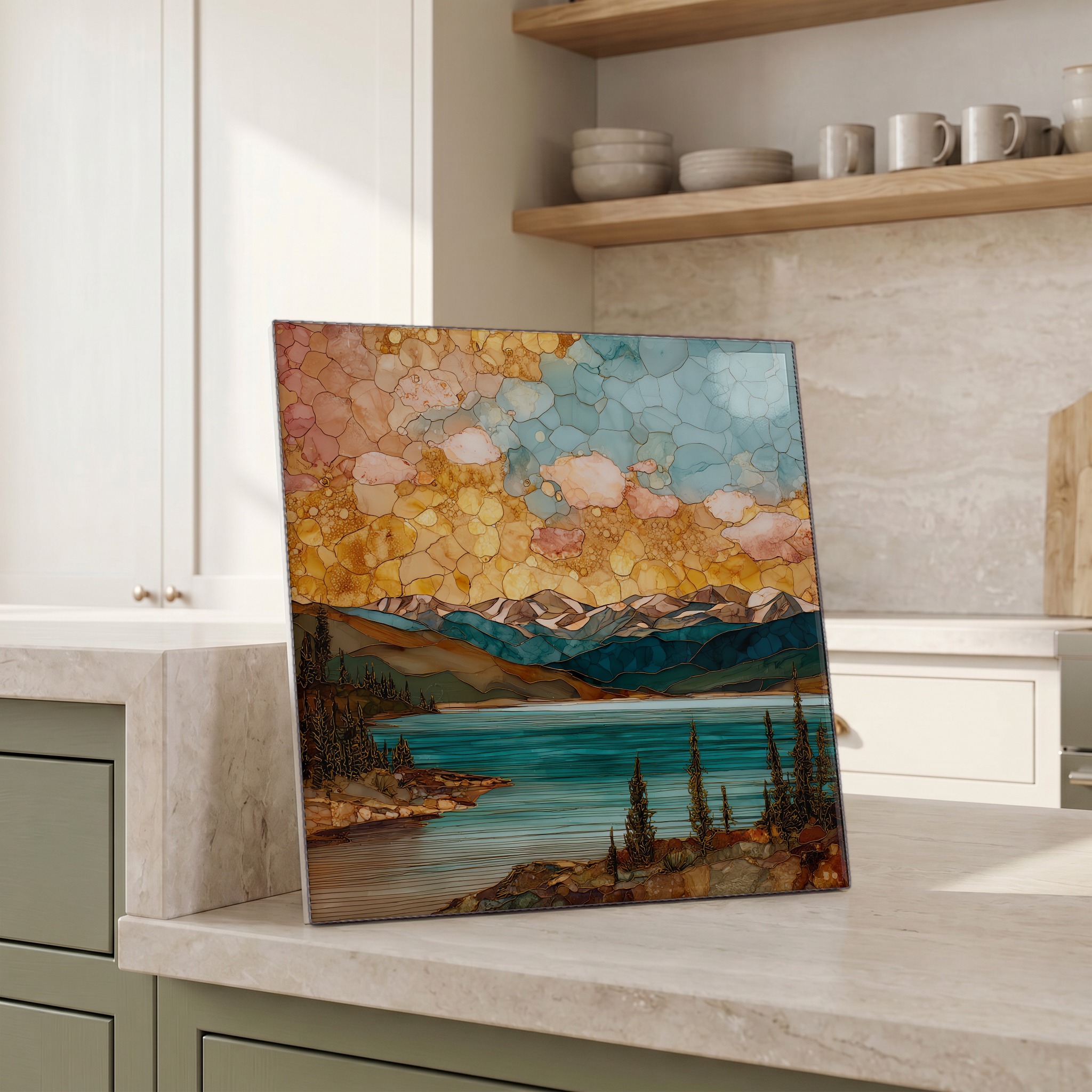
Beside the kettle, propped on the counter.
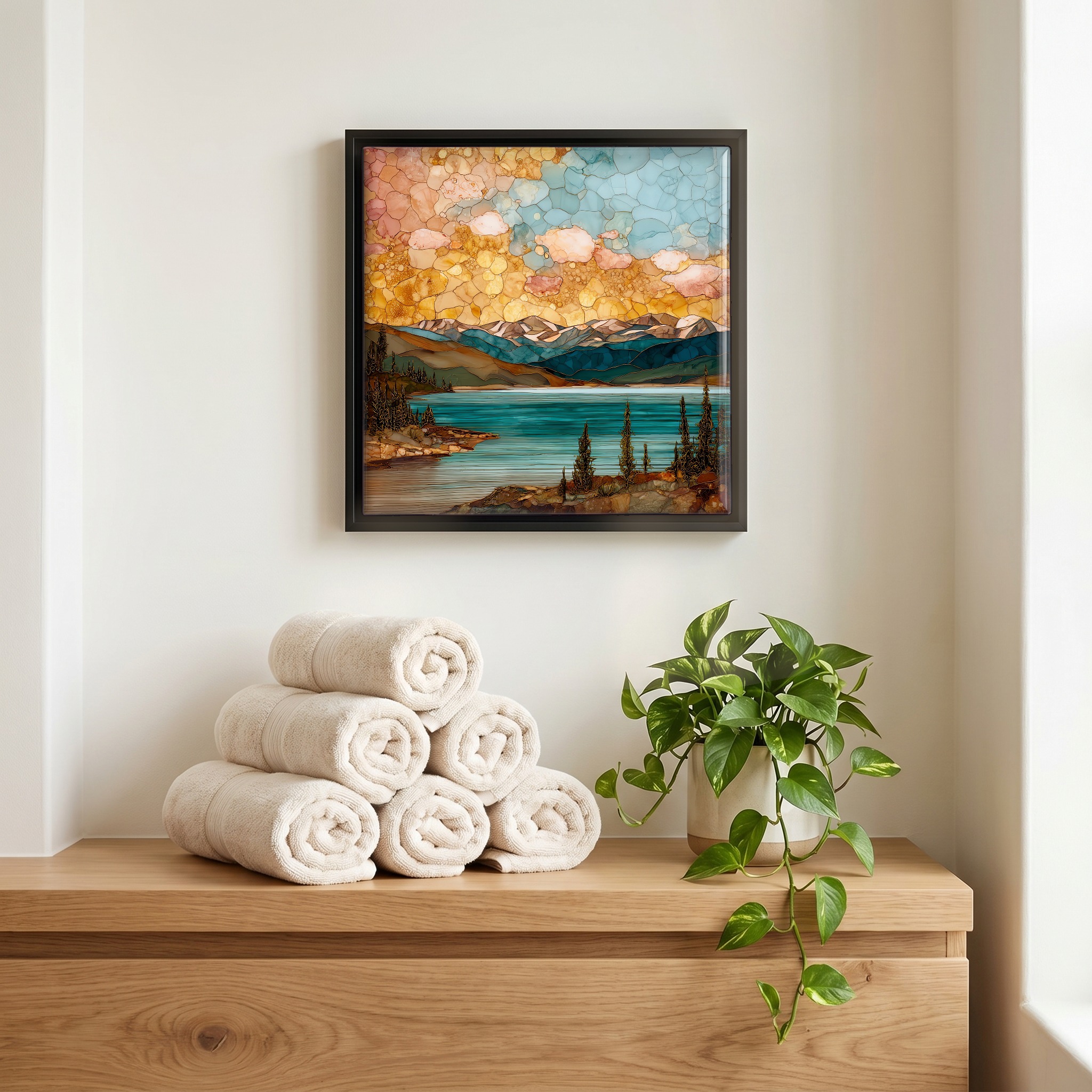
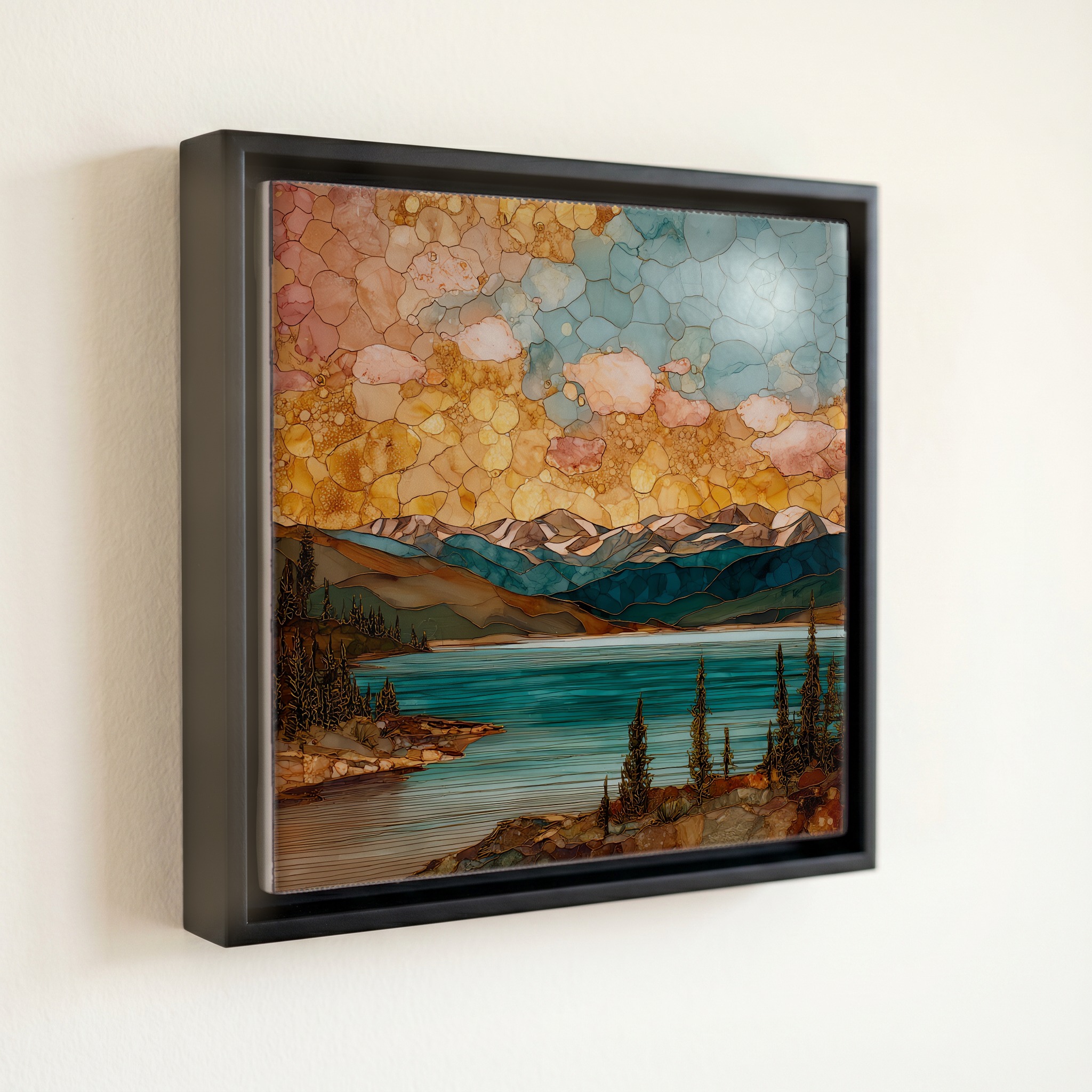
Above the linens, in a slim black surround.
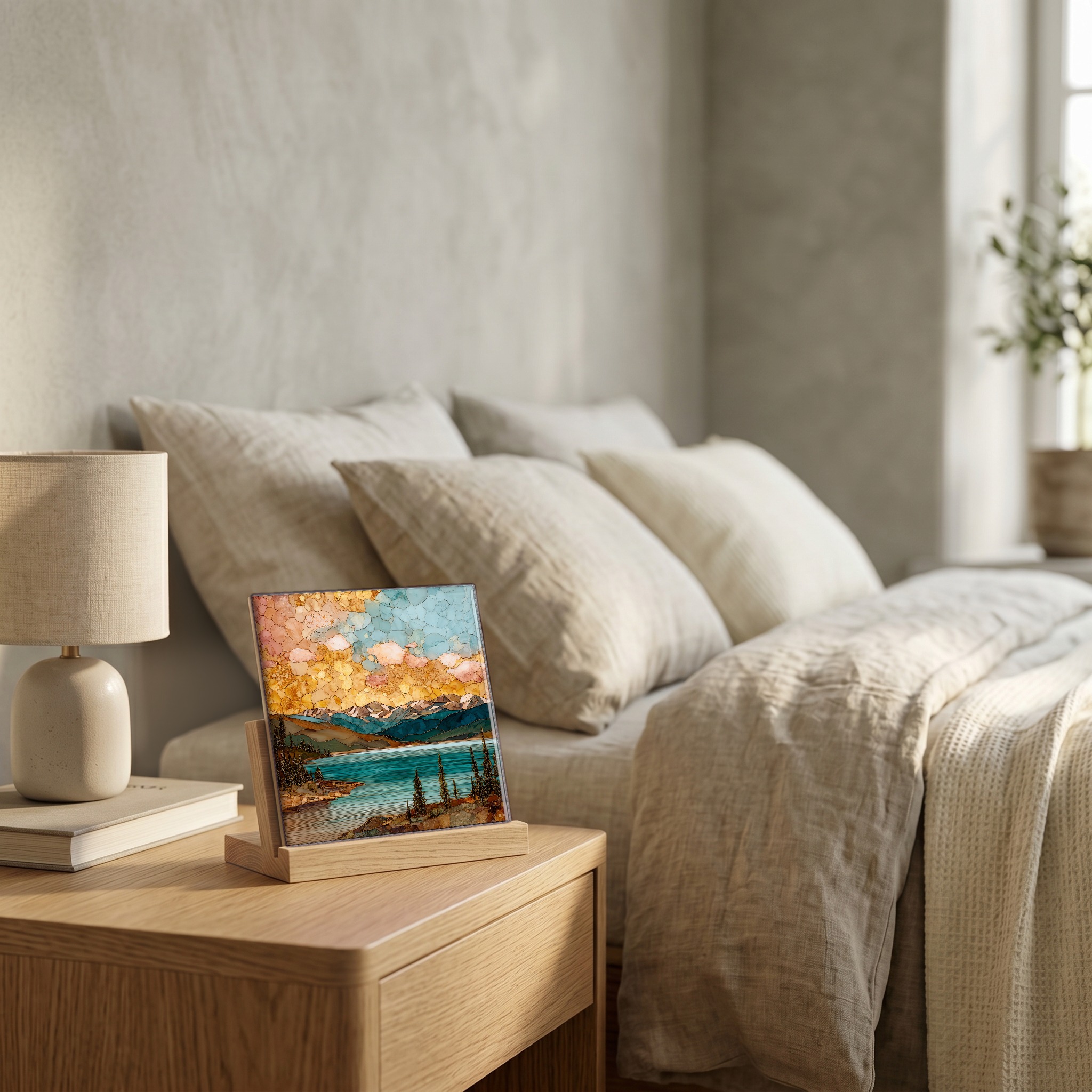
On the nightstand, on a light oak stand.
On a picture ledge, where the light comes in.
a note from the studio

A reservoir on the western slope of the Colorado Rockies, holding water the Indian Peaks send down. The lake sits at 8,284 feet, the third-largest body of water in the state, ringed by Arapaho National Recreation Area. From the eastern shore the Continental Divide rises in a wall of granite. The peaks of Apache, Navajo, Shoshoni, and Arapaho gave the wilderness its name. The road from Granby follows the shoreline north toward Rocky Mountain National Park. In the still hours, before the wind, the whole divide doubles in the water.
from the studio
shown in a slim black floating frame · 6 × 6 in
— bring it home

Lake Granby Indian Peaks Front Range Ceramic Art Tile, on ceramic.

Each tile is finished by hand in our Knoxville studio. Artwork is slowly infused into the ceramic surface under high heat and pressure, and rests beneath a thin glossy finish. The colour lives in the surface, not on top of it.

What kind of piece?
One tile — square or rectangle.
How big?
the popular one — counter, shelf, nightstand
6 × 6 in · 15 cm · 1.6 lb
Surface finish
A clear glossy finish — the artwork reads as if under resin. Ideal for show-pieces and framed wall art.
How it sits
A hidden cleat — sits ¼″ proud of the wall.
$58
Hand-finished and shipped from our studio at the foot of the Smokies. On your wall in about ten days.
size
6 × 6 in
15 cm
weighs
1.6 lb
solid in the hand
surface
ceramic, hand-finished
art rests beneath a thin glossy finish
from
Knoxville, TN
our family studio, at the foot of the Smokies
— start a Coaster Set

Pick any four 4-inch tiles — National Parks you've been to, a Smokies set, the four seasons of one place. $ for a set of , cork-backed, ready to live on the table.
comes gift-ready
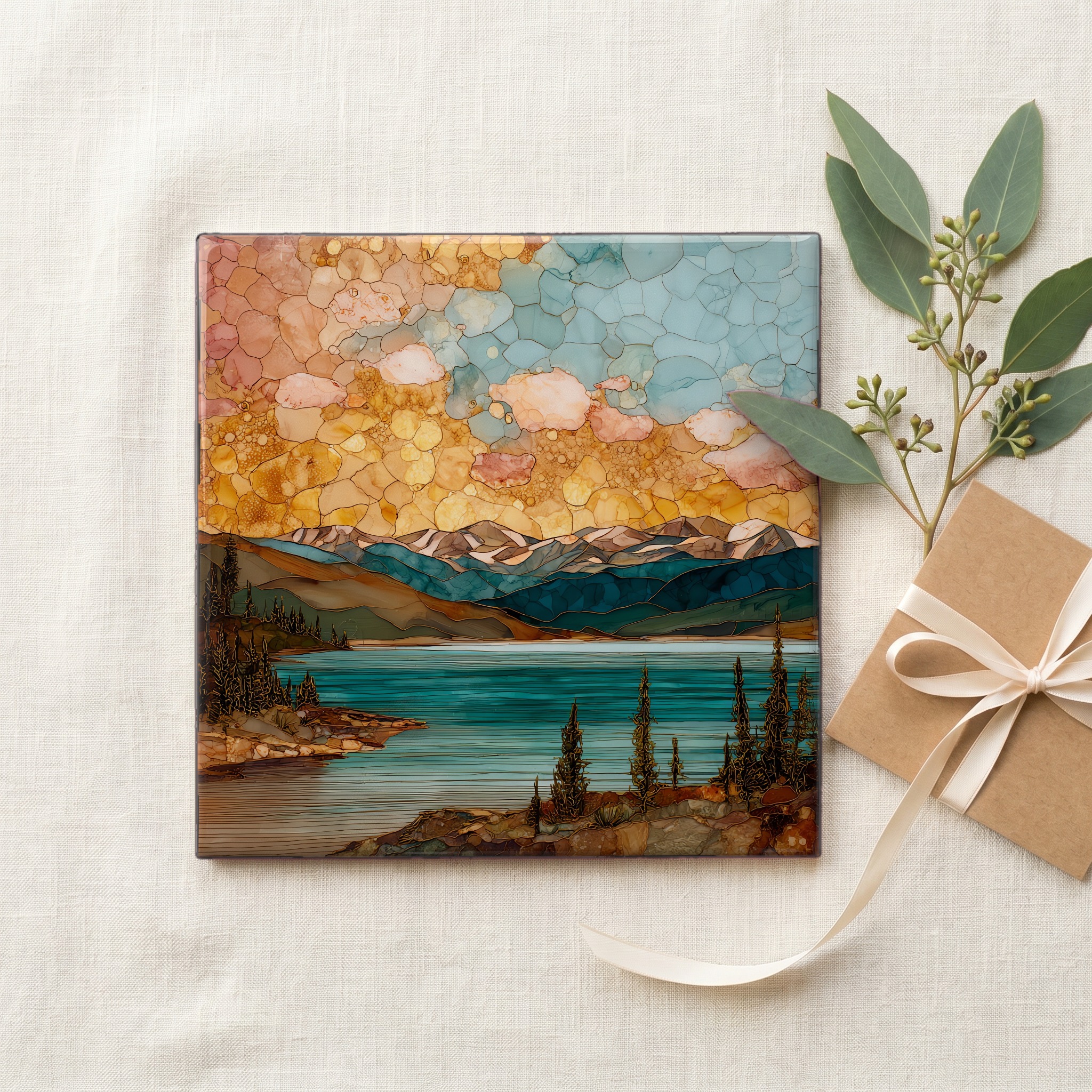
comes gift-ready

Each tile ships in a kraft box, tied with cream ribbon, with a handwritten note from the studio if you'd like to add one.
or build a grouping
or build a grouping

Three or five different vistas, hung together — a chapter of places you've been, or want to go.

about Lake Granby Indian Peaks Front Range Ceramic Art Tile

The place, in three passes.

A little of what's known, in case you fall down the rabbit hole — or want to go see it yourself.
the place

Lake Granby sits at 8,284 feet (2,525 m) on the western slope of the Colorado Rockies, in Grand County in north-central Colorado. The reservoir was built between 1947 and 1950 as part of the Colorado-Big Thompson Project, holding back the upper Colorado River behind Granby Dam to feed the trans-divide tunnel that waters Colorado's eastern plains. It anchors the Arapaho National Recreation Area, managed by the Arapaho and Roosevelt National Forests, and is the third-largest body of water in the state at roughly 7,256 surface acres with about forty miles of shoreline. The northern arm reaches toward Grand Lake and the western entrance of Rocky Mountain National Park.

the water

The water that fills the lake comes off the Continental Divide as snowmelt from the Indian Peaks Wilderness, where North Arapaho Peak rises to 13,502 feet and the Arapaho Glacier still holds a shrinking pocket of permanent ice. Granby's surface reads cold blue against the granite of the divide, taking colour from depth and from the silt the high creeks carry down in spring. From the eastern shore the wall of peaks doubles in the still water in the early morning, before the afternoon wind comes off the divide. The lake is open to fishing year-round; lake trout, rainbow, and kokanee salmon hold deep through summer and again under the ice.

the season

U.S. Highway 34 runs along the eastern shore from the town of Granby north to the western entrance of Rocky Mountain National Park, open year-round. Trail Ridge Road, the high alpine route through the park, opens by late May and closes by mid-October; the lake itself stays accessible through every month. Summer brings boating, fishing, and the Stillwater Campground filling on weekends. Autumn turns the willow flats gold through late September. Winter freezes the surface thick enough for ice fishing, one of Colorado's standard ice-trout grounds. Spring is the quiet season, the divide still deep under snow, the water clearest along the shore before runoff.

where
United States · Grand County, Colorado
within
Arapaho National Recreation Area
elevation
2,525 m · 8,284 ft
position
40.1500° N · 105.8500° W
the neighborhood

What's nearby.

A handful of named places within an hour's walk or short drive. Some we've already painted; some we will.
4 km N
Shadow Mountain Lake
reservoir
12 km N
Grand Lake
natural alpine lake· on a tile
8 km N
Rocky Mountain National Park
national park
9 km E
Monarch Lake
alpine lake trailhead
10 km E
Indian Peaks Wilderness
wilderness area on the Continental Divide
14 km E
North Arapaho Peak
13,502-foot peak
12 km SW
Granby
town
N
Lake Granby Indian Peaks Front Range Ceramic Art Tile
Shadow Mountain Lake
Grand Lake
Rocky Mountain National Park
Monarch Lake
Indian Peaks Wilderness
North Arapaho Peak
Granby
common questions

What people ask.

A few questions we get about Lake Granby Indian Peaks Front Range Ceramic Art Tile — and about bringing the piece home.
about the place

Lake Granby is in Grand County, Colorado, on the western slope of the Continental Divide at 8,284 feet. The reservoir anchors the Arapaho National Recreation Area in the Arapaho and Roosevelt National Forests, just south of the western entrance to Rocky Mountain National Park.

The Indian Peaks Wilderness is a federally protected area straddling the Continental Divide in the Front Range of Colorado. North Arapaho Peak is the tallest at 13,502 feet. The peaks carry the names of Native American tribes: Arapaho, Apache, Navajo, Shoshoni, Pawnee, and Paiute among them.

Lake Granby covers roughly 7,256 surface acres at full pool, with about forty miles of shoreline, making it the third-largest body of water in Colorado. The reservoir was built between 1947 and 1950 as part of the Colorado-Big Thompson Project.

Granby Dam was built to hold the upper Colorado River as the western storage end of the Colorado-Big Thompson Project, a Bureau of Reclamation system that pumps Western Slope water under the Continental Divide through the Alva B. Adams Tunnel to irrigate Colorado's eastern plains.

No, it sits just outside the park boundary. Lake Granby is the anchor of the Arapaho National Recreation Area, managed by the Forest Service. The western entrance to Rocky Mountain National Park lies about five miles north, past Shadow Mountain Lake and the town of Grand Lake.

Yes, year-round. Lake Granby is one of Colorado's standard coldwater fisheries, holding lake trout (mackinaw), rainbow trout, brown trout, and kokanee salmon. Open-water fishing runs from ice-out through fall, and the lake supports a substantial ice fishery in winter. A Colorado fishing license is required.

Late June through September brings open water, accessible high passes, and the long evenings the divide is known for. Late September turns the willow flats and aspens gold. Winter draws ice fishermen onto the frozen surface. Trail Ridge Road through Rocky Mountain National Park is open late May to mid-October.

about the piece in your home

It carries well for anyone who fishes Granby, summers on Shadow Mountain or Grand Lake, or hikes the Indian Peaks side of the divide. A Small or Medium with a handwritten note from the studio is a steady choice; the artwork holds the eastern wall of peaks people recognise from the lake.

The cold-blue water and granite-grey divide settle into Mountain-modern, Cabin-modern, and Alpine interiors. The cooler palette also reads well against warm pine, oak, or walnut, and gives a quieter Pacific Northwest or Earth-tone room its one strong colour note.

Yes. Mountain-modern continues to favour specific alpine places rendered with restraint over generic moose-and-pine motifs. A named Colorado place like Lake Granby with the Indian Peaks behind it fits that direction. A Large above a mantel or a 4-tile Mural along a stair wall holds the room.

Above a standard three-seat sofa, a single Large reads as a confident piece. A 4-tile Mural fills a longer wall as a continuous horizon, and a 9-tile Mural anchors a great-room. Above a console, a Medium or a 2x2 Mural sits at eye level without crowding the lamp line.

Yes, in the Dura Satin or Matte finish. Both are scratch-resistant and rated for vertical wet installations such as a shower wall, a kitchen backsplash, or a powder-room feature wall. The standard Glossy finish is the show-piece option and belongs in drier rooms.

A soft microfibre cloth and clean water is all the surface needs. No abrasive pads, no solvents. The colour is slowly infused into the ceramic surface under high heat and pressure, beneath a thin finish, and will not lift or fade with normal cleaning.

Yes. Reid Wender curates the WenderVista atlas and signs off on every place that enters it. The Lake Granby rendering exists only in this studio's catalogue. Work is not licensed in or out, and each tile is hand-finished in Knoxville, Tennessee.

if this one stayed with you

A few you might also love.

Hand-picked by the eye that found Sorapis. Same air, same kind of quiet.