Wender·Vista
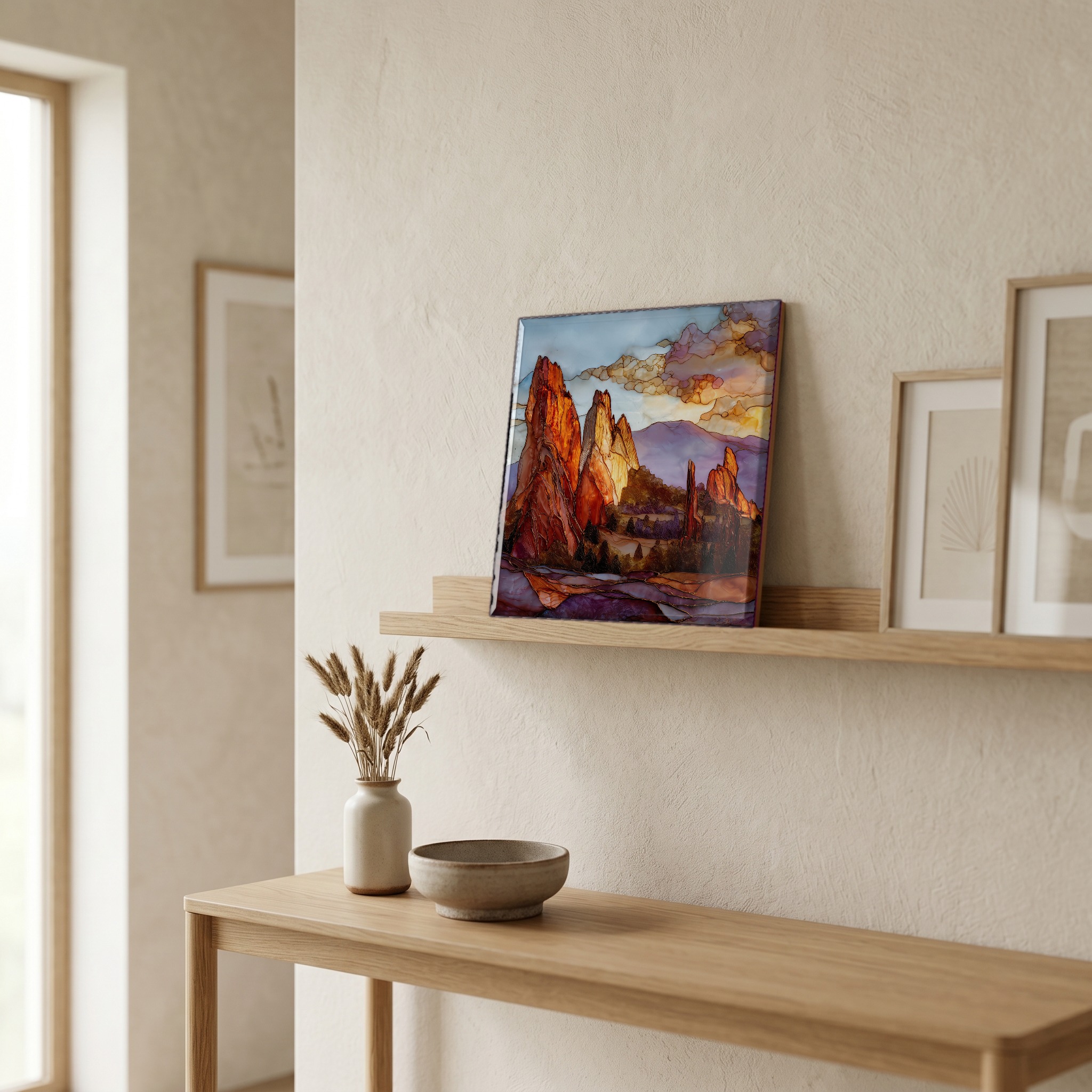
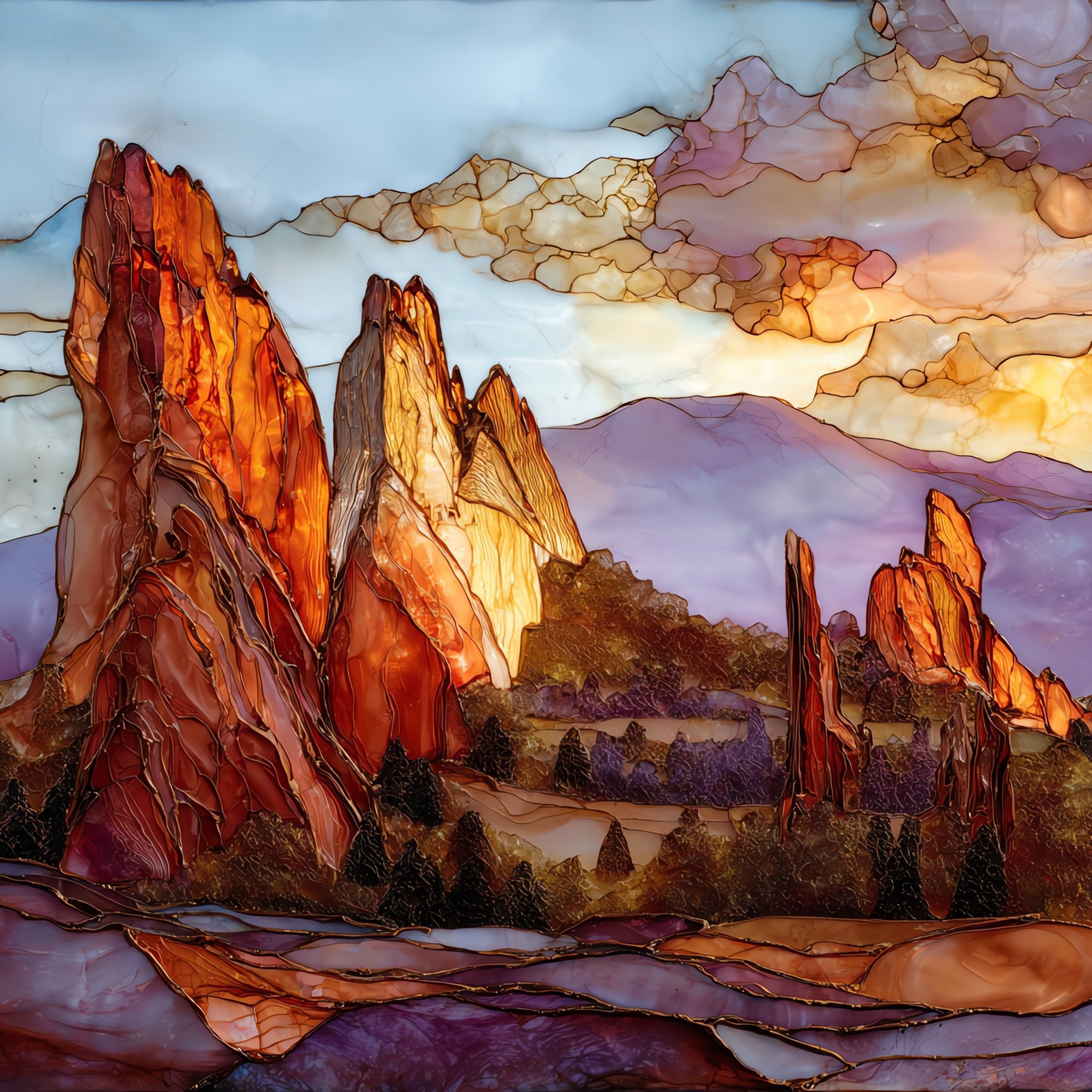
Kissing Camels Garden of the Gods Front Range Ceramic Art Tile
shown on ceramic, 12-inch tileColorado · United States
in Garden of the Gods, below Pikes Peak

Kissing Camels Garden of the Gods Front Range Ceramic Art Tile

two heads of red stone, leaning in at the top.

Where it lives

Not only on a wall.

A small tile on the nightstand catching the morning. A larger one above the fire. Yours, wherever you spend the slow hours.
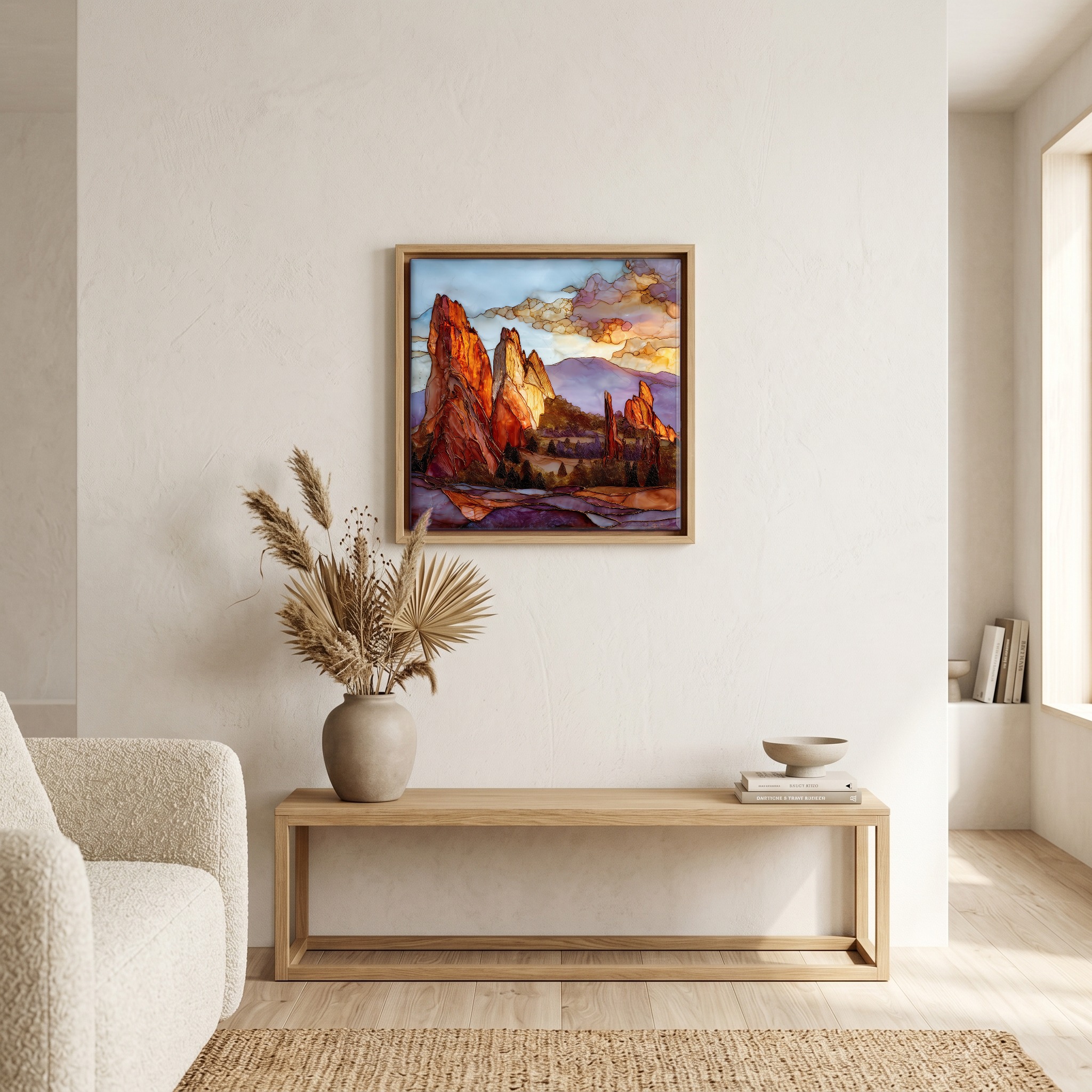
Above the bench, in a warm oak surround.
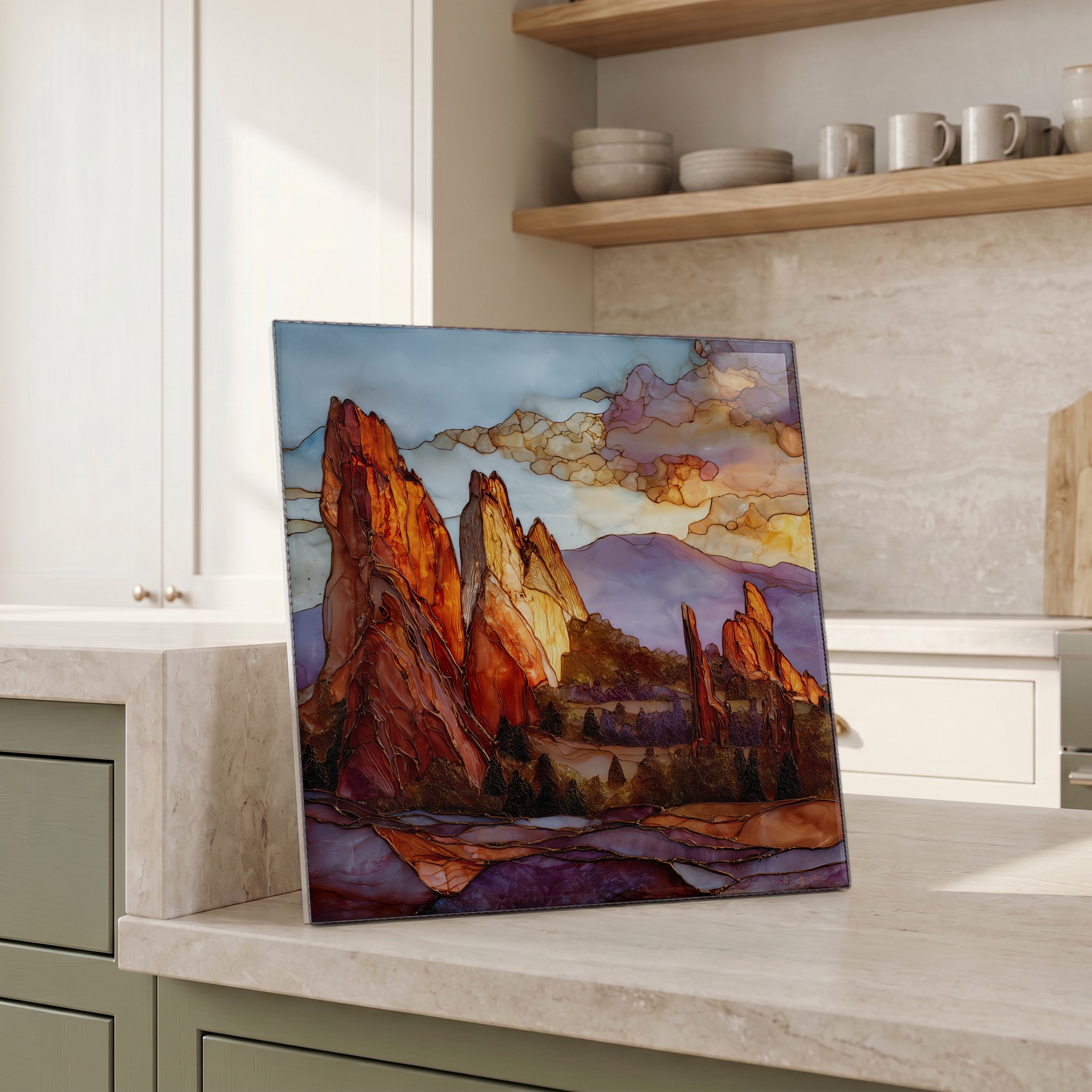
Beside the kettle, propped on the counter.
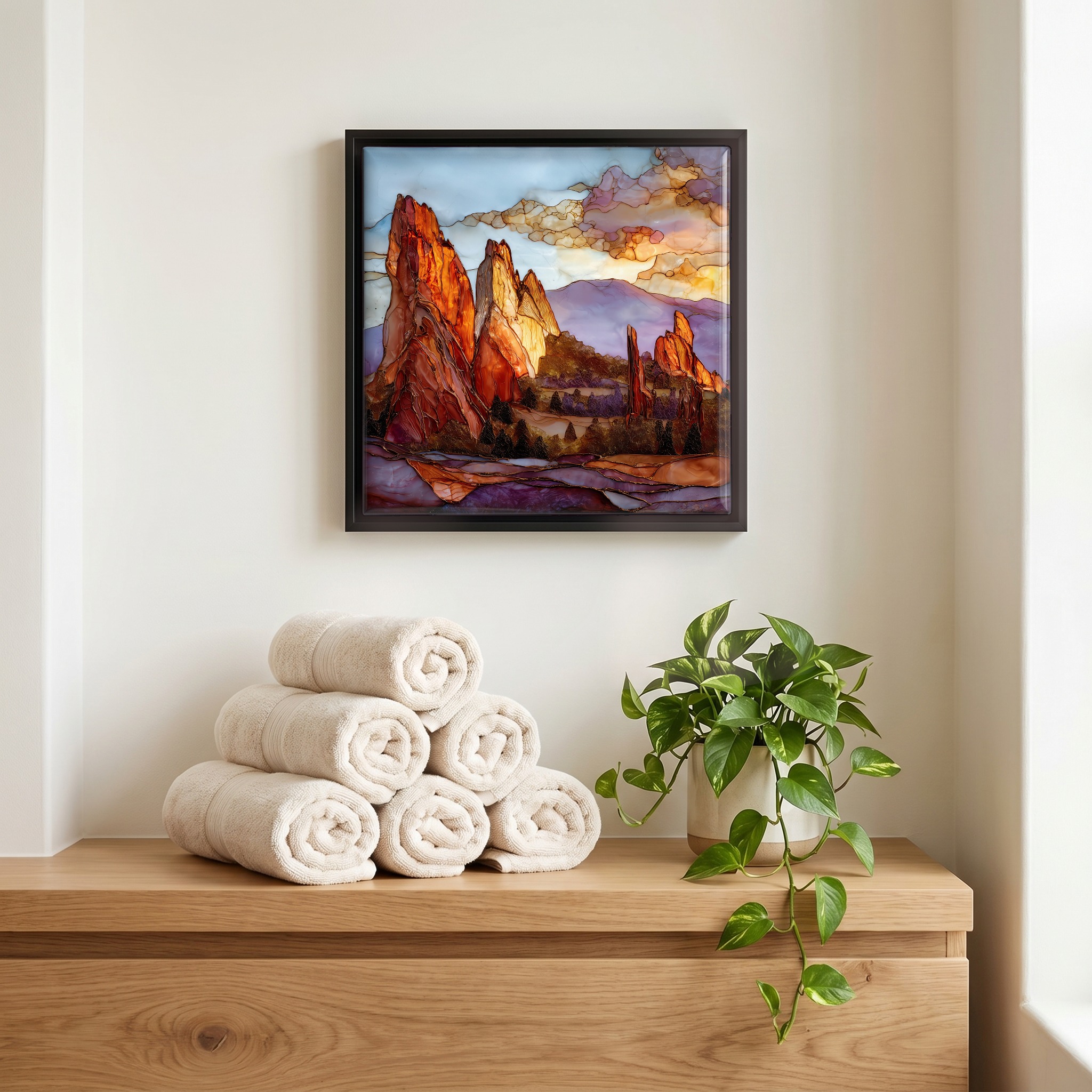
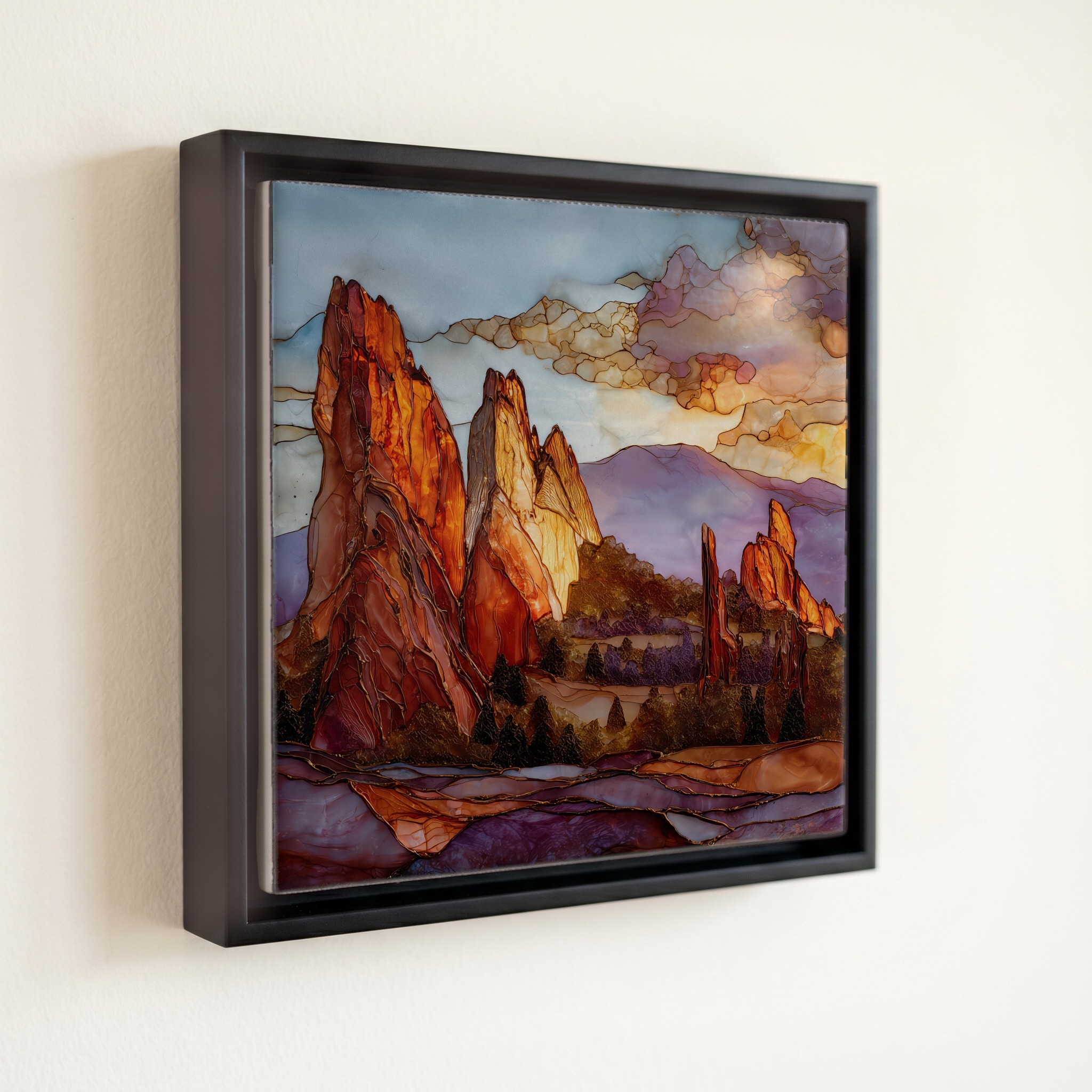
Above the linens, in a slim black surround.
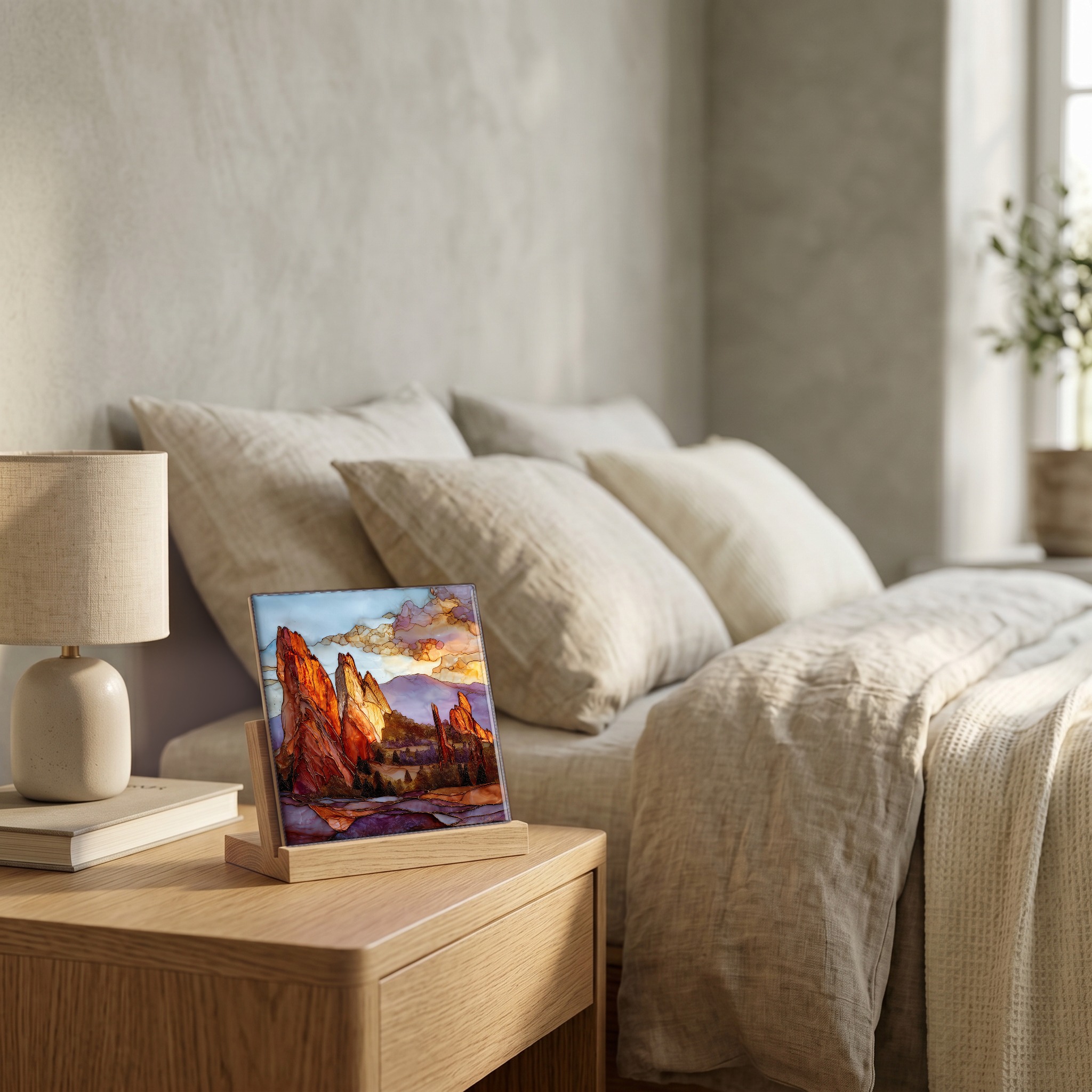
On the nightstand, on a light oak stand.
On a picture ledge, where the light comes in.
a note from the studio

Two pinnacles of red Lyons sandstone, leaning across the saddle of a fin, their heads just touching. The shape carries from a mile down the road; most visitors see it before they know what they're looking at. The park sits below Pikes Peak, on land the Perkins children gave to Colorado Springs in 1909 with one condition: it stay free, forever. Morning light catches the red of the sandstone; by late afternoon the camels read as a silhouette against the western sky.
from the studio
shown in a slim black floating frame · 6 × 6 in
— bring it home

Kissing Camels Garden of the Gods Front Range Ceramic Art Tile, on ceramic.

Each tile is finished by hand in our Knoxville studio. Artwork is slowly infused into the ceramic surface under high heat and pressure, and rests beneath a thin glossy finish. The colour lives in the surface, not on top of it.

What kind of piece?
One tile — square or rectangle.
How big?
the popular one — counter, shelf, nightstand
6 × 6 in · 15 cm · 1.6 lb
Surface finish
A clear glossy finish — the artwork reads as if under resin. Ideal for show-pieces and framed wall art.
How it sits
A hidden cleat — sits ¼″ proud of the wall.
$58
Hand-finished and shipped from our studio at the foot of the Smokies. On your wall in about ten days.
size
6 × 6 in
15 cm
weighs
1.6 lb
solid in the hand
surface
ceramic, hand-finished
art rests beneath a thin glossy finish
from
Knoxville, TN
our family studio, at the foot of the Smokies
— start a Coaster Set

Pick any four 4-inch tiles — National Parks you've been to, a Smokies set, the four seasons of one place. $ for a set of , cork-backed, ready to live on the table.
comes gift-ready
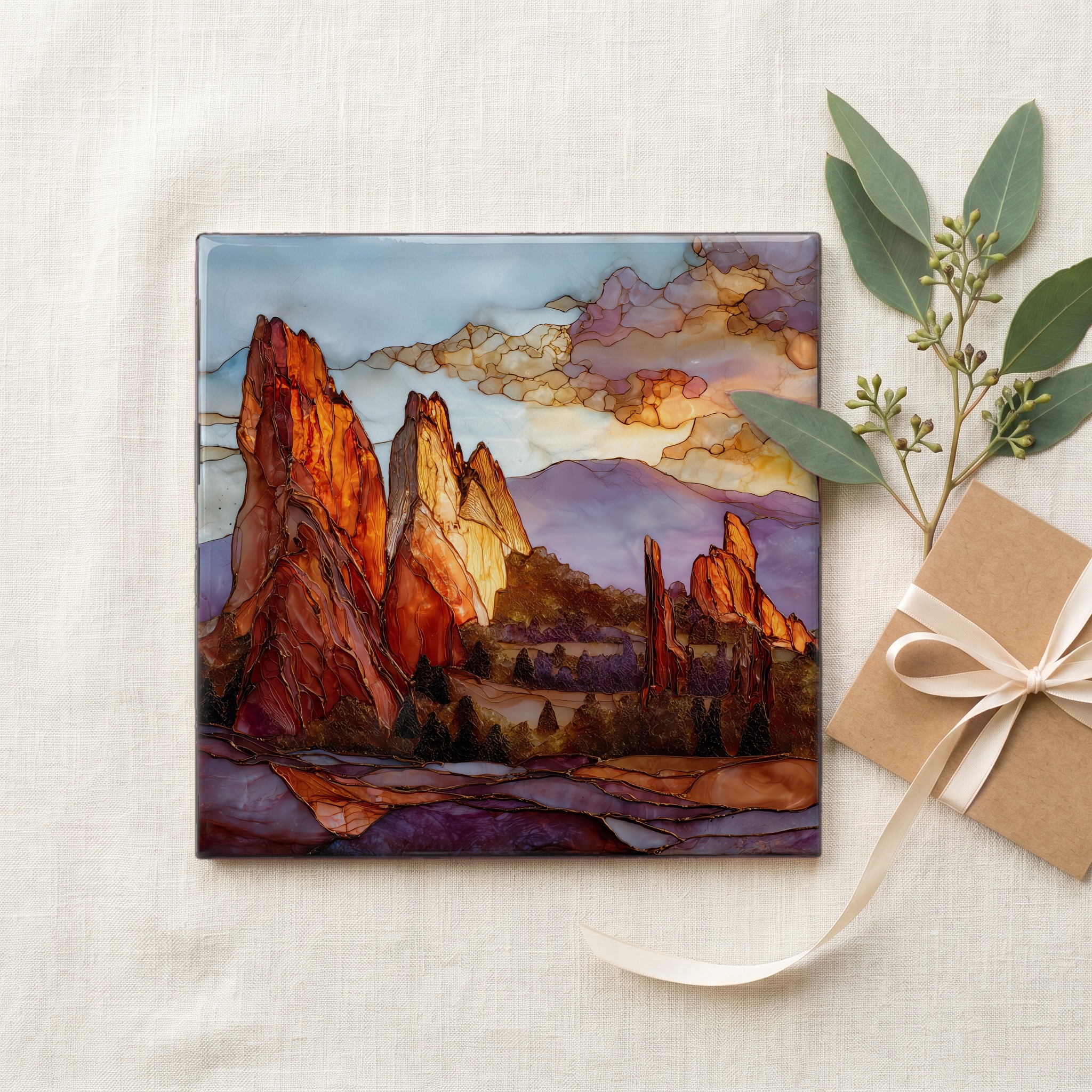
comes gift-ready

Each tile ships in a kraft box, tied with cream ribbon, with a handwritten note from the studio if you'd like to add one.
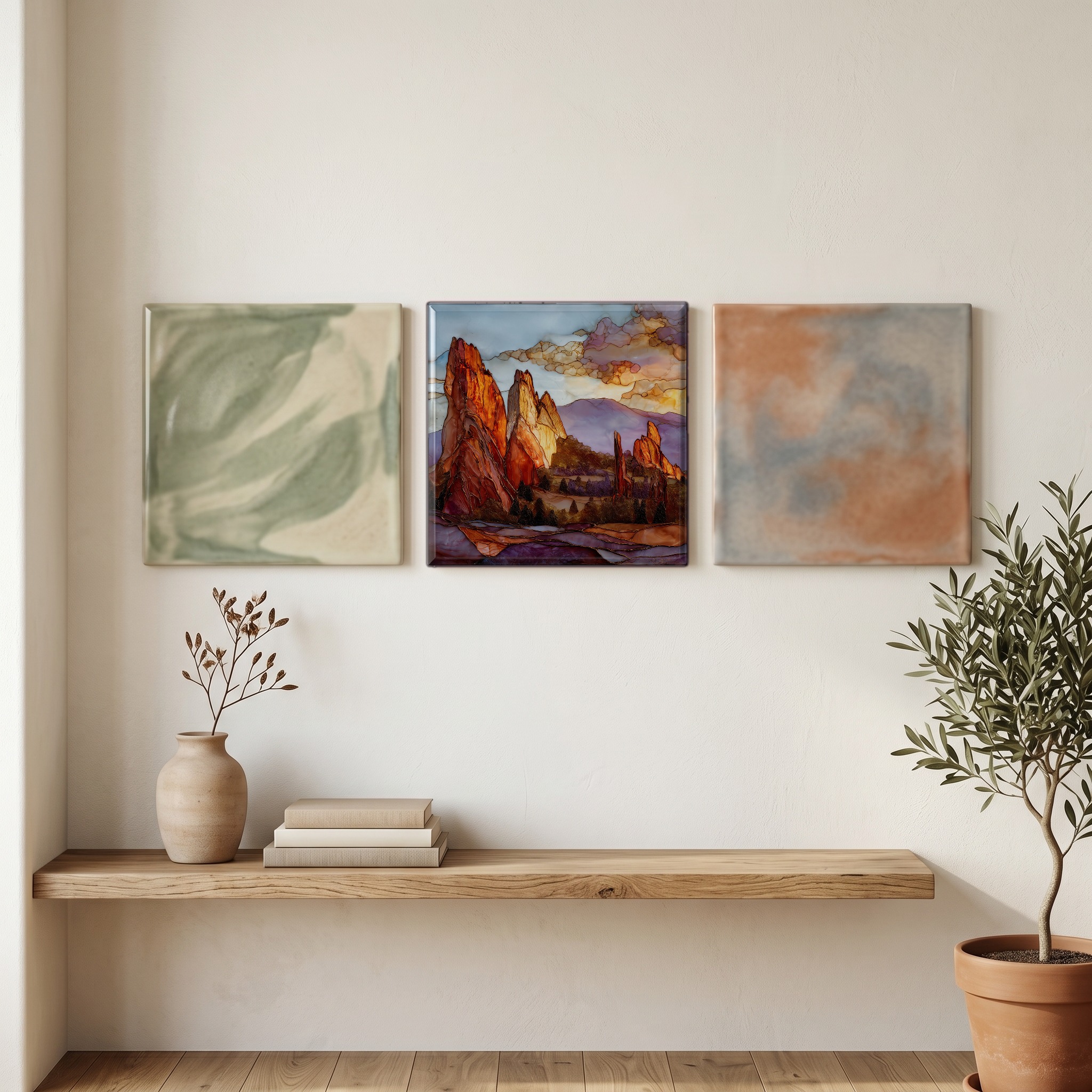
or build a grouping
or build a grouping

Three or five different vistas, hung together — a chapter of places you've been, or want to go.

about Kissing Camels Garden of the Gods Front Range Ceramic Art Tile

The place, in three passes.

A little of what's known, in case you fall down the rabbit hole — or want to go see it yourself.
the place

Garden of the Gods is a 1,367-acre public park on the west side of Colorado Springs, El Paso County, Colorado, at roughly 6,400 feet on the eastern flank of the Front Range. The Kissing Camels formation rises near the centre of the park, visible from the Main Loop road and from many of the overlooks along the Perkins Central Garden Trail. Pikes Peak stands about ten miles to the west at 14,115 feet, often framing the rocks. The park was designated a National Natural Landmark in 1971 by the National Park Service. It is owned by the city of Colorado Springs and admission is free, by the wish of the original donor family.

the stone

The two pinnacles are eroded fins of Lyons sandstone, a fine-grained, deep-red rock laid down during the Permian period, roughly 280 million years ago, in a coastal dune field that once ran along the western edge of an ancient inland sea. When the Front Range was thrust upward in the Laramide orogeny, the originally horizontal beds were tilted nearly vertical, leaving the sandstone standing on edge as the great red walls visible across the park today. Wind and water cut narrower sections of the standing rock into the saddles and spires that mark the Garden. The two heads of the Kissing Camels are the surviving caps at the top of one such fin.

the visit

Admission to Garden of the Gods is free and the park is open year-round, from early morning through evening. The land was donated to Colorado Springs in 1909 by the children of Charles Elliott Perkins, a railroad executive who had bought the parcel in the 1870s; the family's condition was that it remain a public park, free to all. The Kissing Camels are most easily seen from the Main Loop road and from the upper level of the Visitor and Nature Center across Highway 24. The light favours the silhouette at the end of the day; the colour favours morning.

where
United States · Colorado Springs, Colorado
within
Garden of the Gods
elevation
1,951 m · 6,400 ft
position
38.8784° N · 104.8869° W
the neighborhood

What's nearby.

A handful of named places within an hour's walk or short drive. Some we've already painted; some we will.
10 km SW
Pikes Peak
fourteener
4 km SW
Manitou Springs
spa town
5 km SW
Cave of the Winds
show cave
1 km N
Glen Eyrie
Tudor estate
5 km SE
Old Colorado City
historic district
N
Kissing Camels Garden of the Gods Front Range Ceramic Art Tile
Pikes Peak
Manitou Springs
Cave of the Winds
Glen Eyrie
Old Colorado City
common questions

What people ask.

A few questions we get about Kissing Camels Garden of the Gods Front Range Ceramic Art Tile — and about bringing the piece home.
about the place

The Kissing Camels rise near the centre of Garden of the Gods Park, on the west side of Colorado Springs in El Paso County, Colorado. The park sits at about 6,400 feet on the eastern flank of the Front Range, with Pikes Peak roughly ten miles to the west.

The formation is Lyons sandstone, a fine-grained, deep-red Permian rock laid down about 280 million years ago in an ancient coastal dune field. The two heads are erosion-resistant caps at the top of a vertical sandstone fin tilted up by the Laramide orogeny.

Yes. The park has been free since 1909, when the children of Charles Elliott Perkins gave the land to the city of Colorado Springs on the condition that it remain a public park, open to all, with no admission charge.

The silhouette is strongest in the last hour of daylight, when the rocks read as two dark figures against the western sky. The deep red of the Lyons sandstone shows best in early morning, when the sun is behind the viewer.

No. Garden of the Gods is a city park, owned and operated by Colorado Springs. It was designated a National Natural Landmark by the National Park Service in 1971, but it remains a municipal park, not a unit of the national park system.

The name dates to 1859, when two surveyors laying out the future Colorado City first saw the red sandstone fins. One reportedly said the place would be a capital beer garden; the other answered that it was a place fit for the gods, and the second name stuck.

about the piece in your home

Yes. The Kissing Camels are a daily landmark for anyone on the west side of the city, visible from Highway 24, from many neighbourhoods, from the schoolyards. A Small or a Coaster Set with a handwritten note from the studio carries the place to anyone who remembers seeing it on the drive home.

The deep reds and cobalt blues read well against warm whites and natural wood. Mountain-modern, Southwest-modern, and Jewel-tone Maximalist rooms carry it well. It also works as a single anchor piece in a quieter Minimalist room, where the colour does all the work.

Mountain-modern leans on natural materials, deep colour, and a sense of place. A ceramic art tile of a real Front Range landmark, finished by hand, fits the room more honestly than a printed canvas of a stock alpine scene. The Large reads strongest above a fireplace.

The single Large sits well above a console or a reading chair. Above a full sofa, a 4-tile Mural carries the room better; for a long wall or a stair landing, the 9-tile Mural is the version that becomes the room's anchor.

Yes, with the Dura Satin or Matte finish; both are scratch-resistant and built for vertical installations in damp rooms. The Glossy finish is reserved for show-pieces and framed wall art and should not be used in showers or directly over a stovetop.

A soft microfibre cloth and water. No chemical cleaners, no abrasive pads. The colour is slowly infused into the ceramic surface under high heat and pressure and rests beneath a thin protective finish, so a clean, damp cloth restores the surface without dulling it.

Yes. Every WenderVista tile is painted in-studio by Reid Wender, the curator. The work is not licensed from any third party. Each piece is a single studio's eye applied to a single place; in this case, the most recognisable silhouette in Garden of the Gods.

if this one stayed with you

A few you might also love.

Hand-picked by the eye that found Sorapis. Same air, same kind of quiet.