Wender·Vista
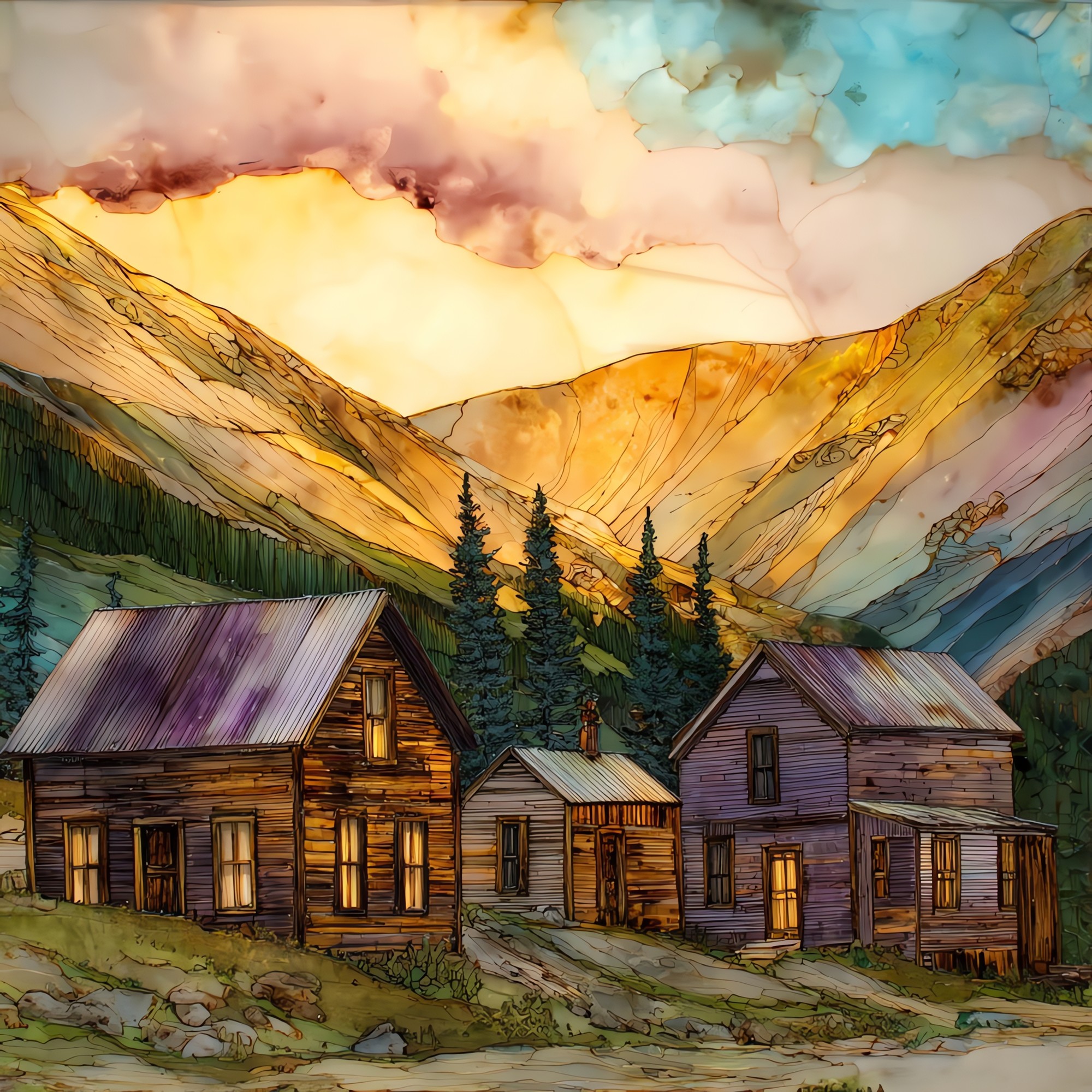
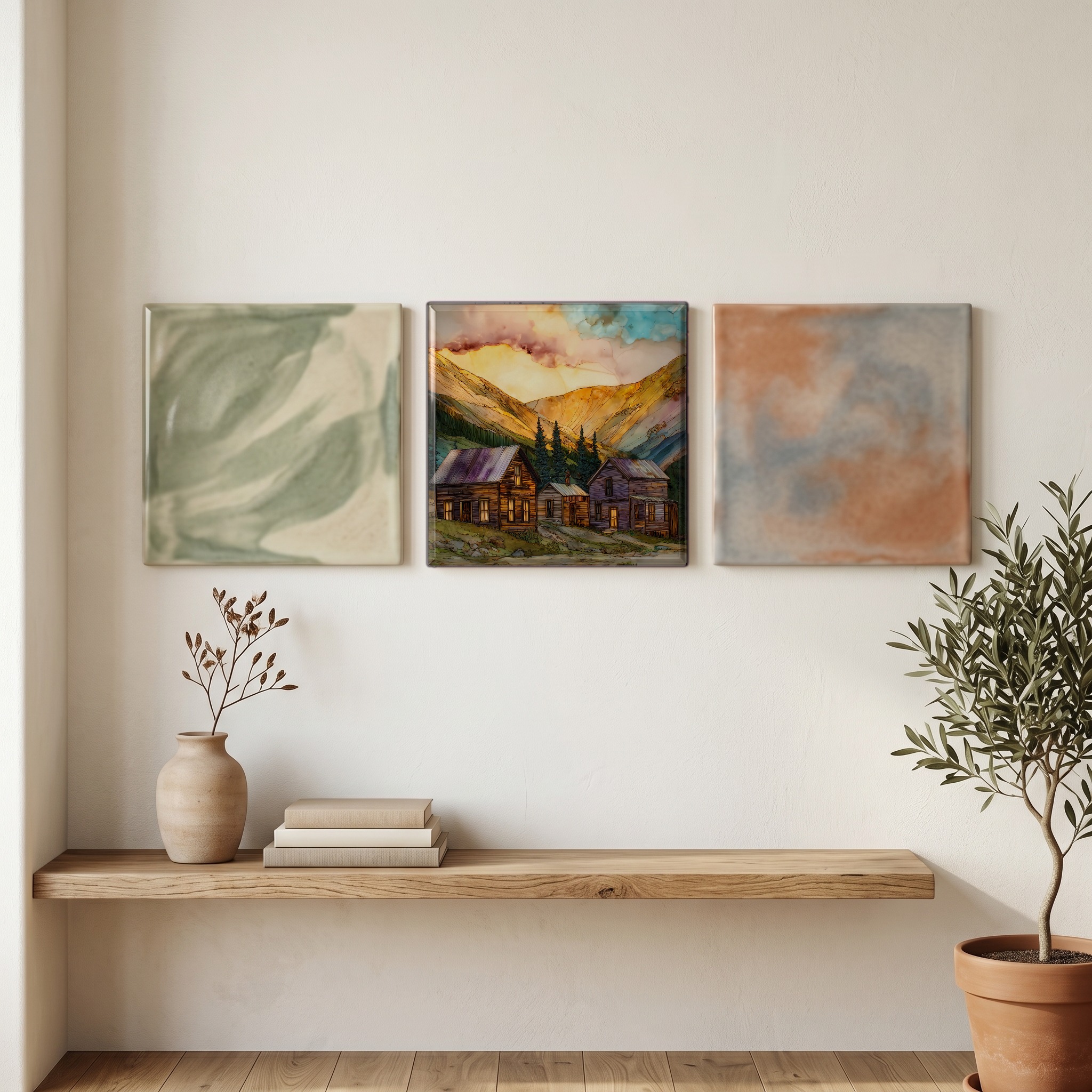
Independence Ghost Town Sawatch Range Ceramic Art Tile
shown on ceramic, 12-inch tileColorado · United States
high in the Sawatch, above Aspen

Independence Ghost Town Sawatch Range Ceramic Art Tile

the silence after the silver left.

Where it lives

Not only on a wall.

A small tile on the nightstand catching the morning. A larger one above the fire. Yours, wherever you spend the slow hours.
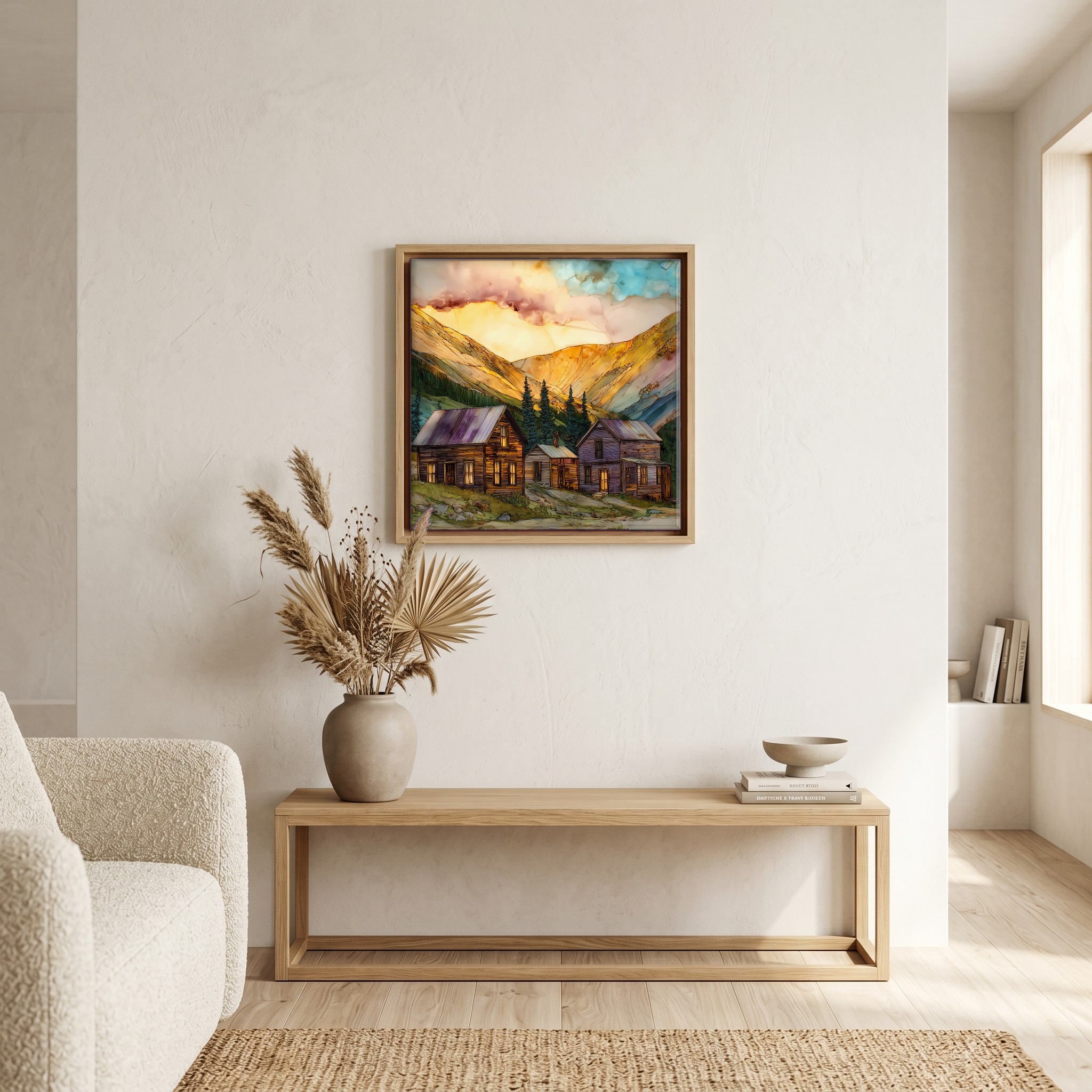
Above the bench, in a warm oak surround.
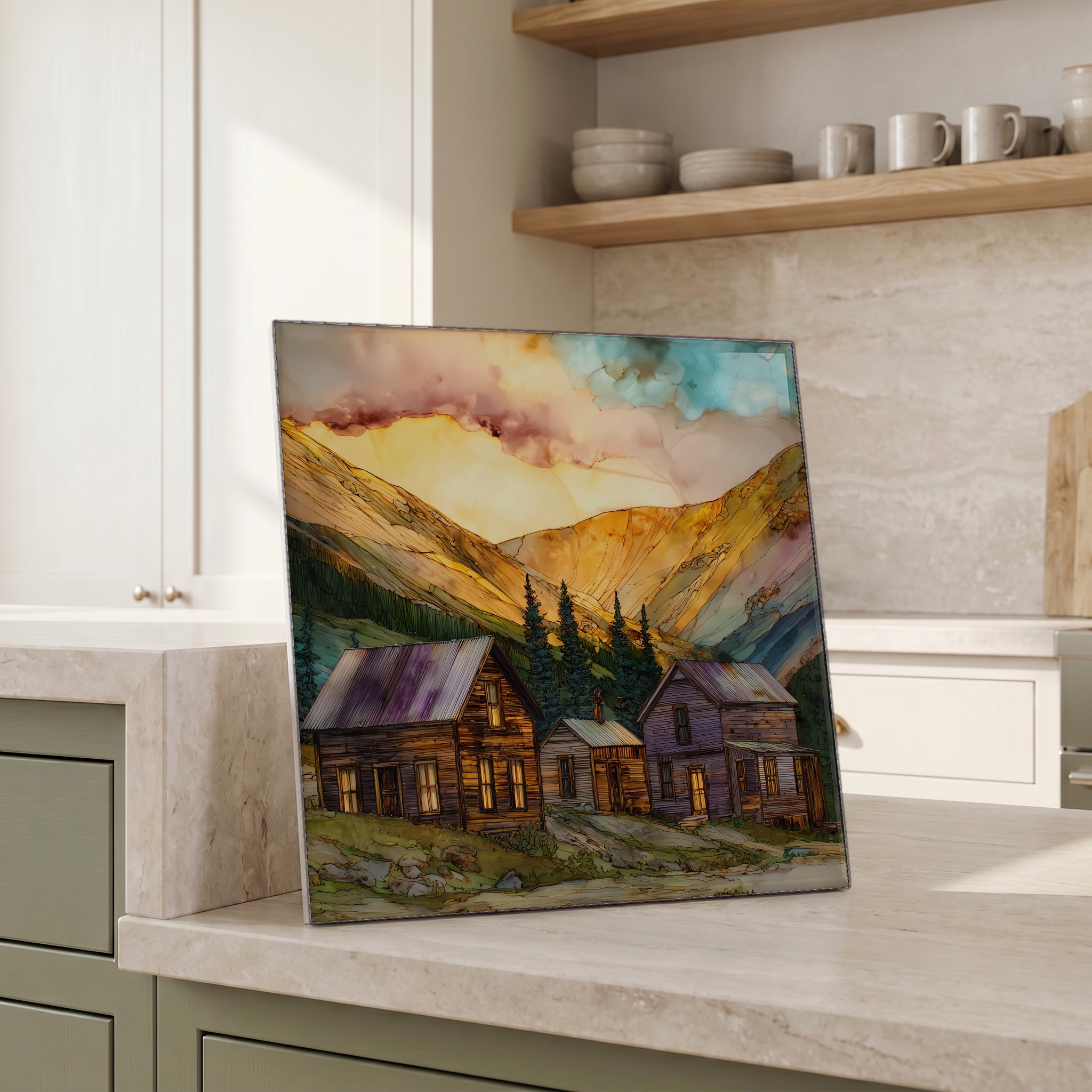
Beside the kettle, propped on the counter.
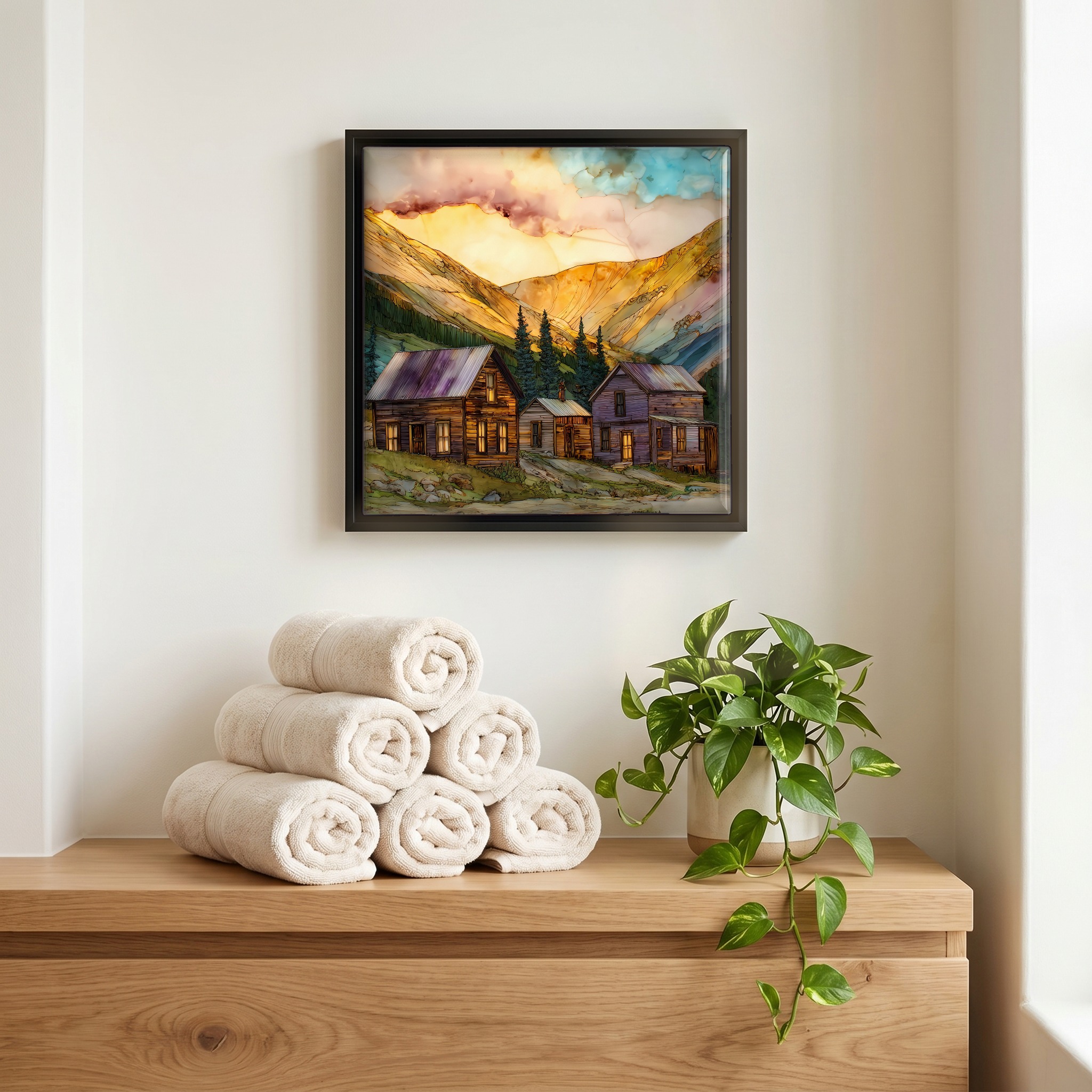
Above the linens, in a slim black surround.
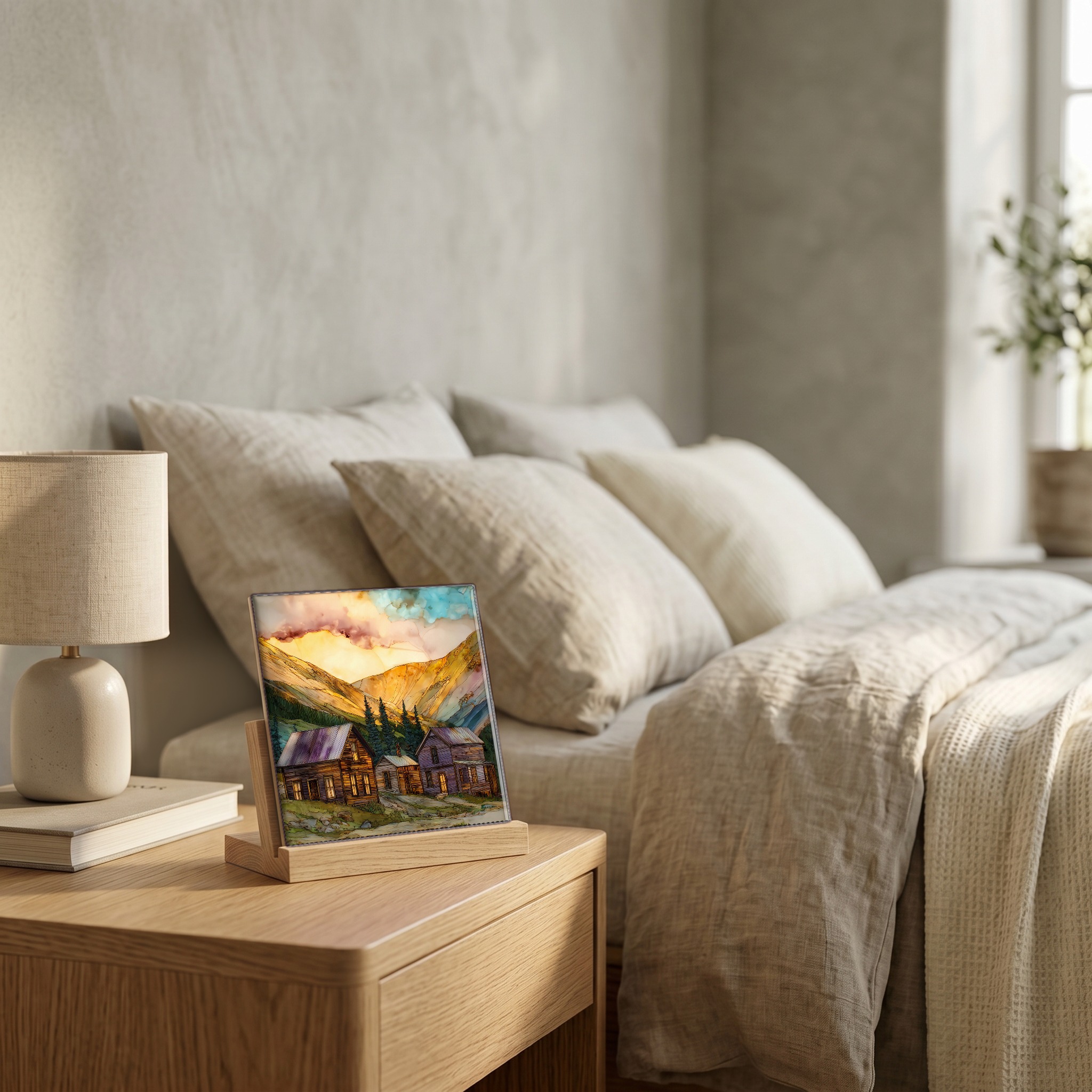
On the nightstand, on a light oak stand.
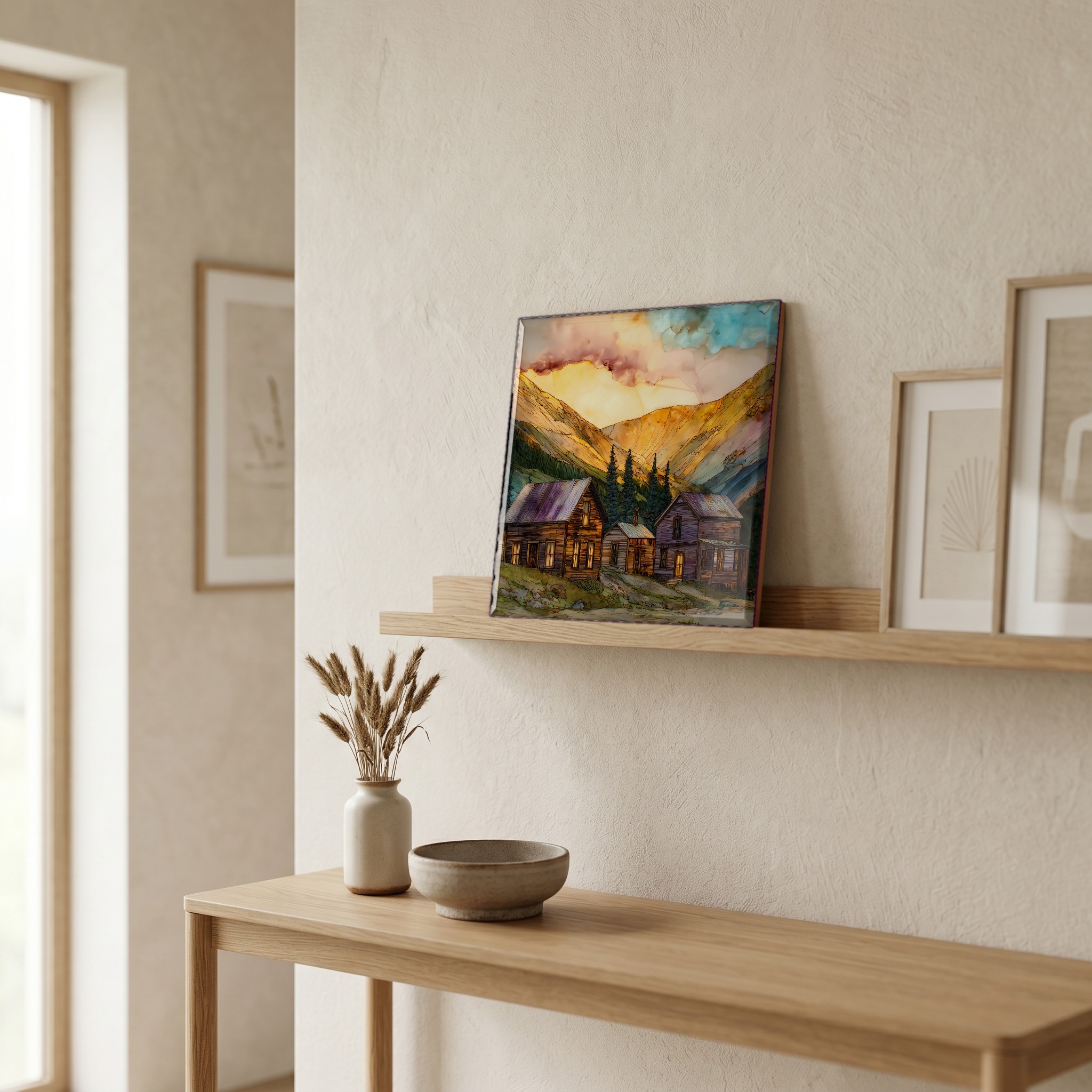
On a picture ledge, where the light comes in.
a note from the studio

A high ghost town on the road over Independence Pass, between Aspen and Twin Lakes. Gold turned up here on the Fourth of July, 1879, and the camp went up fast. By the early 1880s about 1,500 people lived at the site, with saloons, boarding houses, and a working main street of stores. The silver crash of 1893 took most of them out. The last few are said to have skied down to Aspen the winter of 1899, on planks pulled from their own cabins. About a dozen log structures still stand at 10,900 feet, looked after by the Aspen Historical Society. The road is closed every winter; the cabins are alone for six months at a time.
from the studio
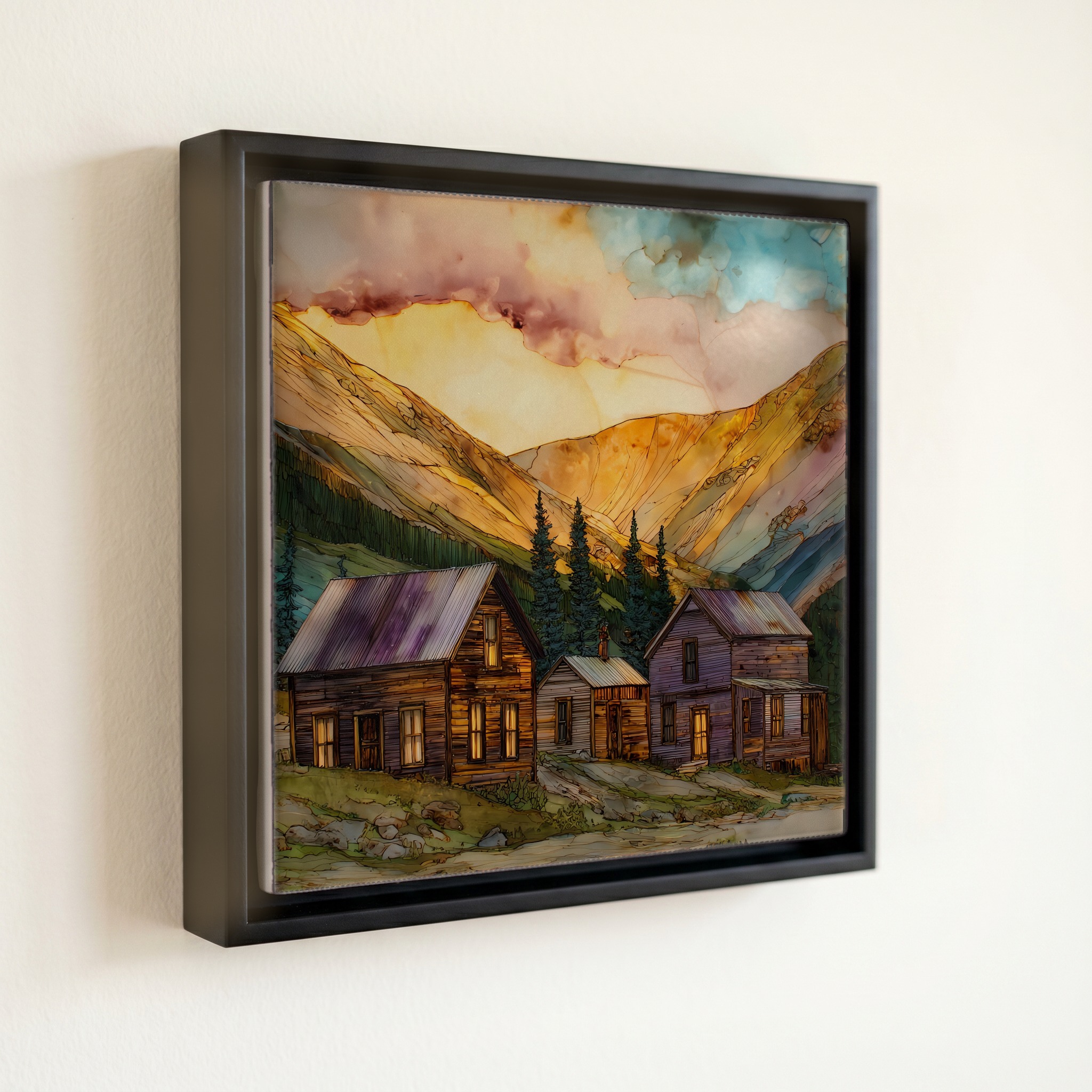
shown in a slim black floating frame · 6 × 6 in
— bring it home

Independence Ghost Town Sawatch Range Ceramic Art Tile, on ceramic.

Each tile is finished by hand in our Knoxville studio. Artwork is slowly infused into the ceramic surface under high heat and pressure, and rests beneath a thin glossy finish. The colour lives in the surface, not on top of it.

What kind of piece?
One tile — square or rectangle.
How big?
the popular one — counter, shelf, nightstand
6 × 6 in · 15 cm · 1.6 lb
Surface finish
A clear glossy finish — the artwork reads as if under resin. Ideal for show-pieces and framed wall art.
How it sits
A hidden cleat — sits ¼″ proud of the wall.
$58
Hand-finished and shipped from our studio at the foot of the Smokies. On your wall in about ten days.
size
6 × 6 in
15 cm
weighs
1.6 lb
solid in the hand
surface
ceramic, hand-finished
art rests beneath a thin glossy finish
from
Knoxville, TN
our family studio, at the foot of the Smokies
— start a Coaster Set

Pick any four 4-inch tiles — National Parks you've been to, a Smokies set, the four seasons of one place. $ for a set of , cork-backed, ready to live on the table.
comes gift-ready
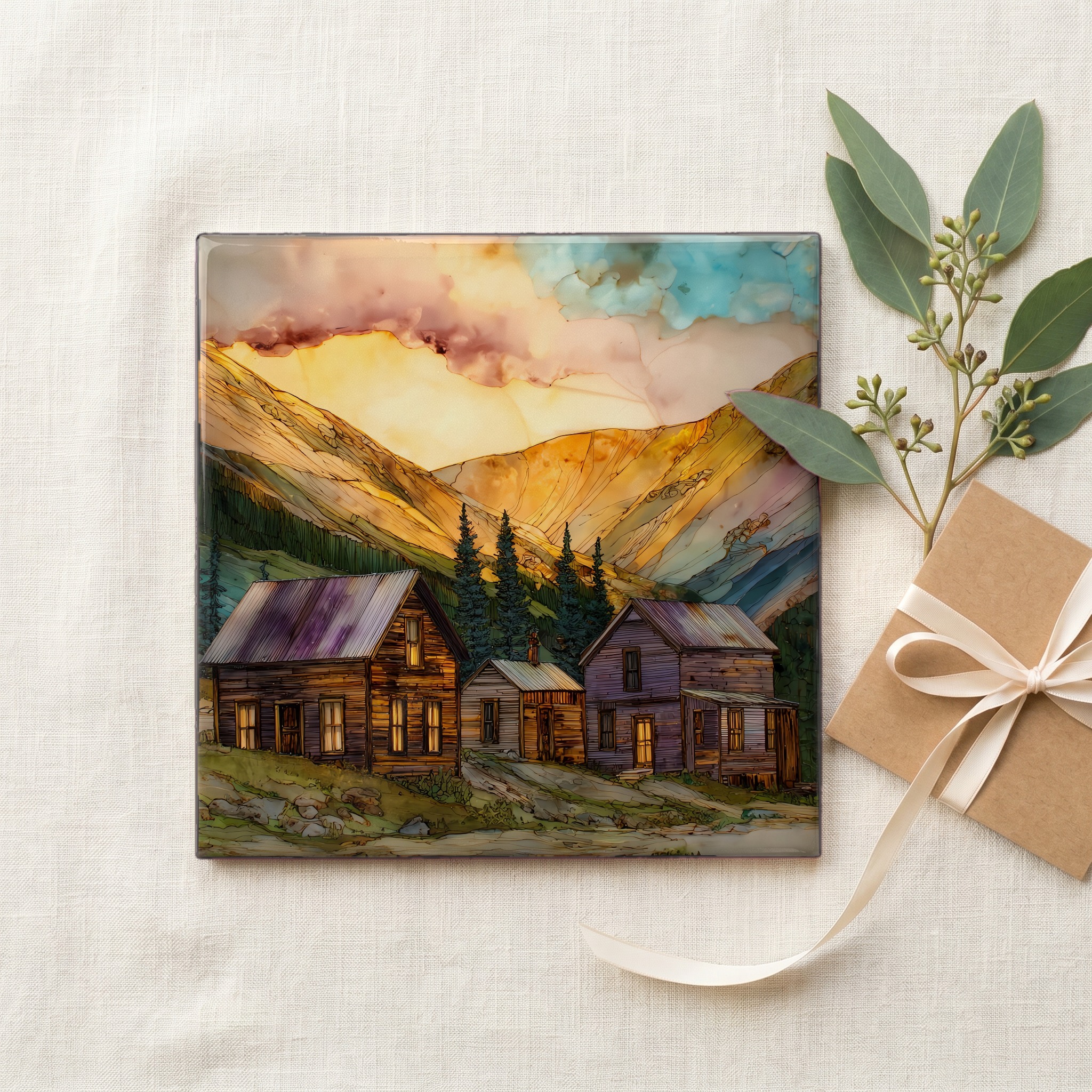
comes gift-ready

Each tile ships in a kraft box, tied with cream ribbon, with a handwritten note from the studio if you'd like to add one.
or build a grouping
or build a grouping

Three or five different vistas, hung together — a chapter of places you've been, or want to go.

about Independence Ghost Town Sawatch Range Ceramic Art Tile

The place, in three passes.

A little of what's known, in case you fall down the rabbit hole — or want to go see it yourself.
the place

Independence sits at 10,900 feet on the western flank of the Sawatch Range, sixteen miles east of Aspen along Colorado State Highway 82, the high road over Independence Pass. The Sawatch holds the highest peaks of the Colorado Rockies. Fifteen named fourteeners cluster here, including Mount Elbert at 14,440 feet, the highest summit in the Rocky Mountain system. The town site is part of the White River National Forest, managed jointly by the U.S. Forest Service and the Aspen Historical Society, and listed on the National Register of Historic Places. The Roaring Fork River begins a few miles above on the pass itself, then runs west through what later became Aspen before joining the Colorado at Glenwood Springs.

the stone

About a dozen log structures remain at the site, mostly small one- and two-room cabins from the early 1880s, along with the foundations of a general store and a stable. The buildings are stabilised rather than restored. The Aspen Historical Society and the U.S. Forest Service manage the site jointly, and Independence was added to the National Register of Historic Places in 1973. Above 10,000 feet, wood weathers slowly. The grey on these walls is real time: more than a hundred and forty winters of dry alpine air, hard sun, and snow that can bury the doorframes from November to May.

the visit

Access is summer only. Colorado State Highway 82 over Independence Pass closes after the first big snow each November and reopens around Memorial Day, depending on the spring melt. The pass itself crests at 12,095 feet, among the highest paved through-routes in North America, and is narrow enough that vehicles longer than 35 feet are prohibited even when the road is open. The town site is a half-mile walk on a graded path from the highway pullout. There is no fee. Interpretive signs from the Aspen Historical Society identify each surviving structure. Visitors are asked to stay on marked paths. The cabins are over 140 years old and the alpine meadow is fragile. Allow an hour for the walk and a careful look.

where
United States · Pitkin County, Colorado
within
White River National Forest
elevation
3,323 m · 10,900 ft
position
39.1078° N · 106.6122° W
the neighborhood

What's nearby.

A handful of named places within an hour's walk or short drive. Some we've already painted; some we will.
26 km W
Aspen
mountain town
6 km E
Independence Pass
mountain pass
11 km W
The Grottos
granite formation
N
Independence Ghost Town Sawatch Range Ceramic Art Tile
Aspen
Independence Pass
The Grottos
common questions

What people ask.

A few questions we get about Independence Ghost Town Sawatch Range Ceramic Art Tile — and about bringing the piece home.
about the place

Independence sits at 10,900 feet on the western side of Colorado's Sawatch Range, sixteen miles east of Aspen on State Highway 82. It is a few miles below the summit of Independence Pass, inside the White River National Forest in Pitkin County.

Gold was discovered at the site on July 4, 1879, and the camp took the name of the date. The town went through several other names, including Belden, Chipeta City, Mount Hope, and Mammoth City, before settling back to Independence in the early 1880s.

Independence emptied out after the Silver Crash of 1893, which collapsed the price of silver and closed most of the mines in the area. By 1899 only a few people were left at the site, and they reportedly skied down to Aspen that winter on planks pulled from their own cabins.

Yes. The site is open to the public during the summer season when Highway 82 over Independence Pass is open, typically late May through early November. There is no admission fee. A half-mile graded path from the highway pullout reaches the cabins, and interpretive signs identify each structure.

The Aspen Historical Society and the U.S. Forest Service manage Independence jointly. The Society's preservation work focuses on stabilising the existing log structures rather than rebuilding them. The site has been listed on the National Register of Historic Places since 1973.

The pass crests at 12,095 feet (3,687 m), making it one of the highest paved through-routes in North America. The ghost town sits about 1,200 feet lower at 10,900 feet, on the long climb up from Aspen. The pass is closed by snow from roughly November through May each year.

The Sawatch Range is a north-south spine of the Colorado Rockies that holds fifteen named fourteen-thousand-foot peaks, more than any other single range in the contiguous United States. Mount Elbert, the highest summit in the Rockies at 14,440 feet, anchors the range about thirty miles south of Independence.

about the piece in your home

It's been a meaningful piece for our customers with ties to the Roaring Fork Valley. Independence is the upstream half of Aspen's own origin story, the mining camp that emptied as the silver crashed. A Coaster Set or Small with a handwritten note from the studio carries well to a former resident or a frequent skier.

The palette runs to weathered greys, cold blues, and the warm wood tones of the standing cabins, with quiet stained-glass colour through the alpine sky. It sits well in Mountain-modern and Rustic-modern rooms, in Alpine-cabin interiors with shiplap or live-edge wood, and in Maximalist galleries where colour and texture can argue.

Mountain-modern has shifted toward darker, moodier palettes with weathered timber and history-rich artwork. A high-altitude Colorado ghost town in stained-glass colour fits that direction. The Large above a long console or a low credenza reads as a statement piece without crowding a modern room.

A single Large works above most consoles. Above a sofa or a long credenza, a 4-tile Mural carries the wall. For a full feature wall in a great room, a 9-tile Mural lets the artwork settle and gives the cabins room to breathe.

Yes, in the Dura Satin or Matte finishes. Both are humidity-resistant and scratch-resistant, and both can go on a backsplash or a shower wall. The Glossy finish is held back for framed wall pieces and Keepsake-size show tiles, where the surface stays dry.

A soft microfibre cloth and warm water are enough. The colour lives in the surface of the tile, so there's no painted layer to scratch off. Avoid abrasive sponges and ammonia-based cleaners on Glossy; the Dura Satin and Matte finishes are more forgiving still.

Yes. Every WenderVista piece is made in our family studio in Knoxville, Tennessee. The artwork is curated by Reid Wender and slowly infused into the ceramic surface under high heat and pressure, then hand-finished beneath a thin protective layer. No licensing, no third-party prints.

if this one stayed with you

A few you might also love.

Hand-picked by the eye that found Sorapis. Same air, same kind of quiet.