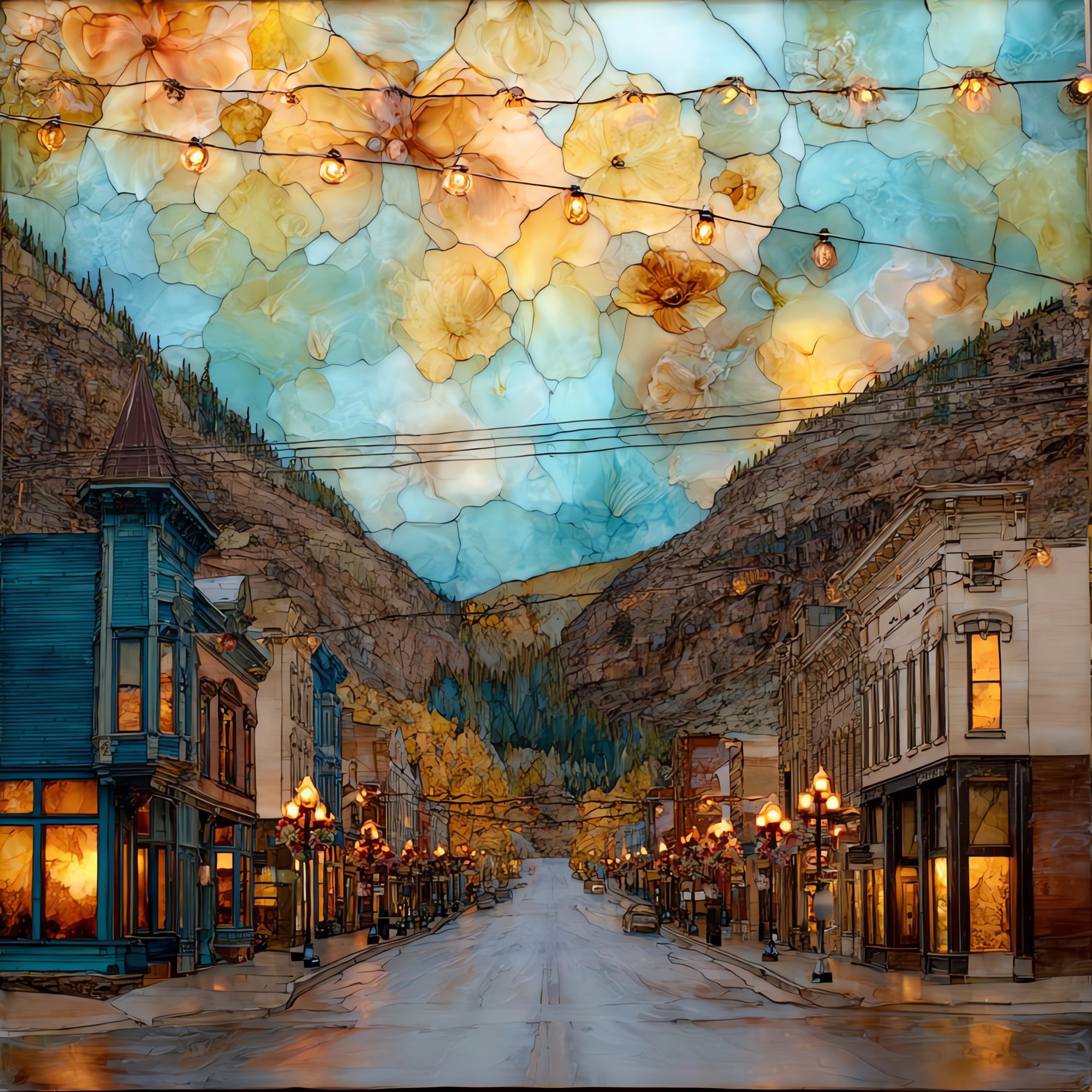
Idaho Springs mining town Front Range Ceramic Art Tile
— a town gold built and left to weather.
Not only on a wall.

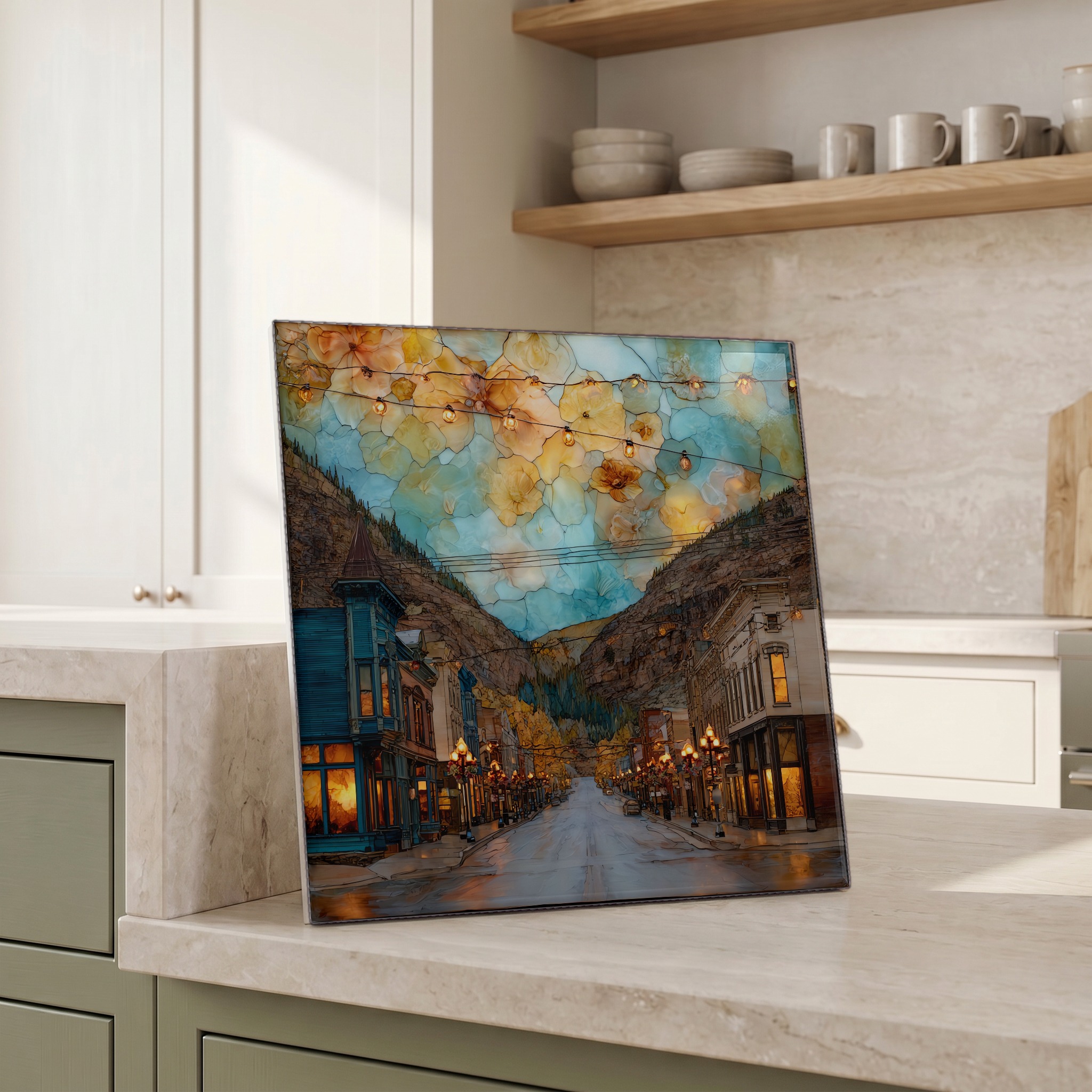
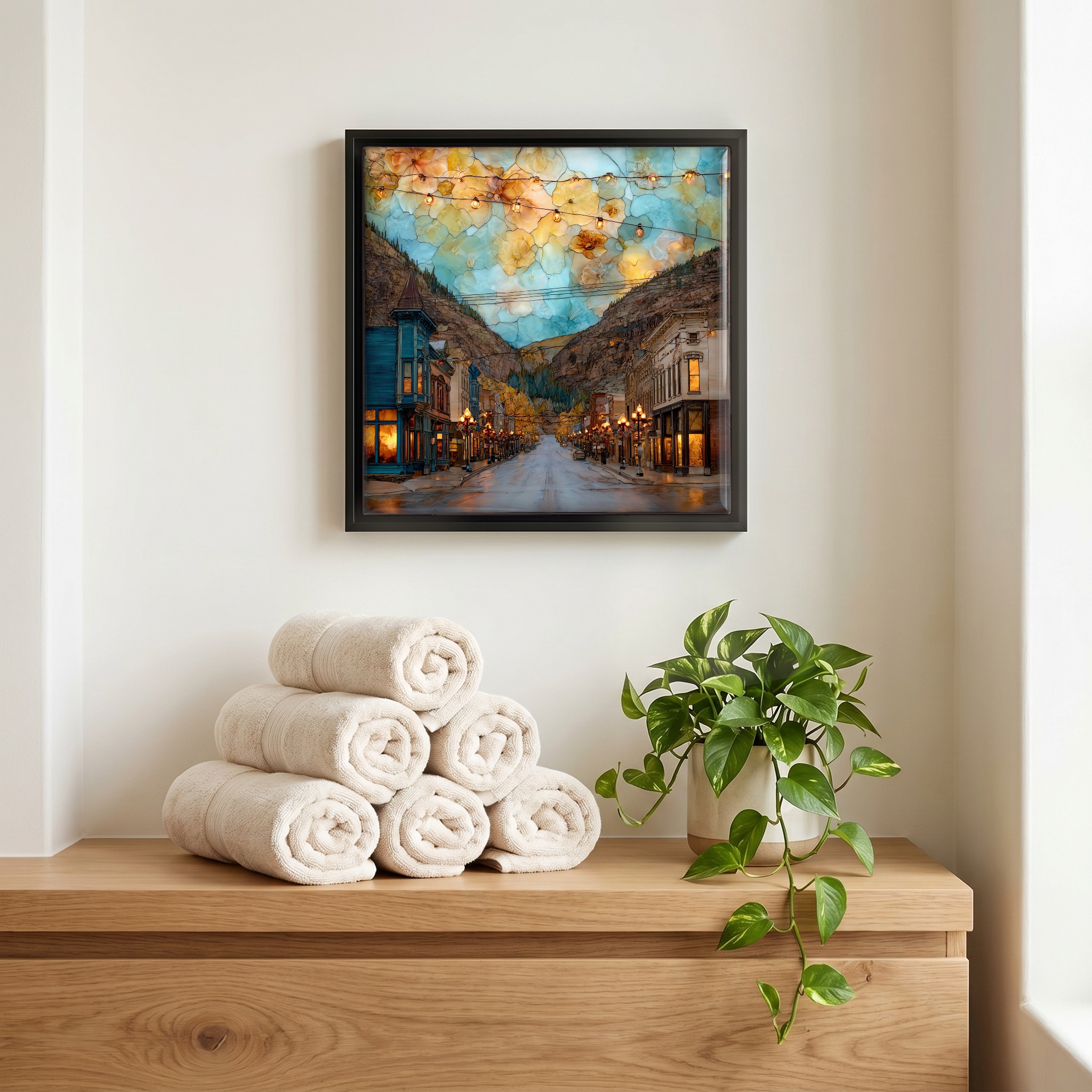

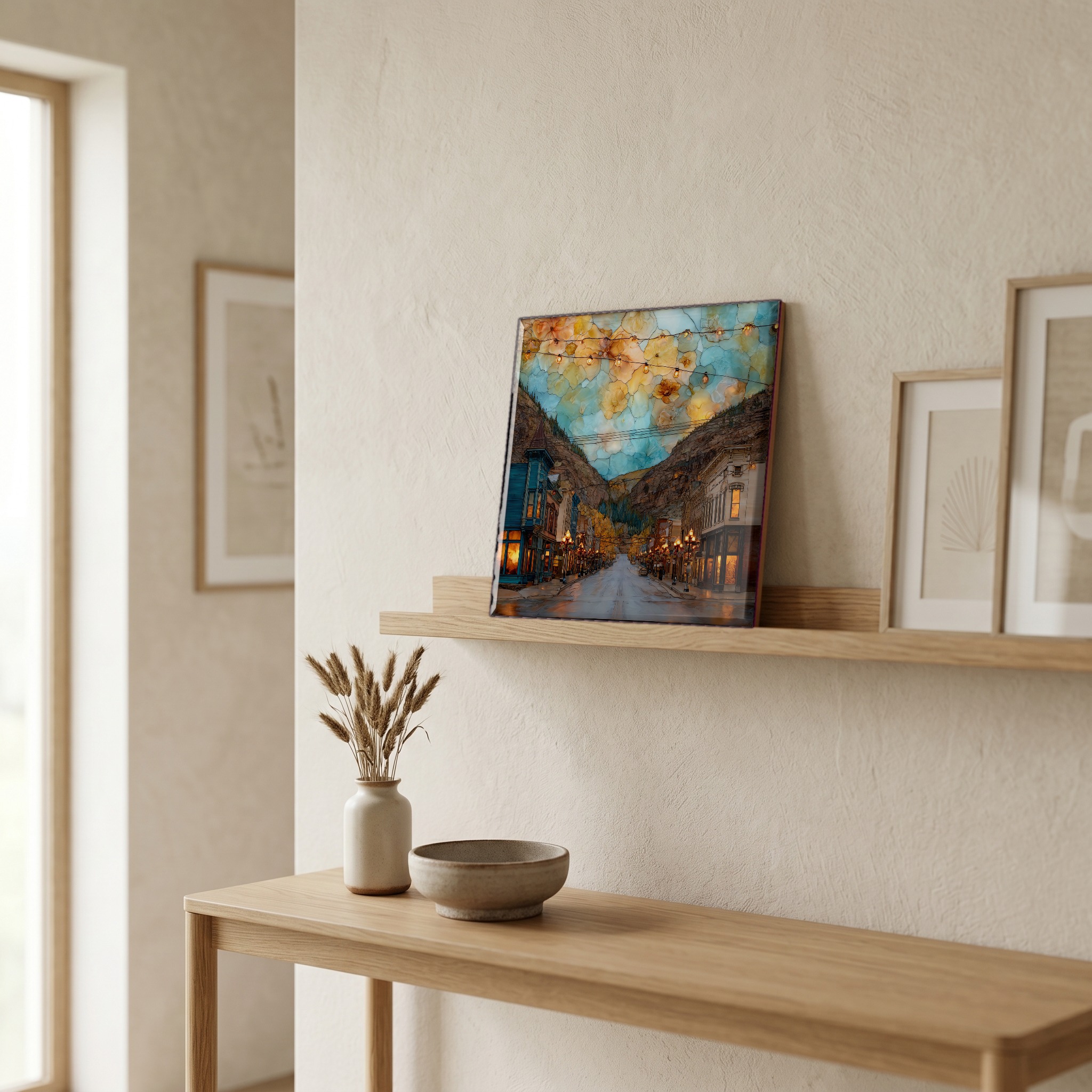
“A small canyon town an hour west of Denver, where George Jackson found placer gold at the creek mouth in January 1859 and pulled the rush into the mountains. The brick storefronts along Miner Street are mostly the ones the boom built. Clear Creek runs through it loud all summer, the Argo Mill watches from the hillside, and the road keeps going up past Echo Lake, past treeline, all the way to the summit of Mount Blue Sky. The town drains the way mining towns drain when the ore runs out, but Idaho Springs never quite emptied. The hot springs are still open. The headframes are still standing. Somebody is always working on a Victorian roof.
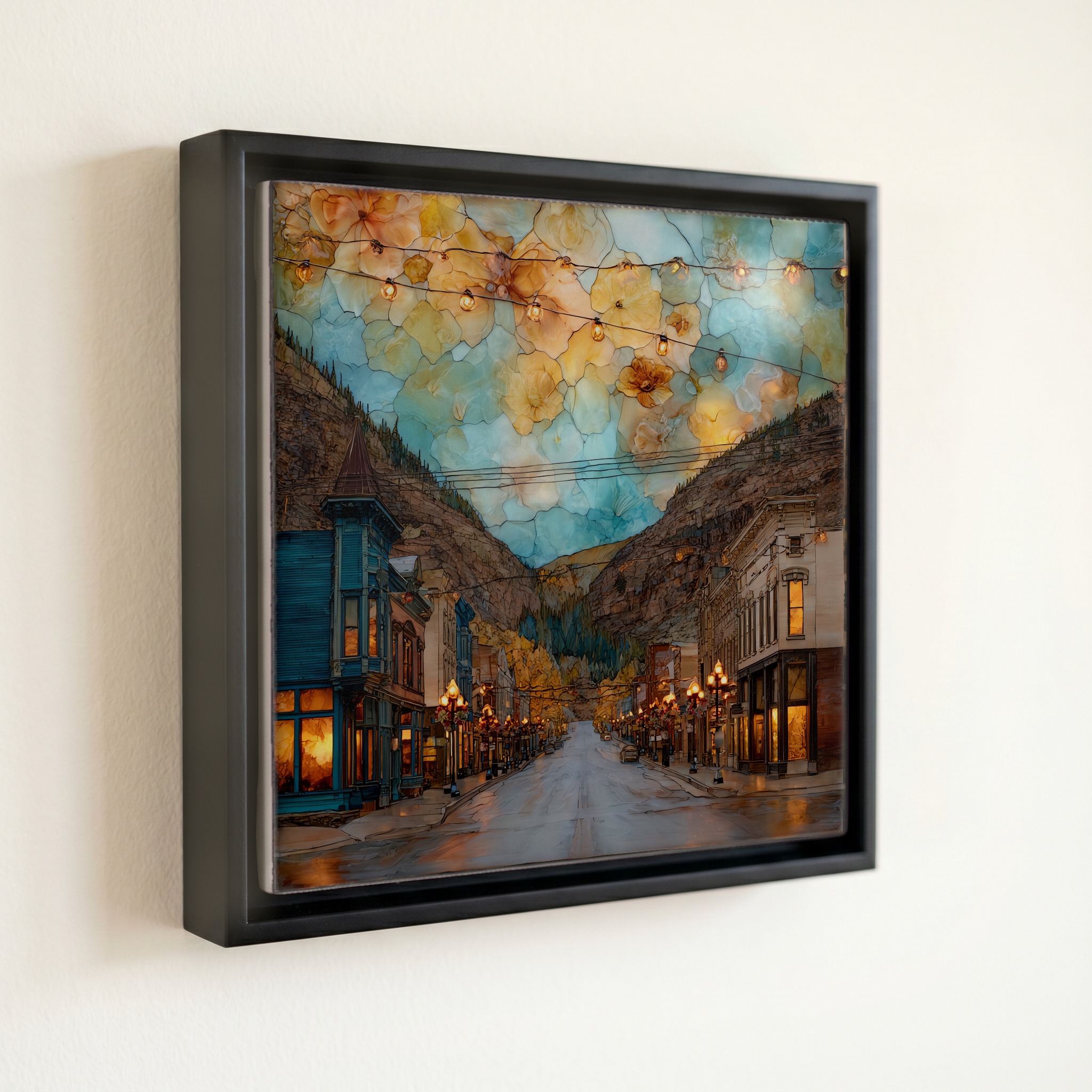
Idaho Springs mining town Front Range Ceramic Art Tile, on ceramic.
Each tile is finished by hand in our Knoxville studio. Artwork is slowly infused into the ceramic surface under high heat and pressure, and rests beneath a thin glossy finish. The colour lives in the surface, not on top of it.
Pick any four 4-inch tiles — National Parks you've been to, a Smokies set, the four seasons of one place. $ for a set of , cork-backed, ready to live on the table.
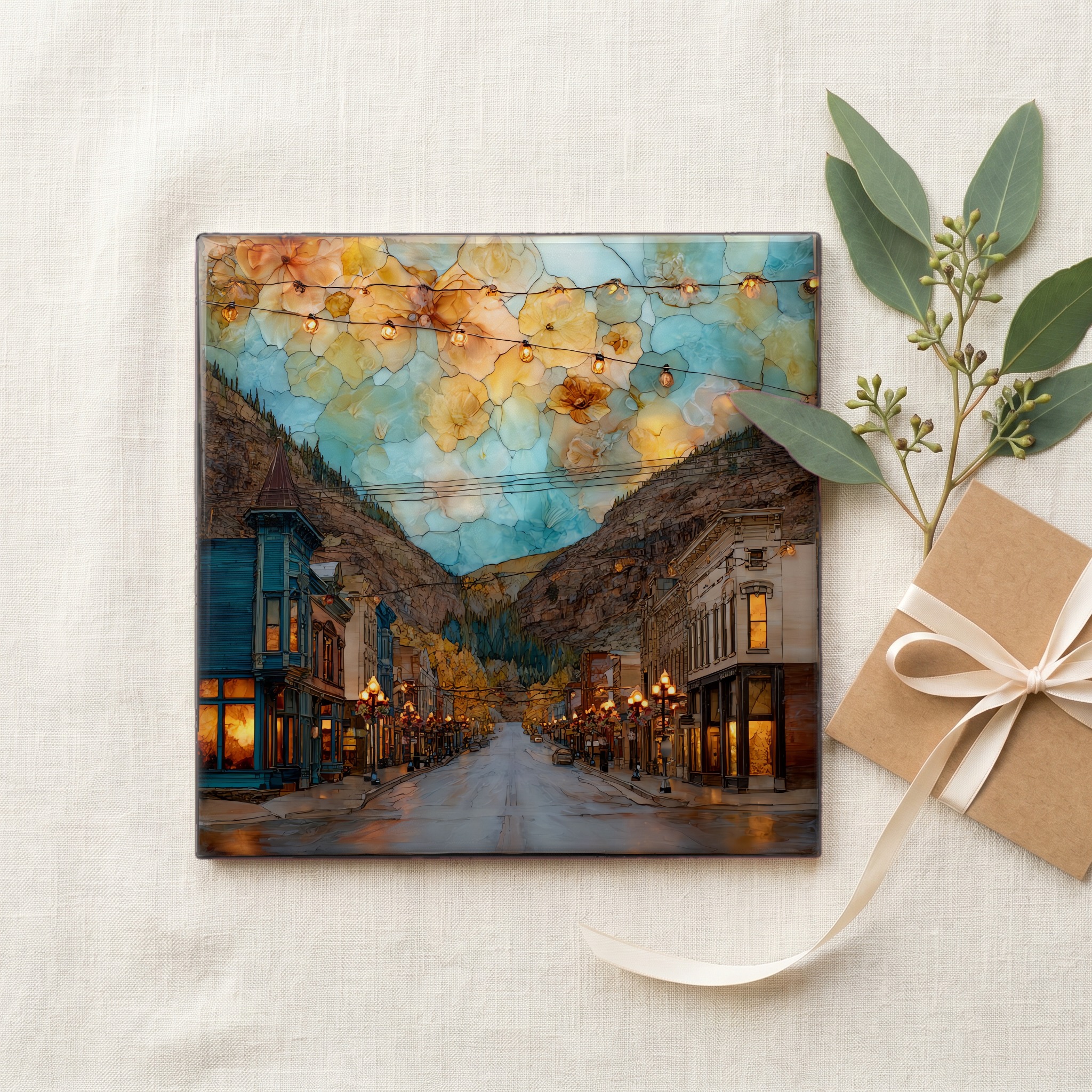
Each tile ships in a kraft box, tied with cream ribbon, with a handwritten note from the studio if you'd like to add one.

Three or five different vistas, hung together — a chapter of places you've been, or want to go.
The place, in three passes.
Idaho Springs sits in Clear Creek County, Colorado, in the canyon Clear Creek has cut into the eastern Front Range. The town is about 30 miles west of Denver on Interstate 70, at an elevation of 7,526 feet (2,294 m). George Jackson found placer gold at the confluence of Chicago Creek and Clear Creek in January 1859, the discovery that opened the Colorado Gold Rush. The town that grew up around the strike never fully emptied. About 1,800 people live there now, most of the Victorian commercial block along Miner Street survives, and the road south climbs toward the summit of Mount Blue Sky (formerly Mount Evans), one of the highest paved auto roads in North America.
The rock here is Precambrian granite gneiss laced with quartz veins, and the gold those veins carry pulled people up the canyon. After the placer gold in the creek played out, the work went underground. The Argo Tunnel, begun in 1893 and finished in 1910, ran 4.16 miles north under Central City to drain water from dozens of high-altitude mines. The Argo Mill at its mouth processed an estimated $100 million in gold ore before a 1943 flood ended operations. The mill, the headframes on the hillside, and the brick storefronts of Miner Street were paid for in gold and built to last. They are what is still standing.
Two waters define Idaho Springs. Clear Creek runs the length of the canyon, loud in spring runoff and low in autumn, and is the creek the first Colorado gold came out of. The other water is geothermal. Indian Hot Springs has operated as a resort since the 1860s, drawing on naturally heated mineral water that surfaces near 110°F (43°C), and still keeps its covered vapor caves and small soaking pools. The creek itself is a working trout stream and runs class III–IV whitewater in May and June, when outfitters in town launch from the city park along U.S. Highway 6.