Wender·Vista
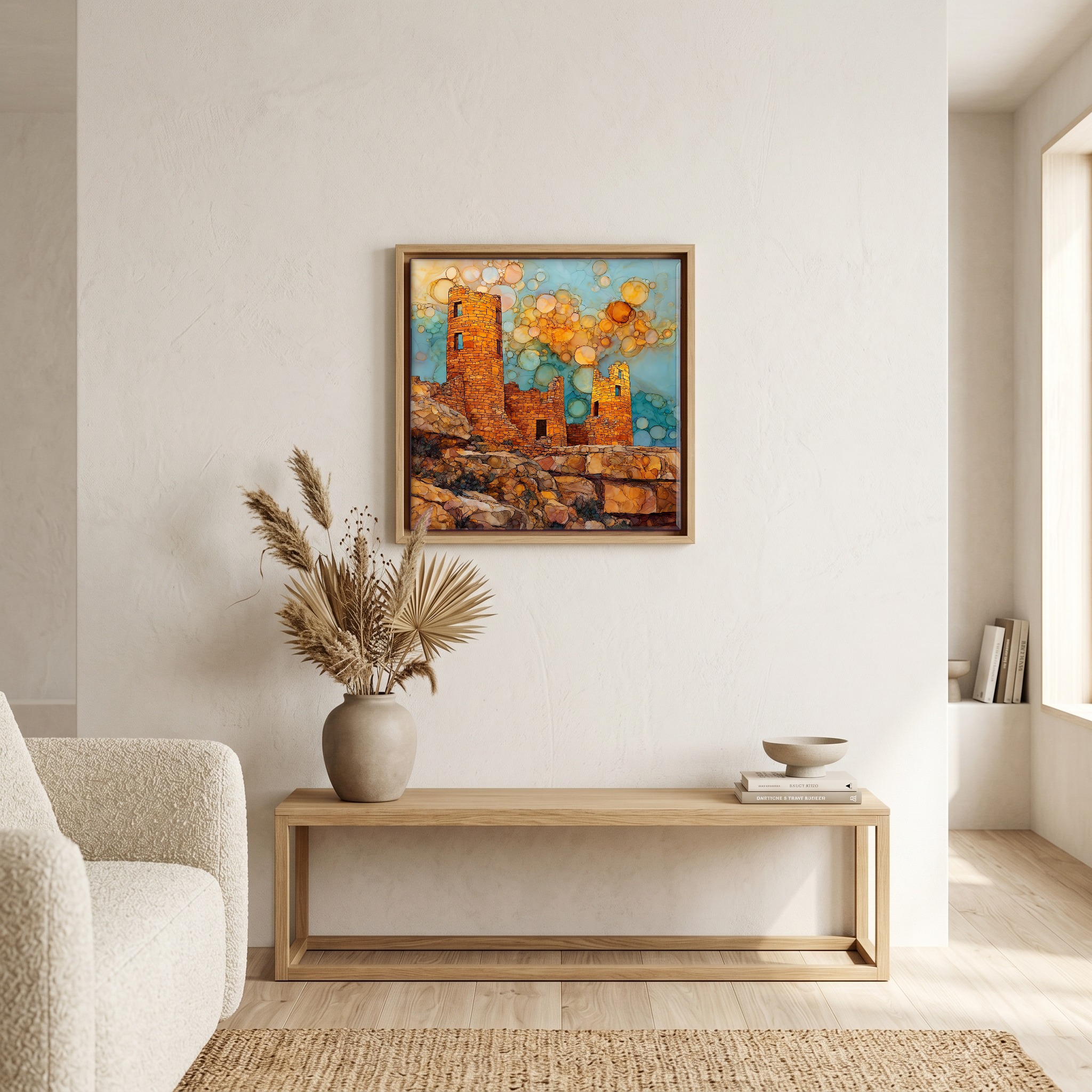
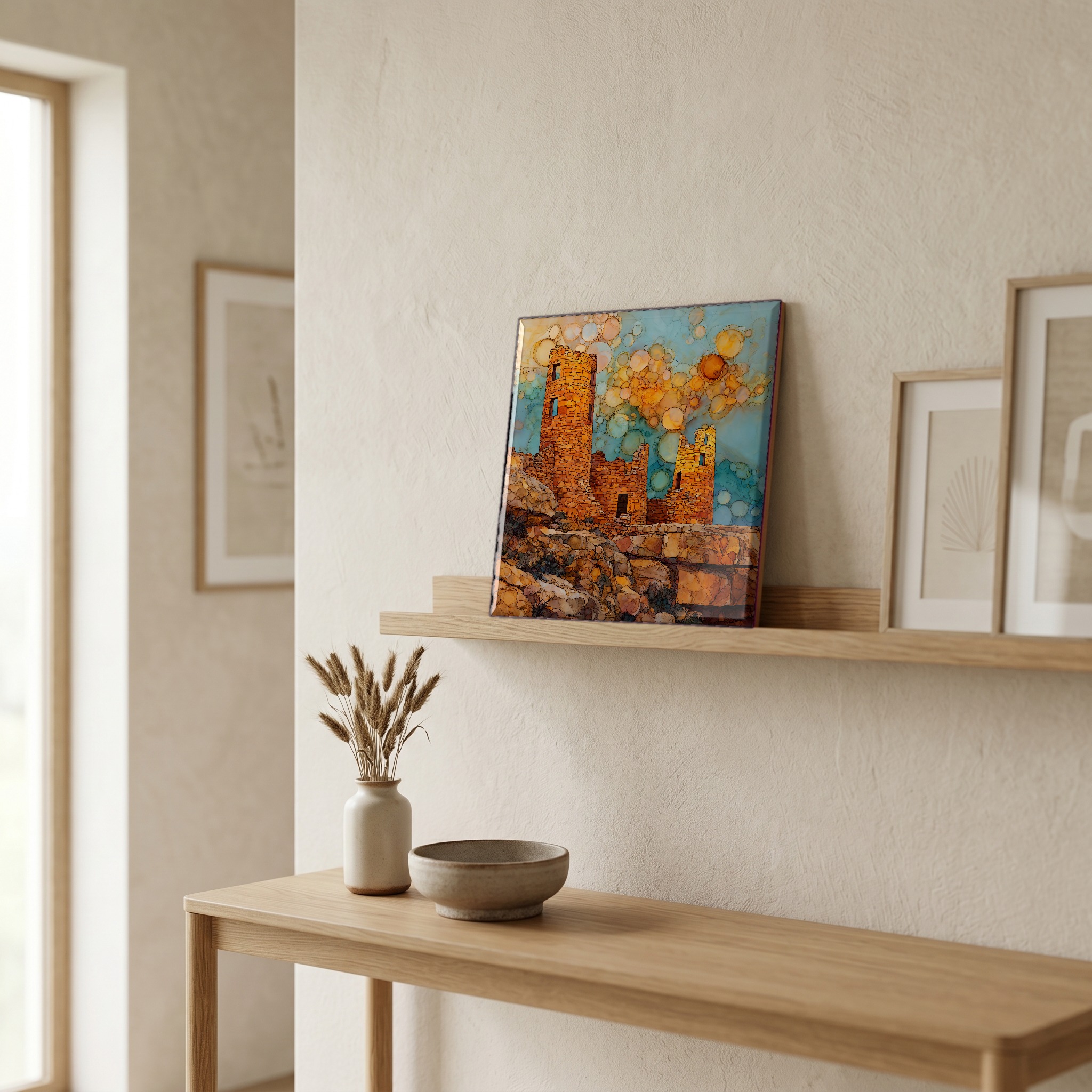
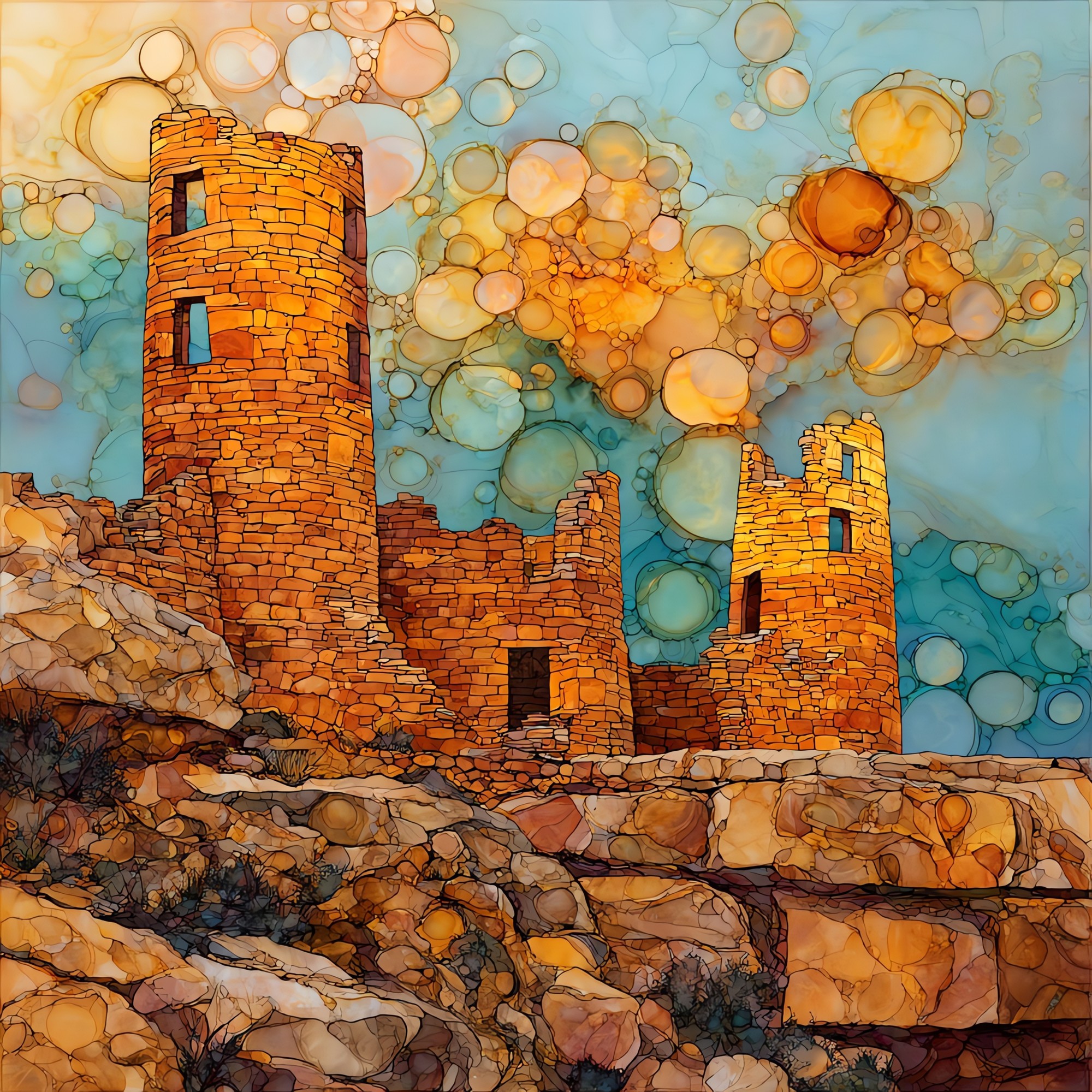
Hovenweep Holly Group Four Corners Ceramic Art Tile
shown on ceramic, 12-inch tileColorado · United States
on the rim of Keeley Canyon, in the Colorado Four Corners

Hovenweep Holly Group Four Corners Ceramic Art Tile

— stone the solstice still finds.

Where it lives

Not only on a wall.

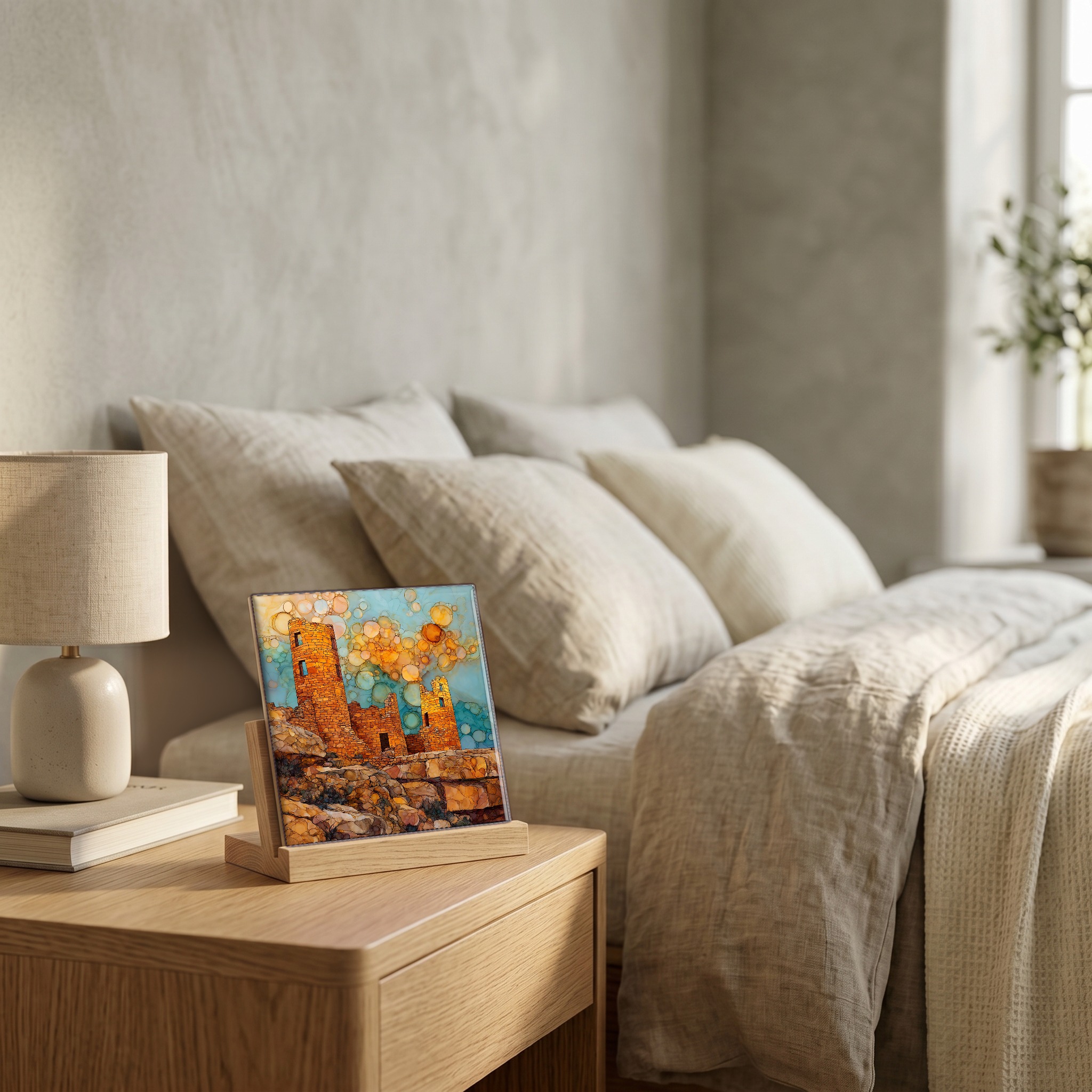
A small tile on the nightstand catching the morning. A larger one above the fire. Yours, wherever you spend the slow hours.
Above the bench, in a warm oak surround.
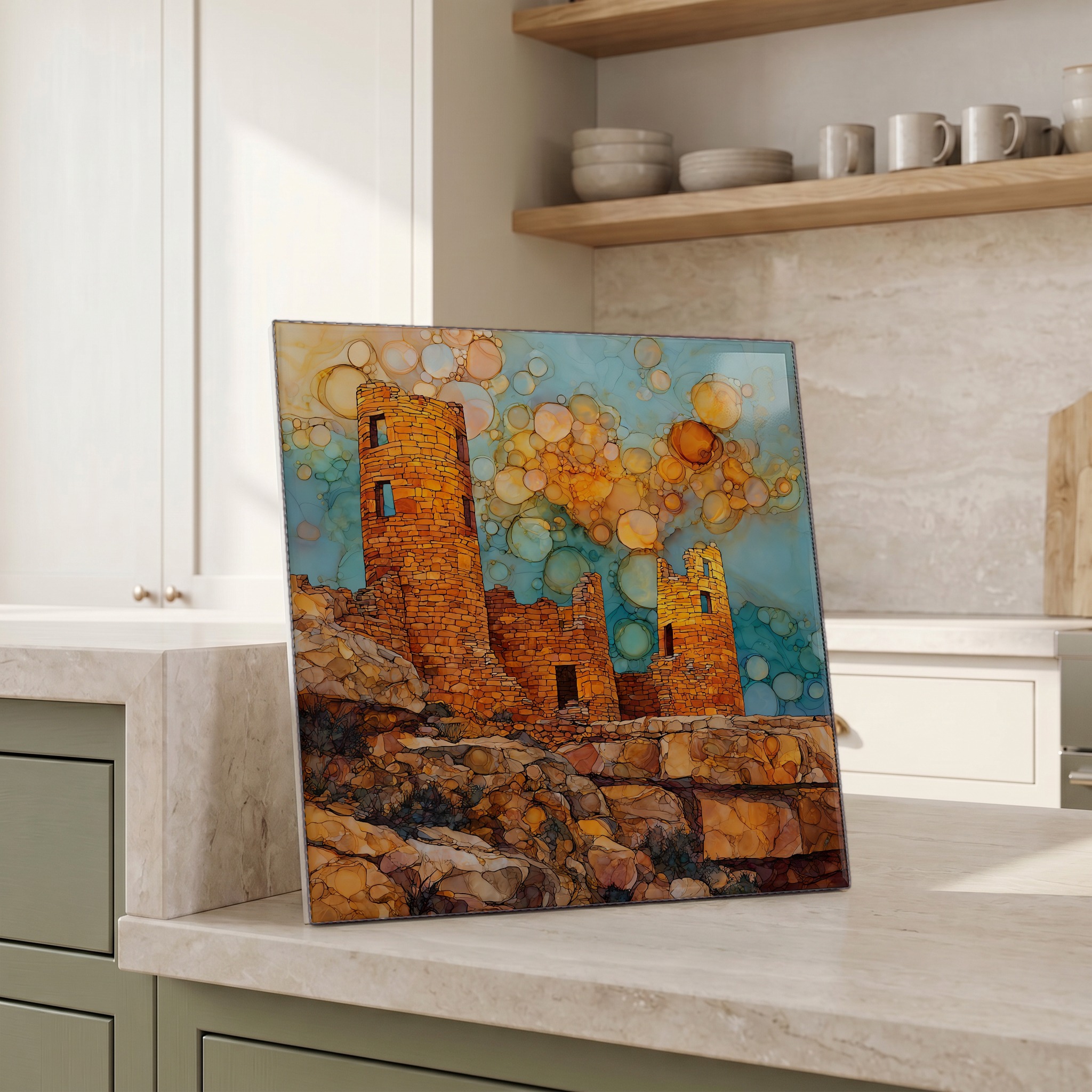
Beside the kettle, propped on the counter.
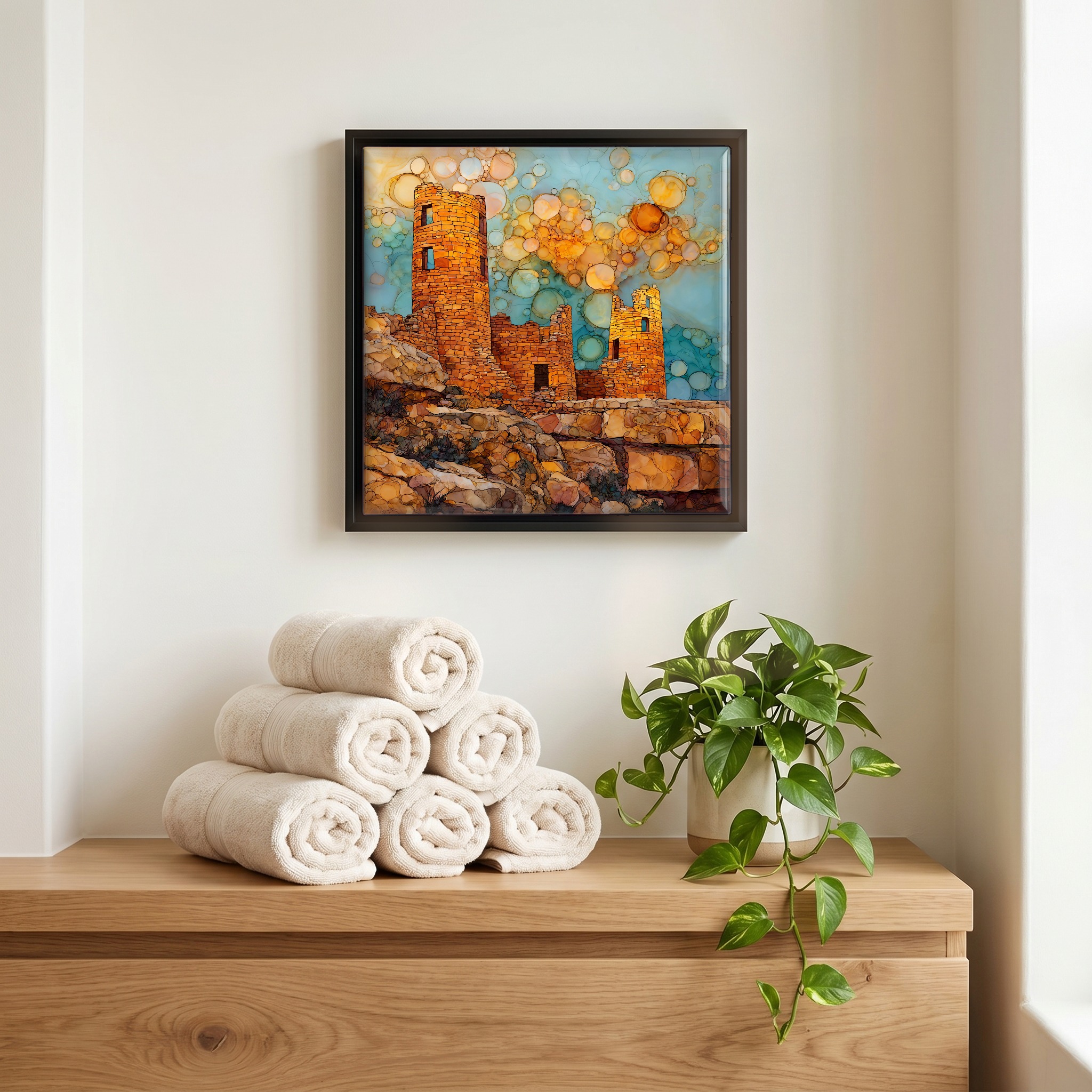
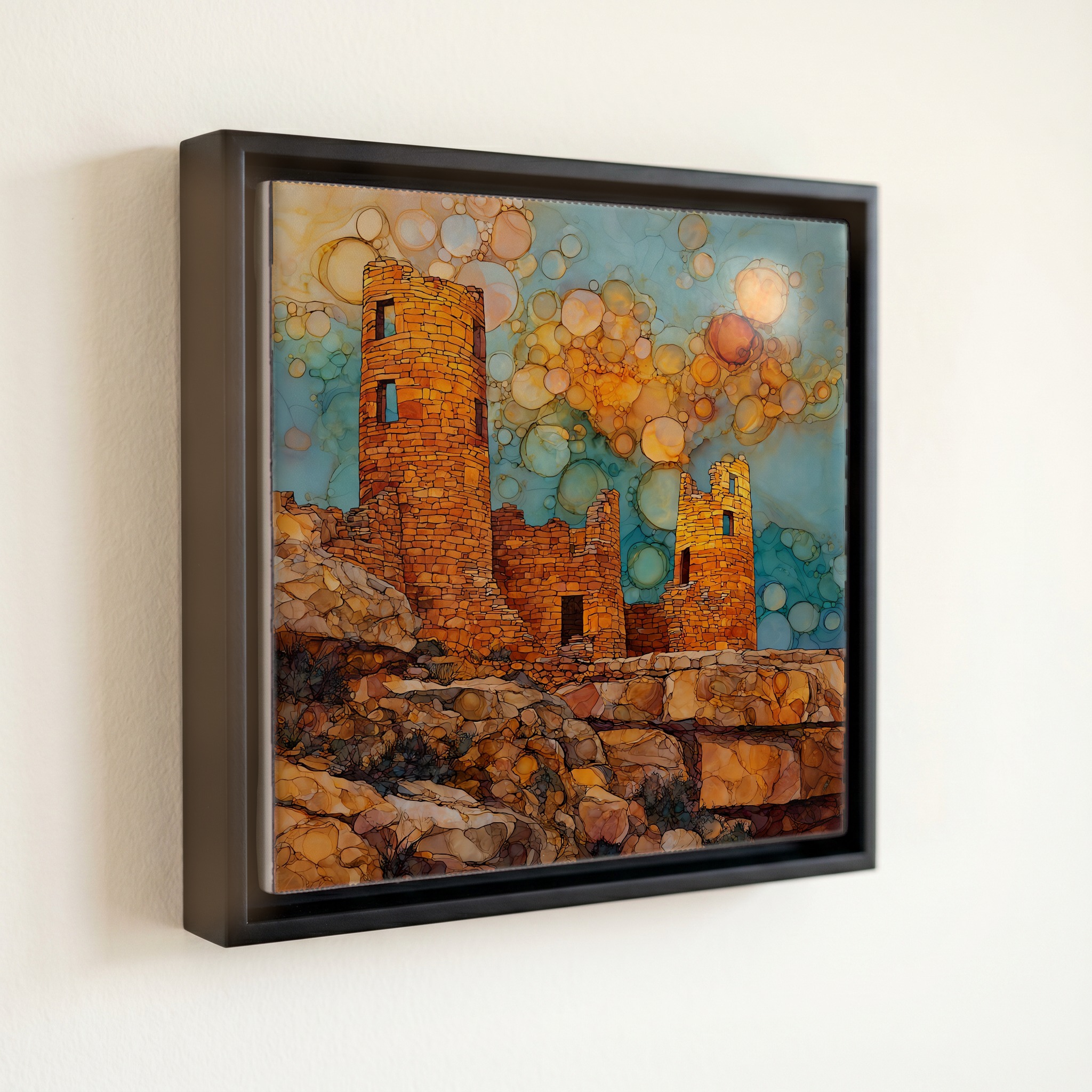
Above the linens, in a slim black surround.
On the nightstand, on a light oak stand.
On a picture ledge, where the light comes in.
a note from the studio

Four small Pueblo ruins above Keeley Canyon, on the Colorado side of Hovenweep. The Holly Tower stands on a single boulder, the way it has for eight hundred years. A spiral cut into the cliff catches the summer-solstice sun for a few minutes around dawn, the same minutes the builders watched for. The road in is rough enough that most days nobody comes. The Square Tower Group, four miles west, is where the rangers and the cars are. Holly is where the wind is.
from the studio
shown in a slim black floating frame · 6 × 6 in
— bring it home

Hovenweep Holly Group Four Corners Ceramic Art Tile, on ceramic.

Each tile is finished by hand in our Knoxville studio. Artwork is slowly infused into the ceramic surface under high heat and pressure, and rests beneath a thin glossy finish. The colour lives in the surface, not on top of it.

What kind of piece?
One tile — square or rectangle.
How big?
the popular one — counter, shelf, nightstand
6 × 6 in · 15 cm · 1.6 lb
Surface finish
A clear glossy finish — the artwork reads as if under resin. Ideal for show-pieces and framed wall art.
How it sits
A hidden cleat — sits ¼″ proud of the wall.
$58
Hand-finished and shipped from our studio at the foot of the Smokies. On your wall in about ten days.
size
6 × 6 in
15 cm
weighs
1.6 lb
solid in the hand
surface
ceramic, hand-finished
art rests beneath a thin glossy finish
from
Knoxville, TN
our family studio, at the foot of the Smokies
— start a Coaster Set

Pick any four 4-inch tiles — National Parks you've been to, a Smokies set, the four seasons of one place. $ for a set of , cork-backed, ready to live on the table.
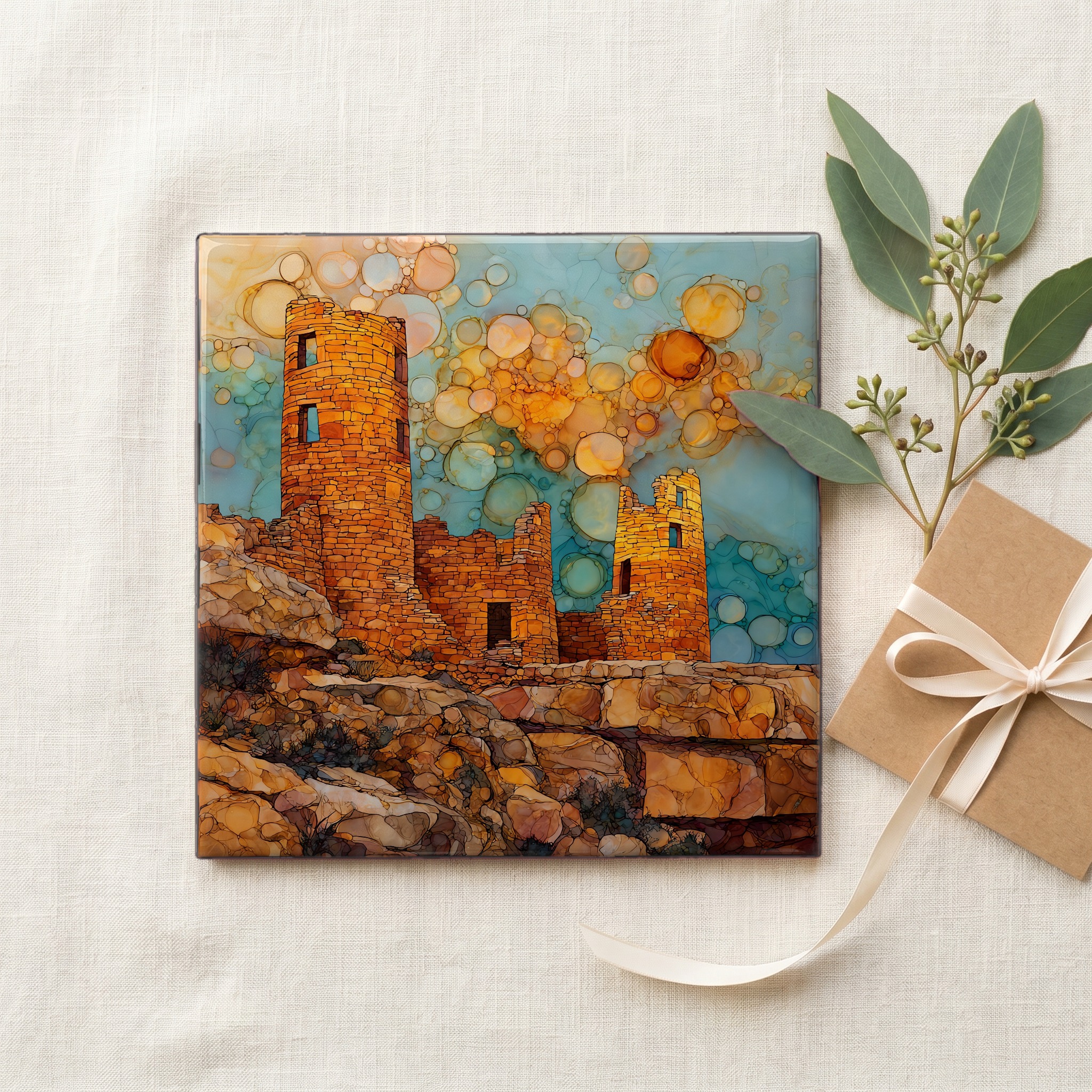
comes gift-ready
comes gift-ready

Each tile ships in a kraft box, tied with cream ribbon, with a handwritten note from the studio if you'd like to add one.
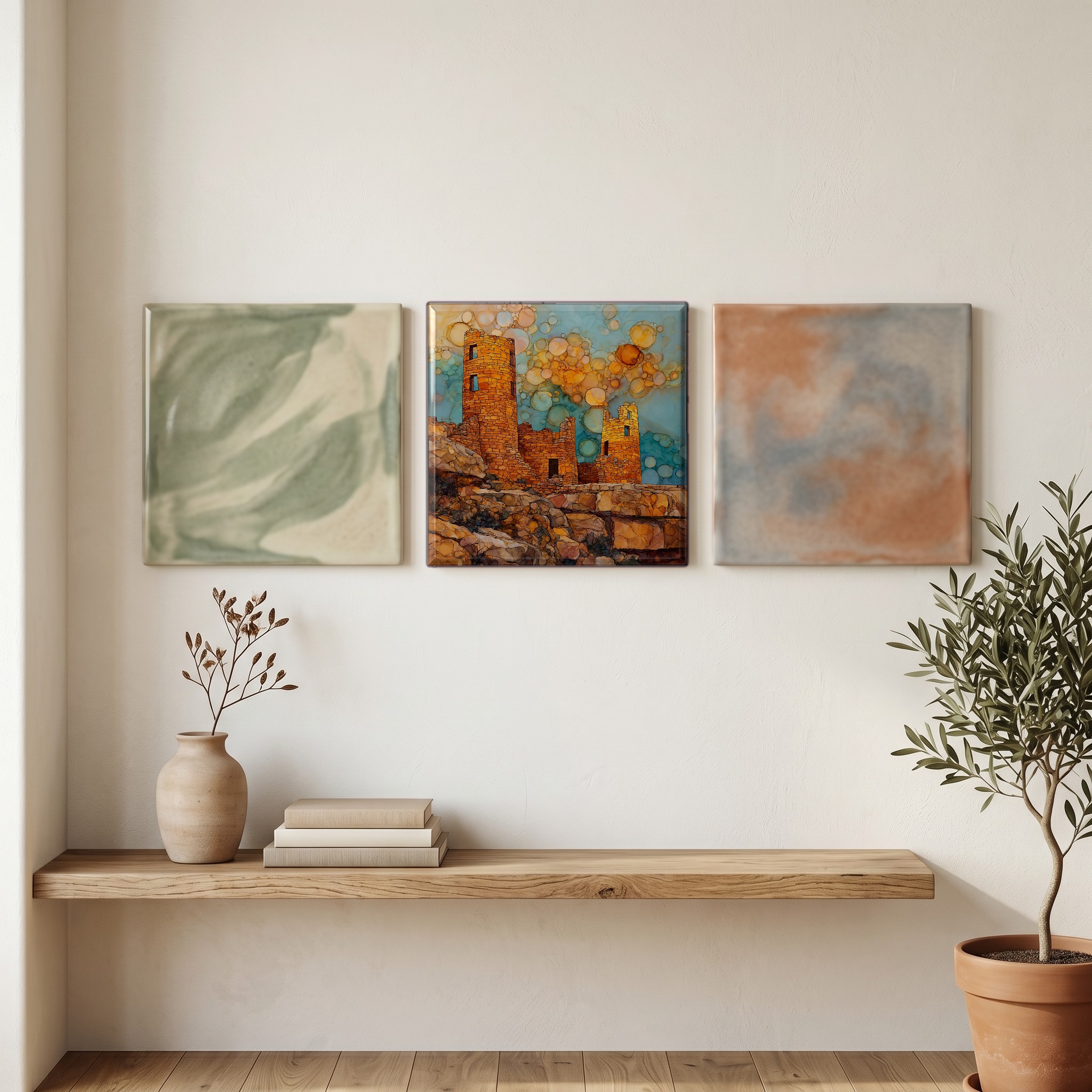
or build a grouping
or build a grouping

Three or five different vistas, hung together — a chapter of places you've been, or want to go.

about Hovenweep Holly Group Four Corners Ceramic Art Tile

The place, in three passes.

A little of what's known, in case you fall down the rabbit hole — or want to go see it yourself.
the place

Hovenweep National Monument straddles the Colorado-Utah border on the Cajon Mesa, in the high desert of the Four Corners region. The Holly Group is one of six village clusters preserved within the monument, set on the Colorado side above Keeley Canyon in Montezuma County. The site holds four standing structures: Holly Tower, Tilted Tower, Boulder House, and Great House, built by Ancestral Puebloan people between roughly 1200 and 1300 CE. The monument was established in 1923 by President Warren G. Harding and now protects around 800 acres of canyon-rim country. Holly sits about four miles east of the Square Tower visitor area by trail; the BLM access road is rough and seasonal.

the stone

The Holly Tower is the signature structure: a roughly three-story masonry tower built directly on top of a free-standing boulder, with no obvious way up that is still intact. Ancestral Puebloan masons across Hovenweep favoured cliff edges, canyon heads, and boulder tops, and the towers may have served as granaries, lookouts, and ceremonial spaces, or all three at different times. The walls are double-coursed sandstone, set with a clay-and-mud mortar that has weathered through more than seven centuries of high-desert wind. Archaeologists at the National Park Service date the masonry to the late Pueblo II and Pueblo III periods, the same century that produced the larger sites at Mesa Verde, fifty miles east.

the visit

Access to Holly is the slowest part of the visit. Two routes lead in: a roughly eight-mile round-trip hike from the Square Tower visitor area along the Holly Canyon trail, or a high-clearance four-wheel-drive approach on BLM Road 4531, which the Park Service describes as rough and impassable when wet. The visitor center is open daily; the back-country roads close in mud and snow. Day-use entry is covered by the standard National Park Service pass, and there is no fee station at Holly itself. The closest gateway towns are Cortez, Colorado, about forty-five miles southeast, and Blanding, Utah, to the west. There is no water and no cell coverage on the trail.

where
United States · Montezuma County, Colorado
within
Hovenweep National Monument
the neighborhood

What's nearby.

A handful of named places within an hour's walk or short drive. Some we've already painted; some we will.
6 km W
Hovenweep Square Tower Group
Pueblo ruin group
1 km NW
Hovenweep Horseshoe Group
Pueblo ruin group
1 km NW
Hovenweep Hackberry Group
Pueblo ruin group
11 km NE
Hovenweep Cutthroat Castle
Pueblo ruin group
15 km SE
Canyons of the Ancients National Monument
national monument
75 km E
Mesa Verde National Park
national park
N
Hovenweep Holly Group Four Corners Ceramic Art Tile
Hovenweep Square Tower Group
Hovenweep Horseshoe Group
Hovenweep Hackberry Group
Hovenweep Cutthroat Castle
Canyons of the Ancients National Monument
Mesa Verde National Park
common questions

What people ask.

A few questions we get about Hovenweep Holly Group Four Corners Ceramic Art Tile — and about bringing the piece home.
about the place

The Holly Group sits within Hovenweep National Monument, on the Colorado side of the Colorado-Utah border in Montezuma County. It rises above Keeley Canyon on the Cajon Mesa, roughly four miles east of the Square Tower visitor area in the Four Corners region.

Holly Tower stands directly on top of a single free-standing sandstone boulder. Ancestral Puebloan masons fitted double-coursed walls to the irregular surface of the rock without leveling it. The original entry route is no longer intact, which is part of why the structure survived.

The Holly Group was built by Ancestral Puebloan people during the late Pueblo II and Pueblo III periods, roughly between 1200 and 1300 CE. The same culture built Mesa Verde, about fifty miles east, and Chaco Canyon further south. The Hovenweep sites were left around 1300, likely during a long regional drought.

A spiral and circle petroglyph carved into the cliff face at Holly is lit by a narrow shaft of sunlight at summer solstice. The light passes across the carving shortly after sunrise. Researchers consider it one of the better-documented solar markers in the Four Corners region.

The Holly Group is reached by an eight-mile round-trip hike from the Square Tower visitor area along the Holly Canyon trail, or by high-clearance four-wheel drive on BLM Road 4531. The back road becomes impassable in rain or snow. There is no water and no cell coverage on the trail itself.

Hovenweep was set aside as a national monument on March 2, 1923, by President Warren G. Harding under the Antiquities Act. The monument now protects about 800 acres across six village groups, with the Holly Group preserved inside its 1923 boundary.

Hovenweep means 'deserted valley' in the Ute and Paiute languages. The photographer William Henry Jackson recorded the name in 1874, after visiting the canyon with the Hayden geological survey. The Ancestral Puebloan name for the place is not preserved.

about the piece in your home

It tends to be a meaningful gift for people with a connection to the Four Corners, to southwest archaeology, or to the long-haul roads through Cortez and Bluff. A Small or Medium with a handwritten studio note travels well. The Keepsake suits an office shelf.

The palette runs through bone, dusk blue, and weathered sandstone, with the stained-glass linework holding it together. It sits naturally with Southwest-modern, desert-neutral, and warm minimalist interiors. It also reads well as the single tonal note in a Japandi or Scandinavian room.

Yes. Desert-modern and Santa Fe-modern have been steady for several seasons, and a stone-and-ruin subject reads as quieter than the usual cactus or mesa motif. The Medium pairs well with linen, leather, and unfinished oak; the Mural works as a focal piece on a clay-tone wall.

Above a standard sofa or long console, a single Large reads as a focal piece. For a wider wall, a 4-tile Mural carries better, and a 9-tile Mural is the right scale above a king bed or a long sideboard. The Medium suits a hallway or above a writing desk.

Yes, with the right finish. For a bathroom, kitchen, or any vertical install with humidity or splashes, choose the Dura Satin or Matte finish; both are scratch-resistant and read soft. The Glossy finish is for framed wall art and show-pieces in dry rooms.

A soft microfibre cloth and clean water are all that is needed. For stubborn marks, a drop of mild dish soap is fine. Avoid abrasive scrubbers, bleach, and ammonia-based cleaners. The colour lives in the ceramic surface and is robust; the finish stays better with gentle care.

Yes. Every WenderVista tile is original to our studio in Knoxville, Tennessee. We do not license art from other illustrators, and we do not source from stock libraries. The work is hand-finished in our studio and shipped from there.

if this one stayed with you

A few you might also love.

Hand-picked by the eye that found Sorapis. Same air, same kind of quiet.