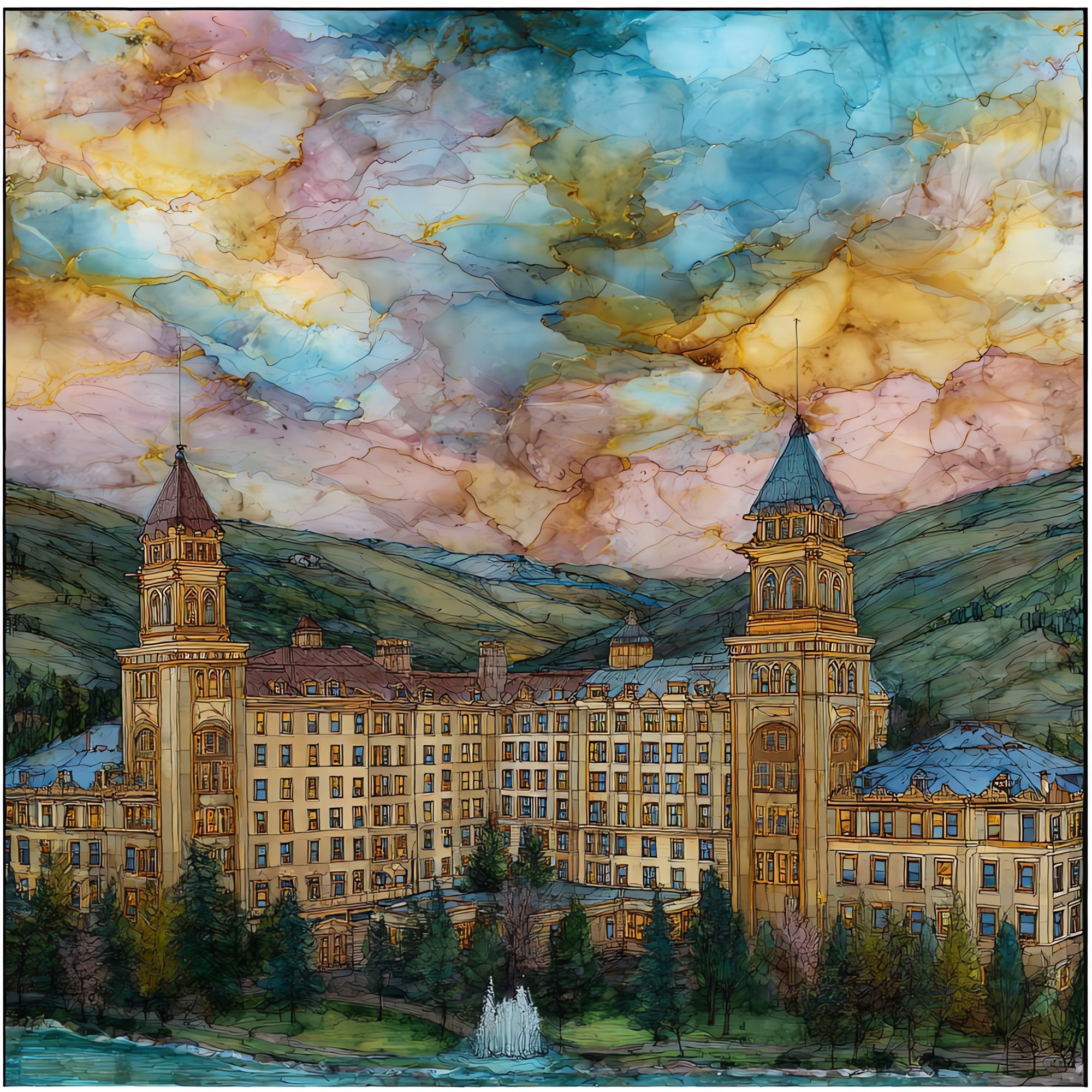
Hotel Colorado Glenwood Ceramic Art Tile
— — peach sandstone holding a Rocky Mountain evening.
Not only on a wall.
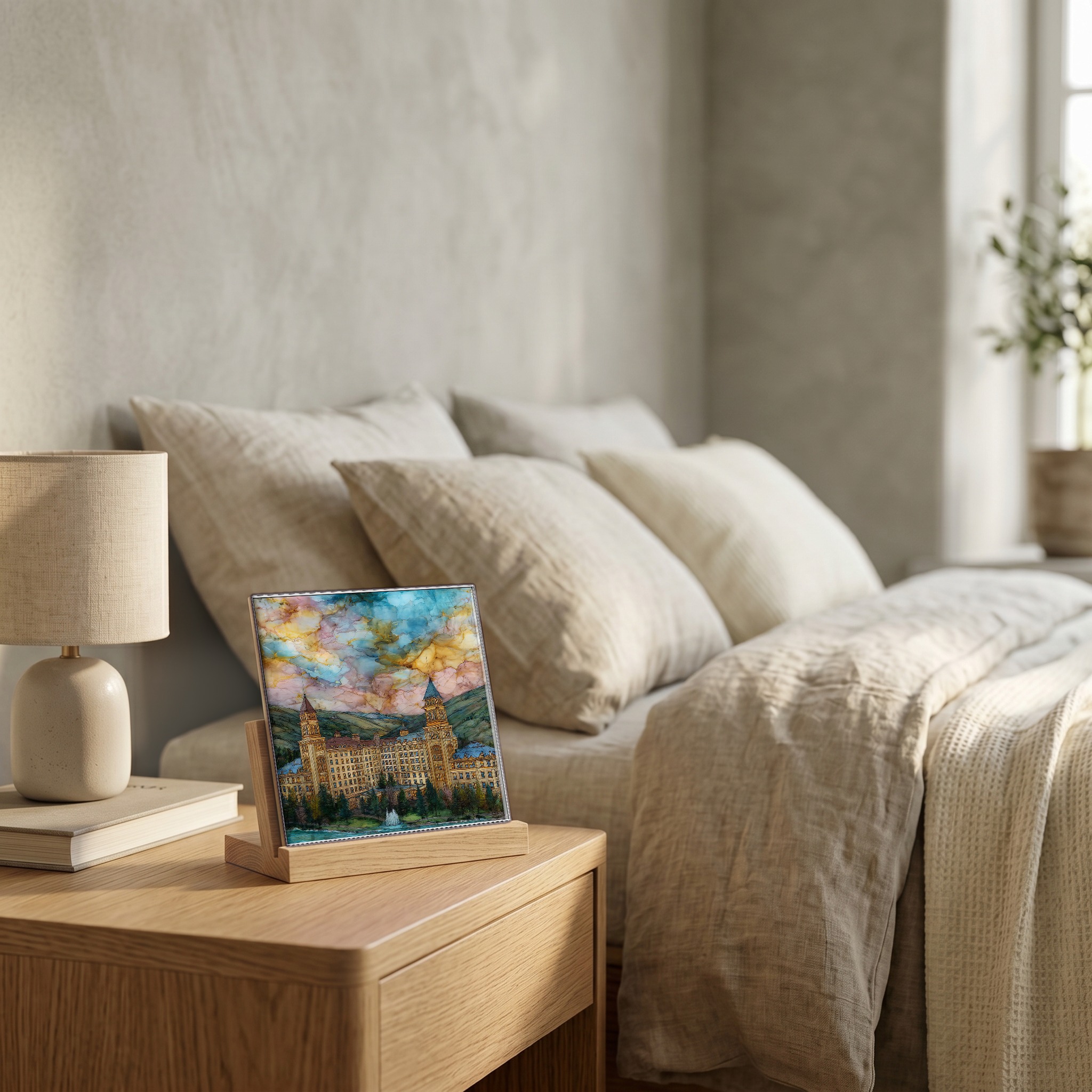
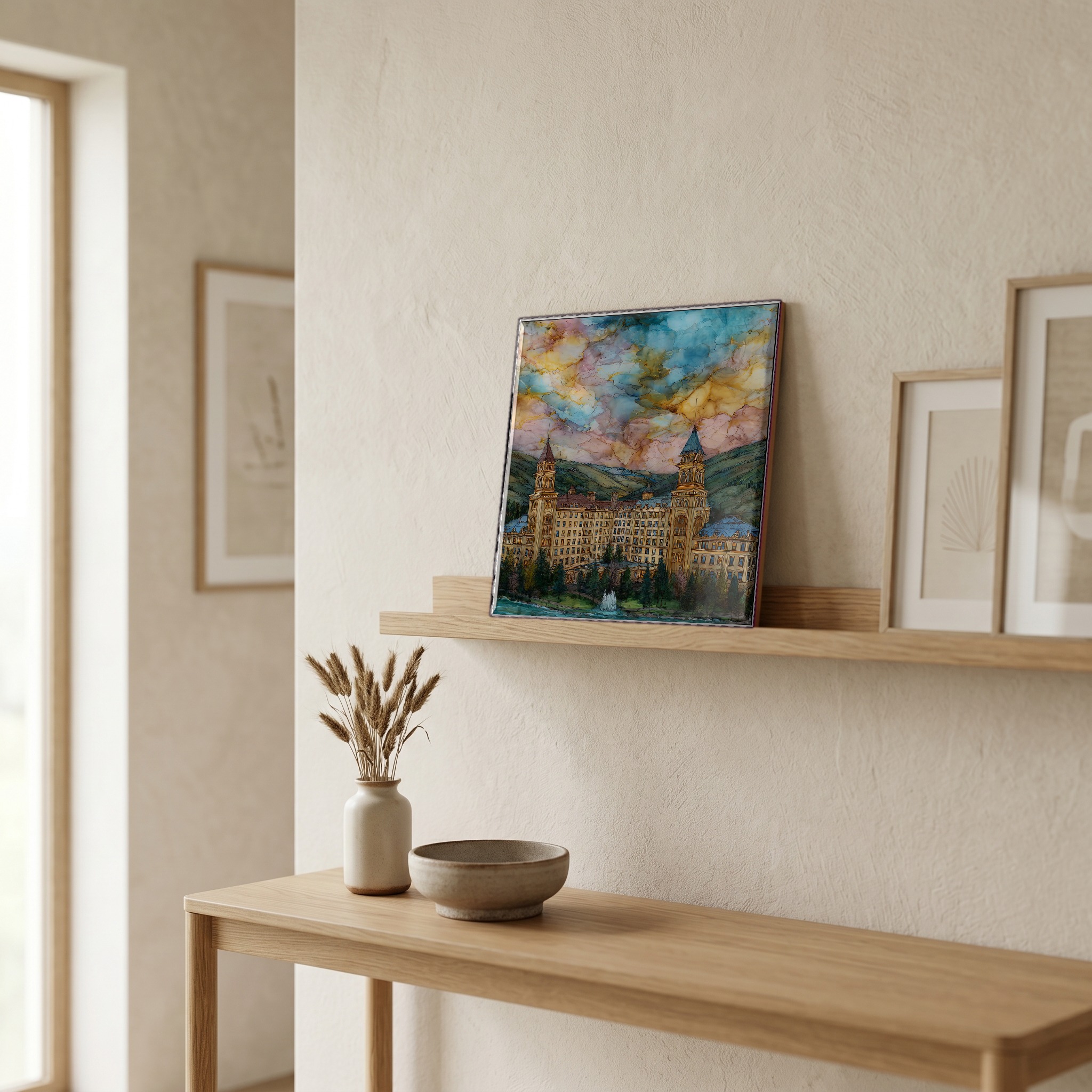
“An Italianate hotel that has held its corner of Glenwood Springs since 1893. Walter Devereux, the silver magnate who electrified the town, modelled it on the Villa Medici and faced it in local Peach Blow sandstone and Roman brick. Twice it served as a working White House: first when Theodore Roosevelt ran the country from its porches during a 1905 bear hunt, then again under Taft. The teddy bear is said to have started in one of its halls. Across the river the hot-springs steam still rises in winter, and the lights on the long facade come on at the same hour.
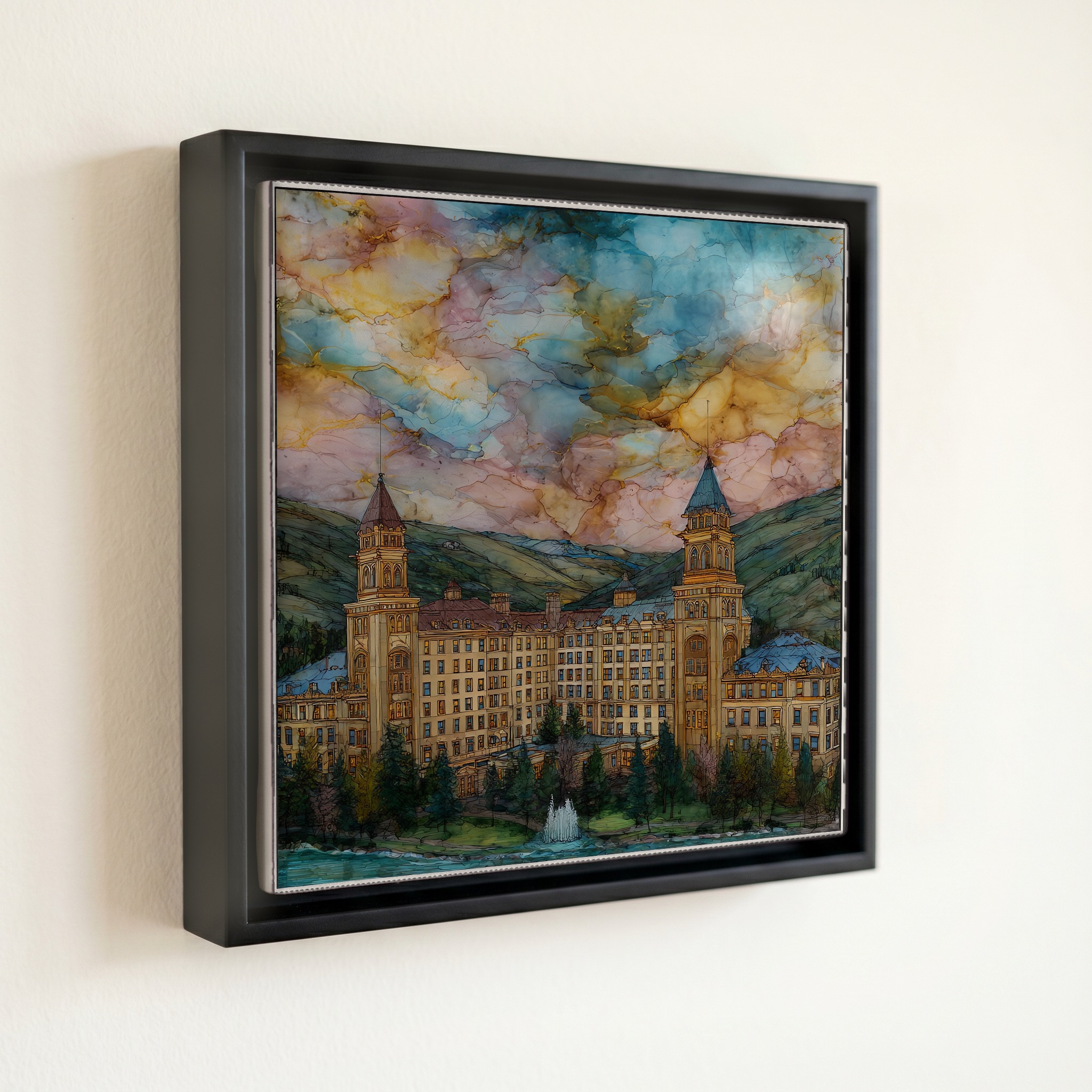
Hotel Colorado Glenwood Ceramic Art Tile, on ceramic.
Each tile is finished by hand in our Knoxville studio. Artwork is slowly infused into the ceramic surface under high heat and pressure, and rests beneath a thin glossy finish. The colour lives in the surface, not on top of it.
Pick any four 4-inch tiles — National Parks you've been to, a Smokies set, the four seasons of one place. $ for a set of , cork-backed, ready to live on the table.
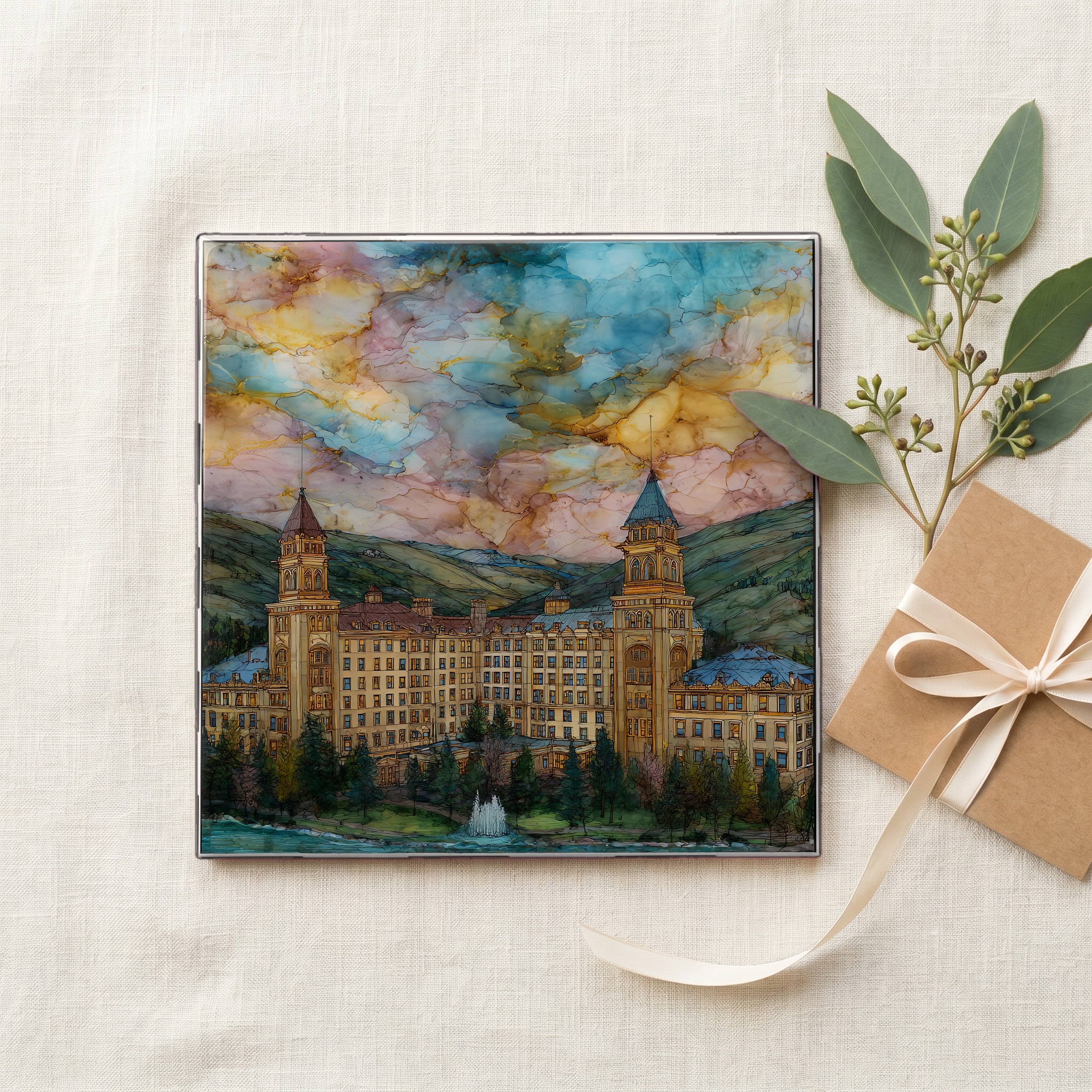
Each tile ships in a kraft box, tied with cream ribbon, with a handwritten note from the studio if you'd like to add one.
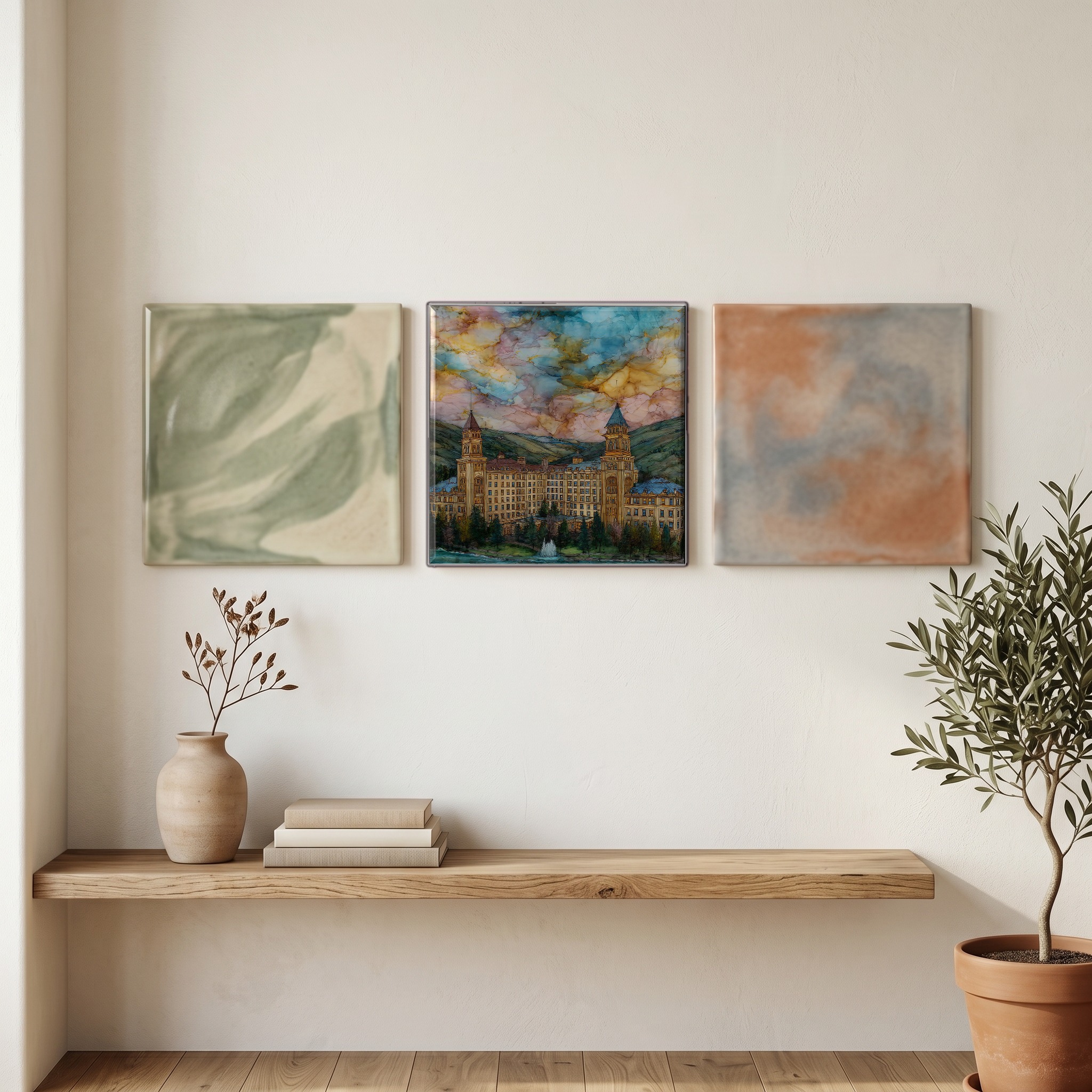
Three or five different vistas, hung together — a chapter of places you've been, or want to go.
The place, in three passes.
Hotel Colorado opened in June 1893 on the north side of the Colorado River in Glenwood Springs, on the western slope of the Rocky Mountains at roughly 5,761 feet above sea level. The town sits where the Roaring Fork River meets the Colorado, in a canyon of red sandstone cliffs. The hotel is at 526 Pine Street, two blocks uphill from the Glenwood Hot Springs Pool, the geothermal complex that gave the town its name. It is reached by Interstate 70, which threads the canyon between Denver to the east and Grand Junction to the west, and by the California Zephyr, which still stops at the 1904 sandstone depot a short walk south.
The building is a four-storey Italian Renaissance villa modelled after the Villa de' Medici, designed in 1890 by the New York firm Boring, Tilton & Mellon. The architects faced it in Roman brick and Peach Blow sandstone, the pinkish local stone that gives the walls their warm tone. The central courtyard once held a 185-foot fountain with a twelve-foot waterfall. Walter Devereux, the silver magnate from Aspen who also brought hydroelectric power to Glenwood, spent roughly $850,000 to put the hotel up. That sum bought 191 sleeping rooms when the doors opened in June 1893. The National Register of Historic Places listed the property on 26 May 1977.
The hotel runs year-round at 526 Pine Street, a five-minute walk from the Glenwood Springs Amtrak depot and the hot-springs pool. Rates start in the low $100s in the shoulder seasons and climb in summer and over the holidays. The Devereux Room serves dinner; the lobby lounge keeps a long bar and a piano. Self-guided history walks pass the porch where Theodore Roosevelt held briefings during his 1905 bear hunt and the hallway where the teddy bear is said to have started. Glenwood Caverns Adventure Park sits 1,200 feet above the town on Iron Mountain; the gondola loads two blocks south of the hotel.