Wender·Vista
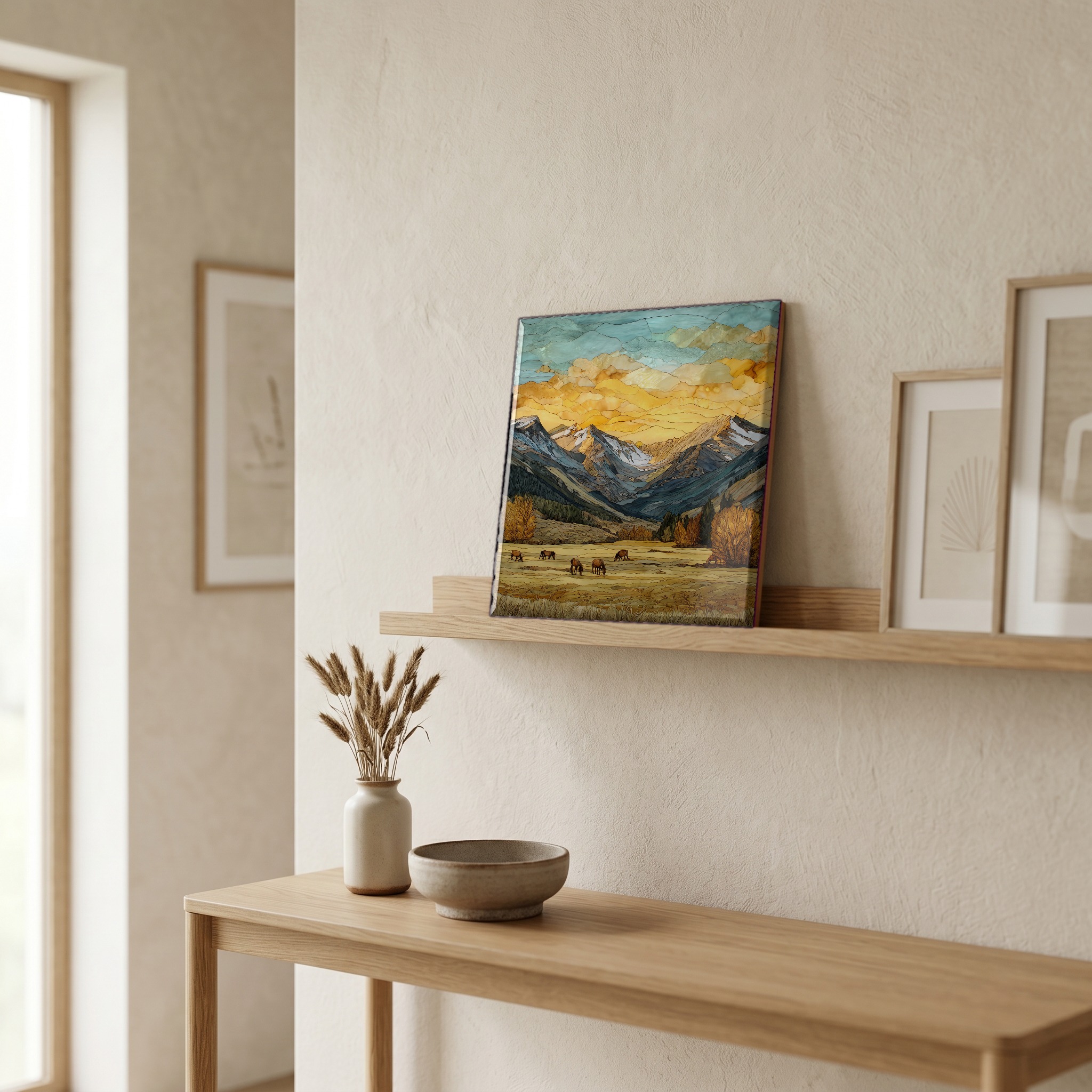
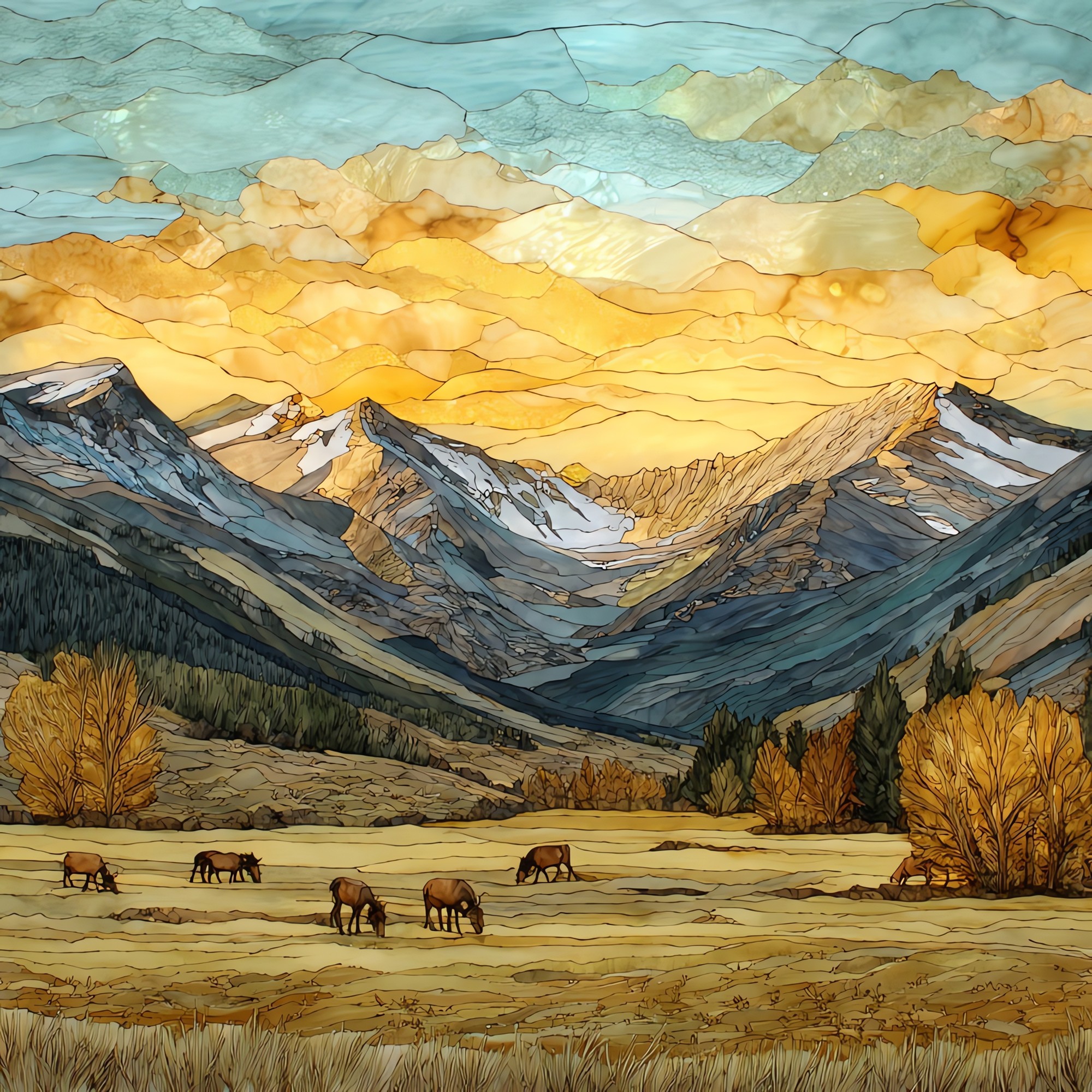
Horseshoe Park elk meadow Rocky Mountain National Park Ceramic Art Tile
shown on ceramic, 12-inch tileColorado · United States
above Estes Park, in Rocky Mountain National Park

Horseshoe Park elk meadow Rocky Mountain National Park Ceramic Art Tile

— first light, the herd back in the bend.

Where it lives

Not only on a wall.

A small tile on the nightstand catching the morning. A larger one above the fire. Yours, wherever you spend the slow hours.
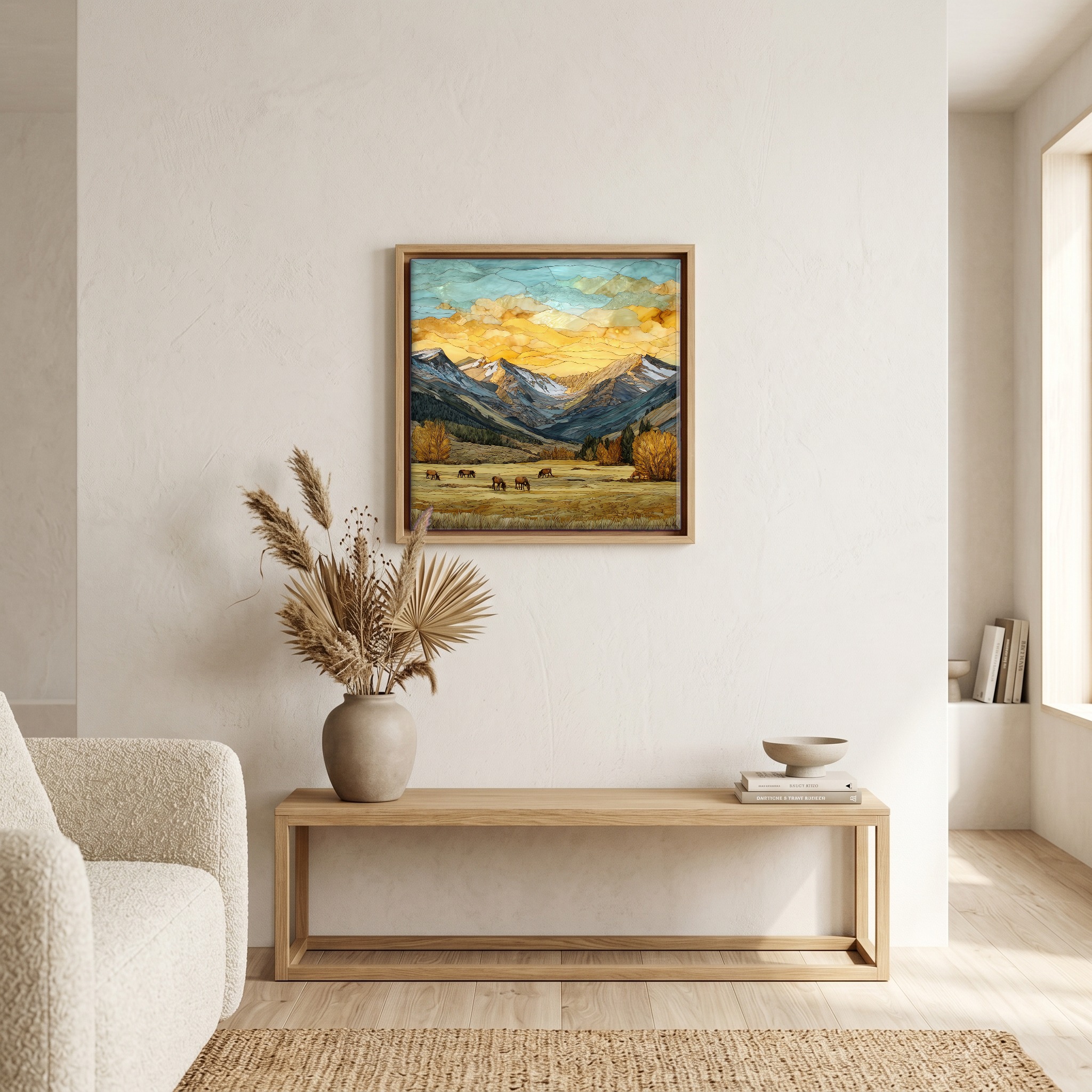
Above the bench, in a warm oak surround.
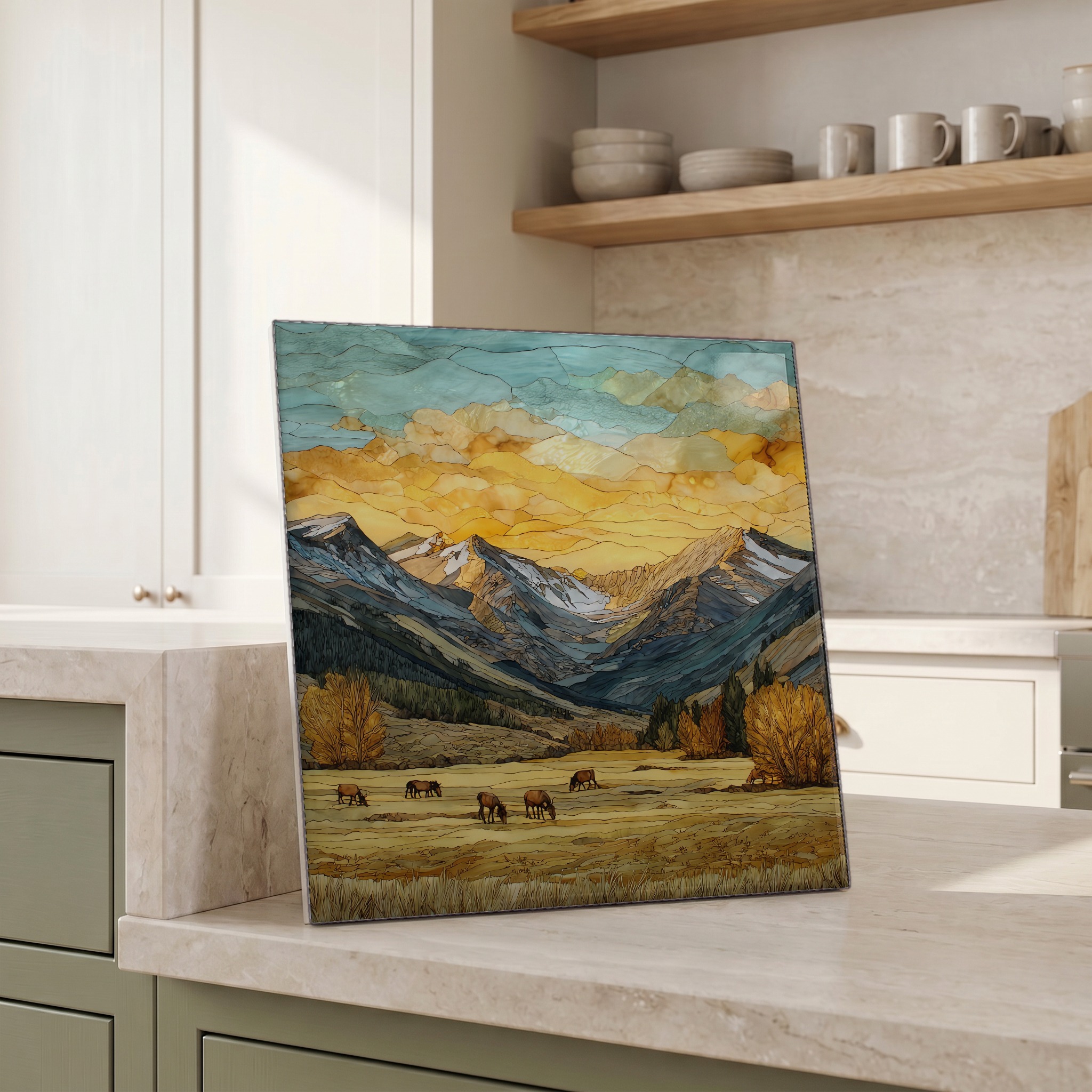
Beside the kettle, propped on the counter.
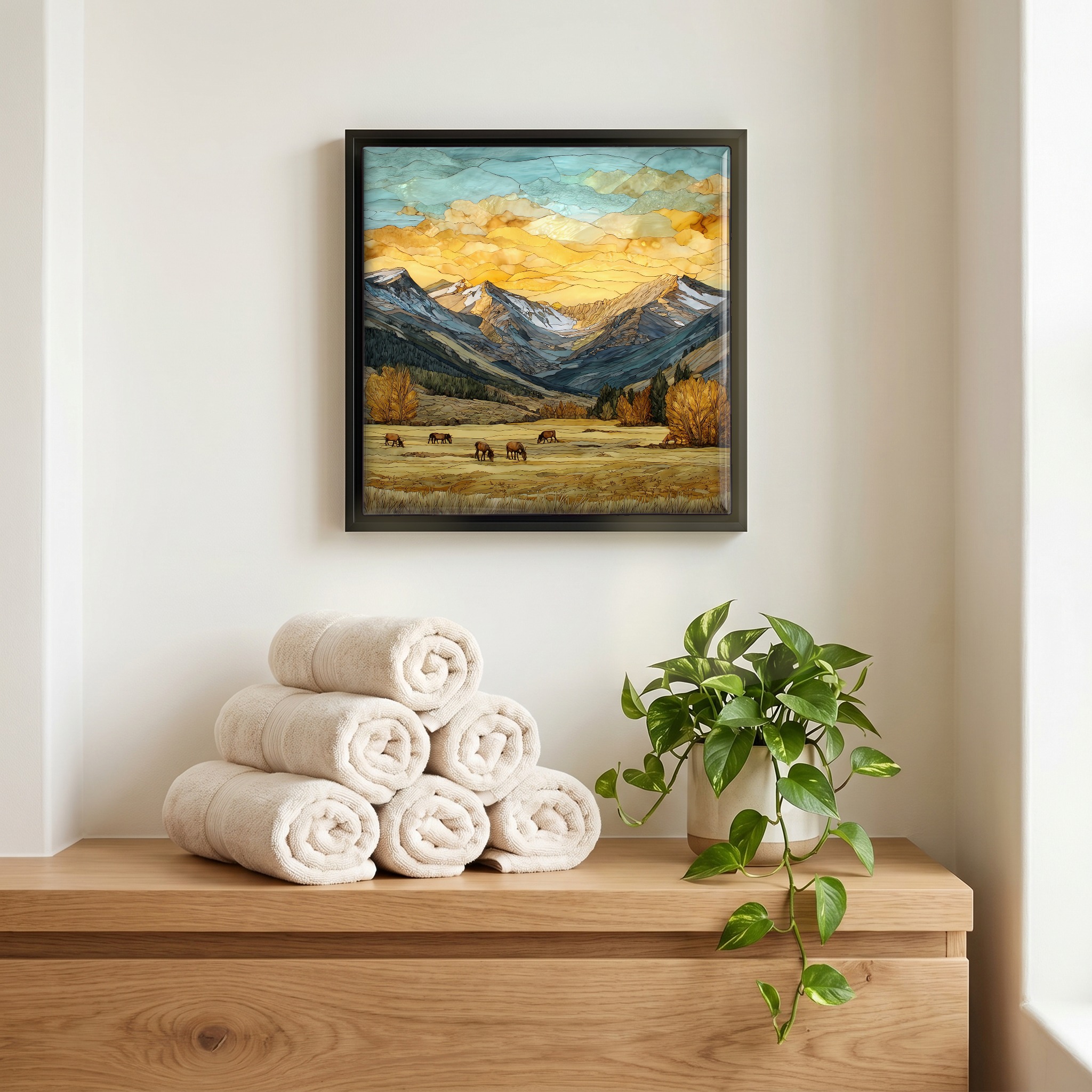
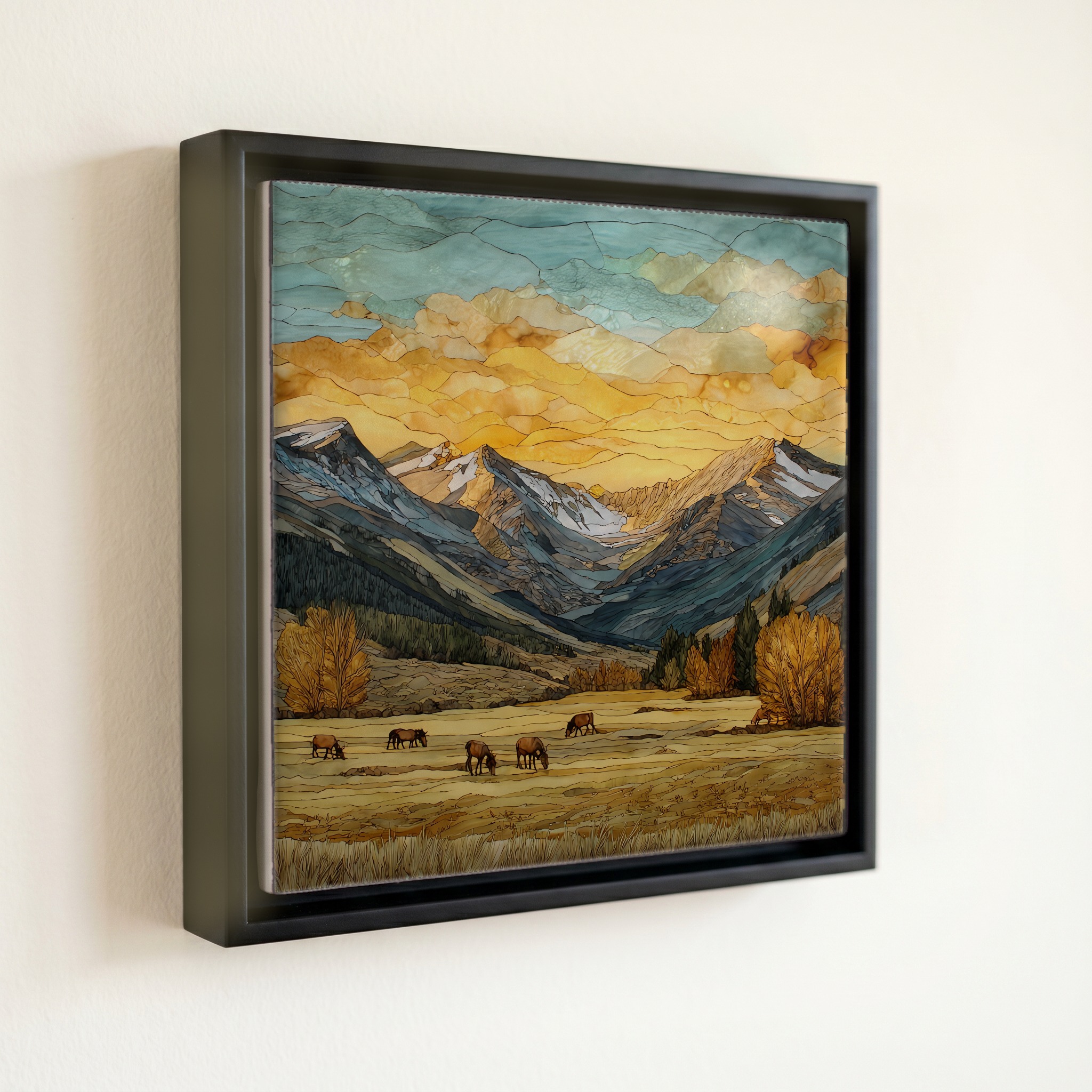
Above the linens, in a slim black surround.
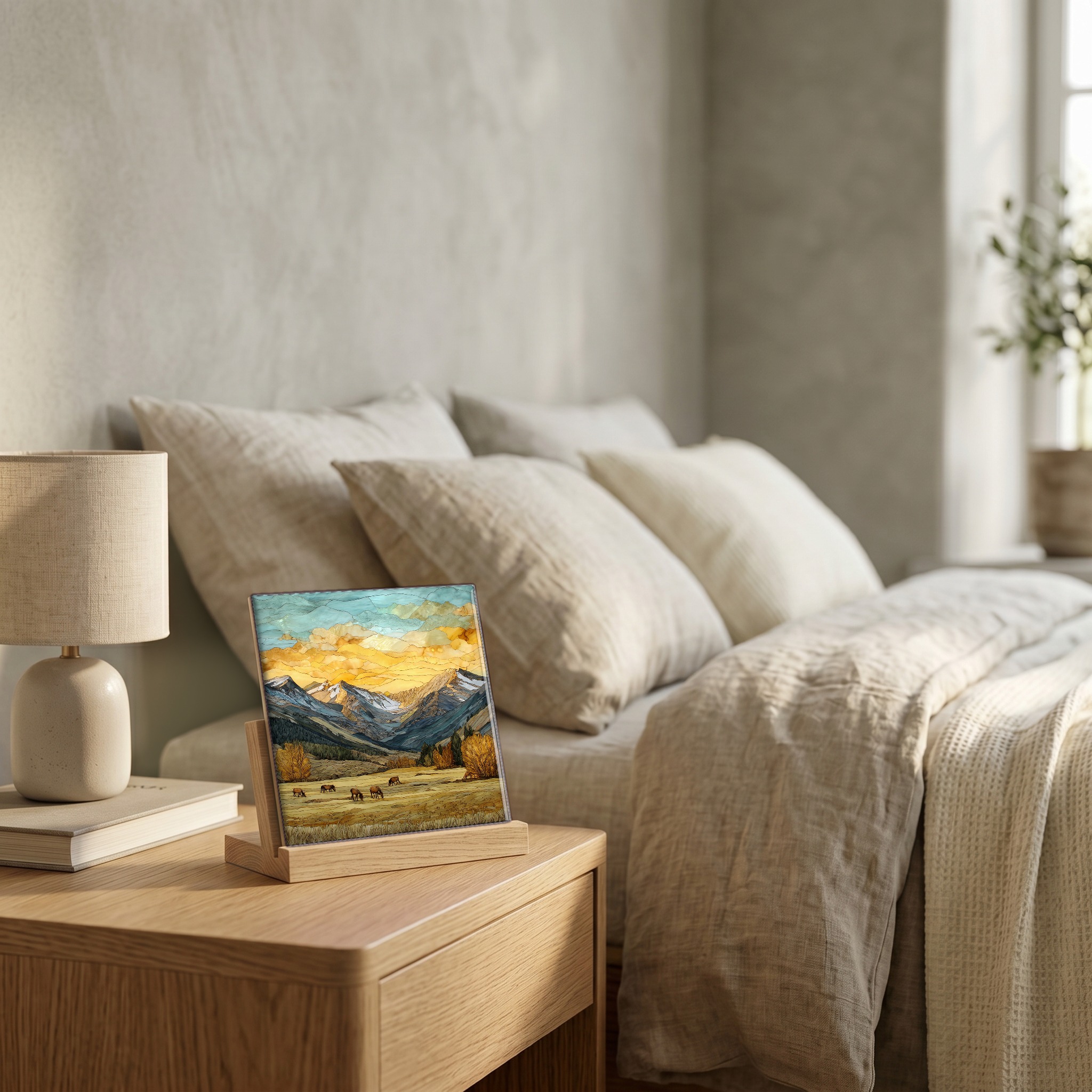
On the nightstand, on a light oak stand.
On a picture ledge, where the light comes in.
a note from the studio

A U-shaped meadow carved by a glacier fifteen thousand years ago. The Fall River bends through it, and twice a day in autumn the elk come down at dawn and again at dusk, bulls bugling across the grass to hold their harems. In spring the meadow belongs to bighorn sheep, descending from the ridge to lick mineral mud at Sheep Lakes. The Old Fall River Road begins at the western end; the Alluvial Fan, scoured open by the 1982 Lawn Lake flood, holds the eastern edge. Most of the year the place is quiet: wind, water, a few cars pulled off the shoulder.
from the studio
shown in a slim black floating frame · 6 × 6 in
— bring it home

Horseshoe Park elk meadow Rocky Mountain National Park Ceramic Art Tile, on ceramic.

Each tile is finished by hand in our Knoxville studio. Artwork is slowly infused into the ceramic surface under high heat and pressure, and rests beneath a thin glossy finish. The colour lives in the surface, not on top of it.

What kind of piece?
One tile — square or rectangle.
How big?
the popular one — counter, shelf, nightstand
6 × 6 in · 15 cm · 1.6 lb
Surface finish
A clear glossy finish — the artwork reads as if under resin. Ideal for show-pieces and framed wall art.
How it sits
A hidden cleat — sits ¼″ proud of the wall.
$58
Hand-finished and shipped from our studio at the foot of the Smokies. On your wall in about ten days.
size
6 × 6 in
15 cm
weighs
1.6 lb
solid in the hand
surface
ceramic, hand-finished
art rests beneath a thin glossy finish
from
Knoxville, TN
our family studio, at the foot of the Smokies
— start a Coaster Set

Pick any four 4-inch tiles — National Parks you've been to, a Smokies set, the four seasons of one place. $ for a set of , cork-backed, ready to live on the table.
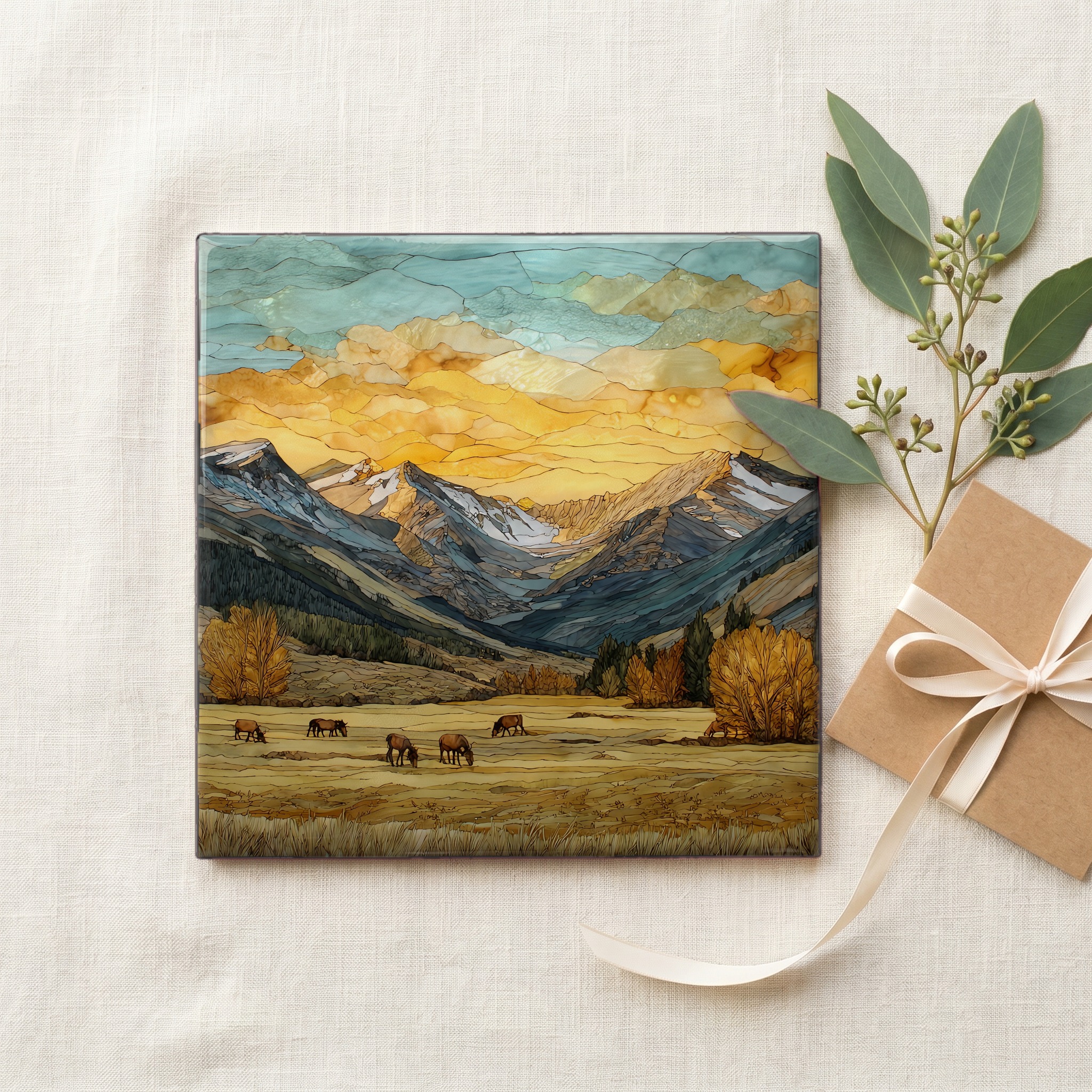
comes gift-ready
comes gift-ready

Each tile ships in a kraft box, tied with cream ribbon, with a handwritten note from the studio if you'd like to add one.
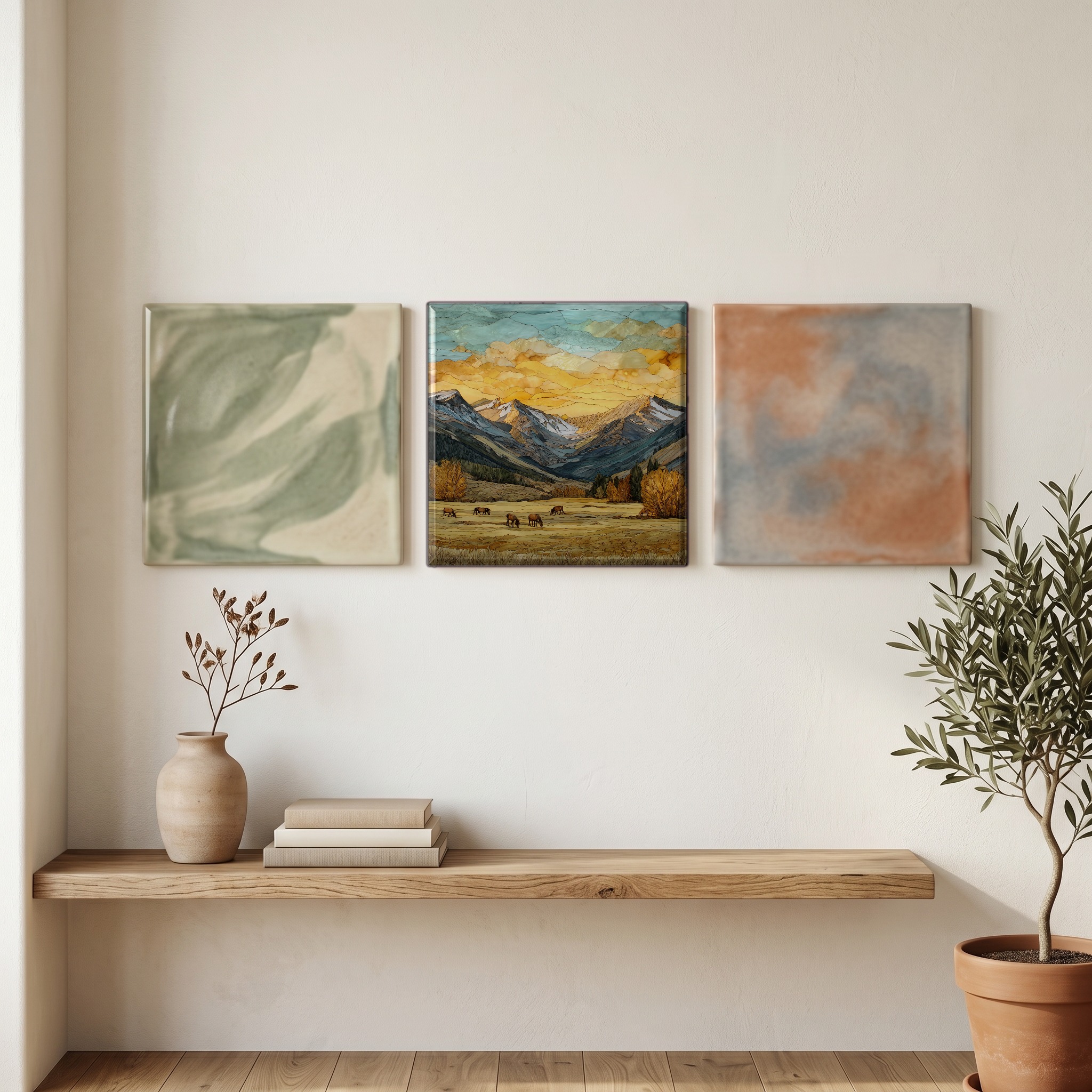
or build a grouping
or build a grouping

Three or five different vistas, hung together — a chapter of places you've been, or want to go.

about Horseshoe Park elk meadow Rocky Mountain National Park Ceramic Art Tile

The place, in three passes.

A little of what's known, in case you fall down the rabbit hole — or want to go see it yourself.
the place

Horseshoe Park is a flat U-shaped valley at 8,524 feet, carved by a glacier roughly 500 feet thick that retreated about 15,000 years ago, leaving lateral moraines and the meadow that now holds the Fall River's slow bend. It sits in Larimer County, in the eastern half of Rocky Mountain National Park, a few miles west of the Fall River Entrance Station and about five miles from the gateway town of Estes Park. The Old Fall River Road climbs out of its western end toward the Alpine Visitor Center at 11,796 feet; Trail Ridge Road runs the high ridgeline above. Sheep Lakes, two small kettle ponds at 8,650 feet, sit inside the meadow.

the season

From May through mid-August, bighorn sheep descend the ridges above Sheep Lakes to lick mineral-rich mud, usually between 9 a.m. and 3 p.m. By mid-September the meadow belongs to elk: for about a month the bulls bugle across the grass at dawn and at dusk to hold their harems through the rut. The grass goes bronze, the aspens above Endovalley turn, and the first night-snow usually finds the herd still out there. By November the elk move down toward Estes Park, Trail Ridge Road closes for winter, and the meadow holds nothing but cold wind and tracks.

the visit

Rocky Mountain National Park requires a timed-entry reservation in the summer high season; outside that window, a standard park pass is enough. During the autumn rut, the meadows in Horseshoe Park close to foot traffic from 5 p.m. to 10 a.m. between September 1 and October 31, so the elk are not crowded; viewing happens from the pullouts along U.S. 34 and the Sheep Lakes lot. Park rules require visitors to keep at least 75 feet from any elk or bighorn (about the length of two school buses). Old Fall River Road, a one-way gravel climb that begins at the western end of the meadow, is open only July through September.

where
United States · Larimer County, Colorado
within
Rocky Mountain National Park
elevation
2,598 m · 8,524 ft
position
40.4081° N · 105.6389° W
the neighborhood

What's nearby.

A handful of named places within an hour's walk or short drive. Some we've already painted; some we will.
at the lake
Sheep Lakes
mineral-lick lakes
1 km E
Alluvial Fan
1982 flood debris field
2 km W
Endovalley
picnic area and aspen grove
8 km SE
Moraine Park
elk meadow
8 km E
Estes Park
gateway town
15 km S
Bear Lake
subalpine lake
N
Horseshoe Park elk meadow Rocky Mountain National Park Ceramic Art Tile
Sheep Lakes
Alluvial Fan
Endovalley
Moraine Park
Estes Park
Bear Lake
common questions

What people ask.

A few questions we get about Horseshoe Park elk meadow Rocky Mountain National Park Ceramic Art Tile — and about bringing the piece home.
about the place

Horseshoe Park is a U-shaped glacial meadow at 8,524 feet inside Rocky Mountain National Park, in Larimer County, Colorado. It sits a few miles west of the Fall River Entrance Station and roughly five miles from the gateway town of Estes Park, along U.S. Highway 34.

The elk rut runs from mid-September through mid-October. Bulls bugle to hold their harems at dawn and at dusk, when the herds move down off the timber and onto the open meadow. Park meadow closures protect the herd from 5 p.m. to 10 a.m.

The meadow is named for the U-shape of the valley itself, which a 500-foot-thick glacier carved into a horseshoe bend roughly 15,000 years ago. The Fall River follows that bend through the grass before turning east toward the Alluvial Fan and Estes Park.

Yes. From May through mid-August, bighorn sheep descend from the ridges to lick mineral-rich mud at Sheep Lakes inside the meadow. They typically arrive between 9 a.m. and 3 p.m. The Sheep Lakes pullout off U.S. 34 is the standard viewing spot.

The Alluvial Fan is the rubble field at the eastern edge of the meadow, scoured open on July 15, 1982, when the Lawn Lake Dam failed and roughly 39 million gallons of water tore down Roaring River in a wall 25 to 30 feet high.

Park regulations require visitors to stay at least 75 feet (about 23 metres) from elk and bighorn sheep, the length of two school buses. During the rut, bulls are unpredictable and will charge. Viewing from the U.S. 34 pullouts keeps everyone, herd included, settled.

From Estes Park, take U.S. 34 west through the Fall River Entrance Station; the meadow opens on the left within a few miles. Old Fall River Road, a one-way gravel climb to the Alpine Visitor Center, begins at the western end and is open July through September.

about the piece in your home

Yes. It has been a steady gift for visitors with a particular elk-rut morning, or a bighorn-at-Sheep-Lakes memory of the park. The Small or Medium ceramic tile with a handwritten studio note carries the meadow's quiet without crowding a desk or shelf.

The stained-glass blues and bronze meadow tones land well in alpine-modern interiors, jewel-tone maximalist palettes, and rustic mountain cabin settings. The artwork holds against rough wood, leather, and dark iron, and reads as a portrait of place rather than a generic landscape.

Alpine-modern has stayed warm since 2022, leaning on natural wood, dark metal, and place-specific art that names where the home is. The Horseshoe Park tile fits that brief directly: a Colorado meadow at a real elevation, rendered in colour-forward stained-glass rather than the muted neutral that crowds the category.

Above a standard sofa, the single Large reads at the right scale for an 84-inch piece. For a wider wall, a 4-tile Mural anchors over a console without crowding it; a 9-tile Mural is the right call above a sectional or a long fireplace.

Yes. Order the Dura Satin finish for showers, splashbacks, and any vertical install that takes spray or steam, or the Matte finish if you want the same durability without sheen. Both are scratch-resistant. The Glossy finish is reserved for framed wall-art use.

Microfibre cloth and water. The colour is slowly infused into the ceramic surface under high heat and pressure and rests beneath a thin glossy finish, so it does not lift with normal cleaning. Skip abrasive pads and strong solvents; everything else is fine.

Yes. The Horseshoe Park painting was made by Reid Wender in our Knoxville studio, and the tile is hand-finished in-house. We do not license artwork from other studios. Every WenderVista place is rendered once, by the same eye, in the same visual language.

if this one stayed with you

A few you might also love.

Hand-picked by the eye that found Sorapis. Same air, same kind of quiet.