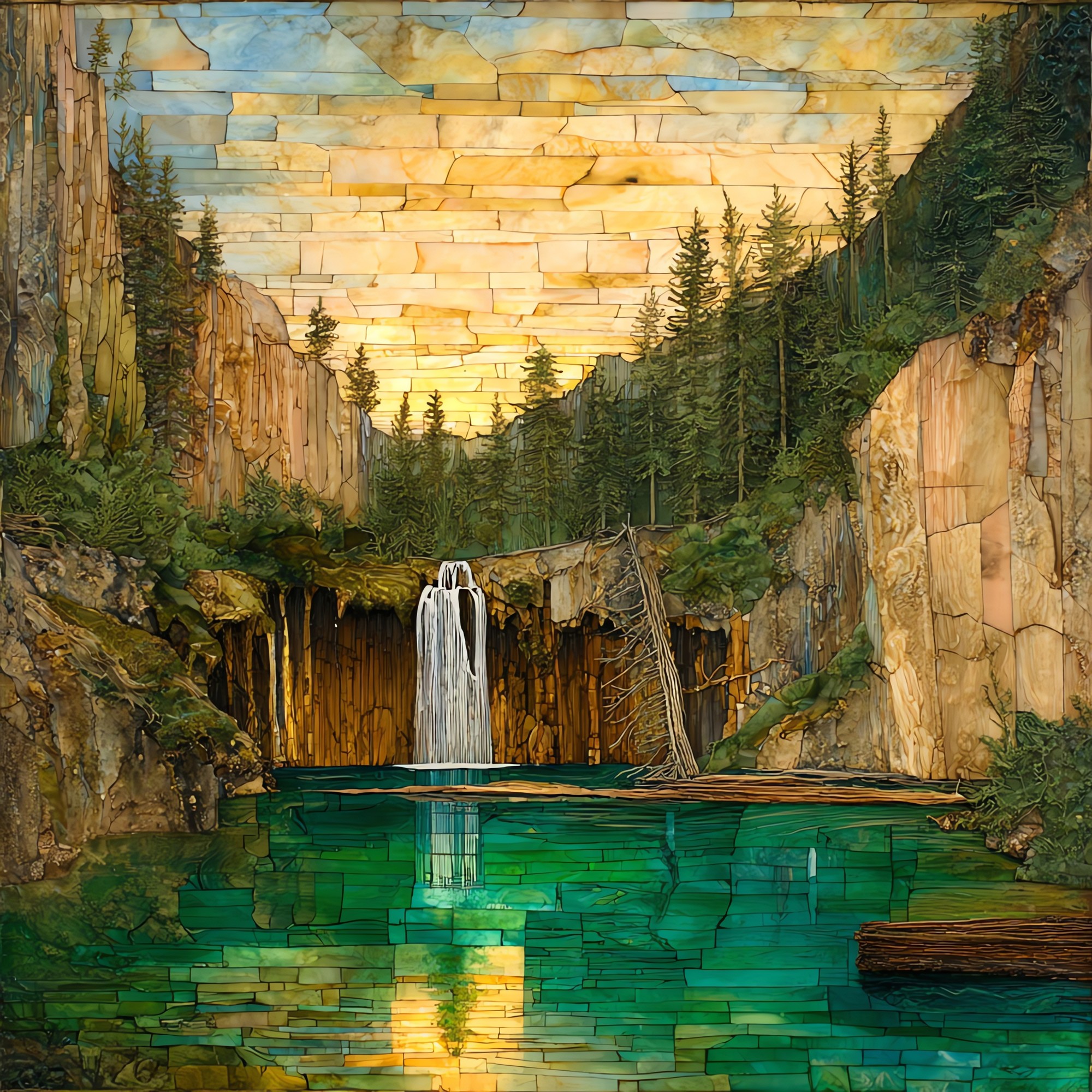
Hanging Lake travertine pool Ceramic Art Tile
— — a pool the cliff still holds.
Not only on a wall.

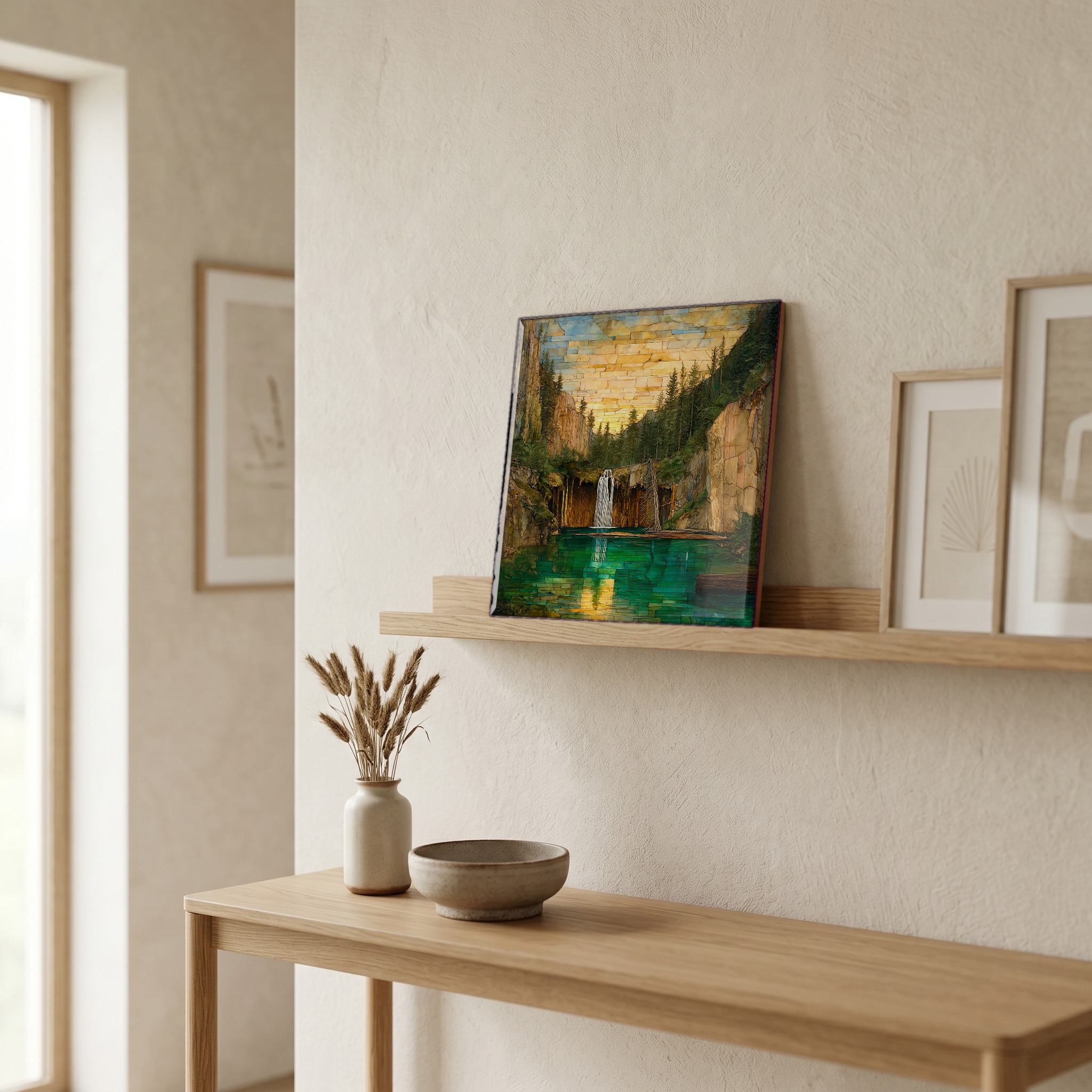
“A travertine pool clinging to a cliff above the Colorado River, seven miles east of Glenwood Springs. The colour comes from carbonate minerals laid down grain by grain as Dead Horse Creek spills over the lip. The trail to it climbs a thousand feet in just over a mile, and the U.S. Forest Service holds the count to a few hundred visitors a day now. The lake was nearly loved to pieces in the 2010s, then half-burned in the Grizzly Creek fire of 2020. People come up quiet. They go down quieter.
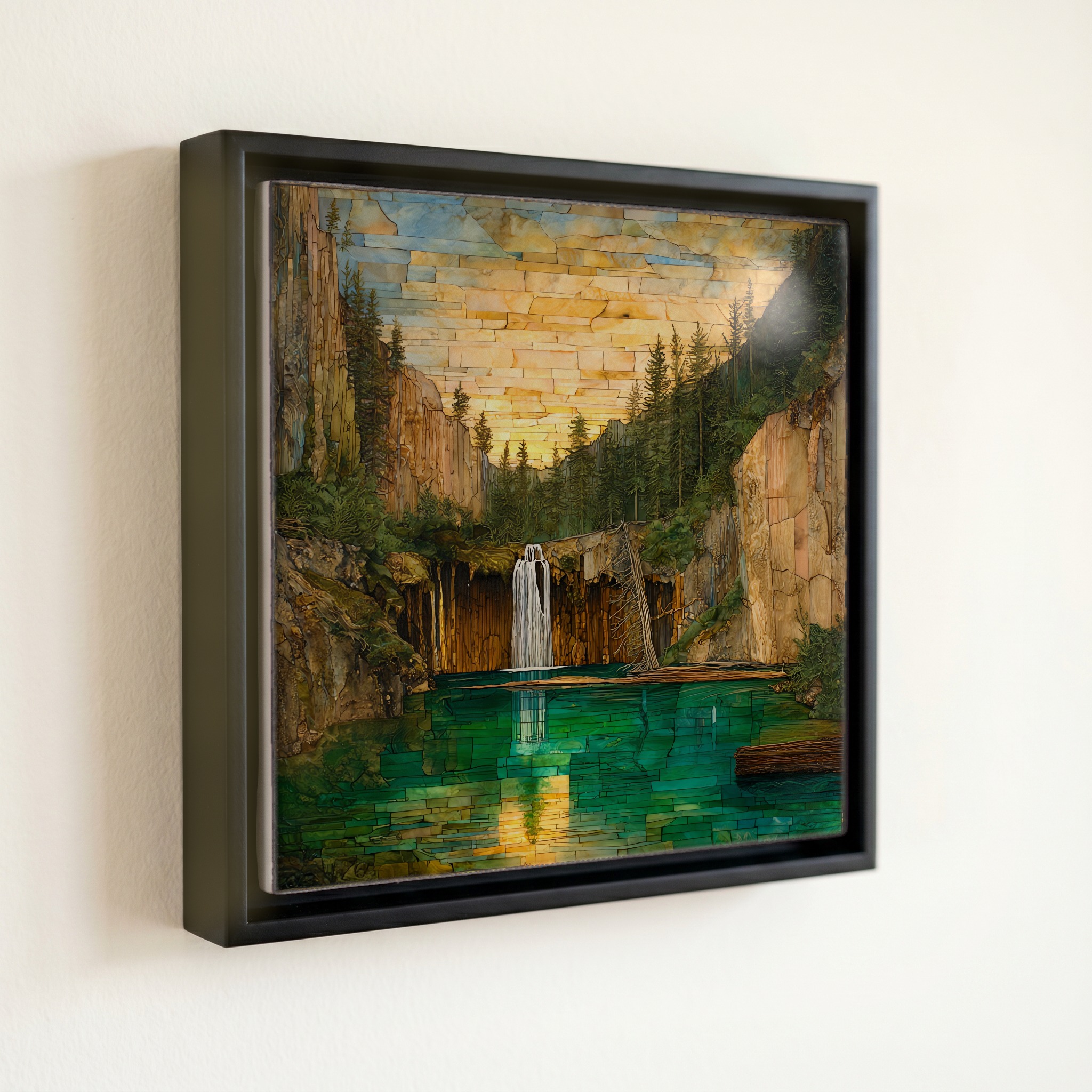
Hanging Lake travertine pool Ceramic Art Tile, on ceramic.
Each tile is finished by hand in our Knoxville studio. Artwork is slowly infused into the ceramic surface under high heat and pressure, and rests beneath a thin glossy finish. The colour lives in the surface, not on top of it.
Pick any four 4-inch tiles — National Parks you've been to, a Smokies set, the four seasons of one place. $ for a set of , cork-backed, ready to live on the table.
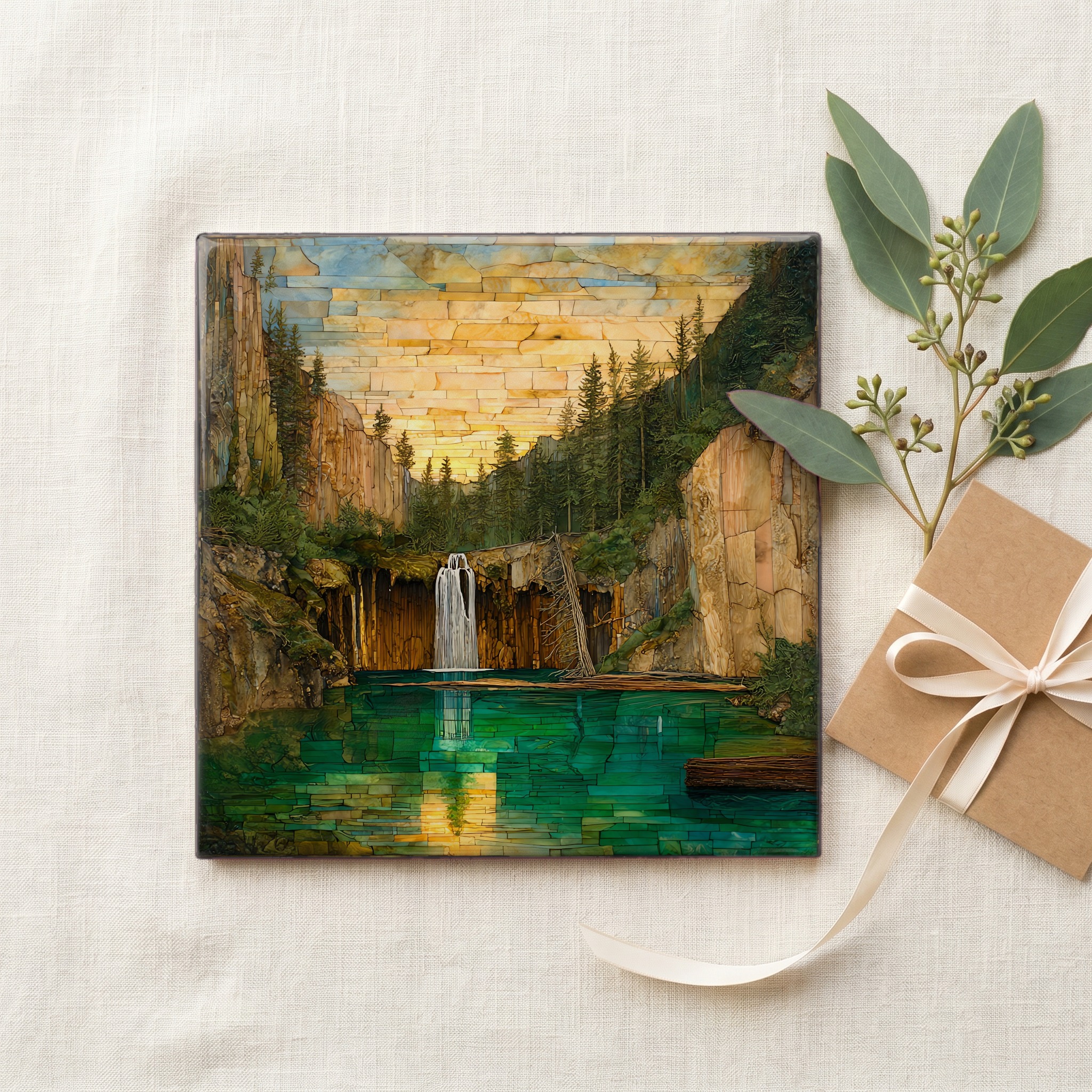
Each tile ships in a kraft box, tied with cream ribbon, with a handwritten note from the studio if you'd like to add one.
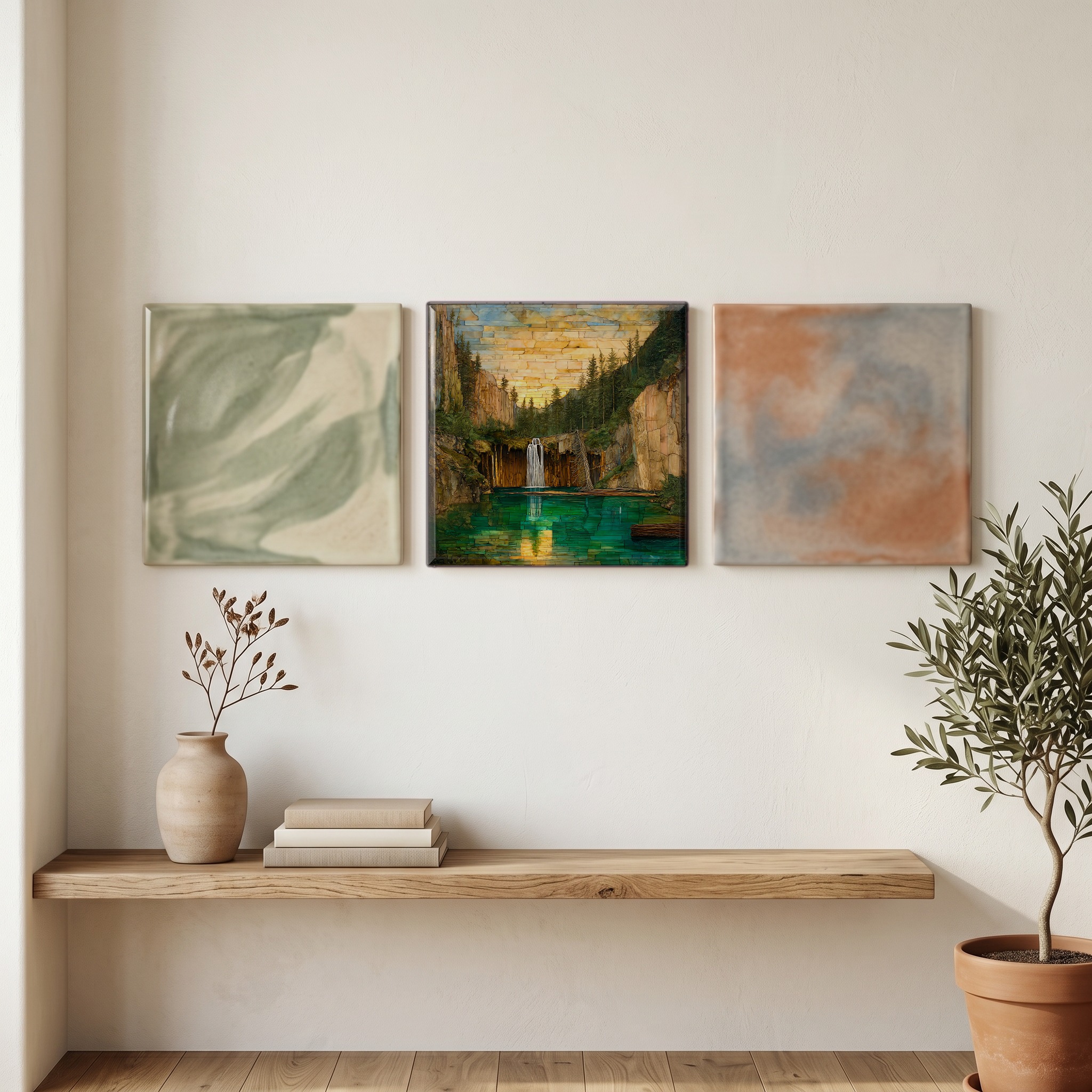
Three or five different vistas, hung together — a chapter of places you've been, or want to go.
The place, in three passes.
A small turquoise pool perched in a cliff face on the north side of Glenwood Canyon, roughly seven miles east of Glenwood Springs in Colorado's White River National Forest. The lake sits at about 7,323 feet, reached by a 1.2-mile trail that climbs nearly a thousand feet from the Glenwood Canyon bike path along the Colorado River. Dead Horse Creek feeds the basin, and a separate waterfall called Spouting Rock breaks straight out of the canyon wall about 200 feet above the lake. The U.S. Forest Service holds the surrounding land as a National Natural Landmark for the geology that keeps the basin from draining.
The colour is the lake's signature, a milky turquoise produced not by depth or glacial silt but by dissolved carbonate minerals. Dead Horse Creek runs through the Leadville Limestone above the canyon, a Mississippian-period formation laid down roughly 340 million years ago, picking up calcium carbonate that re-precipitates on every twig, rock and log it touches once the current slows. Over centuries that mineral deposition has built the travertine dam that holds the pool to the cliff face. The shoreline is still growing, fragile enough that visitors are kept to a wooden boardwalk and the water itself is closed to swimming, wading, or fishing. The same mechanism colours Plitvice in Croatia and Pamukkale in Turkey.
The trail is short but steep: 1.2 miles each way, gaining nearly 1,000 feet in switchbacks from the Glenwood Canyon bike path at 6,387 feet to the lake at 7,323. After heavy crowding through the 2010s and damage from the 2020 Grizzly Creek fire and floods in 2021 and 2023, the U.S. Forest Service and partners rebuilt all seven bridges along the route and now caps visitors with a timed permit system. Permits are $12 from May through December in 2026 and cover a three-hour window. There is no shuttle and no drop-off; hikers drive their own vehicle to the trailhead. The trail sees about 131,000 visitors a year, parcelled out hourly.