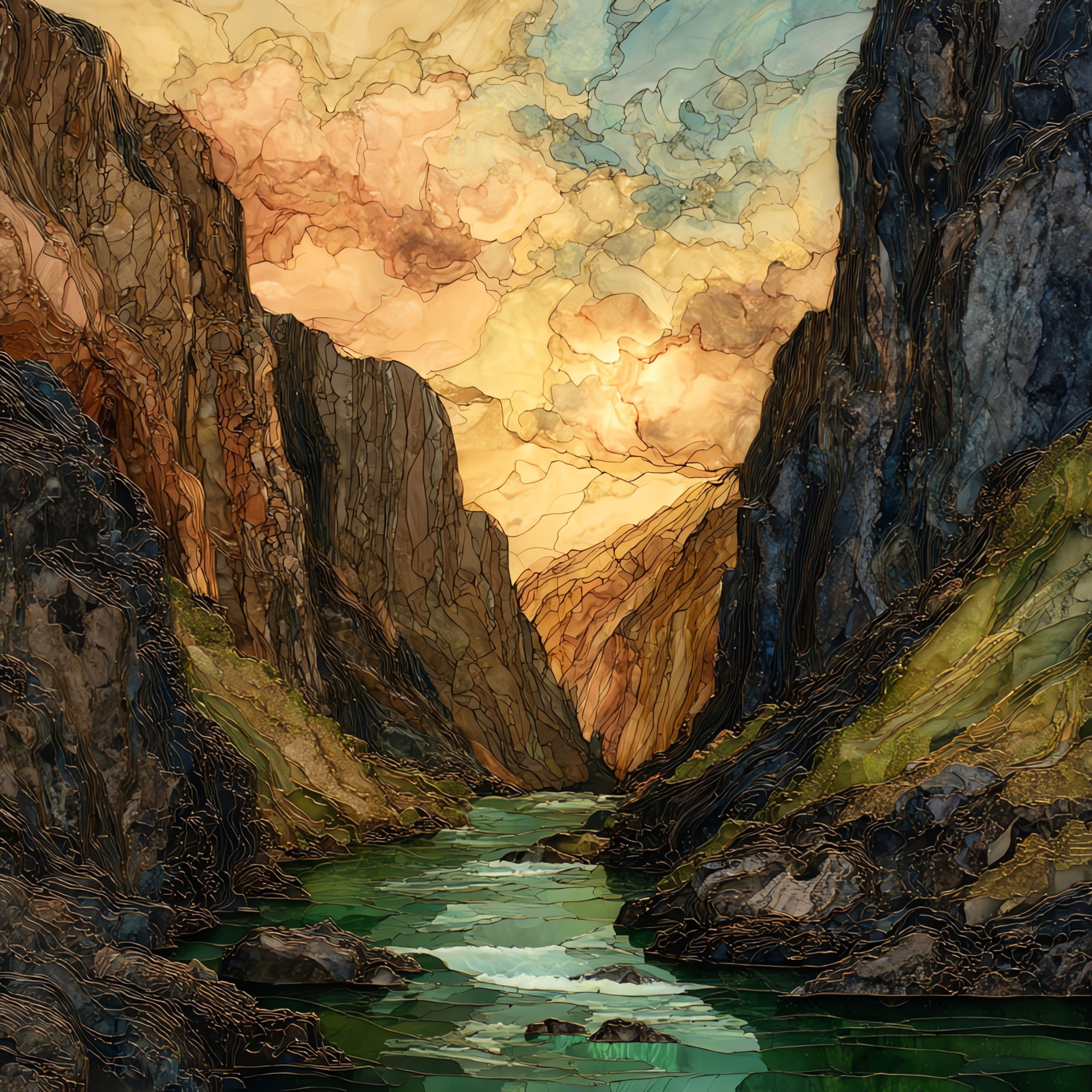
Gunnison River inner gorge Black Canyon NP Ceramic Art Tile
— the river the sun barely finds.
Not only on a wall.
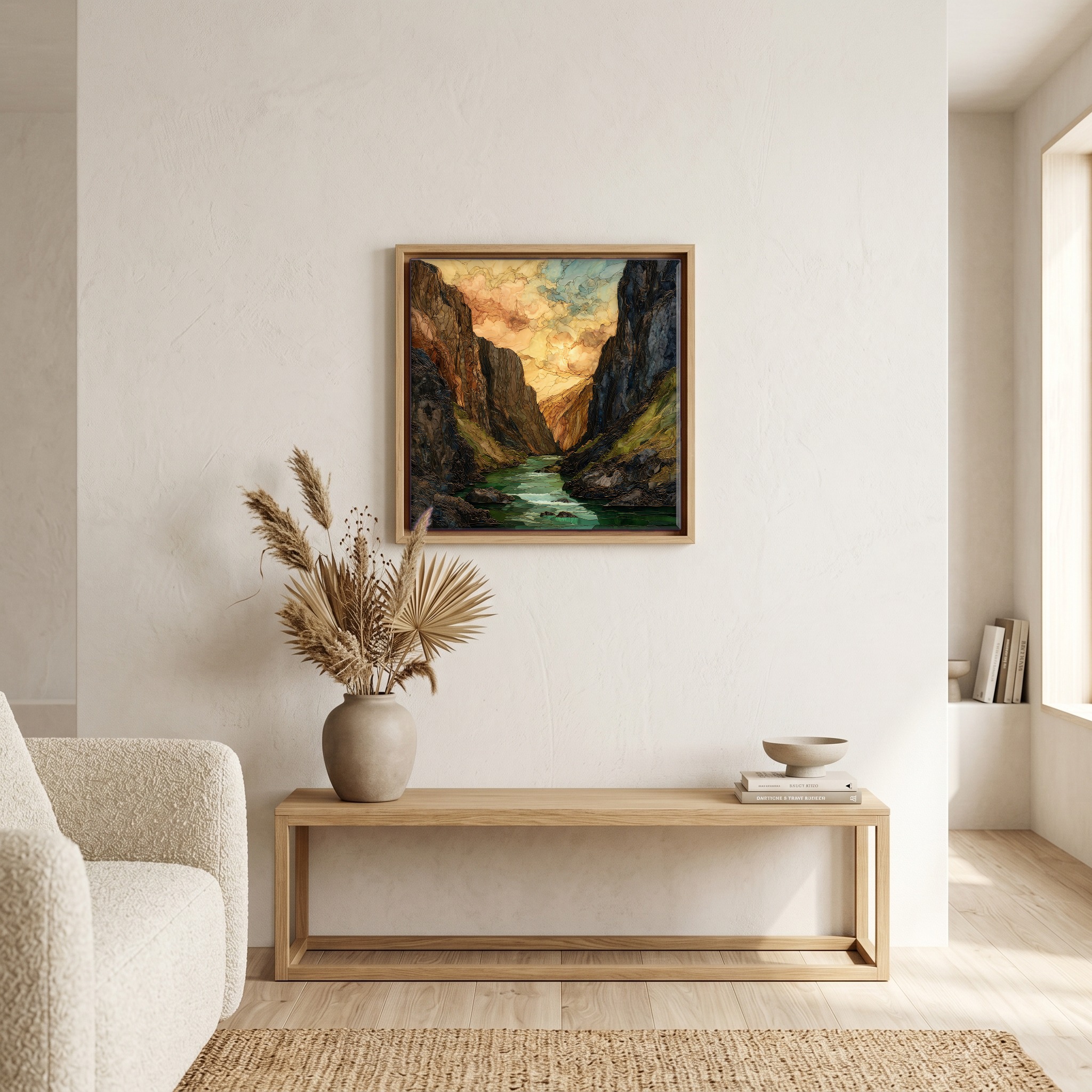
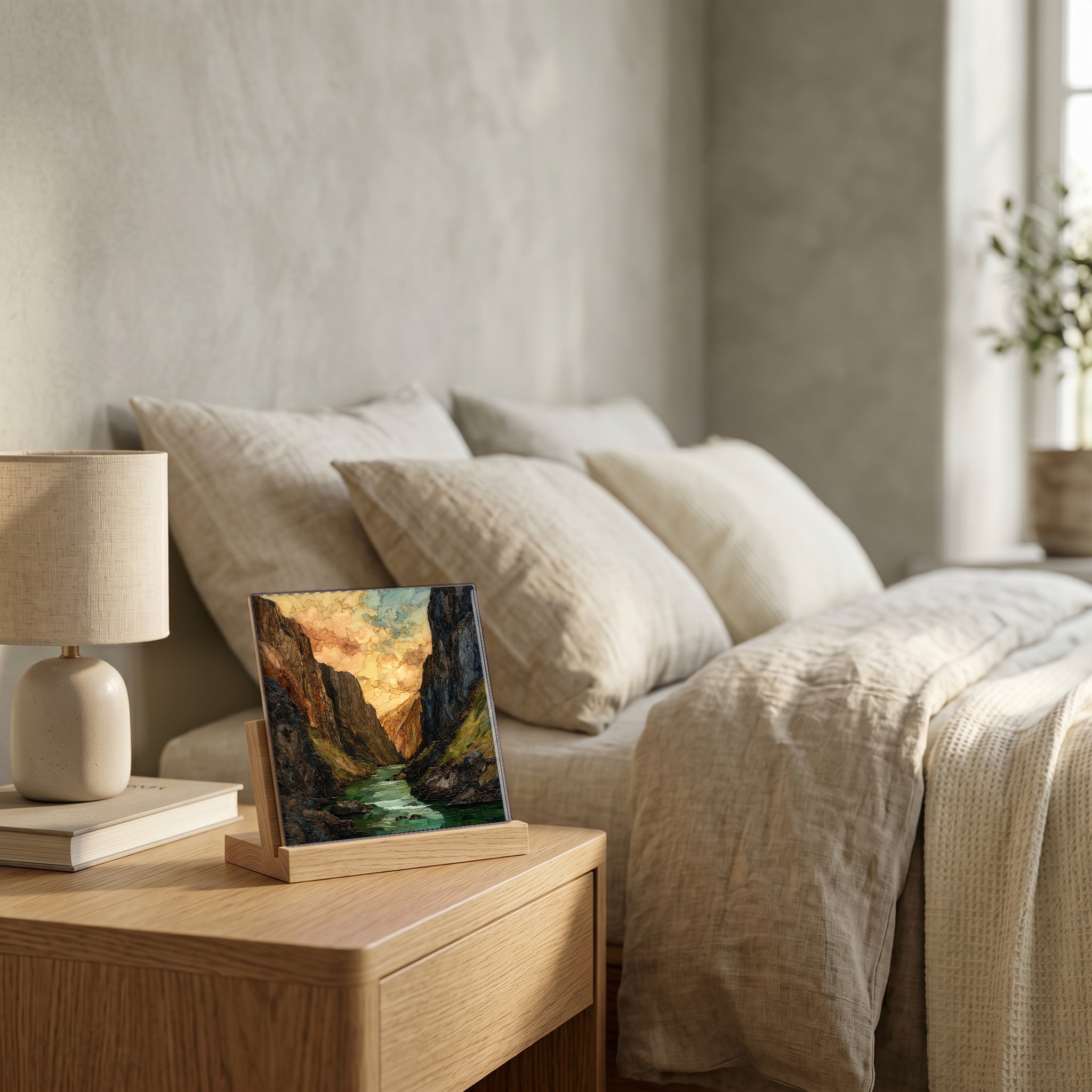
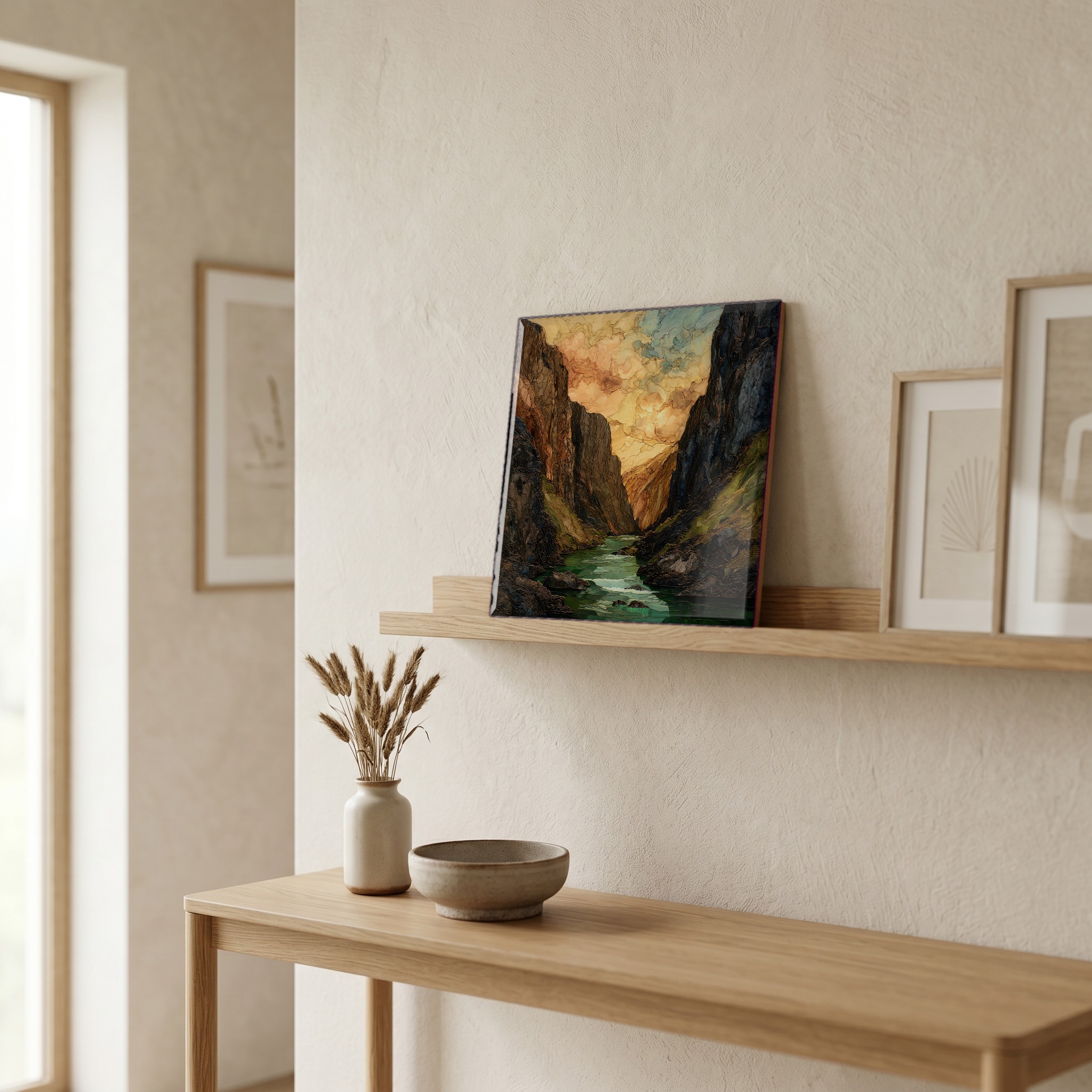
“The deepest reach of Black Canyon, where the Gunnison River runs hard through walls of 1.7-billion-year-old gneiss and schist. In some stretches the sun touches the water for barely half an hour a day. The river drops 95 feet for every mile of the park's fourteen, one of the steepest river gradients on the continent. Reaching the gorge floor takes an unmaintained route and a wilderness permit. Most who come back talk about the silence more than the climb.
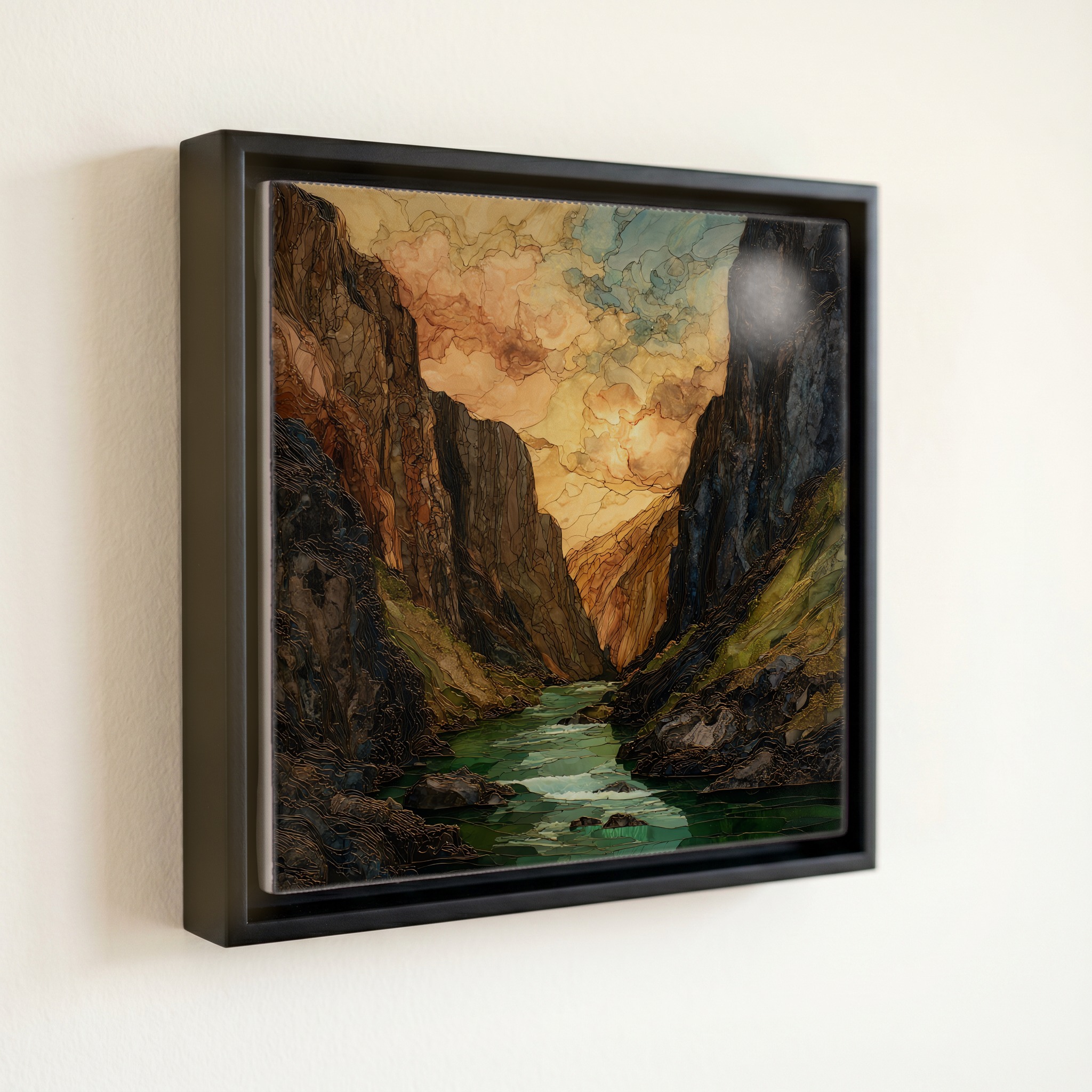
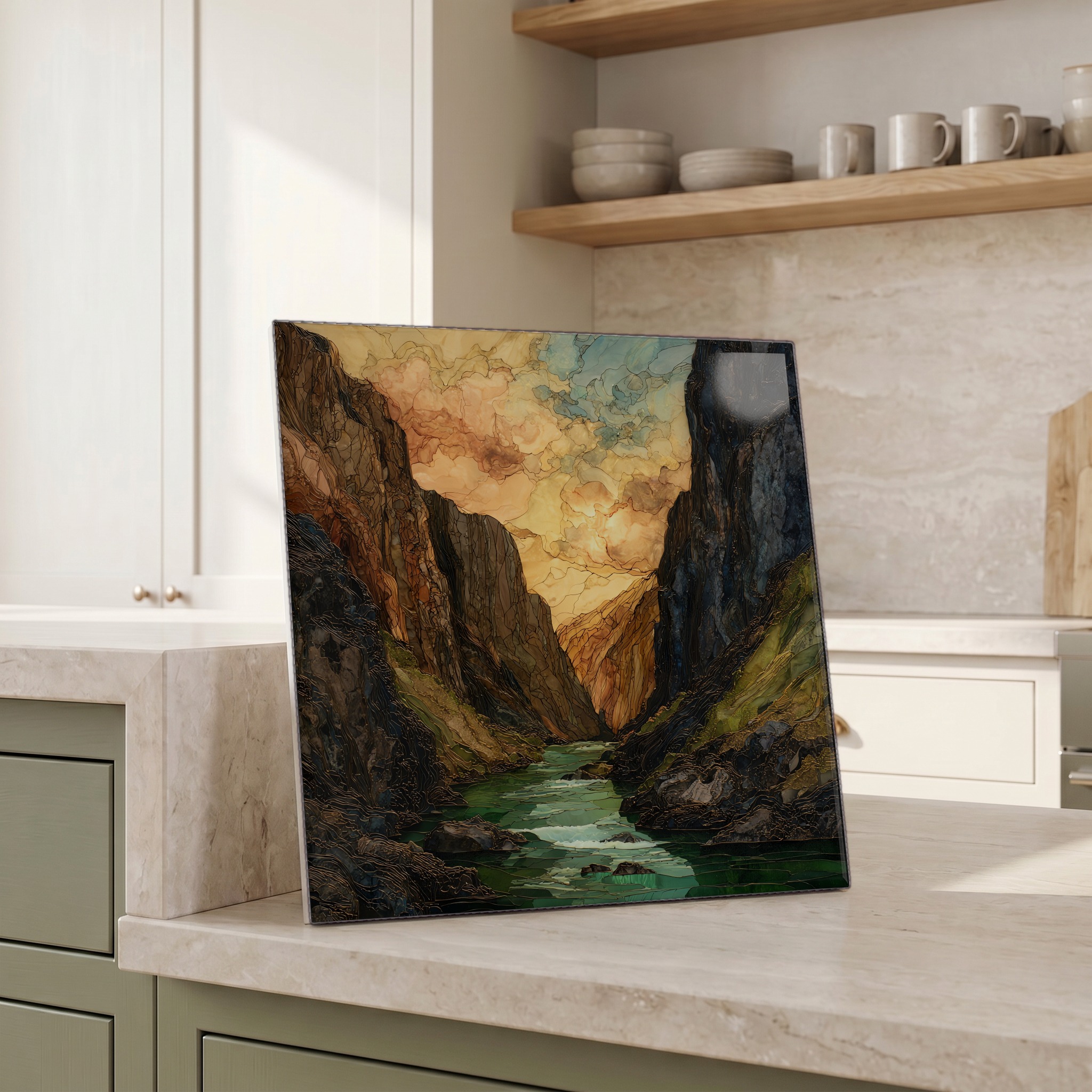
Gunnison River inner gorge Black Canyon NP Ceramic Art Tile, on ceramic.
Each tile is finished by hand in our Knoxville studio. Artwork is slowly infused into the ceramic surface under high heat and pressure, and rests beneath a thin glossy finish. The colour lives in the surface, not on top of it.
Pick any four 4-inch tiles — National Parks you've been to, a Smokies set, the four seasons of one place. $ for a set of , cork-backed, ready to live on the table.
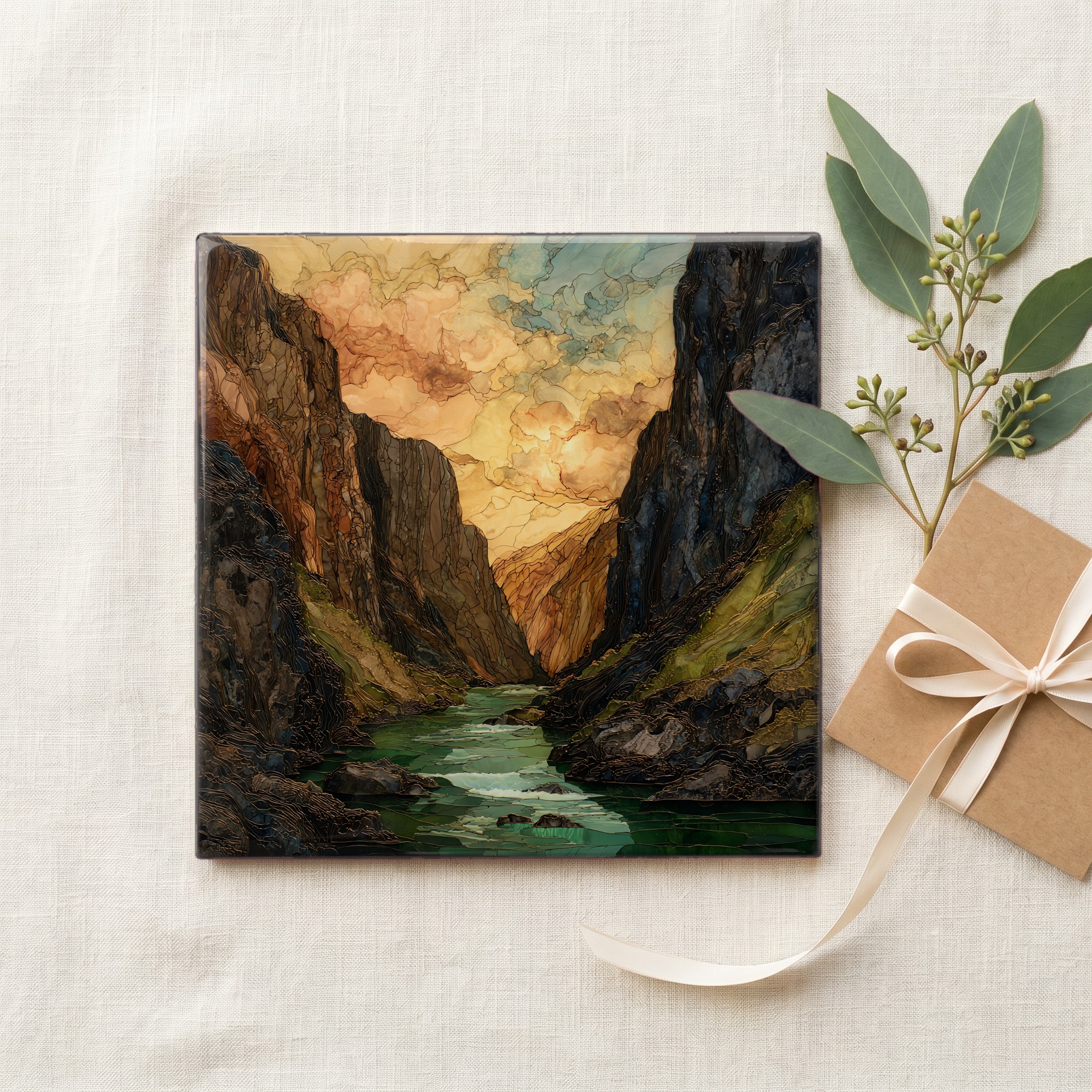
Each tile ships in a kraft box, tied with cream ribbon, with a handwritten note from the studio if you'd like to add one.
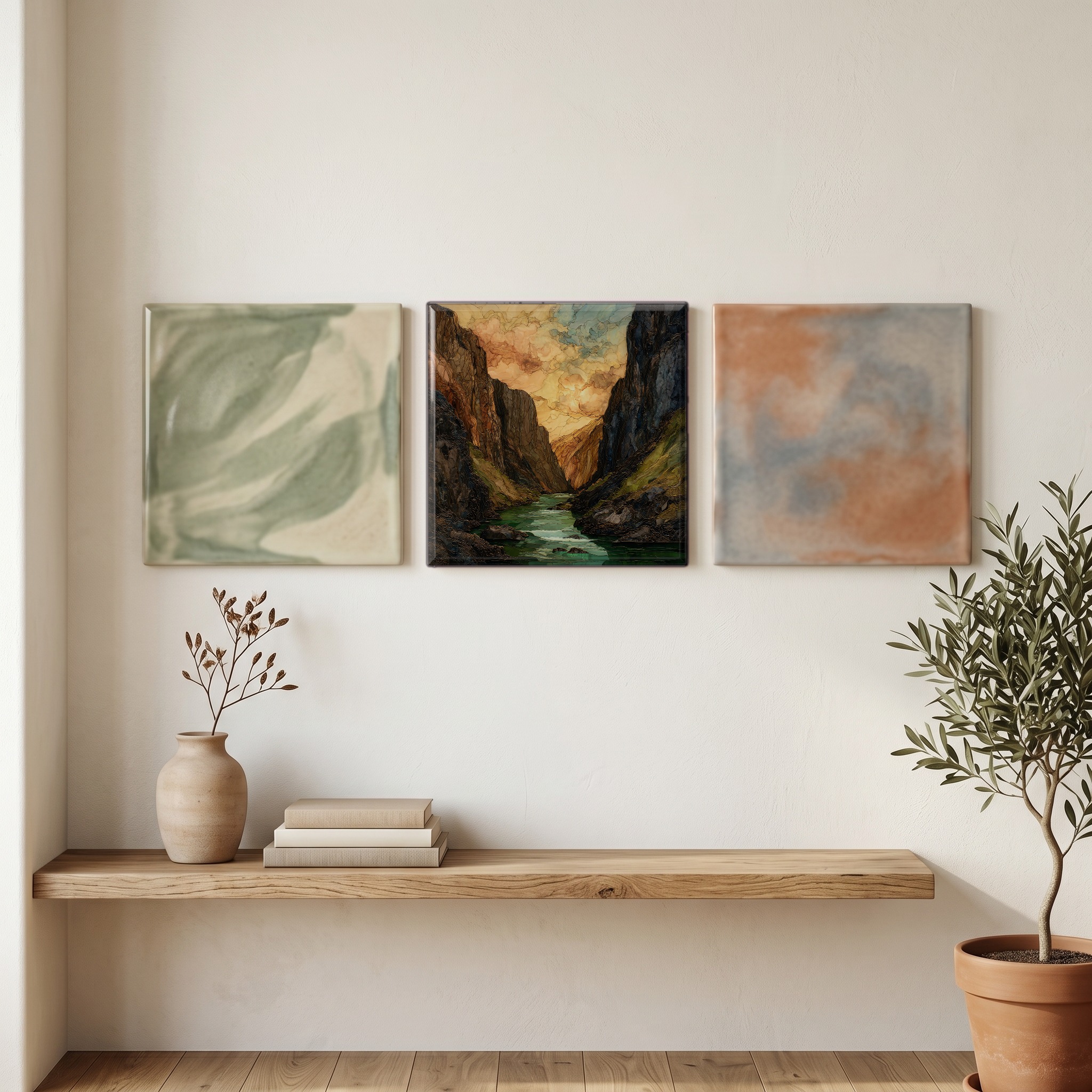
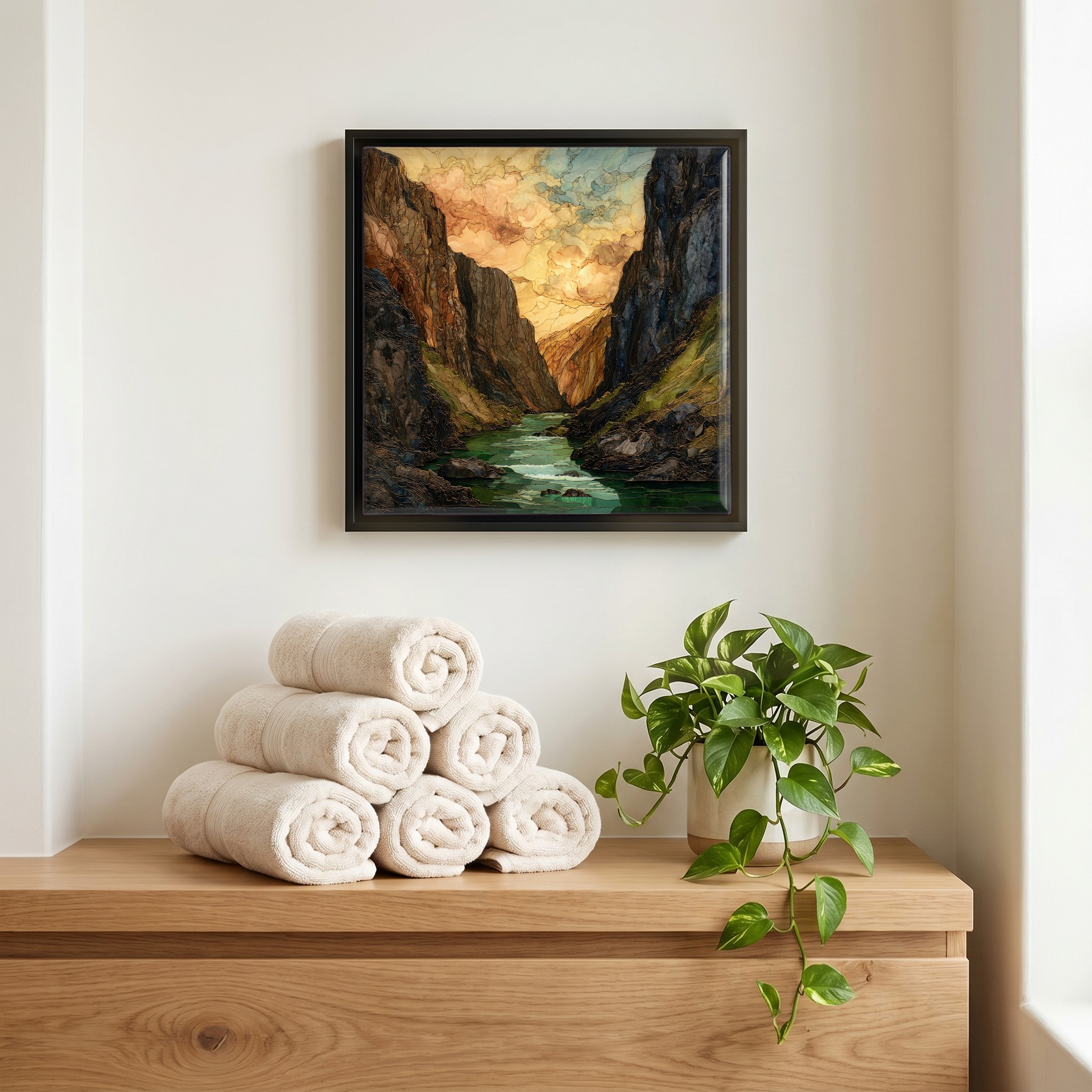
Three or five different vistas, hung together — a chapter of places you've been, or want to go.
The place, in three passes.
The Gunnison River inner gorge is the deepest cut of Black Canyon of the Gunnison National Park, in western Colorado, about fifteen miles north of the town of Montrose. The park was designated a National Monument in 1933 and upgraded to National Park status in 1999. The river runs through fourteen miles of canyon inside park boundaries, with rim elevations near 8,200 feet and the gorge floor 1,750 to 2,700 feet below. Access to the river is by wilderness permit only, via one of three unmaintained backcountry routes (Gunnison, Tomichi, and Warner), each climbing roughly 1,800 feet on the return. The North Rim road closes from late November through April.
The walls of the inner gorge are Precambrian gneiss and schist, dated at roughly 1.7 billion years, among the oldest exposed rock anywhere on the continent. The National Park Service describes the canyon as a knife-edge cut into the Gunnison Uplift: a slow regional uplift met a young, fast river, and the river held its line through stone that newer rivers would have flowed around. The signature feature is the Painted Wall, a 2,250-foot cliff streaked with lighter dikes of pegmatite that intruded the dark host rock and now read as bright veins across the wall. It is the tallest sheer cliff in Colorado.
The name Black Canyon comes from how little light reaches the floor. At the narrowest section the canyon is 40 feet wide at the river, with walls rising more than 2,000 feet on either side, and direct sunlight finds the water for as little as 33 minutes a day in some stretches. The gorge floor sits well below the rim wind. Hikers who descend the Gunnison Route describe the bottom as river-loud and otherwise still, with sound carrying strangely against the gneiss. The Park Service runs no maintained trail, no shuttle, and no signage below the rim. What is left is the river, the rock, and the strip of sky.