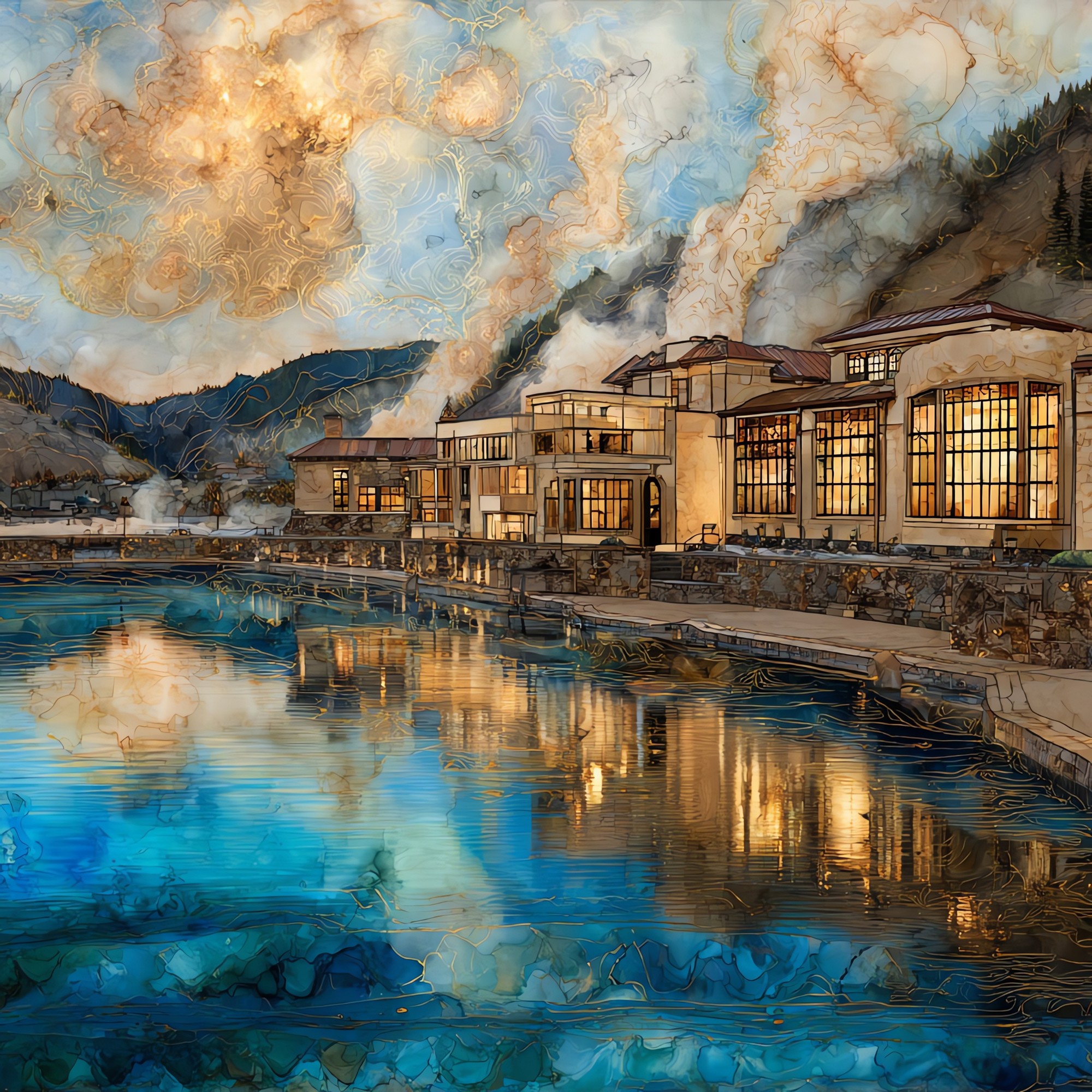
Glenwood Hot Springs great pool Ceramic Art Tile
— — a long pool of held heat.
Not only on a wall.
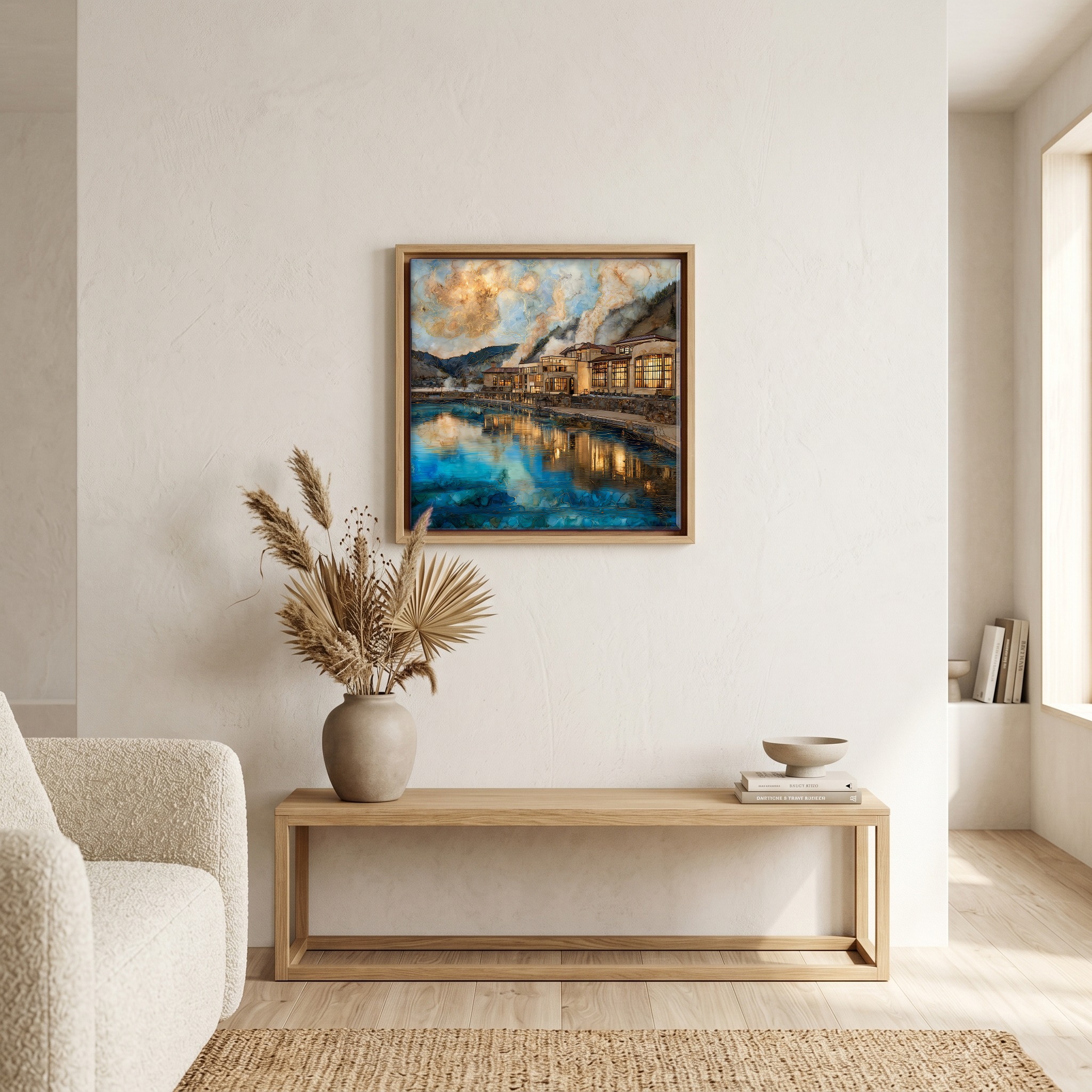
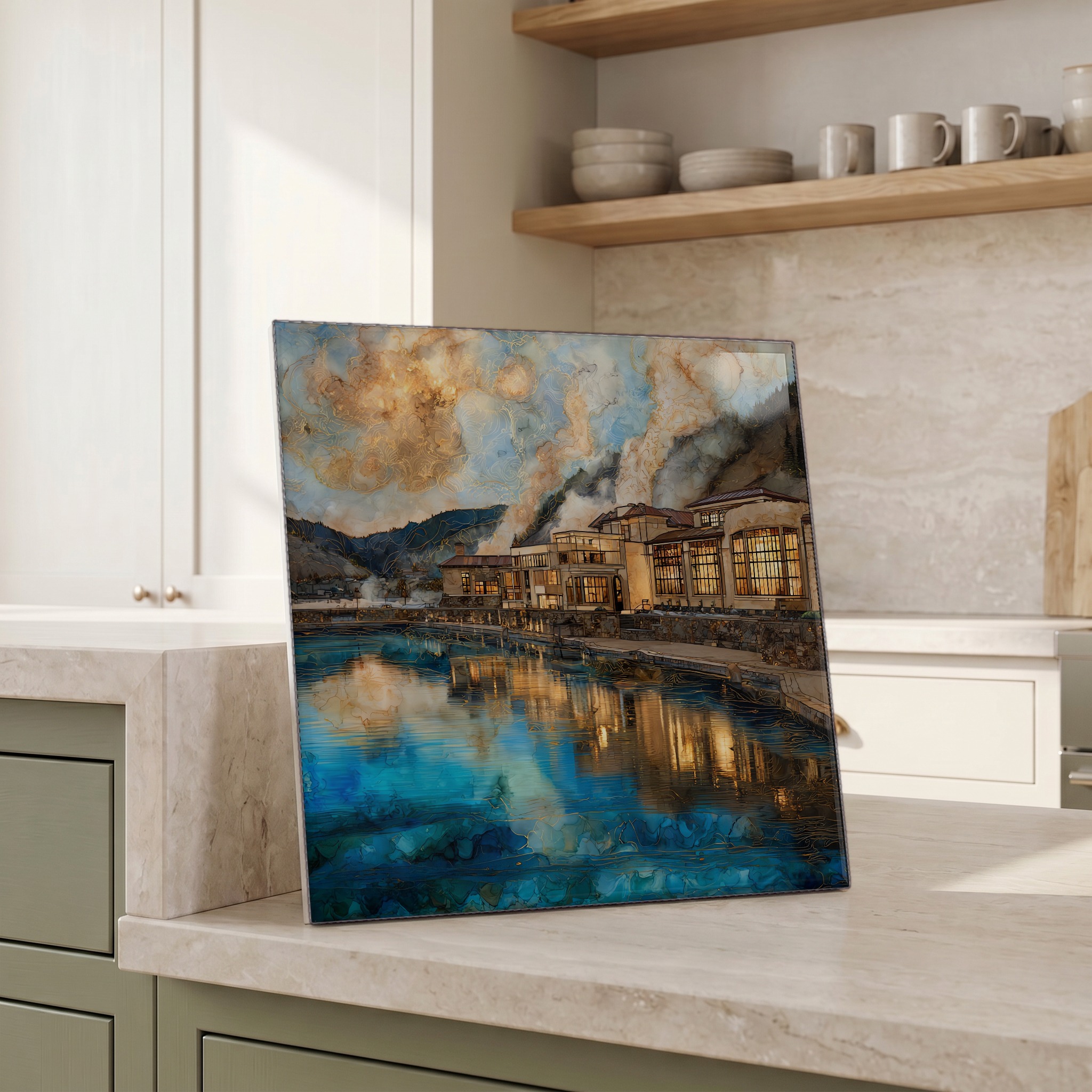
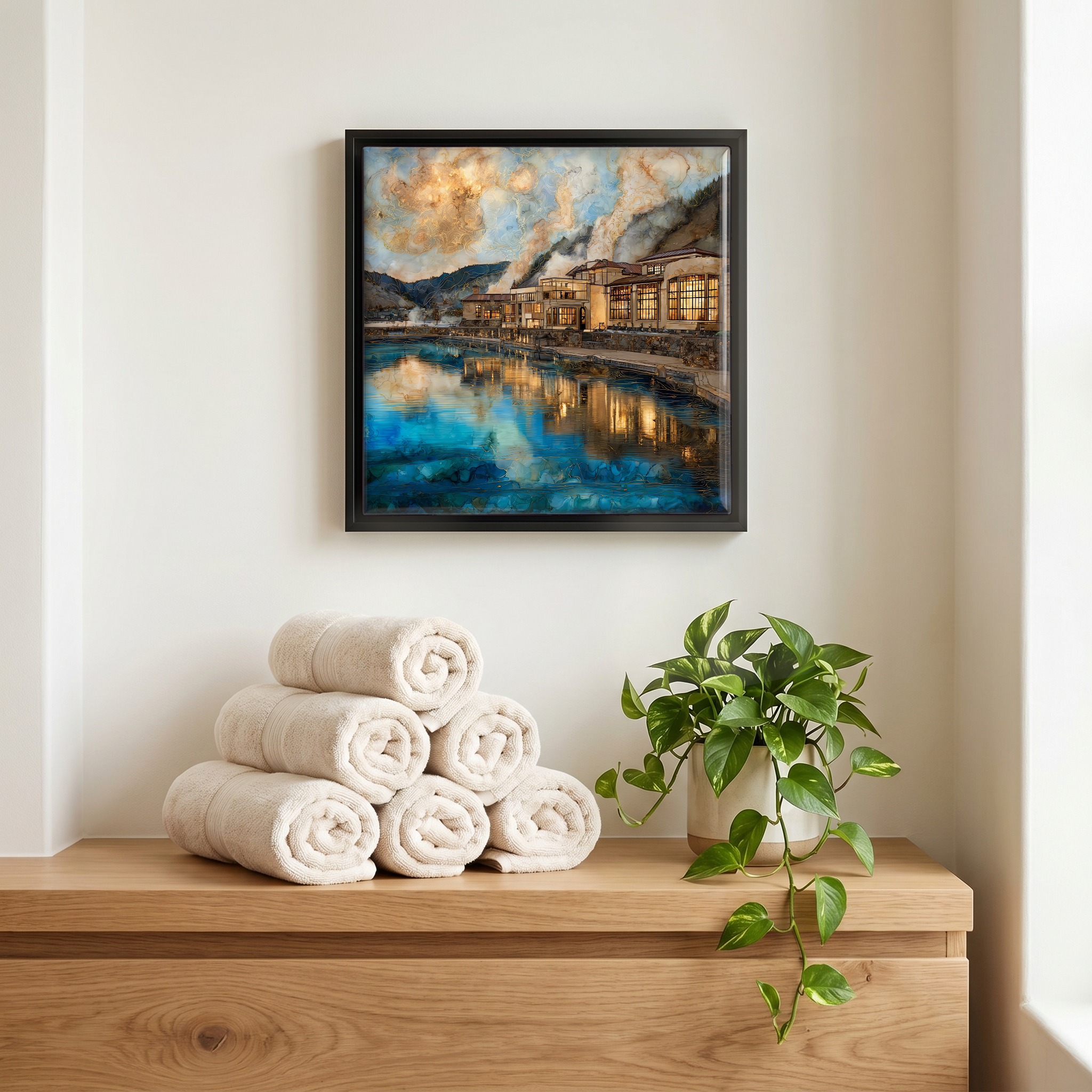
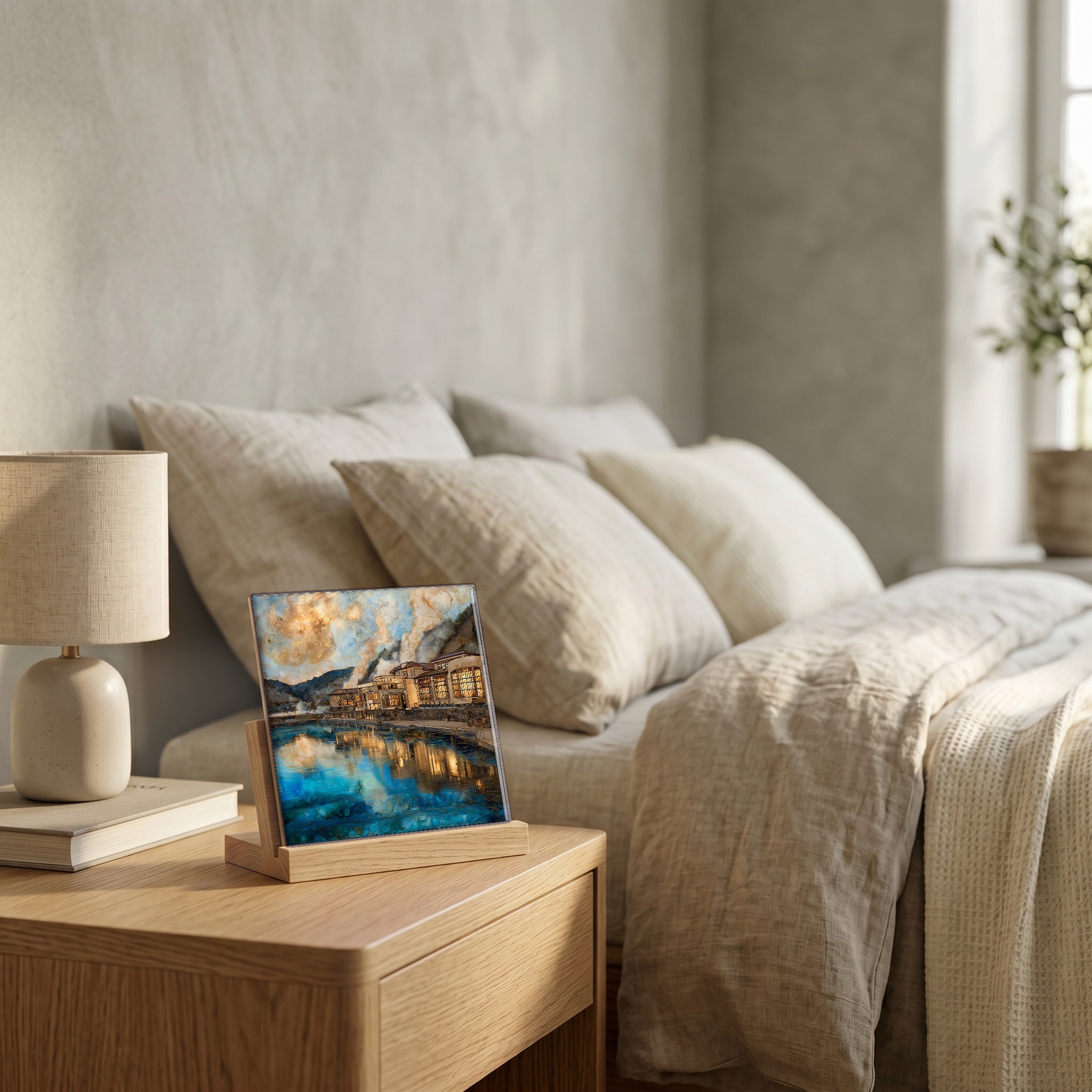
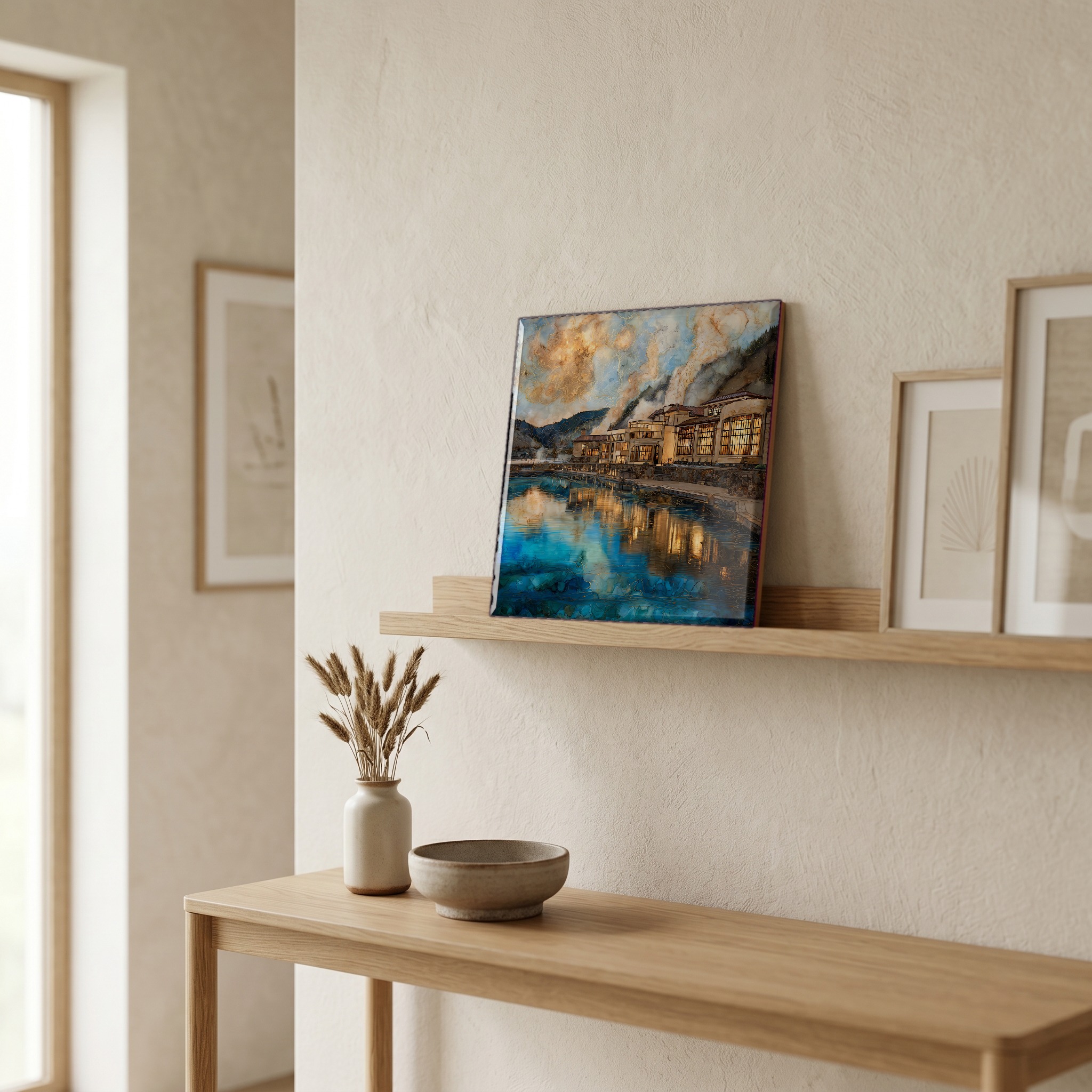
“The pool sits in Glenwood Springs, Colorado, at the confluence of the Colorado River and the Roaring Fork, where Interstate 70 enters the canyon. The Yampah Spring delivers 3.5 million gallons of mineral water a day at 122 degrees before it cools to swimming temperature in the Big Pool. The Ute called the spring Yampah, meaning big medicine in their language, and used it for healing long before any building stood here. Doc Holliday came west for the water in 1887 and is buried up the hill at Linwood Cemetery. In winter the steam holds against the canyon walls and people swim in the snow.
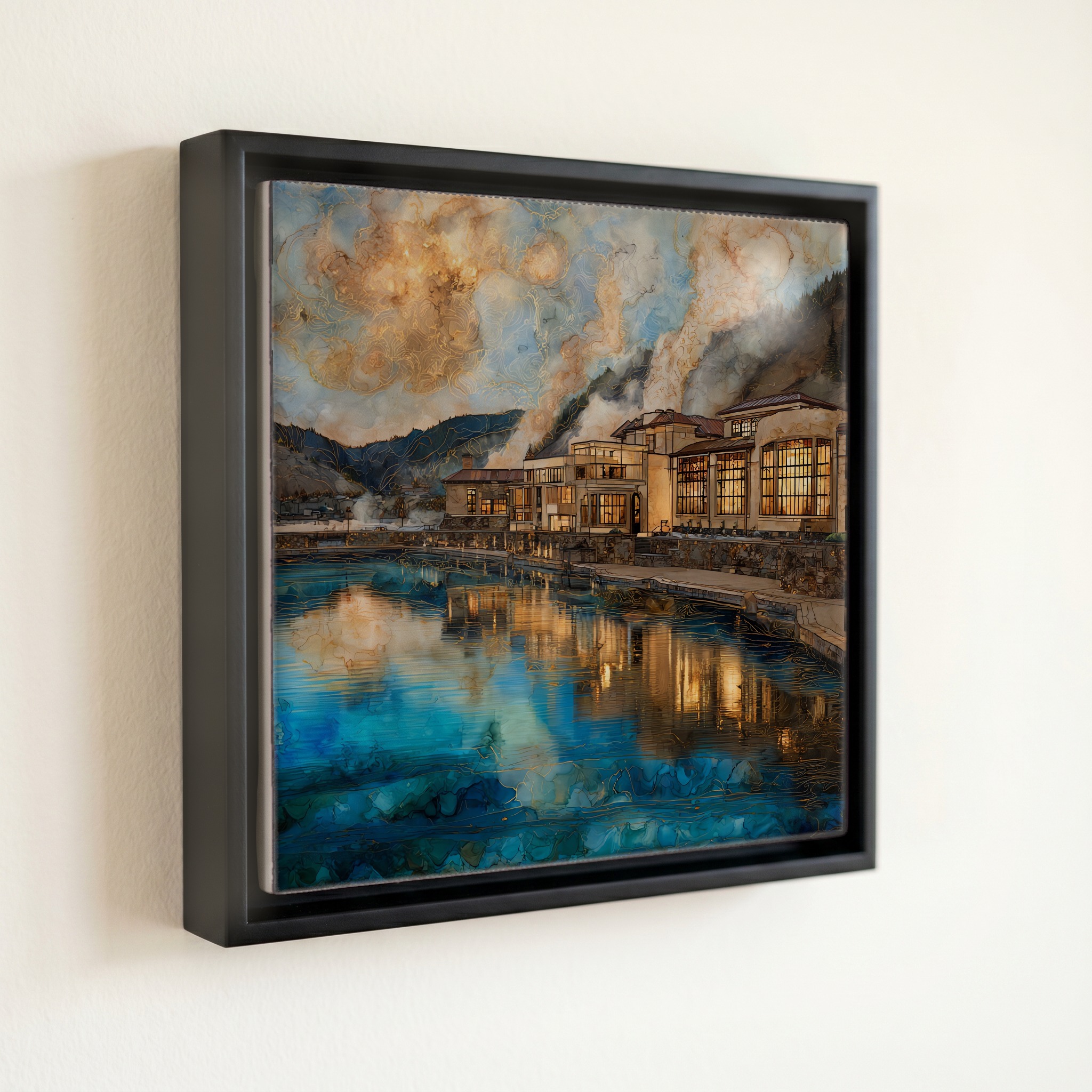
Glenwood Hot Springs great pool Ceramic Art Tile, on ceramic.
Each tile is finished by hand in our Knoxville studio. Artwork is slowly infused into the ceramic surface under high heat and pressure, and rests beneath a thin glossy finish. The colour lives in the surface, not on top of it.
Pick any four 4-inch tiles — National Parks you've been to, a Smokies set, the four seasons of one place. $ for a set of , cork-backed, ready to live on the table.
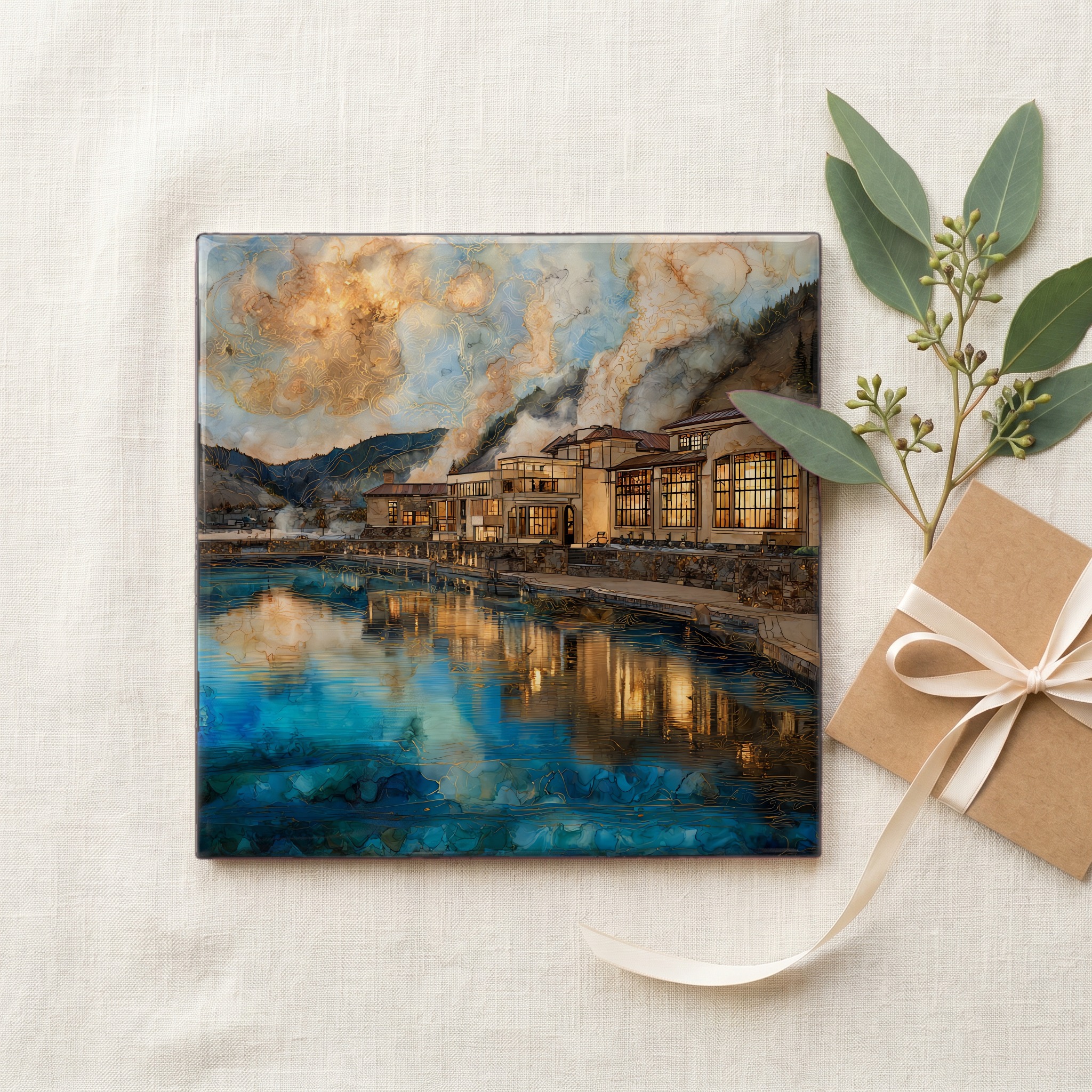
Each tile ships in a kraft box, tied with cream ribbon, with a handwritten note from the studio if you'd like to add one.
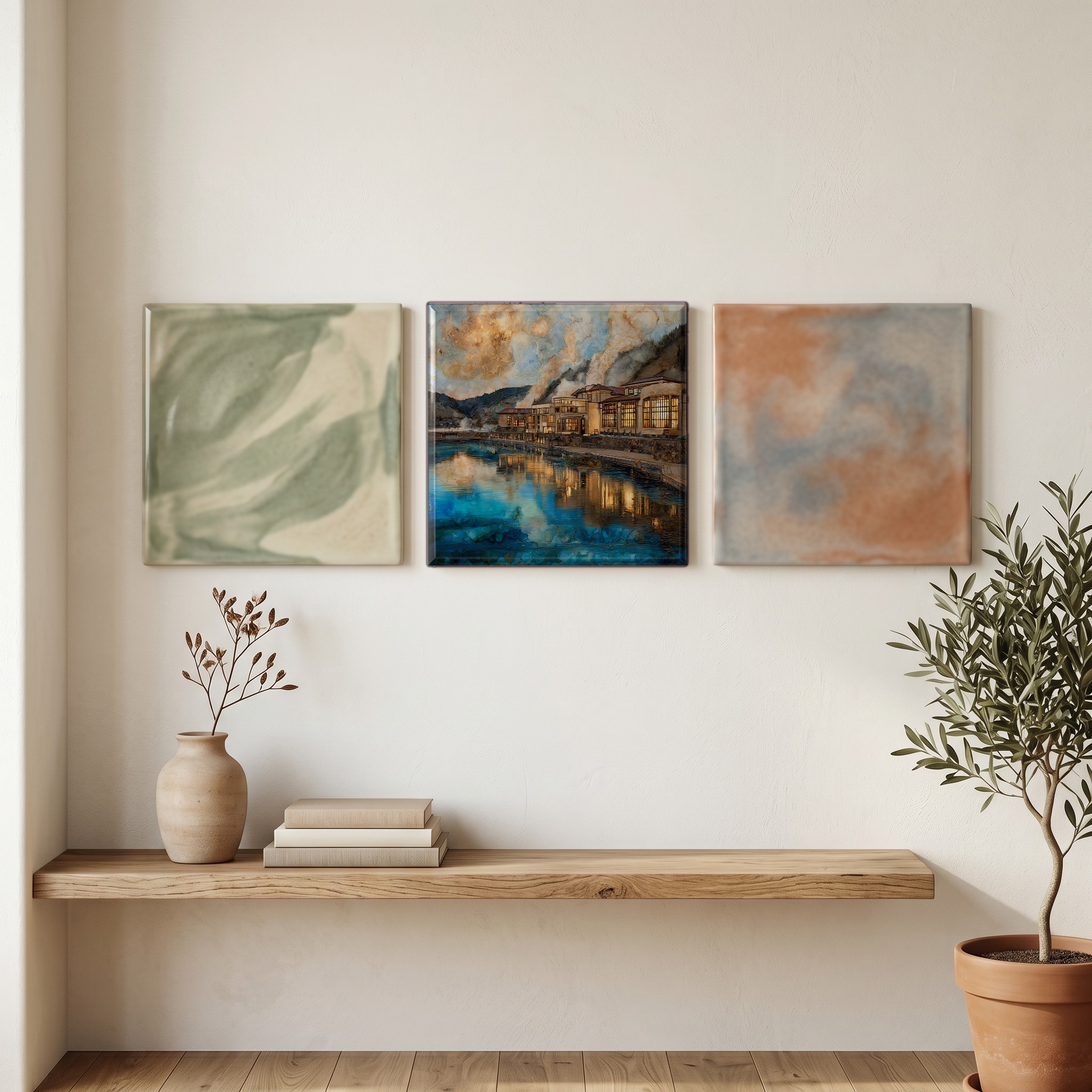
Three or five different vistas, hung together — a chapter of places you've been, or want to go.
The place, in three passes.
Glenwood Hot Springs sits in the town of Glenwood Springs, Colorado, at the confluence of the Colorado River and the Roaring Fork, in Garfield County at 5,761 feet of elevation. The pool occupies the north bank of the Colorado, at the western mouth of Glenwood Canyon, where Interstate 70 enters the canyon on its way east toward the Continental Divide. The Big Pool itself measures 405 feet long and 100 feet wide and holds just over a million gallons of mineral water, the longest mineral hot springs pool in the world. The town is about 160 miles west of Denver and 90 miles east of Grand Junction.
The Yampah Spring delivers 3.5 million gallons of mineral water to the surface each day at 122 degrees Fahrenheit. Fifteen dissolved minerals are in the water, with sodium chloride dominant, plus calcium, potassium, magnesium, and a measurable thread of lithium. The water is cooled to about 90 degrees in the Big Pool and held at 104 in the smaller Therapy Pool, 100 feet long. The Ute people called the spring Yampah, meaning big medicine in their language, and used it for healing long before any building stood here. The sodium content gives the water a slightly buoyant feel against the skin.
The bathhouse and pool opened in 1888, built by mining engineer Walter Devereux on springs the Ute had used for generations. John Henry Holliday came west in 1887 hoping the sulphur waters would ease his tuberculosis; he died that November, and a marker for him stands at Linwood Cemetery on the hill above town. Theodore Roosevelt soaked here in 1905 while staying at the adjacent Hotel Colorado, which the Devereux family built as the resort's lodging and which the President used as a summer White House for several Western trips. The pool is open every day of the year except for a brief annual maintenance closure each September.