Wender·Vista
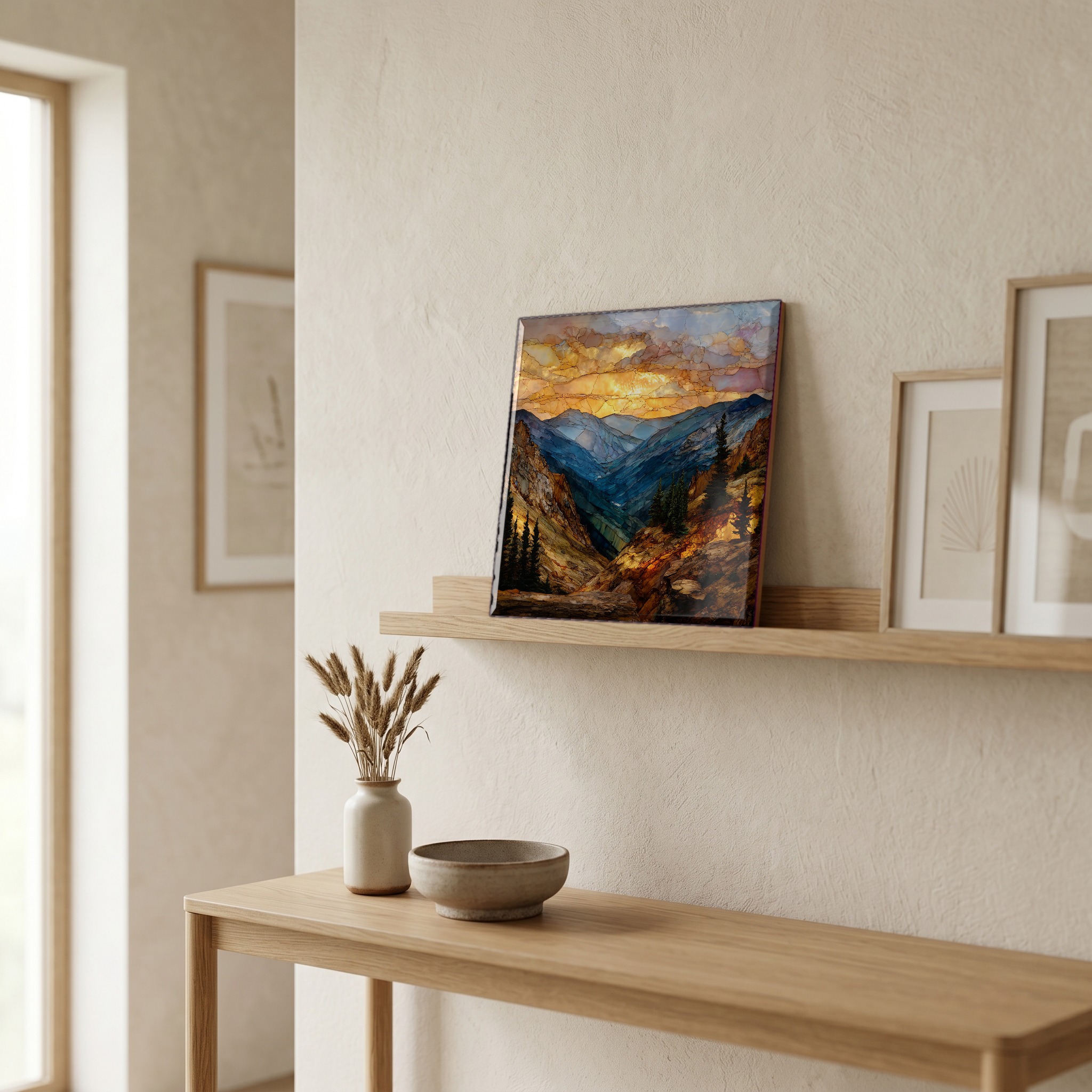
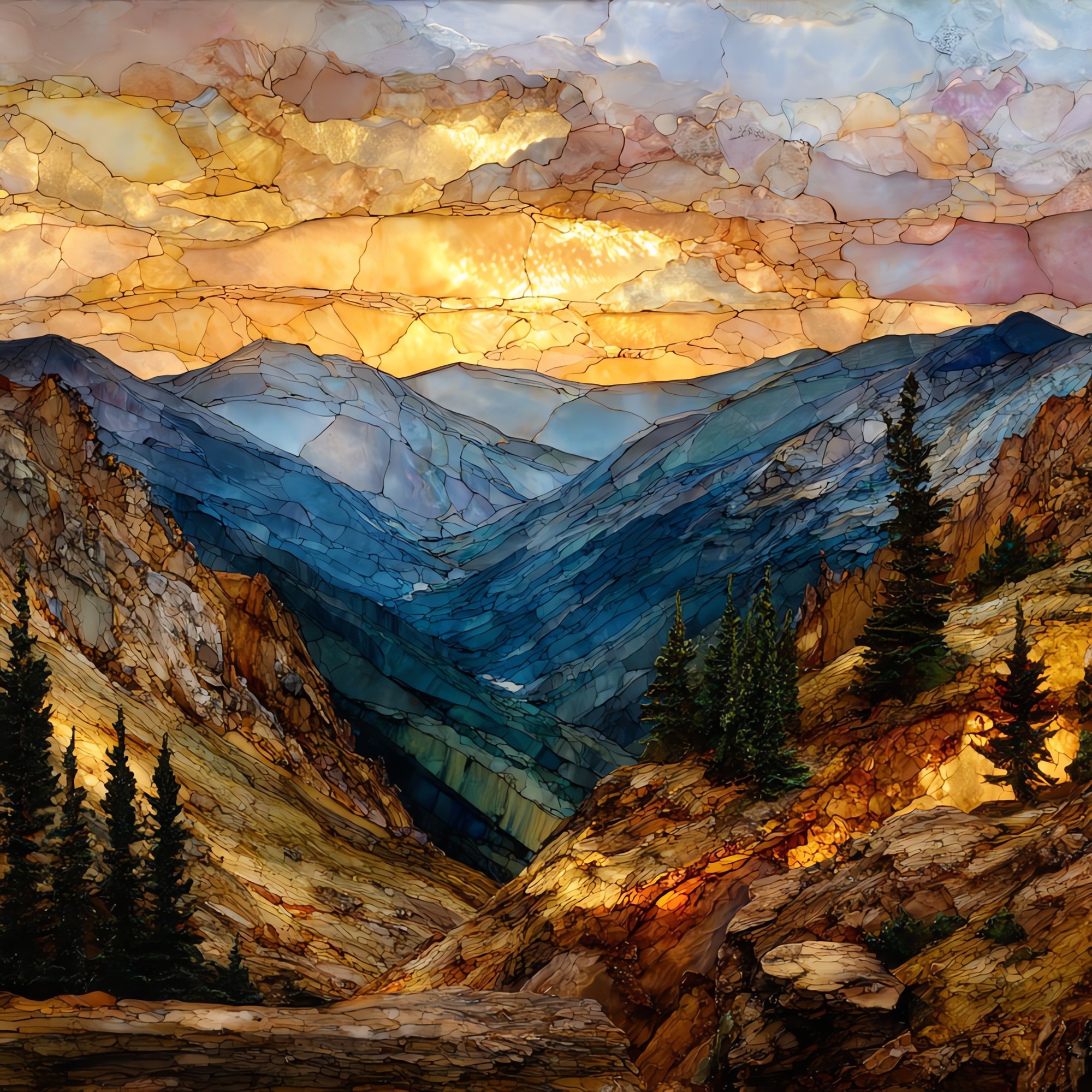
Forest Canyon overlook Rocky Mountain National Park Ceramic Art Tile
shown on ceramic, 12-inch tileColorado · United States
on the tundra above the Big Thompson

Forest Canyon overlook Rocky Mountain National Park Ceramic Art Tile

— the wilderness no trail goes into.

Where it lives

Not only on a wall.

A small tile on the nightstand catching the morning. A larger one above the fire. Yours, wherever you spend the slow hours.
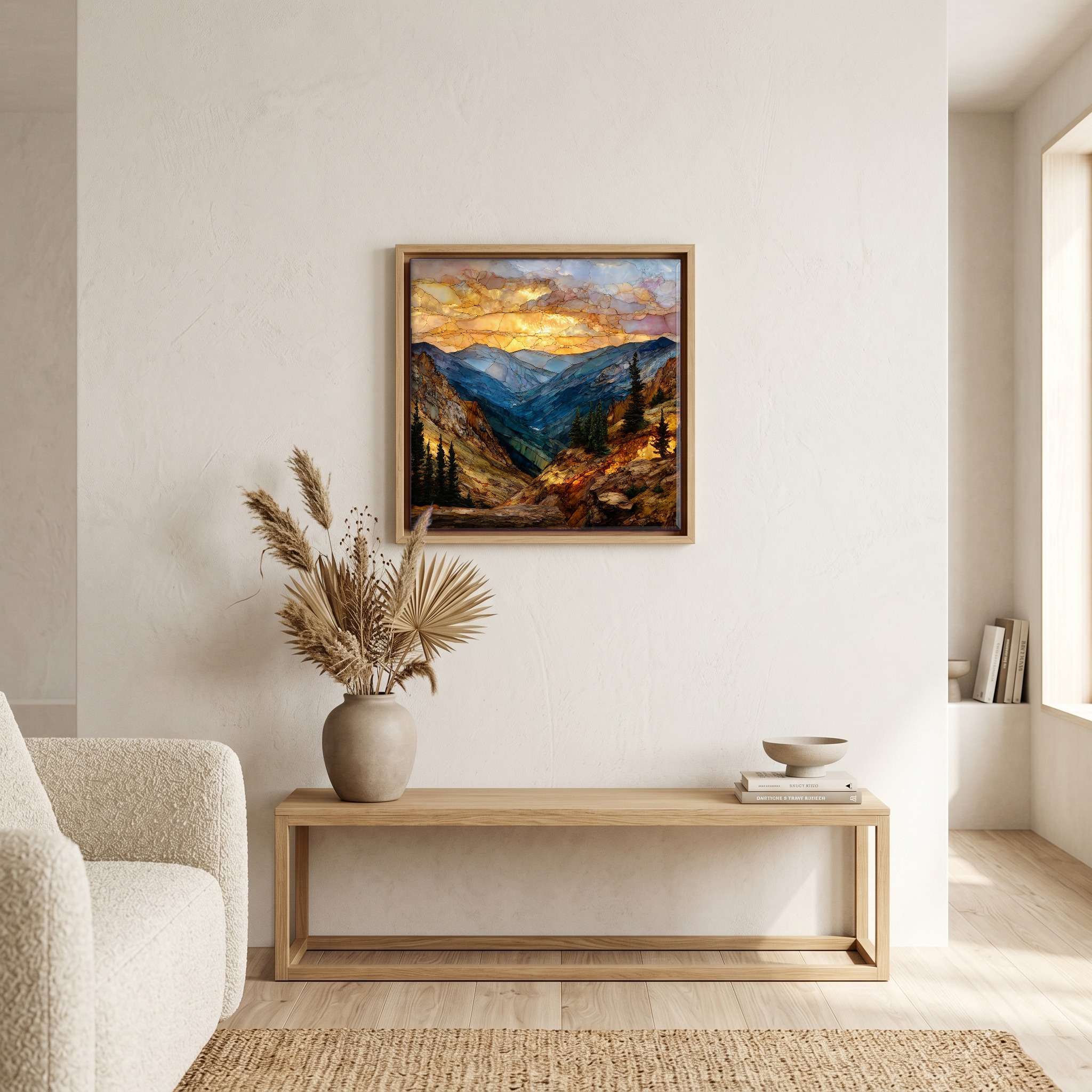
Above the bench, in a warm oak surround.
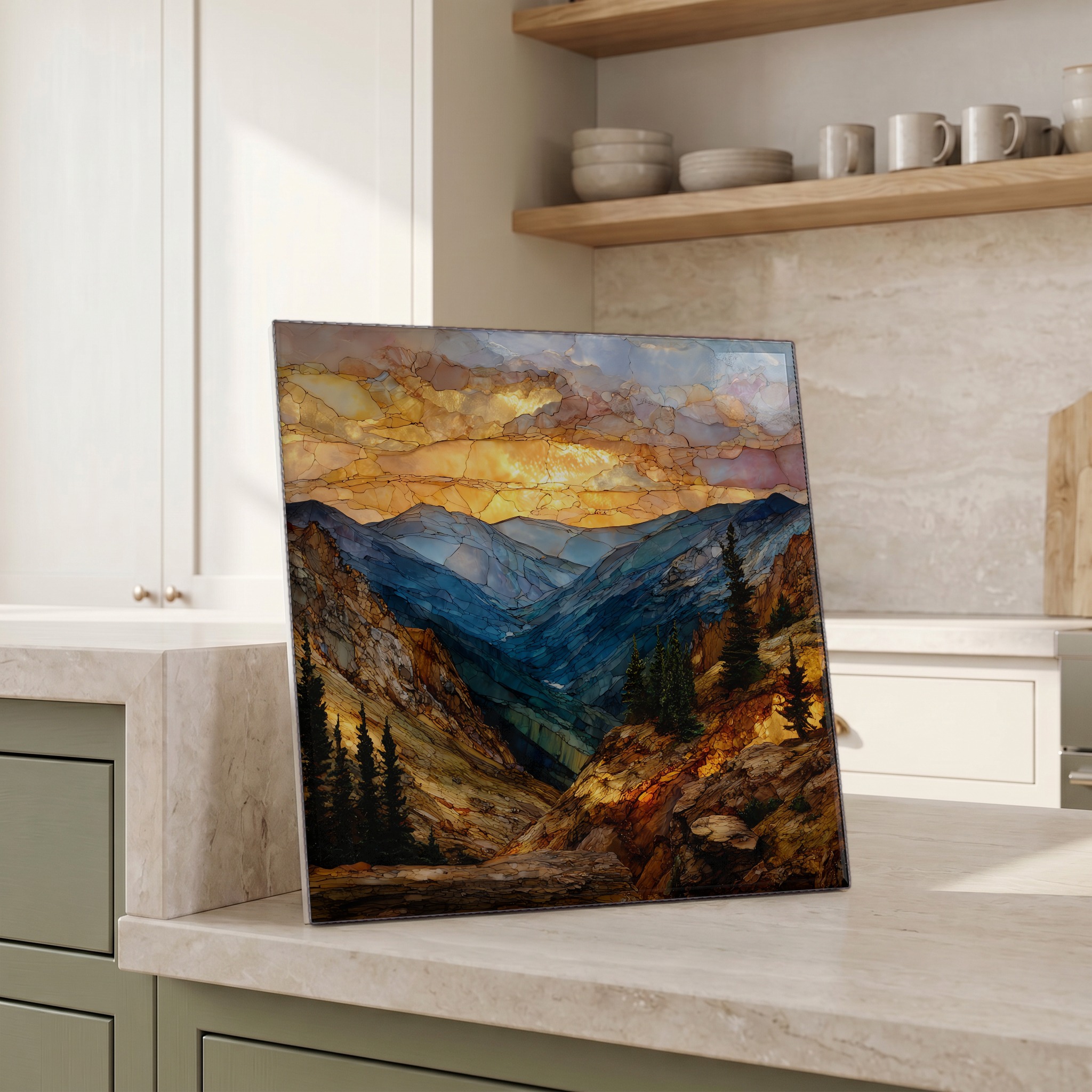
Beside the kettle, propped on the counter.
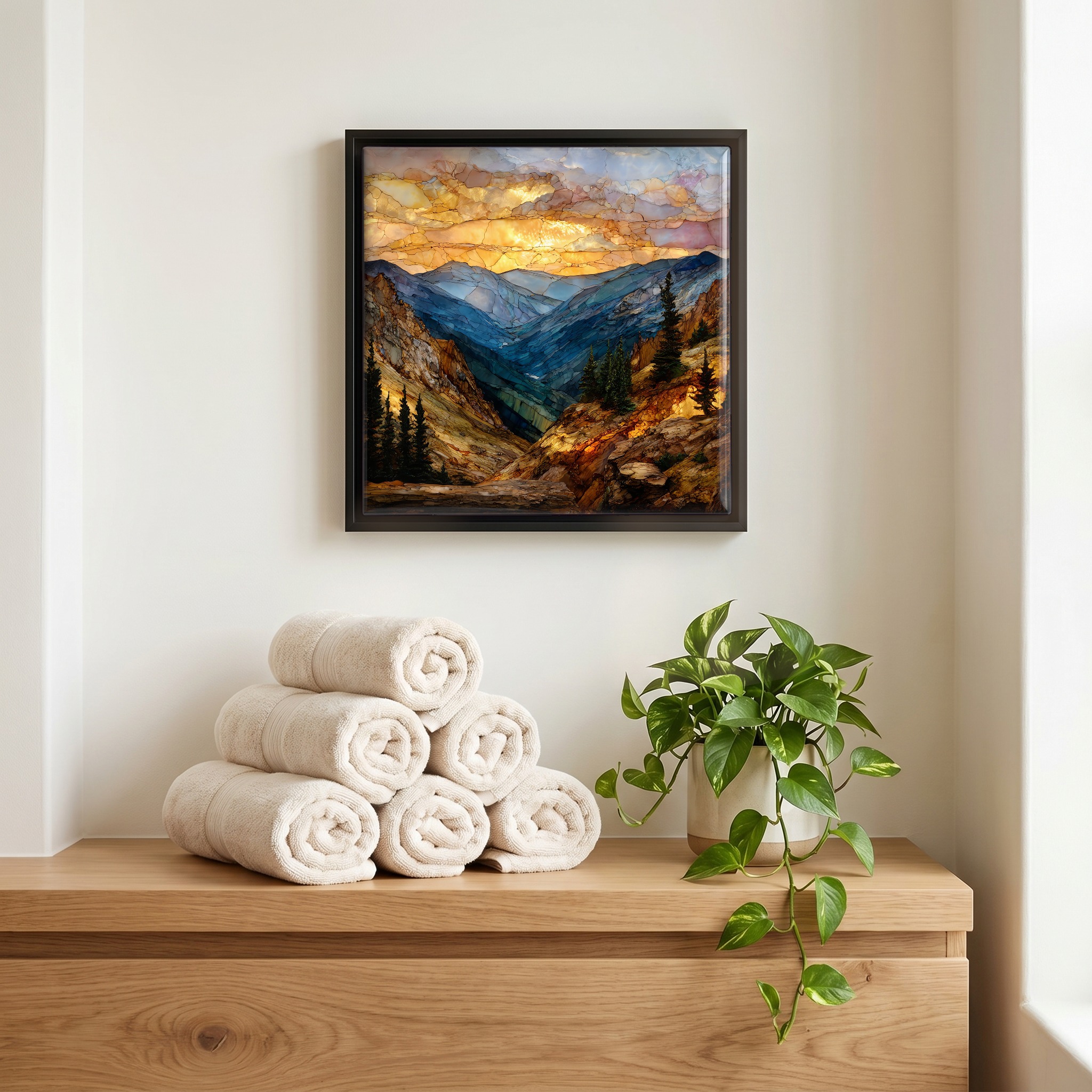
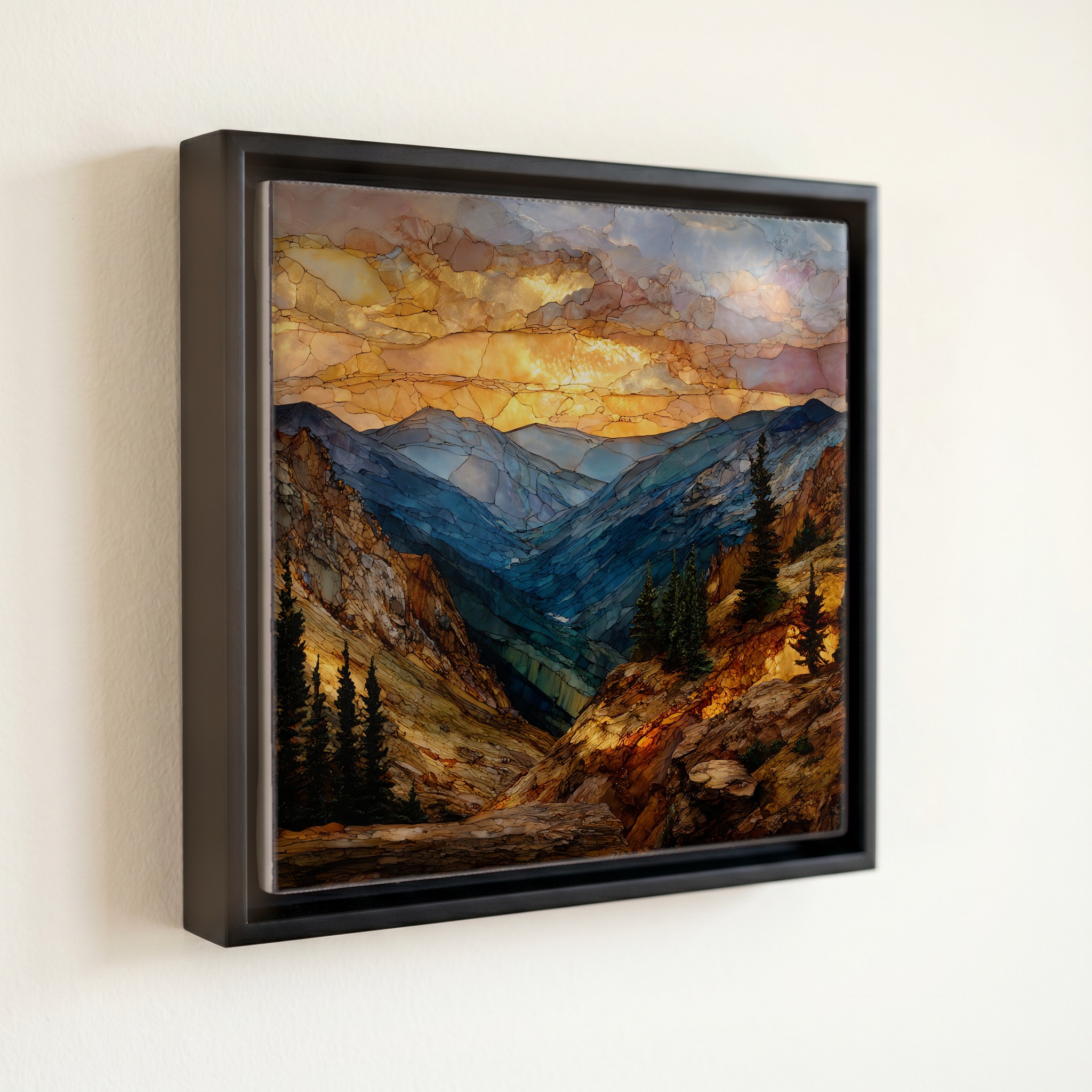
Above the linens, in a slim black surround.
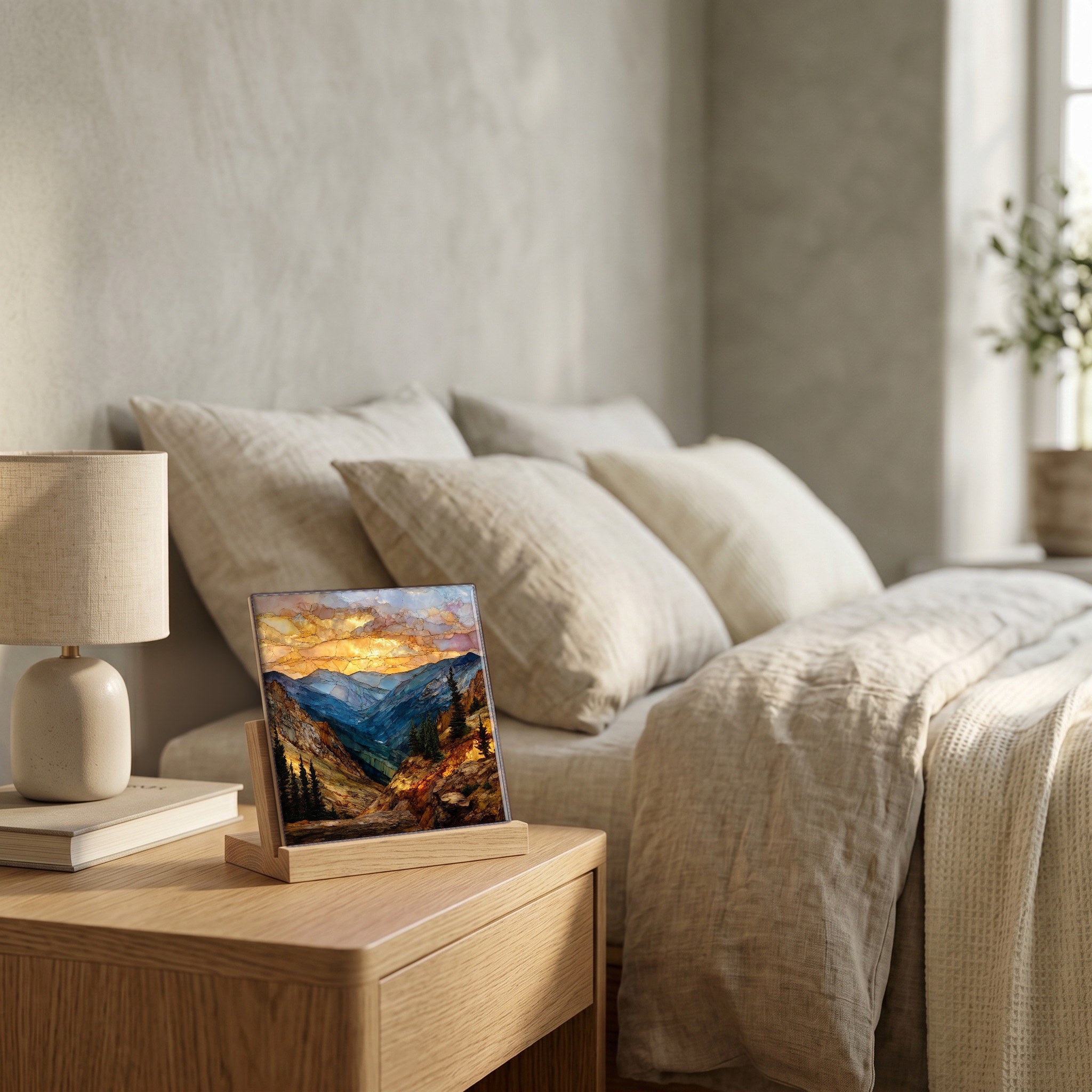
On the nightstand, on a light oak stand.
On a picture ledge, where the light comes in.
a note from the studio

The drop from the parking lot is sudden. A short paved walk, and then the ground falls away two thousand feet into Forest Canyon, where the Big Thompson cuts a line nobody walks. The overlook stands on alpine tundra, above the treeline; the canyon below stays dark with spruce and subalpine fir. Park rangers will tell you the valley is essentially trackless: dense blowdown, no maintained route in. From the rail you can see the Never Summer range across the divide. Most visitors stay five minutes. Some stay longer.
from the studio
shown in a slim black floating frame · 6 × 6 in
— bring it home

Forest Canyon overlook Rocky Mountain National Park Ceramic Art Tile, on ceramic.

Each tile is finished by hand in our Knoxville studio. Artwork is slowly infused into the ceramic surface under high heat and pressure, and rests beneath a thin glossy finish. The colour lives in the surface, not on top of it.

What kind of piece?
One tile — square or rectangle.
How big?
the popular one — counter, shelf, nightstand
6 × 6 in · 15 cm · 1.6 lb
Surface finish
A clear glossy finish — the artwork reads as if under resin. Ideal for show-pieces and framed wall art.
How it sits
A hidden cleat — sits ¼″ proud of the wall.
$58
Hand-finished and shipped from our studio at the foot of the Smokies. On your wall in about ten days.
size
6 × 6 in
15 cm
weighs
1.6 lb
solid in the hand
surface
ceramic, hand-finished
art rests beneath a thin glossy finish
from
Knoxville, TN
our family studio, at the foot of the Smokies
— start a Coaster Set

Pick any four 4-inch tiles — National Parks you've been to, a Smokies set, the four seasons of one place. $ for a set of , cork-backed, ready to live on the table.
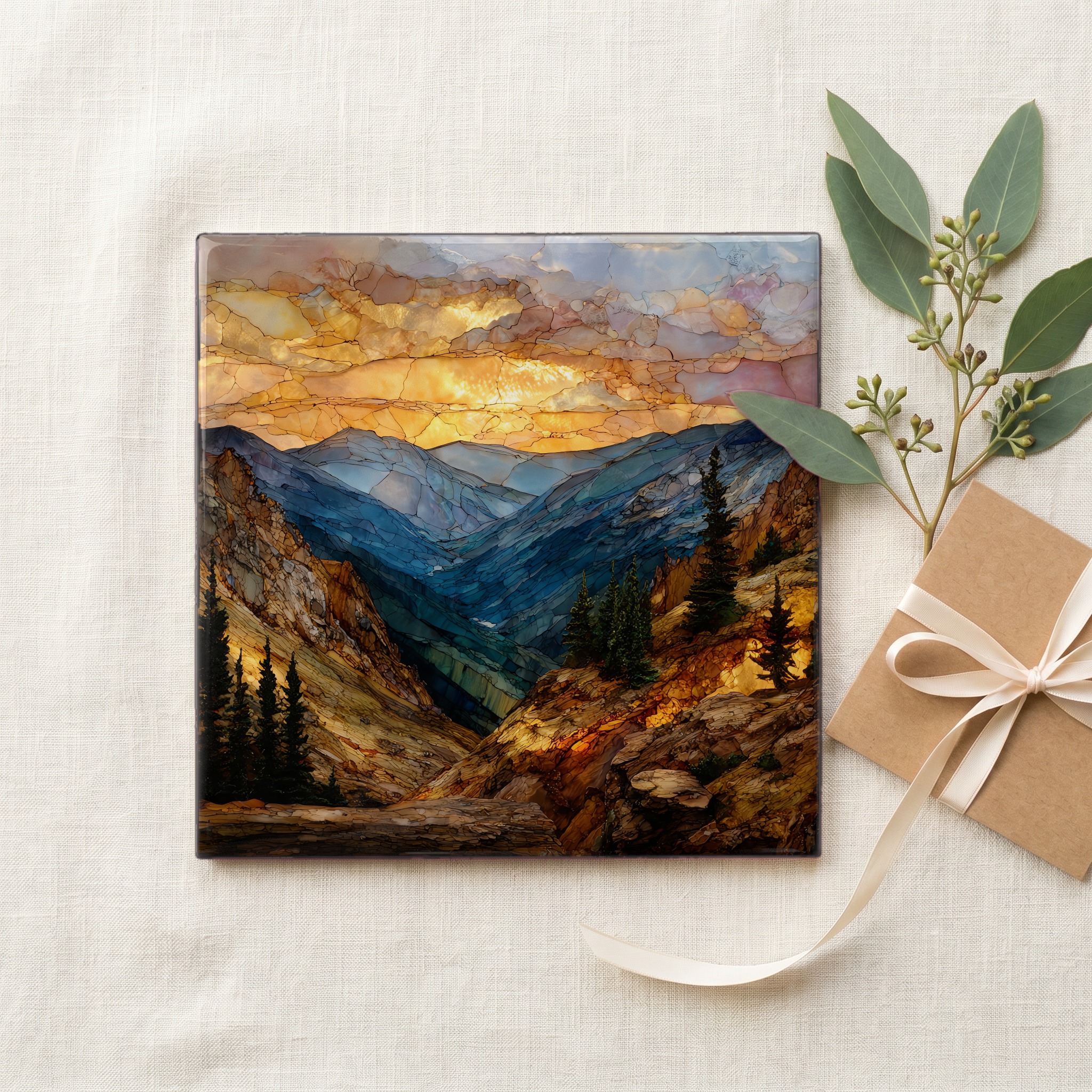
comes gift-ready
comes gift-ready

Each tile ships in a kraft box, tied with cream ribbon, with a handwritten note from the studio if you'd like to add one.
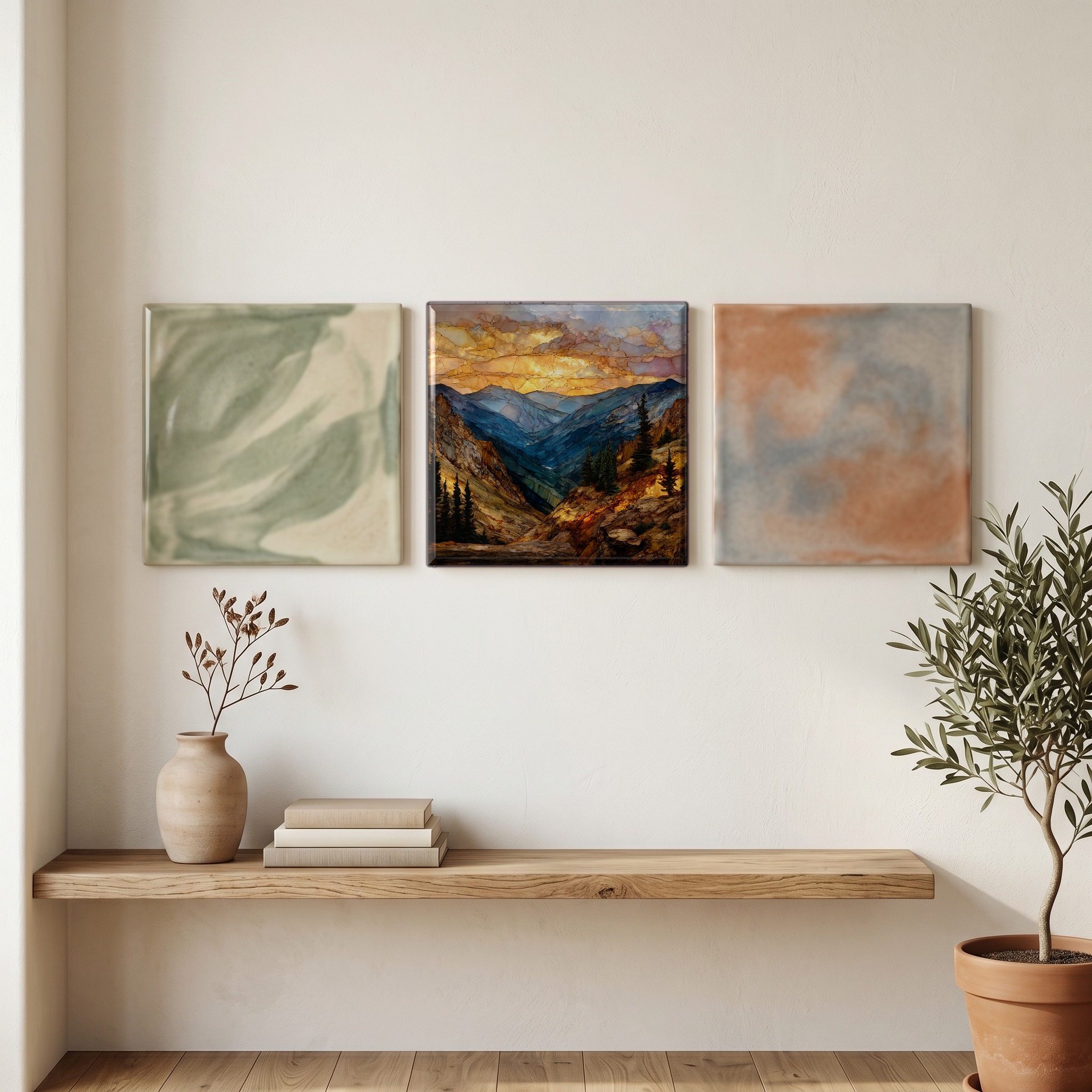
or build a grouping
or build a grouping

Three or five different vistas, hung together — a chapter of places you've been, or want to go.

about Forest Canyon overlook Rocky Mountain National Park Ceramic Art Tile

The place, in three passes.

A little of what's known, in case you fall down the rabbit hole — or want to go see it yourself.
the place

Forest Canyon Overlook sits at 11,716 feet on Trail Ridge Road, the highest continuous paved road in the United States. The pullout is about midway along the road's traverse across Rocky Mountain National Park in north-central Colorado, between Many Parks Curve and the Alpine Visitor Center, on the eastern side of the Continental Divide. The park was established in 1915 and covers roughly 415 square miles, with more than sixty peaks above 12,000 feet. From the railing, the ground drops away into Forest Canyon, a glacial valley carved by the Big Thompson River; across the canyon, the Never Summer Mountains rise on the western side of the divide.

the air

The overlook stands above the treeline. At 11,716 feet, the air carries roughly two-thirds the oxygen available at sea level, and the ground is alpine tundra: a thin mat of cushion plants and sedges that takes a century to recover from a single careless footstep. The Park Service asks visitors to stay on the paved walkway for that reason. From the rail, the forest begins about two thousand feet below, where Engelmann spruce and subalpine fir take over from the tundra; the canyon floor itself, cut by the Big Thompson, is another five hundred feet down. The transition between zones is visible in one sweep of the eye.

the visit

Trail Ridge Road typically opens in late May and closes by mid-October, when the first heavy snow makes the upper section impassable. Forest Canyon Overlook is one of about a dozen marked pullouts along the road's 48-mile traverse from Estes Park to Grand Lake. The walk from the parking lot to the railing is short and paved, under a tenth of a mile, and is rated accessible by the National Park Service. The road's high point, at 12,183 feet, lies about two miles further west. Timed-entry permits may apply during peak summer; weather can shift quickly above the treeline, and thunderstorms typically build in mid-afternoon.

— informed by Trail Ridge Road (NPS)
where
United States · Larimer County, Colorado
within
Rocky Mountain National Park
elevation
3,571 m · 11,716 ft
the neighborhood

What's nearby.

A handful of named places within an hour's walk or short drive. Some we've already painted; some we will.
3 km W
Alpine Visitor Center
park facility
1 km S
Big Thompson River
river
5 km W
Never Summer Mountains
mountain range
7 km E
Rainbow Curve
overlook
10 km E
Many Parks Curve
overlook
N
Forest Canyon overlook Rocky Mountain National Park Ceramic Art Tile
Alpine Visitor Center
Big Thompson River
Never Summer Mountains
Rainbow Curve
Many Parks Curve
common questions

What people ask.

A few questions we get about Forest Canyon overlook Rocky Mountain National Park Ceramic Art Tile — and about bringing the piece home.
about the place

Forest Canyon Overlook sits at 11,716 feet along Trail Ridge Road in Rocky Mountain National Park, roughly midway between Many Parks Curve and the Alpine Visitor Center on the eastern side of the Continental Divide in north-central Colorado.

Forest Canyon has no maintained trails. The valley is choked with dense spruce and subalpine fir, large blowdown deposits, and steep walls that make travel slow and route-finding difficult. The National Park Service classifies it as one of the least-visited backcountry zones in Rocky Mountain National Park.

The canyon floor lies roughly 2,500 feet below the overlook railing. The Big Thompson River, which carves the canyon, runs along the bottom. The valley was deepened during the Pleistocene by repeated glacial advances; the present river is the post-glacial successor, still cutting downward through the granite of the eastern Front Range.

Trail Ridge Road usually opens in late May and closes by mid-October. The exact dates shift with snowfall: the road traverses tundra above 11,000 feet and cannot be plowed safely in winter. Current status is posted at the Rocky Mountain National Park visitor centers and on the park's website.

Forest Canyon falls away directly below the railing, its walls dark with spruce and subalpine fir. Across the canyon, the Never Summer Mountains form the skyline along the western side of the Continental Divide. The Big Thompson River shows in places along the canyon floor, and the alpine tundra plateau extends in both directions along Trail Ridge Road.

The walk from the parking pullout to the railing is under a tenth of a mile, fully paved, and rated accessible by the National Park Service. Elevation is 11,716 feet, so the air is thin; visitors prone to altitude effects should walk slowly and stay hydrated.

about the piece in your home

It carries well for people who know the park, especially those who have driven Trail Ridge Road. Forest Canyon Overlook is one of the most distinctive views on that drive, and the tile reads as a piece of the place rather than a postcard. A Medium or Large works for someone with a wall to give it.

The palette runs cool: deep forest greens, slate blues, alpine stone tones. It fits mountain-modern interiors, Pacific Northwest-influenced rooms, and Jewel-tone Maximalist spaces where a single saturated piece anchors a wall. Less compatible with warm-neutral Coastal-modern or high-key Scandinavian rooms unless balanced with other cool tones.

Yes. Alpine modern leans on slate, wool, weathered wood, and saturated mountain colour. The tile's cool palette and layered depth slot into that family. A Large above a console or a 4-tile Mural over a sofa anchors a room that already has texture.

Above a standard three-seater sofa, a single Large reads centred and balanced. For more presence, a 4-tile Mural fills the wall above the couch; a 9-tile Mural goes full-feature-wall. Above a console, a Medium or Large is the usual fit. Mounting hardware ships with every tile larger than Coaster.

Yes. For wet rooms, order the Dura Satin or Matte finish: both are scratch-resistant and stand up to regular cleaning. The Glossy finish is for dry walls and framed display. A Small or Medium reads well on a kitchen backsplash; a Coaster Set anchors a side table or breakfast bar.

A soft microfibre cloth with warm water lifts most marks. For kitchen splatter or bathroom film, add a drop of mild dish soap and rinse. Skip abrasive sponges and harsh cleaners, which can dull the surface over time. The colour lives in the ceramic, so it will not fade under normal use.

Yes. Every WenderVista piece is curated and finished in the Wender Studios family workshop in Knoxville, Tennessee. There is no third-party licensing and no off-the-shelf catalog imagery. The Forest Canyon Overlook tile was made for this catalog, by this studio, and is sold nowhere else.

if this one stayed with you

A few you might also love.

Hand-picked by the eye that found Sorapis. Same air, same kind of quiet.