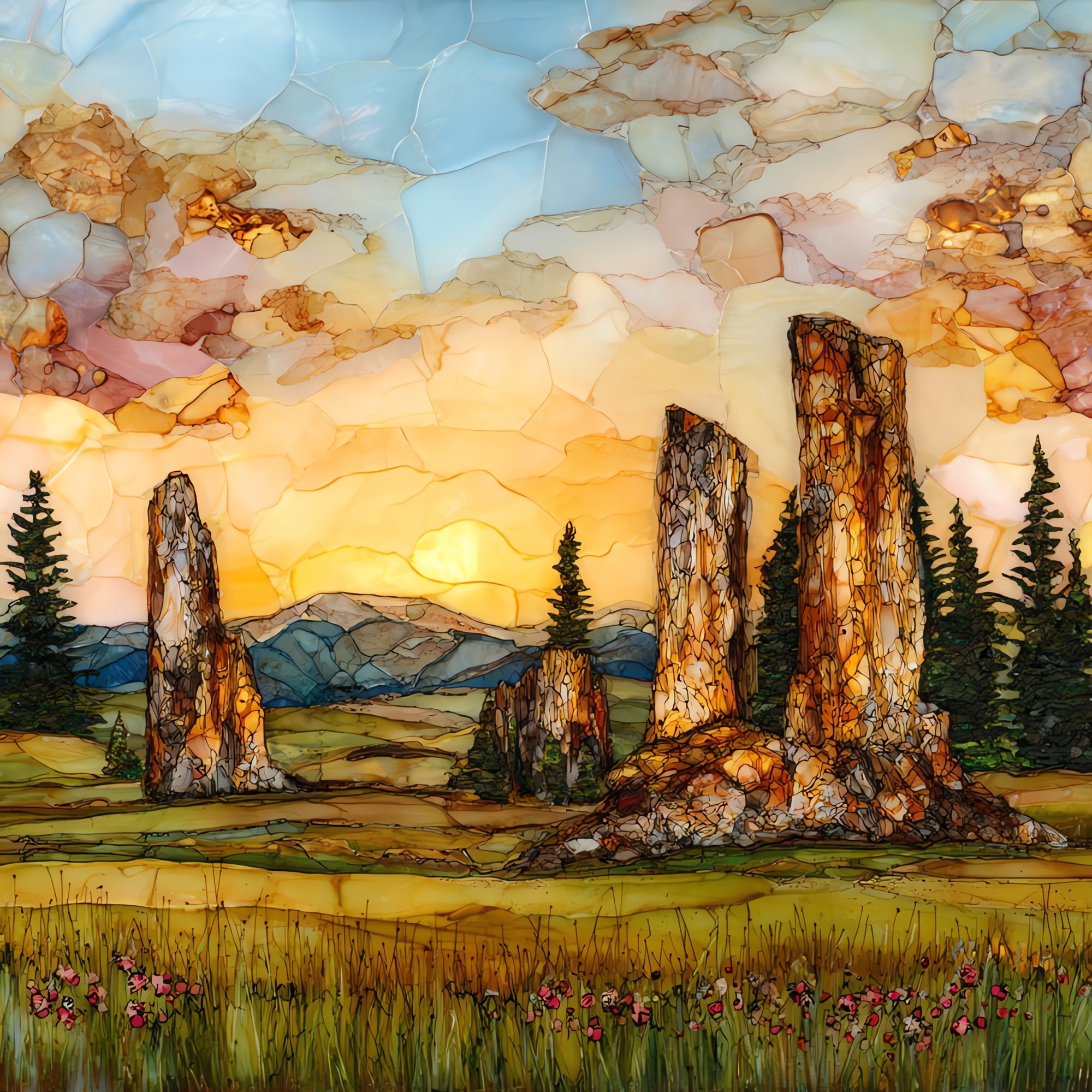
Florissant petrified stumps Front Range Ceramic Art Tile
— — what the volcano kept of the redwoods.
Not only on a wall.
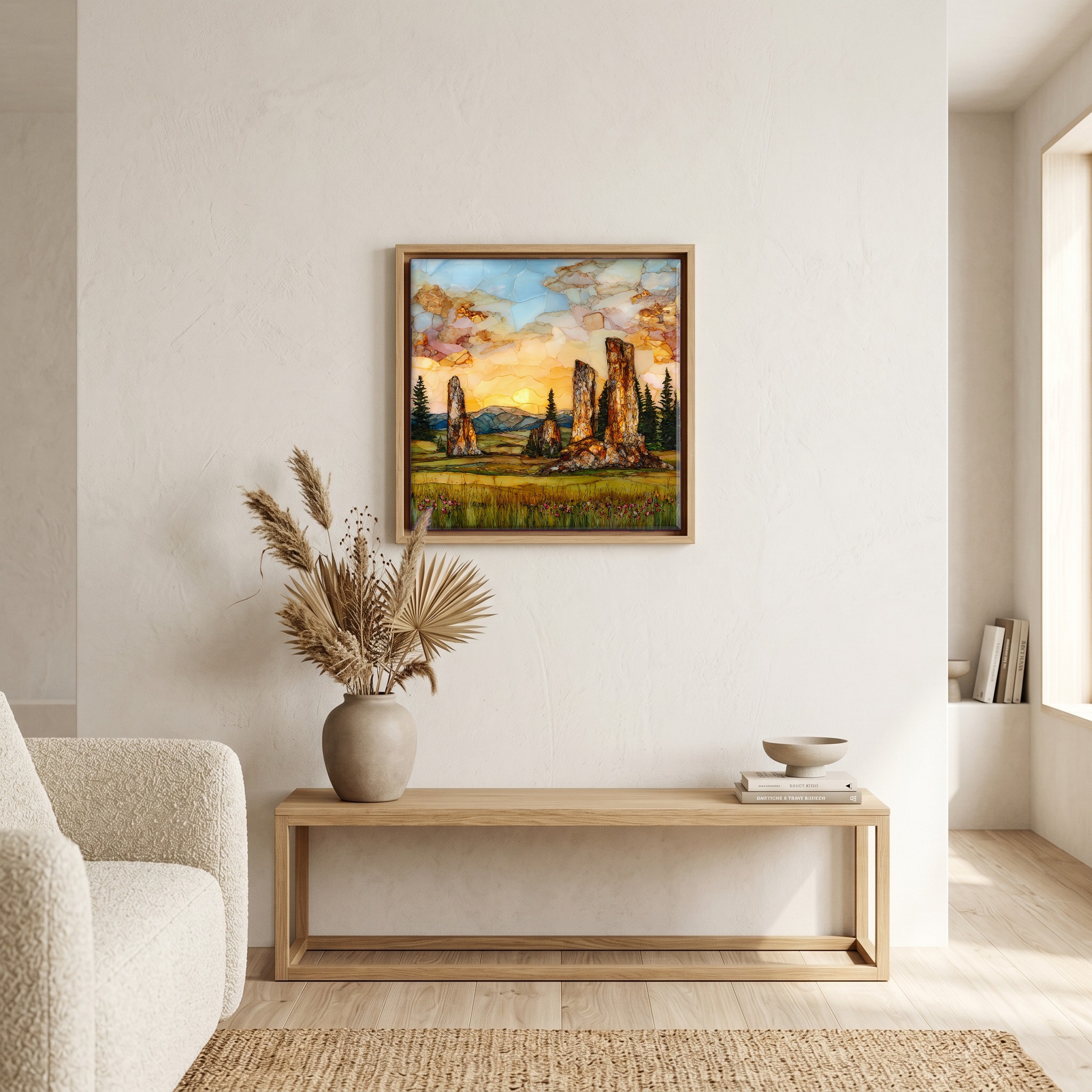

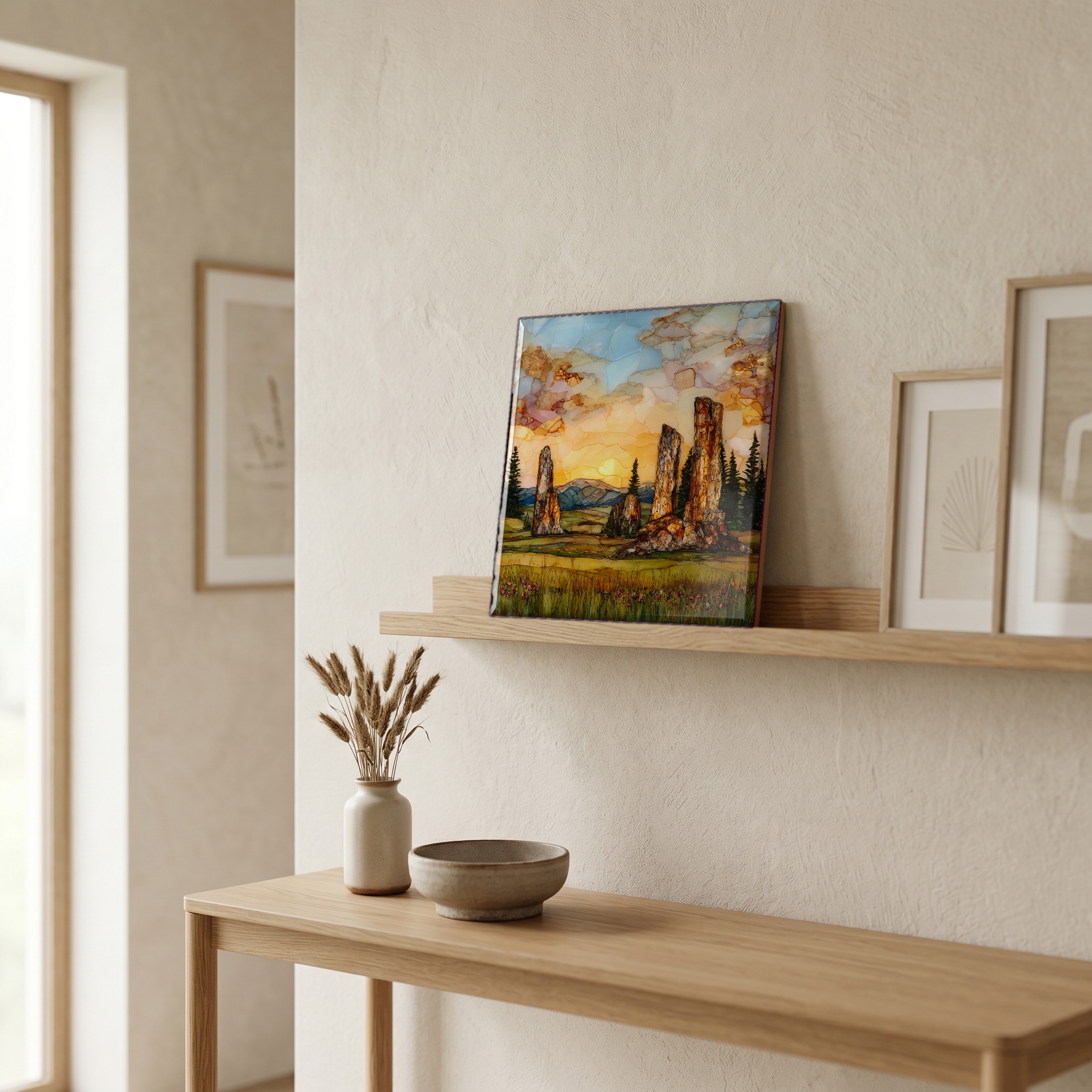
“The meadow west of Colorado Springs where the redwoods used to stand, and in a sense still do. A lahar came down off the Guffey volcano thirty-four million years ago and buried a grove of giant sequoias up to their middles. The trunks rotted; the silica in the ash slowly took their place. The Big Stump is fourteen feet across at the base, with two broken saw blades still in it from the 1880s, when somebody tried to ship it to the Chicago World's Fair and couldn't. The ground here is one of the richest fossil beds on the planet. Quiet, today. Wind in the dry grass.
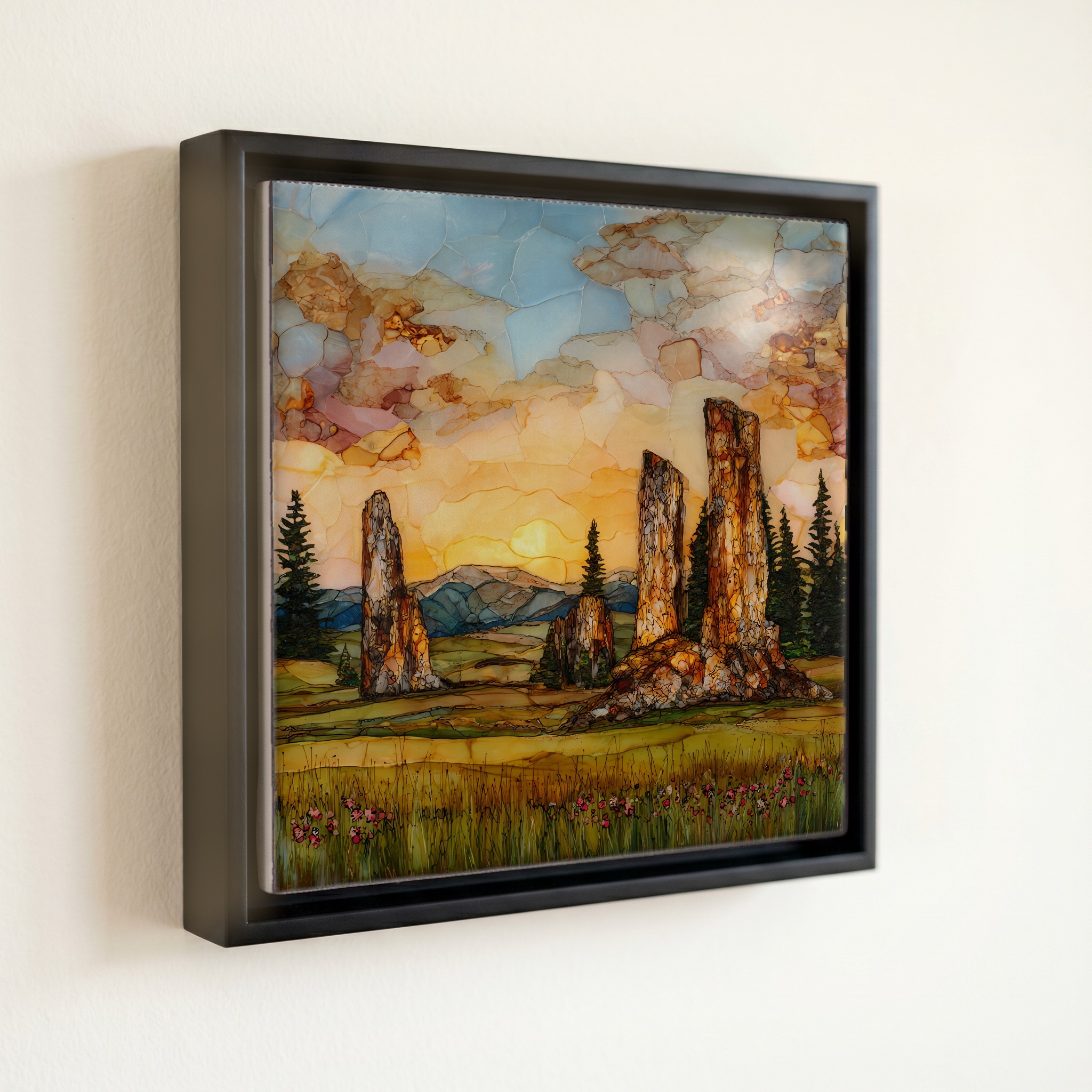
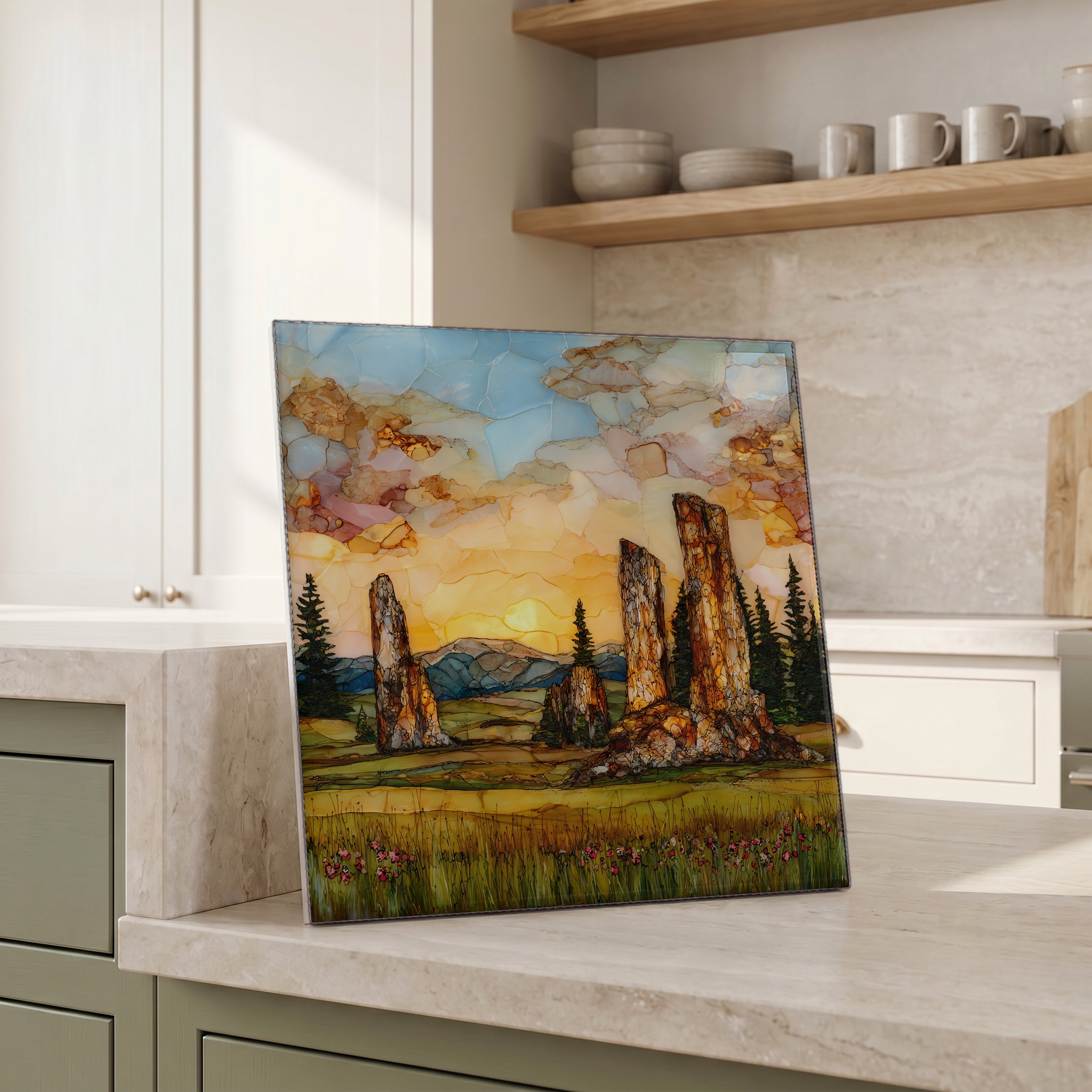
Florissant petrified stumps Front Range Ceramic Art Tile, on ceramic.
Each tile is finished by hand in our Knoxville studio. Artwork is slowly infused into the ceramic surface under high heat and pressure, and rests beneath a thin glossy finish. The colour lives in the surface, not on top of it.
Pick any four 4-inch tiles — National Parks you've been to, a Smokies set, the four seasons of one place. $ for a set of , cork-backed, ready to live on the table.
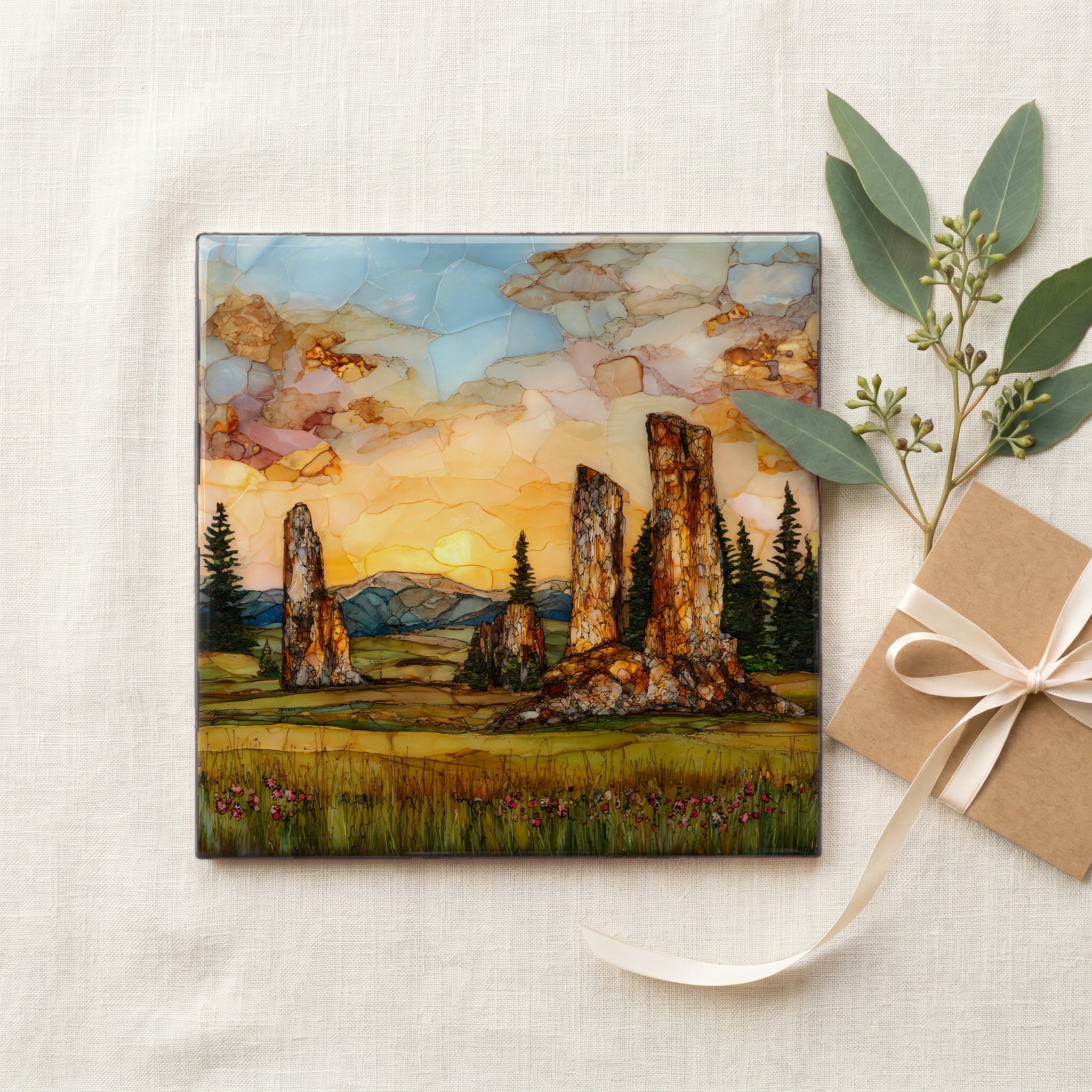
Each tile ships in a kraft box, tied with cream ribbon, with a handwritten note from the studio if you'd like to add one.
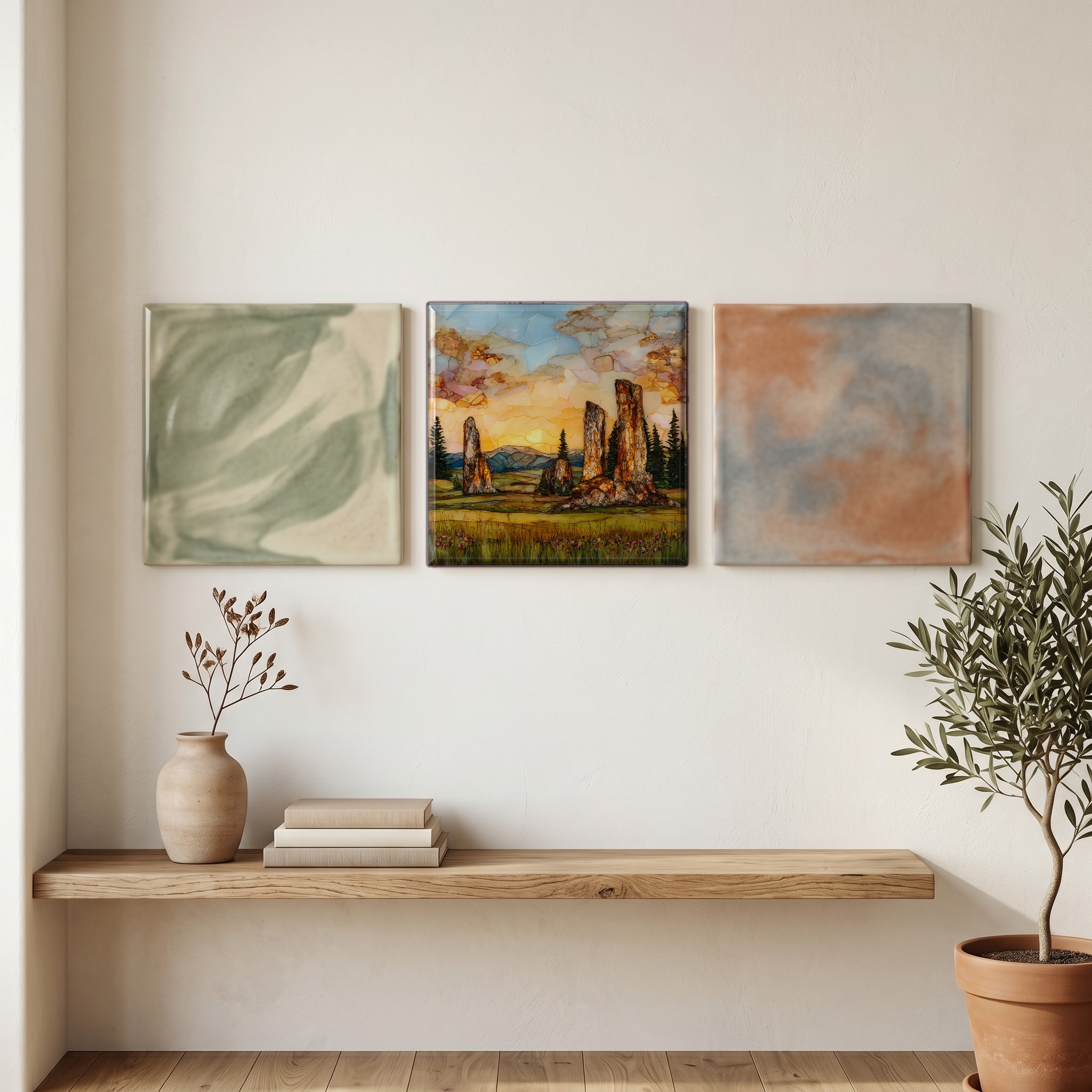
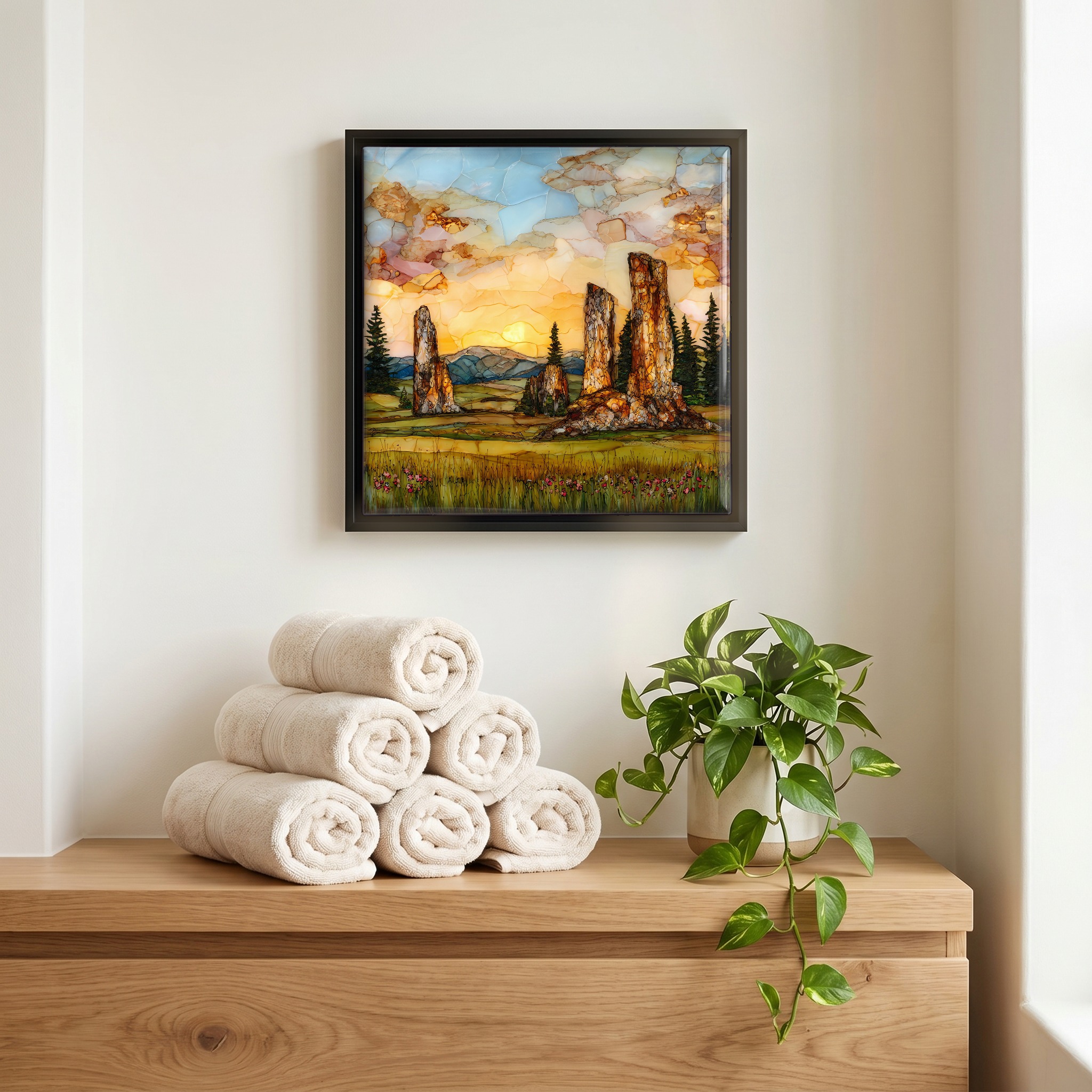
Three or five different vistas, hung together — a chapter of places you've been, or want to go.
The place, in three passes.
Florissant Fossil Beds National Monument sits in Teller County, Colorado, about 35 miles west of Colorado Springs and a short drive south of the small mountain town of Florissant. The monument was established by Congress in 1969 to protect roughly 6,300 acres of fossil-bearing shales and the petrified stumps of an ancient redwood grove. The terrain is open ponderosa-and-aspen meadow at around 8,400 feet of elevation, drained by Grape Creek. The petrified stumps are the visible part of a much larger story: the area also holds one of the densest fossil-insect and fossil-plant beds on the continent, with more than 1,700 species described. The visitor center sits at the south end of the main loop.
The stumps are the remains of giant sequoias closely related to the modern coast redwood (Sequoia affinis), and they date to the late Eocene, roughly 34 million years ago. They were buried alive by lahars, volcanic mudflows of ash and water, coming off the nearby Guffey volcanic complex about 15 miles to the southwest. The mud held the trunks upright. Over centuries, dissolved silica from the volcanic ash moved through the wood cell by cell and replaced it with chalcedony and opal, leaving rings, knots, and bark intact. The Big Stump is roughly fourteen feet in diameter, the largest known petrified redwood in the world. Two iron saw blades broken off by an 1880s attempt to remove it are still embedded near its top.
The monument is open year-round, with visitor-center hours that change with the season; the main Petrified Forest Loop is about a one-mile walk on packed gravel and is generally accessible from late spring through October. Snow closes the higher trails in winter. The entry fee is modest and standard interagency passes are accepted. The Big Stump, the Redwood Trio, and the Scudder Pit are all on or near the loop. Rangers offer fossil-prep demonstrations in summer, and a small museum at the visitor center holds insect, fish, and leaf fossils from the lake-bed shales. Florissant town, three miles to the north on Highway 24, has fuel and a couple of small cafés.