Wender·Vista
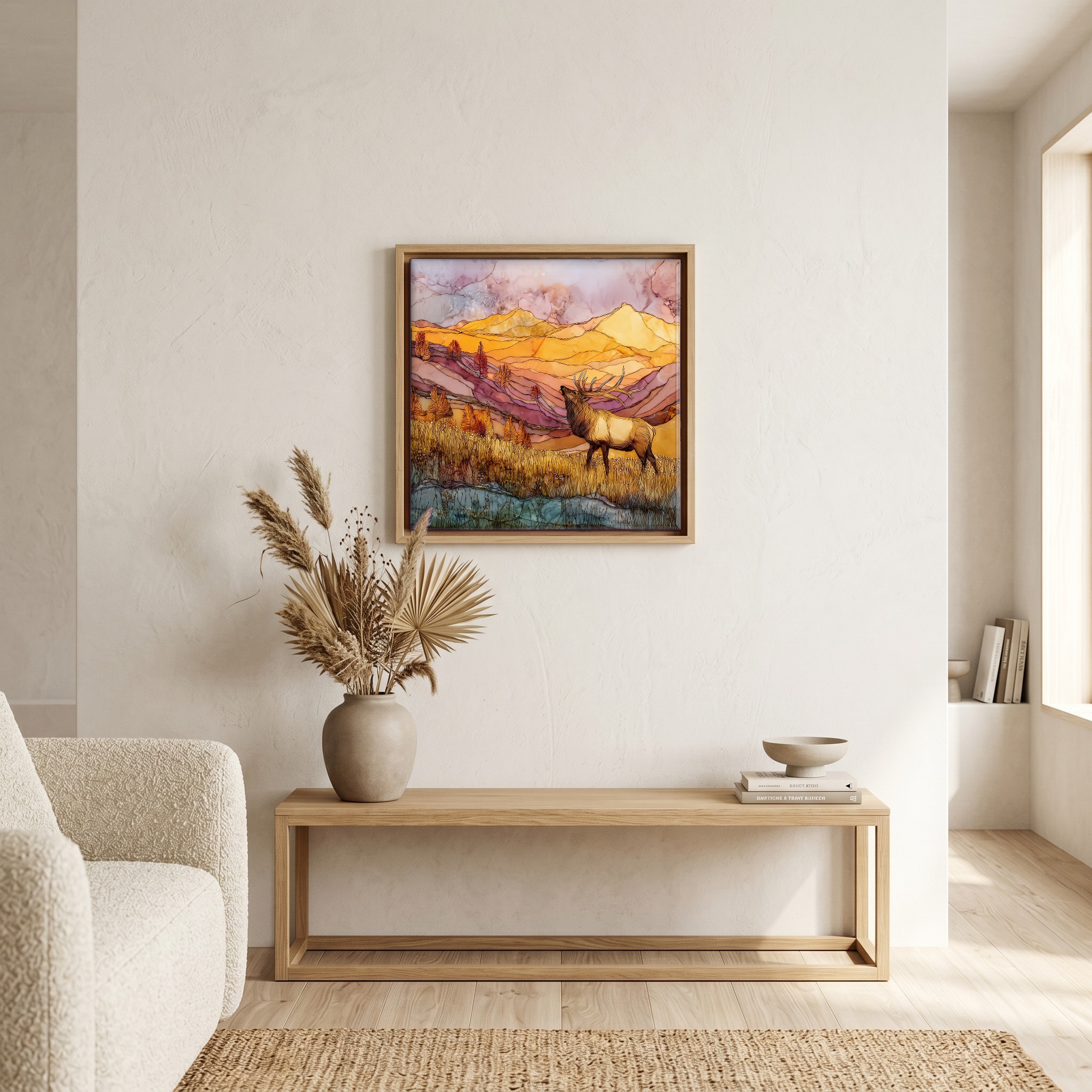
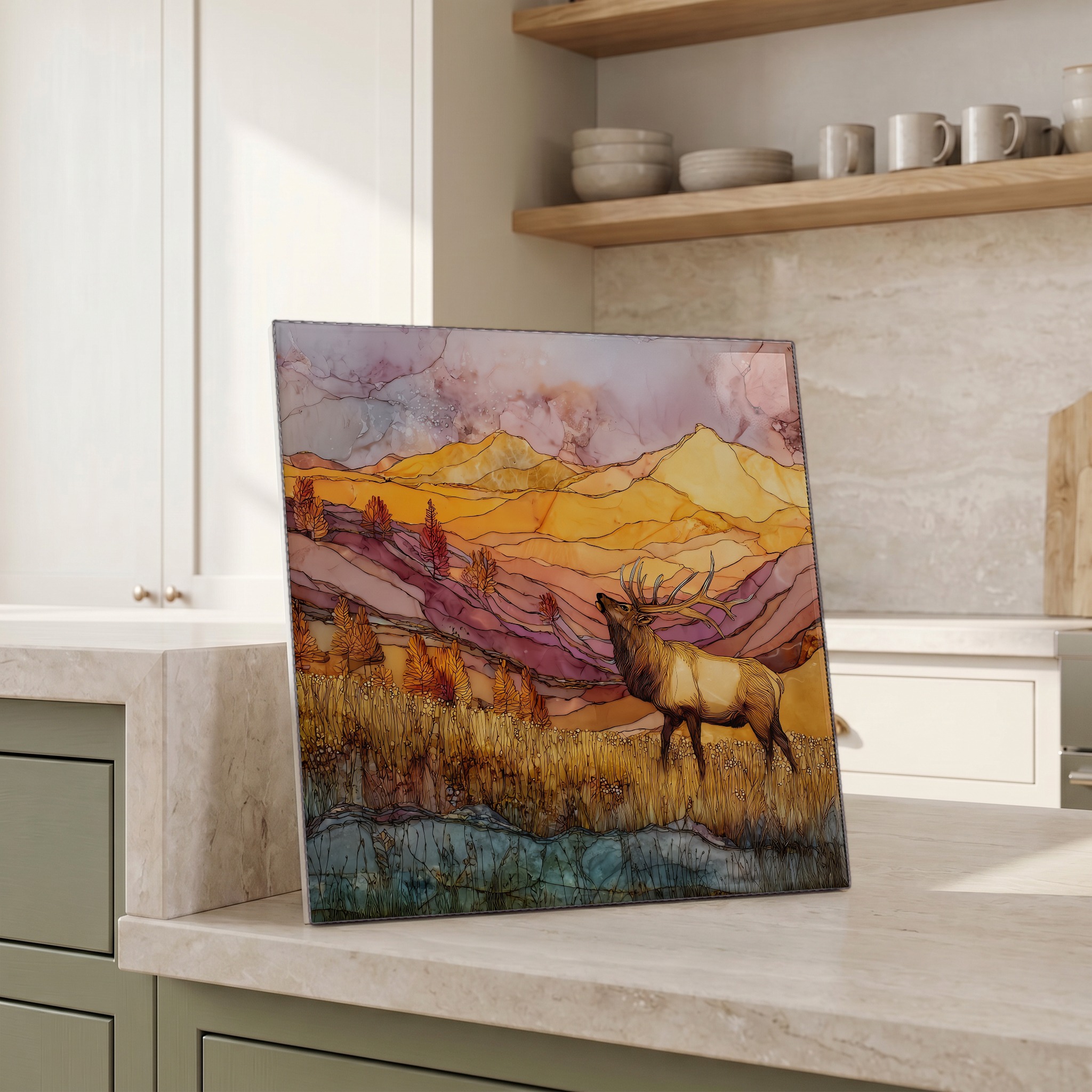
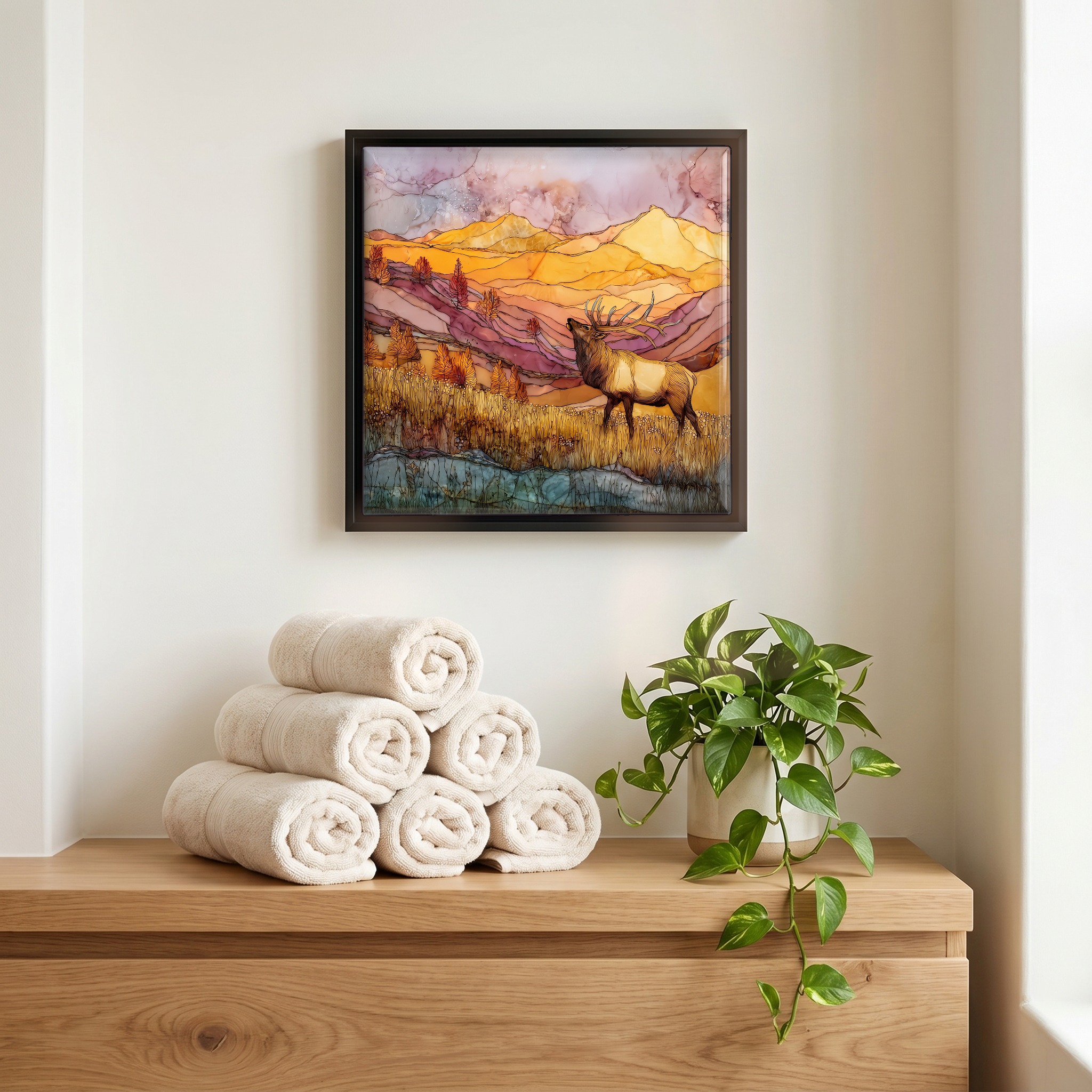
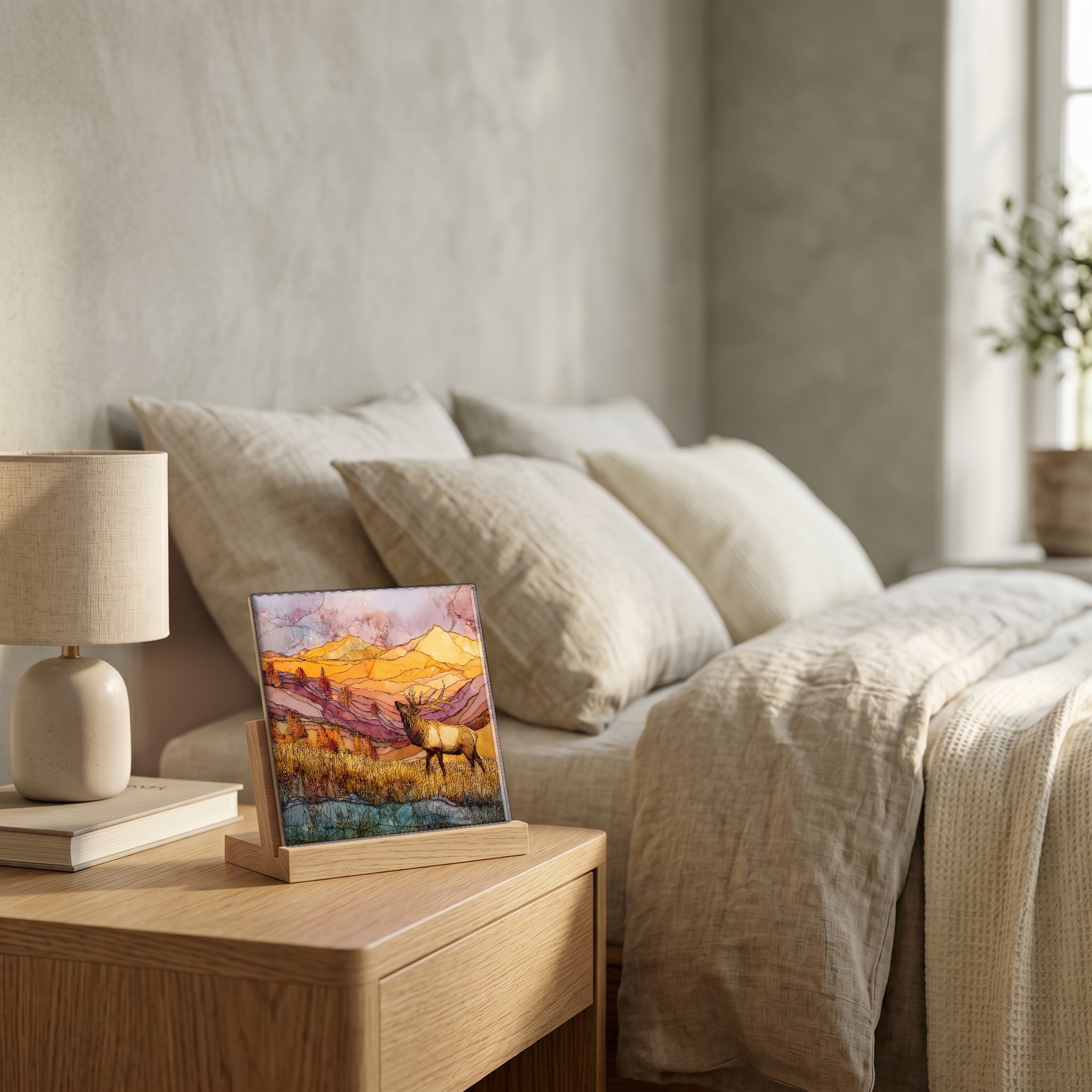
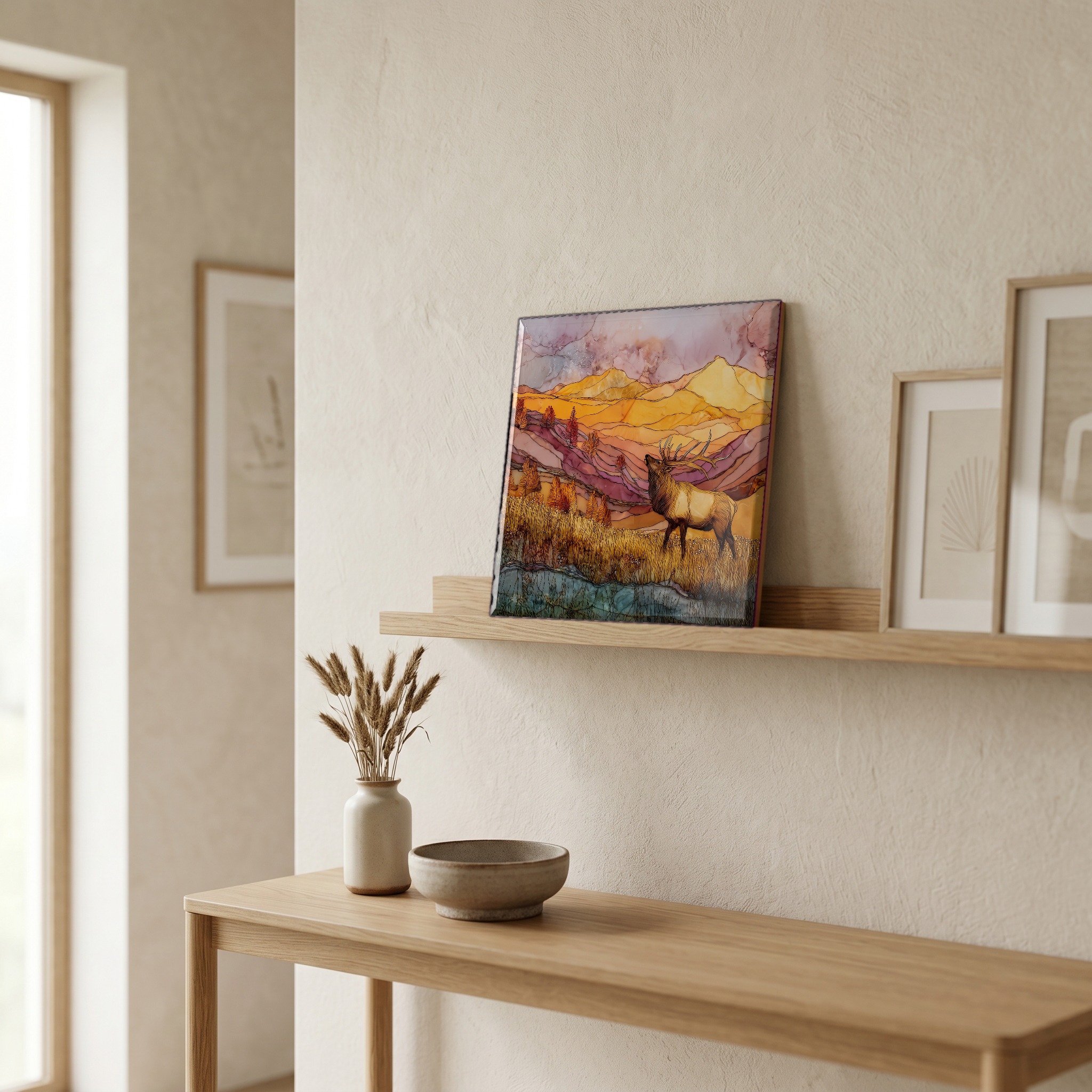
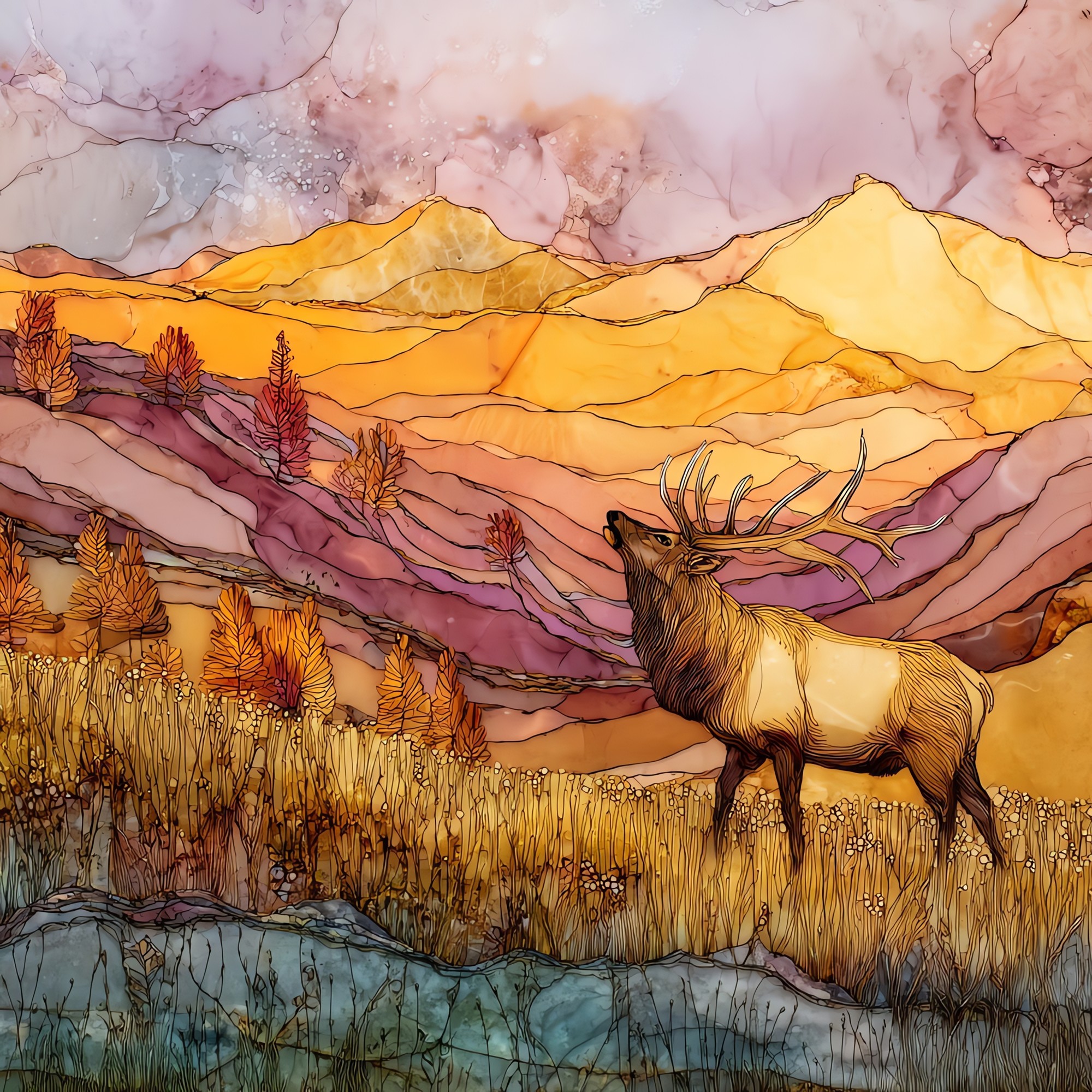
Elk bugling at Estes Front Range Ceramic Art Tile
shown on ceramic, 12-inch tileColorado · United States
at the eastern gate of Rocky Mountain National Park

Elk bugling at Estes Front Range Ceramic Art Tile

a single high note across the cold meadow.

Where it lives

Not only on a wall.

A small tile on the nightstand catching the morning. A larger one above the fire. Yours, wherever you spend the slow hours.
Above the bench, in a warm oak surround.
Beside the kettle, propped on the counter.
Above the linens, in a slim black surround.
On the nightstand, on a light oak stand.
On a picture ledge, where the light comes in.
a note from the studio

The herd comes down from the high country as the air turns. Bulls walk into Moraine Park and Horseshoe Park most evenings through September and into October, and a single bugle carries across the grass in a way the maps do not tell you about. It is a long rising whistle that drops into something almost mechanical at the end. The cows graze. The cars pull over and the windows go down. Nobody talks much. The Front Range stands behind it all, the same range it has stood through for ten thousand autumns.
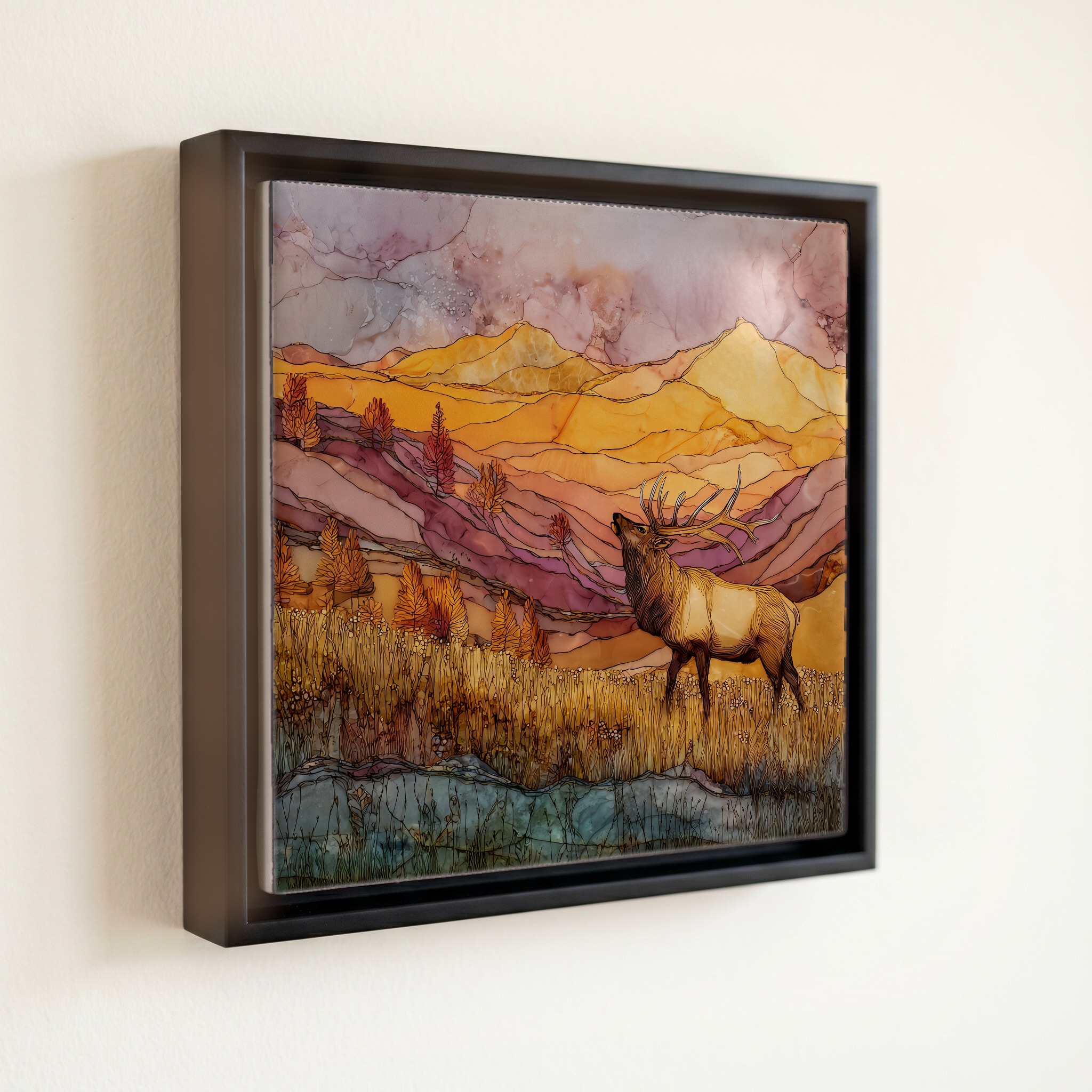
from the studio
shown in a slim black floating frame · 6 × 6 in
— bring it home

Elk bugling at Estes Front Range Ceramic Art Tile, on ceramic.

Each tile is finished by hand in our Knoxville studio. Artwork is slowly infused into the ceramic surface under high heat and pressure, and rests beneath a thin glossy finish. The colour lives in the surface, not on top of it.

What kind of piece?
One tile — square or rectangle.
How big?
the popular one — counter, shelf, nightstand
6 × 6 in · 15 cm · 1.6 lb
Surface finish
A clear glossy finish — the artwork reads as if under resin. Ideal for show-pieces and framed wall art.
How it sits
A hidden cleat — sits ¼″ proud of the wall.
$58
Hand-finished and shipped from our studio at the foot of the Smokies. On your wall in about ten days.
size
6 × 6 in
15 cm
weighs
1.6 lb
solid in the hand
surface
ceramic, hand-finished
art rests beneath a thin glossy finish
from
Knoxville, TN
our family studio, at the foot of the Smokies
— start a Coaster Set

Pick any four 4-inch tiles — National Parks you've been to, a Smokies set, the four seasons of one place. $ for a set of , cork-backed, ready to live on the table.
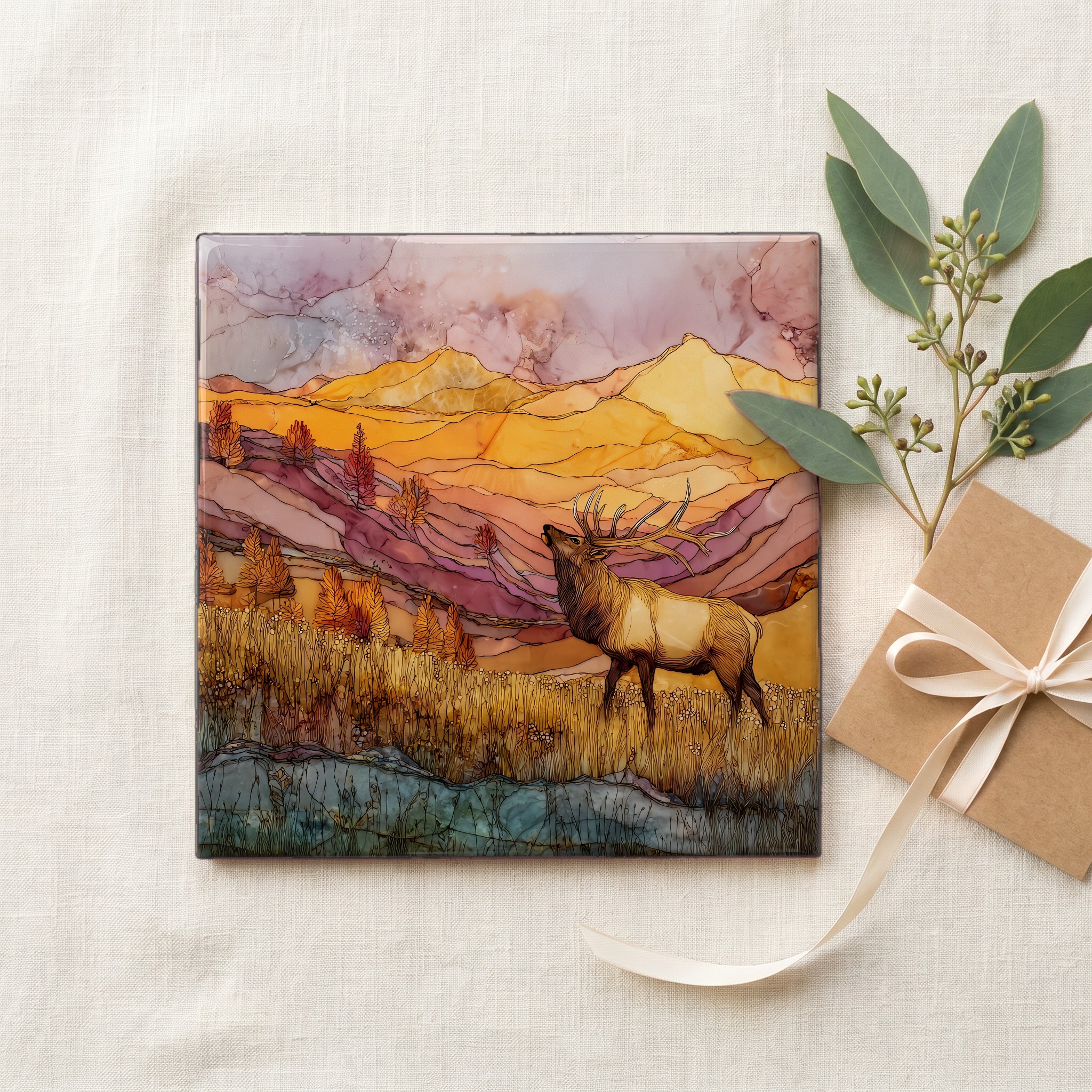
comes gift-ready
comes gift-ready

Each tile ships in a kraft box, tied with cream ribbon, with a handwritten note from the studio if you'd like to add one.
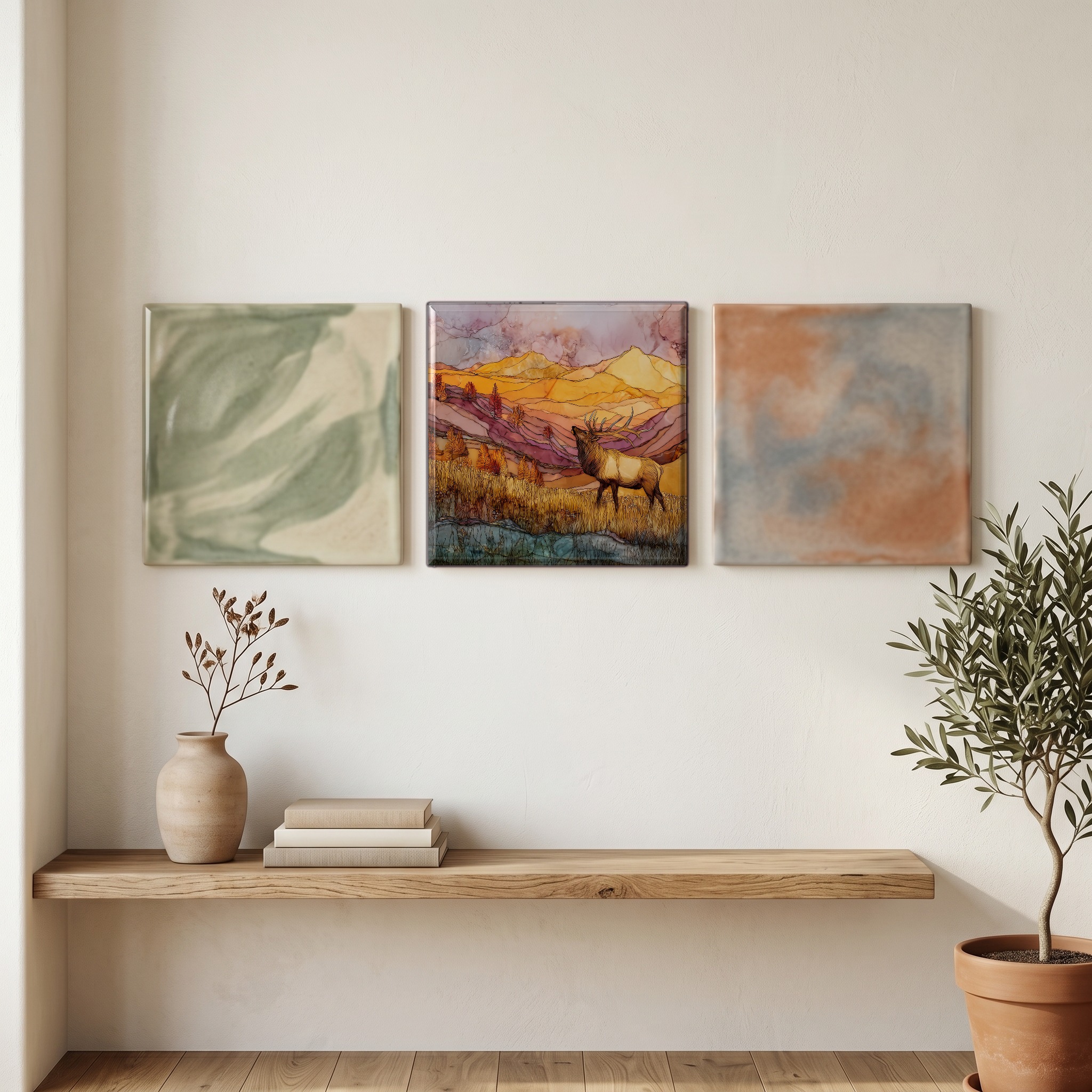
or build a grouping
or build a grouping

Three or five different vistas, hung together — a chapter of places you've been, or want to go.

about Elk bugling at Estes Front Range Ceramic Art Tile

The place, in three passes.

A little of what's known, in case you fall down the rabbit hole — or want to go see it yourself.
the place

Estes Park is a Colorado town of about 5,900 residents in southwestern Larimer County, at the eastern entrance to Rocky Mountain National Park and at an elevation of 7,658 feet. It sits in a glacial valley along the Big Thompson River, with the Front Range, the easternmost rampart of the Colorado Rockies, climbing to the west. The park itself was established in 1915 as the nation's tenth national park and protects 415 square miles of montane forest and alpine tundra. Longs Peak rises to 14,259 feet on the southwestern skyline. Moraine Park and Horseshoe Park, the two large meadows just inside the east boundary, are the places the elk come down to most evenings in late summer and fall.

the season

The elk rut runs from early September through mid-October, with peak bugling activity in late September. Rocky Mountain elk (Cervus canadensis nelsoni) move down from the high alpine basins to the lower meadows as the days shorten, and bulls compete for harems through bugle calls and antler displays. The National Park Service closes Moraine Park, Horseshoe Park, Upper Beaver Meadows, Harbison Meadow, and Holzwarth Meadow to foot traffic between 5 p.m. and 10 a.m. for the duration of the rut, so viewing is from the roadside pull-offs rather than from inside the grass. The aspen turn gold along Bear Lake Road in the same window, which folds two of the park's annual events into one.

the air

A bull elk bugle carries well at high elevation because cold dense air transmits sound farther than warm summer air. At Estes Park's 7,658 feet, autumn nights drop into the 30s Fahrenheit by late September, and the meadows hold the cold close to the ground after sunset. The call begins as a long rising whistle and ends in a cascade of deep grunts, the rising note audible across much of a mile in still conditions. It is partly territorial and partly advertisement, broadcasting the bull's size and fitness to rival males and to receptive cows. Roughly 3,000 elk move through the park and the surrounding Estes Valley, the largest population concentrated on this east side.

where
United States · Estes Park, Larimer County, Colorado
within
Rocky Mountain National Park
elevation
2,334 m · 7,658 ft
position
40.3772° N · 105.5217° W
the neighborhood

What's nearby.

A handful of named places within an hour's walk or short drive. Some we've already painted; some we will.
6 km W
Moraine Park
glacial meadow
7 km W
Horseshoe Park
glacial meadow
17 km W
Bear Lake
subalpine lake
18 km SW
Longs Peak
fourteener summit
8 km W
Trail Ridge Road
alpine highway
2 km E
Lake Estes
reservoir
2 km N
Stanley Hotel
historic hotel
N
Elk bugling at Estes Front Range Ceramic Art Tile
Moraine Park
Horseshoe Park
Bear Lake
Longs Peak
Trail Ridge Road
Lake Estes
Stanley Hotel
common questions

What people ask.

A few questions we get about Elk bugling at Estes Front Range Ceramic Art Tile — and about bringing the piece home.
about the place

Estes Park is in southwestern Larimer County, Colorado, at the eastern entrance to Rocky Mountain National Park and about 70 miles northwest of Denver. The town sits at 7,658 feet in a glacial valley along the Big Thompson River, on the Front Range of the Colorado Rockies.

The rut runs from early September through mid-October, with peak bugling activity in late September. Dawn and the hour before dusk are the strongest windows. The elk descend from the high alpine basins to Moraine Park and Horseshoe Park most evenings during this period.

A bull elk bugle is a two-part call: a long rising whistle followed by a cascade of deep grunts. It carries close to a mile through cold autumn air. The whistle advertises fitness to receptive cows and warns rival bulls; the grunts are a closer-range signal.

The Front Range is the easternmost mountain range of the Colorado Rockies, the first ridge you meet driving west from the Great Plains. It runs north and south through northern Colorado into southern Wyoming. Longs Peak, the high summit above Estes Park, reaches 14,259 feet.

Yes, from a respectful distance. The National Park Service requires staying at least 75 feet from elk, the length of two school buses. Bulls in rut can be unpredictable and have charged visitors who approached too closely. The park closes the meadows themselves between 5 p.m. and 10 a.m. during the rut.

Yes. Rocky Mountain elk (Cervus canadensis nelsoni) are native to the southern Rockies. The herd in Rocky Mountain National Park was nearly extirpated by 1900 and was reintroduced from Yellowstone in 1913 and 1914. Today around 3,000 elk move through the park and the Estes Valley.

From the Estes Park visitor center drive U.S. Highway 36 west to the Beaver Meadows entrance station. Moraine Park lies two miles inside the park; Horseshoe Park is reached via U.S. Highway 34 and the Fall River entrance. Viewing is from designated roadside pull-offs during the rut.

about the piece in your home

It carries well as a gift for that recipient. The elk rut is one of the most loved Colorado autumn rituals, and people who grew up driving up to Estes Park in September recognize the moment immediately. A Small or Medium with a handwritten studio note travels well.

The piece reads as Mountain-modern, Western-traditional, and Lodge-warm. The deep greens and umbers of the rut meadow at dusk sit well against natural wood, leather, wool textures, and stone hearths. It also pairs cleanly with a more minimal Scandinavian palette of pale walls and oak.

Yes. Alpine-modern has been one of the steadier interior categories of the last several years, and ceramic art on the wall carries a depth that print on paper does not. The colour is slowly infused into the ceramic surface under high heat and pressure, then sealed beneath a thin protective finish.

Above a standard sofa, a single Large or a four-tile Mural usually carries the wall. Above a console table or in a hallway, a Medium reads correctly. For a feature wall in a great room or lodge, the nine-tile Mural is the version most customers choose.

Yes. Order the Dura Satin or Matte finish for kitchens, bathrooms, mudrooms, and any installation where moisture or splashing is present. The Glossy finish is the right choice for framed wall art in dry rooms such as living rooms, dens, and bedrooms.

A soft microfibre cloth and warm water are enough. No solvents, no abrasive pads. The colour is slowly infused into the ceramic surface under high heat and pressure and sits beneath a thin protective finish, so everyday handling and regular cleaning do not affect it.

Yes. Every piece in the WenderVista atlas is made by Reid Wender, the curator, and produced in our family studio in Knoxville, Tennessee. We do not license the work to third parties, and each tile is hand-finished in-house before it ships.

if this one stayed with you

A few you might also love.

Hand-picked by the eye that found Sorapis. Same air, same kind of quiet.