Wender·Vista
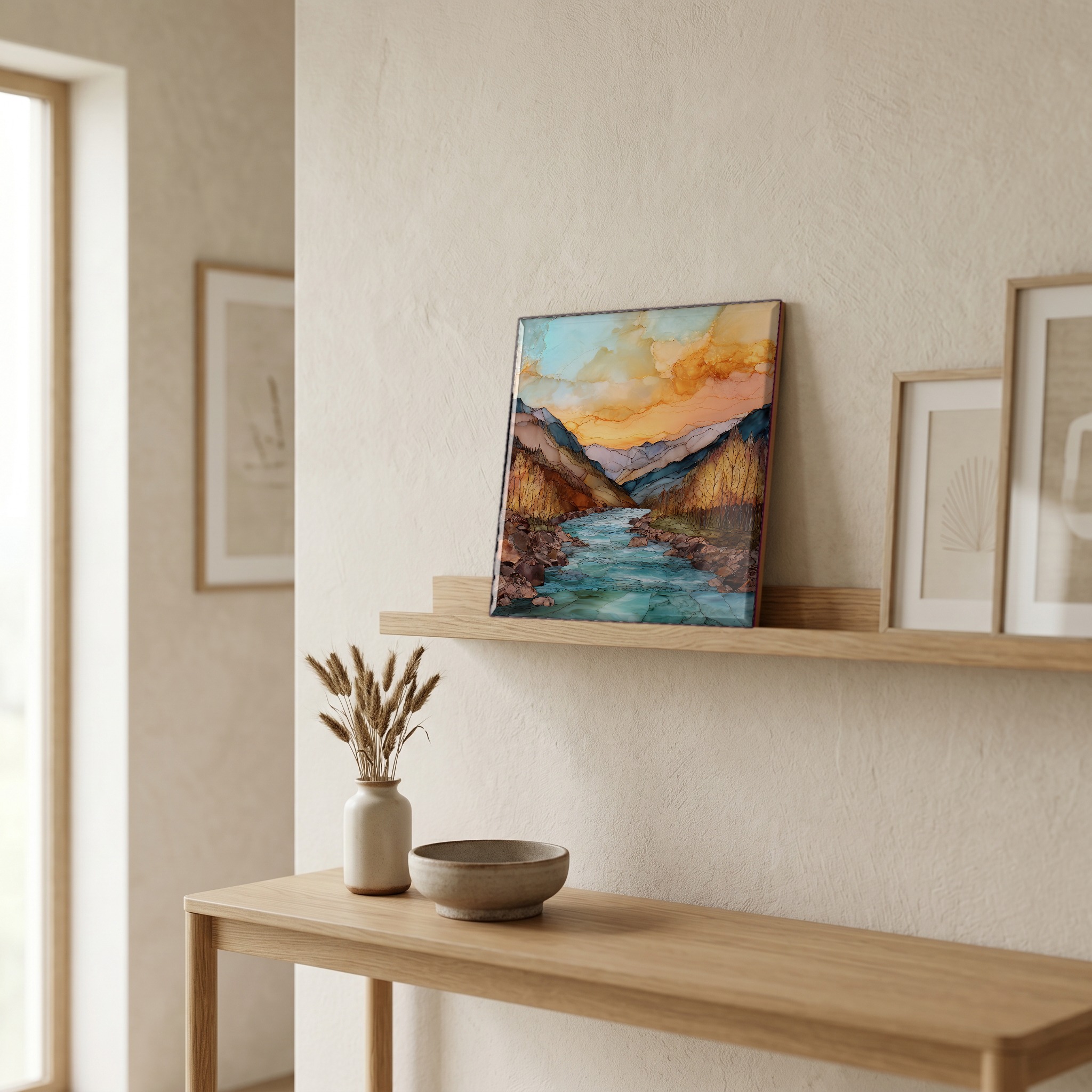
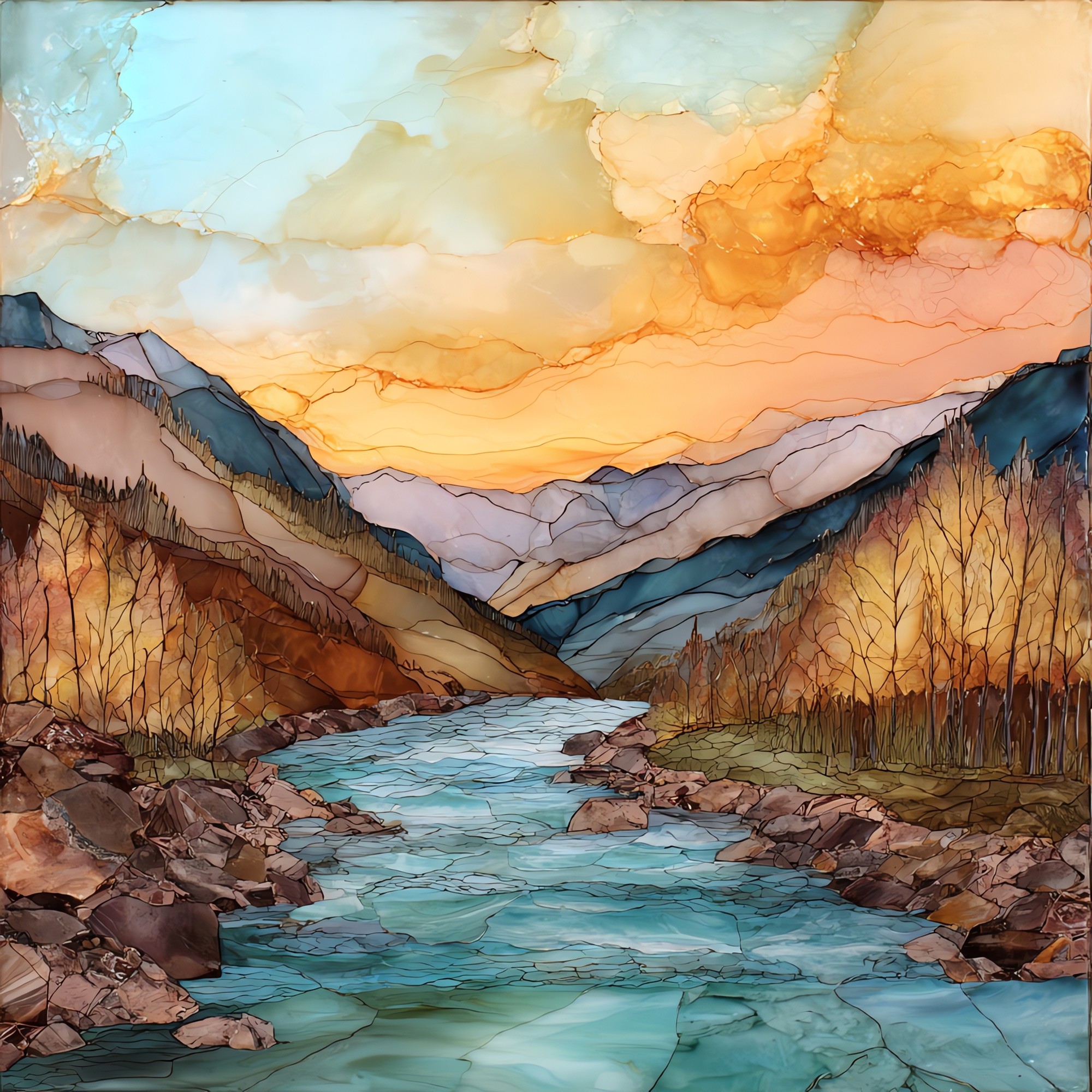
Eagle River at Vail Eagle Valley Ceramic Art Tile
shown on ceramic, 12-inch tileColorado · United States
in the valley below the Gore Range

Eagle River at Vail Eagle Valley Ceramic Art Tile

the green the snow turns into.

Where it lives

Not only on a wall.

A small tile on the nightstand catching the morning. A larger one above the fire. Yours, wherever you spend the slow hours.
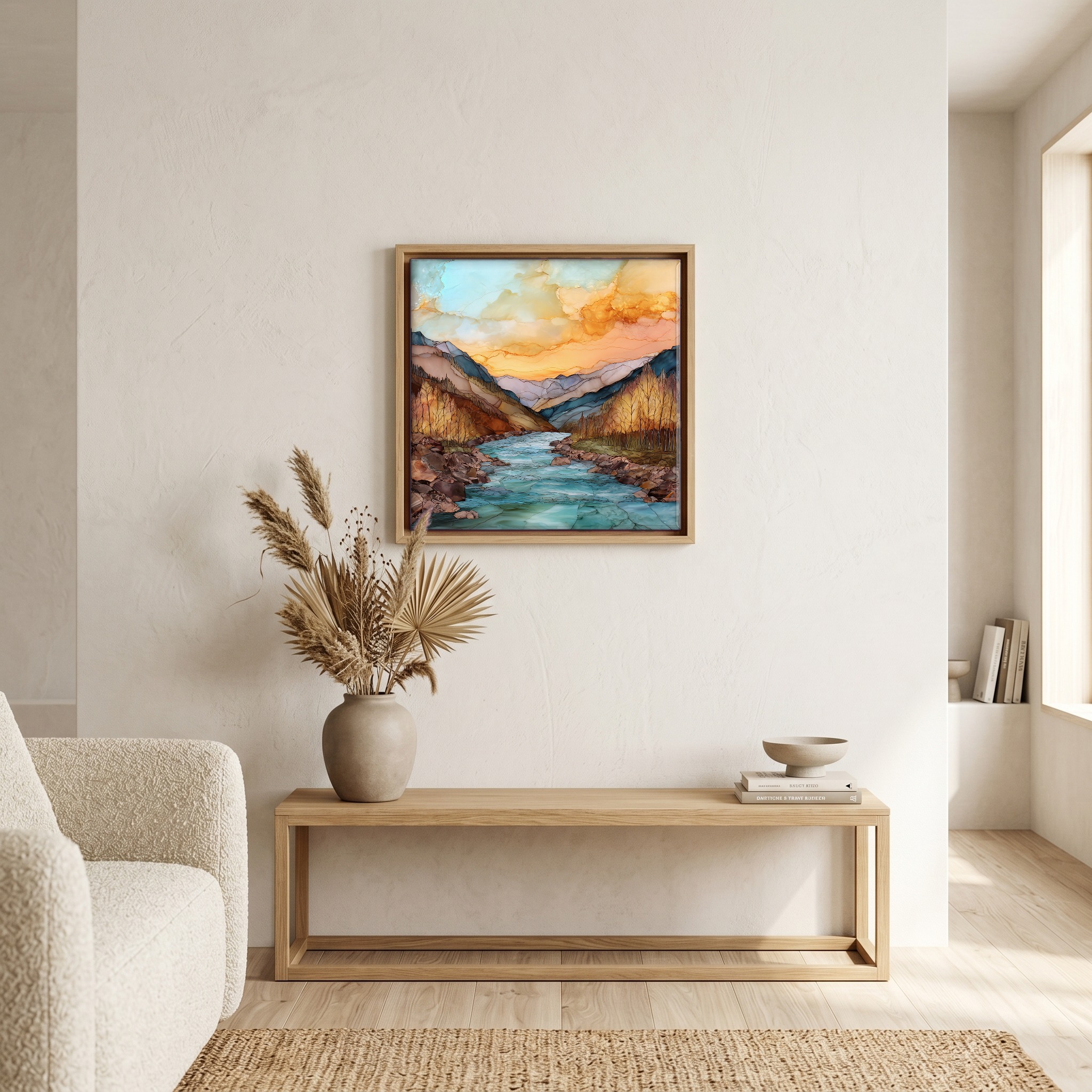
Above the bench, in a warm oak surround.
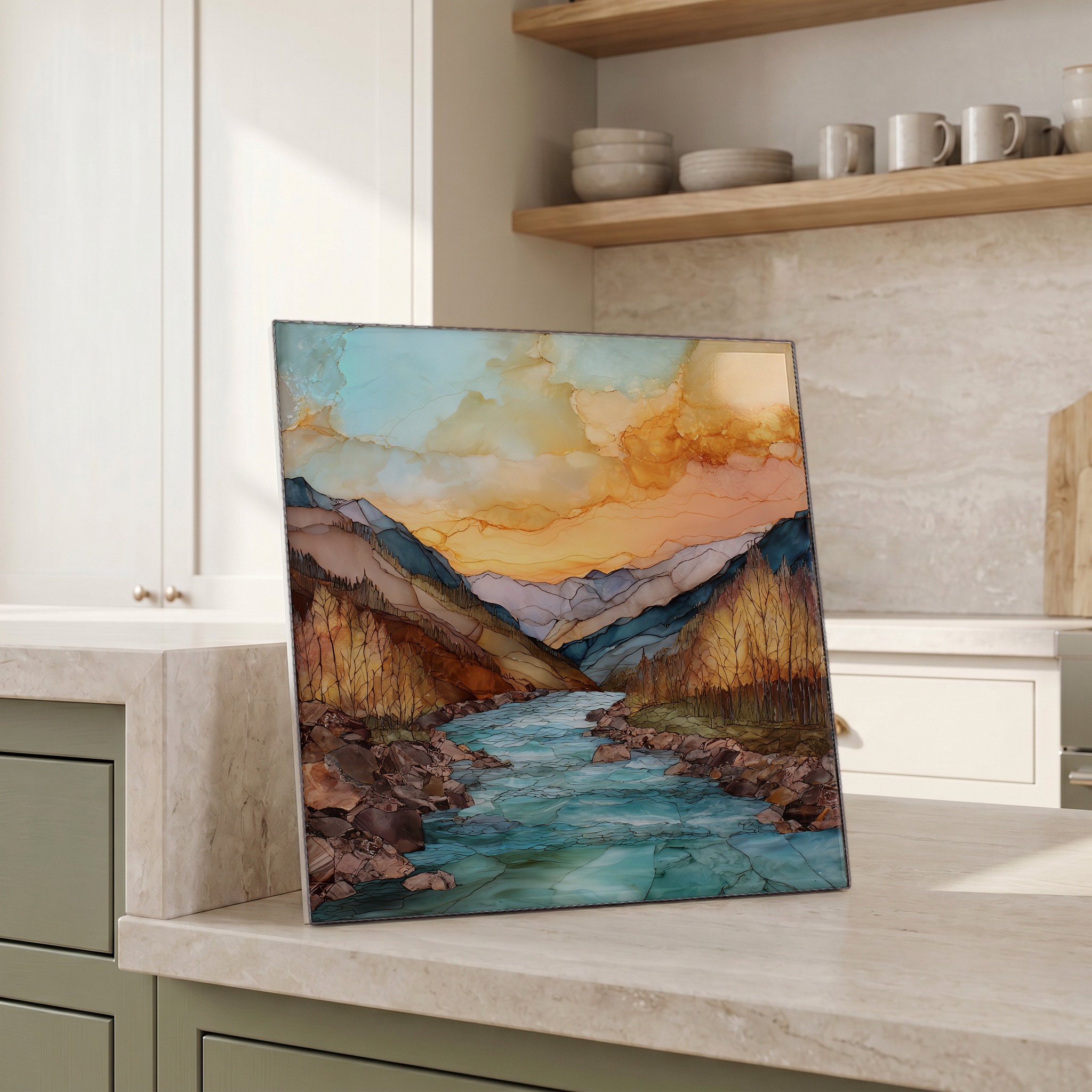
Beside the kettle, propped on the counter.
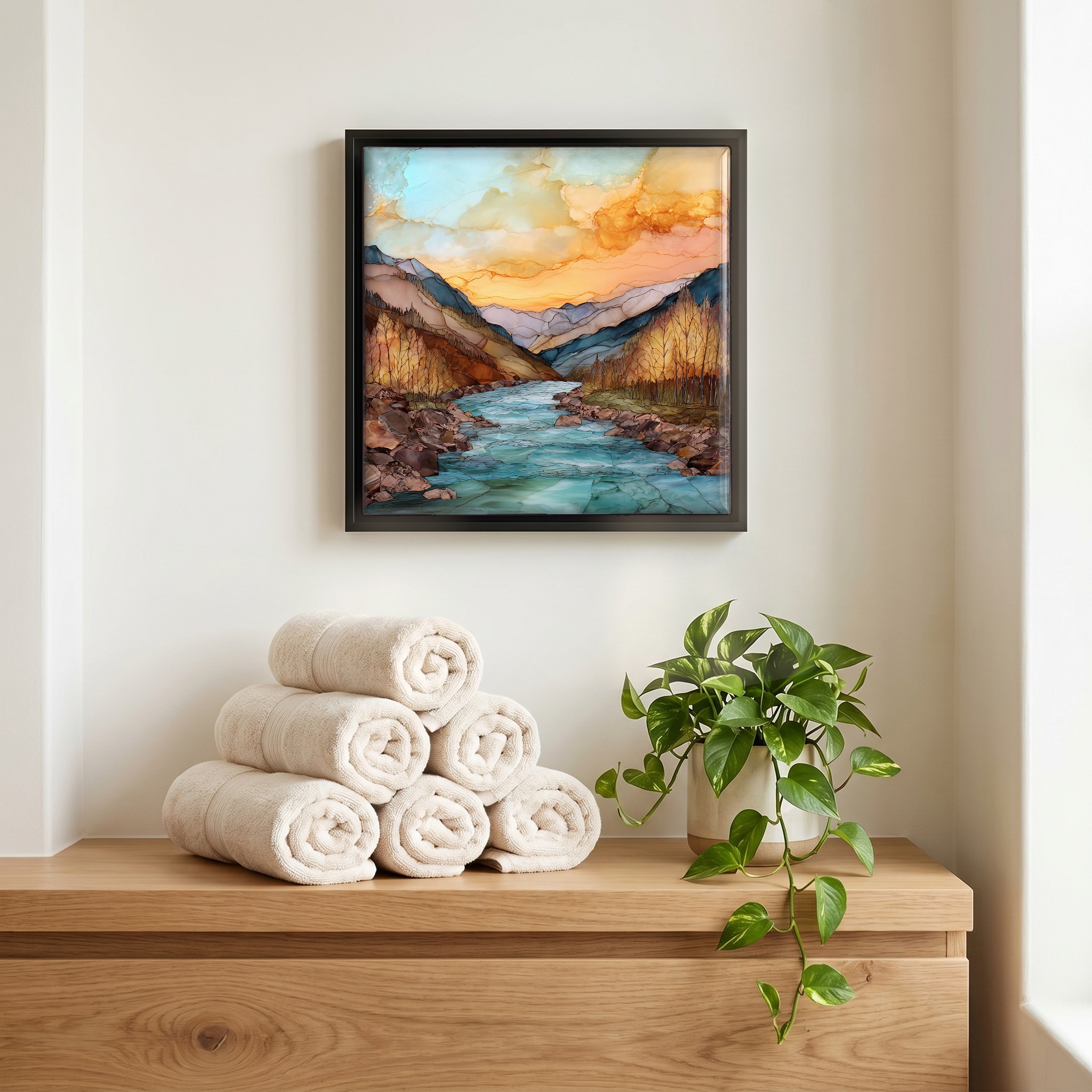
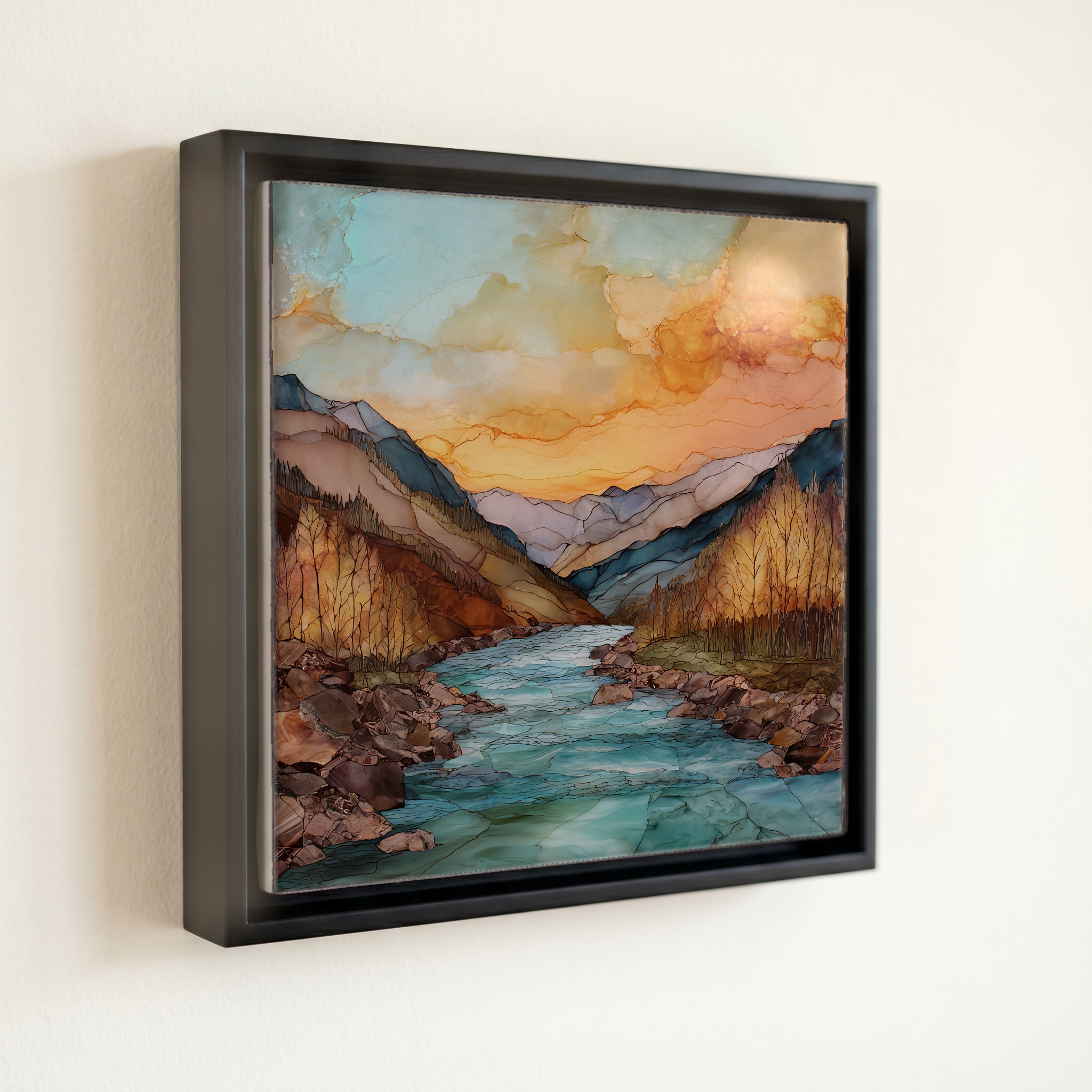
Above the linens, in a slim black surround.
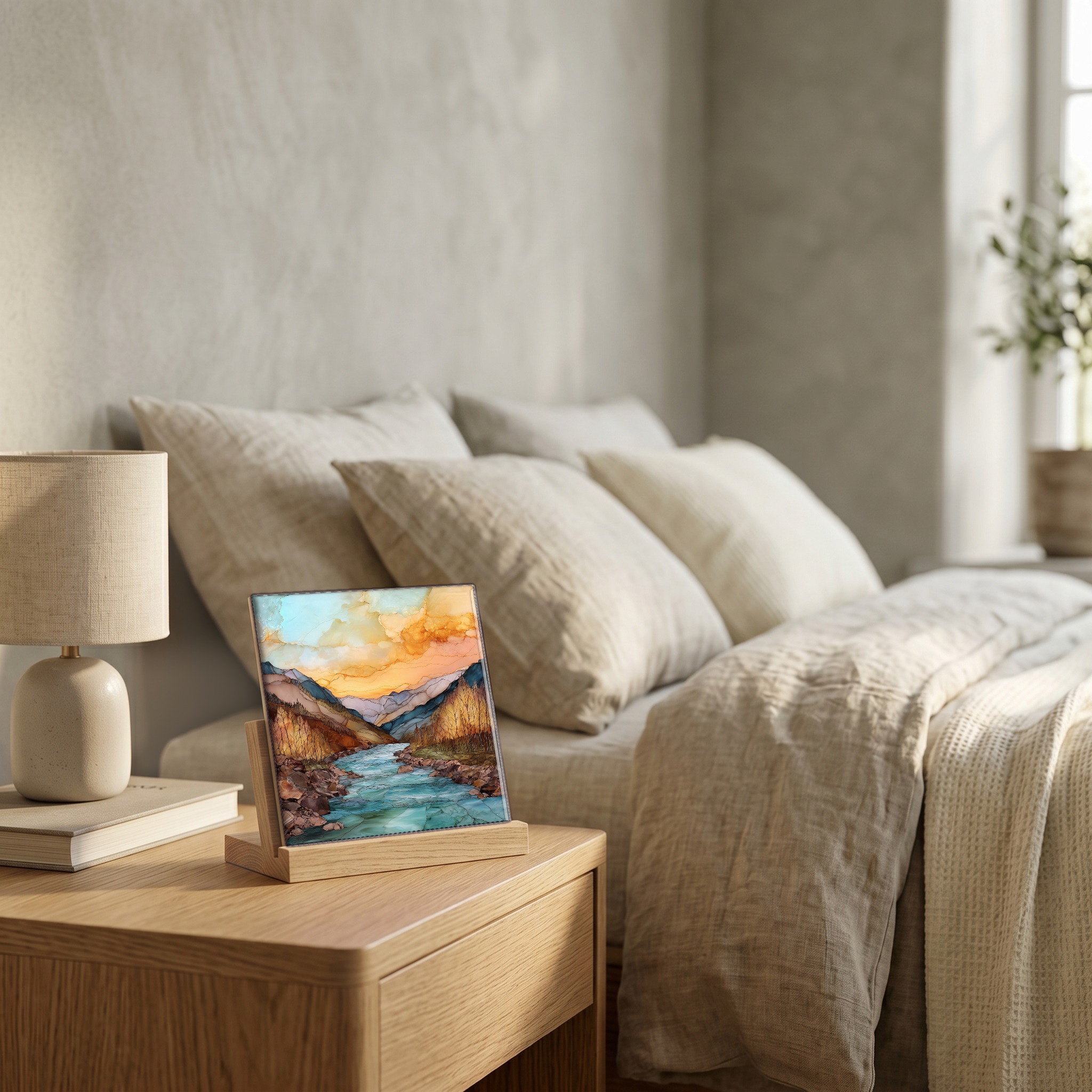
On the nightstand, on a light oak stand.
On a picture ledge, where the light comes in.
a note from the studio

The Eagle runs the length of the valley it named, west out of Tennessee Pass and down through Minturn and Vail and Avon and Edwards before it gives itself to the Colorado at Dotsero. In Vail Valley it runs alongside Interstate 70 close enough that drivers see it from the road. Cottonwoods on one bank, the Gore Range above. The colour shifts with the snow: silty in June runoff, clear and green by August. Fly rods come out before the heat. The river is colder than the road suggests.
from the studio
shown in a slim black floating frame · 6 × 6 in
— bring it home

Eagle River at Vail Eagle Valley Ceramic Art Tile, on ceramic.

Each tile is finished by hand in our Knoxville studio. Artwork is slowly infused into the ceramic surface under high heat and pressure, and rests beneath a thin glossy finish. The colour lives in the surface, not on top of it.

What kind of piece?
One tile — square or rectangle.
How big?
the popular one — counter, shelf, nightstand
6 × 6 in · 15 cm · 1.6 lb
Surface finish
A clear glossy finish — the artwork reads as if under resin. Ideal for show-pieces and framed wall art.
How it sits
A hidden cleat — sits ¼″ proud of the wall.
$58
Hand-finished and shipped from our studio at the foot of the Smokies. On your wall in about ten days.
size
6 × 6 in
15 cm
weighs
1.6 lb
solid in the hand
surface
ceramic, hand-finished
art rests beneath a thin glossy finish
from
Knoxville, TN
our family studio, at the foot of the Smokies
— start a Coaster Set

Pick any four 4-inch tiles — National Parks you've been to, a Smokies set, the four seasons of one place. $ for a set of , cork-backed, ready to live on the table.
comes gift-ready
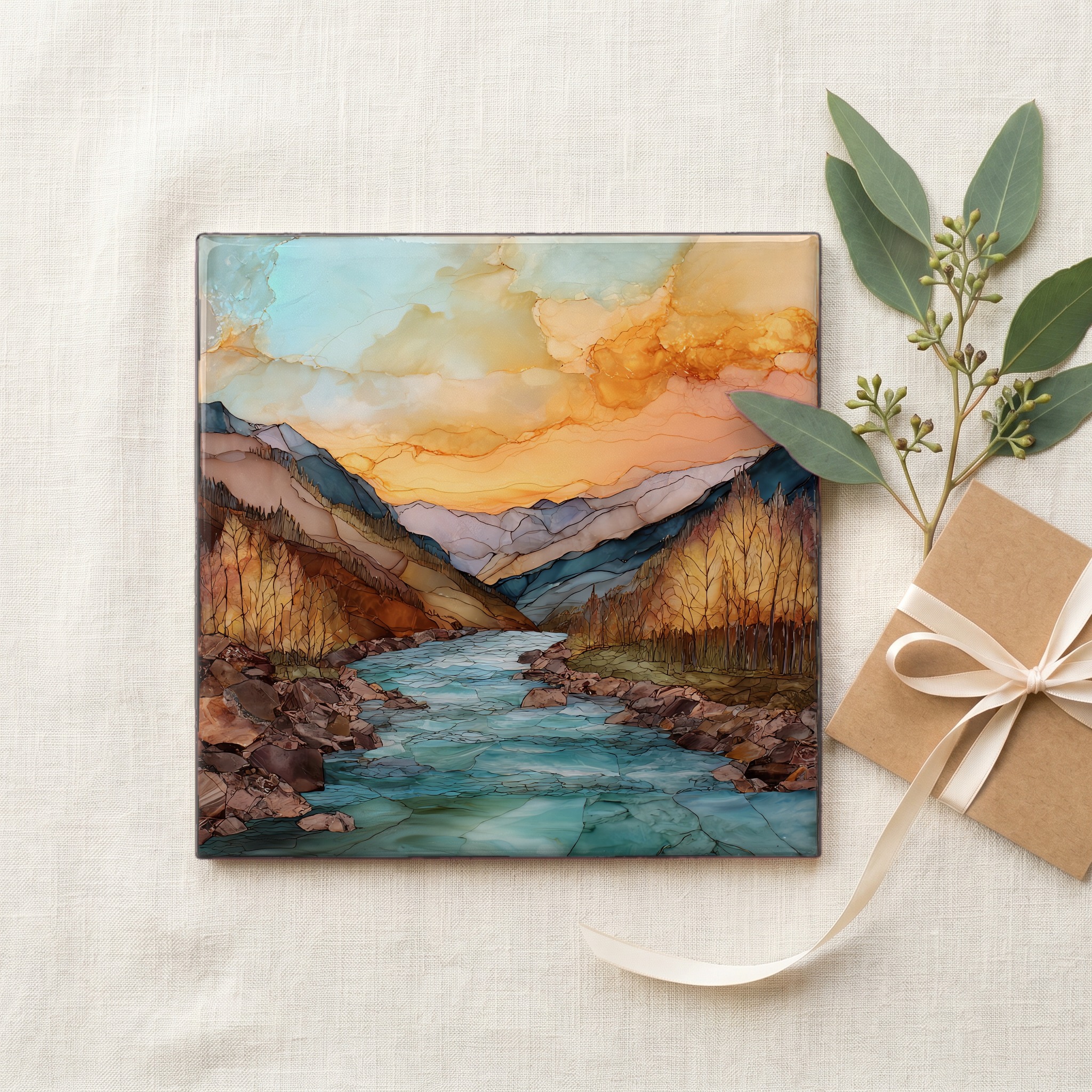
comes gift-ready

Each tile ships in a kraft box, tied with cream ribbon, with a handwritten note from the studio if you'd like to add one.
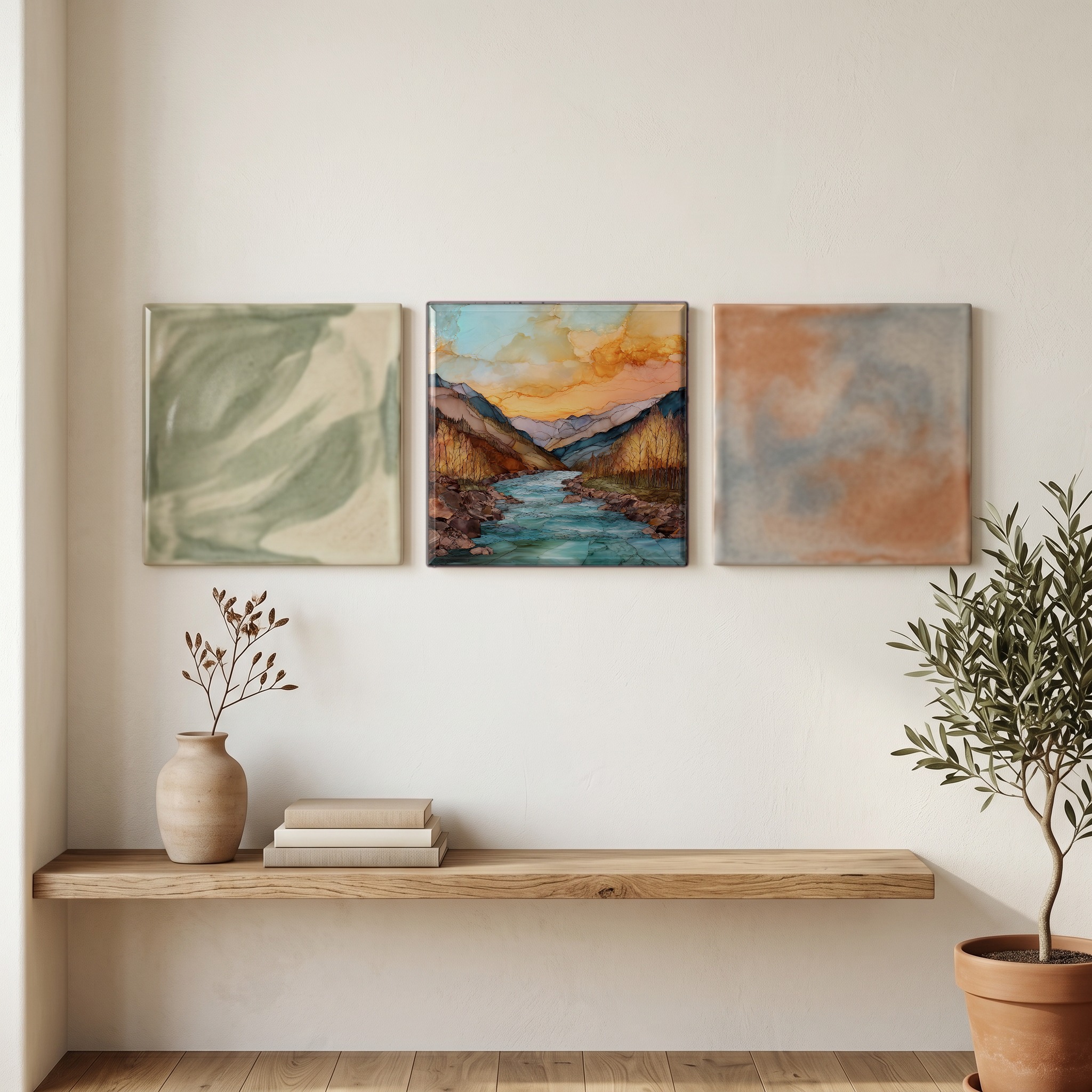
or build a grouping
or build a grouping

Three or five different vistas, hung together — a chapter of places you've been, or want to go.

about Eagle River at Vail Eagle Valley Ceramic Art Tile

The place, in three passes.

A little of what's known, in case you fall down the rabbit hole — or want to go see it yourself.
the place

The Eagle River rises near Tennessee Pass in the Sawatch Range at roughly 10,400 feet, then runs about 70 miles west and northwest through Eagle County, Colorado, before joining the Colorado River at Dotsero. Through Vail Valley it parallels Interstate 70 and the Eagle Valley Trail, passing the town of Vail at 8,150 feet and the smaller communities of Minturn, Avon, Edwards, and Eagle. Above the valley to the north stands the Gore Range; to the south, the Sawatch and the Holy Cross Wilderness. The river drops more than 4,000 feet from headwaters to mouth, a freestone river the whole way.

the water

The Eagle is a freestone river, undammed, fed entirely by snowmelt and tributary creeks rather than a reservoir release. Spring runoff begins in late April and peaks in late May or early June, when the river runs silty and high with melt off the Sawatch and the Gore Range. By midsummer it clears and drops, and the green-blue colour of late summer returns. The river also carries the legacy of mining: the Eagle Mine at Gilman, abandoned in the 1980s, became a Superfund site, and decades of remediation have brought the lower river's water quality back close to where it began.

the season

The fishing window opens after runoff drops in mid-to-late June and runs through October, with the strongest hatches in July and September. Whitewater season is shorter: peak flows for kayaking and rafting fall between Memorial Day and the Fourth of July. The Eagle Valley Trail, a paved path that follows the river from Vail to Eagle, is rideable from spring through late autumn. Winter brings ice along the banks and quiet stretches between the towns. The river never freezes solid through the valley; the current keeps the channel open even on the coldest weeks.

where
United States · Eagle County, Colorado
position
39.6403° N · 106.3742° W
the neighborhood

What's nearby.

A handful of named places within an hour's walk or short drive. Some we've already painted; some we will.
6 km W
Minturn
town
16 km W
Beaver Creek
ski resort
15 km SW
Mount of the Holy Cross
mountain
10 km N
Gore Range
mountain range
13 km E
Vail Pass
mountain pass
12 km SW
Holy Cross Wilderness
wilderness area
N
Eagle River at Vail Eagle Valley Ceramic Art Tile
Minturn
Beaver Creek
Mount of the Holy Cross
Gore Range
Vail Pass
Holy Cross Wilderness
common questions

What people ask.

A few questions we get about Eagle River at Vail Eagle Valley Ceramic Art Tile — and about bringing the piece home.
about the place

The Eagle River flows through Eagle County in west-central Colorado. It rises near Tennessee Pass in the Sawatch Range at about 10,400 feet and runs roughly 70 miles west and northwest to its confluence with the Colorado River at Dotsero, passing through Minturn, Vail, Avon, Edwards, and Eagle along the way.

The river takes its name from the bald eagles that historically wintered along its lower stretches. The county, the valley, and the town of Eagle all take their name from the river. Ute people used the river corridor for centuries before the name was anglicised in the 19th century.

Yes. The Eagle is a wadable freestone river with populations of rainbow and brown trout. The most-fished water runs from Edwards down through Eagle and Gypsum. Public access points sit at most highway interchanges along Interstate 70, and the lower river is open to wading and float fishing.

Peak runoff typically arrives between late May and early June, fed by snowmelt from the Sawatch Range and the Gore Range. The river clears and drops through July. By August the green-blue colour of late summer returns and stays through October.

The river was severely polluted in the 20th century by drainage from the Eagle Mine at Gilman, which became a Superfund site after operations ended in the 1980s. Decades of remediation have substantially restored water quality through the lower valley, and trout populations have rebounded.

Eagle Valley is the broad east-west valley in Eagle County, Colorado, that the Eagle River runs through. It contains the towns of Minturn, Vail, Avon, Edwards, Eagle, and Gypsum. Interstate 70 and the Eagle Valley Trail follow the river the length of the valley.

The Eagle River joins the Colorado River at Dotsero, Colorado, at roughly 6,130 feet of elevation. The confluence sits where Interstate 70 enters Glenwood Canyon. From there, the combined Colorado runs west toward the Utah border and on toward the Grand Canyon.

about the piece in your home

It travels well in that direction. The Eagle is the river that gives the valley its name, the water that runs alongside every drive between Vail and Eagle. For someone who fly fishes the river, lives along it, or grew up in Eagle County, a Small or Medium with a handwritten note from the studio lands honestly.

Mountain-modern, alpine-rustic, and the warmer end of contemporary. The greens and slate-blues in the river hold up against natural wood, stone, and earth-toned upholstery. Above a console in a mudroom or beside a window facing the mountains it does its quietest work.

Yes. Mountain-modern has shifted toward calmer, more painterly art and away from straight photography. The Voynich treatment reads as a hand-painted study of the river rather than a snapshot, which suits the direction the style has been moving for the past several seasons.

Above a standard sofa, a Large reads strongly without crowding the wall. A 4-tile Mural fills a wider section and gives the river room to run. Above a narrower console, a Medium centred between two sconces holds the room.

Yes, with the Dura Satin or Matte finish. Both are scratch-resistant, hold up to moisture, and wipe clean. The Glossy finish is intended for framed wall pieces, not splash zones. Order the Dura Satin if it's going behind a sink or in a shower wall.

Microfibre cloth and water. The colour is slowly infused into the ceramic surface under high heat and pressure, so it doesn't fade or scratch the way a printed surface would. No solvents and no abrasive pads; they are unnecessary and over time can dull the finish.

Yes. Every WenderVista piece is made in-house in Knoxville, Tennessee, by Reid Wender and the studio. We do not license images and we do not reproduce work from outside artists. The Eagle River tile is a single studio's interpretation of the river through Eagle Valley.

if this one stayed with you

A few you might also love.

Hand-picked by the eye that found Sorapis. Same air, same kind of quiet.