Wender·Vista
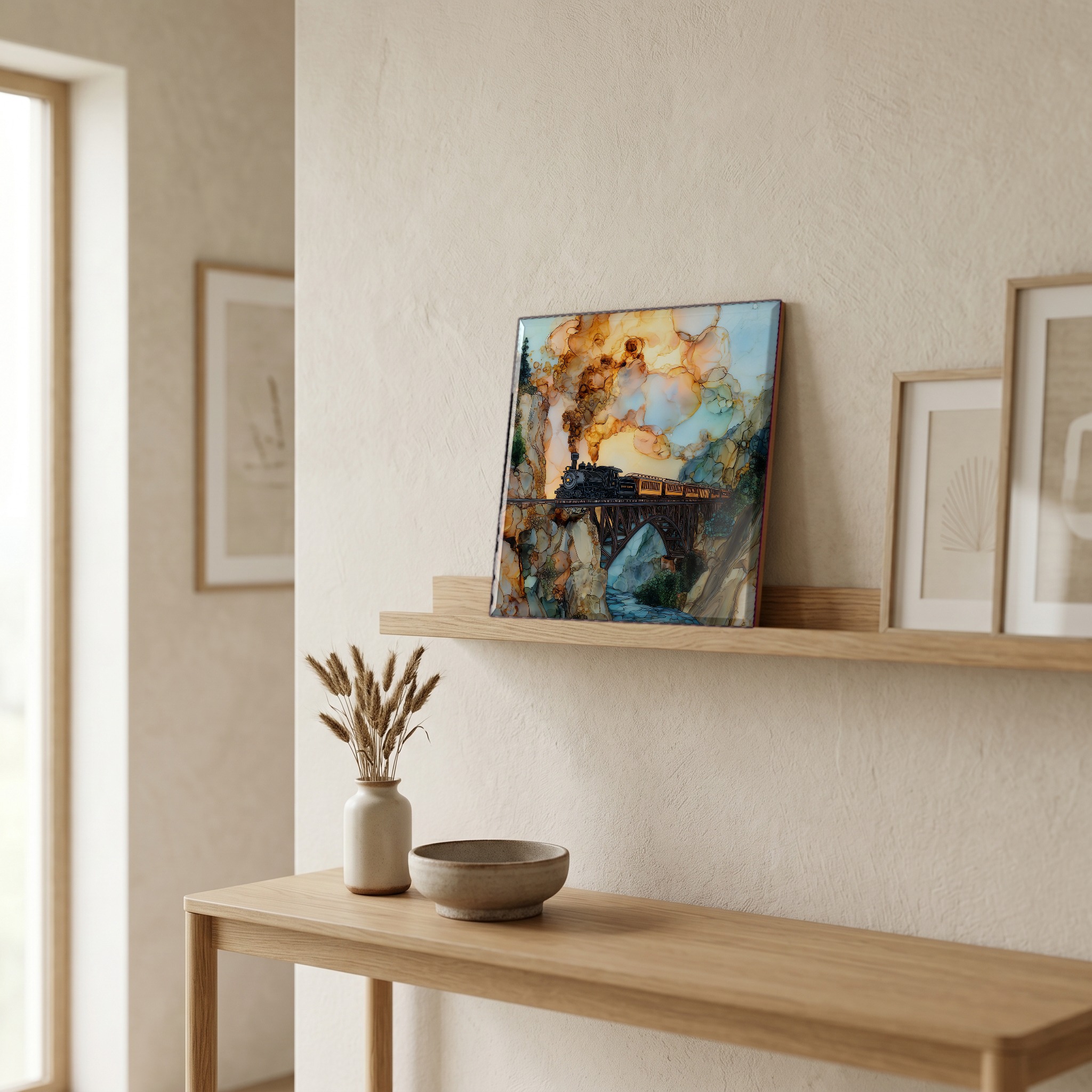
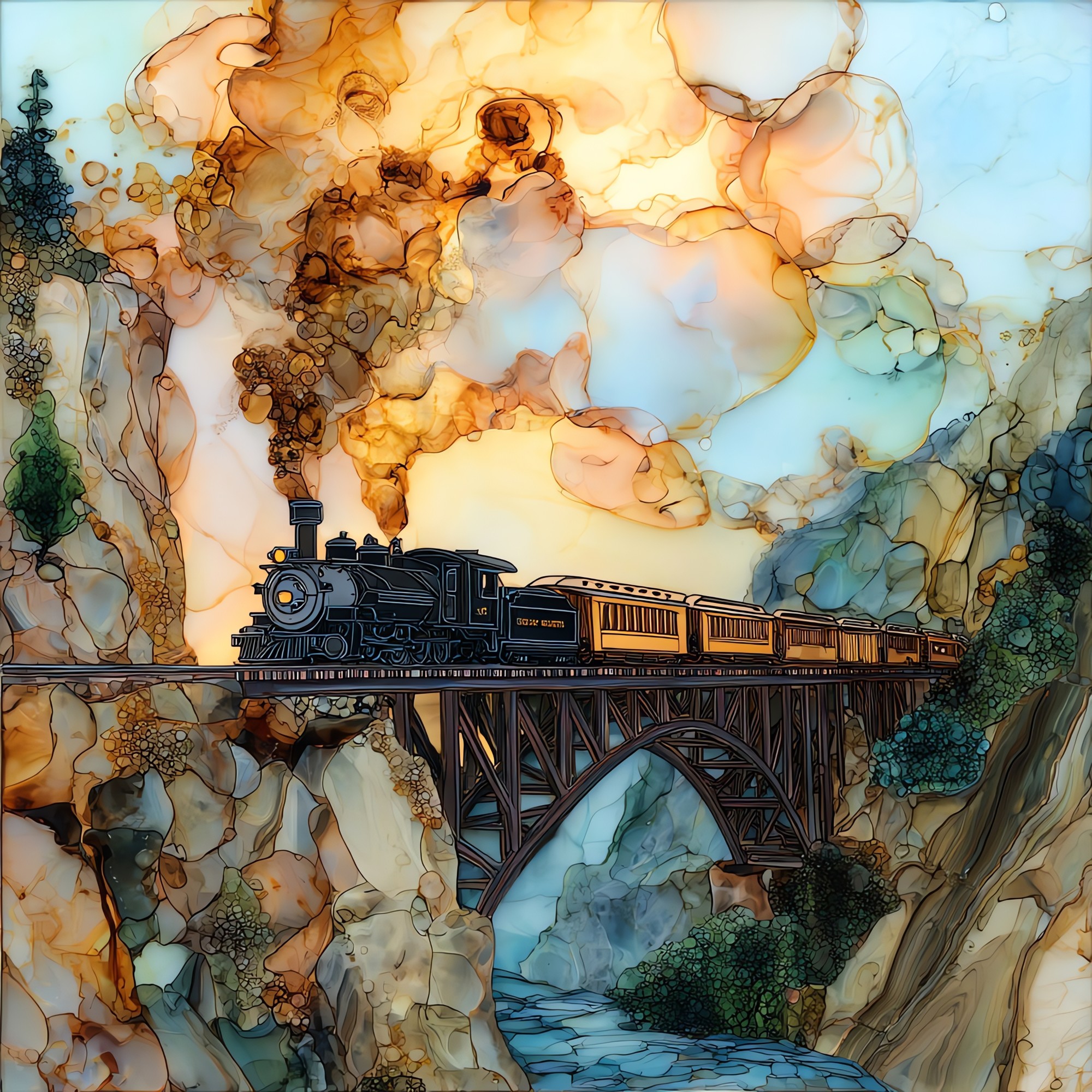
Durango-Silverton at High Bridge San Juans Ceramic Art Tile
shown on ceramic, 12-inch tileColorado · United States
in the San Juans, above the Animas

Durango-Silverton at High Bridge San Juans Ceramic Art Tile

— a column of smoke the canyon keeps.

Where it lives

Not only on a wall.

A small tile on the nightstand catching the morning. A larger one above the fire. Yours, wherever you spend the slow hours.
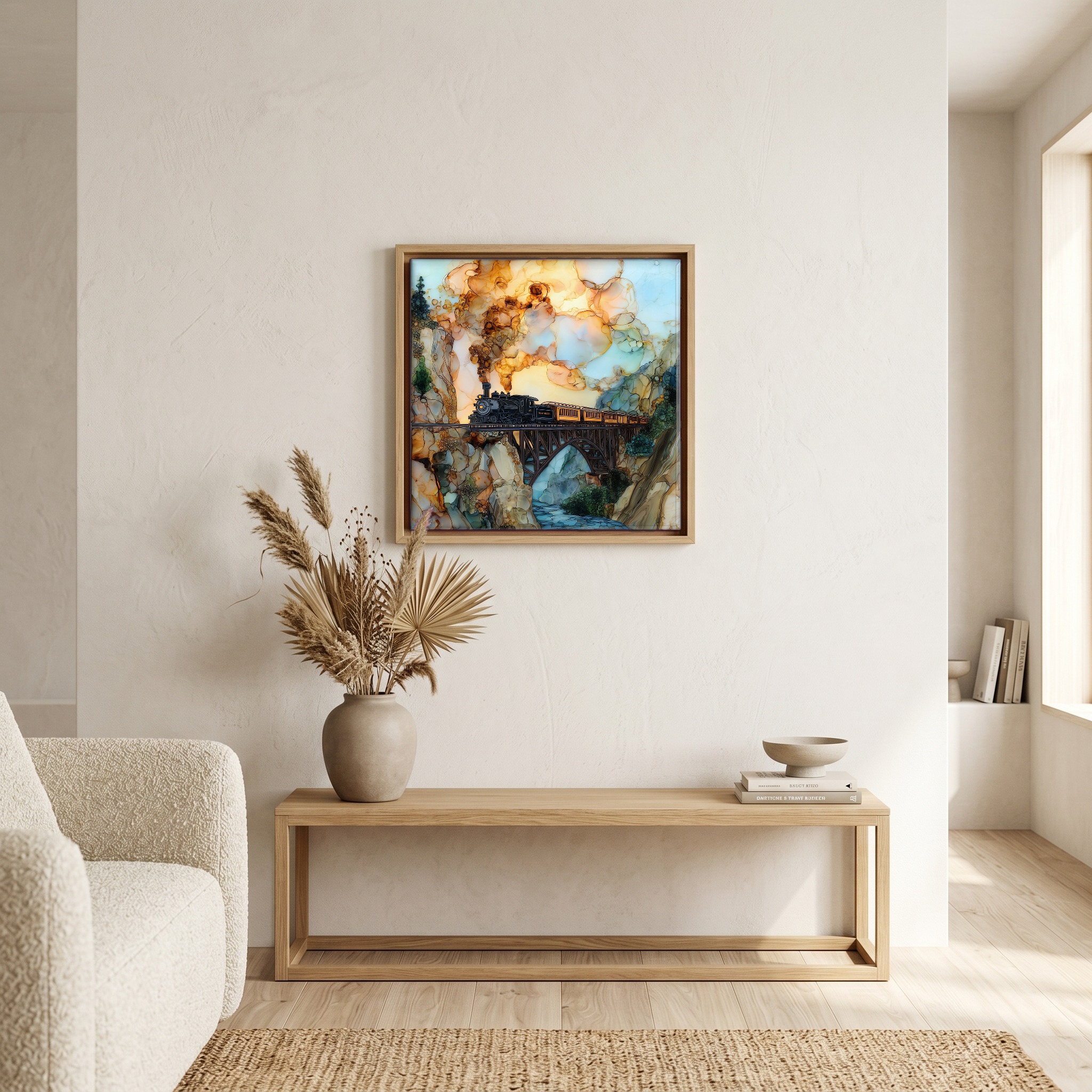
Above the bench, in a warm oak surround.
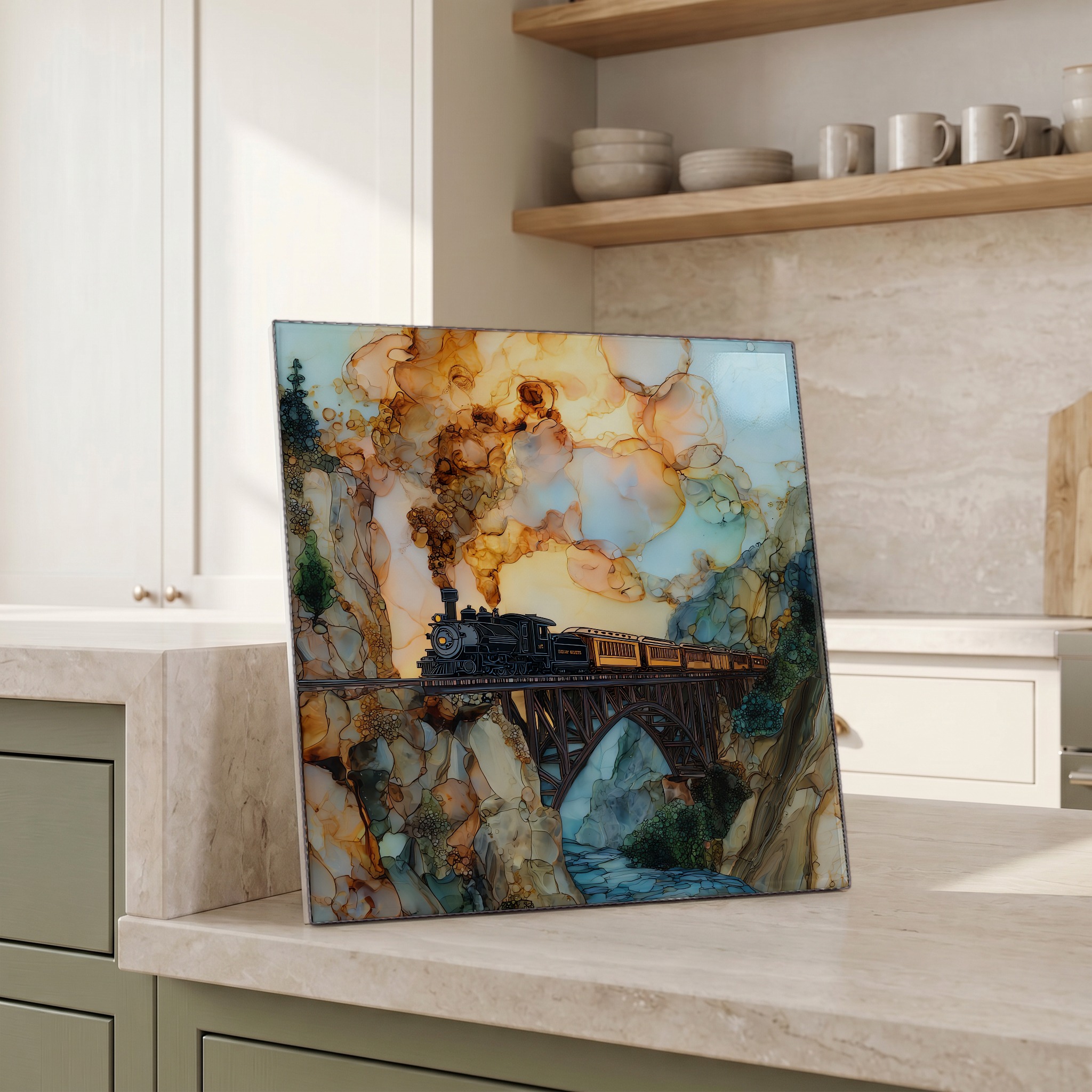
Beside the kettle, propped on the counter.
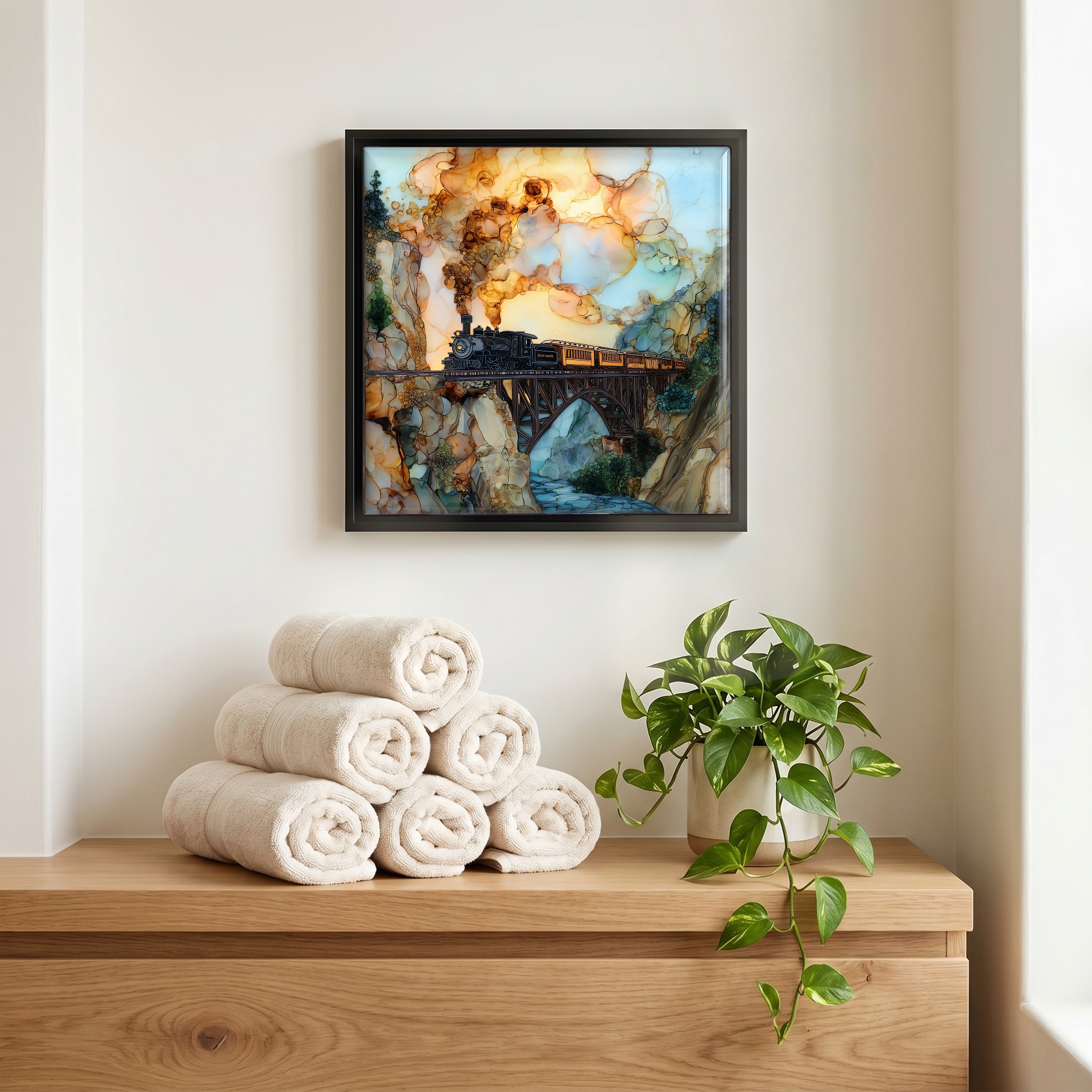
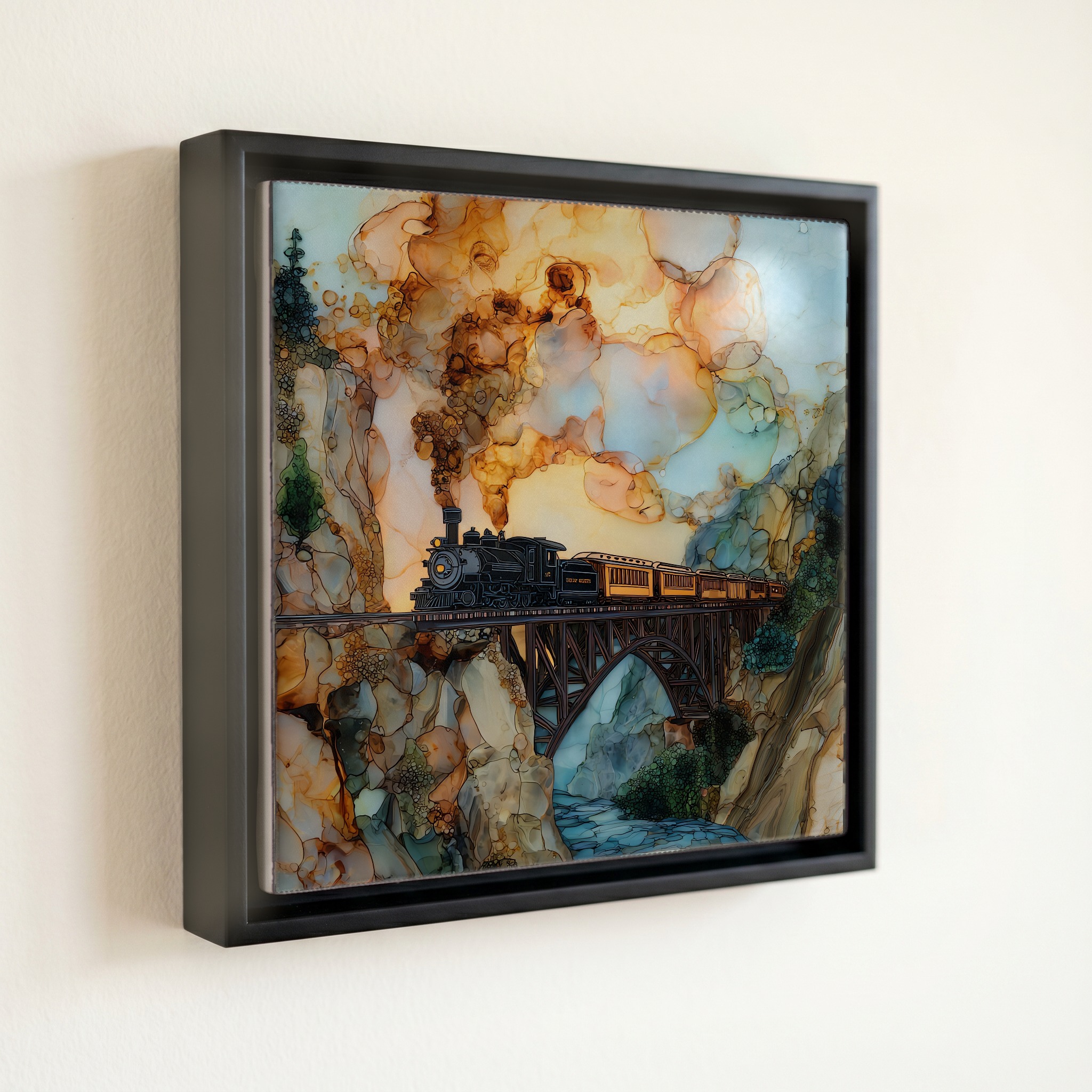
Above the linens, in a slim black surround.
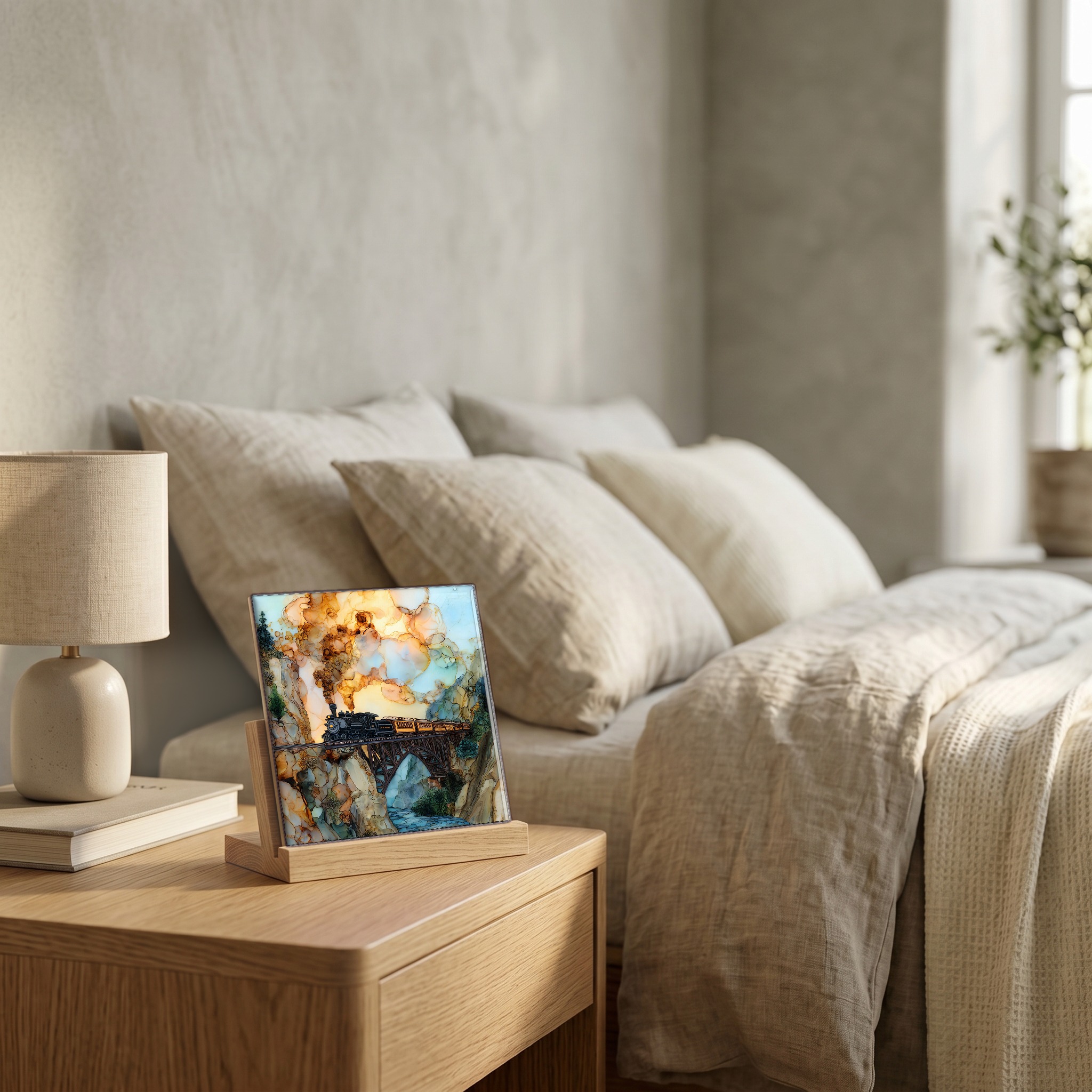
On the nightstand, on a light oak stand.
On a picture ledge, where the light comes in.
a note from the studio

A narrow-gauge steam train, climbing the canyon between Durango and Silverton along a track three feet wide. The Denver & Rio Grande built the line in 1881 and finished it the next year; it has been working ever since, on coal and steam. From the trail above, the High Bridge is a long, slow crossing: a column of smoke against the San Juan rock, a whistle the canyon has known since 1882. The road to Silverton runs on the other side of the divide. Down here the train is the way in.
from the studio
shown in a slim black floating frame · 6 × 6 in
— bring it home

Durango-Silverton at High Bridge San Juans Ceramic Art Tile, on ceramic.

Each tile is finished by hand in our Knoxville studio. Artwork is slowly infused into the ceramic surface under high heat and pressure, and rests beneath a thin glossy finish. The colour lives in the surface, not on top of it.

What kind of piece?
One tile — square or rectangle.
How big?
the popular one — counter, shelf, nightstand
6 × 6 in · 15 cm · 1.6 lb
Surface finish
A clear glossy finish — the artwork reads as if under resin. Ideal for show-pieces and framed wall art.
How it sits
A hidden cleat — sits ¼″ proud of the wall.
$58
Hand-finished and shipped from our studio at the foot of the Smokies. On your wall in about ten days.
size
6 × 6 in
15 cm
weighs
1.6 lb
solid in the hand
surface
ceramic, hand-finished
art rests beneath a thin glossy finish
from
Knoxville, TN
our family studio, at the foot of the Smokies
— start a Coaster Set

Pick any four 4-inch tiles — National Parks you've been to, a Smokies set, the four seasons of one place. $ for a set of , cork-backed, ready to live on the table.
comes gift-ready
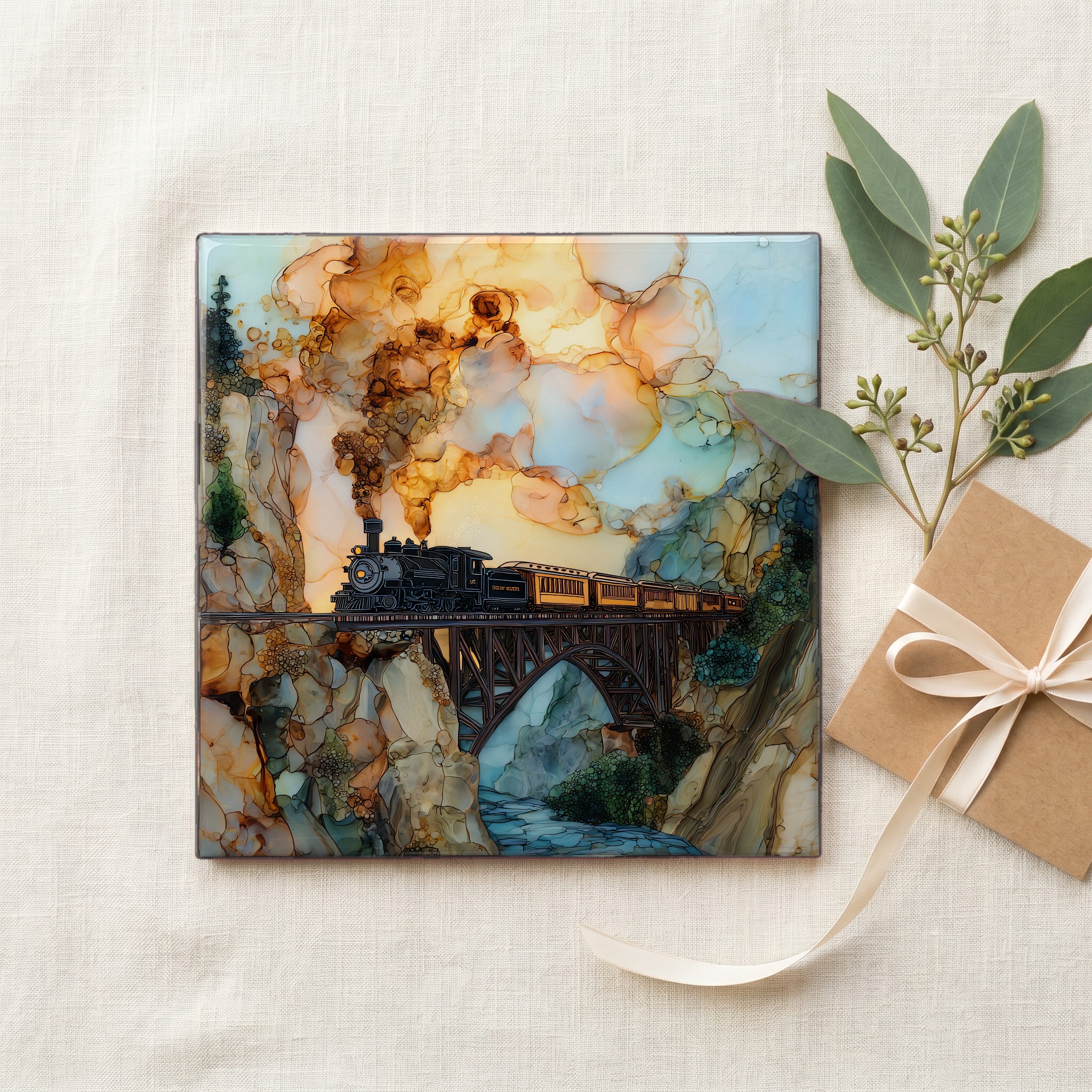
comes gift-ready

Each tile ships in a kraft box, tied with cream ribbon, with a handwritten note from the studio if you'd like to add one.

or build a grouping
or build a grouping

Three or five different vistas, hung together — a chapter of places you've been, or want to go.

about Durango-Silverton at High Bridge San Juans Ceramic Art Tile

The place, in three passes.

A little of what's known, in case you fall down the rabbit hole — or want to go see it yourself.
the place

The Durango & Silverton Narrow Gauge Railroad runs 45.4 miles along the Animas River between Durango (6,512 ft) and Silverton (9,318 ft), entirely on a three-foot-gauge track laid by the Denver & Rio Grande between 1881 and 1882. The High Bridge is one of the crossings along this route, lifted above the river where the canyon walls steepen and the line cannot stay on the floor. For most of the run the only access is the train itself: the Animas River canyon is roadless for nearly thirty miles, bracketed by the 13,000-ft peaks of the Needle Mountains in the Weminuche Wilderness. The line was named a National Historic Landmark in 1961.

the year

The Durango & Silverton runs on a seasonal calendar that has barely moved in a century. Steam locomotives, mostly K-28 and K-36 class engines built in the 1920s for the Denver & Rio Grande Western, haul the full Durango-to-Silverton run from late spring through autumn, with the schedule narrowing as snow closes the high country. In winter a shorter Cascade Canyon train turns around well below the 9,318-ft Silverton terminal. The Rio Grande operated the route until 1981, when it sold the line to private owners. The gauge, the route, and the steam have not changed.

— informed by Wikipedia
the visit

The full round trip to Silverton takes most of a day: about three and a half hours each way, with roughly two hours in Silverton between trains. The railroad's depot is in downtown Durango on Main Avenue. Coach, Deluxe, parlor-class, and open-air gondola seating are available, with the gondolas reserved for the warmer months. The line passes through stretches of San Juan National Forest that are otherwise inaccessible by road, including a section called the Highline that runs roughly four hundred feet above the Animas River. The best photographs of the train come from the trails above, where the canyon shows its full depth.

where
United States · La Plata County, Colorado
within
San Juan National Forest
the neighborhood

What's nearby.

A handful of named places within an hour's walk or short drive. Some we've already painted; some we will.
25 km S
Durango
town and railroad terminus
20 km N
Silverton
former mining town and railroad terminus
at the lake
Animas River
river
10 km E
Needle Mountains
13,000-ft peaks
5 km E
Weminuche Wilderness
wilderness area
at the lake
San Juan National Forest
national forest
8 km N
Cascade Creek
tributary creek and winter turnaround
N
Durango-Silverton at High Bridge San Juans Ceramic Art Tile
Durango
Silverton
Animas River
Needle Mountains
Weminuche Wilderness
San Juan National Forest
Cascade Creek
common questions

What people ask.

A few questions we get about Durango-Silverton at High Bridge San Juans Ceramic Art Tile — and about bringing the piece home.
about the place

The High Bridge is one of the bridge crossings along the 45.4-mile route between Durango and Silverton, Colorado, in San Juan National Forest. The line follows the Animas River through a canyon that is roadless for most of its length, so the train itself is the primary way to see the bridge.

The Denver & Rio Grande began construction in 1881 and finished the line in 1882, originally to haul silver and gold ore out of the San Juan Mountains. It has operated since, and was designated a National Historic Landmark in 1961.

Coal-burning steam locomotives, mostly K-28 class engines built by ALCO in 1923 and K-36 class engines built by Baldwin in 1925 for the Denver & Rio Grande Western. The track is three-foot narrow gauge, the same width laid in 1881.

Roughly three and a half hours each way. Durango sits at 6,512 ft and Silverton at 9,318 ft, so the train climbs nearly 2,800 ft along the 45.4-mile route, mostly following the Animas River through the canyon.

Not directly. The Animas River canyon is roadless for most of the route between Durango and Silverton. The paved alternative is U.S. 550, the Million Dollar Highway, which crosses the divide well to the east of the canyon.

The full Durango-to-Silverton schedule runs from late spring through autumn, typically May through October. In winter a shorter Cascade Canyon train runs partway up the line, turning around before the high country.

It was built to move silver and gold ore down out of the San Juan Mountains. Silverton sits at 9,318 ft in a basin that the Denver & Rio Grande reached in 1882, after a year of cutting the line along the Animas River from Durango.

about the piece in your home

It has been a meaningful gift for many of our customers with roots in southwest Colorado. The Durango & Silverton has been running for nearly a hundred and fifty years and is the working railway most people from the region grew up alongside. A Small or Medium with a short note from the studio carries well.

The piece sits naturally in mountain-modern interiors, alpine cabins, and rooms that lean toward warm woods and oxidized metal. The palette reads warm and earthen: coal-smoke gray, canyon stone, the colour of late aspen. It works alongside Pendleton textiles, leather, and antique brass.

Yes. The mix of historic-railway subject and stained-glass colour work fits current mountain-modern and western-contemporary directions, which favor handcraft and the palette of the American West. The piece reads as art rather than memorabilia, so it does not date the way a vintage poster would.

A single Large holds the wall above a console or a console-depth shelf. Above a full sofa, a four-tile Mural carries the space properly; for a wide statement wall behind a sectional, a nine-tile Mural is the right scale. A Medium suits a narrower wall or a stairwell landing.

Yes. Order it in the Dura Satin or Matte finish for any room that sees water or steam, including bathrooms, showers, kitchen backsplashes, and mudrooms. The colour is slowly infused into the ceramic surface under high heat and pressure, so it does not lift or fade with regular cleaning.

A soft microfibre cloth and water are enough for everyday dust. For heavier marks, a damp cloth with a small amount of mild dish soap is fine. Skip abrasive scrubbers and bleach-based sprays, which can dull the thin glossy finish over time.

Yes. Every WenderVista piece is made by Wender Studios, a family studio in Knoxville, Tennessee. The art is original to the studio, not licensed from anyone else, and each tile is hand-finished in-house.

if this one stayed with you

A few you might also love.

Hand-picked by the eye that found Sorapis. Same air, same kind of quiet.