Wender·Vista
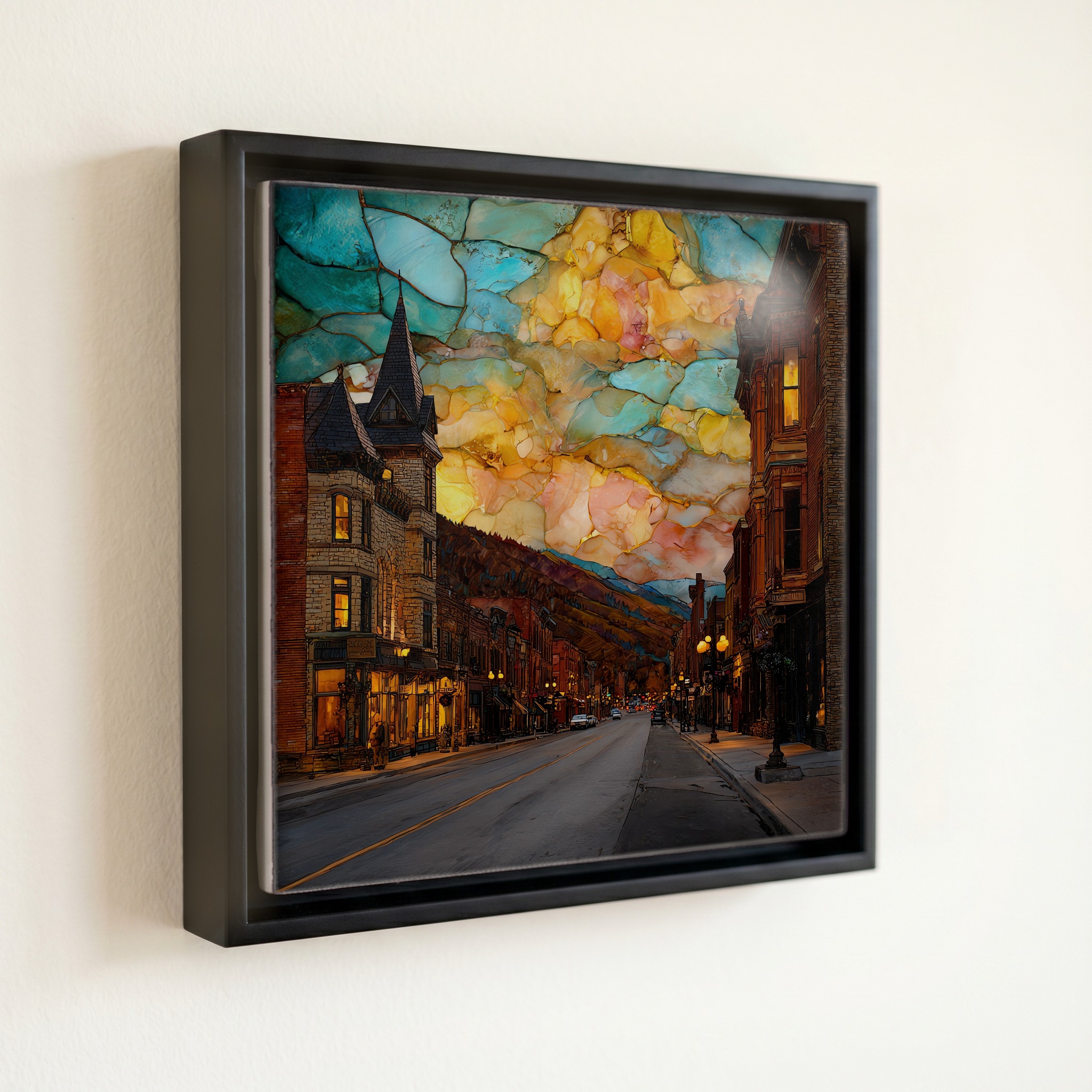
Durango Main Avenue San Juans Ceramic Art Tile
shown on ceramic, 12-inch tileColorado · United States
at the south end of the San Juans, where the narrow-gauge still runs

Durango Main Avenue San Juans Ceramic Art Tile

the avenue the steam train wakes up.

Where it lives

Not only on a wall.

A small tile on the nightstand catching the morning. A larger one above the fire. Yours, wherever you spend the slow hours.
Above the bench, in a warm oak surround.
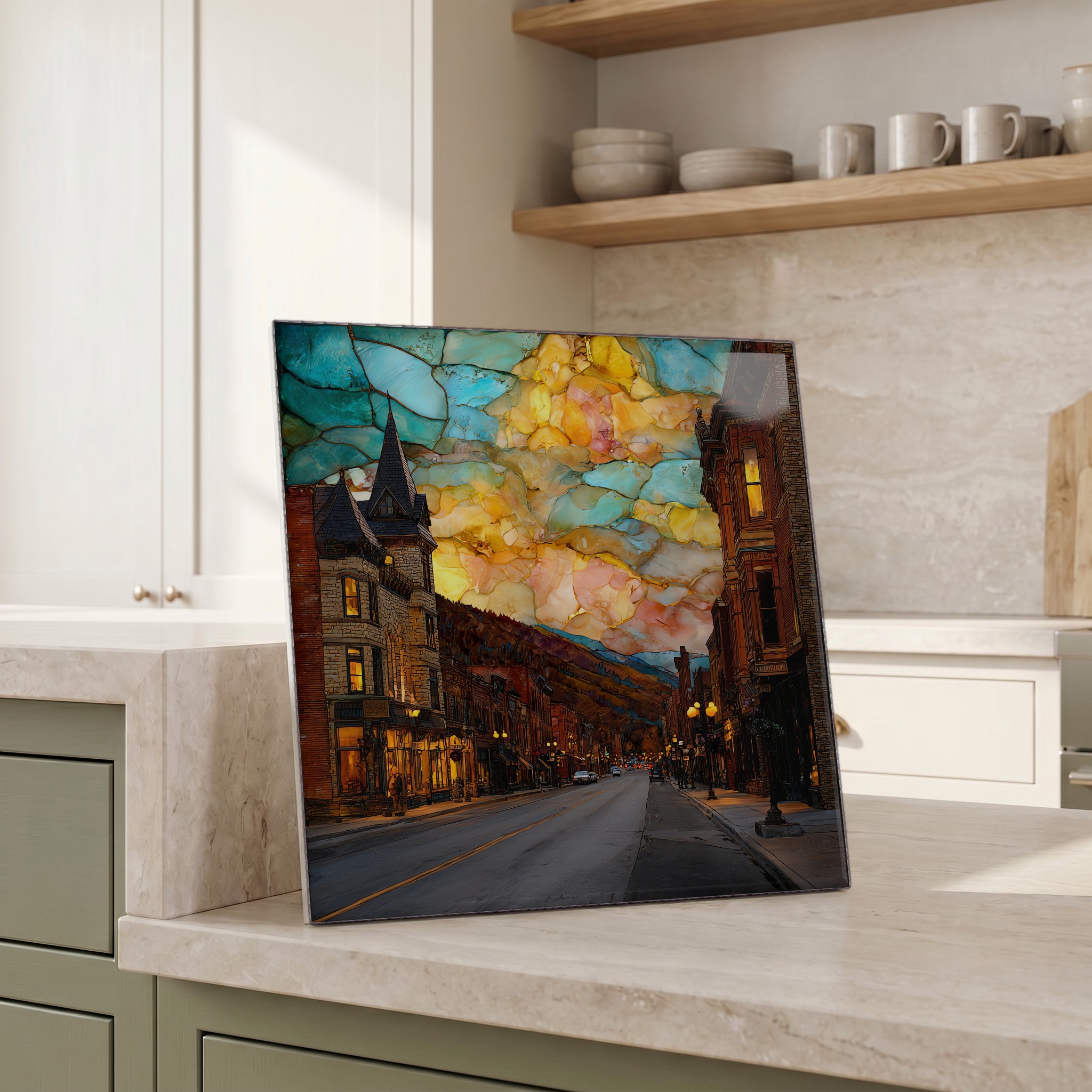
Beside the kettle, propped on the counter.
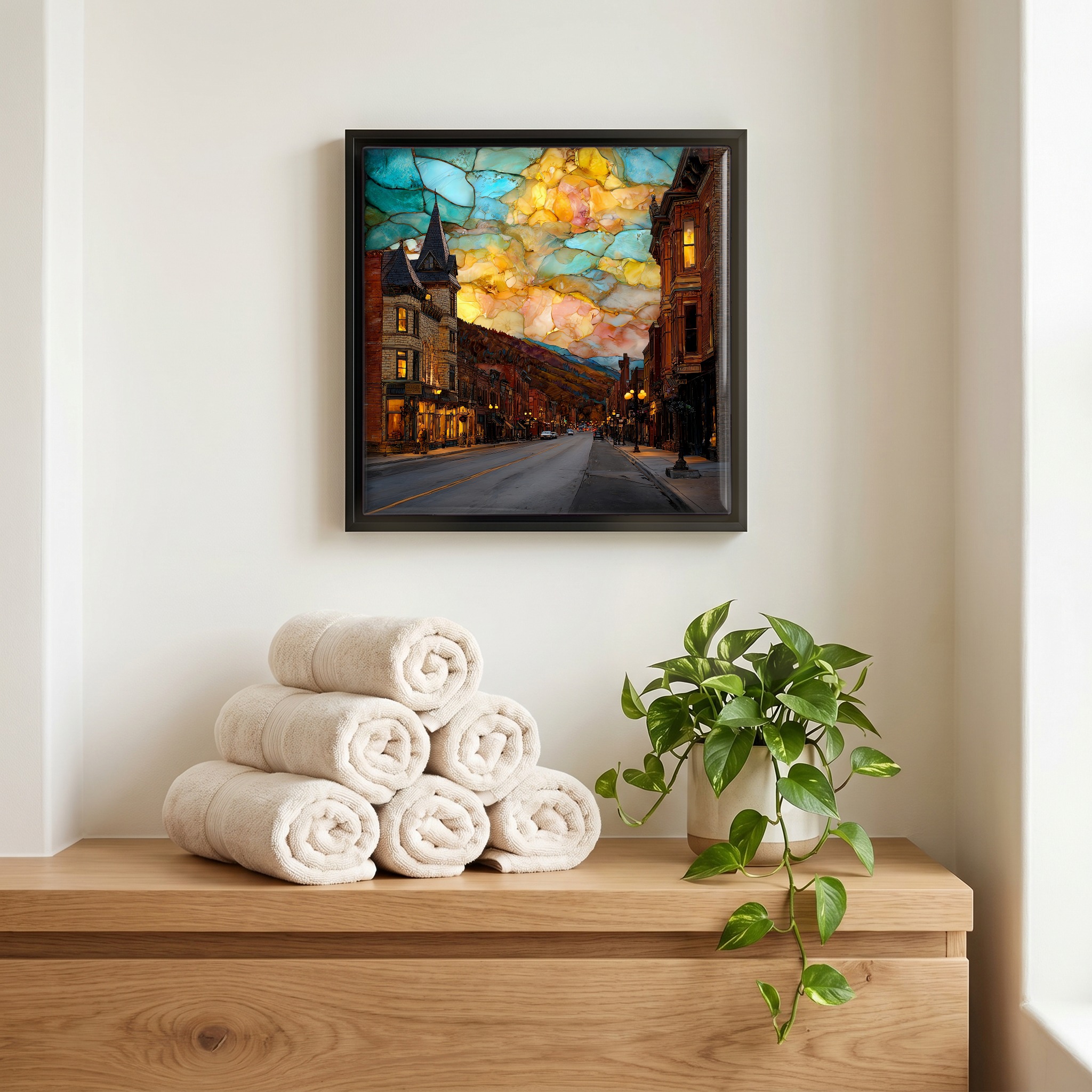
Above the linens, in a slim black surround.
On the nightstand, on a light oak stand.
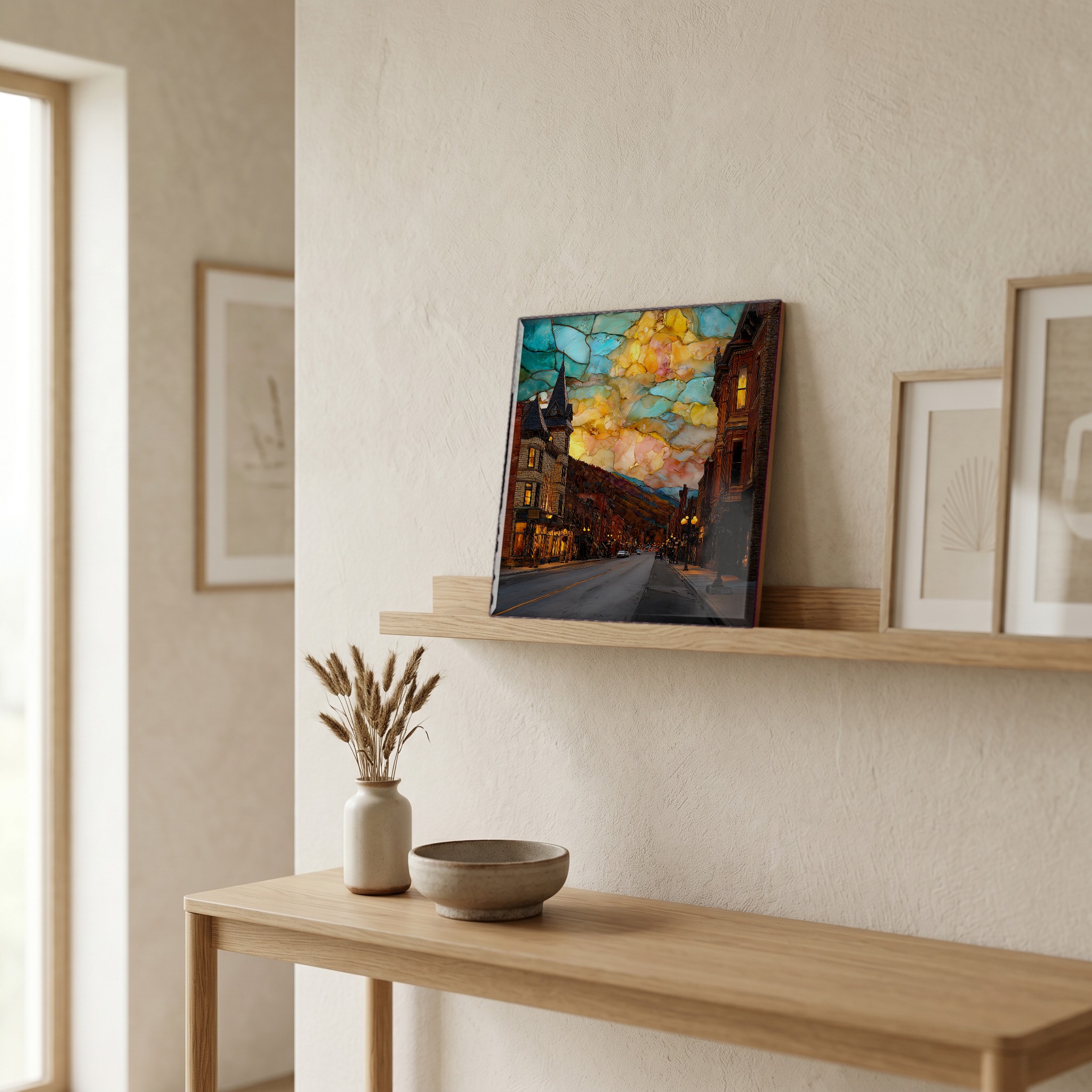
On a picture ledge, where the light comes in.
a note from the studio

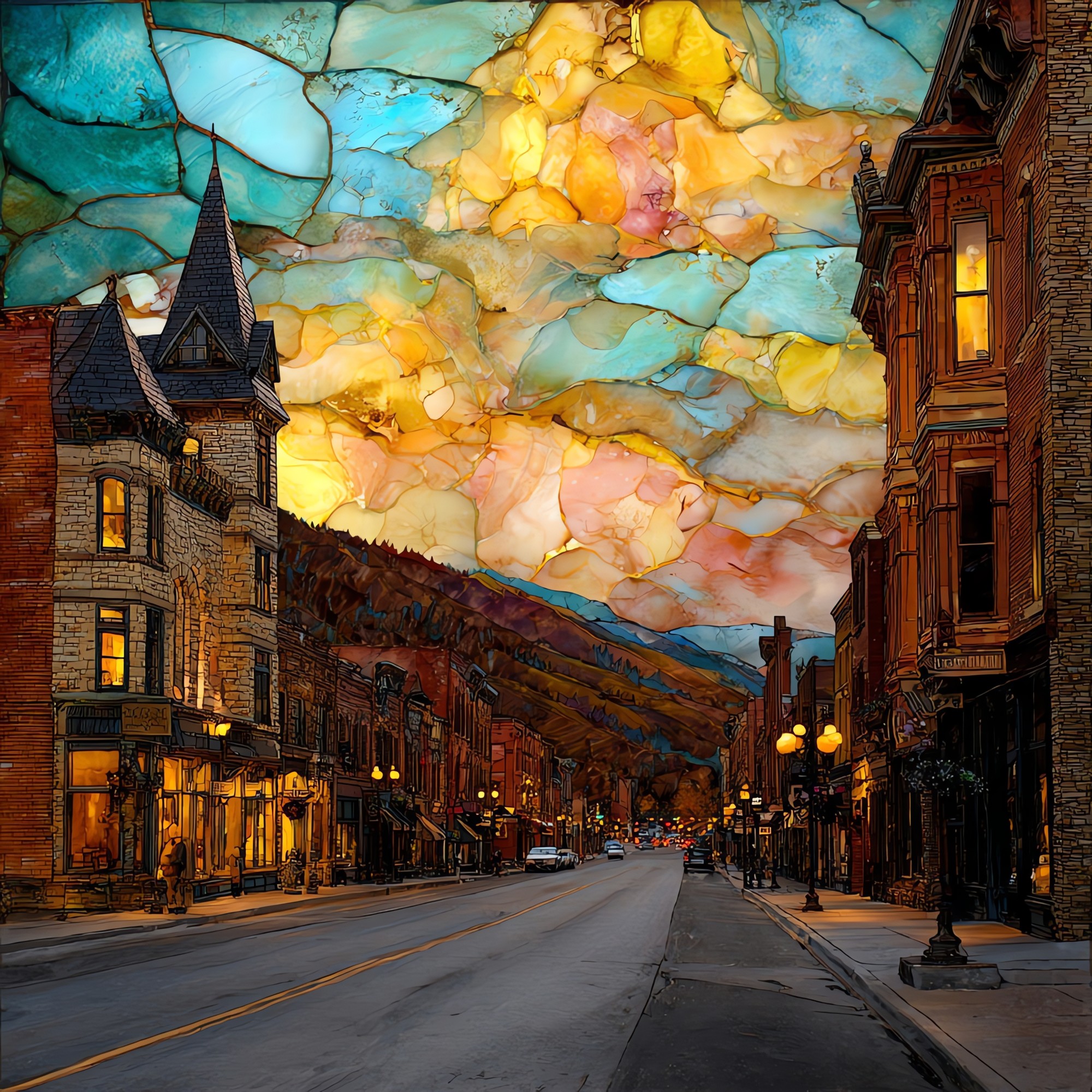
Main Avenue runs the length of downtown Durango, a town the Denver & Rio Grande Railway laid out in 1880 to reach the silver country at Silverton. The Victorian storefronts are mostly still there: the Strater Hotel since 1887, the General Palmer since 1898, and the coal-fired steam train still leaves the depot at the south end of the street most mornings. The San Juan Mountains start almost immediately past the rooflines. The town moves slowly, the way a place moves when it has already had its boom.
from the studio
shown in a slim black floating frame · 6 × 6 in
— bring it home

Durango Main Avenue San Juans Ceramic Art Tile, on ceramic.

Each tile is finished by hand in our Knoxville studio. Artwork is slowly infused into the ceramic surface under high heat and pressure, and rests beneath a thin glossy finish. The colour lives in the surface, not on top of it.

What kind of piece?
One tile — square or rectangle.
How big?
the popular one — counter, shelf, nightstand
6 × 6 in · 15 cm · 1.6 lb
Surface finish
A clear glossy finish — the artwork reads as if under resin. Ideal for show-pieces and framed wall art.
How it sits
A hidden cleat — sits ¼″ proud of the wall.
$58
Hand-finished and shipped from our studio at the foot of the Smokies. On your wall in about ten days.
size
6 × 6 in
15 cm
weighs
1.6 lb
solid in the hand
surface
ceramic, hand-finished
art rests beneath a thin glossy finish
from
Knoxville, TN
our family studio, at the foot of the Smokies
— start a Coaster Set

Pick any four 4-inch tiles — National Parks you've been to, a Smokies set, the four seasons of one place. $ for a set of , cork-backed, ready to live on the table.

comes gift-ready
comes gift-ready

Each tile ships in a kraft box, tied with cream ribbon, with a handwritten note from the studio if you'd like to add one.

or build a grouping
or build a grouping

Three or five different vistas, hung together — a chapter of places you've been, or want to go.

about Durango Main Avenue San Juans Ceramic Art Tile

The place, in three passes.

A little of what's known, in case you fall down the rabbit hole — or want to go see it yourself.
the place

Main Avenue is the historic spine of downtown Durango, a town at 6,512 feet in La Plata County, southwestern Colorado, where the San Juan Mountains meet the high mesa country of the Four Corners. The town was platted in 1880 by William Jackson Palmer's Denver & Rio Grande Railway to serve the silver and gold mines around Silverton, forty-five miles north along the Animas River. Main Avenue runs north-south for about twelve blocks as the original commercial street, with the Animas River one block to the east. North out of town the avenue joins U.S. 550, known locally as the Million Dollar Highway, which climbs over Red Mountain Pass into the high San Juans.

the stone

The Main Avenue Historic District was listed on the National Register of Historic Places in 1980 and covers about twelve blocks of late-nineteenth-century commercial architecture, most of it built in the decade after the 1880 railroad arrival. The Strater Hotel at 699 Main Avenue has stood since 1887, four stories of red brick and white sandstone trim built by Henry Strater. The General Palmer Hotel followed at 567 Main in 1898, in the Queen Anne style, named for William Jackson Palmer of the Denver & Rio Grande. Most of the storefronts between them are two- and three-story Italianate brick from the same decade. The cornices, hood moulds and cast-iron pilasters along the street are largely original.

the visit

The Durango & Silverton Narrow Gauge Railroad still runs coal-fired steam from the depot at the south end of Main Avenue most days from early May through late October, with a winter Polar Express service in December. The 45.2-mile route to Silverton follows the Animas River up into the San Juan National Forest and climbs about 2,800 feet. Summer tickets sell out weeks ahead; the Strater and General Palmer both face the avenue, a block from the platform. Off-season the street is quieter, with snow on the cornices and the high San Juans pale behind, and Fort Lewis College on the mesa above lit at the edges of the dusk.

where
United States · Durango, La Plata County, Colorado
elevation
1,985 m · 6,512 ft
position
37.2727° N · 107.8801° W
the neighborhood

What's nearby.

A handful of named places within an hour's walk or short drive. Some we've already painted; some we will.
1 km S
Durango & Silverton Depot
narrow-gauge railroad depot
at the lake
Animas River
river· on a tile
2 km SE
Fort Lewis College
college on the mesa
4 km N
Animas Mountain
mesa
13 km N
Trimble Hot Springs
hot springs
40 km N
Purgatory Resort
ski resort
72 km N
Silverton
mountain town
56 km W
Mesa Verde National Park
national park
N
Durango Main Avenue San Juans Ceramic Art Tile
Durango & Silverton Depot
Animas River
Fort Lewis College
Animas Mountain
Trimble Hot Springs
Purgatory Resort
Silverton
common questions

What people ask.

A few questions we get about Durango Main Avenue San Juans Ceramic Art Tile — and about bringing the piece home.
about the place

Main Avenue runs north-south through downtown Durango, a town in La Plata County in southwestern Colorado, at 6,512 feet at the south edge of the San Juan Mountains. The historic district covers about twelve blocks, anchored by the 1887 Strater Hotel and the Durango & Silverton depot.

The town was platted in 1880 by William Jackson Palmer's Denver & Rio Grande Railway to serve the silver mines at Silverton, forty-five miles north. Main Avenue was laid out as the original commercial street, and most of the buildings standing today date to the decade after the railroad arrived.

The Main Avenue Historic District was listed on the National Register of Historic Places in 1980. It covers roughly twelve blocks of late-Victorian commercial architecture in downtown Durango, including the 1887 Strater Hotel, the 1898 General Palmer Hotel, and the Italianate brick storefronts between them.

The Durango & Silverton Narrow Gauge Railroad runs coal-fired steam from the south end of Main Avenue most days from early May through late October, plus a Polar Express service in December. The 45.2-mile trip to Silverton follows the Animas River into the San Juan National Forest.

Durango sits at 6,512 feet, about 1,985 metres, above sea level. The San Juan Mountains rise immediately north of the town, and the Durango & Silverton railway climbs about 2,800 feet over its 45.2-mile route to the silver-mining town of Silverton at 9,318 feet.

South, Main Avenue ends at the Durango & Silverton depot. North, it leaves town as U.S. 550, the Million Dollar Highway, which climbs over Red Mountain Pass and continues to Ouray. The Animas River runs parallel a block east through downtown.

The Strater Hotel opened in 1887 and has operated continuously since. The four-story red-brick building at 699 Main Avenue was built by Henry Strater and is one of the oldest hotels still in business in Colorado. Many of its rooms retain their original Victorian walnut furniture.

about the piece in your home

It has been a meaningful gift for graduates of Fort Lewis College, riders of the Durango & Silverton, and anyone who walks Main Avenue on visits home. A Coaster with a handwritten note from the studio carries well; the Small frames easily for a desk or bookshelf.

The piece sits in mountain-modern, Western-traditional, and warm-eclectic rooms, anywhere a Victorian palette of red brick, brass, and lamp amber feels at home. It pairs well against unpainted wood walls or against a deep green or rust accent wall.

Mountain-modern has shifted toward warmer palettes since 2024, with brass fixtures, brick accent walls, and reclaimed wood. The Durango Main Avenue tile sits inside that palette without leaning rustic, useful in a Telluride condo or a downtown Denver loft alike.

Above a standard 84-inch sofa, the Large works as a single anchor. For a fuller wall, a 4-tile Mural or a 9-tile Mural carries the scale better, especially in landscape orientation that reads the avenue as the architecture it is. Above a console table, a Medium or Large is the usual choice.

Yes, with the Dura Satin or Matte finish. Both are scratch-resistant and humidity-tolerant, suited to backsplashes, showers, and vanity walls. The Glossy finish is reserved for framed wall pieces in living spaces and is not intended for wet installation.

A soft microfibre cloth and water. The colour lives in the ceramic surface beneath the finish, so it does not lift or fade with normal cleaning. Avoid abrasive pads on the Glossy and avoid bleach or solvent cleaners on any finish.

Yes. Every WenderVista piece is original to our studio in Knoxville, Tennessee. We do not license imagery or reproduce other artists. Reid Wender curates the atlas and chooses each place that enters it, and the Durango Main Avenue piece is not available in this form from any other studio.

if this one stayed with you

A few you might also love.

Hand-picked by the eye that found Sorapis. Same air, same kind of quiet.