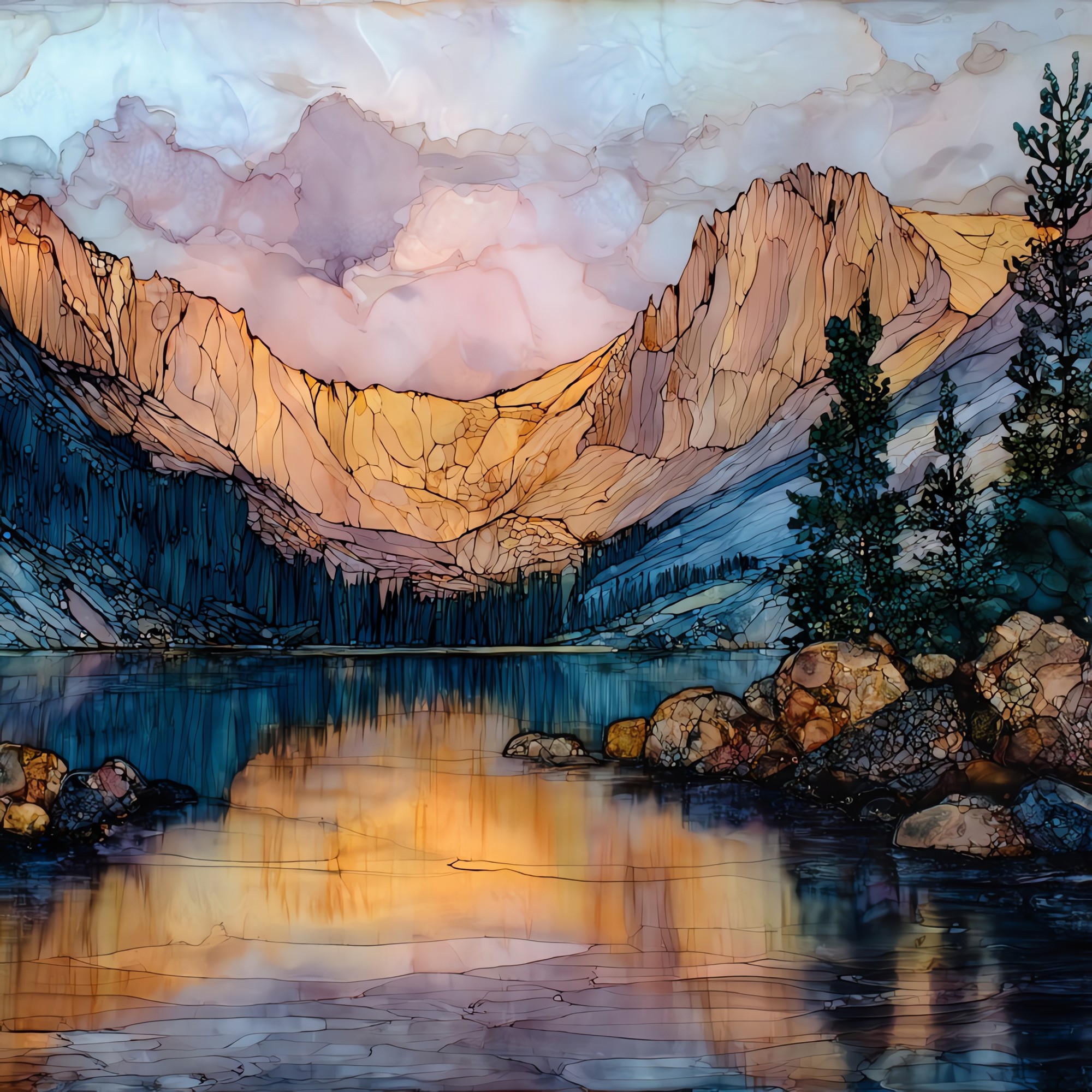
Dream Lake Rocky Mountain National Park Ceramic Art Tile
— — a blue the cold keeps for itself.
Not only on a wall.
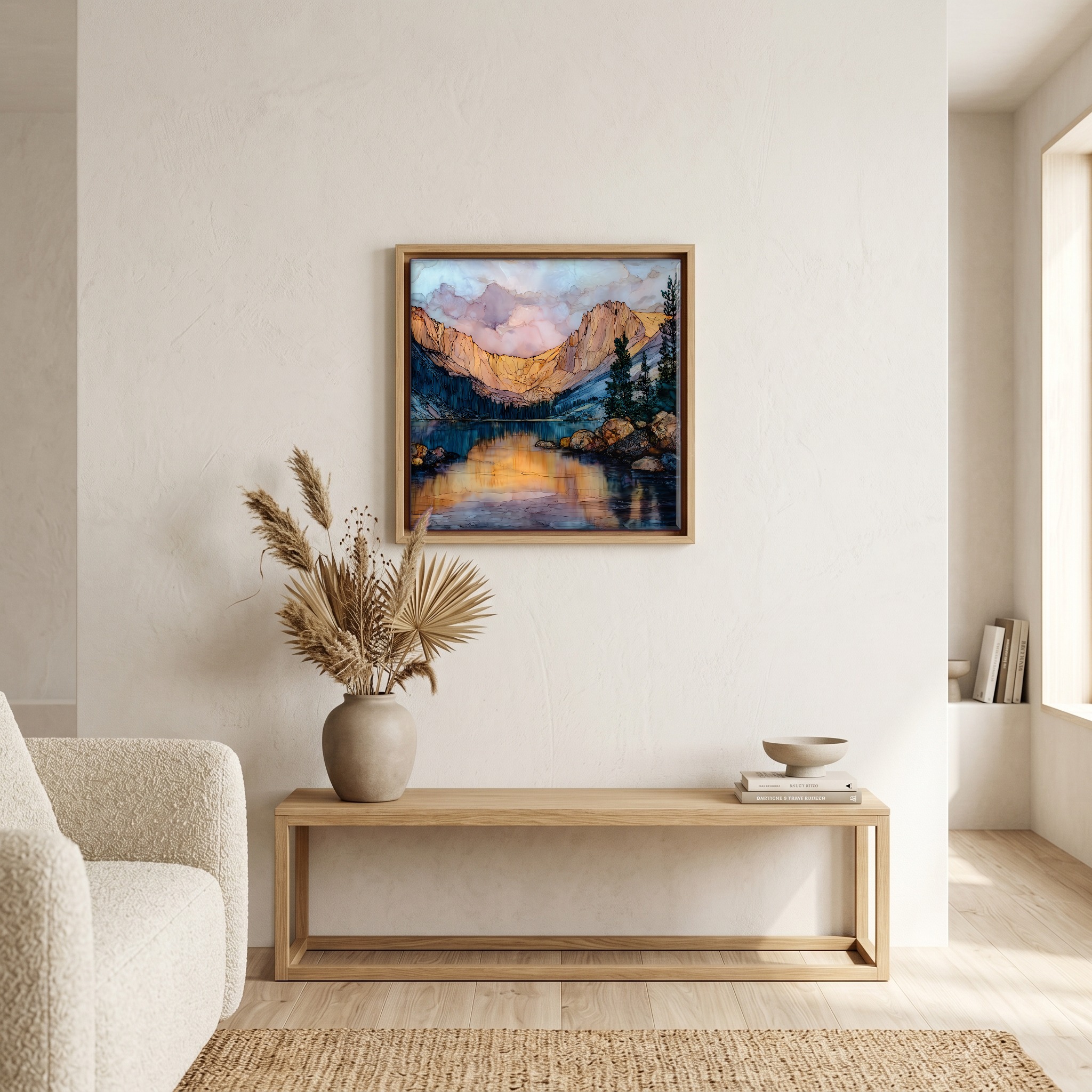
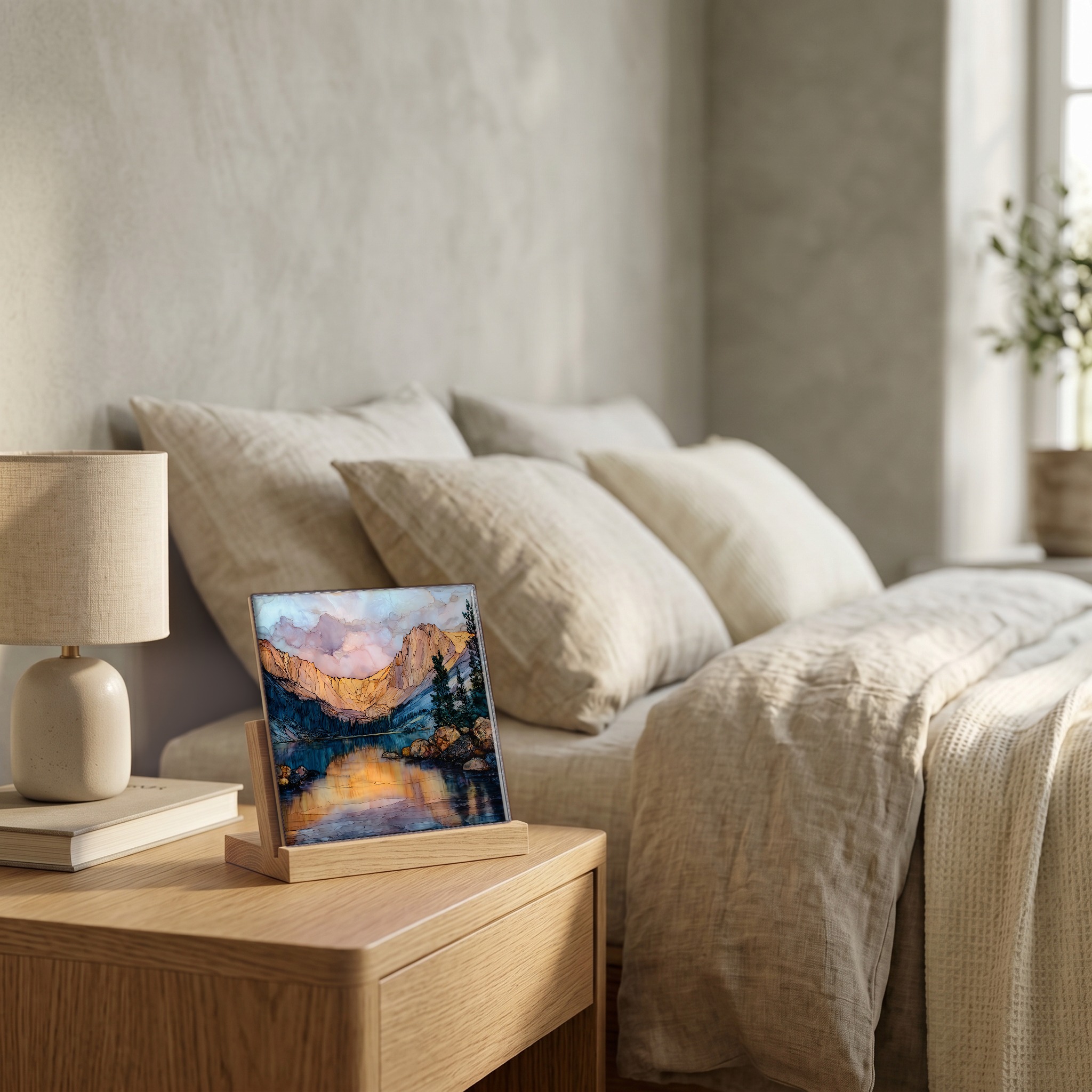
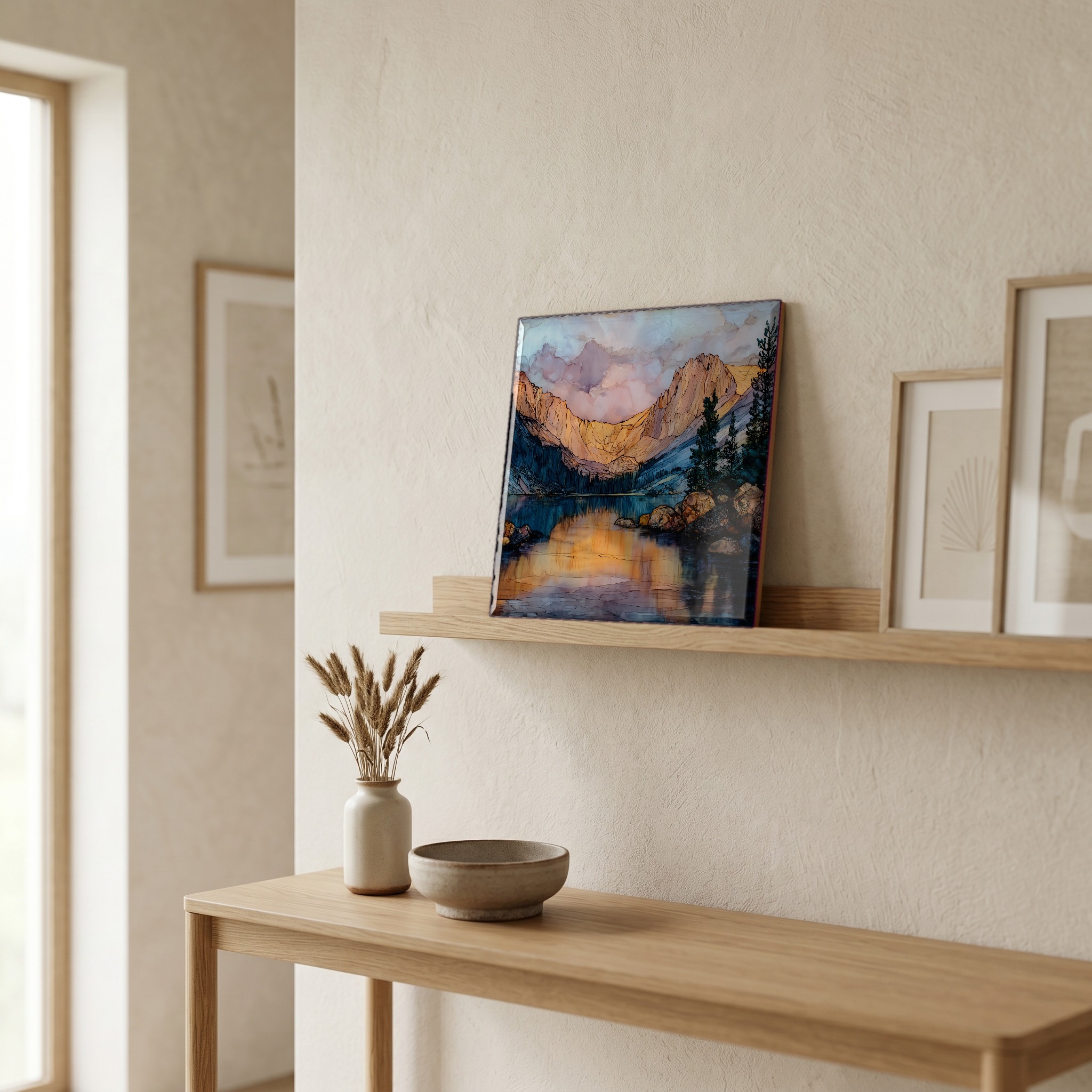
“A long thin lake at 9,905 feet, reached in a mile from Bear Lake. The trail climbs through subalpine spruce, past Nymph Lake and its lily pads, then opens onto the water with Hallett Peak standing straight up out of it. Most of the year the lake is famous for the reflection, but the season the artwork records is winter. From late October the surface closes over, and by January the ice runs two feet thick and goes cobalt where the pressure cracks. The wind off Flattop runs all afternoon. The blue belongs to the cold.
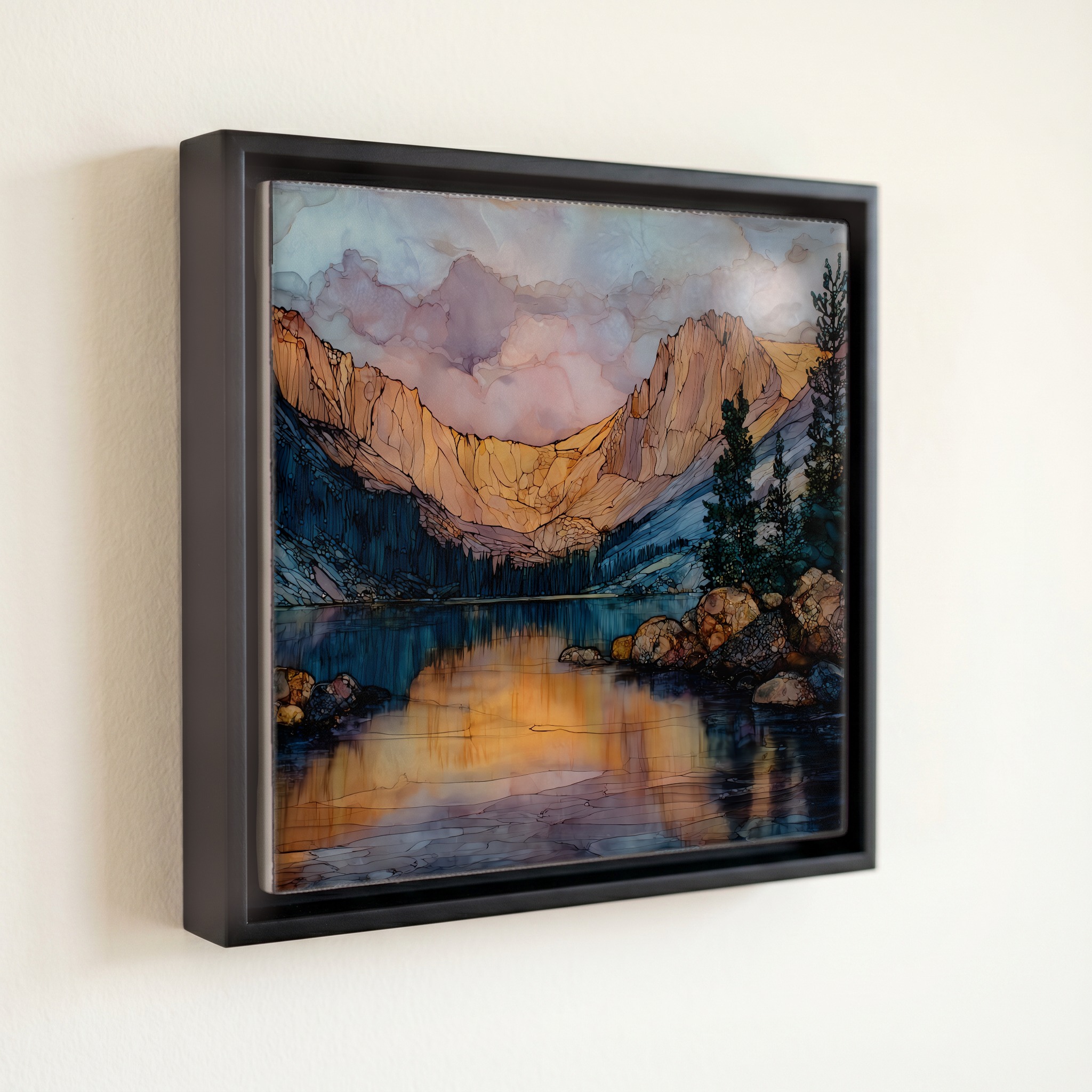
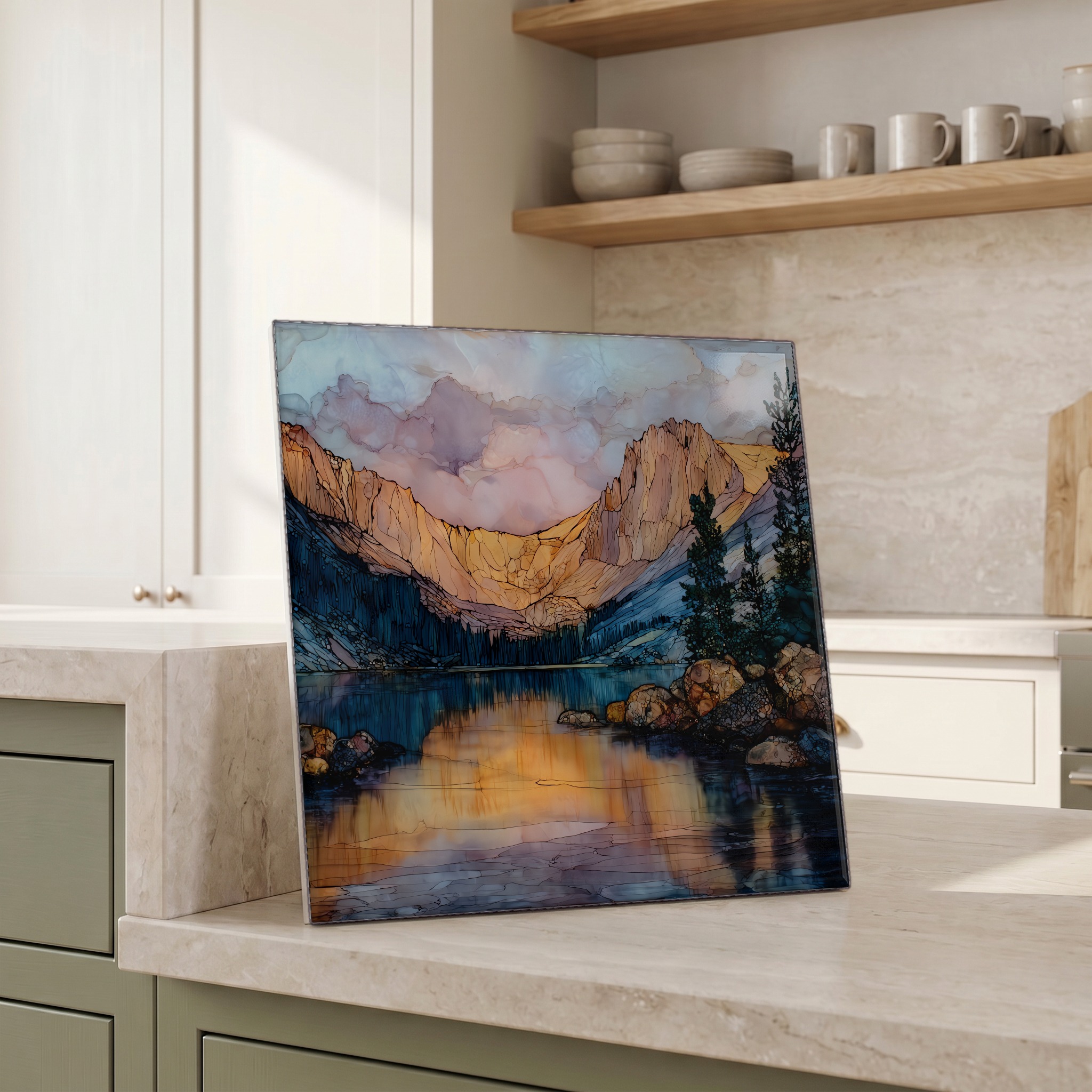
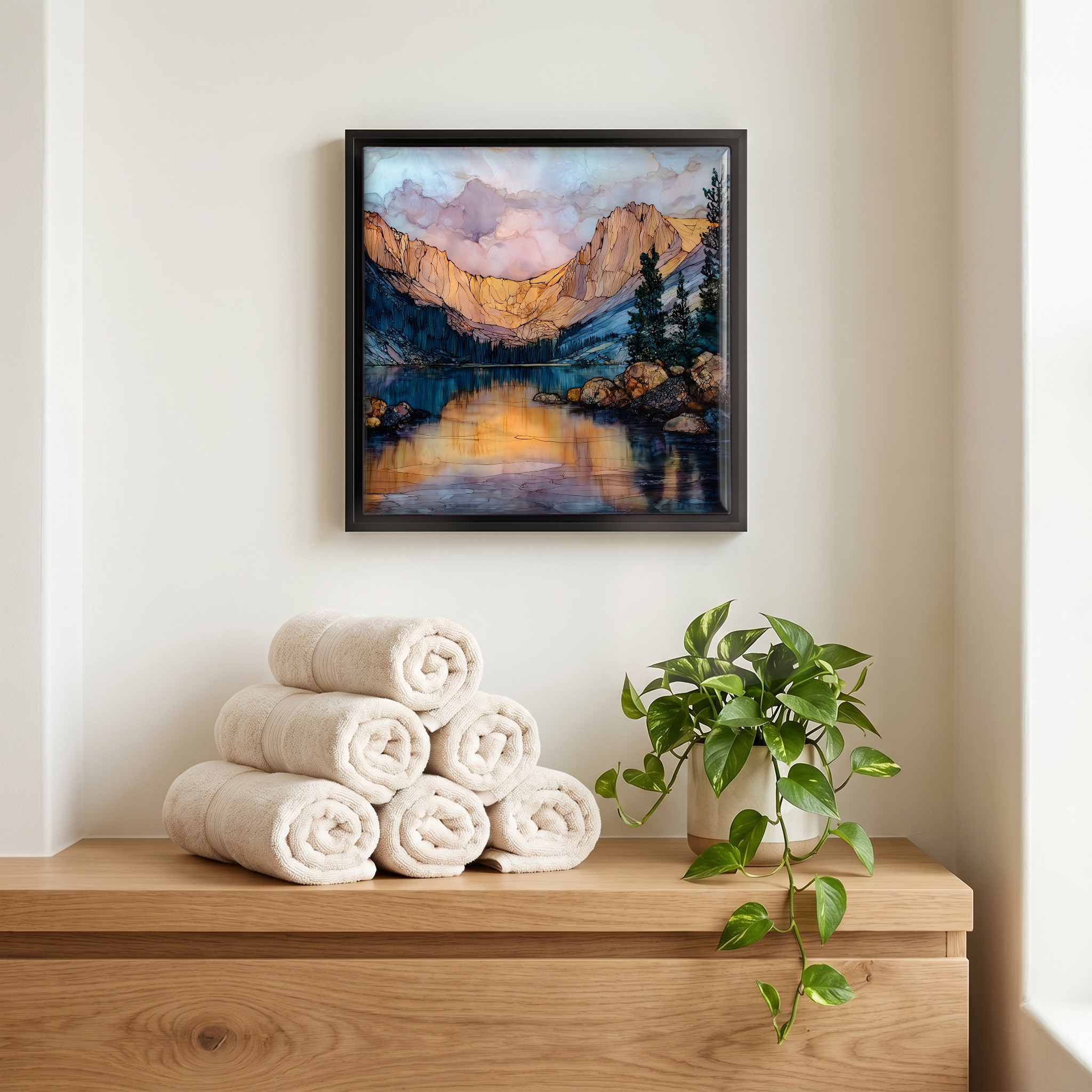
Dream Lake Rocky Mountain National Park Ceramic Art Tile, on ceramic.
Each tile is finished by hand in our Knoxville studio. Artwork is slowly infused into the ceramic surface under high heat and pressure, and rests beneath a thin glossy finish. The colour lives in the surface, not on top of it.
Pick any four 4-inch tiles — National Parks you've been to, a Smokies set, the four seasons of one place. $ for a set of , cork-backed, ready to live on the table.
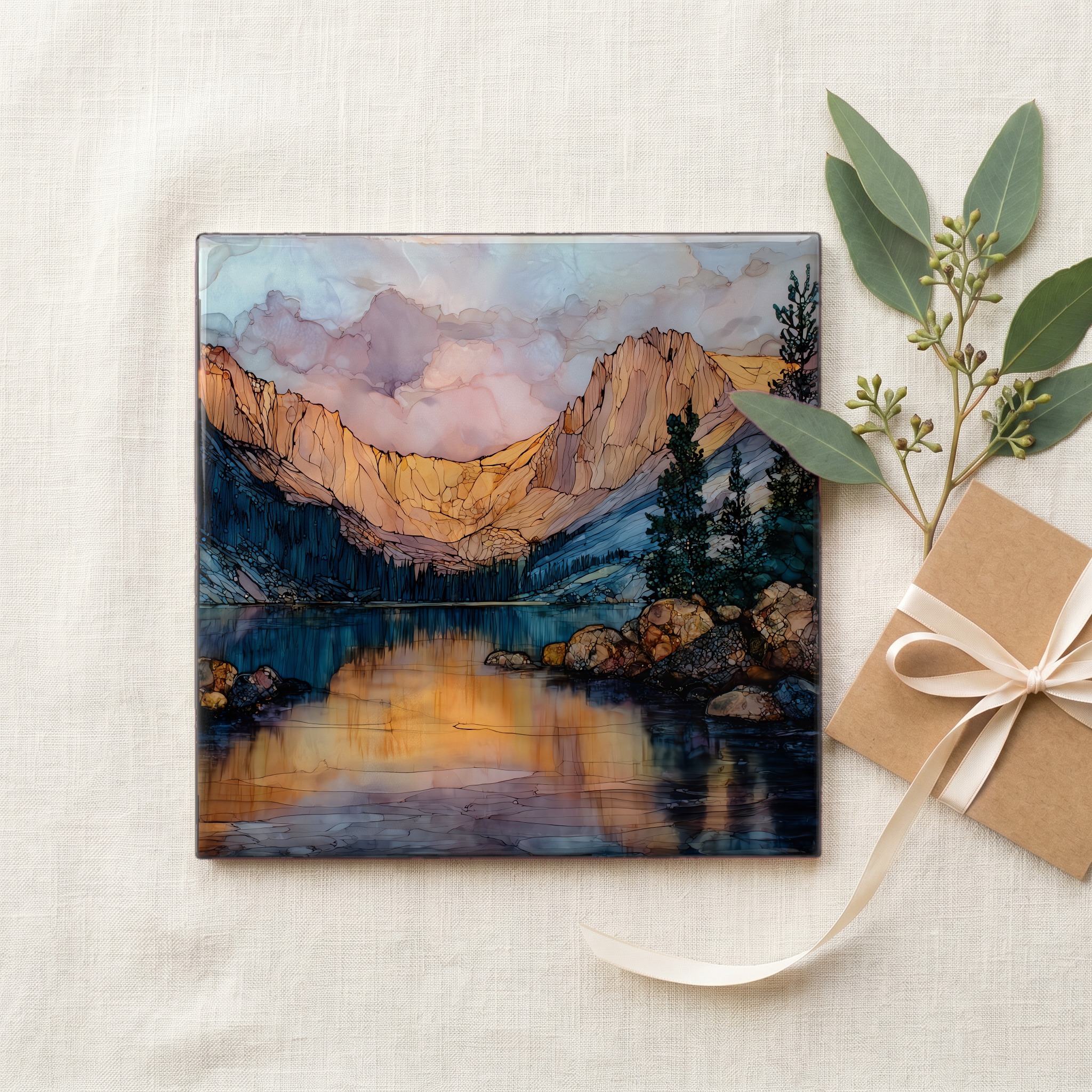
Each tile ships in a kraft box, tied with cream ribbon, with a handwritten note from the studio if you'd like to add one.

Three or five different vistas, hung together — a chapter of places you've been, or want to go.
The place, in three passes.
Dream Lake sits at 9,905 feet (3,019 m) on the east side of the Continental Divide, in the Bear Lake basin of Rocky Mountain National Park. The water is reached by a 1.1-mile trail that climbs 450 feet from the Bear Lake Trailhead, nine miles up Bear Lake Road from the U.S. 36 junction near Estes Park, Colorado. The same trail strings Nymph Lake below it and Emerald Lake above, all three under the granite shoulders of Hallett Peak at 12,713 feet and Flattop Mountain at 12,324 feet. The basin sits in the Front Range subrange of the Rockies and is part of the park's most heavily walked corridor.
The basin holds a small alpine lake fed by snowmelt off Tyndall Glacier and the Hallett shoulder above. From late June into September the surface reads pale jade, the colour of high glacial water scattered by rock flour the way Lake Pukaki and Lago di Sorapis are scattered. In late October the lake closes over. By January the ice runs about two feet thick, and pressure cracks scatter blue from below the way a sapphire does. Photographers come up from Estes Park in the dark to shoot the cobalt before the sun softens it. The thaw begins in late April and open water returns by Memorial Day in most years.
The Bear Lake basin keeps two seasons: a long winter and a short, busy summer. Snow holds on the trail from November through May; microspikes are the standard footwear above Nymph Lake from December into April, and snowshoes are needed after fresh fall. June brings the thaw and a brief alpine bloom under Hallett Peak before the July monsoon afternoons arrive. The aspen below the basin turn through late September and into early October, with the colour holding around Bear Lake itself for about two weeks. The wind off Flattop Mountain is near-daily in every season; most mornings the lake is glass for an hour after sunrise, and gone by mid-morning.