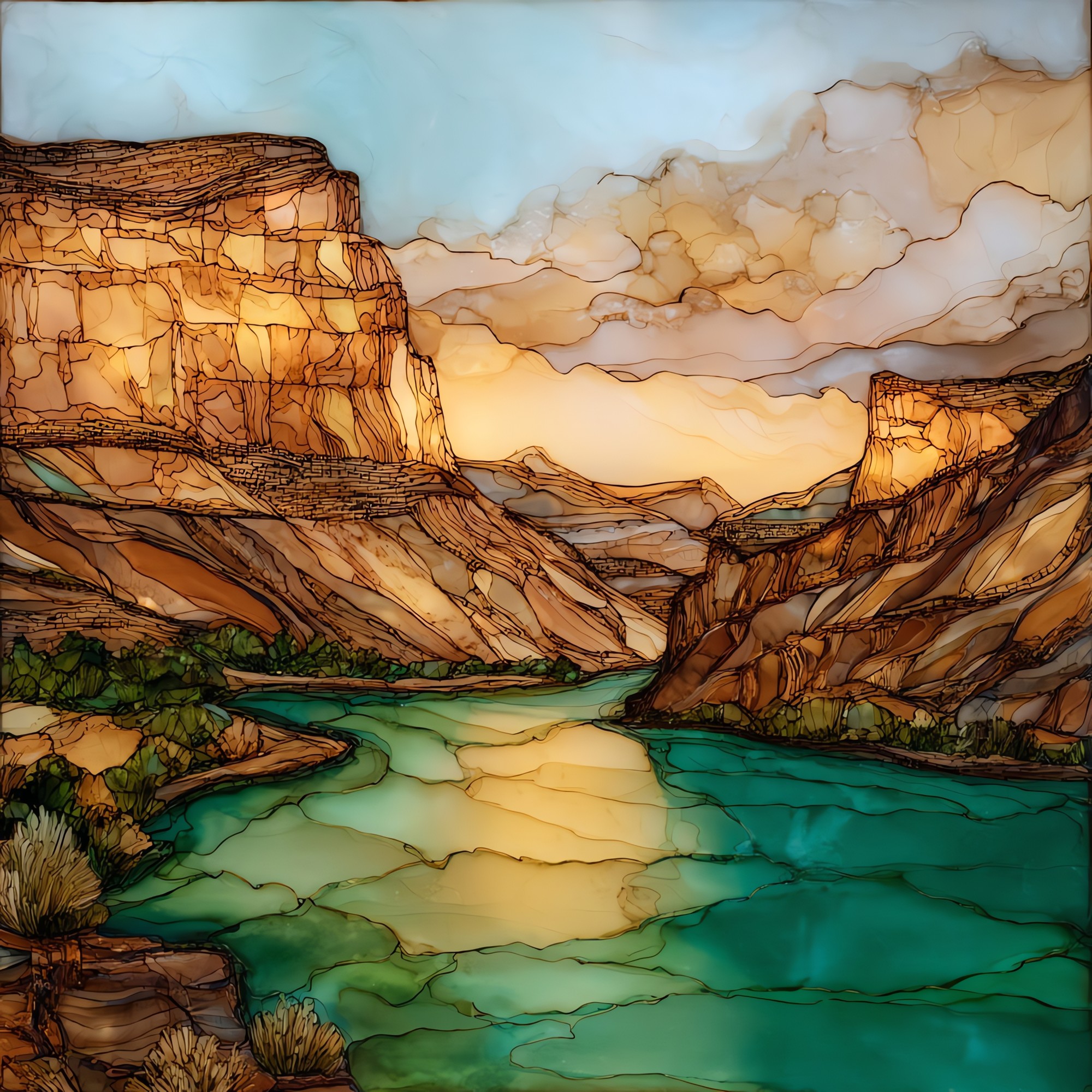
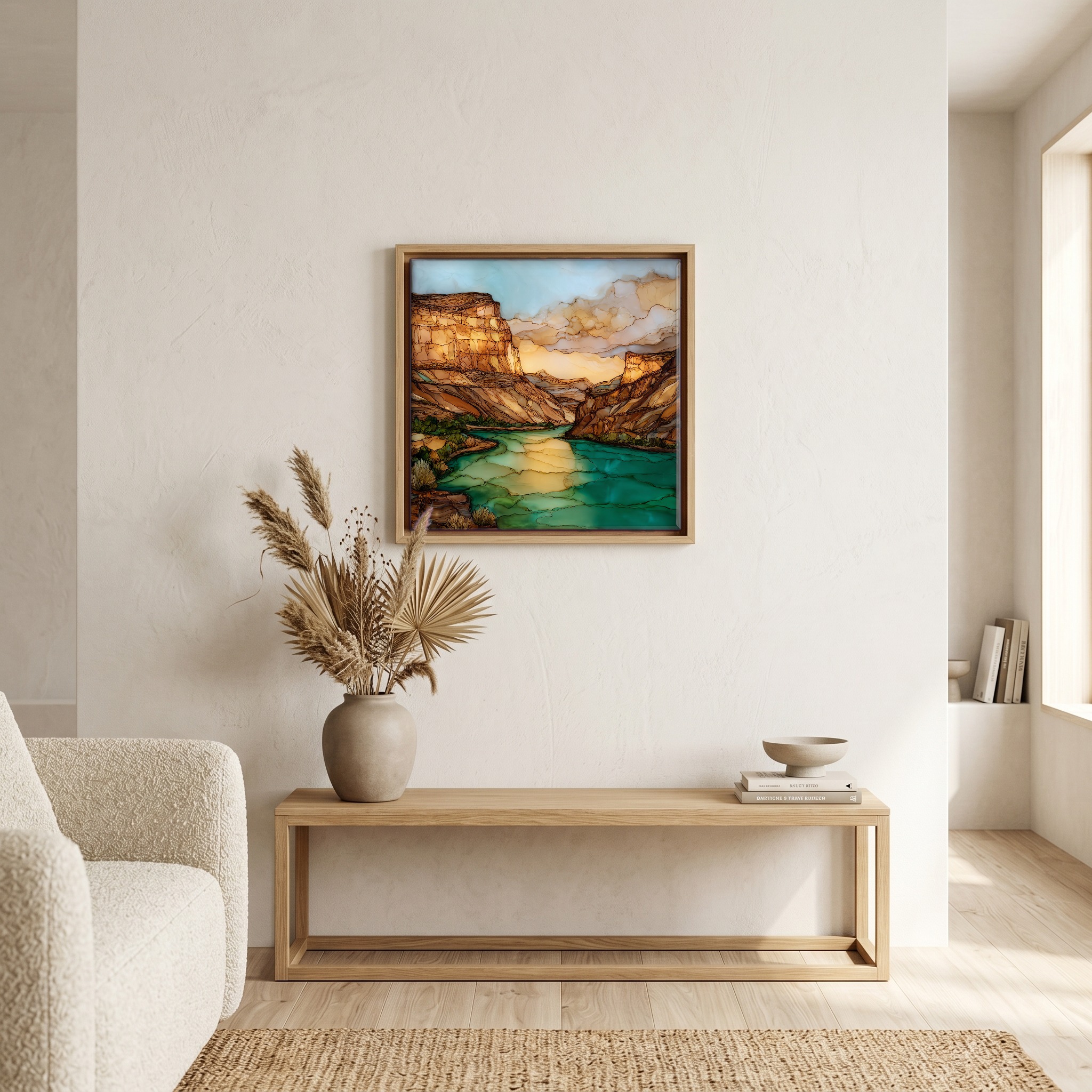
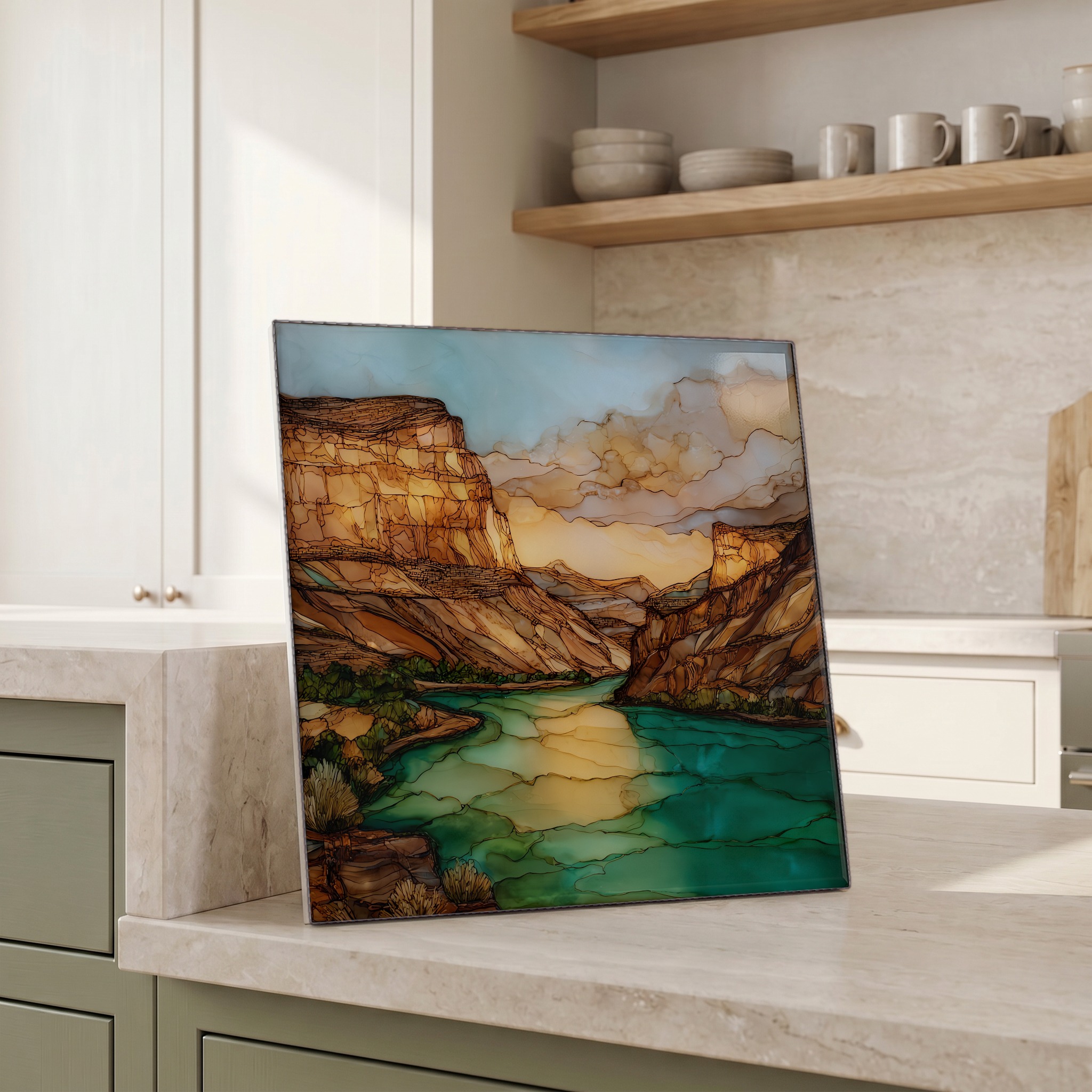
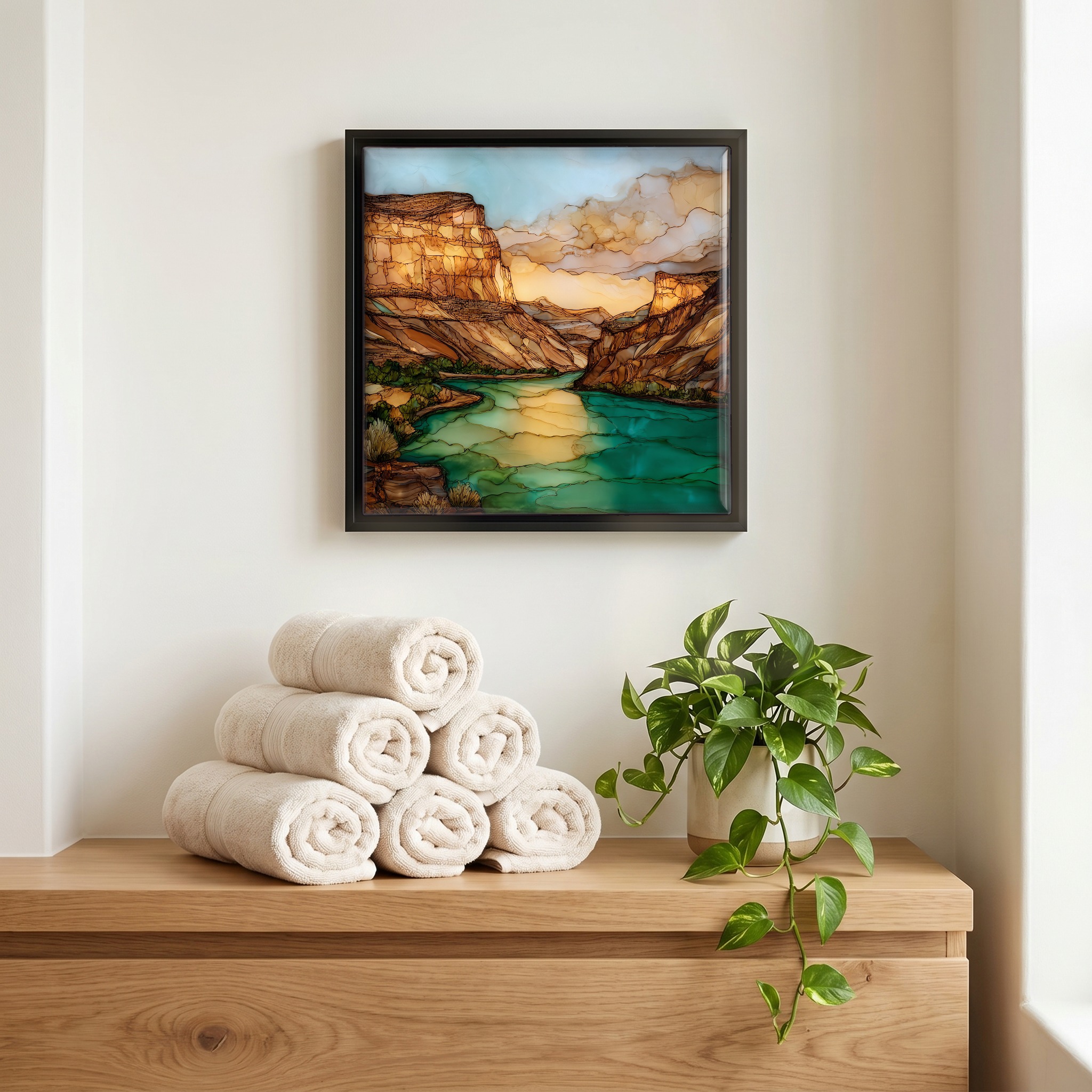
Echo Park confluence Ceramic Art Tile
— — two rivers and the rock between them.
Not only on a wall.

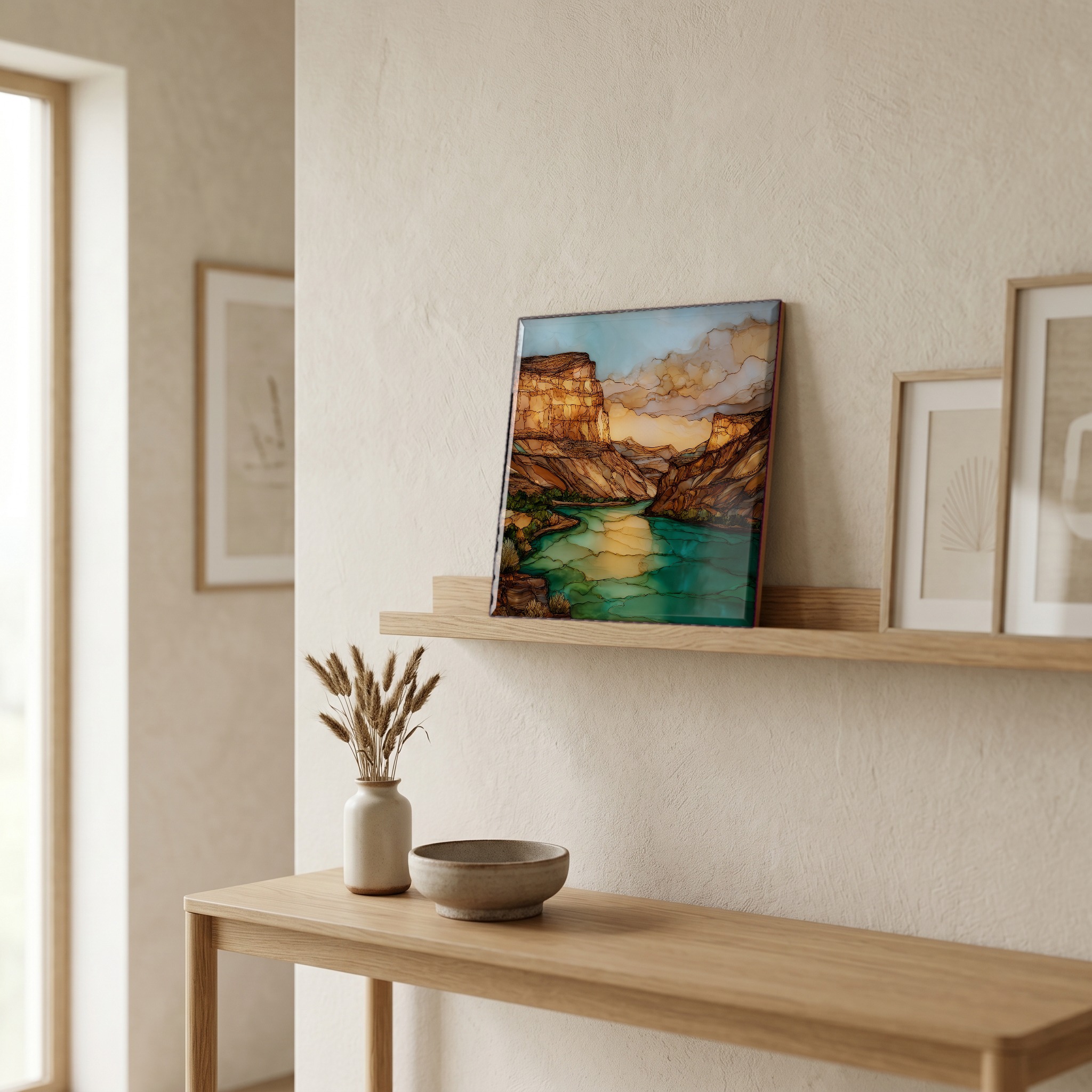
“The confluence sits at the bottom of a thirteen-mile dirt road that turns to glue when it rains. Steamboat Rock rises about seven hundred feet above the meeting of the Yampa and the Green, sandstone the colour of dried tea. The Yampa is one of the last largely free-flowing rivers in the Colorado system; the Green carries water that has already passed through Flaming Gorge. The campground holds nine sites at the base of the rock. People who reach it tend to sit very still.
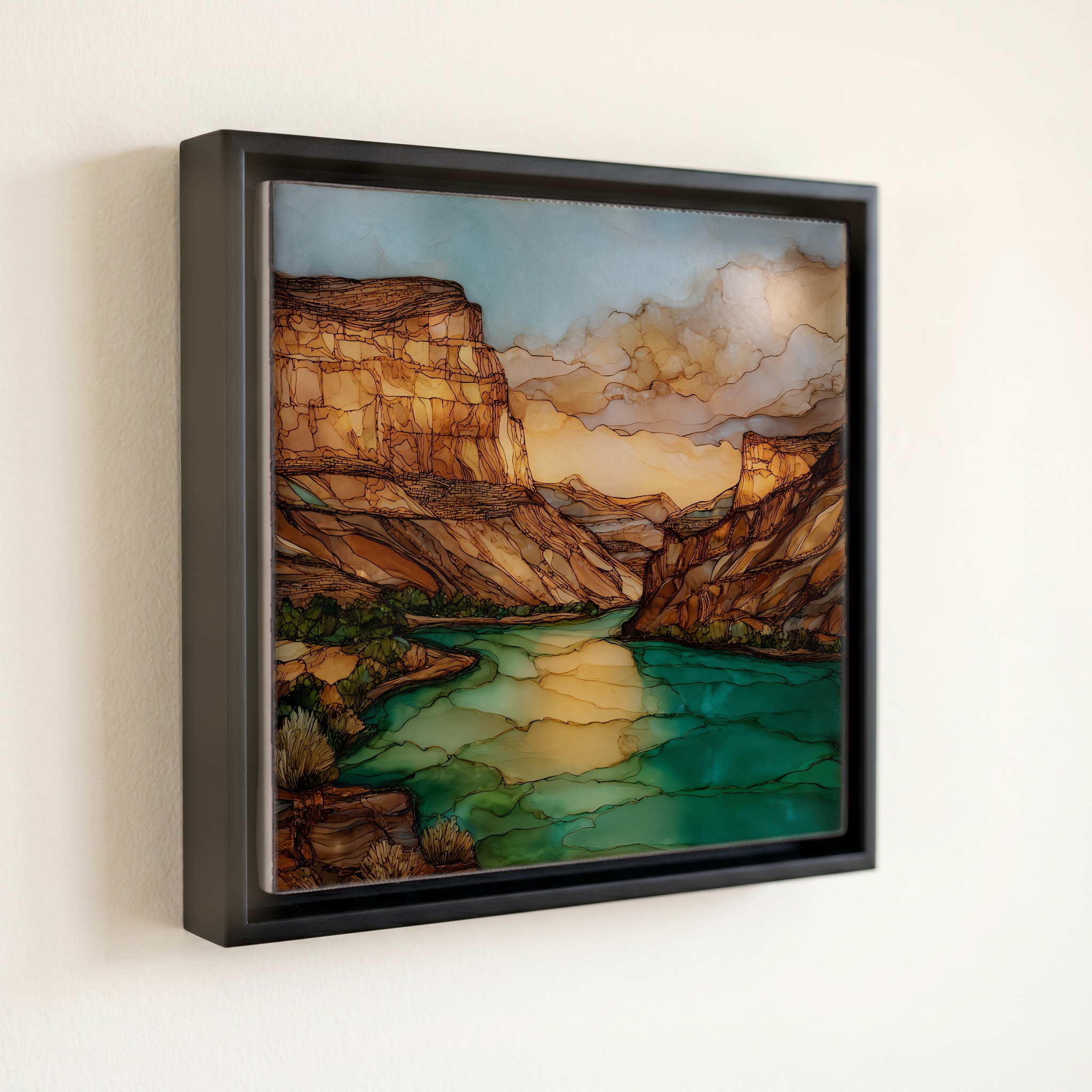
Echo Park confluence Ceramic Art Tile, on ceramic.
Each tile is finished by hand in our Knoxville studio. Artwork is slowly infused into the ceramic surface under high heat and pressure, and rests beneath a thin glossy finish. The colour lives in the surface, not on top of it.
Pick any four 4-inch tiles — National Parks you've been to, a Smokies set, the four seasons of one place. $ for a set of , cork-backed, ready to live on the table.
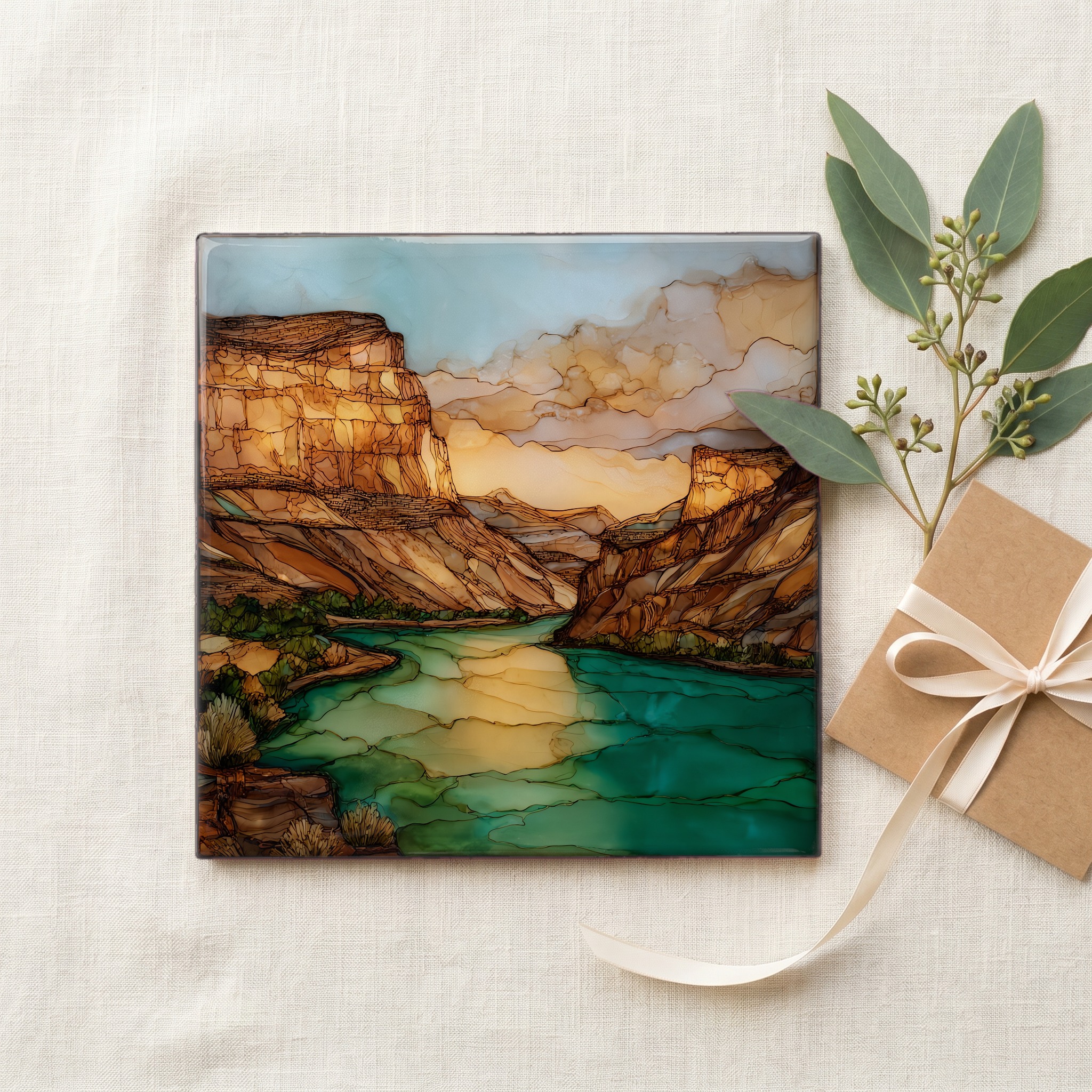
Each tile ships in a kraft box, tied with cream ribbon, with a handwritten note from the studio if you'd like to add one.
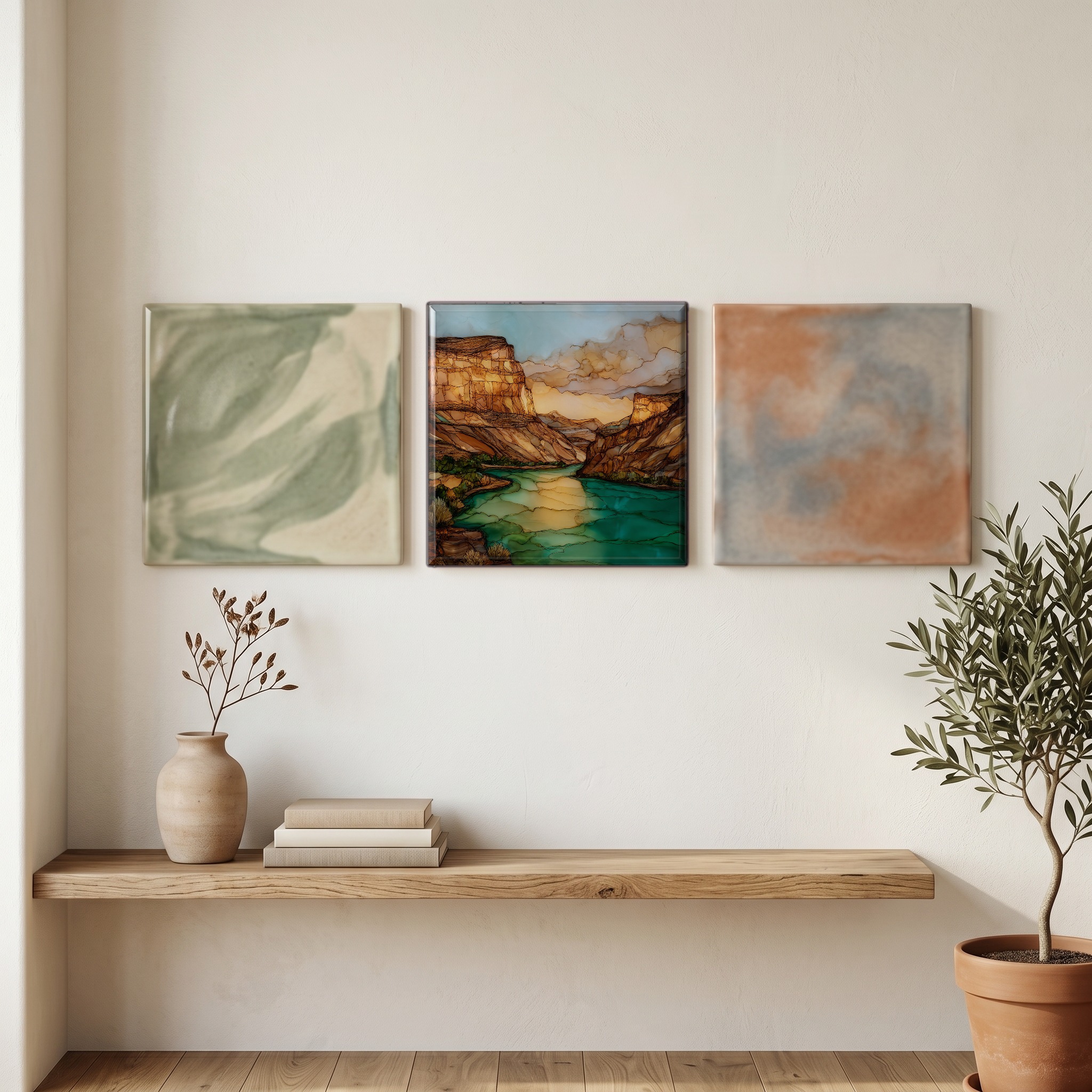
Three or five different vistas, hung together — a chapter of places you've been, or want to go.
The place, in three passes.
Echo Park lies at the confluence of the Yampa and Green rivers inside Dinosaur National Monument. The monument straddles the Colorado-Utah border across roughly 210,000 acres of sandstone and sage; Echo Park itself sits in Moffat County, Colorado, around 5,200 feet above sea level. Reaching it requires a thirteen-mile unimproved road branching off Harpers Corner Road, often closed after rain when the bentonite clay turns impassable. A first-come campground holds nine sites at the base of Steamboat Rock. The monument headquarters in the town of Dinosaur, Colorado is about thirty-five miles to the east; the nearest services town, Maybell, is roughly fifty miles south.
Steamboat Rock is the monolith. It rises about seven hundred feet above the confluence in a single block of Weber Sandstone, formed from desert dune fields laid down roughly 280 million years ago. The rock turns from cream to rust as the sun moves across it, and the canyon walls send sound back: the name Echo Park comes from voices that bounce between the cliff and the rivers. Fremont culture petroglyphs survive on its lower face, attributed to people who lived in this drainage between roughly 700 and 1300 CE. The geologist John Wesley Powell named the place during his 1869 expedition down the Green.
The Yampa is the rare thing here. Of the major tributaries in the Colorado River system, it is one of the last that still flows mostly undammed, carrying spring snowmelt off the Flat Tops in flood pulses that shape the riverbed every year. It meets the Green, which is heavily regulated upstream by Flaming Gorge Dam in Wyoming. The contrast is visible at the confluence: warmer red-brown Yampa water folding into the colder green-grey Green. In 1956, a proposed dam at Echo Park itself was defeated after a national campaign led by the Sierra Club's David Brower. The trade-off was the loss of Glen Canyon, a few hundred miles south.