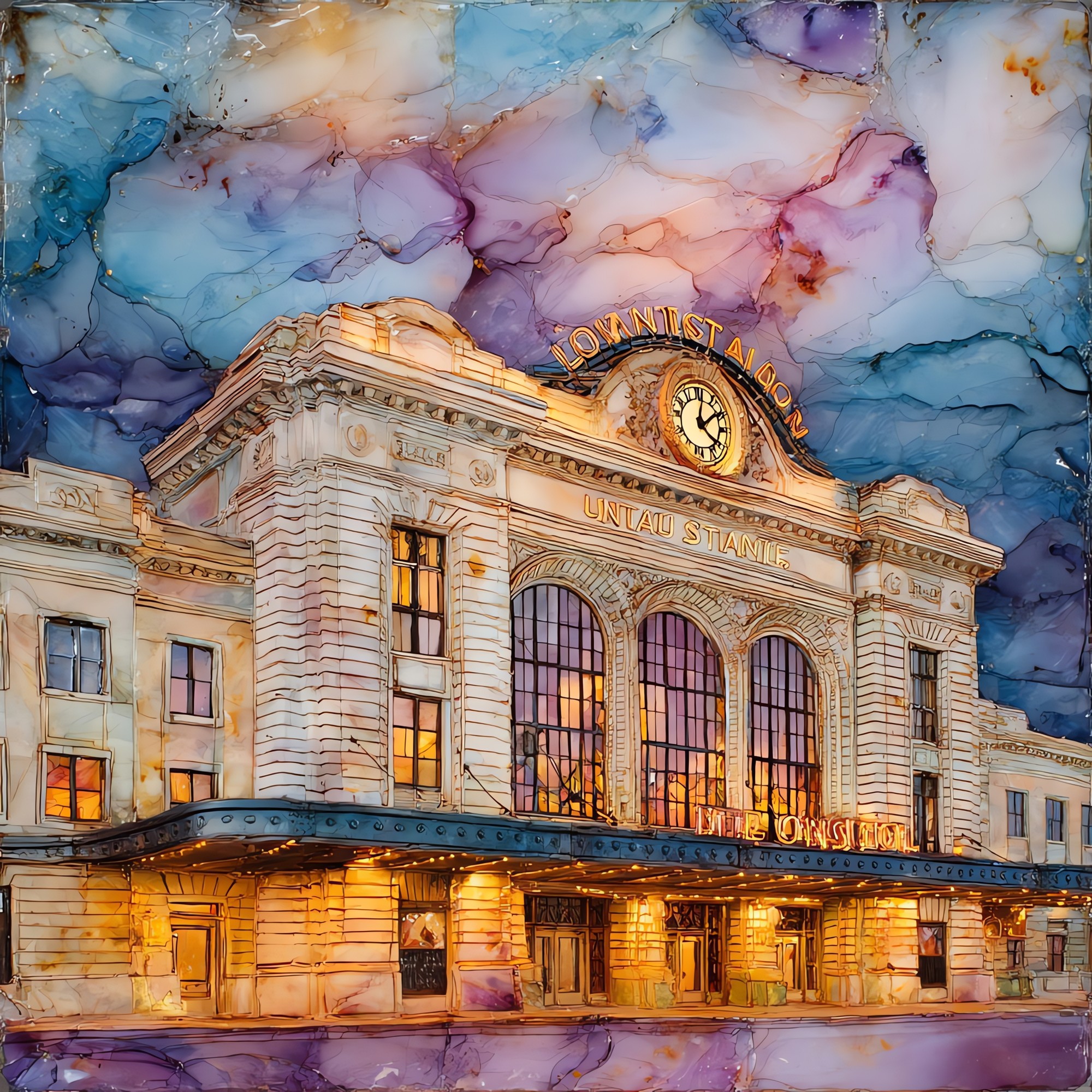
Denver Union Station Denver Metro Ceramic Art Tile
— the lobby Denver shares with its trains.
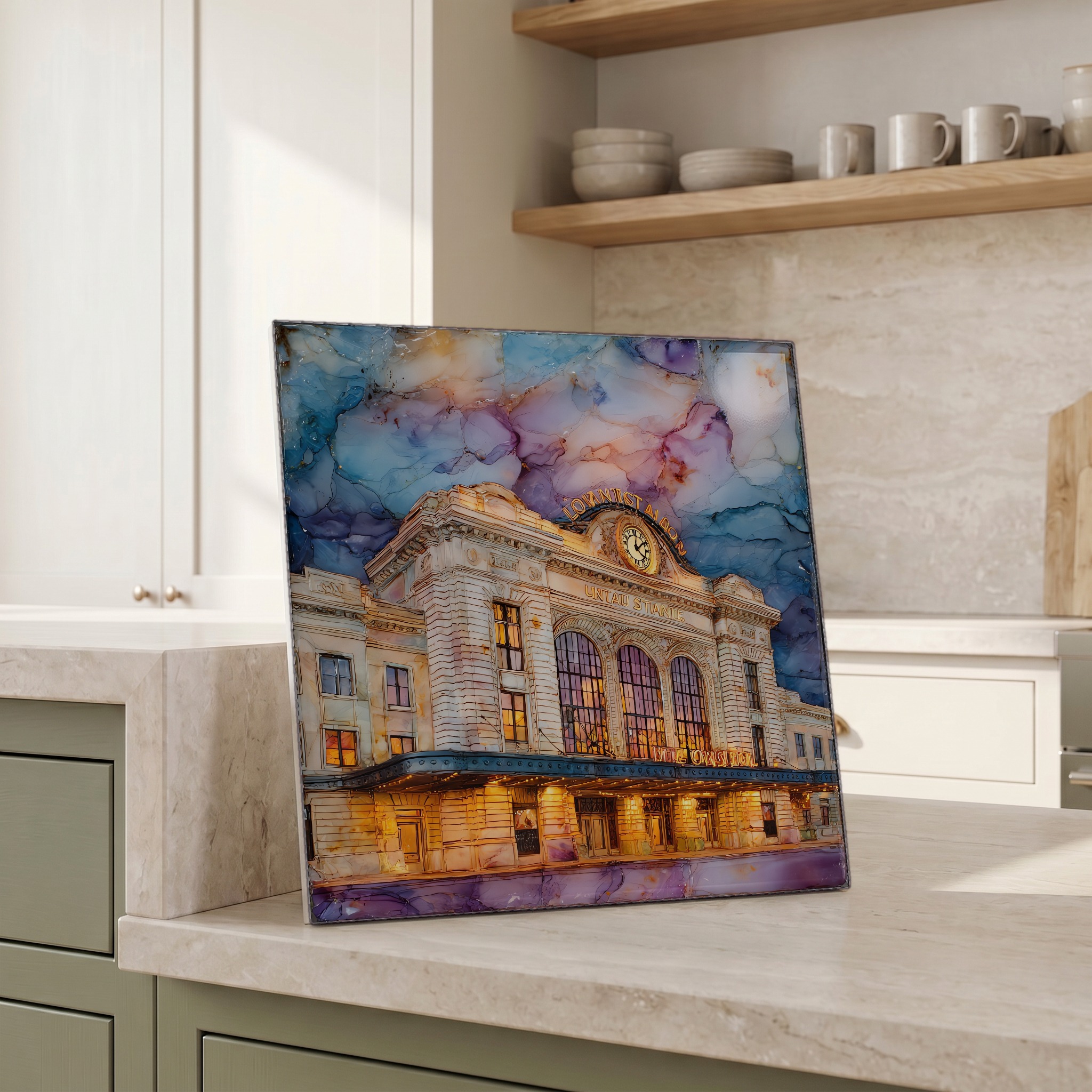
Not only on a wall.
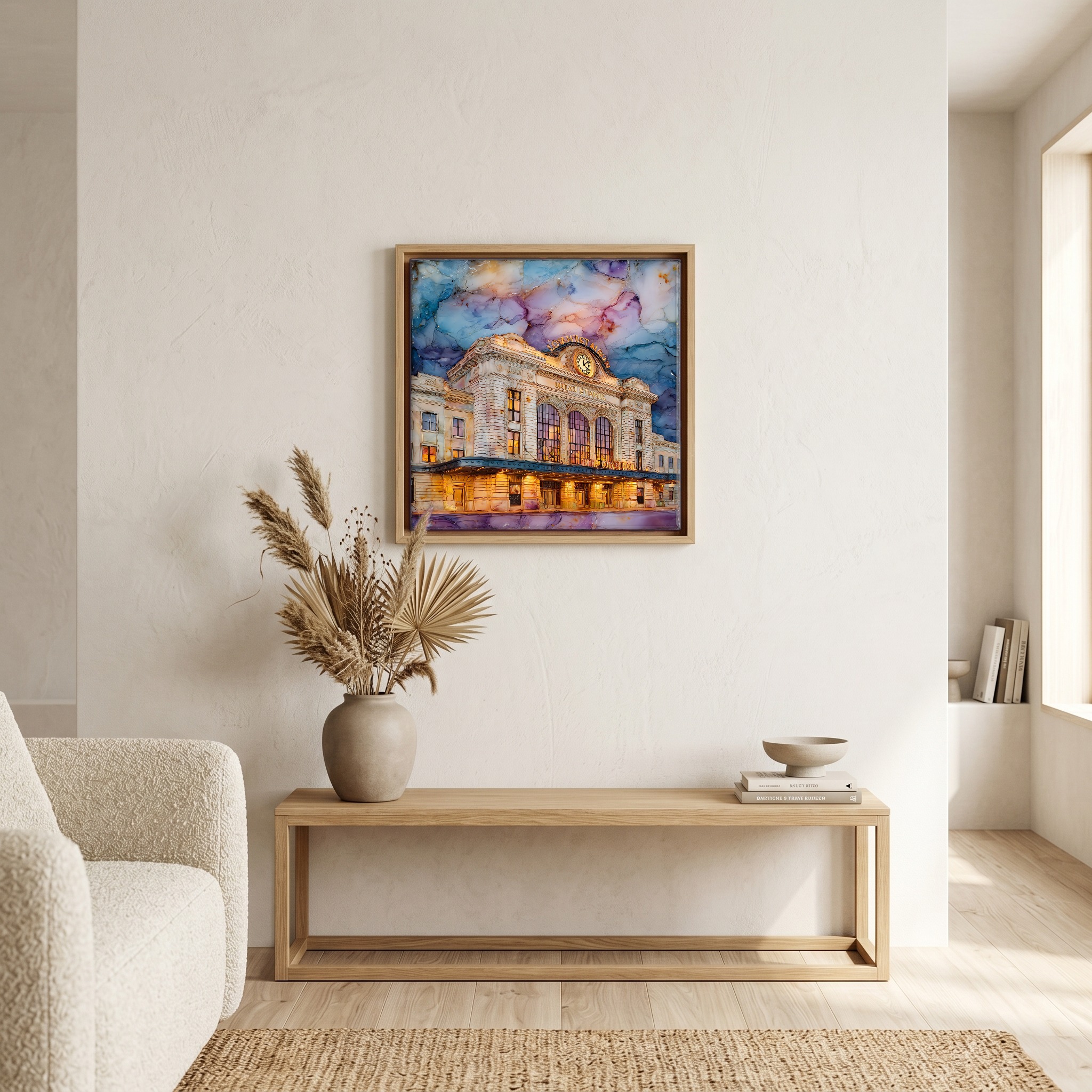
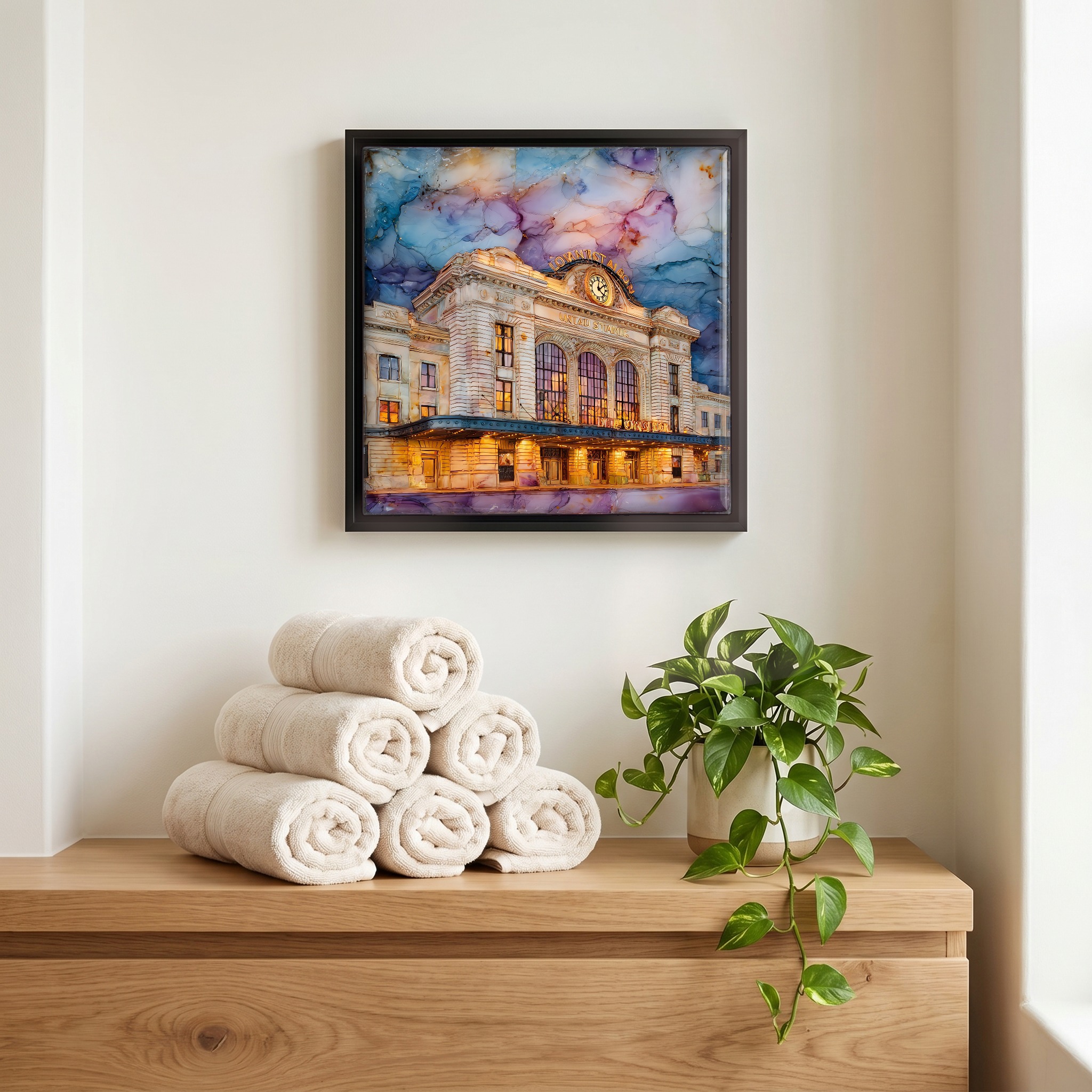
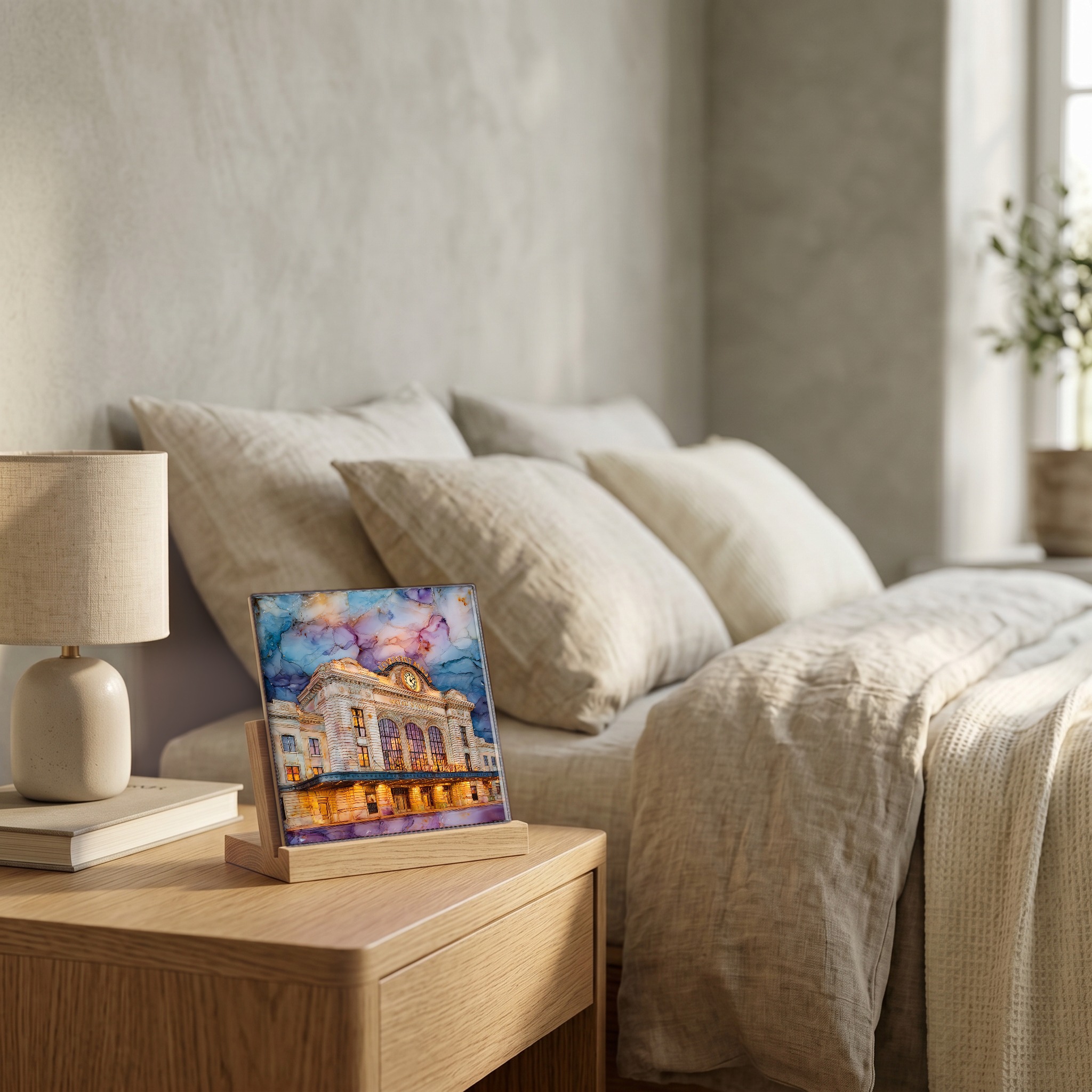
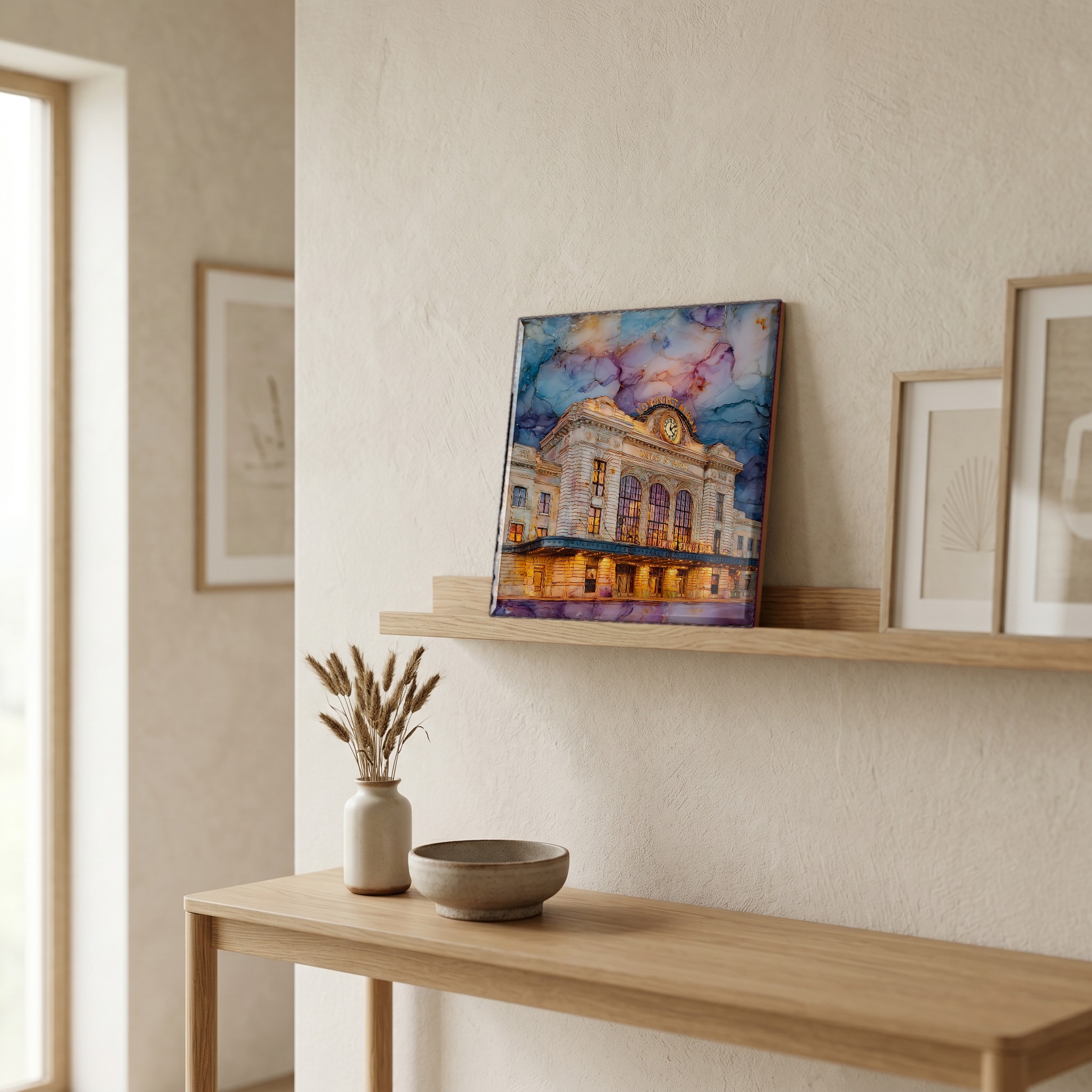
“The 1914 Beaux-Arts hall at the end of 17th Street, where Denver still meets its trains. The neon sign on the south facade reads Travel by Train, kept lit through the years it nearly stopped making sense. Inside, the Great Hall does double duty as a waiting room and the city's living room. Coffee, drinks, the California Zephyr arriving in the morning from Chicago and leaving for Emeryville before noon. People who live nearby come here just to sit.
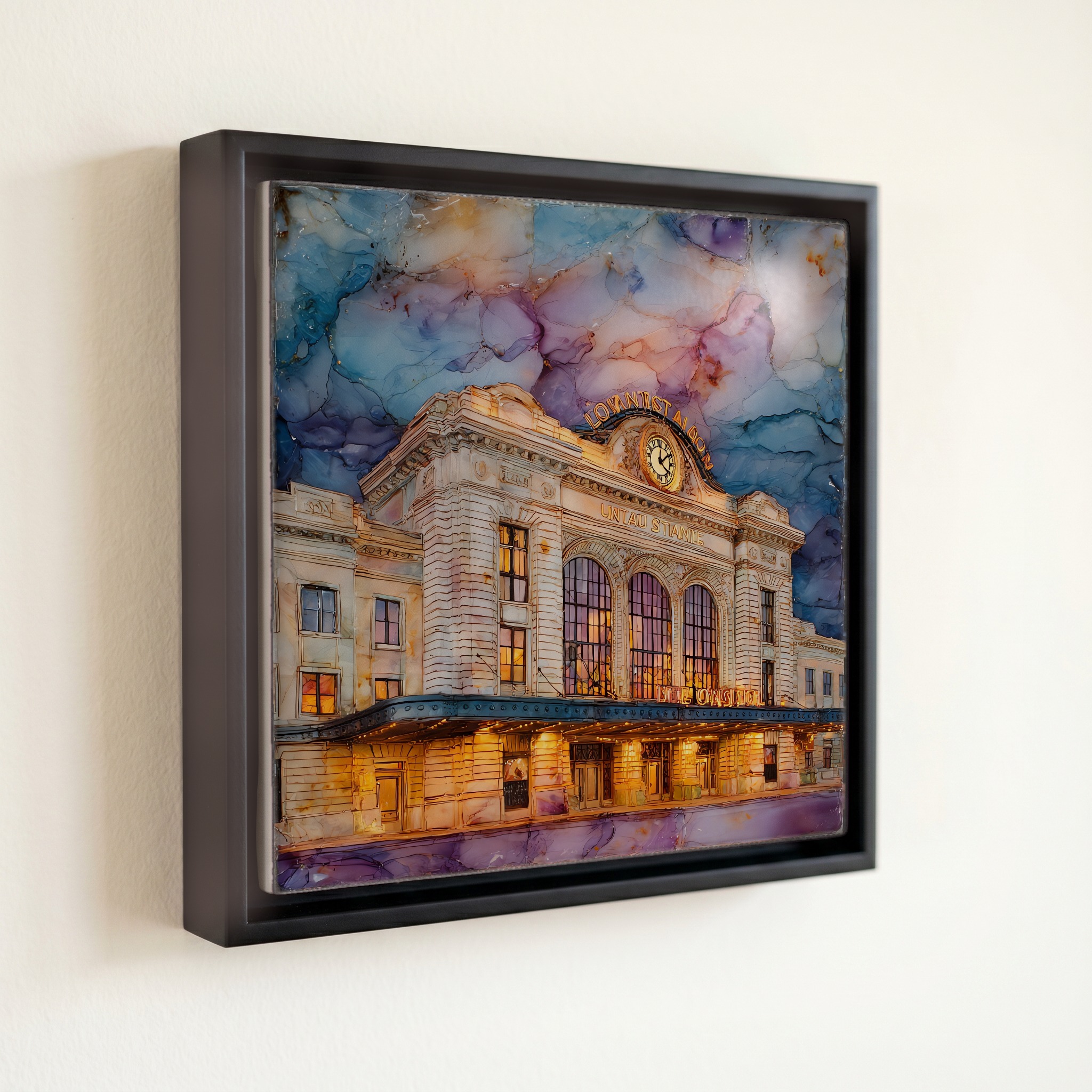
Denver Union Station Denver Metro Ceramic Art Tile, on ceramic.
Each tile is finished by hand in our Knoxville studio. Artwork is slowly infused into the ceramic surface under high heat and pressure, and rests beneath a thin glossy finish. The colour lives in the surface, not on top of it.
Pick any four 4-inch tiles — National Parks you've been to, a Smokies set, the four seasons of one place. $ for a set of , cork-backed, ready to live on the table.
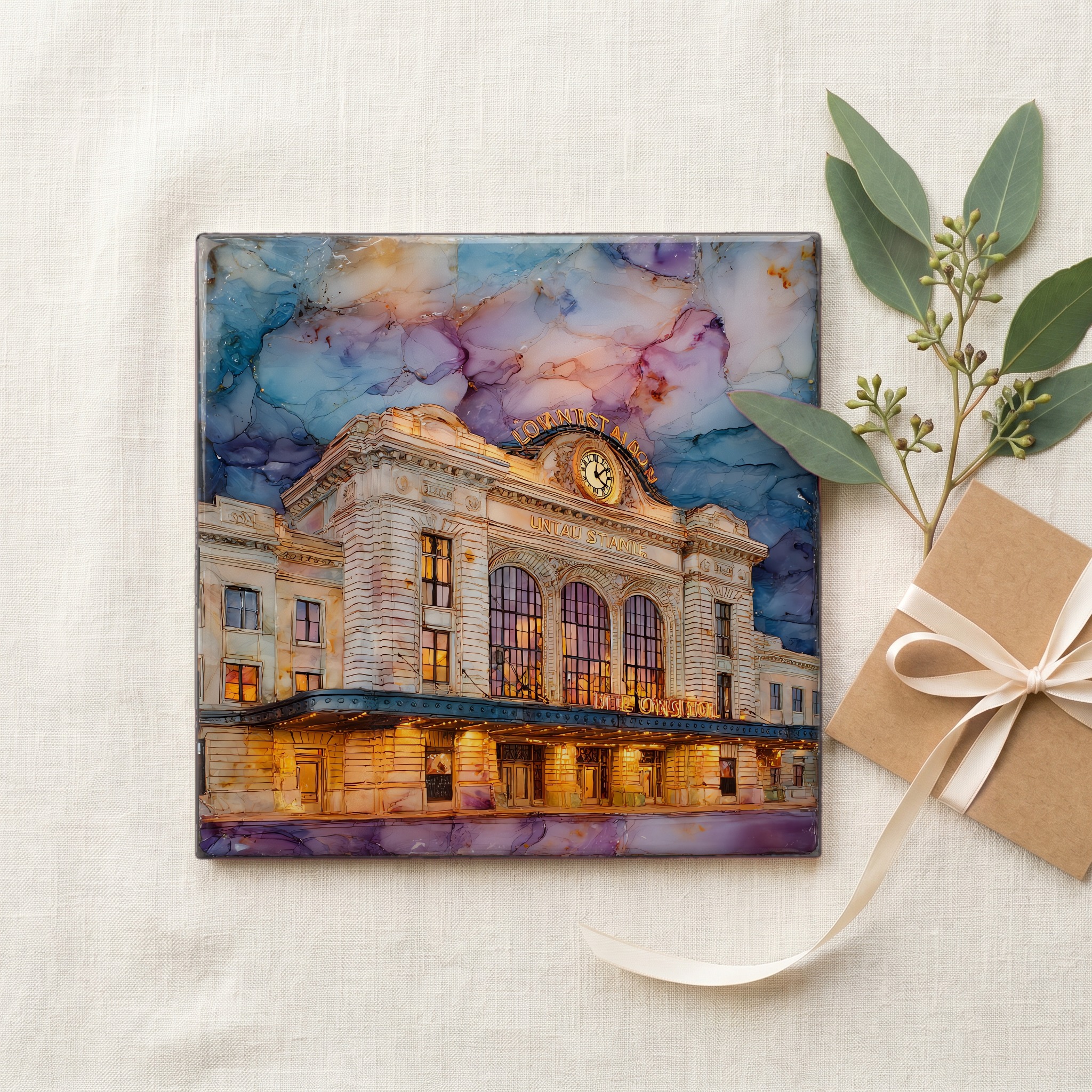
Each tile ships in a kraft box, tied with cream ribbon, with a handwritten note from the studio if you'd like to add one.
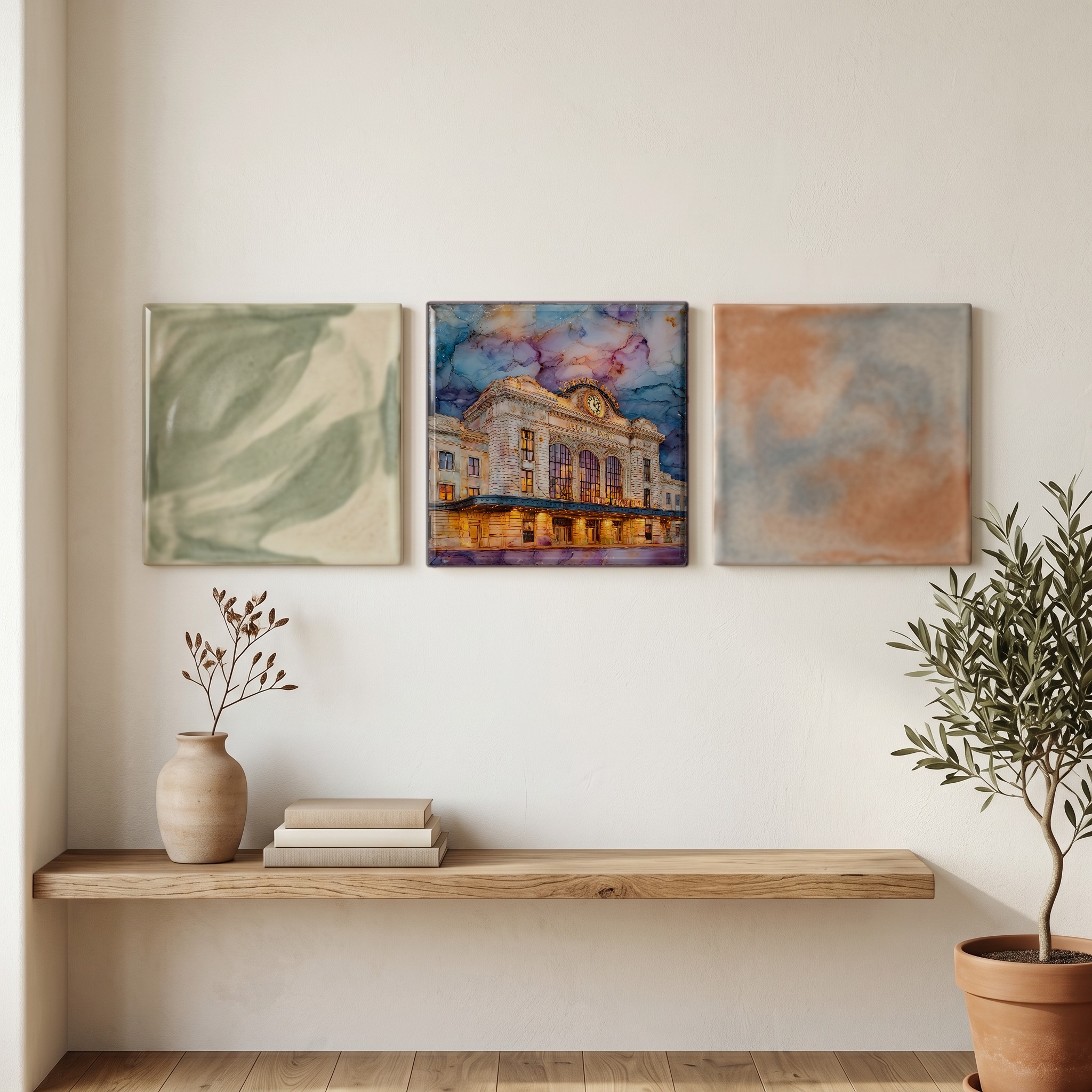
Three or five different vistas, hung together — a chapter of places you've been, or want to go.
The place, in three passes.
Denver Union Station sits at 1701 Wynkoop Street in Lower Downtown, a mile above sea level at 5,280 feet. The current Beaux-Arts central pavilion was completed in 1914 by Denver architects Gove and Walsh after fire and rebuilding cycles reshaped the earlier structure. The station carried the Denver and Rio Grande Western and the Union Pacific in the long era of cross-country rail, then nearly emptied through the second half of the twentieth century. A 2014 reopening returned it to active duty: Amtrak's California Zephyr stops here daily, RTD's A Line carries riders to Denver International Airport in about 37 minutes, and light rail and bus services share an underground concourse behind Wynkoop Plaza.
The 1914 building is the third Union Station on the site. The first opened in 1881 in a Romanesque Revival design by William E. Taylor, was partially burned in 1894, and was rebuilt and then partially replaced. Architects Gove and Walsh anchored the surviving wings with a granite-clad central pavilion in the Beaux-Arts manner: a colonnaded entry, an arched roof line, a clock face set into the Wynkoop Street facade. The red Travel by Train neon was added in 1953. A 2012-2014 restoration led by Tryba Architects opened the Great Hall as a public concourse, with the Crawford Hotel occupying the upper floors, named for preservationist Dana Crawford.
Denver Union Station is open to the public daily as a working transit hub and public space, with no admission fee. The Great Hall functions as a waiting room and a downtown commons, ringed by restaurants, bars, and the 112-room Crawford Hotel. Amtrak's California Zephyr arrives from Chicago and continues west toward Emeryville. RTD's A Line runs from the platforms behind the building to Denver International Airport in about 37 minutes. Visitors usually pair the stop with a short walk to Coors Field, Larimer Square, or the 16th Street Mall. The mountain view is reserved for clear mornings, when the Front Range shows above the rail yard.