Wender·Vista
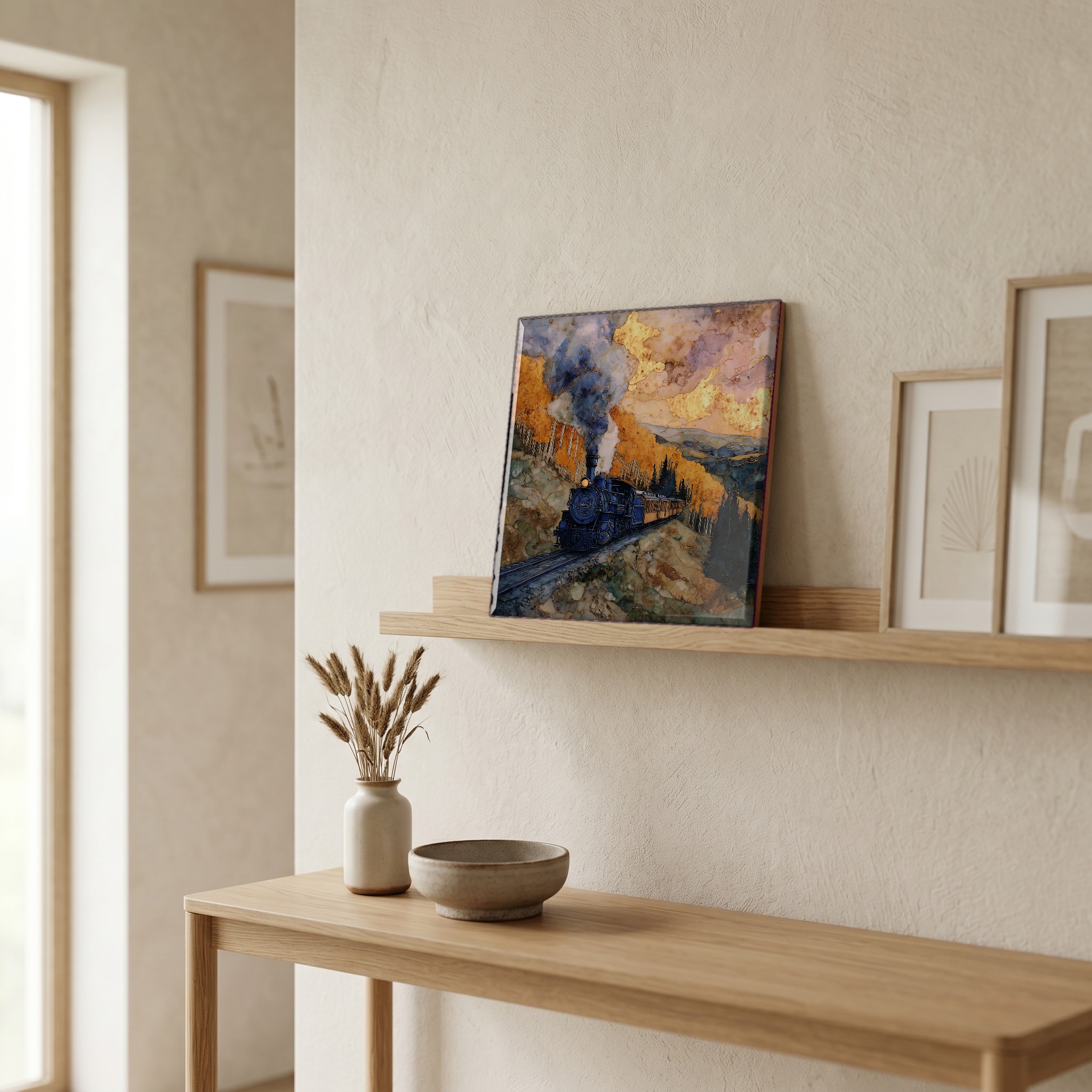
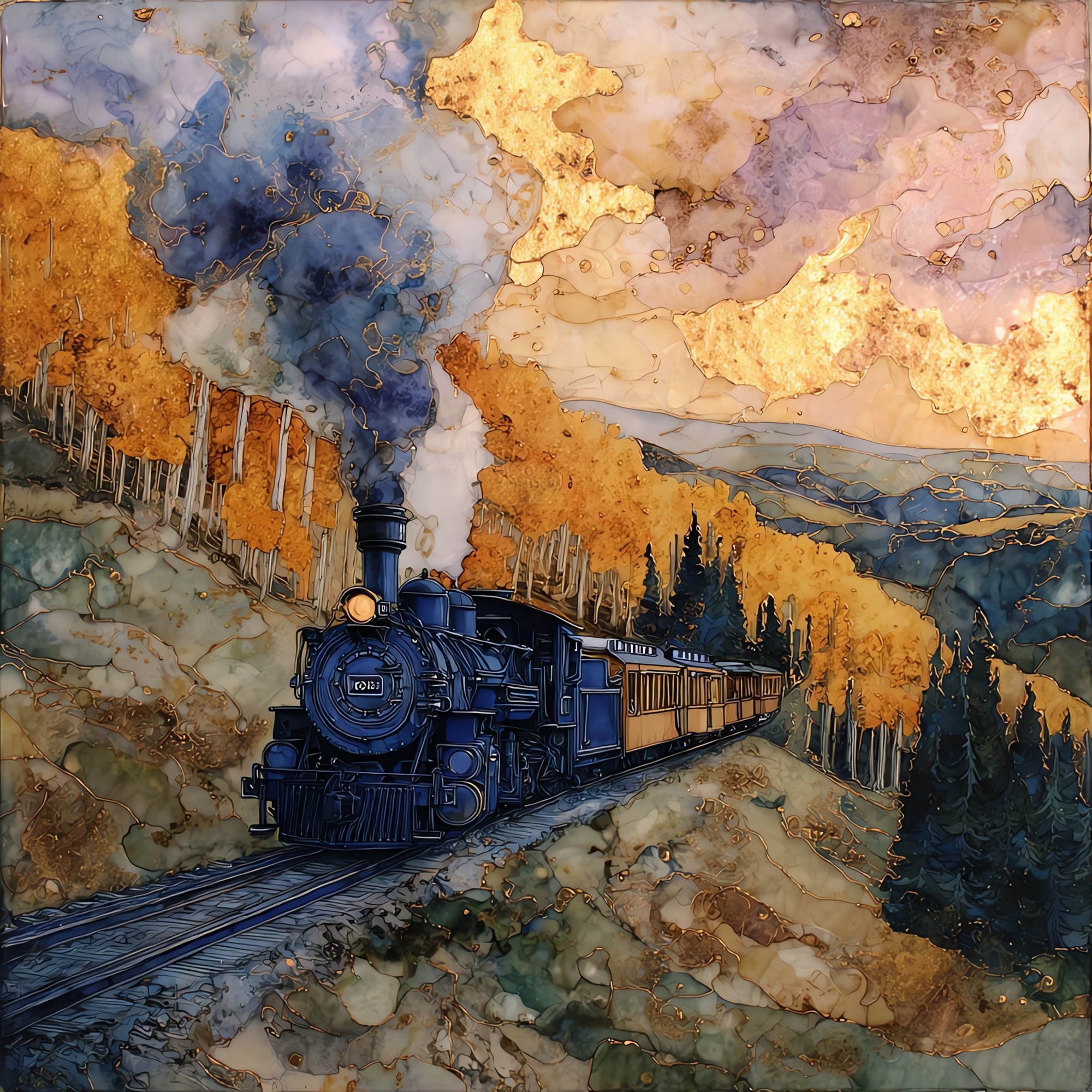
Cumbres & Toltec at Cumbres Pass San Juans Ceramic Art Tile
shown on ceramic, 12-inch tileColorado · United States
high in the San Juans, near the New Mexico line

Cumbres & Toltec at Cumbres Pass San Juans Ceramic Art Tile

steam at ten thousand feet.

Where it lives

Not only on a wall.

A small tile on the nightstand catching the morning. A larger one above the fire. Yours, wherever you spend the slow hours.
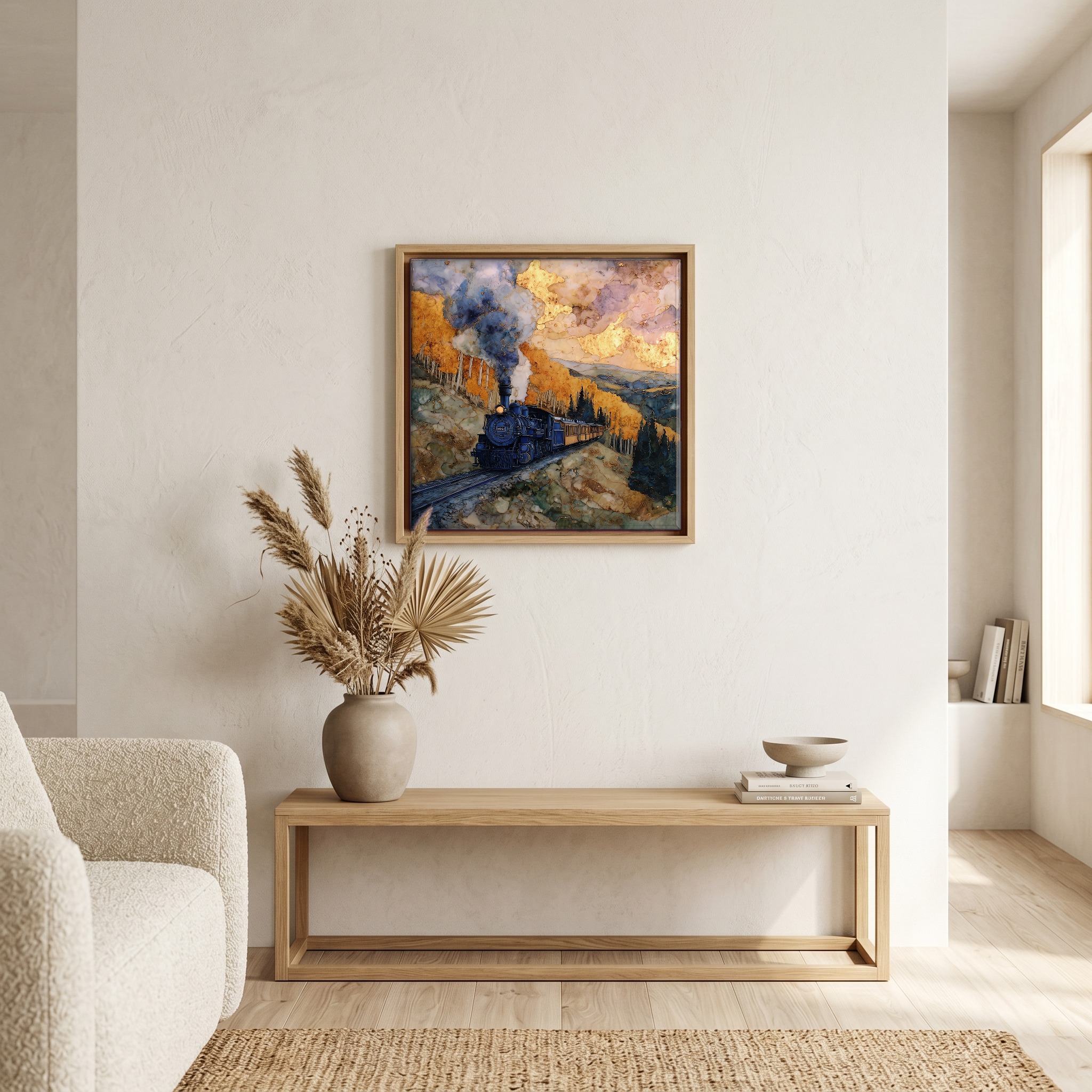
Above the bench, in a warm oak surround.
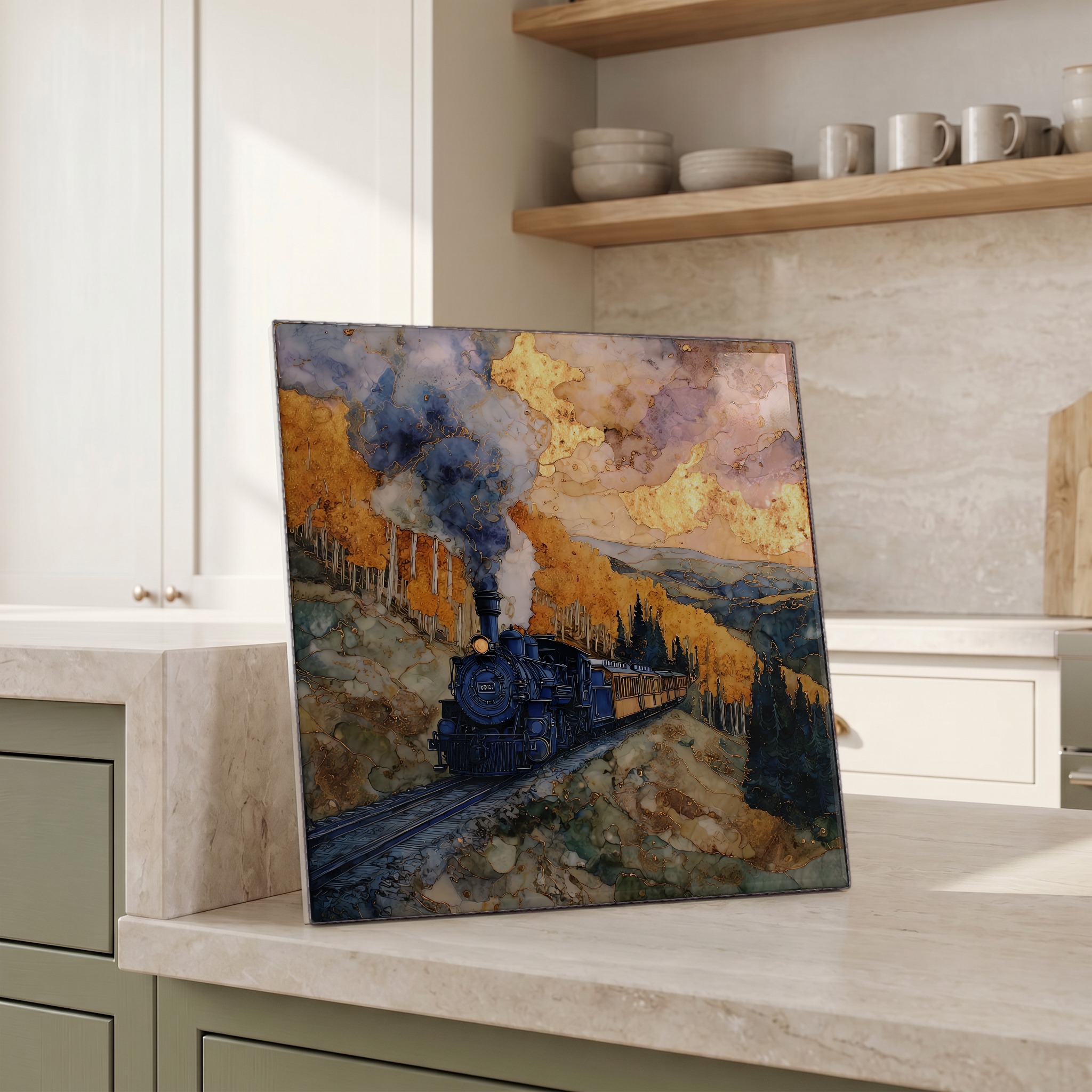
Beside the kettle, propped on the counter.
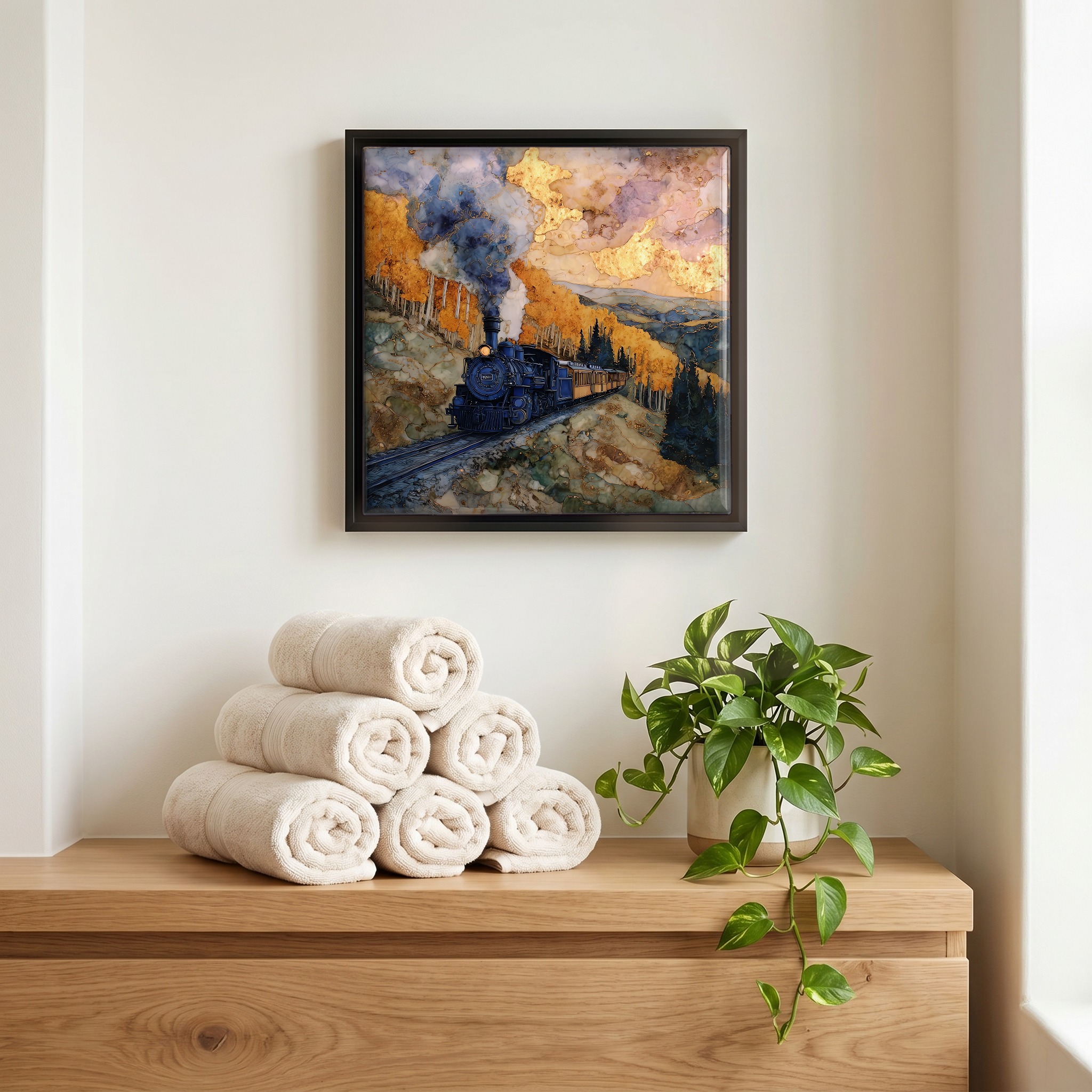
Above the linens, in a slim black surround.
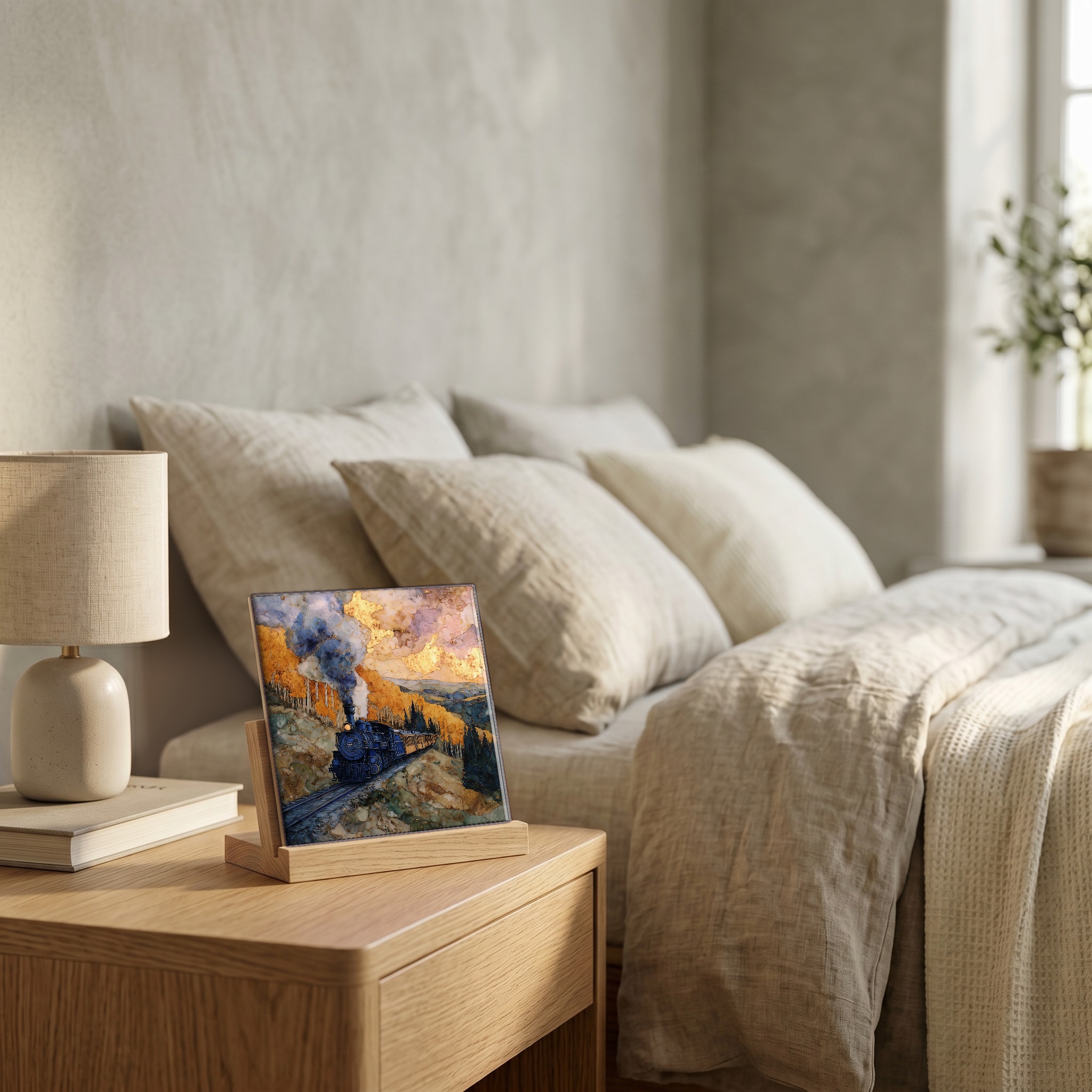
On the nightstand, on a light oak stand.
On a picture ledge, where the light comes in.
a note from the studio

The highest stretch of narrow-gauge railroad still working in the United States. Steam locomotives built in the 1920s climb out of Chama, New Mexico, work their way up a four-percent grade through aspen and high meadow, and crest at Cumbres Pass at 10,015 feet before easing down into Toltec Gorge. Volunteers in the railyard talk about the line the way other people talk about a parent. The colour the artwork holds is the colour the smokestack leaves behind on a cold September morning, blue against gold.
from the studio
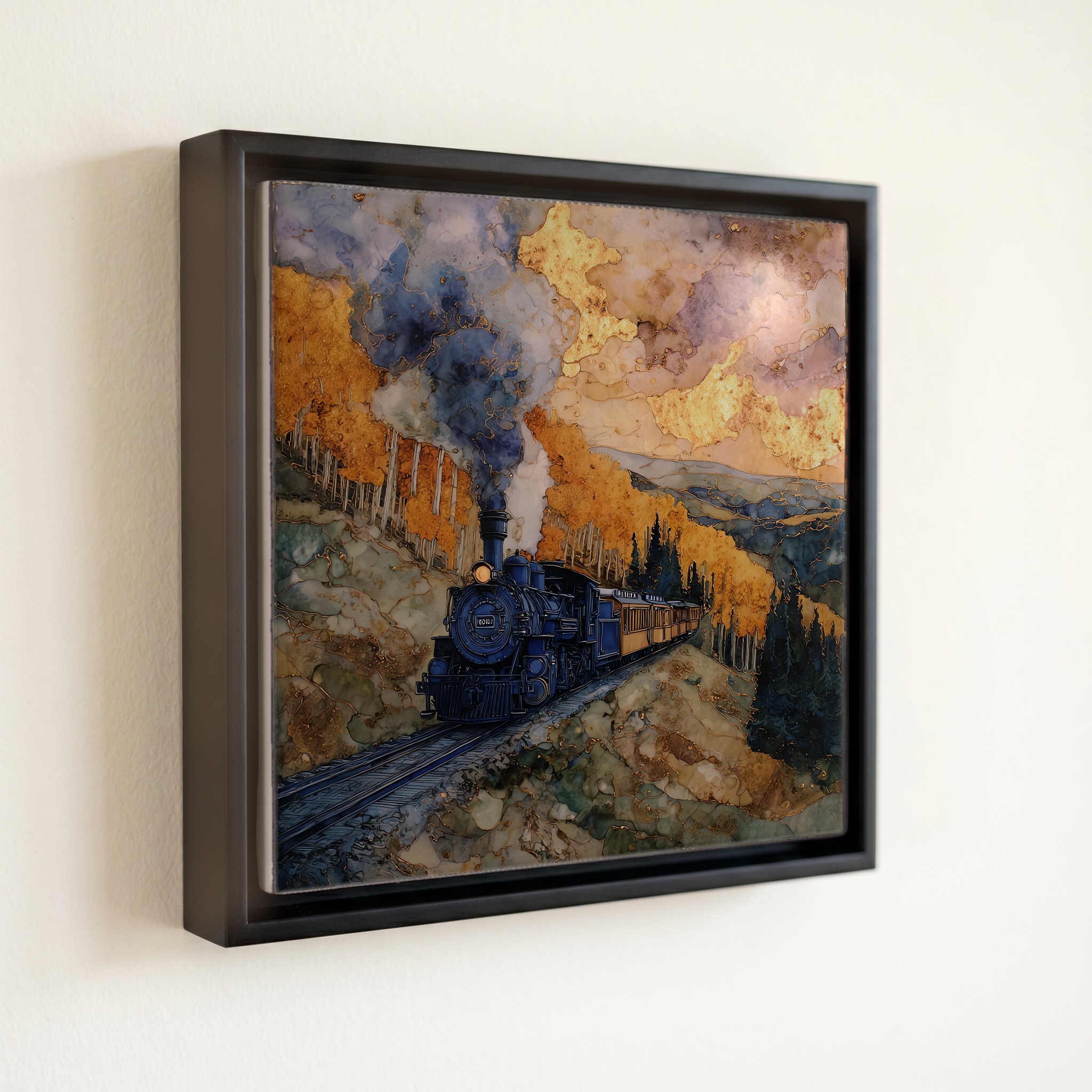
shown in a slim black floating frame · 6 × 6 in
— bring it home

Cumbres & Toltec at Cumbres Pass San Juans Ceramic Art Tile, on ceramic.

Each tile is finished by hand in our Knoxville studio. Artwork is slowly infused into the ceramic surface under high heat and pressure, and rests beneath a thin glossy finish. The colour lives in the surface, not on top of it.

What kind of piece?
One tile — square or rectangle.
How big?
the popular one — counter, shelf, nightstand
6 × 6 in · 15 cm · 1.6 lb
Surface finish
A clear glossy finish — the artwork reads as if under resin. Ideal for show-pieces and framed wall art.
How it sits
A hidden cleat — sits ¼″ proud of the wall.
$58
Hand-finished and shipped from our studio at the foot of the Smokies. On your wall in about ten days.
size
6 × 6 in
15 cm
weighs
1.6 lb
solid in the hand
surface
ceramic, hand-finished
art rests beneath a thin glossy finish
from
Knoxville, TN
our family studio, at the foot of the Smokies
— start a Coaster Set

Pick any four 4-inch tiles — National Parks you've been to, a Smokies set, the four seasons of one place. $ for a set of , cork-backed, ready to live on the table.
comes gift-ready
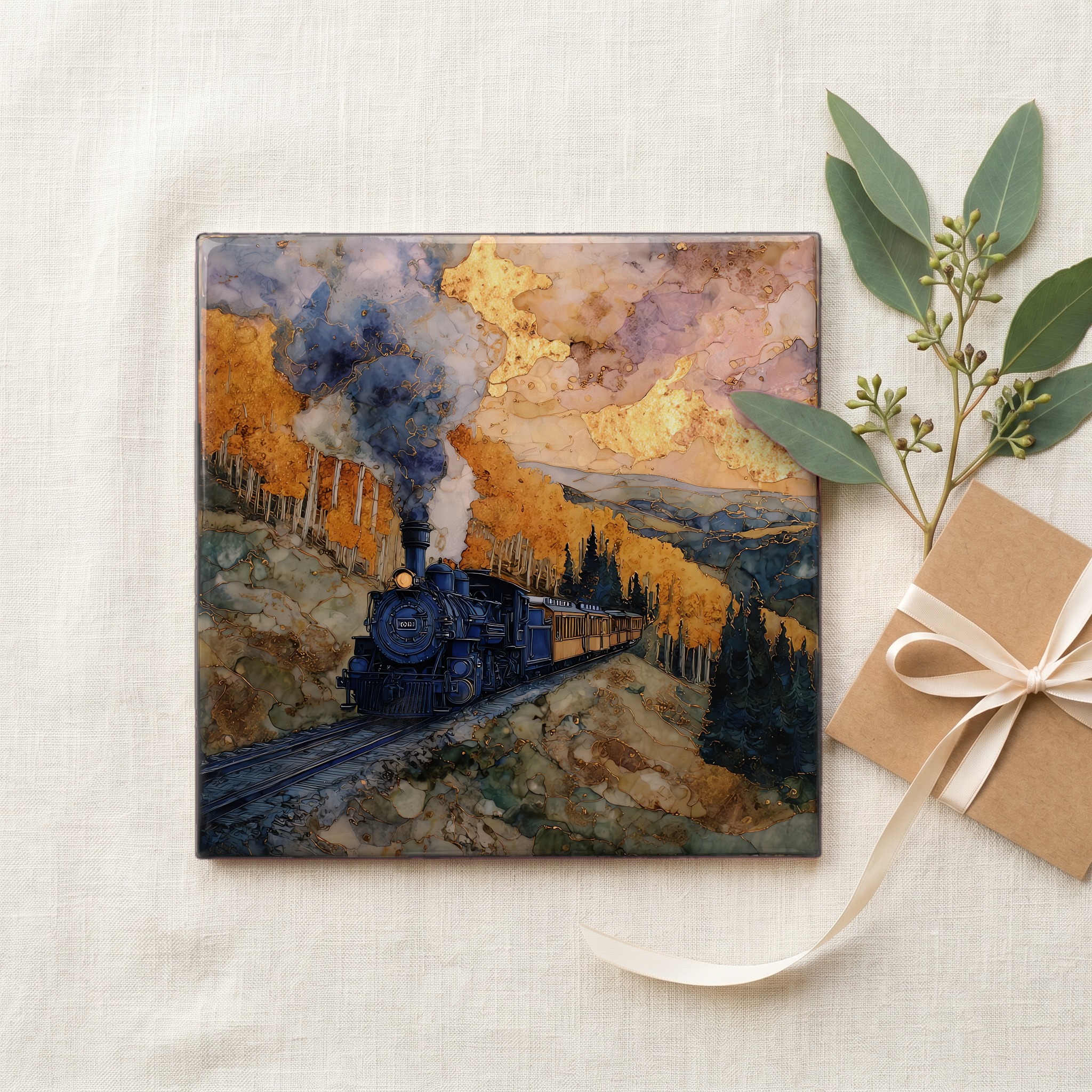
comes gift-ready

Each tile ships in a kraft box, tied with cream ribbon, with a handwritten note from the studio if you'd like to add one.
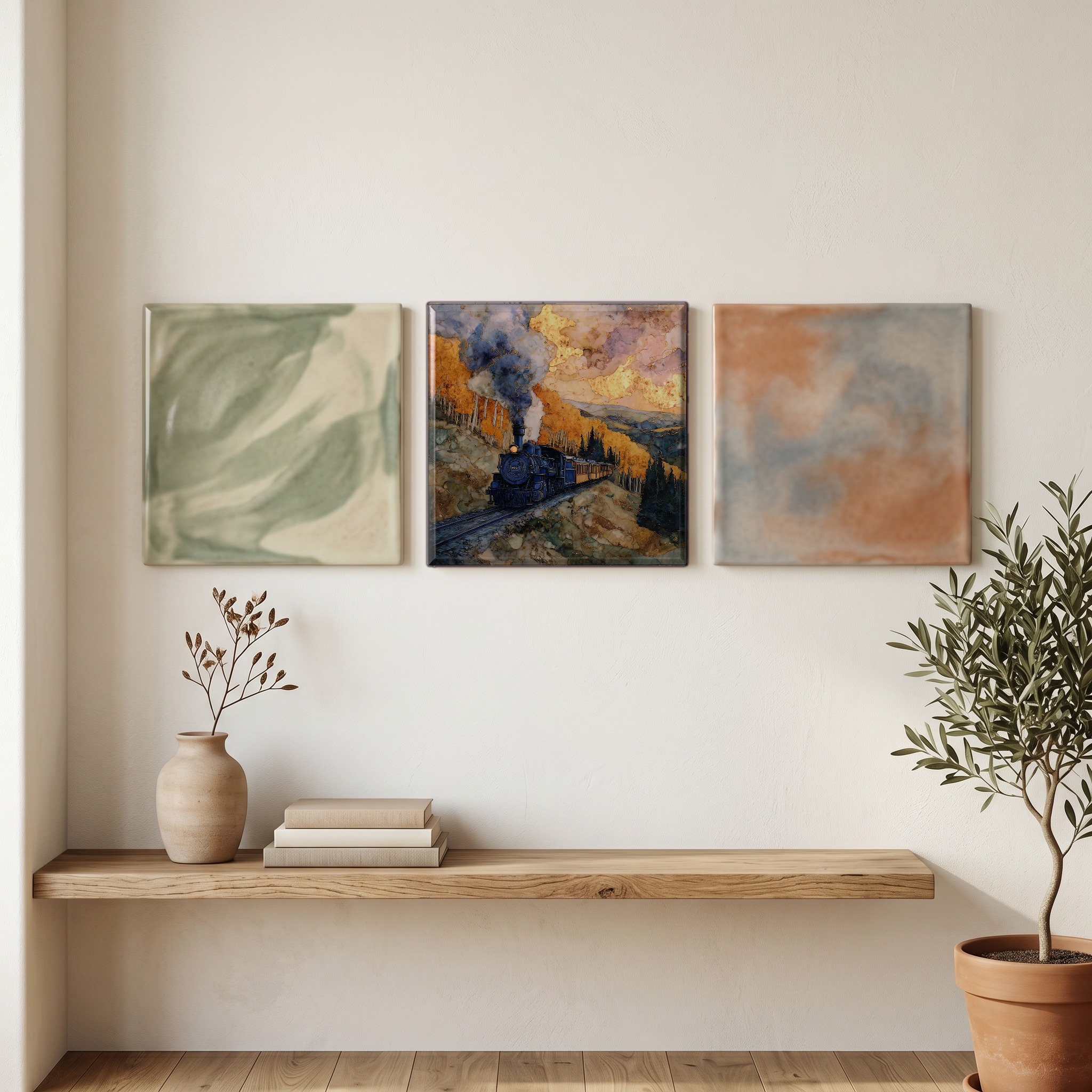
or build a grouping
or build a grouping

Three or five different vistas, hung together — a chapter of places you've been, or want to go.

about Cumbres & Toltec at Cumbres Pass San Juans Ceramic Art Tile

The place, in three passes.

A little of what's known, in case you fall down the rabbit hole — or want to go see it yourself.
the place

The Cumbres & Toltec Scenic Railroad runs 64 miles of three-foot narrow gauge between Antonito, Colorado and Chama, New Mexico, crossing the state line eleven times along the way. The line is the surviving portion of the Denver & Rio Grande Railway's San Juan Extension, built in 1880 to carry silver and freight out of the southwestern Colorado mining country. At Cumbres Pass the rails crest at 10,015 feet, the highest point reached by a working steam railroad in the United States. The route was designated a National Historic Landmark in 2012 and is jointly owned by the states of Colorado and New Mexico, operated through a bi-state commission. The pass sits at the eastern edge of the San Juan Mountains, where the range gives way to the Tusas highlands.

the year

The railroad runs from late May through mid-October. Trains cannot keep the pass open through winter; by November the snowsheds at Cumbres and Tanglefoot Curve are buried and the line goes quiet until the next thaw. The summer schedule is built around two daily trains, eastbound and westbound, meeting at Osier in the middle of the route for lunch. The colour the page holds is the colour the meadows wear in the second week of September, when the aspen at Los Pinos Creek go gold and the first frost touches the ties. Most ticketholders ride for that window. The crews work the rest of the off-season pulling the K-36 and K-37 locomotives apart and putting them back together.

the visit

Two boarding points: Chama, New Mexico for the climb up the four-percent grade and the loop at Tanglefoot Curve; Antonito, Colorado for the long descent through the Toltec Gorge and Cascade Trestle, 137 feet above Cascade Creek. The full 64-mile through-trip runs about six and a half hours and includes a hot lunch at Osier, where the eastbound and westbound trains meet. Shorter half-day options return passengers by motorcoach. Reservations are required from late May through mid-October, and the line does not sell walk-up tickets in any meaningful number. The locomotives in service are 1920s-era K-27, K-36, and K-37 class Mikados, coal-fired and hand-fed, restored by paid crews with help from the Friends of the Cumbres & Toltec.

where
United States · Conejos County, Colorado
elevation
3,053 m · 10,015 ft
position
37.0228° N · 106.4444° W
the neighborhood

What's nearby.

A handful of named places within an hour's walk or short drive. Some we've already painted; some we will.
16 km S
Chama, New Mexico
railroad town
80 km E
Antonito, Colorado
railroad town
30 km E
Osier
mid-route lunch stop
35 km E
Toltec Gorge
river gorge
25 km N
Rio Grande National Forest
national forest
75 km NW
Wolf Creek Pass
mountain pass
N
Cumbres & Toltec at Cumbres Pass San Juans Ceramic Art Tile
Chama, New Mexico
Antonito, Colorado
Osier
Toltec Gorge
Rio Grande National Forest
Wolf Creek Pass
common questions

What people ask.

A few questions we get about Cumbres & Toltec at Cumbres Pass San Juans Ceramic Art Tile — and about bringing the piece home.
about the place

The railroad runs 64 miles between Antonito, Colorado and Chama, New Mexico, crossing the state line eleven times. The route climbs to Cumbres Pass at the eastern edge of the San Juan Mountains and descends through Toltec Gorge on the Colorado side.

Cumbres Pass sits at 10,015 feet (3,053 metres) above sea level. It is the highest point reached by a working steam railroad in the United States, and the highest mountain pass crossed by a regularly scheduled railway in North America.

The line was built in 1880 by the Denver & Rio Grande Railway as the San Juan Extension, carrying ore and freight out of the silver and gold camps of southwestern Colorado. It is the surviving portion of the original D&RG narrow-gauge network.

The fleet is 1920s-era class K-27, K-36, and K-37 narrow-gauge Mikados, coal-fired and hand-fed. The locomotives are maintained and restored by paid crews with volunteer support from the Friends of the Cumbres & Toltec.

The Cumbres & Toltec is jointly owned by the states of Colorado and New Mexico and operated by a non-profit through a bi-state commission. It was designated a National Historic Landmark in 2012.

The operating season runs from late May through mid-October. The pass is closed by snow in winter; locomotives, cars, and snowsheds are overhauled during the off-season. Reservations are required for the in-season through-trip and shorter half-day rides.

Cumbres is Spanish for summits, and refers to Cumbres Pass at 10,015 feet. Toltec refers to the Toltec Gorge, a narrow rock canyon on the Colorado side of the route, named by the railroad surveyors who laid out the line in 1880.

about the piece in your home

It has been a gift for many of our customers with ties to the line. The high pass, the K-36 Mikados, and the Toltec Gorge are deeply held by people who grew up around them. A Small or Medium with a handwritten note from the studio carries well.

The piece sits well in mountain-modern interiors, in warm wood-and-leather libraries, and in heritage-rustic rooms with a railroad or western theme. The blue-to-gold palette pairs with oiled walnut, blackened steel, and Pendleton-weight textiles.

Yes. The current mountain-modern direction favours art that names a real place rather than a generic landscape. A specific working railroad above 10,000 feet reads as place-anchored, not decorative, and pairs with the wood-and-steel direction current in Rocky Mountain interiors.

Above a standard sofa, the Large is the everyday choice. Above a wider sectional or a tall stairwell, a four-tile Mural is right; over a fireplace mantel running the full chimney, the nine-tile Mural carries. Above a console or in a hallway, a Medium or Triptych works.

Yes, with the Dura Satin or Matte finish rather than Glossy. Both are scratch-resistant and tolerate humidity. The colour is slowly infused into the ceramic surface under high heat and pressure, so it does not fade in steam.

A microfibre cloth with water, or a microfibre with a mild non-abrasive cleaner. Avoid bleach, abrasive scrub, and acidic cleaners. The colour lives in the surface, beneath a thin glossy finish, and stays put with normal care.

Yes. Every WenderVista piece is original work by Reid Wender, hand-finished in the studio in Knoxville, Tennessee. The artwork is not licensed from any third party and is exclusive to Wender Studios.

if this one stayed with you

A few you might also love.

Hand-picked by the eye that found Sorapis. Same air, same kind of quiet.