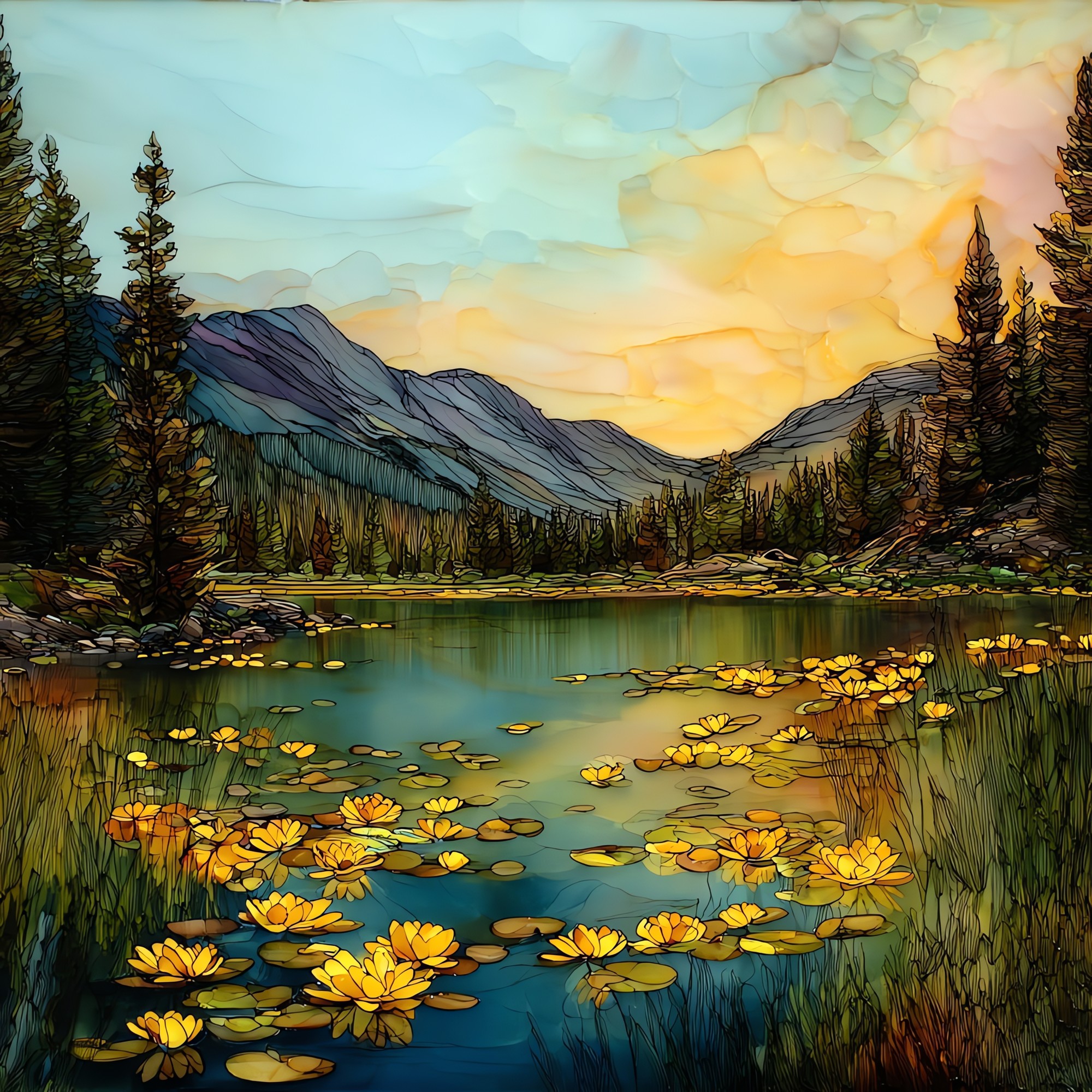
Cub Lake among lily pads Rocky Mountain National Park Ceramic Art Tile
— — water held still long enough to bloom.
Not only on a wall.




“A shallow mountain lake at 8,620 feet on the east side of Rocky Mountain National Park. Reached on foot from the floor of Moraine Park, a half-day round-trip through aspen, lodgepole pine, and the long grass of the meadow below. By mid-July the surface is dense with yellow pond lilies, Nuphar polysepala, the same species that floats on shallow ponds from the Yukon down to New Mexico. The slopes around the lake still carry the dark grain of the 2012 Fern Lake Fire. The new growth comes back through it. The water stays still.
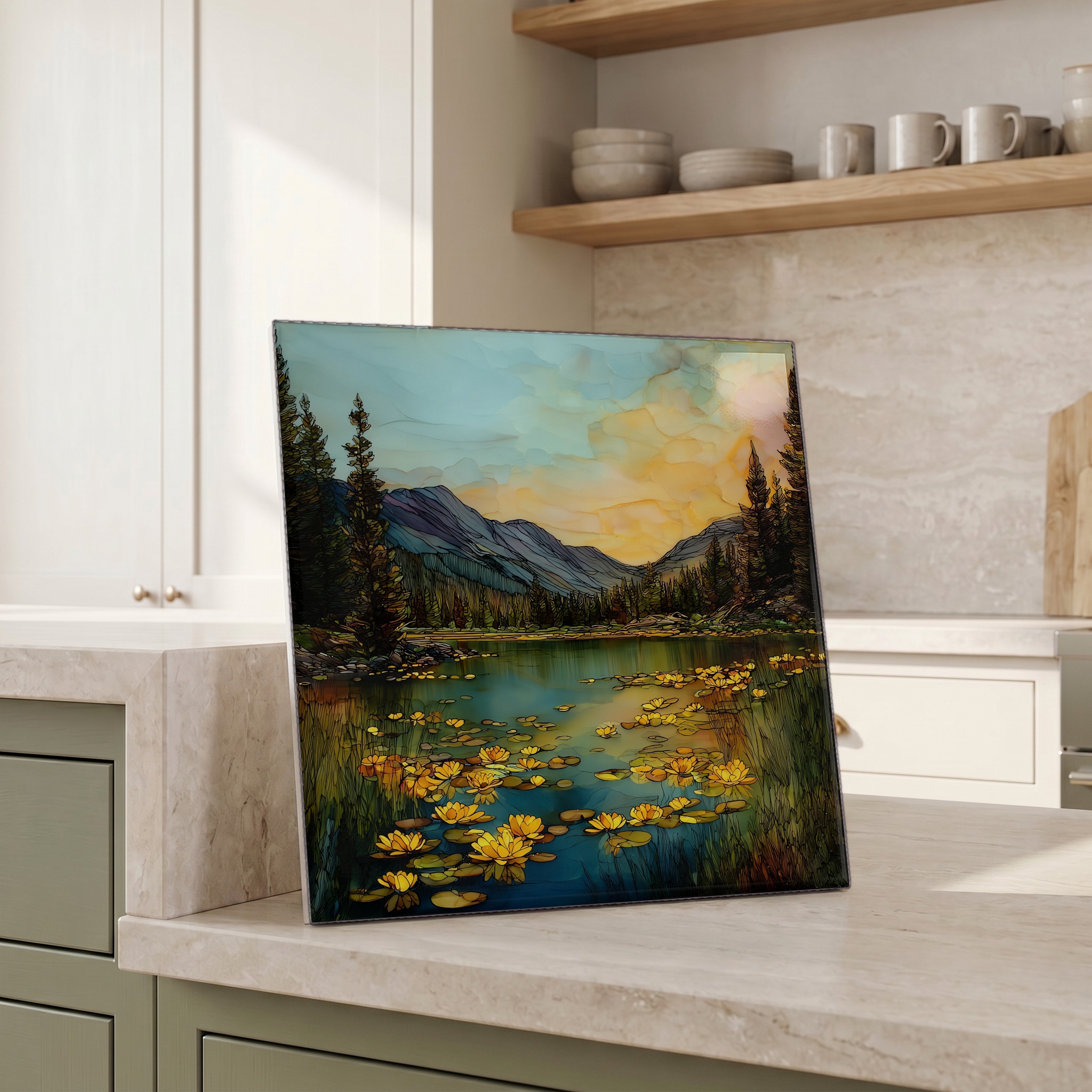
Cub Lake among lily pads Rocky Mountain National Park Ceramic Art Tile, on ceramic.
Each tile is finished by hand in our Knoxville studio. Artwork is slowly infused into the ceramic surface under high heat and pressure, and rests beneath a thin glossy finish. The colour lives in the surface, not on top of it.
Pick any four 4-inch tiles — National Parks you've been to, a Smokies set, the four seasons of one place. $ for a set of , cork-backed, ready to live on the table.

Each tile ships in a kraft box, tied with cream ribbon, with a handwritten note from the studio if you'd like to add one.

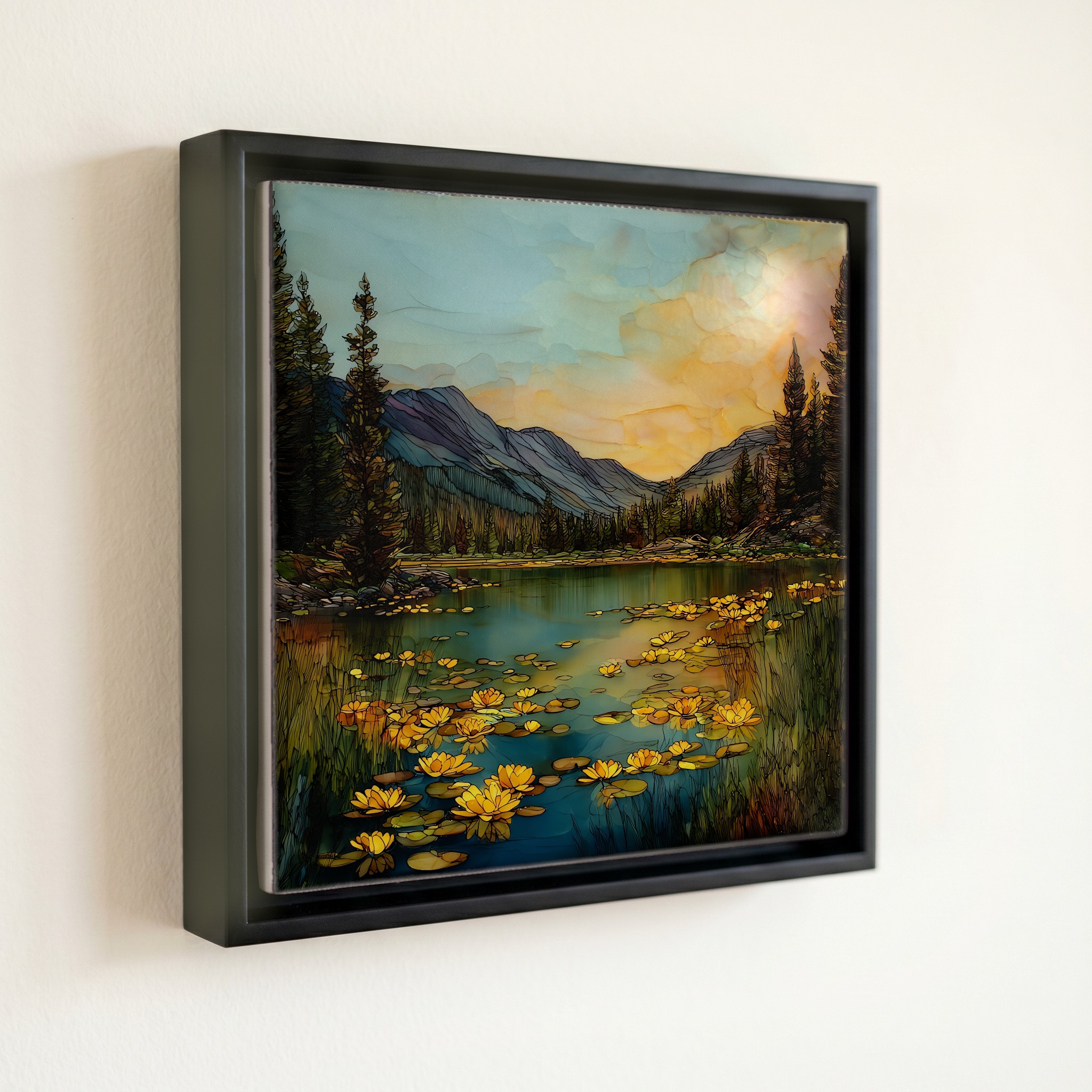
Three or five different vistas, hung together — a chapter of places you've been, or want to go.
The place, in three passes.
Cub Lake sits at 8,620 feet on the east side of Rocky Mountain National Park, in Larimer County, Colorado, roughly 55 miles northwest of Denver. The trail begins at 8,080 feet on the west side of Moraine Park, a wide glacial valley carved by Pleistocene ice and now grazed by elk in the long evenings. The route is 4.6 miles round-trip, gaining about 540 feet through aspen, ponderosa, and lodgepole pine. The lake lies in a shallow basin fed by snowmelt and seep, with no inlet stream of consequence. Estes Park, the gateway town about five miles east, sits at 7,522 feet on the Big Thompson River.
The lily pads belong to Nuphar polysepala, the great yellow pond lily, a North American native that floats on shallow muddy ponds from the Yukon south to New Mexico and west to California. The species needs warm, still water and a soft sediment bed, both of which Cub Lake holds because the basin is shallow enough for the sun to reach bottom even at altitude. By mid-July the pads cover most of the surface; the blossoms open six-petaled and yellow, sometimes reddish at the center. Ducks work the gaps between leaves. Garter snakes thread the shallows. Trout do not live in the lake; the lilies have it instead.
The bloom peaks in mid-July, when daytime air at this elevation runs in the sixties and the lake surface warms enough to push the lilies into flower. The trail opens with the snow, usually mid-to-late May, and the wildflower count along the way climbs past eighty species in summer, including columbine, fireweed, and pearly everlasting. Aspens turn gold from late September into the first week of October. By November the lake skims with ice and the lily mat dies back into the sediment until spring. Much of the slope around the lake still shows the dark stand of the 2012 Fern Lake Fire, which burned roughly 3,500 acres of this corner of the park.