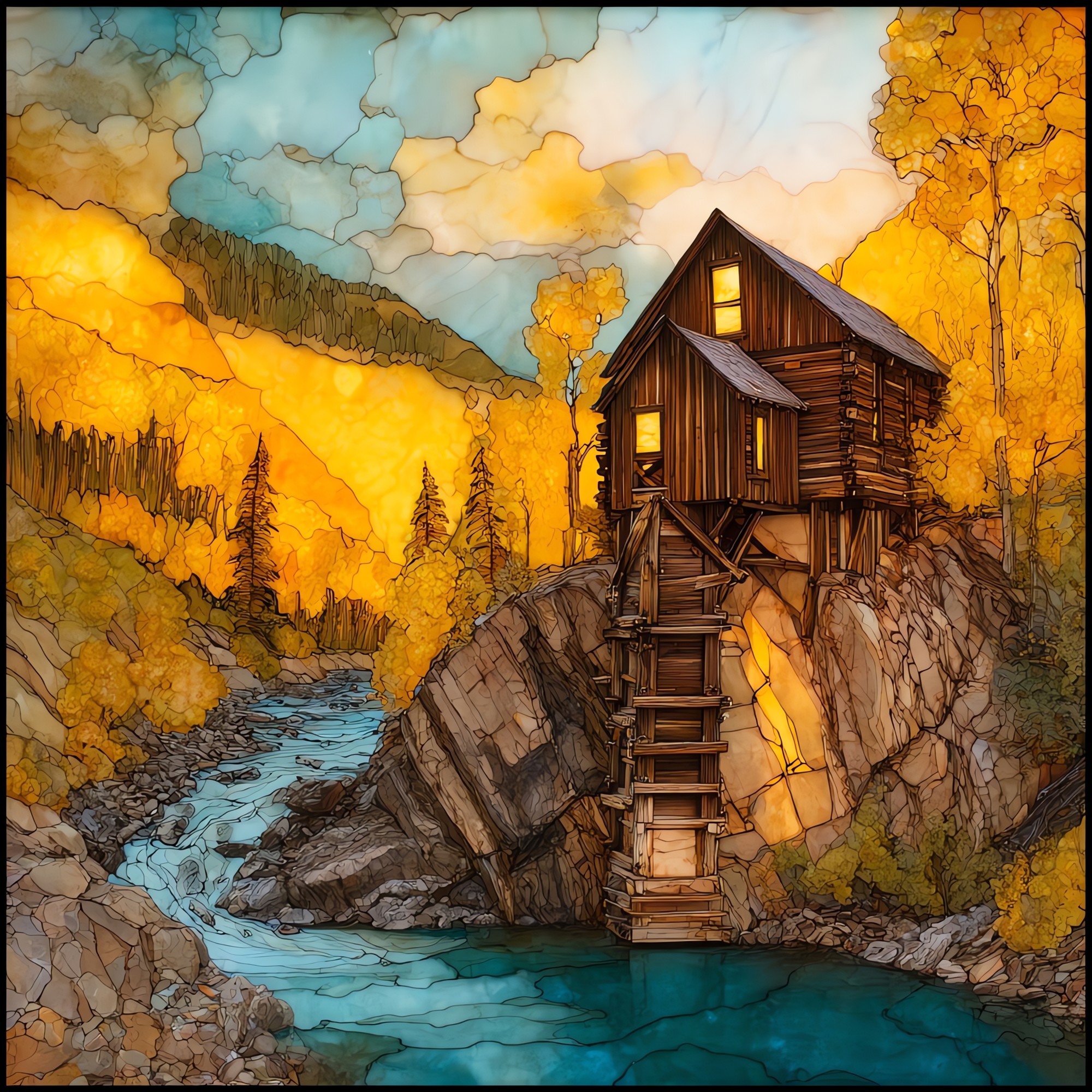
Crystal Mill at Marble Elk Range Ceramic Art Tile
— — the room the river left standing.
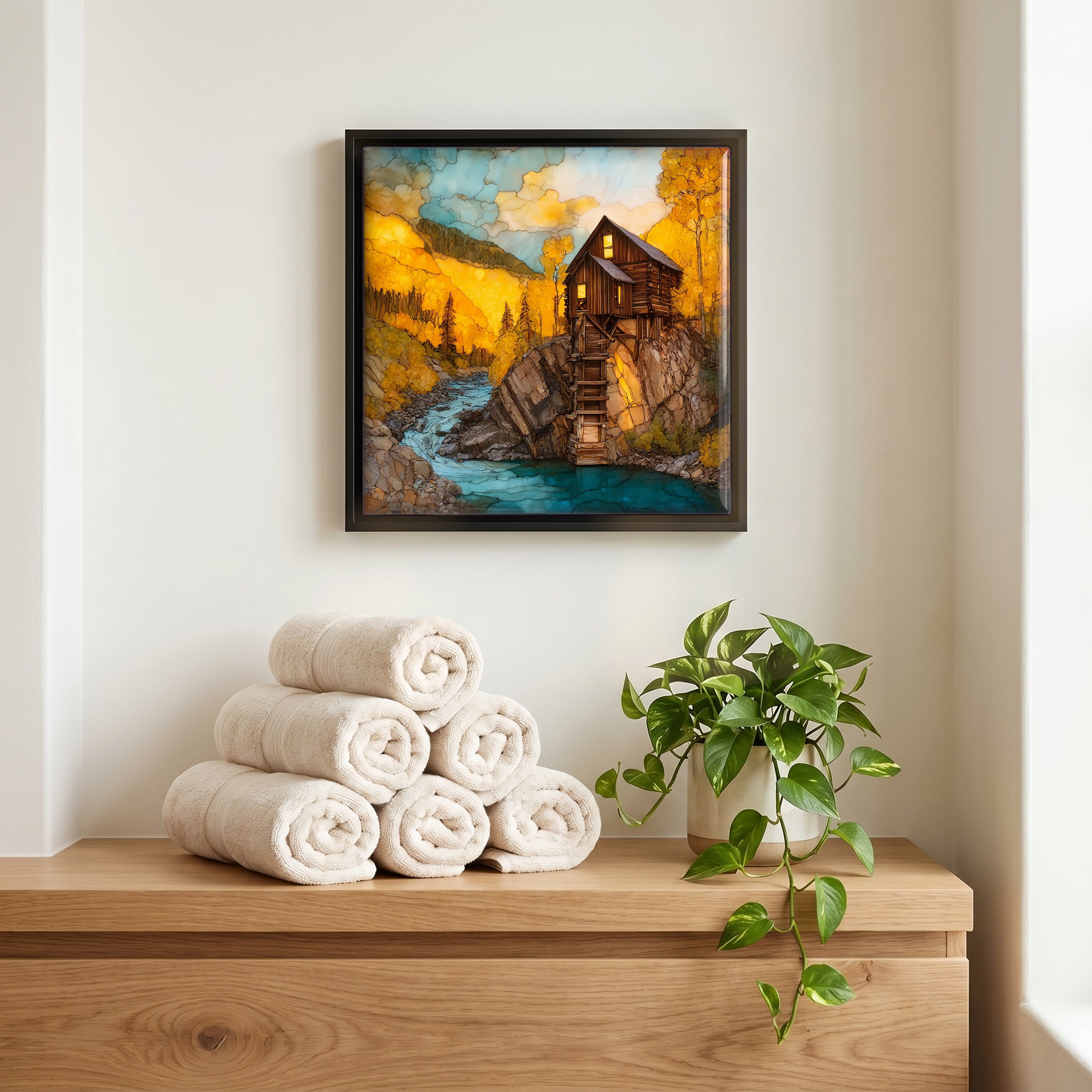
Not only on a wall.
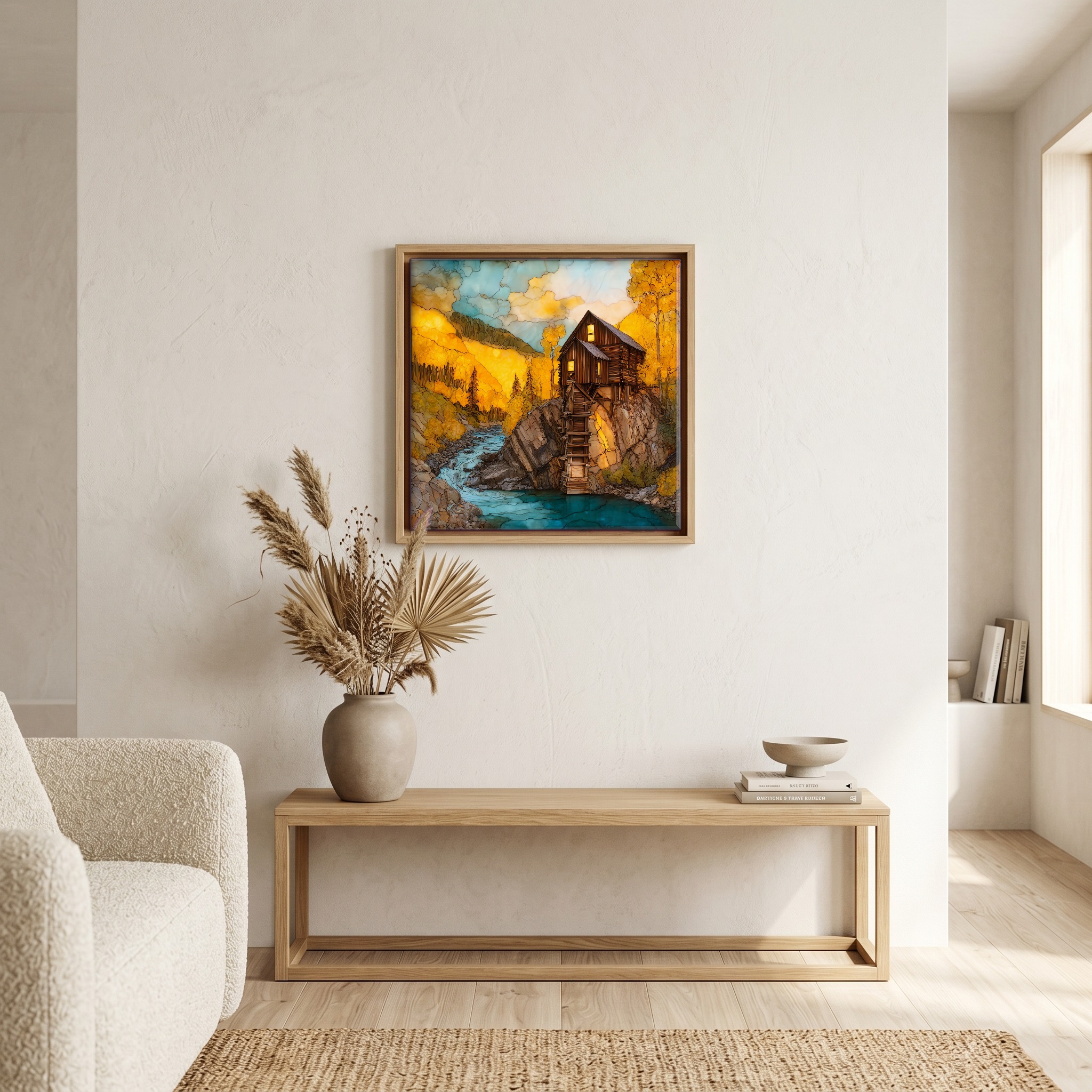
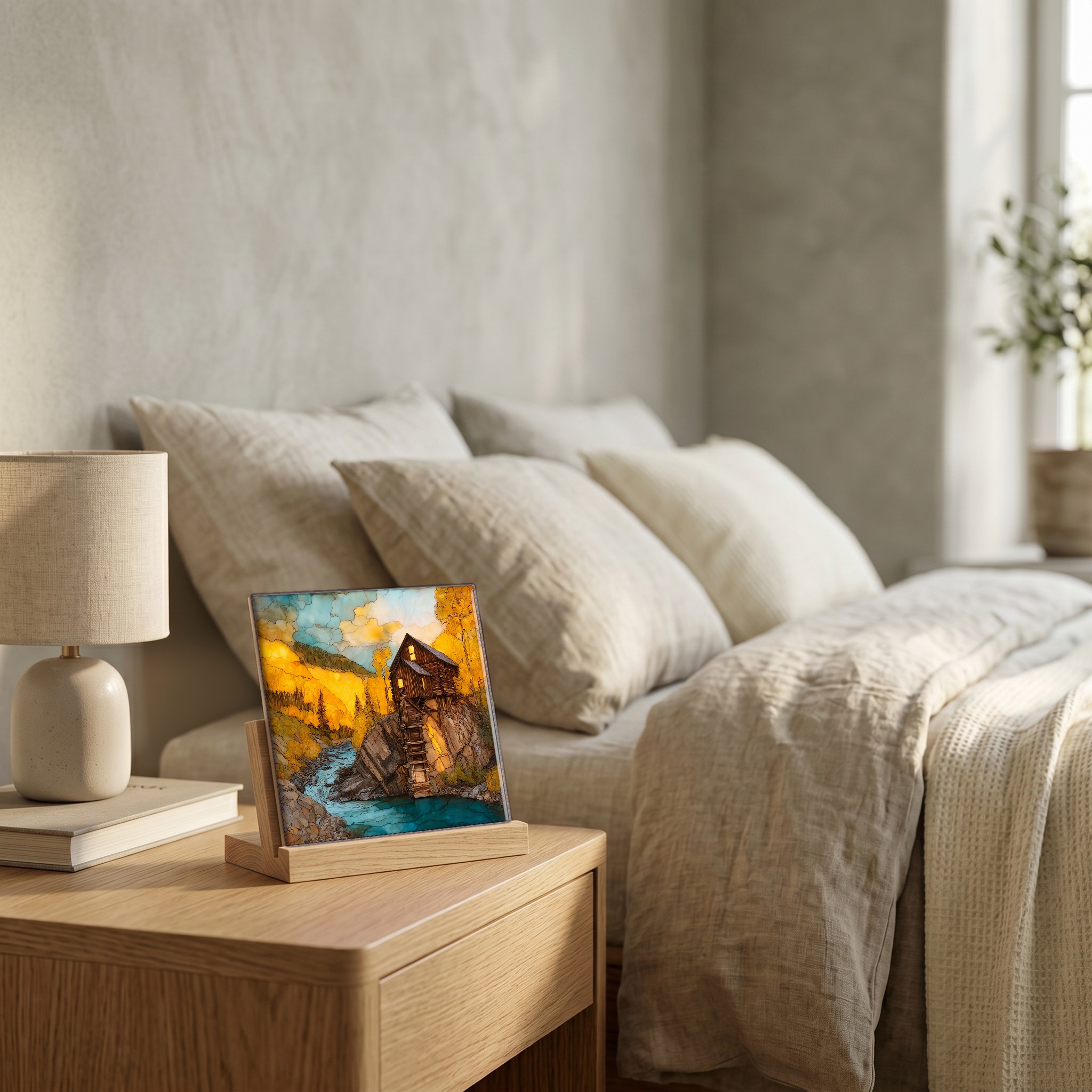
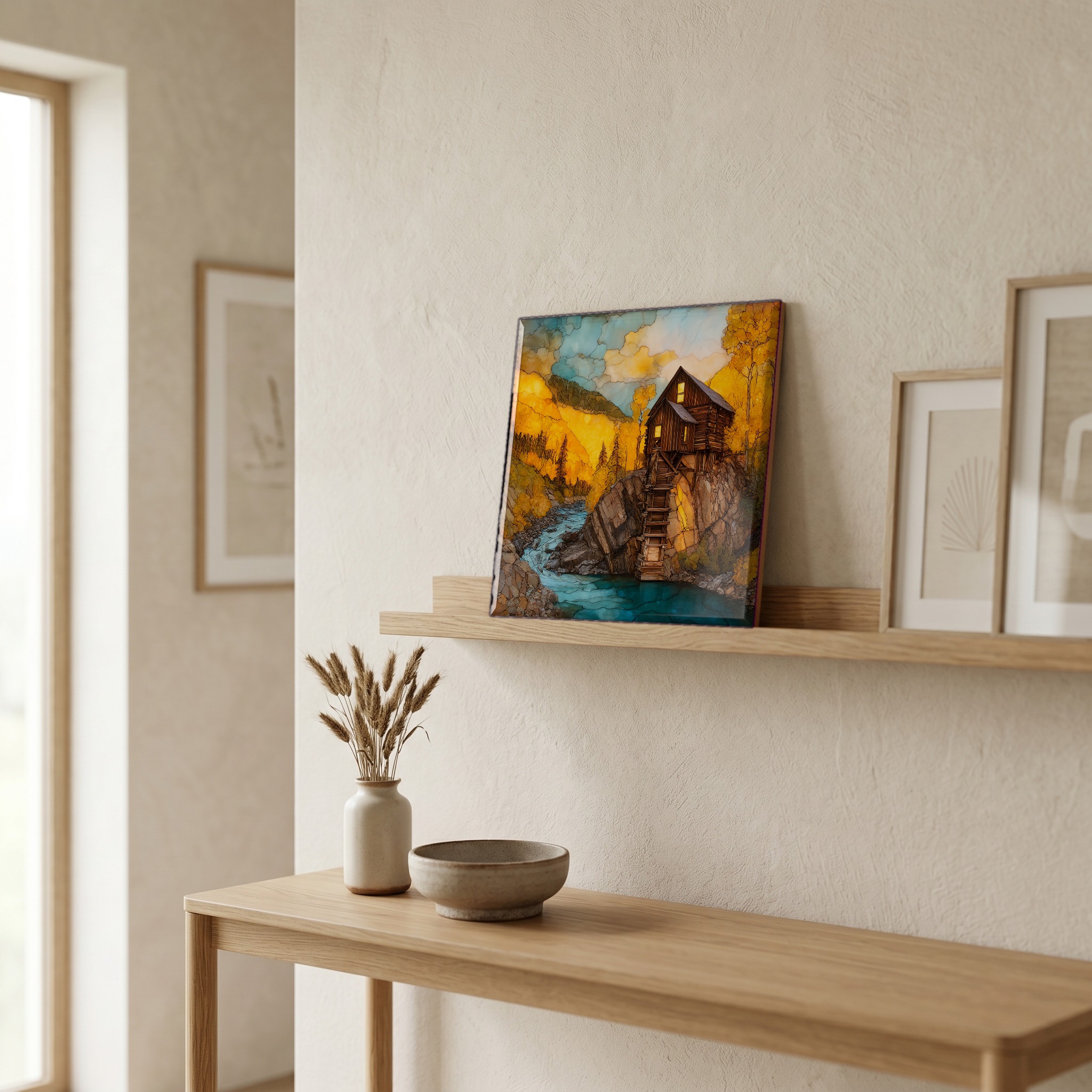
“A wooden powerhouse on a rock above the Crystal River, six miles past Marble, in the Elk Mountains. Built in 1892 to compress air for the silver mine on Sheep Mountain. The mine closed before the First World War; the town of Crystal emptied; the building stayed. The road in is one of the roughest jeep tracks in Colorado, and most who make it stand for a while saying very little. The aspens turn the last week of September, when the gold and the grey wood and the small fall under the floor all line up at once.
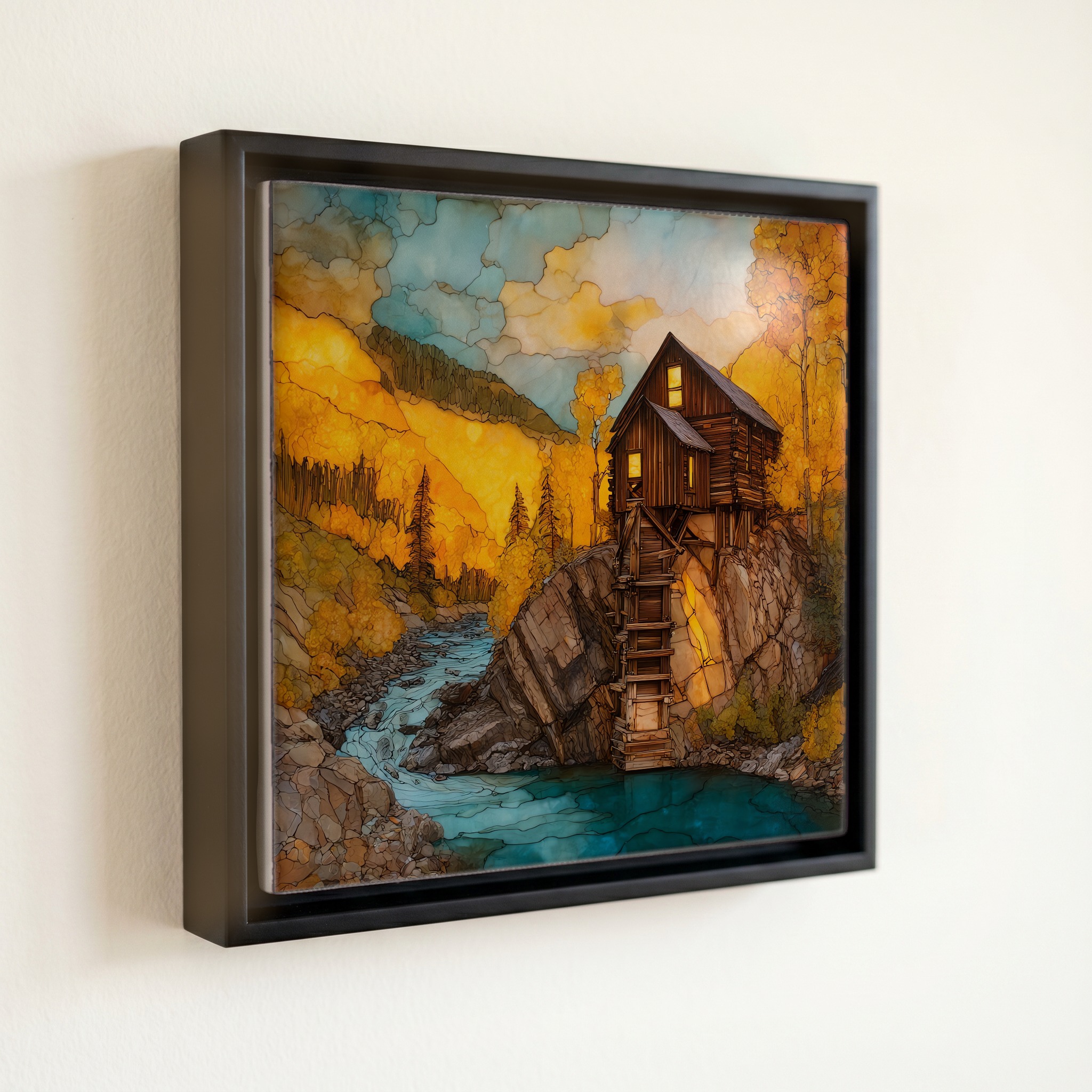
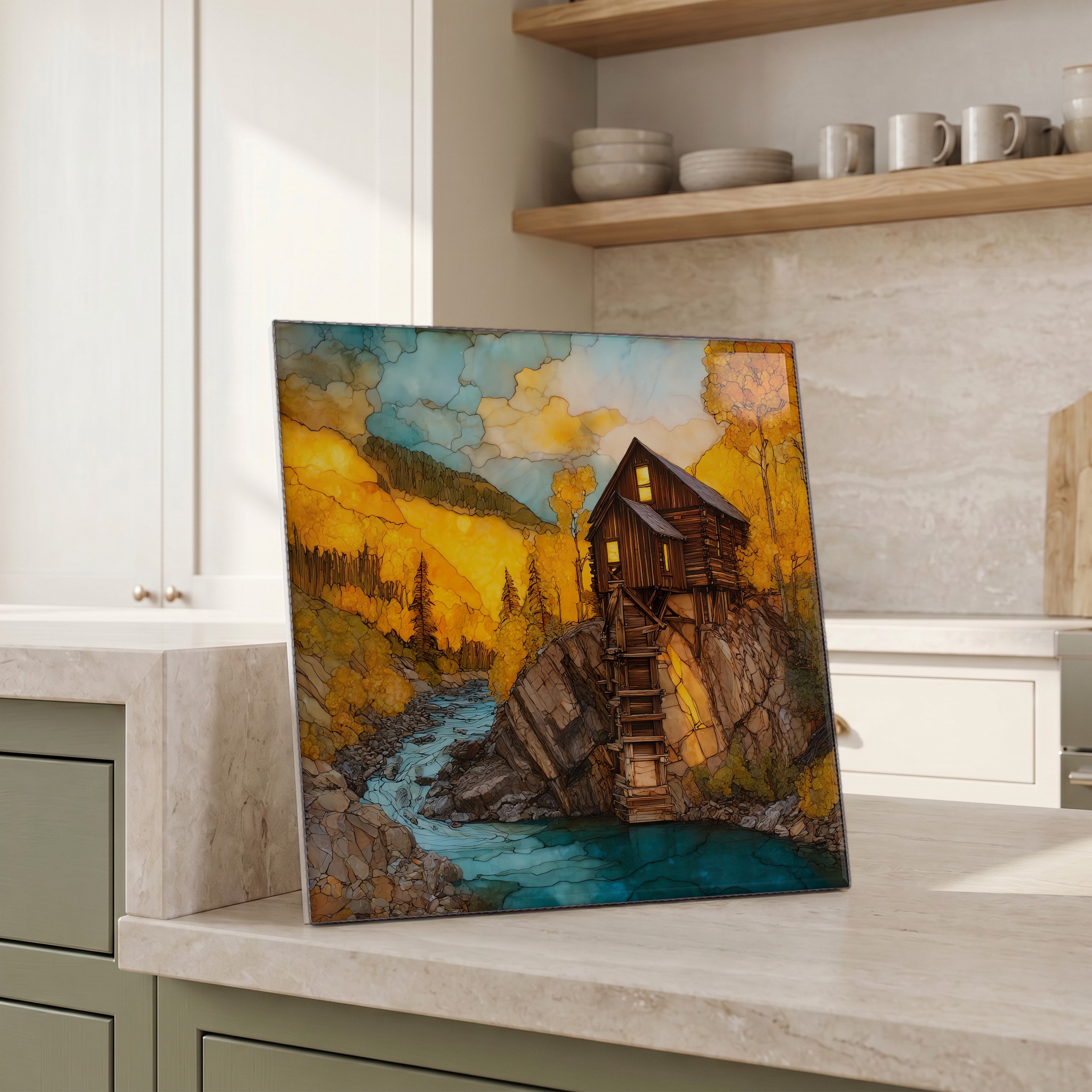
Crystal Mill at Marble Elk Range Ceramic Art Tile, on ceramic.
Each tile is finished by hand in our Knoxville studio. Artwork is slowly infused into the ceramic surface under high heat and pressure, and rests beneath a thin glossy finish. The colour lives in the surface, not on top of it.
Pick any four 4-inch tiles — National Parks you've been to, a Smokies set, the four seasons of one place. $ for a set of , cork-backed, ready to live on the table.
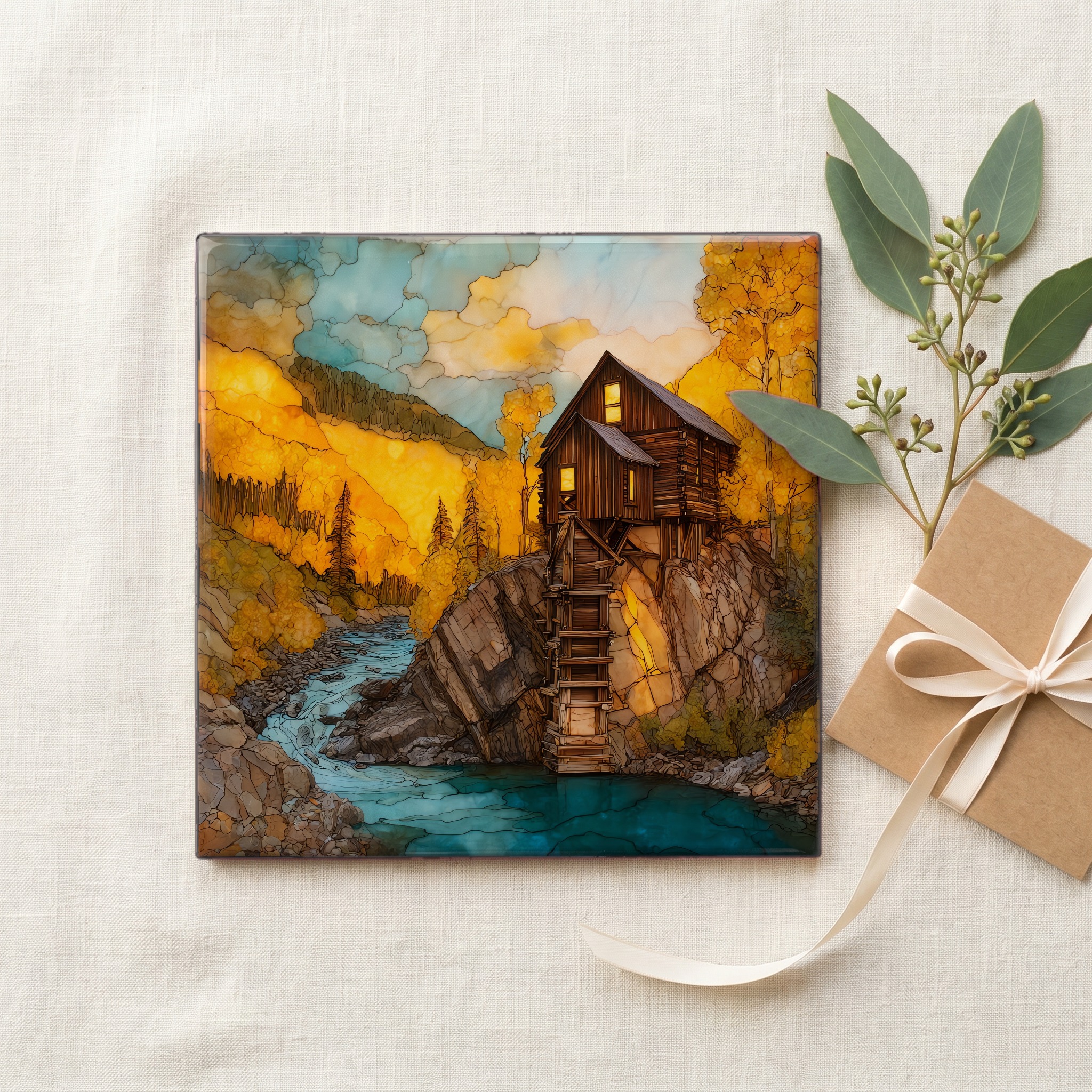
Each tile ships in a kraft box, tied with cream ribbon, with a handwritten note from the studio if you'd like to add one.
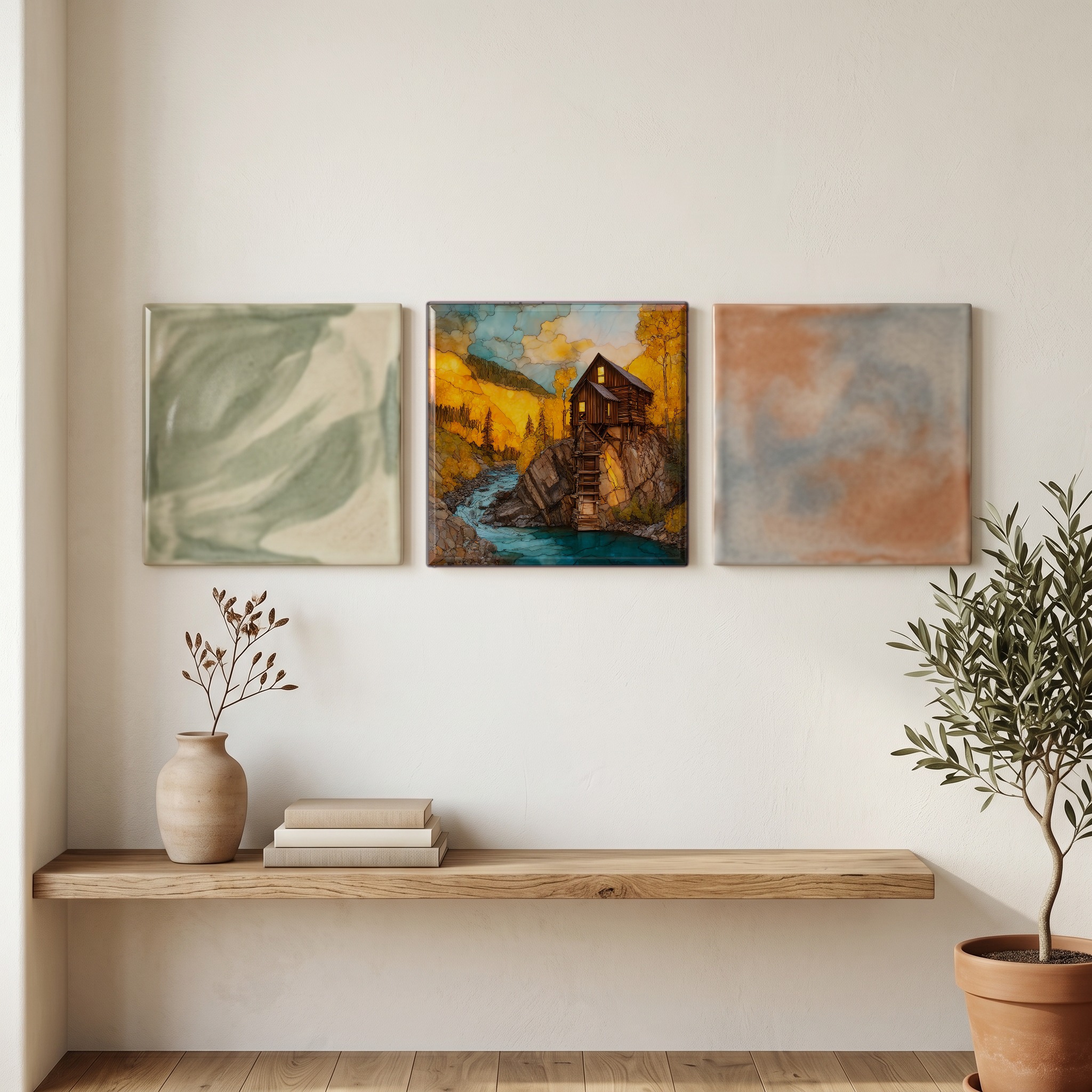
Three or five different vistas, hung together — a chapter of places you've been, or want to go.
The place, in three passes.
The Crystal Mill stands on a small rock outcrop above the Crystal River, roughly six miles east of the town of Marble in Gunnison County, Colorado. The river drops here in a short fall, and the wooden building, a powerhouse built in 1892 as a compressor station for the silver mines on Sheep Mountain, is anchored to the bedrock with timber bracing that has held for more than 130 years. It is one of the most-photographed structures in Colorado and was added to the National Register of Historic Places in 1985. The Elk Mountains rise west and south, including Snowmass Mountain at 14,099 feet. Access is via the Crystal River Jeep Trail, which is closed by snow most of the year.
The Crystal River rises in the high basins below Schofield Pass and runs about 35 miles to its confluence with the Roaring Fork at Carbondale. At the mill, the river drops over a low ledge of bedrock and turns a quick bend; the original 1892 design used that drop to power a water-driven Pelton wheel inside the building, which in turn drove an air compressor for the drilling equipment at the Sheep Mountain Tunnel Mine, a quarter-mile uphill. The river is fed almost entirely by snowmelt and is usually clear and cold even in August. It is also fast: the section above Marble holds a Class V whitewater run rarely paddled by anyone but local kayakers.
The road from Marble to Crystal opens in late May or early June, depending on snowpack, and closes again with the first heavy October storm. Most photographers come the last week of September into the first week of October, when the aspens along the lower Crystal River turn gold and the building's silver-grey timber reads warmest against the leaves. The road itself is not casual: the Crystal River Jeep Trail includes the Devil's Punchbowl, a narrow shelf cut into rock above a deep pool, and is restricted to high-clearance four-wheel-drive vehicles and side-by-sides. Most visitors hire a UTV tour out of Marble or hike the five-mile out-and-back rather than drive themselves.