Wender·Vista
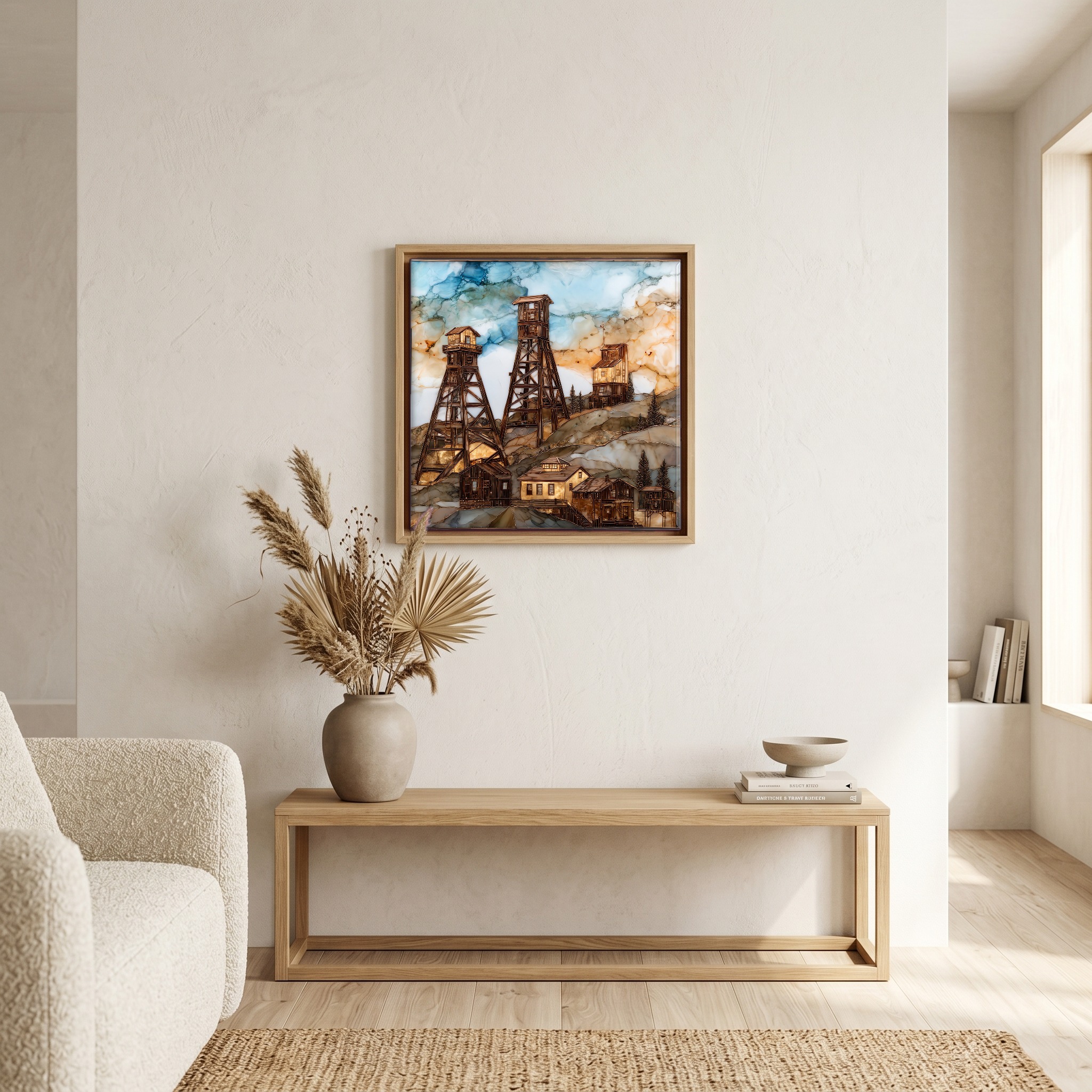
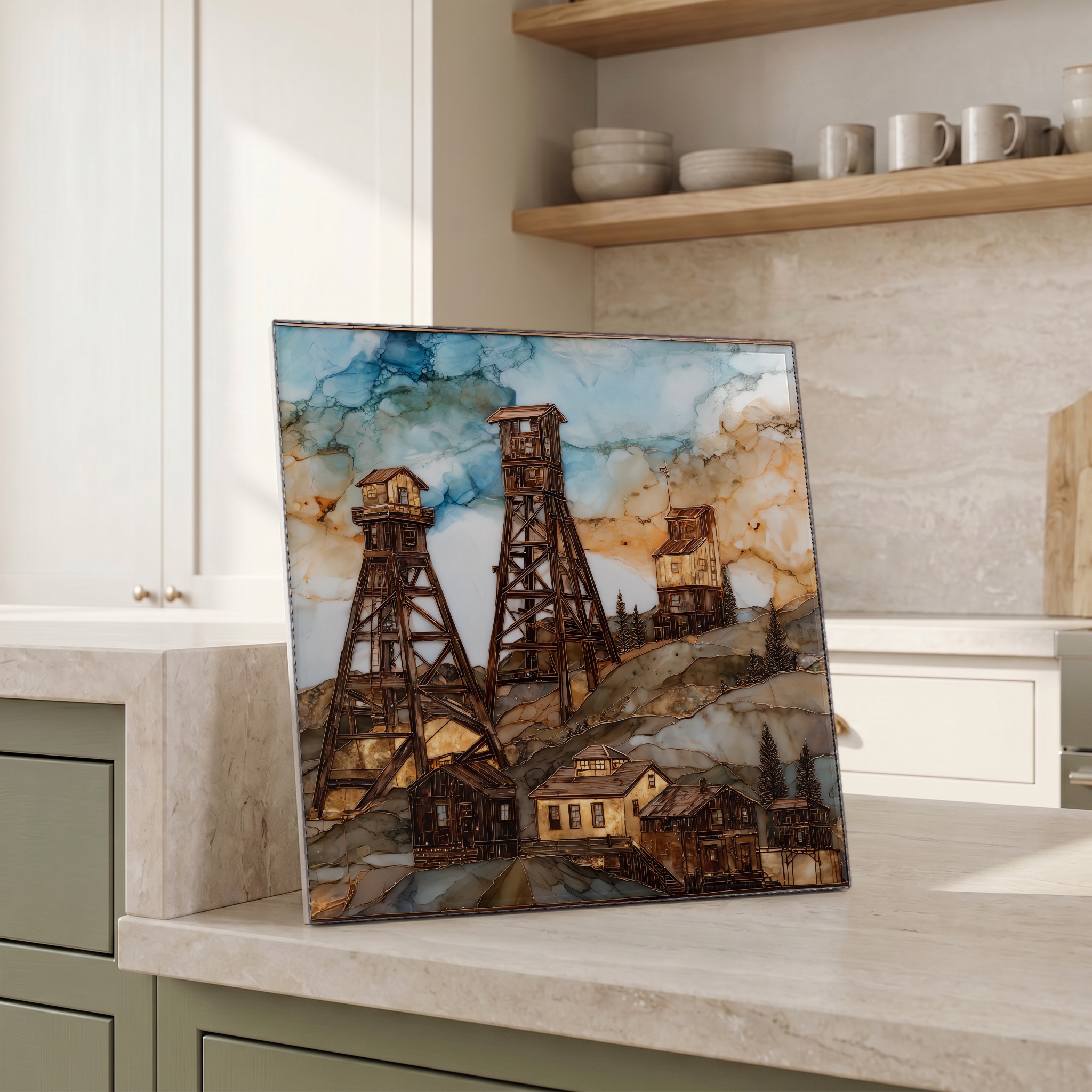
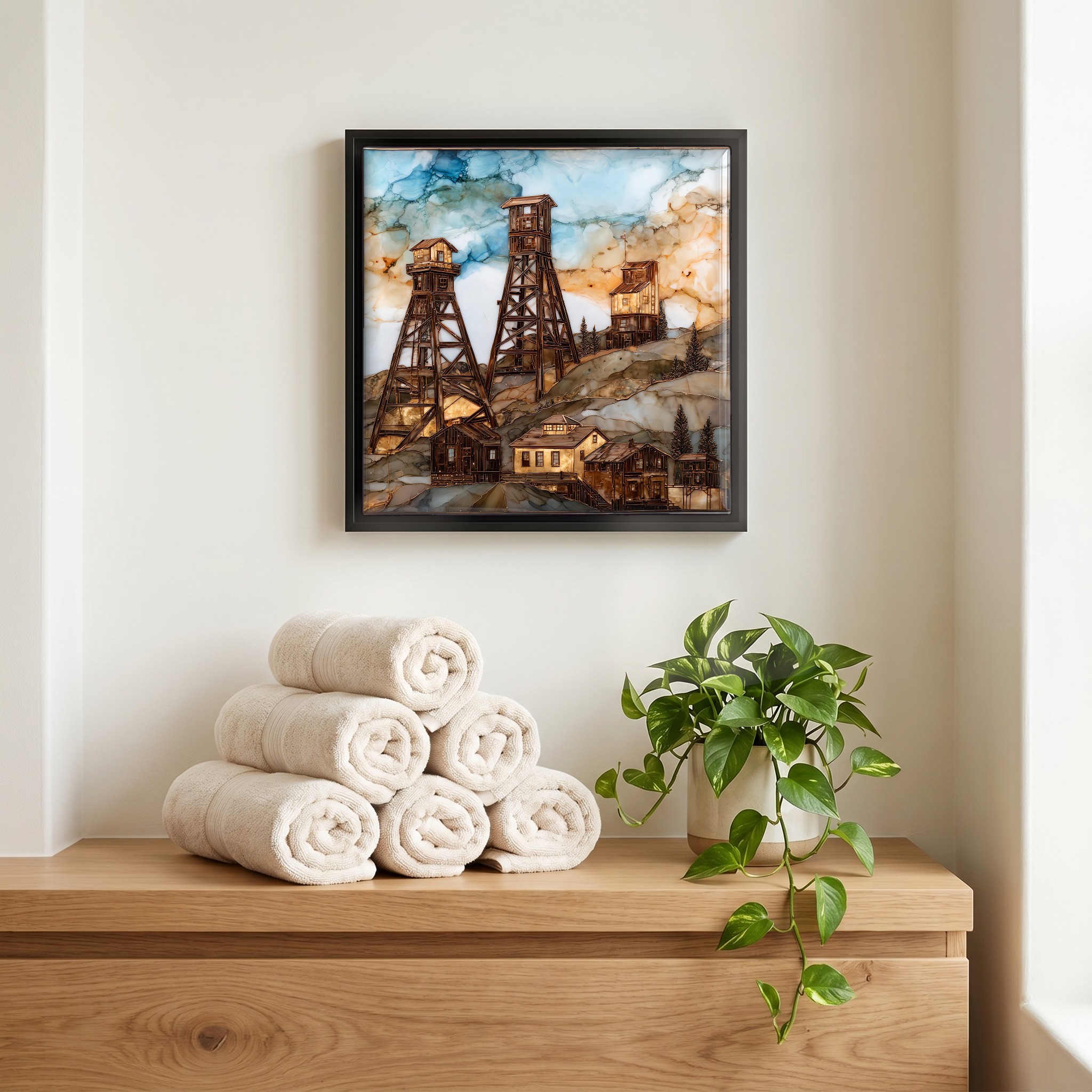
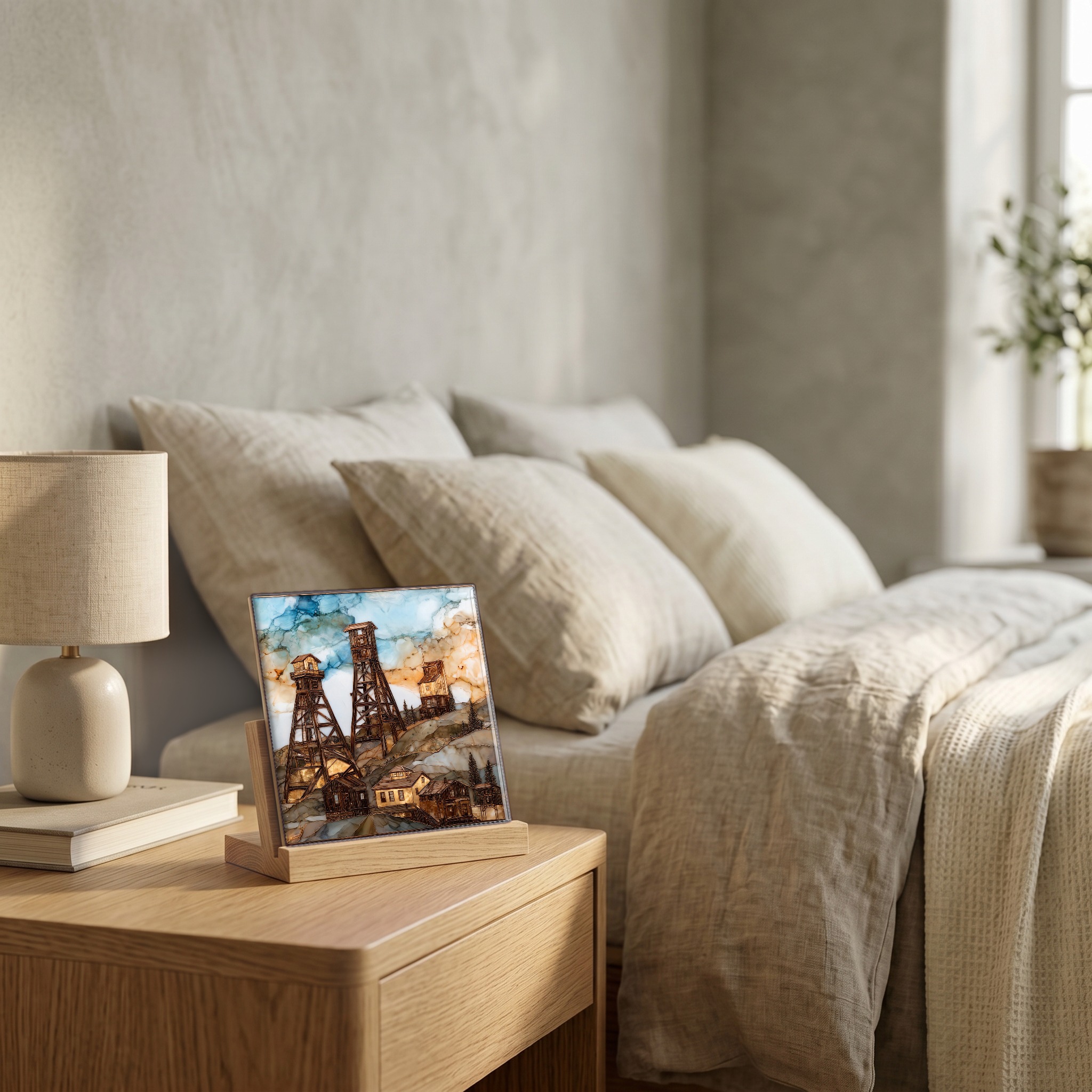
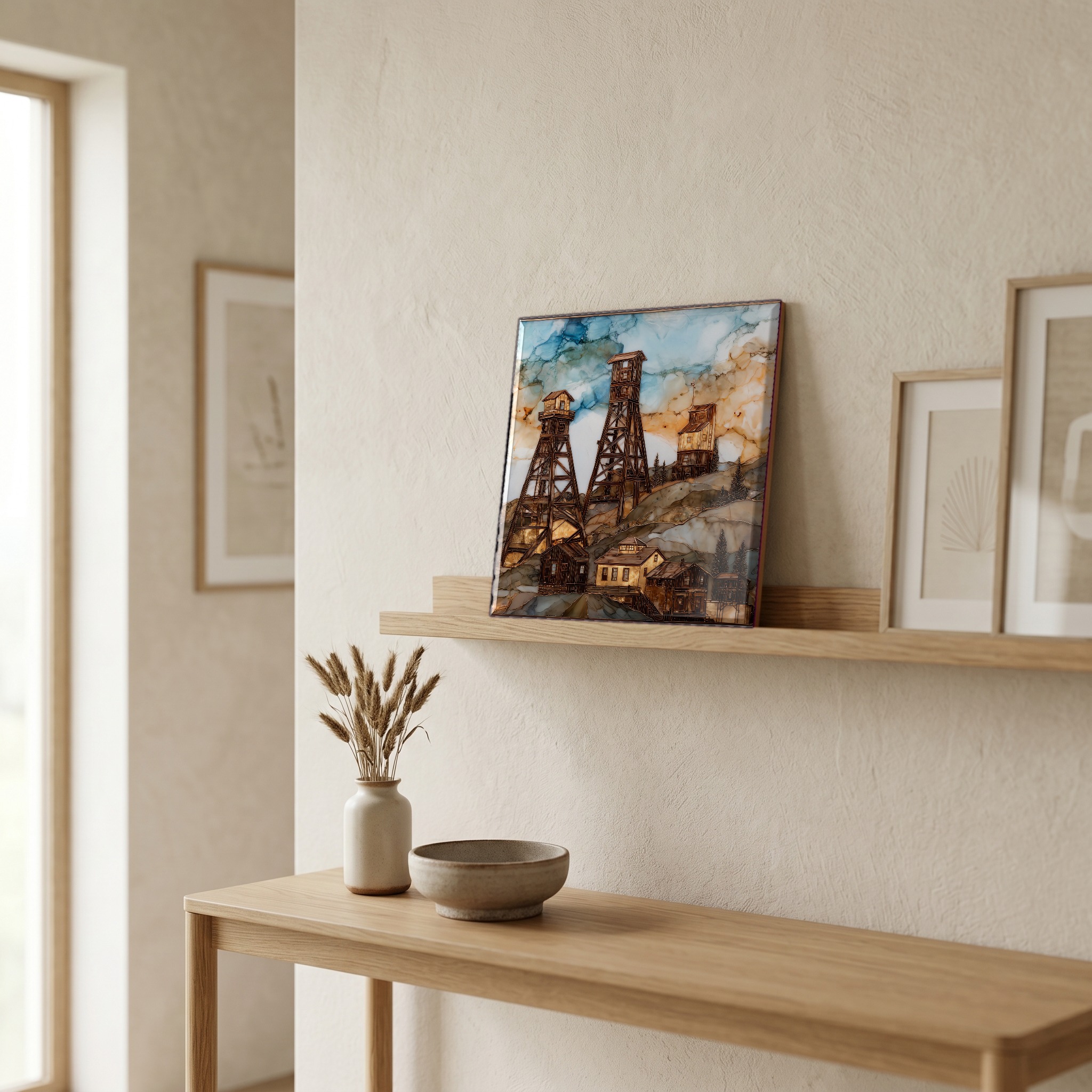
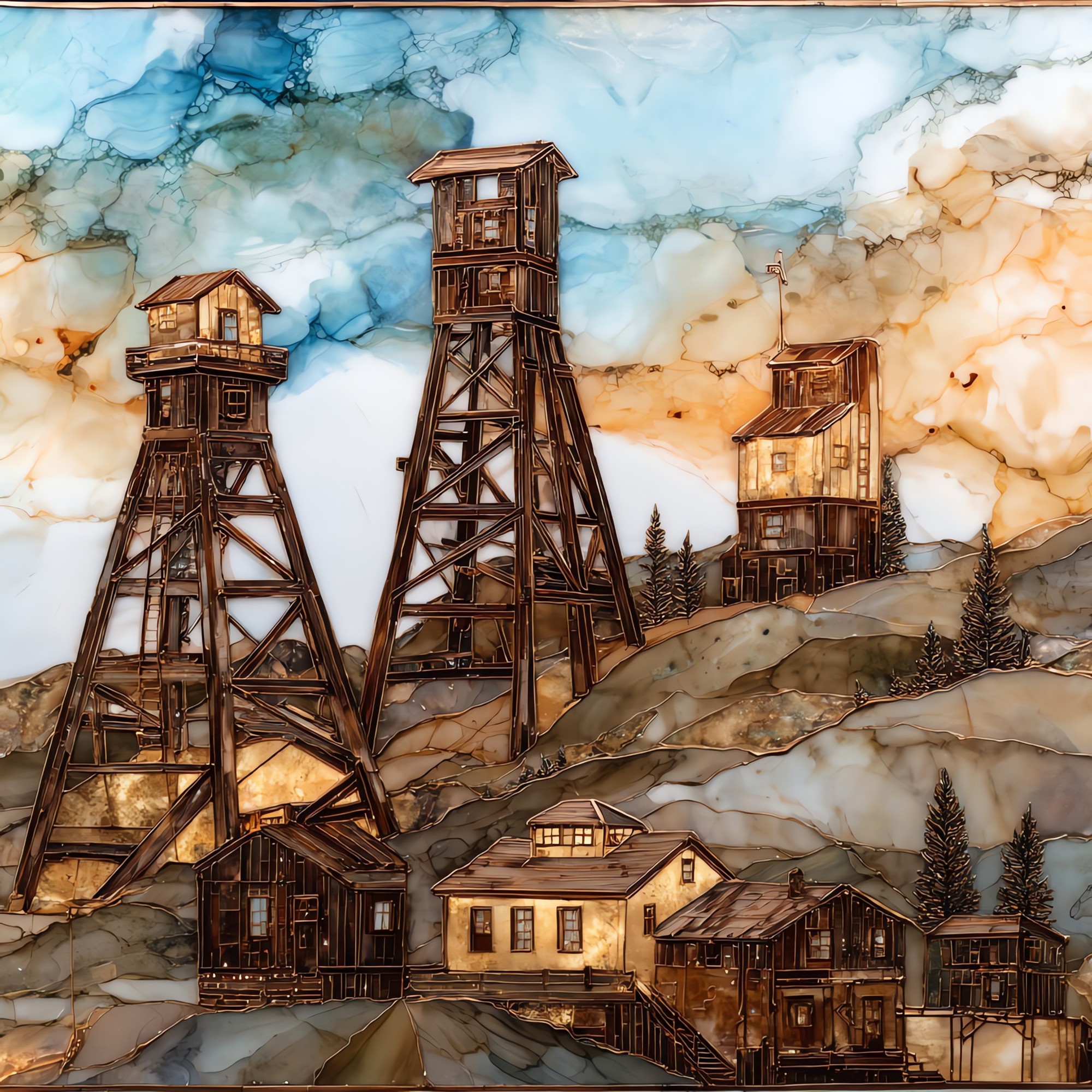
Cripple Creek headframes Front Range Ceramic Art Tile
shown on ceramic, 12-inch tileColorado · United States
on the southwest flank of Pikes Peak

Cripple Creek headframes Front Range Ceramic Art Tile

— what the gold rush left to the wind.

Where it lives

Not only on a wall.

A small tile on the nightstand catching the morning. A larger one above the fire. Yours, wherever you spend the slow hours.
Above the bench, in a warm oak surround.
Beside the kettle, propped on the counter.
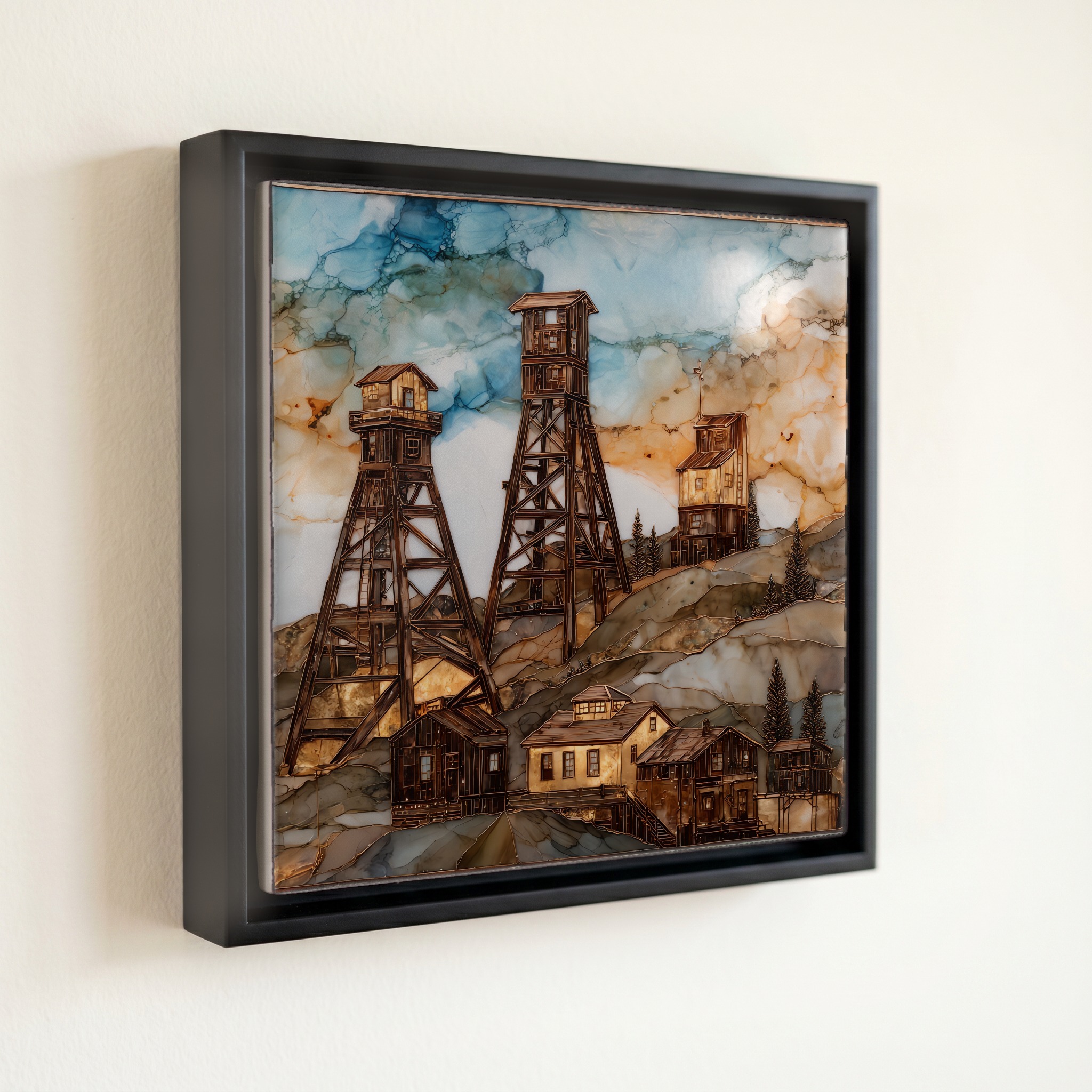
Above the linens, in a slim black surround.
On the nightstand, on a light oak stand.
On a picture ledge, where the light comes in.
a note from the studio

A volcanic caldera on the southwest flank of Pikes Peak, near 9,500 feet. The town sits inside the rim. The headframes stand outside it: wooden gallows over mine shafts, some original to the gold-rush years, some rebuilt after fires. The Mollie Kathleen still lowers tour cages a thousand feet down. The Cresson open pit still moves rock. In between, the old frames hold up against the wind. Twenty-three million ounces came up out of this ground. Most of the timbers are still where the gold was.
from the studio
shown in a slim black floating frame · 6 × 6 in
— bring it home

Cripple Creek headframes Front Range Ceramic Art Tile, on ceramic.

Each tile is finished by hand in our Knoxville studio. Artwork is slowly infused into the ceramic surface under high heat and pressure, and rests beneath a thin glossy finish. The colour lives in the surface, not on top of it.

What kind of piece?
One tile — square or rectangle.
How big?
the popular one — counter, shelf, nightstand
6 × 6 in · 15 cm · 1.6 lb
Surface finish
A clear glossy finish — the artwork reads as if under resin. Ideal for show-pieces and framed wall art.
How it sits
A hidden cleat — sits ¼″ proud of the wall.
$58
Hand-finished and shipped from our studio at the foot of the Smokies. On your wall in about ten days.
size
6 × 6 in
15 cm
weighs
1.6 lb
solid in the hand
surface
ceramic, hand-finished
art rests beneath a thin glossy finish
from
Knoxville, TN
our family studio, at the foot of the Smokies
— start a Coaster Set

Pick any four 4-inch tiles — National Parks you've been to, a Smokies set, the four seasons of one place. $ for a set of , cork-backed, ready to live on the table.
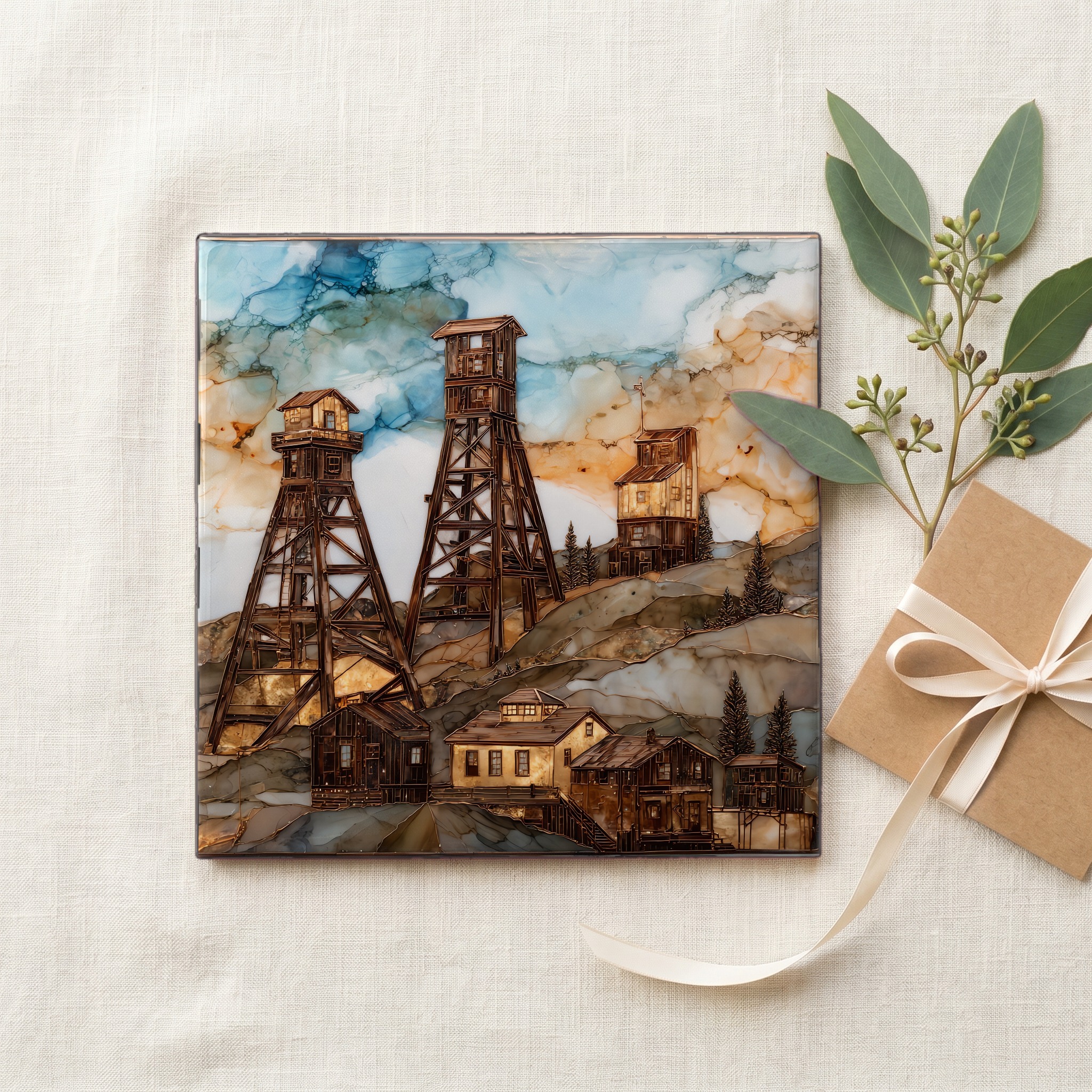
comes gift-ready
comes gift-ready

Each tile ships in a kraft box, tied with cream ribbon, with a handwritten note from the studio if you'd like to add one.
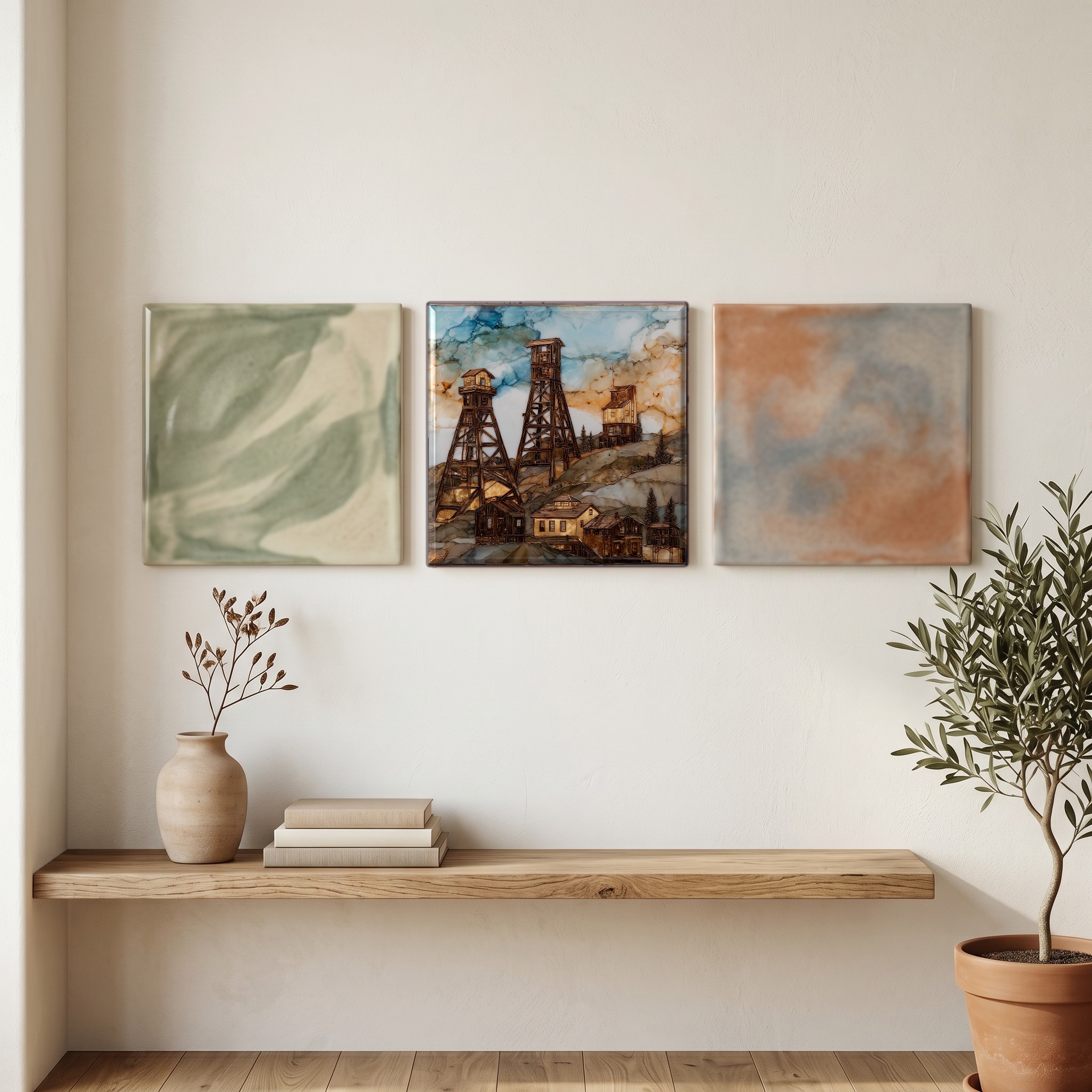
or build a grouping
or build a grouping

Three or five different vistas, hung together — a chapter of places you've been, or want to go.

about Cripple Creek headframes Front Range Ceramic Art Tile

The place, in three passes.

A little of what's known, in case you fall down the rabbit hole — or want to go see it yourself.
the place

Cripple Creek sits inside the rim of an ancient volcano on the southwest flank of Pikes Peak, at 9,494 feet in Teller County, Colorado. The town is about forty-five miles west-southwest of Colorado Springs, reached by Colorado Highway 67 climbing up from US 24 at Divide. The Cripple Creek-Victor Mining District covers about six square miles, and Cripple Creek and its sister town Victor anchor opposite ends of it. The Cripple Creek Historic District was designated a National Historic Landmark in 1961. The same volcanic structure that built the surrounding cone is what concentrated the gold; the mines follow ore bodies down through the caldera.

the year

The first gold was found by Bob Womack on Poverty Gulch in 1890, and the strike that built the town came in 1891. By 1900 the district had grown to a combined population near 50,000 across Cripple Creek, Victor, Goldfield, and the smaller camps in between. Winfield Scott Stratton's Independence Lode on Battle Mountain was the first deep mine in the district and produced one of the largest fortunes in Colorado. A pair of fires in April 1896 destroyed most of the original wooden town, and the rebuild in brick is what stands today. The district has produced more than 23 million ounces of gold since 1891, and the Cresson open-pit mine is still in production.

— informed by Wikipedia, Wikipedia
the visit

The Mollie Kathleen Gold Mine is the only mine in the district still running underground tours, lowering visitors a thousand feet down in the original cage hoist. The Cripple Creek and Victor Narrow Gauge Railroad runs a four-mile loop past several preserved headframes and old workings, operating from May through October. The American Eagles Overlook above Victor sits more than 10,500 feet up on Bull Hill, looking across the modern Cresson open pit and the surviving frames on the surrounding ridges. The town is about an hour's drive from Colorado Springs by US 24 and Colorado Highway 67, climbing more than 3,000 feet from the plains.

— informed by Wikipedia
where
United States · Teller County, Colorado
elevation
2,894 m · 9,494 ft
position
38.7472° N · 105.1786° W
the neighborhood

What's nearby.

A handful of named places within an hour's walk or short drive. Some we've already painted; some we will.
6 km SE
Victor
mining town
3 km W
Mount Pisgah
peak
5 km ESE
Goldfield
ghost town
24 km NW
Florissant Fossil Beds National Monument
national monument
N
Cripple Creek headframes Front Range Ceramic Art Tile
Victor
Mount Pisgah
Goldfield
Florissant Fossil Beds National Monument
common questions

What people ask.

A few questions we get about Cripple Creek headframes Front Range Ceramic Art Tile — and about bringing the piece home.
about the place

Cripple Creek sits at 9,494 feet on the southwest flank of Pikes Peak in Teller County, Colorado, about forty-five miles west-southwest of Colorado Springs by US 24 and Colorado Highway 67. The town is inside the rim of an ancient volcanic caldera.

Headframes are the tall wooden or steel structures that stood over mine shafts to lift ore, men, and equipment in cages. The Cripple Creek district had hundreds of working mines from 1891 through the early twentieth century, and dozens of the original wooden frames still stand on the ridges around town.

Bob Womack found gold on Poverty Gulch in 1890, and the strike that built the town came in 1891. Winfield Scott Stratton's Independence Lode on Battle Mountain was the first deep mine in the district and produced one of the largest fortunes in Colorado.

More than 23 million ounces of gold have come out of the Cripple Creek-Victor district since 1891. Production never fully stopped: the Cresson open-pit mine, run by the Cripple Creek and Victor Gold Mining Company, still operates today.

Yes. The Mollie Kathleen Gold Mine offers the only underground tour in the district, lowering visitors a thousand feet down in the original cage hoist. The Cripple Creek and Victor Narrow Gauge Railroad also runs a four-mile loop past preserved surface workings from May through October.

The Cripple Creek Historic District was designated a National Historic Landmark in 1961, covering the town and the surrounding mining district that includes Victor and Goldfield. Most of the standing brick buildings in town date from the rebuild after a pair of fires in April 1896.

The town sits above 9,000 feet, so winters are cold and snowy and many outdoor mining-history attractions close from October through May. The casinos in town stay open in winter, and US 24 and Colorado Highway 67 are kept clear.

about the piece in your home

It's a piece many of our Colorado customers buy for parents and grandparents who worked the district or grew up around it. The headframes carry the work and the wind both. A Medium or Large with the studio's handwritten note tends to land well.

The piece reads warm against rustic-modern, mountain-modern, and industrial-leaning interiors. The wooden vertical lines and the broken volcanic ground anchor it; it pairs with leather, raw oak, blackened steel, and pieces that already carry some patina.

Yes. The current mountain-modern direction leans into honest materials and historical reference rather than ski-lodge decoration. The headframes give a room something specific to look at, and a piece of Colorado history that isn't another aspen-grove print.

For a sofa, a single Large reads as a focal point, and a 4-tile Mural carries a longer wall. Above a console table or a narrow run, a Medium or a 9-tile Mural in a vertical layout works to lift the eye.

Yes. The Dura Satin and Matte finishes are scratch-resistant and built for backsplashes, showers, and vertical installations. The Glossy finish is meant for framed wall art and dry settings, not splash zones.

A microfibre cloth and water is enough for routine cleaning. The colour lives in the surface beneath the finish, so there is no painted layer to wear off. For a backsplash, the Dura Satin or Matte finish is meant to be wiped down.

Yes. Every WenderVista piece is original to the studio in Knoxville, Tennessee. There is no licensing, no stock library, and no other source. Reid Wender chooses each place and the studio hand-finishes each tile.

if this one stayed with you

A few you might also love.

Hand-picked by the eye that found Sorapis. Same air, same kind of quiet.