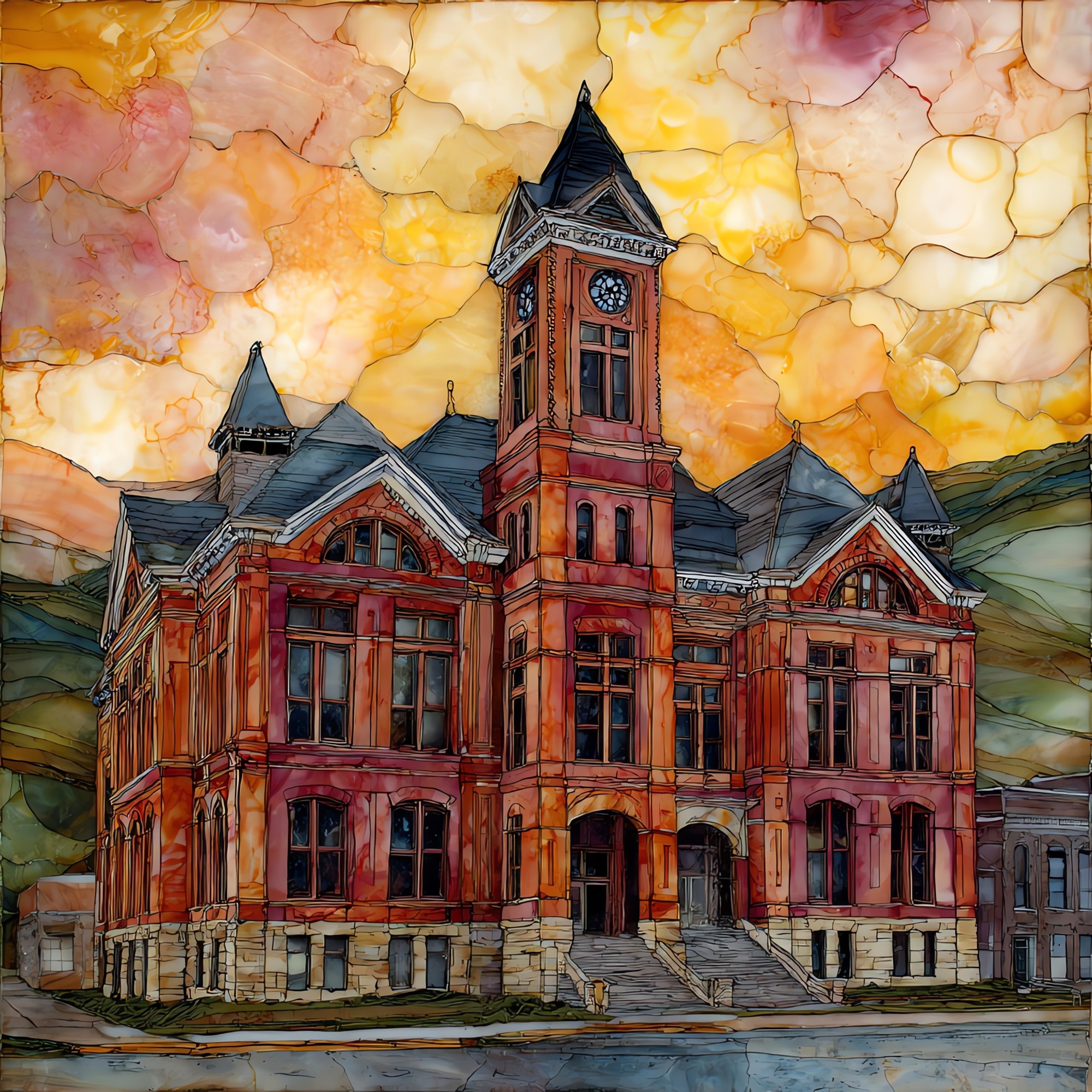
Cripple Creek courthouse Front Range Ceramic Art Tile
— — granite the rush left behind.
Not only on a wall.
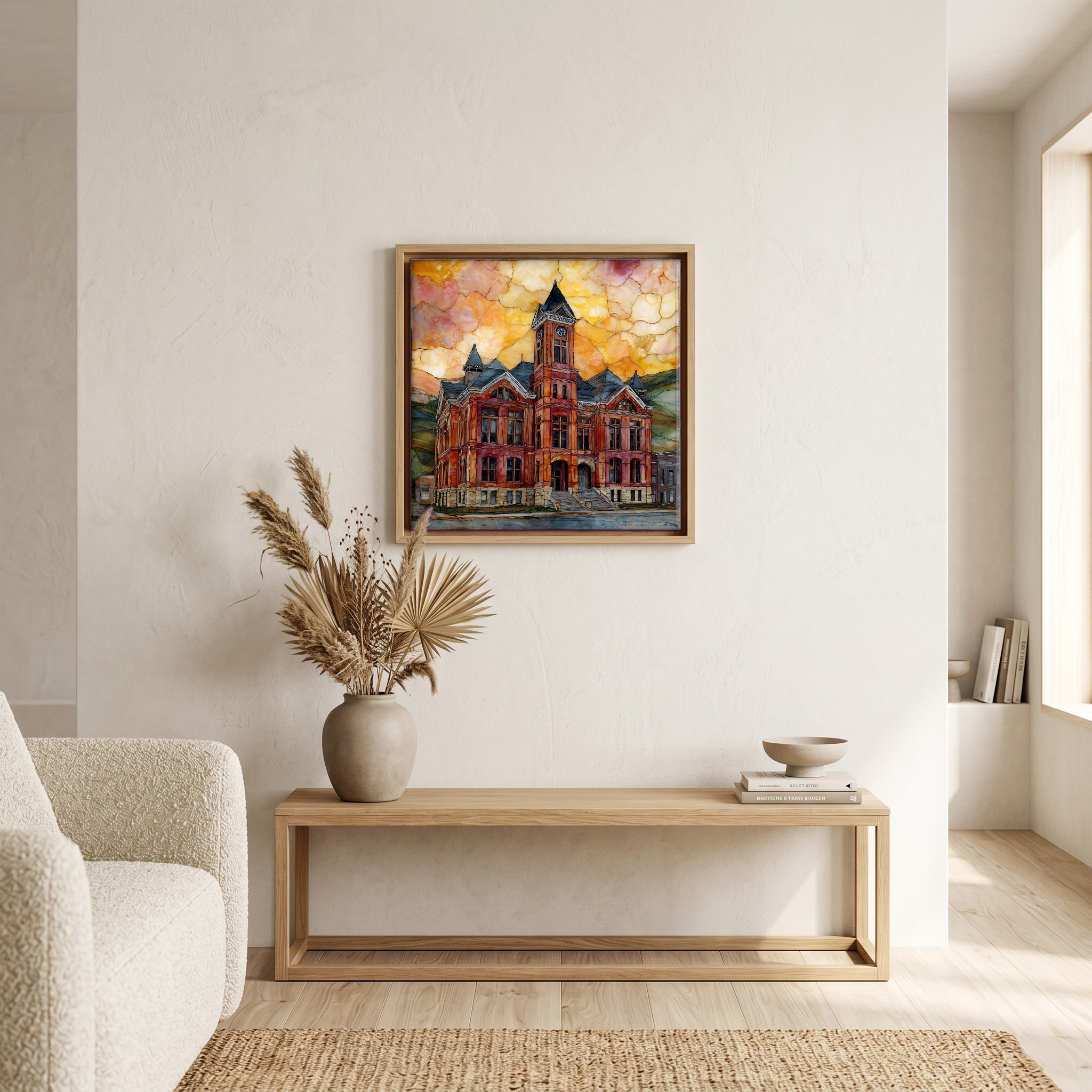
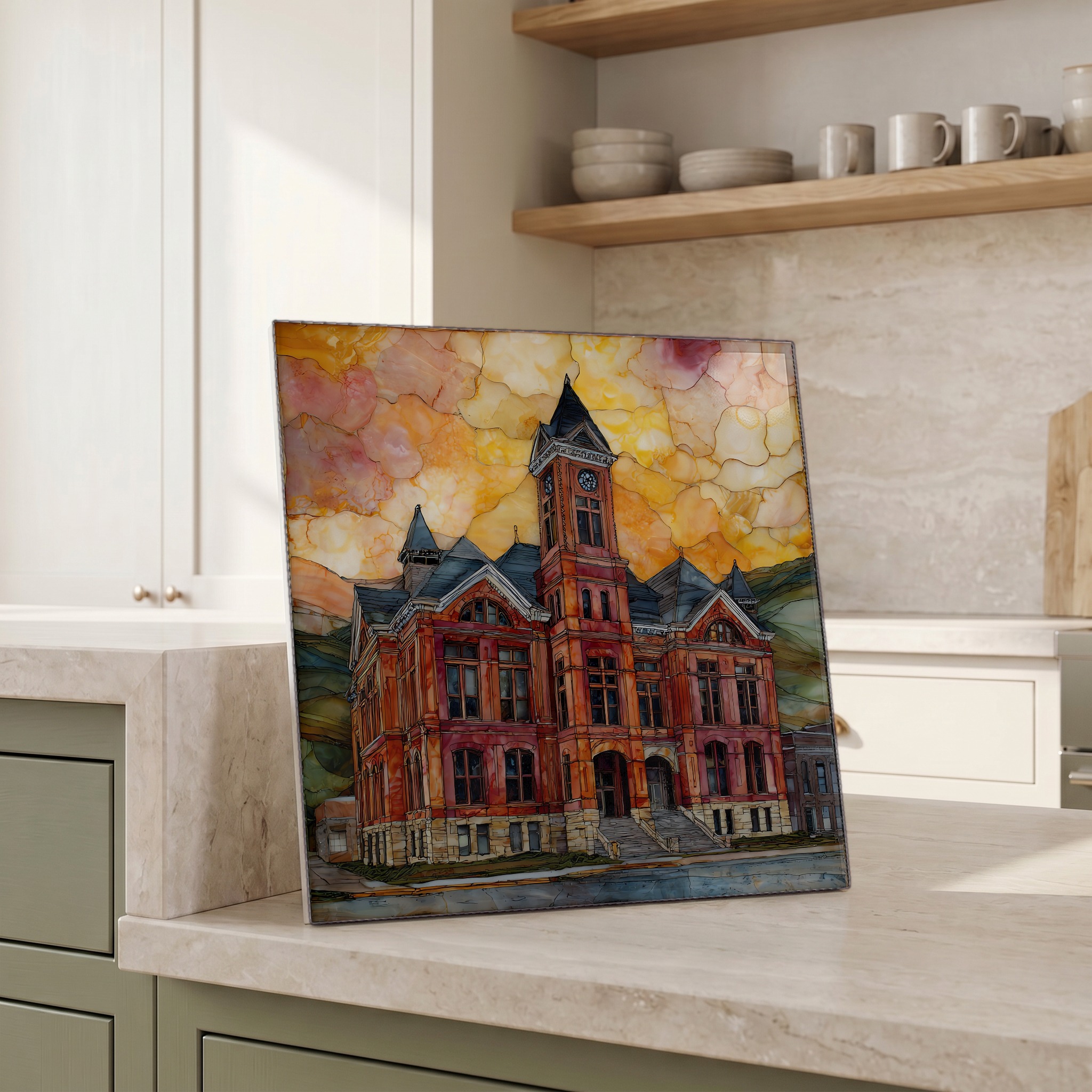
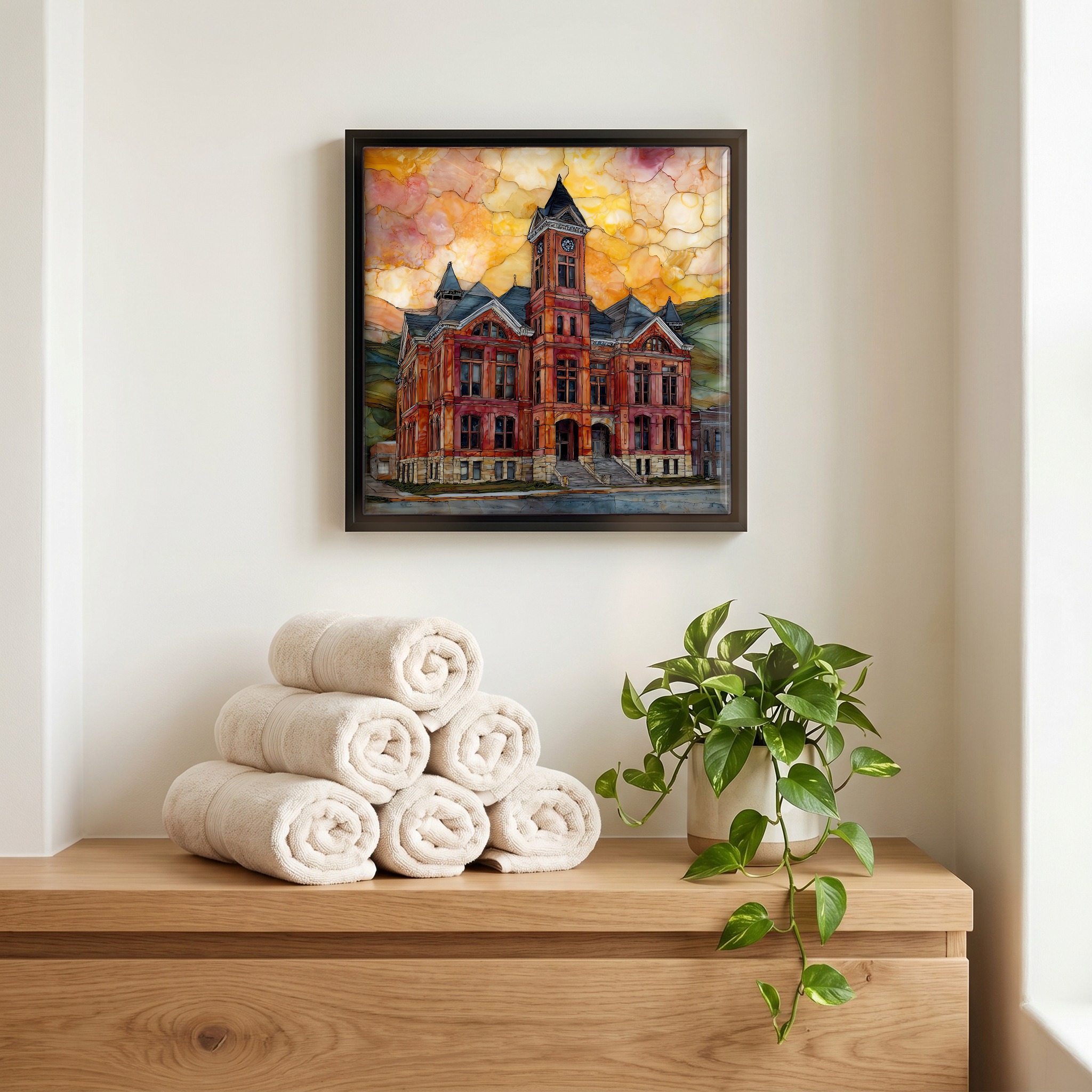
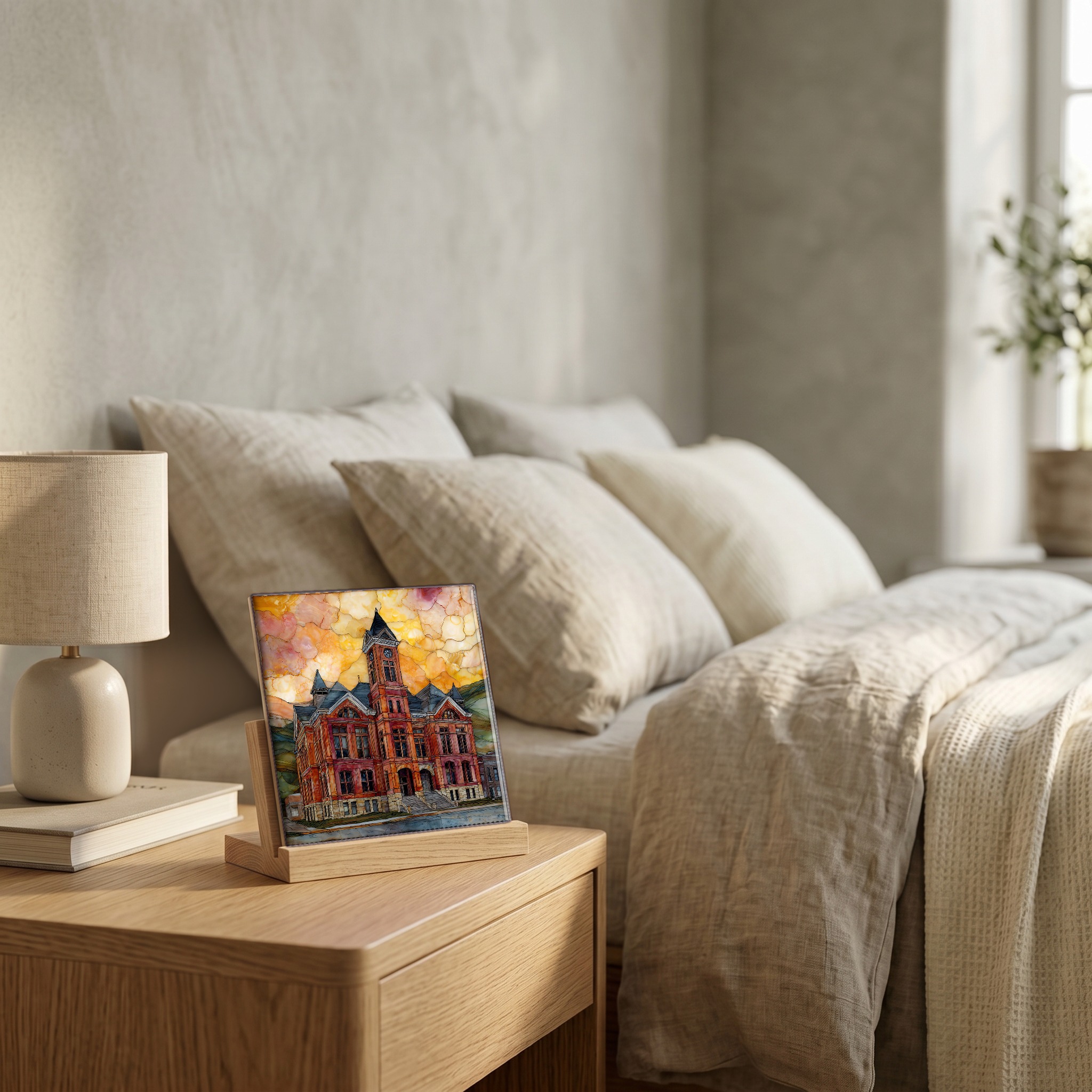
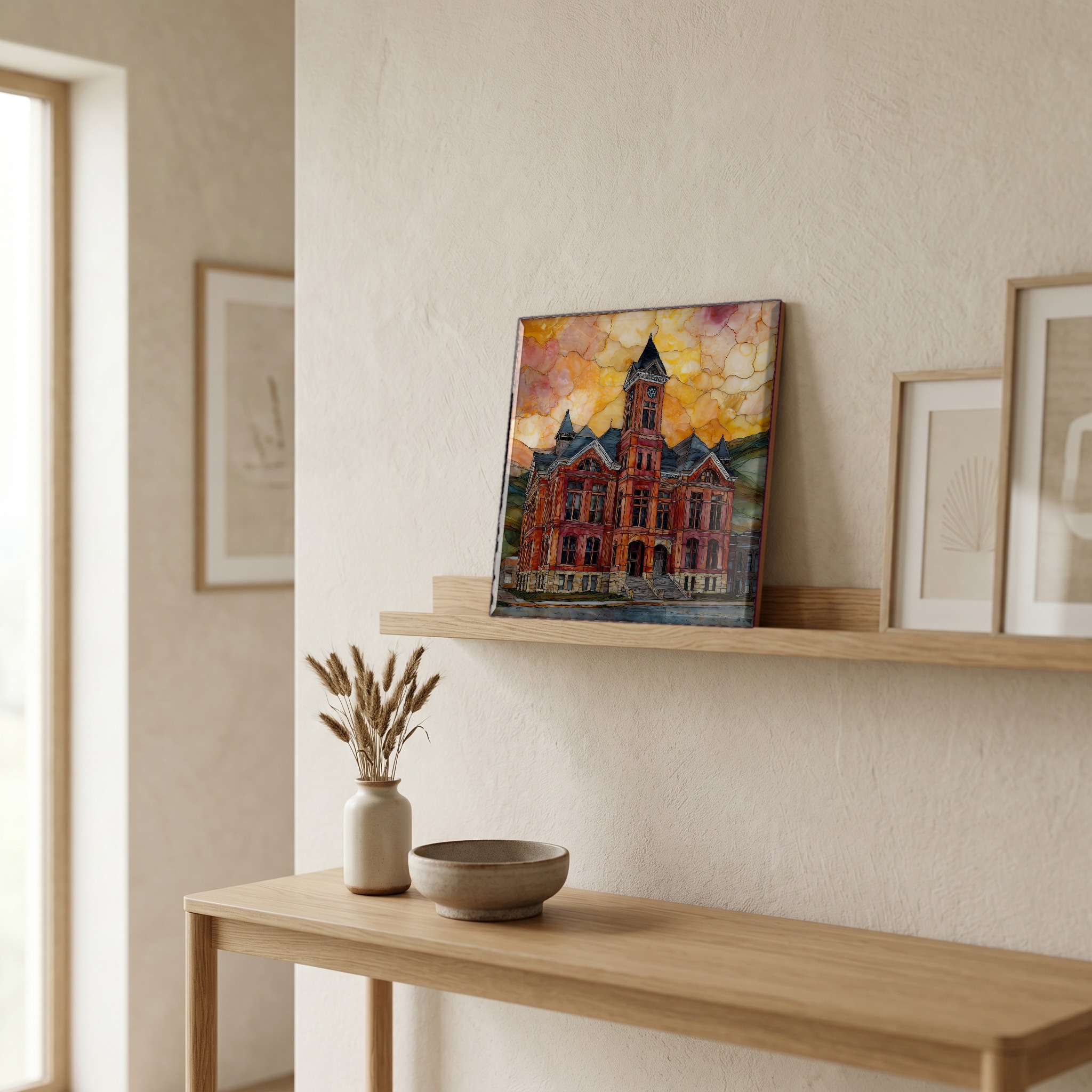
“Built in 1904, eight years after two fires in 1896 burned most of the wood-frame town. Cripple Creek had something like 25,000 residents at the gold-rush peak; today, around 1,200. The courthouse went up in three stories of granite, more building than the town has needed for a hundred years. It still holds court. The stone keeps its colour at altitude. Cold blues in winter shadow, warm browns when the late sun catches the west face. From Bennett Avenue the whole rebuilt district sits in view, two blocks of brick and stone, with the back of Pikes Peak rising to the east.
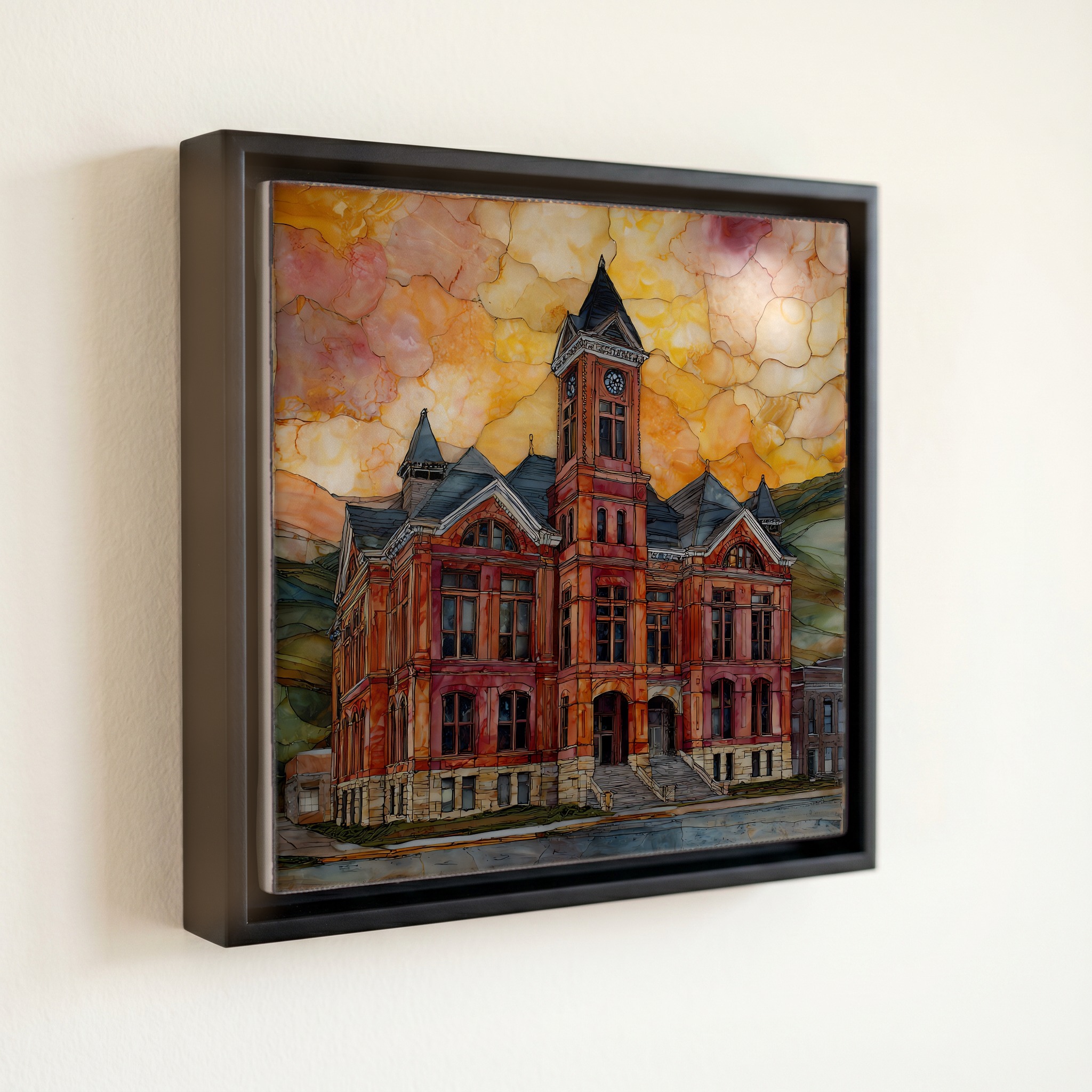
Cripple Creek courthouse Front Range Ceramic Art Tile, on ceramic.
Each tile is finished by hand in our Knoxville studio. Artwork is slowly infused into the ceramic surface under high heat and pressure, and rests beneath a thin glossy finish. The colour lives in the surface, not on top of it.
Pick any four 4-inch tiles — National Parks you've been to, a Smokies set, the four seasons of one place. $ for a set of , cork-backed, ready to live on the table.
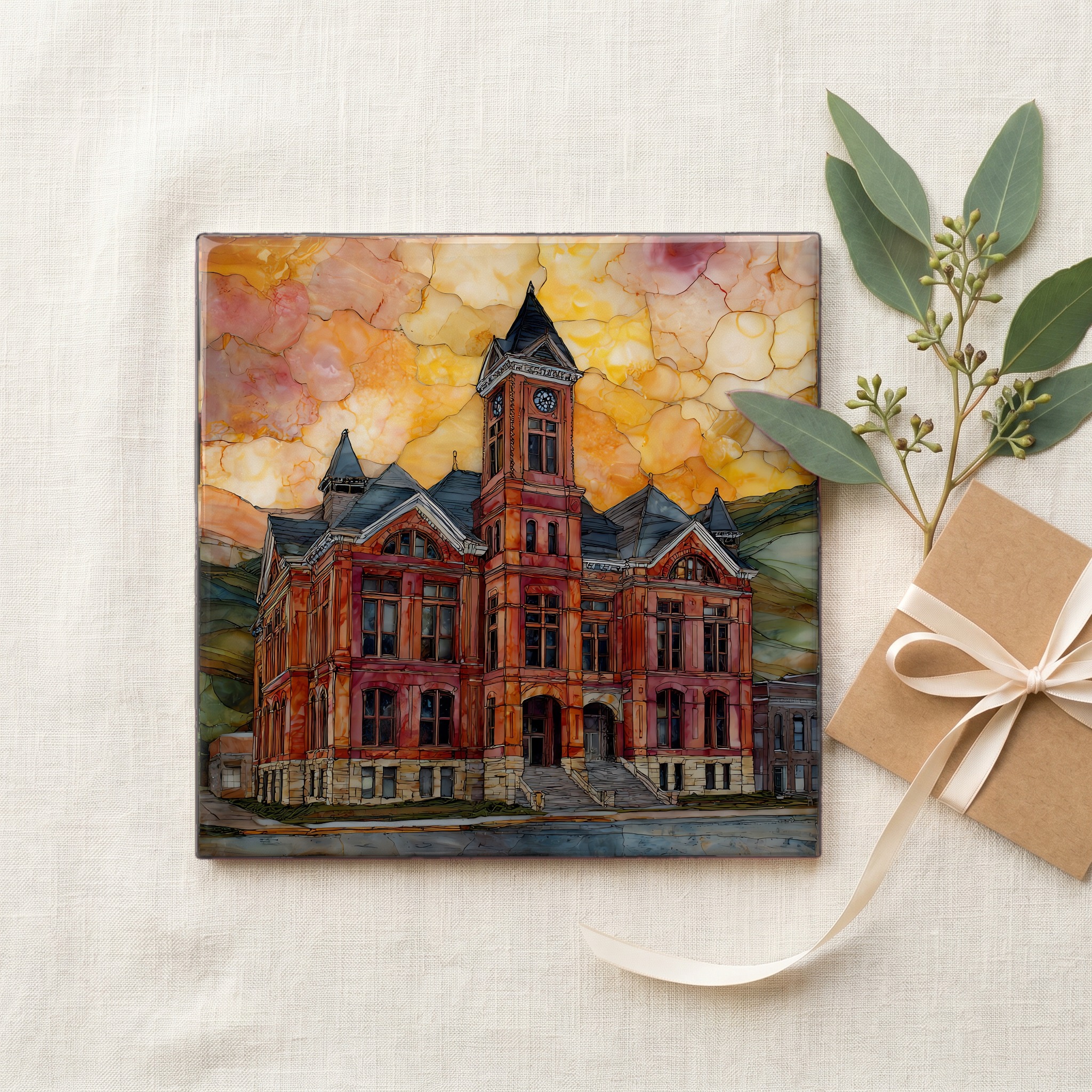
Each tile ships in a kraft box, tied with cream ribbon, with a handwritten note from the studio if you'd like to add one.
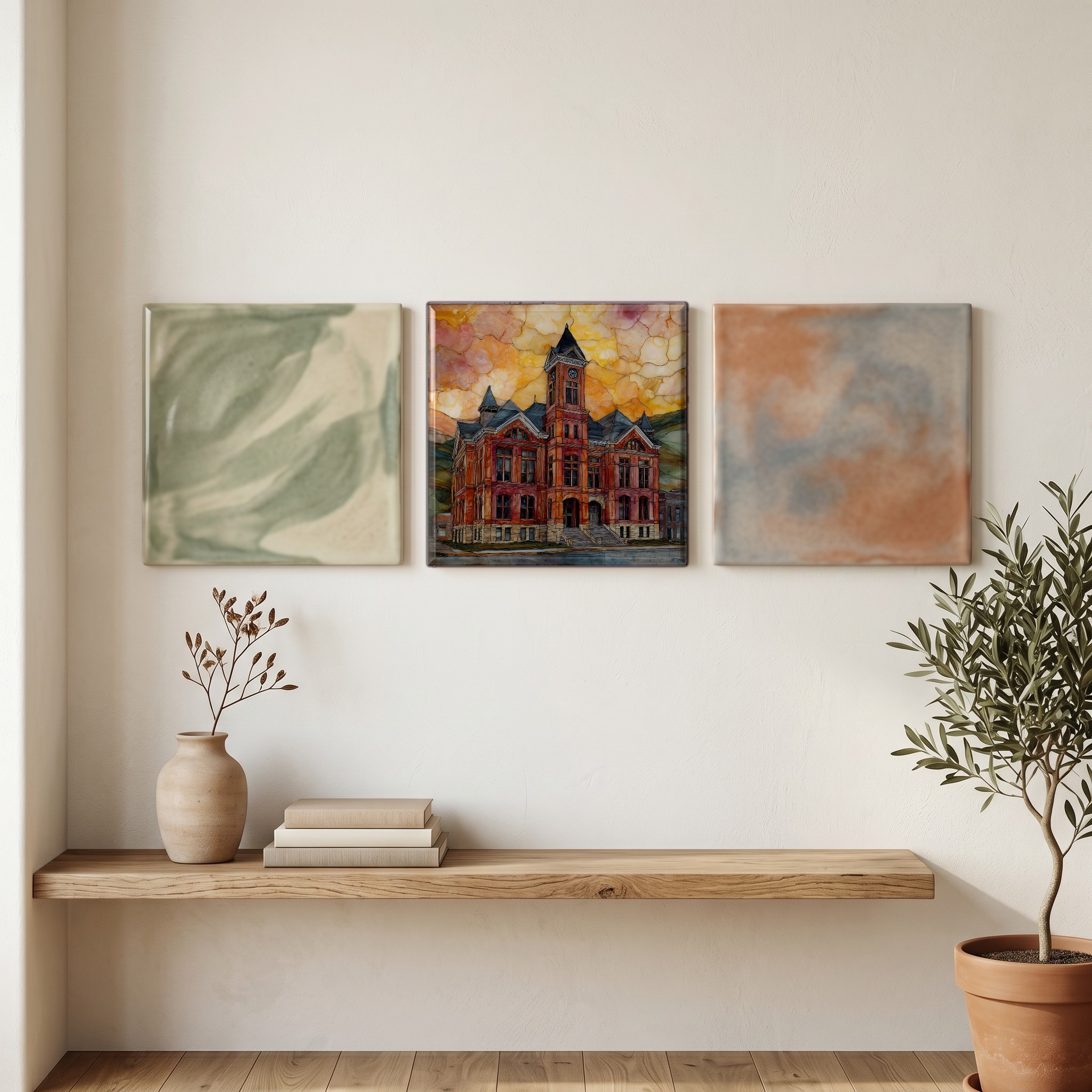
Three or five different vistas, hung together — a chapter of places you've been, or want to go.
The place, in three passes.
The Teller County Courthouse stands at 101 West Bennett Avenue in Cripple Creek, Colorado, at an elevation of about 9,494 feet on the western flank of Pikes Peak. Cripple Creek sits in the southern reach of the Front Range, roughly 45 miles west of Colorado Springs by way of U.S. Highway 24 and Colorado 67. The town grew up around Bob Womack's 1890 gold strike, which seeded what became known as the Cripple Creek Mining District; over the life of the district, more than 22 million troy ounces of gold were pulled from the surrounding ridges. The courthouse was completed in 1904 and remains the seat of Teller County, which the Colorado General Assembly carved out of El Paso County in 1899.
The courthouse is built of grey granite quarried from the mountains around Cripple Creek and laid up in the Romanesque Revival idiom that civic architects favoured for county buildings in the American West at the turn of the twentieth century. Three stories rise above a heavy foundation, with rough-cut stone on the lower courses giving way to dressed blocks above and rounded arches over the upper windows. The granite is the legacy of the 1896 fires: two consecutive blazes in late April of that year burned most of Cripple Creek's wood-frame buildings to the ground, and the town rebuilt in stone and brick on the understanding that the next fire was a matter of when, not if. The result is two blocks of Bennett Avenue that have not changed much in over a century.
Cripple Creek sits at 9,494 feet, one of the highest incorporated towns in Colorado, well into the subalpine forest where aspen and lodgepole pine give way to spruce and fir. Air thins meaningfully at this altitude; summer afternoons in Teller County run cooler than the same hour in Colorado Springs, almost 3,500 feet below. Weather changes are swift. Storms build through the afternoon and drop into the basin in under an hour, dragging hail across Bennett Avenue and then clearing to the long evening light the high Rockies are known for. Winter snowfall averages around 150 inches a year, and the granite holds its colour against it. In late September the aspens above the town turn at their own pace, depending on the year's first hard frost.