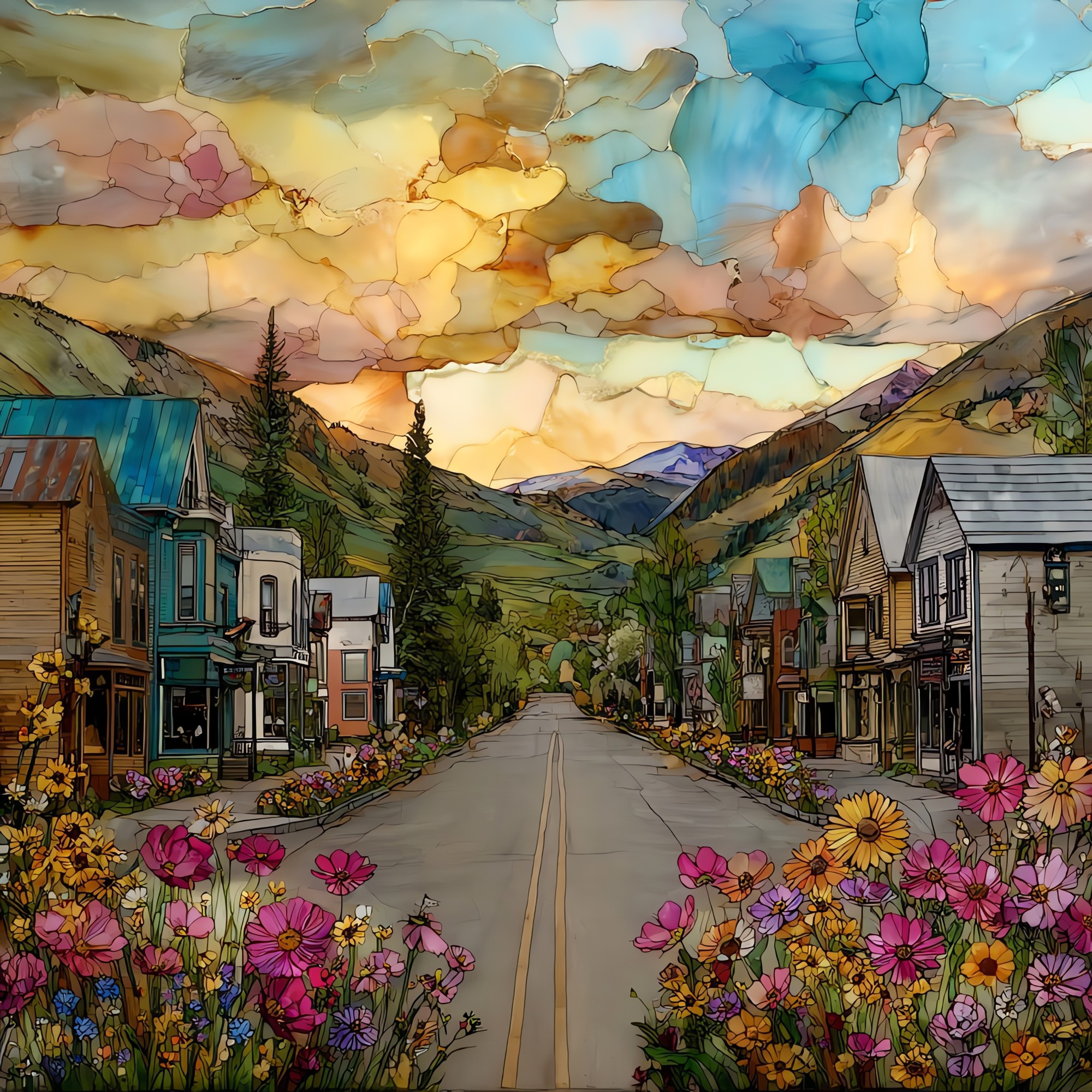
Crested Butte Elk Avenue Elk Range Ceramic Art Tile
— — the road that ends in the Elk Range.
Not only on a wall.
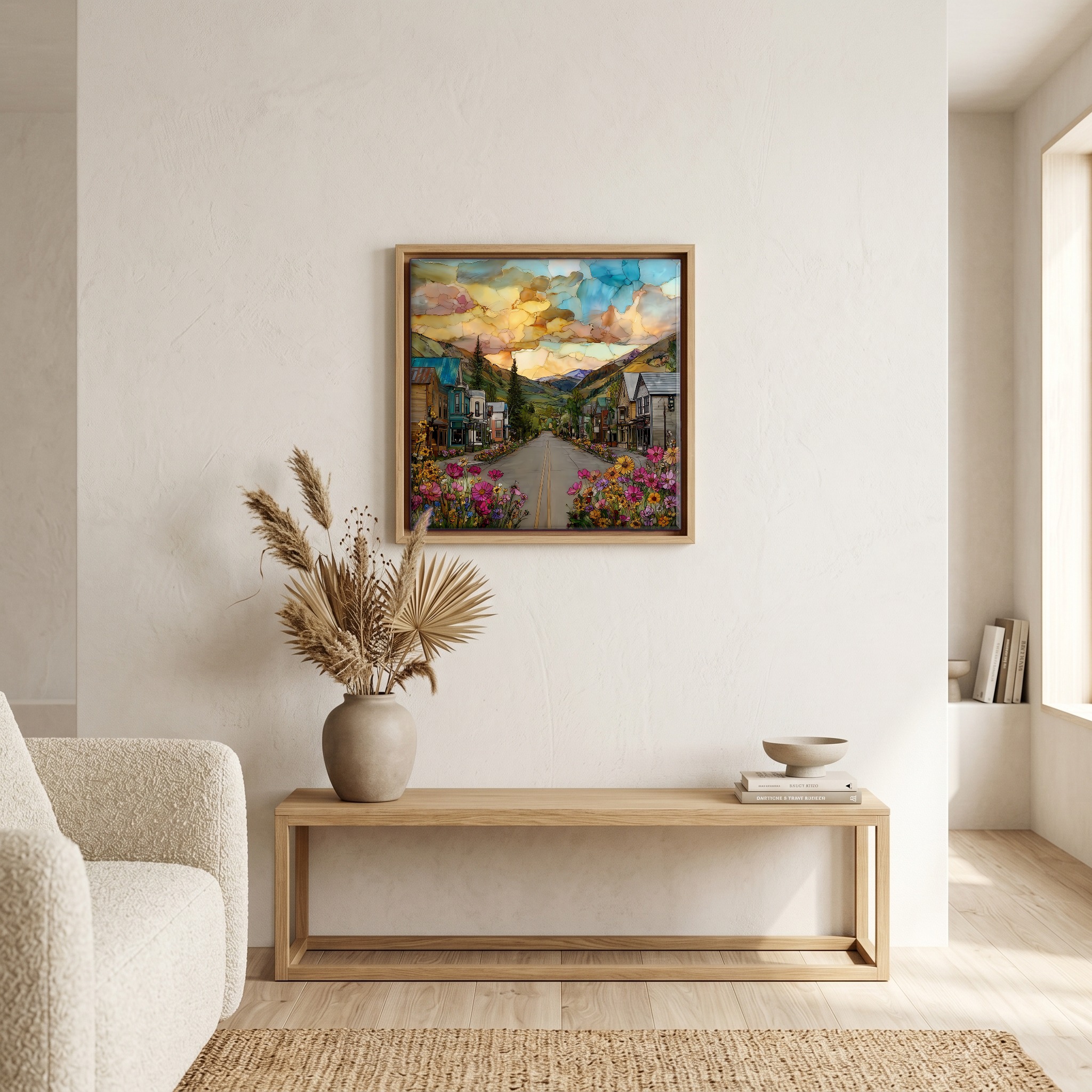
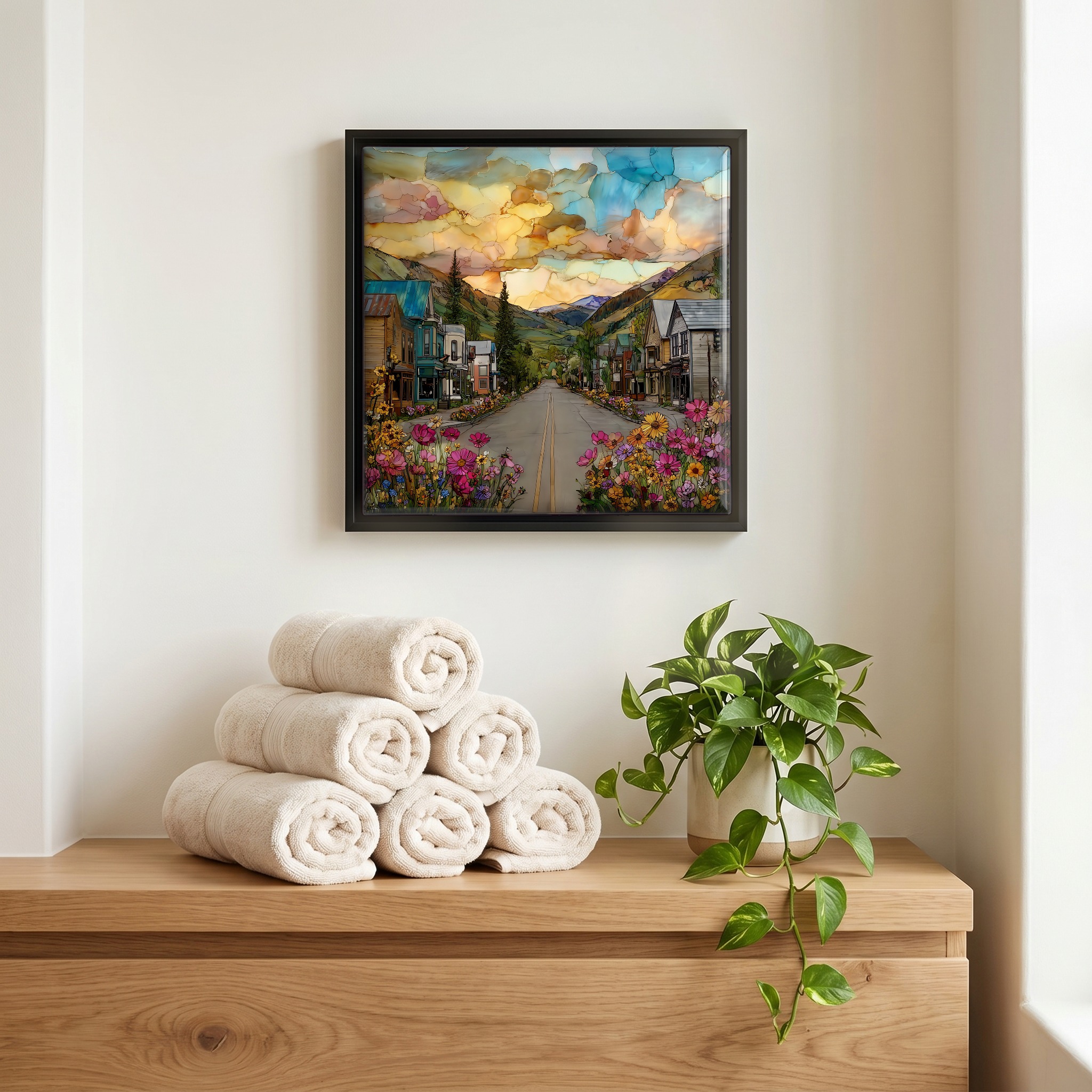
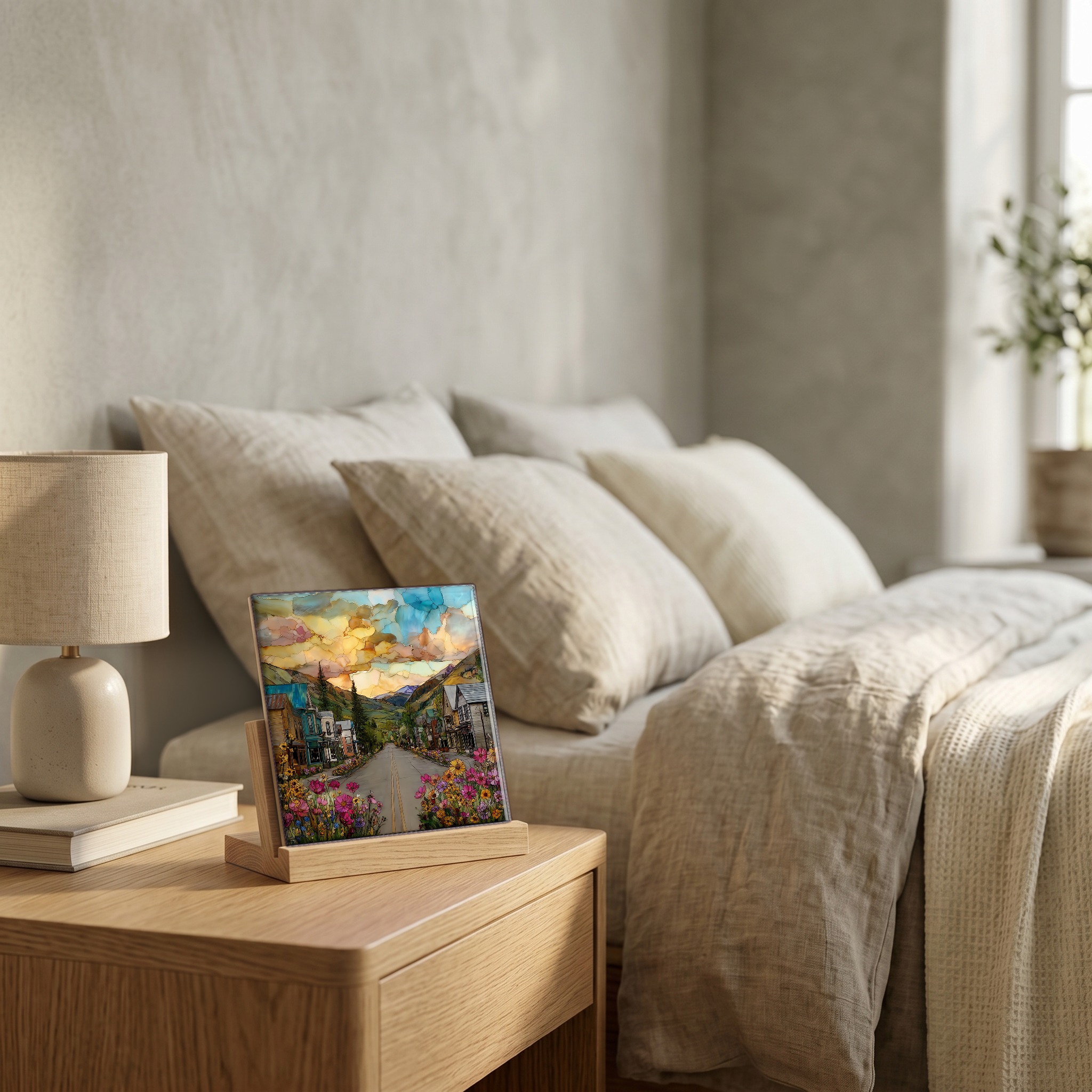
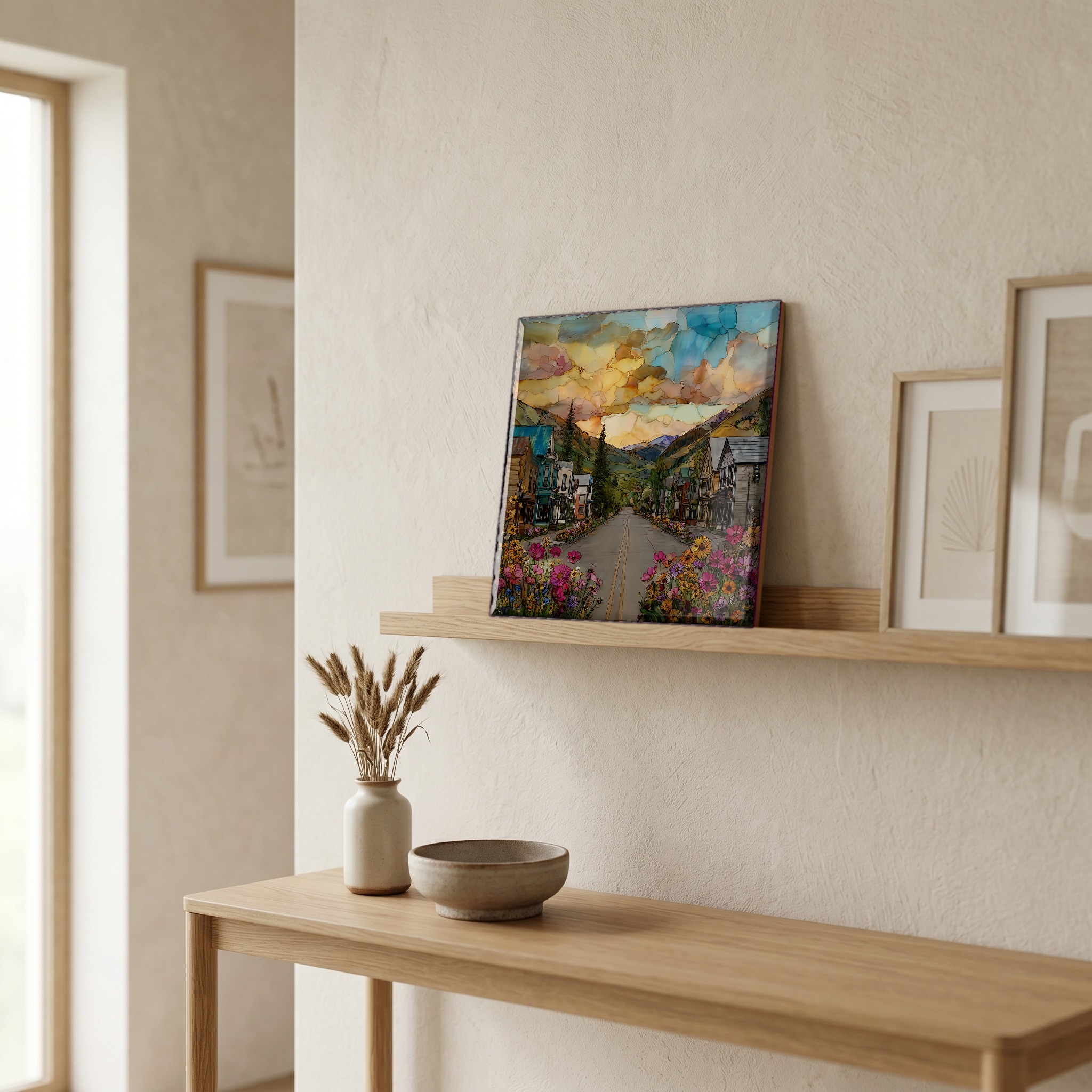
“The historic district along Elk Avenue holds the Victorian false-fronts coal miners built in the 1880s, painted now in colours their original owners would not recognize. Look east on a clear morning and the street runs straight at Mount Crested Butte. The town sits below the resort. Coal Creek runs through it. In July the meadows above come up in lupine and paintbrush so thick the state legislature named the town the Wildflower Capital of Colorado.
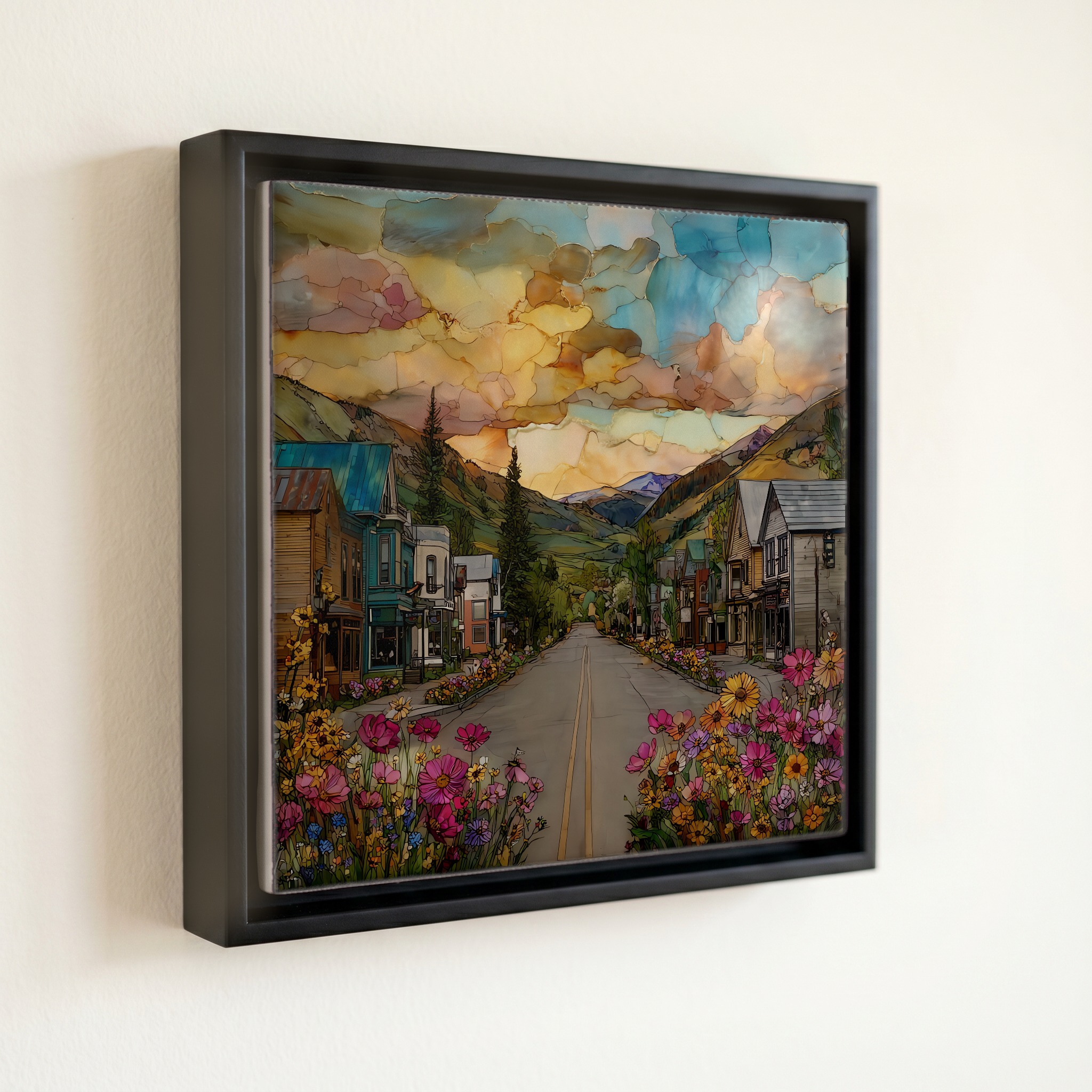
Crested Butte Elk Avenue Elk Range Ceramic Art Tile, on ceramic.
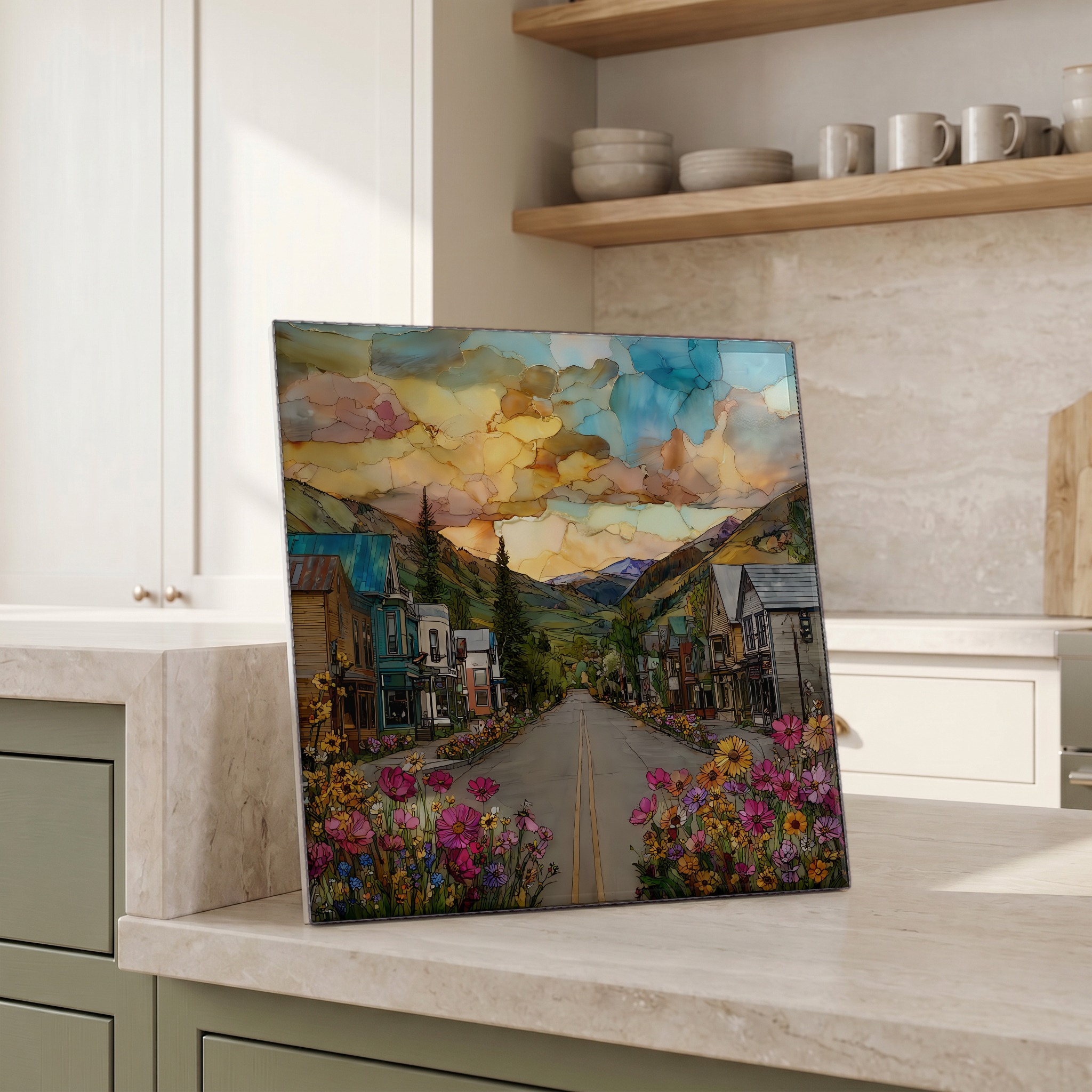
Each tile is finished by hand in our Knoxville studio. Artwork is slowly infused into the ceramic surface under high heat and pressure, and rests beneath a thin glossy finish. The colour lives in the surface, not on top of it.
Pick any four 4-inch tiles — National Parks you've been to, a Smokies set, the four seasons of one place. $ for a set of , cork-backed, ready to live on the table.
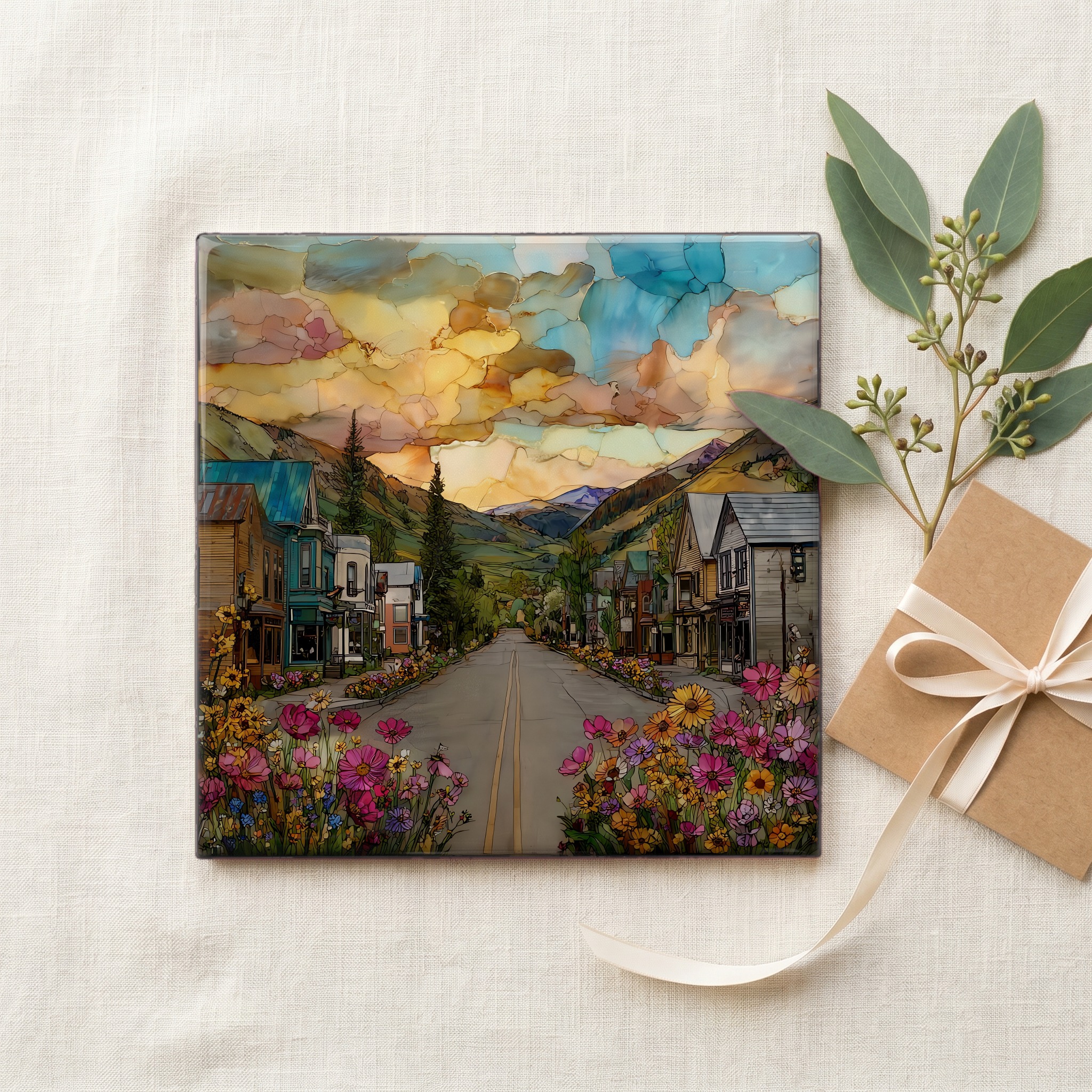
Each tile ships in a kraft box, tied with cream ribbon, with a handwritten note from the studio if you'd like to add one.
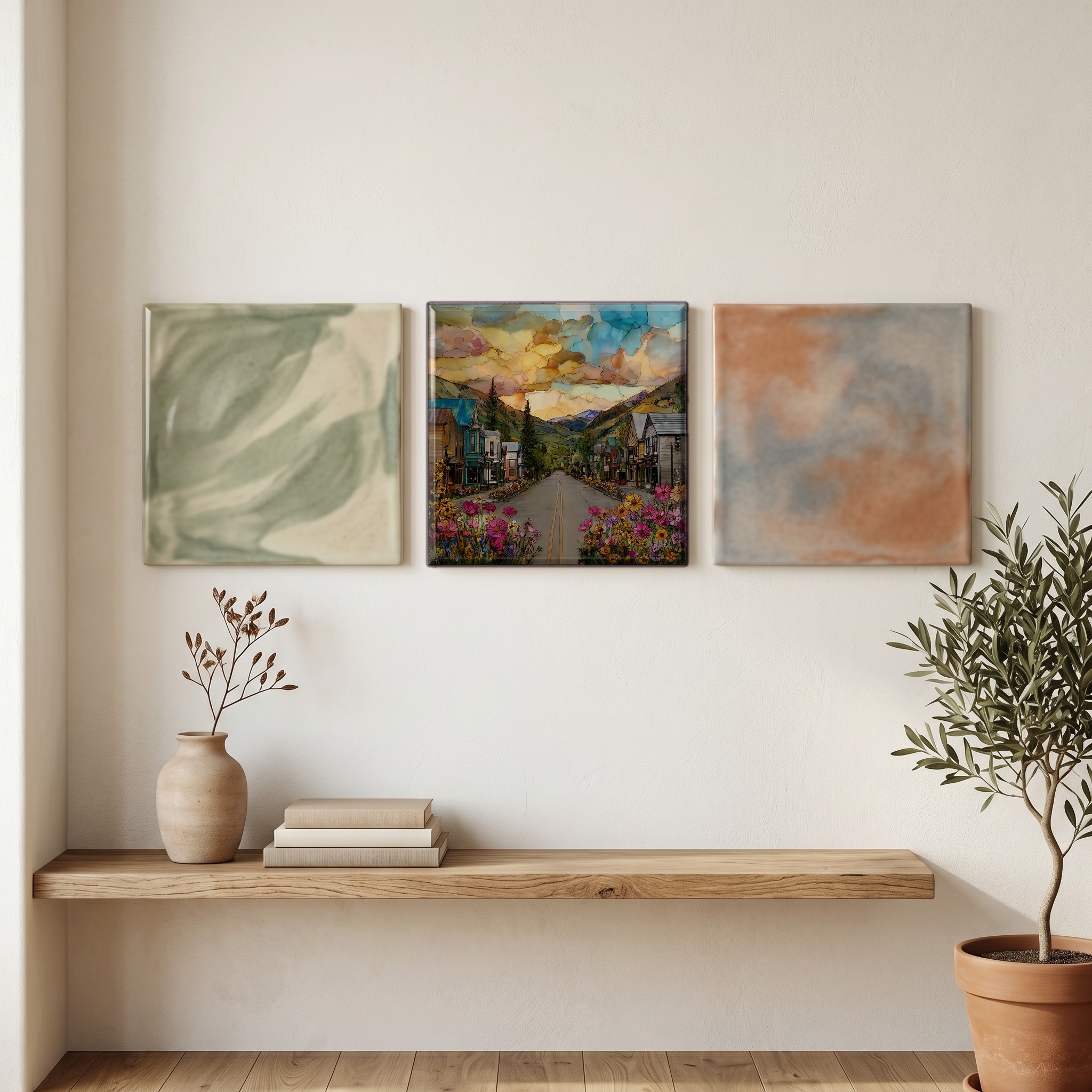
Three or five different vistas, hung together — a chapter of places you've been, or want to go.
The place, in three passes.
Crested Butte sits at 8,885 feet in Gunnison County, Colorado, on the western flank of the Elk Mountains. The town grew up in the 1880s as a supply hub for coal and silver miners working the Ruby and Irwin districts; the last coal mine closed in 1952. The ski area on Mount Crested Butte, the 12,162-foot peak directly north of town, opened in 1962. The Elk Avenue corridor was designated a National Historic Landmark District in 1974, one of the largest such districts in the Rocky Mountain region. Coal Creek runs along the south edge of town; the Slate River drains the valley to the north.
Elk Avenue's false-front buildings are the visual signature of late-19th-century mining towns across the American West. Crested Butte's commercial core preserves one of the densest surviving collections in the Rocky Mountain region: wood-frame storefronts built between 1880 and 1893, when the coal boom out of the Anthracite and Gunnison fields put a railhead at the foot of Elk Avenue. The Old Rock Schoolhouse, built of locally quarried sandstone, anchors the eastern end. The current paint scheme of barn reds, ochres, mustard yellows, and slate blues came in waves after the town was designated a National Historic Landmark District in 1974.
The Colorado legislature designated Crested Butte the official Wildflower Capital of Colorado in 1990, an honour the town has built into a working calendar. The Crested Butte Wildflower Festival runs each July, when lupine, scarlet gilia, mule's ears, and Colorado columbine come up across the meadows above Gothic and along the Slate River. Snow holds on Mount Crested Butte through late spring; the ski area typically runs from late November to mid-April. Mud season, the gap between melt and bloom, empties the town in May. The shoulder weeks in late September, when the aspens above Kebler Pass turn, draw their own quiet pilgrimage.